


September 1-30, 2026 · Executive Editorial Feature
Blood Cancer Awareness Month 2026
Make the route from first concern to diagnosis, treatment, support, and survivorship visible, owned, and measurable.
Awareness can increase demand, but an unclear entry point, delayed authorization, weak symptom capture, or unowned transition can still prevent a person from completing the next step. The executive task is to make the entire operating route dependable.
The leadership signal
Awareness is credible only when the care route works.
Blood Cancer Awareness Month places leukemia, lymphoma, myeloma, myelodysplastic syndromes, and related hematologic malignancies in public view. These conditions do not share one diagnostic test, one urgency profile, one treatment plan, or one recovery pattern. That clinical diversity makes a generic campaign especially risky. A message that tells people to seek help without ensuring that questions reach the right team can create more motion without improving access.
Healthcare executives should treat September as a test of the oncology operating system. The central question is not how many impressions the campaign generates. It is whether the organization can receive concern, recognize urgency, coordinate diagnostic work, explain what happens next, remove administrative barriers, manage symptoms, support caregivers, and retain accountability across treatment and survivorship.
Recent peer-reviewed research illustrates why this matters. A 2026 study of an artificial-intelligence triage model used routinely collected complete blood count data to support earlier acute myeloid leukemia referral. The validation result was promising, but precision was lower than sensitivity, which means a triage tool could also increase follow-up workload. The operational lesson is not to deploy a model from one retrospective study. It is to connect any detection aid to capacity, human review, and a clearly governed referral route.[3]
Other studies show that access may fail after diagnosis. Treatment intensity in diffuse large B-cell lymphoma was associated with illness burden, tolerance, and outcomes in a single-center retrospective analysis. The authors called for multidisciplinary care to reduce risks associated with undertreatment.[4] In a safety-net multiple myeloma cohort, insurance processes, assistance enrollment, and medication requirements shaped initiation and adherence.[9] These are not isolated patient problems. They are operating conditions.
Current evidence
Financial and structural barriers belong on the clinical reliability agenda.
A 2026 systematic review and meta-analysis included 11 cohorts and 280,826 adults with hematologic malignancies. Financial toxicity was associated with higher mortality after multivariable adjustment. The pooled adjusted hazard ratio was 1.57, with a 95% confidence interval from 1.29 to 1.91. The review also reported high heterogeneity, a wide prediction interval, and evidence that structural barriers such as lack of insurance drove much of the association. After adjustment for potential publication bias, the association remained statistically significant but was smaller.[11]
Leaders should resist two weak conclusions. First, the meta-analysis does not prove that financial navigation alone improves survival. Second, high heterogeneity means the pooled estimate should not be treated as a universal local forecast. The sound conclusion is that financial distress and coverage barriers are material risks that deserve early detection, referral, and governance. A hospital that waits for missed treatment, nonadherence, or crisis utilization before offering help has placed the intervention too late in the route.
Figure 1. Financial toxicity and mortality risk signals reported in a 2026 meta-analysis
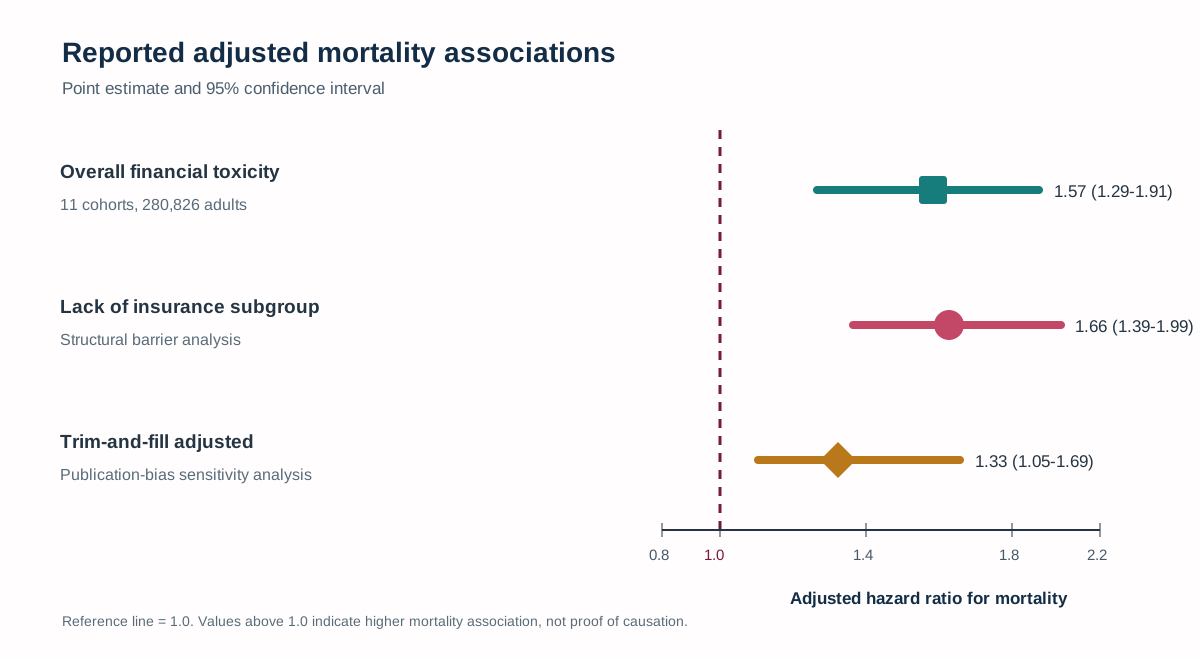
| Estimate | Adjusted hazard ratio | 95% confidence interval |
|---|---|---|
| Overall financial toxicity | 1.57 | 1.29-1.91 |
| Lack of insurance subgroup | 1.66 | 1.39-1.99 |
| Trim-and-fill adjusted | 1.33 | 1.05-1.69 |
Evidence from individual settings reinforces the need to examine where local process creates friction. In a safety-net hospital, only 12.5% of 80 patients with multiple myeloma reached a proportion of days covered of at least 80% for immunomodulatory treatment, and 65% experienced an initiation delay of at least one month. Assistance enrollment was associated with better adherence, but program steps could also delay treatment.[9] The study is small, retrospective, and specific to one safety-net setting. It should not be used as a benchmark. It does, however, show why pharmacy authorization, assistance enrollment, required safety processes, and start-date visibility should be managed as one pathway.
A Medicare claims analysis of 12,154 older or medically unfit adults with newly diagnosed acute myeloid leukemia found that more than half remained untreated. Treatment uptake increased over time, while age and sex were associated with whether therapy was received. Race and geographic residence were not significant in that analysis.[10] Leaders should not turn a null finding in one dataset into a claim that inequity is absent. Claims data may not capture transportation, trust, caregiving, health literacy, local capacity, or the reasons behind a treatment decision. The appropriate response is disciplined local measurement.
From concern to accountable care
Build one visible route across many disease-specific pathways.
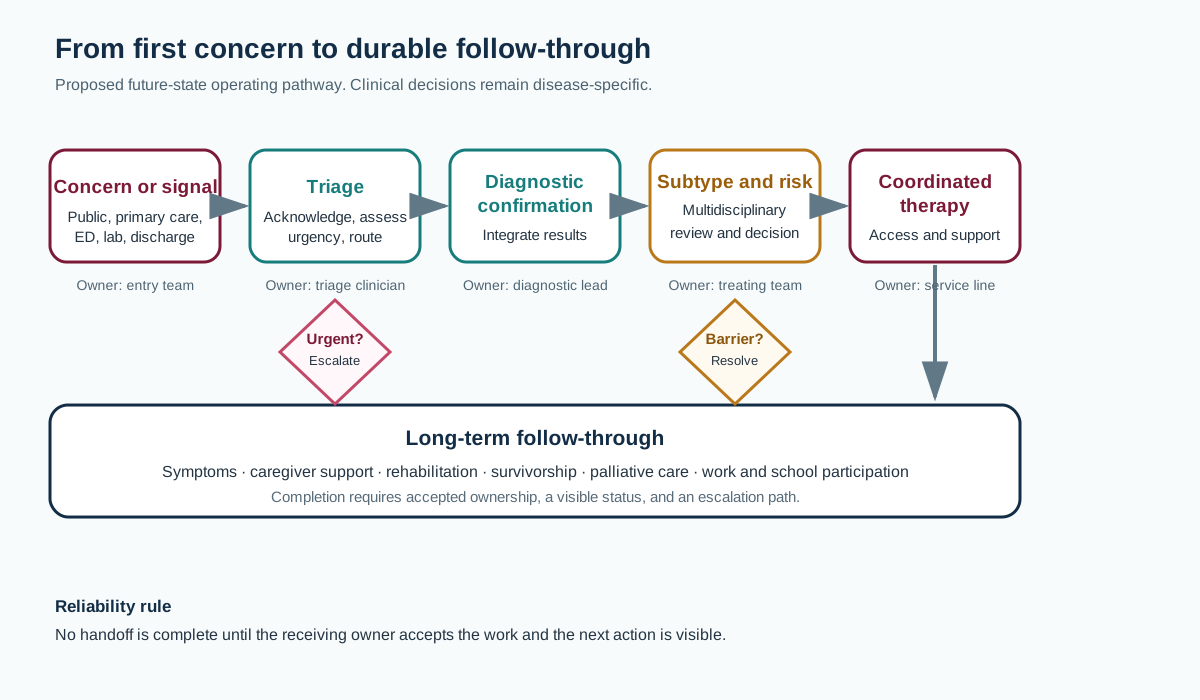
The organization does not need to pretend that every blood cancer follows the same clinical algorithm. It does need a common operating spine. That spine begins with a reliable entry point and ends only when responsibility, status, and the next action are clear. Clinical decisions remain disease-specific and patient-specific. Operating reliability should be consistent.
Figure 2. Proposed future-state blood cancer access and follow-through pathway
Make the first contact usable.
A person may enter through primary care, emergency care, an abnormal laboratory result, a specialist referral, a hospital discharge, or a self-directed call prompted by the observance. The receiving process should identify urgent conditions, route nonurgent concerns appropriately, and explain what information is needed. Staff should not offer diagnostic certainty through a campaign channel. They should be able to acknowledge the request and explain the next accountable step.
Detection technology can support this stage, but technology does not own the handoff. The 2026 complete blood count study achieved high sensitivity in its validation set, with lower precision and an expected increase in follow-up referrals.[3] Any organization evaluating a similar tool should assess external validity, bias, false-positive workload, clinician oversight, escalation rules, auditability, and downstream capacity before implementation.
Protect the diagnostic handoff.
Diagnostic confirmation may require pathology, flow cytometry, imaging, cytogenetic or molecular testing, bone marrow examination, and specialty review. Each order can be completed while the overall diagnosis remains unowned. A reliable pathway names who integrates results, who contacts the patient, how incomplete testing is surfaced, and when the case escalates for multidisciplinary review.
Executives should monitor elapsed time between locally defined milestones without imposing one universal target across all diseases and presentations. Useful milestones can include referral receipt, initial specialist review, specimen acquisition, pathology completion, integrated diagnosis, treatment decision, authorization completion, and therapy start. Measure medians and tail risk. A median can look acceptable while a smaller group experiences severe delay.
Make the treatment transition explicit.
Once the diagnosis is defined, the route may cross inpatient and outpatient settings, academic and community sites, specialty pharmacy, transplant or cellular therapy programs, infusion services, and supportive care. The sending team should know whether the receiving team accepted the case. The patient and caregiver should know whom to contact during the transition. The electronic record should show the accountable owner, current state, and next milestone.
Equity and access
Do not reduce inequity to outreach.
Awareness campaigns often emphasize information. Current evidence shows that information is only one barrier. In a 2026 survey of 346 patients with multiple myeloma, 51 caregivers, and 31 physicians, 26% of patients reported being unfamiliar with T-cell redirecting therapies. Unawareness was higher among Black patients and people with less formal education. Caregivers reported substantial stress and time demands, while physicians reported that many referrals did not lead to treatment.[6] The cross-sectional design and selected setting limit generalization, but the pattern is operationally useful. Awareness, referral, caregiver support, and treatment capacity must be designed together.
A separate human-centered design initiative proposed a protocol-agnostic pretrial navigation model for blood cancer research. Stakeholders identified cultural, logistical, financial, and linguistic barriers and converged on human navigation supported by governed digital tools.[8] Because this was hypothesis-generating workshop research, the model still requires pilot testing. Its core principle is sound: navigation should begin before a person is screened out by nonmedical barriers.
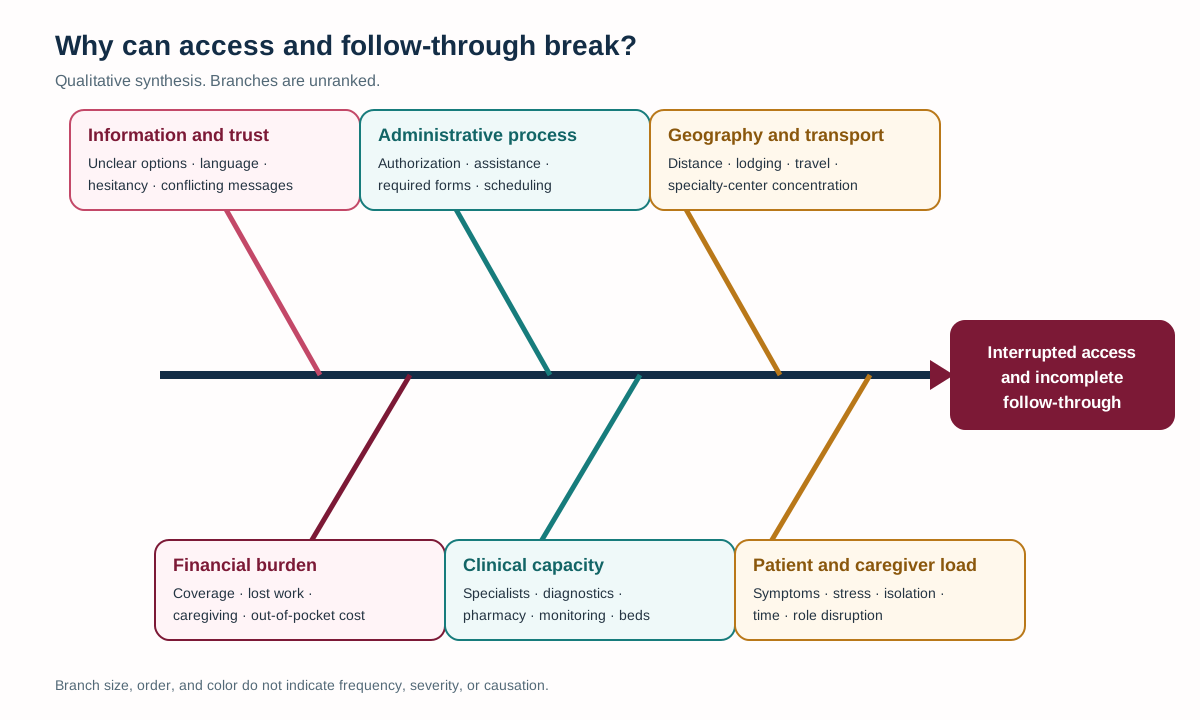
Leaders should examine the full burden placed on patients and caregivers. Travel to a specialty center, time away from work, temporary housing, childcare, insurance approval, specialty pharmacy coordination, digital access, language services, disability accommodation, and caregiver availability can determine whether a clinically appropriate option is usable. Those barriers should be documented as pathway risks, not treated as private failures.
Figure 3. Qualitative fishbone for interrupted access and incomplete follow-through
Use stratified measures without turning them into blame.
Report pathway measures by relevant population and service characteristics when sample size, privacy, and statistical stability allow. Potential stratifiers include age, sex, race and ethnicity, preferred language, payer, area deprivation, distance, disability, treatment location, and referral source. A single-center study of 79 patients with acute myeloid leukemia receiving a venetoclax-based regimen did not find a significant association between area deprivation and survival.[2] That result should temper overstatement, not end inquiry. The sample and setting limit inference, and other access barriers may not be captured by the index.
The executive goal is to identify variation that the organization can act on. If authorization time is longer for one payer group, fix the process. If referrals from distant communities fail before consultation, test telehealth readiness, transportation support, and community handoffs. If education materials do not reach people with limited English proficiency or low health literacy, redesign them with the people expected to use them. Report what changed and whether completion improved.
Human infrastructure
Make patient-reported symptoms part of the operating system.
Blood cancer treatment can create complex and rapidly changing symptoms. Routine documentation may still miss what matters most to the patient. In a 2026 study of 31 adults hospitalized with acute myeloid leukemia, lack of energy and appetite were commonly identified by patients and clinicians. Psychosocial symptoms showed greater discordance. Seventeen patients reported feeling sad, compared with two clinician documentations, and 10 reported irritability, compared with two clinician documentations.[14] The sample is small and should not be generalized as a systemwide rate. It does demonstrate why structured patient-reported information can add value to routine notes.
A qualitative outpatient malignant hematology study found that symptom management focused heavily on medical treatment. Patients and nurses described limited nonpharmacologic strategies and education, while workflow, role clarity, knowledge access, workload, and the relative priority of symptom care affected delivery.[13] Leaders should not respond by adding one more form to an already overloaded clinic. They should design who reviews symptoms, what thresholds require action, which interventions are available, how urgent findings escalate, and how closure is documented.
Validated patient-reported measures can support this work. A 2026 psychometric analysis evaluated symptom and fatigue measures for chronic lymphocytic leukemia or small lymphocytic lymphoma and mantle cell lymphoma. The measures showed reliability and construct validity in clinical-trial datasets, although targeting was weaker among people with the lowest symptom severity.[15] Organizations should select tools that fit the intended population and purpose. A research instrument should not be imported into routine care without workflow testing, governance, and a response plan.
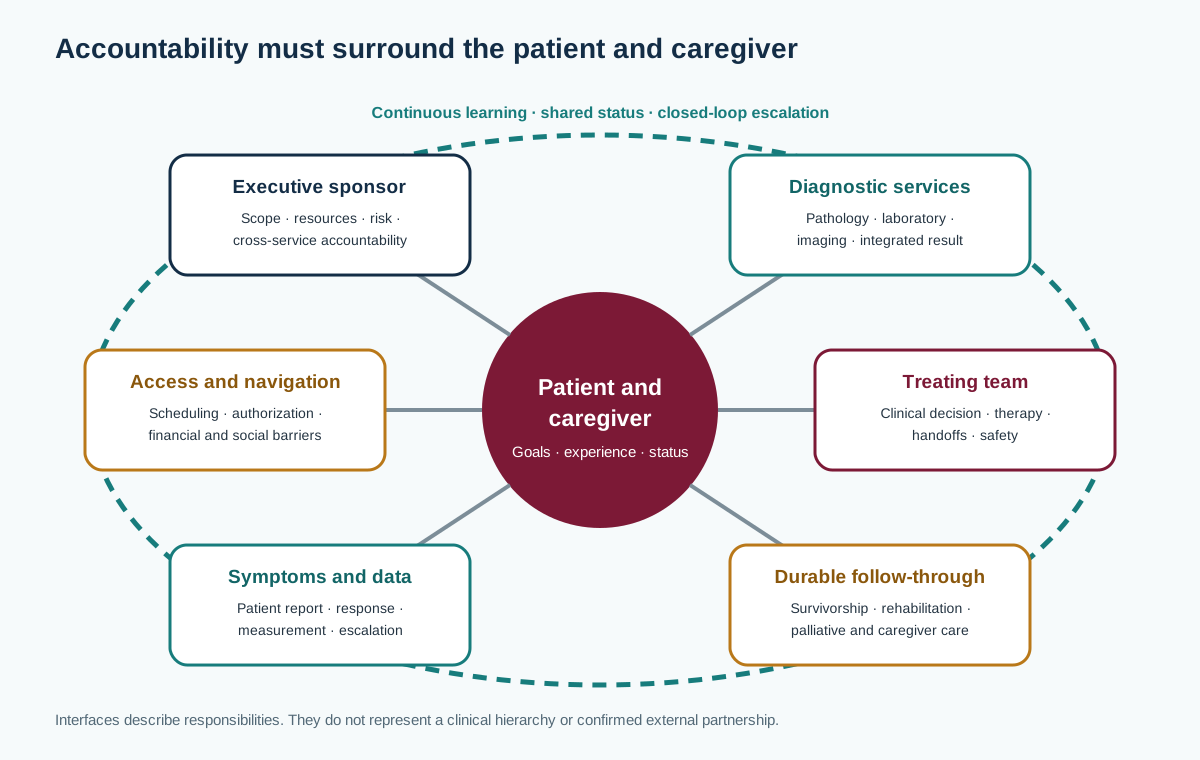
Figure 4. Blood cancer accountability operating system
Assign real ownership.
Executive sponsorship is necessary, but day-to-day ownership must be closer to the work. The operating owner should have authority to convene diagnostic services, oncology, pharmacy, nursing, financial counseling, scheduling, information technology, social work, rehabilitation, palliative care, and community partners. Each service should know what it owns, what it does not own, and how a barrier becomes visible across boundaries.
Care navigation should not depend on heroic memory. Use shared work queues, standard status definitions, escalation rules, and closed-loop communication. Give frontline staff a way to flag a barrier without reconstructing the entire case. Give patients and caregivers one understandable contact route. Use automation to support, not replace, responsibility.
Advanced treatment readiness
Do not promote advanced options without preparing the system that delivers them.
Cellular and T-cell redirecting therapies illustrate the gap between scientific availability and operational access. Patient awareness, physician referral, caregiver capacity, travel, monitoring, and specialty-center coordination all affect whether a person reaches treatment.[6] A systematic review of second-line axicabtagene ciloleucel in relapsed or refractory large B-cell lymphoma found that real-world effectiveness and safety were broadly consistent with trial experience. Patient-reported quality of life declined early and then improved, and outpatient administration may reduce costs for selected patients.[7] The review also included industry-affiliated authors and heterogeneous real-world evidence. Local adoption decisions require independent governance, patient selection, safety capability, and financial analysis.
Readiness is more than bed availability. It includes referral criteria, benefit verification, apheresis coordination when relevant, manufacturing or product scheduling, bridging plans, emergency recognition, caregiver education, local lodging, transportation, infection precautions, toxicity management, cross-site communication, and long-term follow-up. A campaign that mentions innovation without explaining the access route can increase frustration and inequity.
Executives should define what the organization can deliver, what it refers, and how it supports people during external care. Community and specialty centers need reciprocal expectations. The referring team should know when the referral was accepted. The specialty center should know who will support pre-treatment and post-treatment needs locally. The patient should not become the sole courier between systems.
Durable follow-through
Survivorship begins before the treatment episode ends.
A qualitative study of 25 acute myeloid leukemia survivors interviewed about two years after allogeneic transplantation described physical debilitation, disrupted roles, uncertainty, social isolation, caregiver investment, and the need for individualized and peer support.[1] The experience was shaped by transplantation during the peak of the COVID-19 pandemic, which limits transferability. The study still identifies domains that a resilient survivorship system should anticipate: function, emotional health, relationships, social determinants, caregiver strain, identity, and continuity.
Early survivorship needs also appear in younger populations. A longitudinal study of 83 children who completed treatment for acute lymphoblastic leukemia and 53 matched healthy peers found poorer health-related quality of life among survivors at 27 months, especially in social and school functioning.[5] The study was electronically published earlier and appeared in a 2026 issue. It should not be treated as a universal trajectory. It does show why school reintegration, peer connection, psychosocial screening, and family support belong in the plan before follow-up becomes fragmented.
Work is another outcome that standard clinical measures may miss. A scoping review of 36 studies found that age, transplant type, sex, income, workplace conditions, legislation, and health-system factors can shape work participation after hematopoietic cell transplantation.[16] Return to work is not a simple yes-or-no endpoint. Leaders should consider rehabilitation, occupational health, documentation, flexible scheduling, benefits navigation, employer communication when authorized, and the patient's own goals.
Survivorship plans should state who owns surveillance, treatment complications, preventive care, vaccination coordination when clinically appropriate, rehabilitation, fertility or sexual health needs, psychosocial care, caregiver support, and urgent escalation. When care returns to a community clinician, the handoff should include responsibilities, timing, and a route back to specialty care.
Palliative care is part of quality, not a signal that treatment has stopped.
A 2026 retrospective study comparing 86 patients with hematologic malignancies and 264 with solid tumors at one tertiary center found more intensive end-of-life care, later resuscitation discussions, fewer palliative-care referrals, and more intensive-care deaths among the hematologic group.[12] The findings come from one Saudi Arabian center and may reflect local practice, referral criteria, and case mix. They should not be used as a benchmark. They do support earlier, diagnosis-compatible palliative involvement focused on symptoms, communication, caregiver support, and goals of care.
Executives can normalize concurrent palliative care through referral triggers, service capacity, clinician education, and visible measures. Measure time from eligibility to referral, acceptance, first contact, and documented response. Do not measure success only by referral count. A referral that cannot be scheduled is not access.
Decision-grade measurement
Measure completed care, not campaign activity.
Campaign impressions, page views, event attendance, and referral volume describe reach. They do not show whether people completed diagnostic evaluation, began an agreed treatment, received symptom support, or remained connected through survivorship. Leaders need a small set of pathway measures with precise definitions.
Figure 5. Executive measurement table for a blood cancer access pathway
| Measure | Definition and denominator | Accountable owner | Cadence | Interpretation limit |
|---|---|---|---|---|
| Referral acknowledgment | Accepted referrals acknowledged within the locally approved interval, divided by eligible referrals received. | Access center and hematology operations | Weekly | Does not show diagnostic completion. |
| Diagnostic route completion | People completing the locally defined diagnostic milestone set, divided by people entering that route. | Diagnostic pathway owner | Monthly | Milestones differ by condition and urgency. |
| Authorization cycle time | Elapsed days from complete submission to determination, reported by payer and therapy pathway. | Revenue cycle and pharmacy access | Weekly | Exclude incomplete submissions using a documented rule. |
| Treatment start reliability | People starting the agreed plan within the locally defined clinical window, divided by people for whom treatment was planned. | Oncology service line | Monthly | Separate clinical choice from avoidable delay. |
| Symptom response closure | Patient-reported alerts with a documented assessment and disposition, divided by eligible alerts. | Nursing and symptom-management owner | Weekly | Completion does not prove symptom resolution. |
| Navigation barrier resolution | Documented barriers with a completed action or continuing escalation, divided by barriers opened. | Navigation program | Biweekly | Do not hide unresolved cases by closing the record. |
| Survivorship handoff | Eligible people with documented responsibility, follow-up timing, and contact route, divided by people entering survivorship. | Survivorship program | Monthly | A completed document does not prove the receiving team accepted ownership. |
Pair quantitative signals with direct experience.
Review delays and drop-off alongside patient, caregiver, and frontline narratives. Quantitative data can identify where variation occurs. Interviews, journey mapping, complaint review, and co-design can explain how the route feels and why work becomes stuck. Use both forms of evidence to choose one improvement. Do not use a dashboard to distance leaders from the people represented by the data.
Stratify carefully. Small numbers can threaten privacy and produce unstable rates. Combine periods only when definitions remain consistent. Display counts with percentages. State exclusions. Keep a data-quality flag when a field is incomplete. When sample size is too small for a reliable comparison, report the limitation instead of implying no difference.
90-day executive agenda
Convert awareness into one verified operating improvement.
The timeline below is a proposed management sequence. It does not replace clinical governance, research review, privacy review, contracting, legal review, workforce planning, or patient-safety approval. Select one pathway problem that is important enough to matter and narrow enough to improve within 90 days.
Figure 6. Proposed 90-day implementation timeline
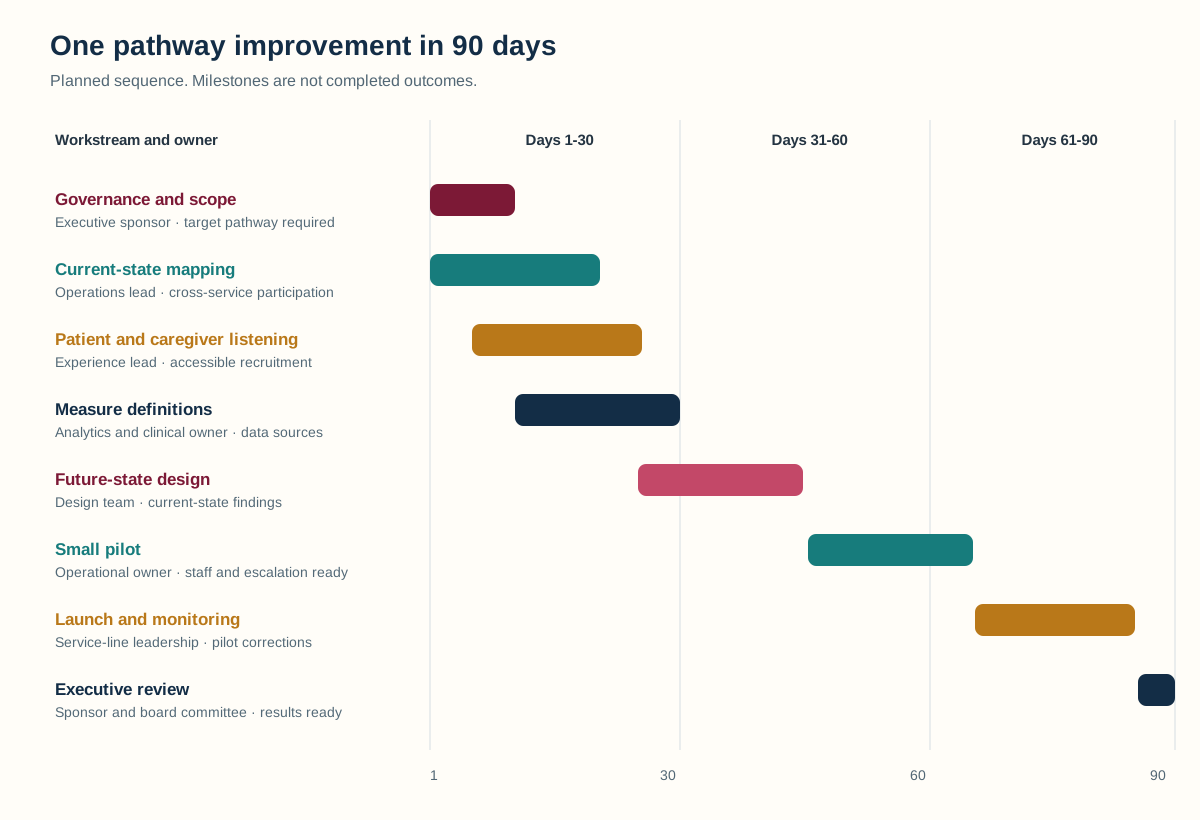
| Workstream | Timing | Owner | Dependency |
|---|---|---|---|
| Governance and scope | Days 1-10 | Executive sponsor | Defined target pathway |
| Current-state mapping | Days 1-20 | Operations lead | Cross-service participation |
| Patient and caregiver listening | Days 5-25 | Experience and navigation leads | Accessible recruitment and consent |
| Measure definitions | Days 10-30 | Analytics and clinical owner | Approved data sources |
| Future-state design | Days 25-45 | Multidisciplinary design team | Current-state findings |
| Small pilot | Days 46-65 | Operational owner | Staff preparation and escalation rules |
| Launch and monitoring | Days 66-85 | Service-line leadership | Pilot corrections |
| Executive review | Days 86-90 | Executive sponsor and board committee | Outcome and limitation summary |
Days 1-30. See the current route.
- Name one executive sponsor and one operational owner.
- Choose one bounded pathway, population, and starting point.
- Map every handoff from entry through the selected completion endpoint.
- Listen to patients, caregivers, frontline staff, and receiving services.
- Define measures, denominators, exclusions, data owners, and privacy rules.
- Identify where requests wait without an owner or visible status.
Days 31-60. Design and test.
- Redesign the entry point, acknowledgment, handoff, escalation, and closure signals.
- Make financial, transportation, language, disability, and caregiver barriers visible early.
- Define who reviews patient-reported symptoms and how urgent findings escalate.
- Test the route with representative cases, including an incomplete record and an external referral.
- Confirm downstream capacity before increasing public promotion.
- Correct the workflow before broader launch.
Days 61-90. Implement and verify.
- Launch the smallest viable change with daily visibility during the first week.
- Review delays, unresolved barriers, patient feedback, and staff workload.
- Separate clinical exceptions from preventable operating failure.
- Report variation by relevant populations when data are stable and privacy is protected.
- Document what improved, what did not, and what requires another cycle.
- Assign the next review date so accountability survives the observance month.
Public communication
Market only the access that the system can support.
Public communication should use plain language, avoid unverified annual themes, distinguish urgent symptoms from general education, and direct people to an approved destination. State who the resource is for, what will happen after contact, typical response expectations using locally approved language, and what to do in an emergency. Do not imply that a campaign channel provides diagnosis or individualized medical advice.
Before launch, test the destination as a patient would. Call the number. Use the form. Review mobile readability. Check language access. Confirm that staff know the campaign is active. Verify that referrals have a receiving queue. If the system cannot absorb the demand, narrow the campaign or add capacity before promotion.
Related resources
Continue the executive pathway.
Authoritative observance resource
Blood Cancer United, 2026 Blood Cancer Awareness Month announcement
Safety note: This article supports leadership planning and education. It does not provide medical advice or replace clinical judgment, emergency procedures, organizational policy, or qualified legal and regulatory review.
Scholarly references
Peer-reviewed evidence
- McAndrew NS, Patterson S, Mohanraj L, et al. Acute myeloid leukemia survivors report transplant-specific burdens in interviews two years after receiving allogeneic hematopoietic cell transplantation during the peak of the COVID-19 pandemic: a qualitative study. Inquiry. 2026;63:1-14. https://doi.org/10.1177/00469580261478062
- Uyemura B, Hollnagel F, Hall A, et al. Impact of Area Deprivation Index in patients with newly diagnosed acute myeloid leukemia treated with a venetoclax-based regimen: a single-center retrospective study. Leuk Lymphoma. Published online August 16, 2026:1-8. https://doi.org/10.1080/10428194.2026.2711591
- El Alaoui Y, Padmanabhan R, Qaraqe MK, et al. AI-based computational model integrating routinely acquired blood parameters for triage and early detection of acute myeloid leukemia. Biomed Eng Comput Biol. 2026;17:11795972261456588. https://doi.org/10.1177/11795972261456588
- Cherng HJJ, DeStephano D, Gould P, et al. Treatment intensity, illness burden, and disparities in newly diagnosed diffuse large B-cell lymphoma treated at an urban academic center. Leuk Lymphoma. 2026;67(9):1953-1964. https://doi.org/10.1080/10428194.2026.2678414
- Premaratne G, McCarthy M, Tennant M, Downie P, Hearps S, De Luca C. Health-related quality of life in children and adolescents treated for acute lymphoblastic leukaemia, compared with healthy peers: a longitudinal study of early survivorship. J Cancer Surviv. 2026;20(4):1341-1350. https://doi.org/10.1007/s11764-024-01736-7
- Shah Z, Robinson M, Prempeh A, et al. Access to T-cell redirecting therapies in multiple myeloma: patient, caregiver, and physician perspectives on awareness and barriers. Cancers. 2026;18(15):2412. https://doi.org/10.3390/cancers18152412
- Lin Y, Palivela M, Lakzadeh P, et al. Systematic literature review of clinical outcomes, health-related quality of life, and healthcare costs and resource use in relapsed/refractory large B-cell lymphoma treated with axicabtagene ciloleucel. Leuk Lymphoma. Published online July 27, 2026:1-16. https://doi.org/10.1080/10428194.2026.2695323
- Colasurdo G, Nadeem A, Mason N, et al. An equity-embedded, protocol-agnostic pre-trial navigation model for Canadian blood cancer trials: findings from the Myeloma Canada Phase 0 Workshop. Curr Oncol. 2026;33(7):433. https://doi.org/10.3390/curroncol33070433
- Ononogbu O, Mohr S, Khalid J, et al. Early adherence to immunomodulators in multiple myeloma: retrospective observations from a safety-net hospital. Curr Oncol. 2026;33(7):432. https://doi.org/10.3390/curroncol33070432
- Mina A, Xu Y, Kapustyan TA, et al. Treatment inequity among older adults with newly diagnosed acute myeloid leukemia ineligible for intensive therapy. Leuk Lymphoma. Published online July 12, 2026:1-9. https://doi.org/10.1080/10428194.2026.2691911
- Liao F, Xu QX, Lin P, Feng JQ, Chen D. The association between financial toxicity and mortality in hematologic malignancies: a systematic review and meta-analysis. Oncologist. 2026;31(7):1-12. https://doi.org/10.1093/oncolo/oyag178
- Almusaed S, Sadler K, Abdulmutaali W, et al. Comparison of end-of-life care between patients with hematological malignancies versus solid tumors: a retrospective analysis. J Palliat Care. 2026;41(3):256-265. https://doi.org/10.1177/08258597251388251
- Teggart K, Bryant-Lukosius D, Neil-Sztramko SE, et al. Factors influencing evidence-informed symptom management in outpatient malignant hematology: a qualitative description of patients' and nurses' experiences. J Clin Nurs. 2026;35(7):3226-3241. https://doi.org/10.1111/jocn.70323
- Chae S, Bae J, Youn N, et al. Concordance between patient-reported and clinically documented symptoms in acute myeloid leukemia. Oncol Nurs Forum. 2026;53(4):1-13. https://doi.org/10.1188/26.ONF.e26535329
- Loubert A, Creel K, Bhandari NR, et al. Psychometric analysis of new lymphoma-specific patient-reported symptom measures derived from the EORTC item library. J Patient Rep Outcomes. 2026;10(1). https://doi.org/10.1186/s41687-026-01126-w
- Bilodeau K, Vinette B, Gélinas-Gagné C, et al. Work participation of hematological cancer survivors after hematopoietic cell transplantation: a scoping review. J Occup Rehabil. 2026;36(1):71-86. https://doi.org/10.1007/s10926-024-10257-0