

September 2026 · Executive Brief
Food Safety Education Month 2026: Turn Awareness into a Reliable Safety System
Use September to test the complete route from supplier approval and receiving through preparation, service, incident response, and verified learning.
Leadership signal
Treat food safety as enterprise reliability, not a September message.
Food Safety Education Month creates a useful moment for healthcare executives to examine a risk pathway that crosses clinical, operational, workforce, procurement, facilities, public health, and community boundaries. The work reaches far beyond the kitchen. It begins when an organization qualifies a supplier, continues as products are transported and received, and remains active through storage, preparation, service, allergen communication, waste handling, incident reporting, and corrective action.
A reliable system does not depend on a single employee remembering every rule under pressure. It makes the safe action visible, feasible, and expected. It also gives leaders a dependable view of exceptions. That means a temperature deviation, damaged package, missing label, unavailable handwashing resource, unresolved allergy question, or training gap can be identified, owned, escalated, and closed before it disappears into routine work.
Recent healthcare evidence illustrates why executive attention matters. A mixed-method assessment in four public psychiatric hospitals found gaps in formal training, temperature-control understanding, supervision, internal controls, and regulatory certification, even while many employees expressed commitment to food safety.2 A hospital-kitchen decision study identified training, environmental cleanliness, and meal quality as important elements within a broader safety system.11 A qualitative study of public-hospital food service managers also placed receiving controls, labels, traceability, transport, supplier education, and infrastructure at the center of procurement reliability.13
These studies come from different settings and should not be treated as a single benchmark. Their consistent leadership signal is more useful: knowledge, policy, equipment, supervision, supplier control, and feedback must work together. Training alone cannot compensate for a broken refrigerator, an unapproved vendor, an unclear escalation route, or staffing conditions that make safe practice difficult.
For leaders, the observance should therefore produce an operational result. Choose a real route. Map it with the people who use it. Identify one high-consequence weakness. Assign an executive sponsor and an operational owner. Define how completion will be observed. Then carry the work beyond September.
Start with five questions
- Who owns the end-to-end food-safety route, not just individual tasks?
- Which receiving, storage, preparation, service, and incident signals are visible today?
- Where does the process depend on memory, informal workarounds, or inaccessible instructions?
- Can every employee stop work and escalate a concern without ambiguity?
- What evidence will show that education changed practice rather than attendance?
Evidence to action
The evidence rejects a one-time training model.
Education can improve knowledge. A 2026 pre-post study of 42 street-food vendors reported a large increase in median knowledge after a three-day program.1 A small virtual program for low-income home food handlers also reported higher post-program knowledge and self-reported practices.10 Both studies lacked a control group and did not establish long-term behavior or reduced illness. Their appropriate use is to support education as one component of improvement, not to claim that a course alone produces a safe system.
Larger observational studies add operational detail. Among 2,751 U.S. retail food-service workers, knowledge was stronger for handwashing, illness reporting, and personal hygiene than for temperature control, preparation, sanitation, and storage. More recent education, in-person or blended formats, supervisor support, equipment, practice, and visual reminders were associated with stronger knowledge.5 At a military installation, missing employee training was associated with more food-safety risk-factor deficiencies across 716 inspections of 124 facilities.12 These are associations, not proof that training alone caused better inspection outcomes.
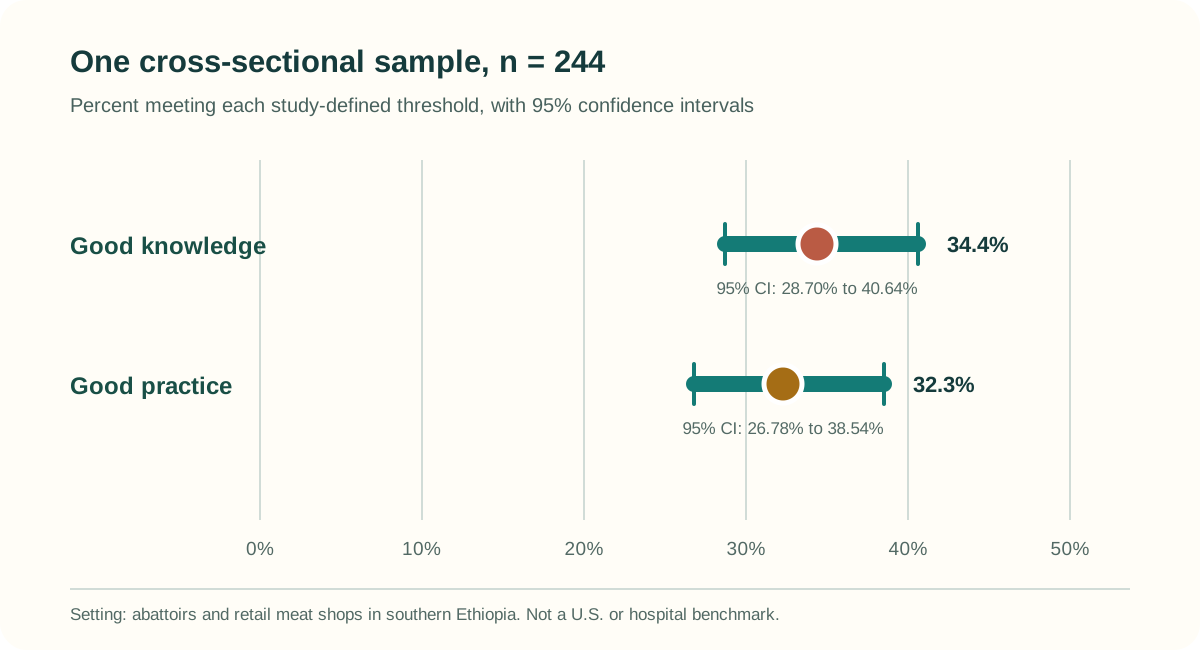
A mixed-method study of 415 handlers found poor practice was associated with limited education, short experience, no training, and poor knowledge, while interviews identified weak enforcement, missing guidelines, risk perception, and inadequate equipment or facilities as barriers.4 A facility-based study of 150 hostel-kitchen workers also found that education and socioeconomic status were associated with knowledge, although the study was cross-sectional and used different scales for knowledge, attitude, and practice.7 In a separate meat-sector sample of 244 handlers, only about one-third met the study thresholds for good knowledge or good practice. Education, experience, and training were associated with knowledge; education, experience, knowledge, and attitude were associated with practice.8
Figure 1. Knowledge and practice thresholds in one food-handler sample
| Measure | Estimate | 95% confidence interval | Sample |
|---|---|---|---|
| Good food-safety knowledge | 34.4% | 28.70% to 40.64% | n = 244 |
| Good food-safety practice | 32.3% | 26.78% to 38.54% | n = 244 |
End-to-end control
Build one accountable route from dock to destination.
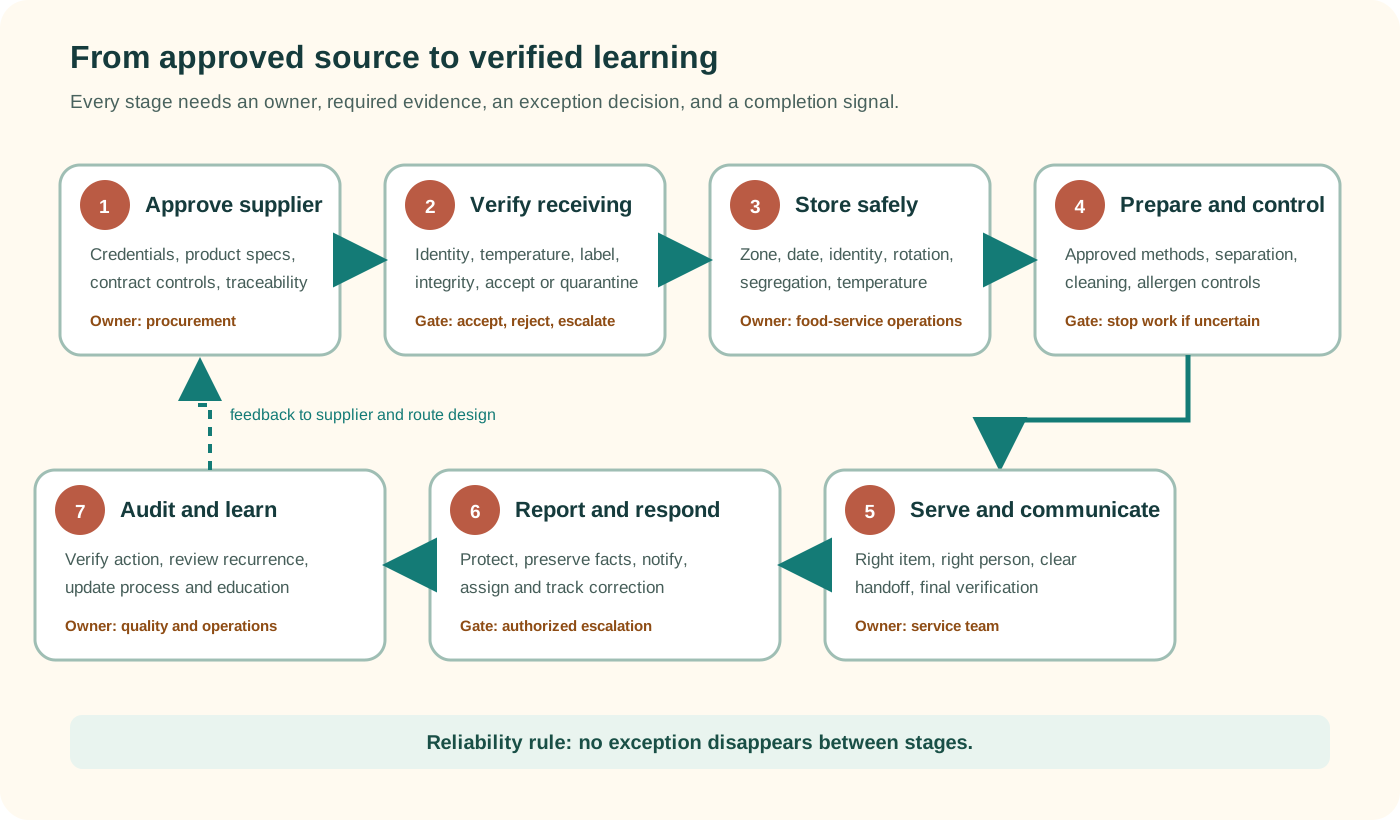
Healthcare organizations may prepare food for inpatients, employees, visitors, ambulatory programs, behavioral-health settings, residential sites, mobile operations, community events, and contracted services. Different operating models do not remove the need for a shared control structure. Leaders should be able to see what enters the system, what condition it is in, who accepts it, where it goes, which controls apply, and what happens when a deviation appears.
Supplier approval and receiving
Procurement should connect contract language to observable receiving controls. The operational team needs current supplier status, product specifications, delivery conditions, traceability information, and a rejection or quarantine path. Hospital food-service managers have emphasized temperature, label completeness, transport conditions, and traceability at receiving.13 Those requirements should be translated into a short workflow that receiving staff can use during a busy delivery, not left only in a policy binder.
Variation in regulatory monitoring of unapproved or unregulated foods suggests another governance need. A U.S. agency survey found differences in monitoring, documentation, staff education, and enforcement approaches.3 The study had a low response rate and did not measure illness. Still, it supports a practical question for organizations operating across jurisdictions: does every location use the same approved-source standard, documentation rule, and escalation route?
Storage, preparation, and service
Once a product is accepted, responsibility must stay visible. Storage zones, date and identity controls, allergen segregation, first-in-first-out methods, temperature monitoring, cleaning, equipment availability, and authorized preparation methods should connect to named roles. Service then adds another handoff. Tray assembly, unit delivery, retail service, catering, mobile operations, and community distribution each need a defined completion signal and a way to hold or recall an item when information changes.
The route should include decision rights. Who can reject a delivery? Who can remove equipment from service? Who decides whether an unlabeled product can be used? Who receives an allergy concern? Who contacts public health or a regulator? Who preserves documentation after a suspected event? Clear answers reduce hesitation when time matters.

Figure 2. Proposed institutional food-safety reliability route
Learning in the workflow
Design education for use, language, literacy, and reinforcement.
A completion certificate is not a control. Education becomes operational when it helps a person make the right decision in the real setting, with the available tools, during the actual work. The design should begin with the highest-consequence decisions and the errors already visible in local observations, inspection findings, incident reports, near misses, questions, and corrective actions.
Match the format to the task
Use demonstration and return demonstration for observable skills such as thermometer use, handwashing technique, cleaning sequence, separation, and receiving inspection. Use short scenarios for judgment, such as an unlabeled container, a late delivery, a temperature deviation, a product substitution, or an allergy question. Use job aids at the point of work for steps that are infrequent or easily confused.
Evidence from U.S. retail food service supports recency, practice, supervisor reinforcement, and visual reminders as important parts of knowledge retention.5 A 2026 training study also suggests that focused instruction can improve knowledge quickly, although the small uncontrolled design does not show long-term behavior.1 Leaders should therefore pair instruction with direct observation and follow-up.
Build for language access
Language is a safety-system feature. In a study of mobile food units, owners described language and cross-county mobility as barriers to inspection completion, leading the authors to recommend multilingual resources and intercounty coordination.6 In independently owned restaurants, food-allergy education was often absent, and some training was available only in English.15 Organizations should identify the languages used by the workforce and the communities served, then test whether translated materials are understandable and usable.
Use digital tools carefully
Digital education can extend access, but usability determines whether it helps. A mixed-method evaluation of a food-safety application among 419 young adults reported strong perceived usefulness and intended use, along with requests for multilingual access, clearer icons, mobile reliability, accessibility, and shorter evaluation steps.9 The findings concern usability and intention, not verified safety outcomes.
A small bilingual virtual program reported improved knowledge and self-reported practice among 60 low-income home food handlers after two sessions and take-home activities.10 It offers a promising format for engagement, but the design does not establish durable behavior. For healthcare organizations, digital learning should supplement, not replace, observation of high-risk work.
Close the reinforcement loop
Supervisors need protected time and a simple method for observation, coaching, and escalation. A person who cannot answer a question safely should know exactly where to go. A leader who sees repeat confusion should be able to update the job aid or process. Training content should change when equipment, products, menus, vendors, policies, language needs, regulations, or incident patterns change.
The strongest education measure is not the percentage of people who clicked through a module. It is the percentage of defined critical behaviors demonstrated correctly, plus the time required to correct a high-risk exception.

Higher-risk environments
Protect patients and communicate allergens through a closed-loop route.
Healthcare food service operates in environments where the consequences of a failure may be amplified by age, illness, treatment, disability, or dependence on others for meal selection and delivery. That reality calls for precision without making unsupported claims about risk in a specific organization. Executives should require the local team to define which populations, products, settings, and decisions need enhanced controls under applicable policy and professional guidance.
Hospital research points to a broad control set. The psychiatric-hospital assessment found knowledge and control gaps that included temperature management, formal education, supervision, internal systems, and certification status.2 The hospital-kitchen decision framework ranked training, environmental cleanliness, and meal quality among important criteria, while identifying a set of high-importance items that were not performing well in the study setting.11 Public-hospital food-service managers described receiving, infrastructure, protocols, supplier education, and policy as connected parts of safety.13
Food allergy management adds a communication pathway. In a survey of 103 independently owned restaurants, 71 reported that they accommodated food allergies, while written procedures and manager education were inconsistent.15 The restaurant setting differs from healthcare, and the study used self-report. The executive lesson is still important: willingness to accommodate does not substitute for a written, rehearsed process.
Receive
Capture the concern in an approved field and confirm that the responsible service received it.
Clarify
Route questions to a qualified professional and distinguish verified information from assumptions.
Prepare
Apply the organization’s approved ingredient, substitution, segregation, equipment, and cleaning controls.
Handoff
Keep identity and instructions attached as responsibility moves between preparation, transport, and service.
Verify
Use a defined final check before service and document the required completion signal.
Escalate
Make uncertainty, deviation, and suspected reaction pathways immediate and unmistakable.
Work-system conditions
Remove the conditions that make safe behavior hard.
When leaders respond to every deviation with retraining, they may miss the conditions that produced it. Food-safety behavior occurs inside a work system. Staff may be balancing volume, time pressure, equipment constraints, inconsistent supplies, unclear instructions, language differences, cross-site variation, and supervision gaps. A fair review distinguishes a knowledge need from a design failure.
Mixed-method evidence supports that distinction. Food handlers have described missing training, limited risk perception, inconsistent enforcement, unavailable guidelines, and inadequate equipment or facilities as barriers.4 Street vendors interviewed after an education and equipment intervention described improved capability and motivation, but infrastructure, regulation, finances, and cultural expectations continued to constrain practice.14 The qualitative sample was small and context specific, so the factors should be used as prompts for local investigation rather than assumed causes.
Education, experience, and knowledge were associated with better practice in the meat-handler study, but the cross-sectional design cannot establish cause.8 The U.S. retail study similarly linked stronger results to training format, recency, supervisor support, equipment, practice, and reminders.5 Together, these studies support an executive approach that improves both people’s capability and the environment in which they work.
Figure 3. Qualitative fishbone for an unsafe-food event
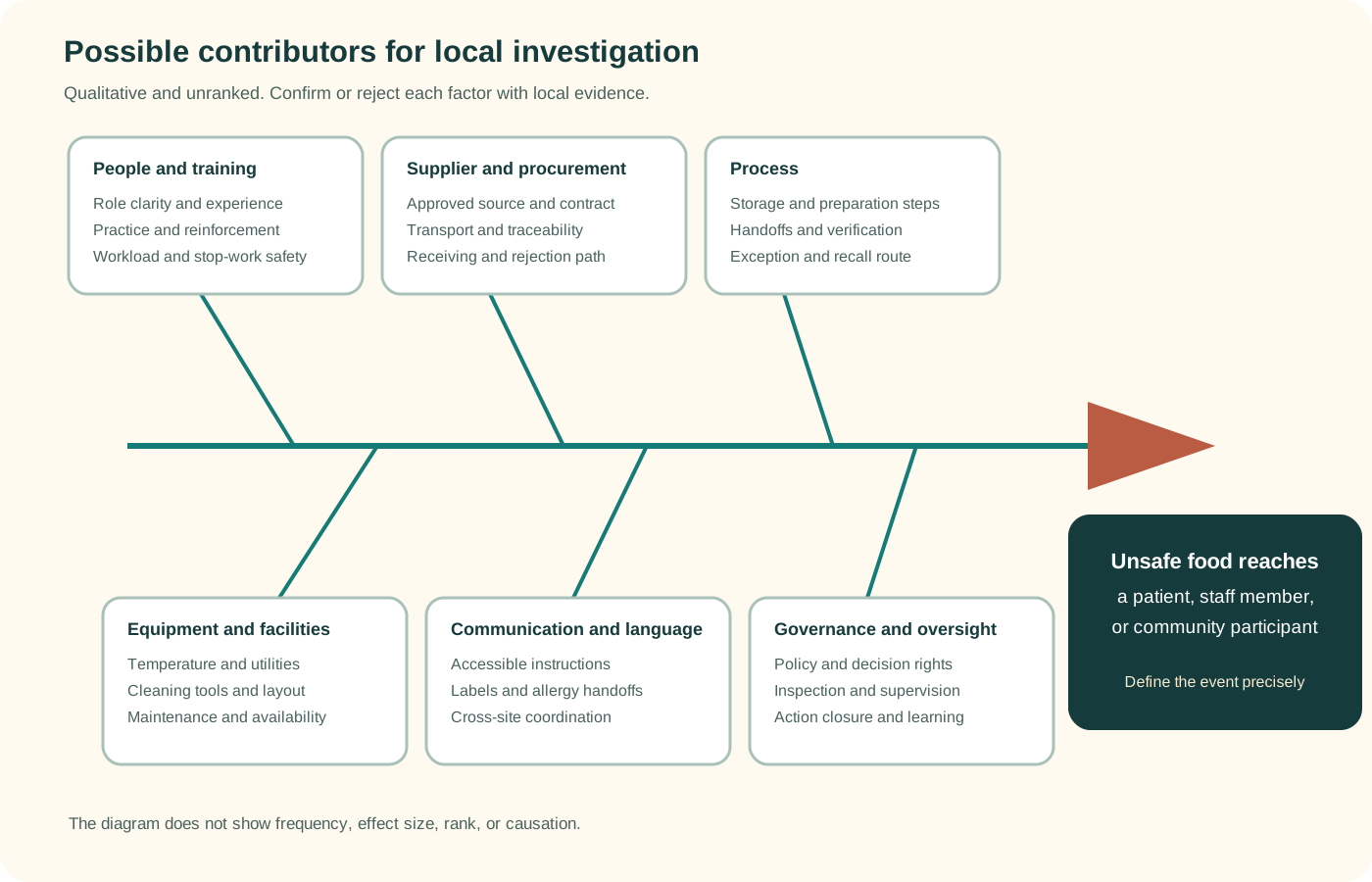
Use the fishbone in a learning review
- Define the event narrowly. State what reached whom, where, and when. Separate facts from assumptions.
- Invite the people closest to the work. Include food service, receiving, procurement, facilities, quality, infection or public health partners, and affected service representatives.
- Test each branch. Look for observable evidence. Do not rank a category because it is easy to blame.
- Choose controls at the right level. Fix equipment, policy, staffing, language, supply, or workflow defects when those conditions are the source.
- Verify the correction. Define an owner, due date, effectiveness check, and escalation if the action does not hold.
Governance
Run food safety as an operating system.
No single department controls the complete route. Food and nutrition services may operate preparation and service, but procurement qualifies suppliers, facilities maintains equipment and utilities, quality supports measurement and improvement, infection prevention or public health teams support response, education teams support learning design, and community partners may receive or distribute food beyond the campus. Executive sponsorship gives these contributors one forum for decisions that cross departmental boundaries.
The operating system should be small enough to use and strong enough to govern. It needs a named sponsor, a process owner, defined participants, an agreed source of truth, a review cadence, decision rights, and an escalation path. It should also connect oversight to the realities of different sites. Research on public hospitals, hospital kitchens, regulatory agencies, and military facilities shows that training, inspection, policy, infrastructure, internal controls, and oversight can vary even when formal expectations exist.2,3,11,12
Figure 4. Proposed food-safety operating system
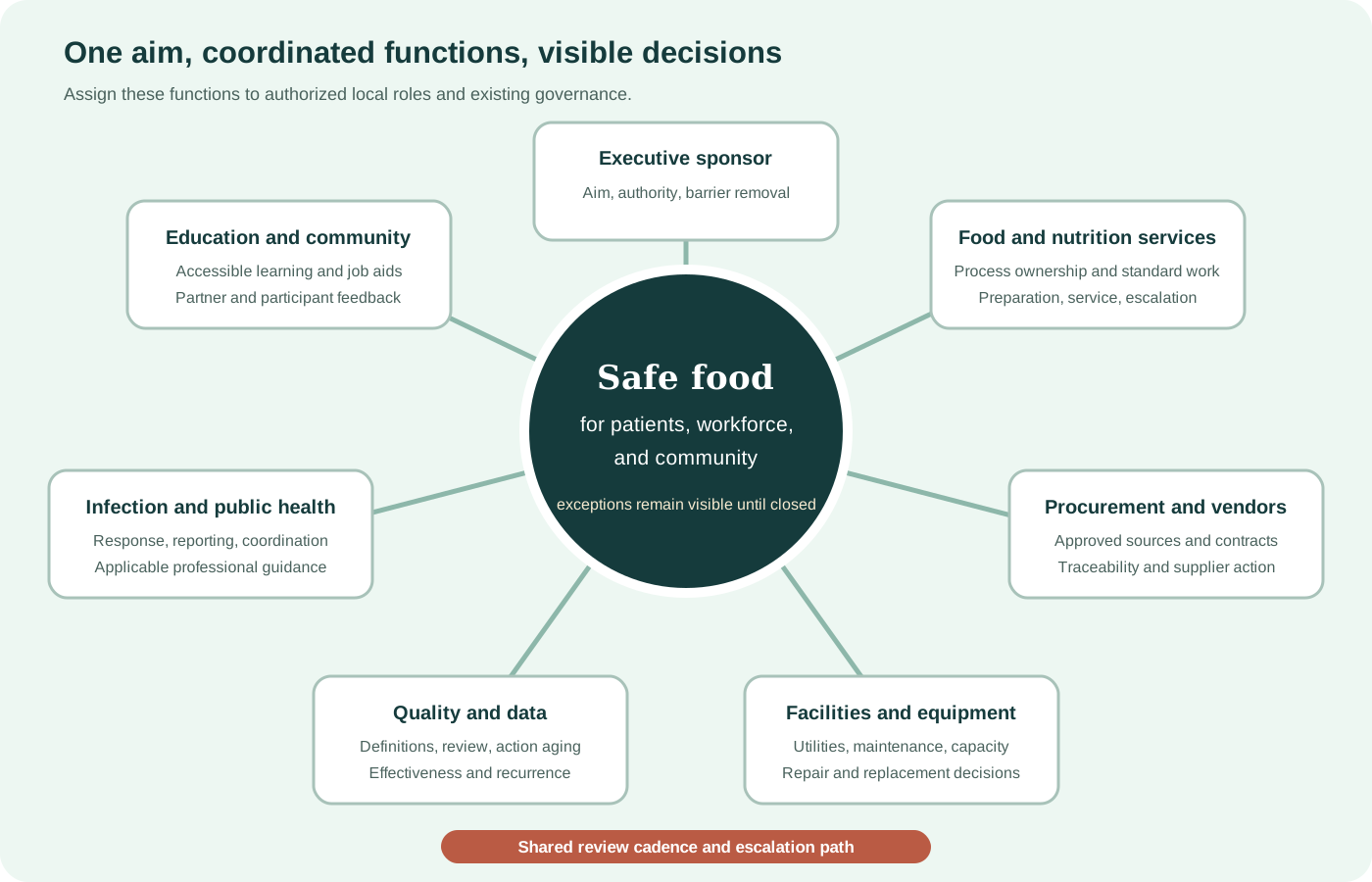
Executive sponsor
Sets the reliability aim, resolves cross-functional barriers, confirms decision rights, and keeps unresolved high-risk exceptions visible.
Operational owner
Maintains the end-to-end map, standard work, data definitions, training triggers, and corrective-action log.
Frontline partners
Test whether controls work in real conditions, surface weak signals, participate in learning reviews, and verify redesigned work.
Oversight forum
Reviews exceptions, aging actions, site variation, supplier or equipment concerns, and evidence that corrective action was effective.
Measurement
Measure completion, not participation.
A September campaign can produce attendance counts, downloads, posters, and social engagement. Those measures describe activity. They do not show whether a delivery was accepted safely, an employee demonstrated a critical skill, an allergen handoff remained intact, a deviation was corrected, or a recurrence was prevented.
Build the scorecard around the route selected for improvement. Define every numerator, denominator, exclusion, source, owner, and review cadence before displaying a percentage. Segment results only when the sample is large enough and the comparison is ethically and operationally appropriate. Annotate missing data, process changes, and small denominators. Do not convert the published studies in this article into local targets because their settings, populations, definitions, and methods differ.
Figure 5. Structured executive food-safety scorecard
| Signal | Definition | Numerator and denominator | Owner | Cadence | Escalation and limitation |
|---|---|---|---|---|---|
| Receiving control completion | Eligible deliveries with every required receiving check documented | Complete eligible delivery records / all eligible deliveries reviewed | Receiving or food-service leader | Weekly, with daily exception review | Escalate high-risk deviations immediately. Documentation does not prove the check was accurate. |
| Critical skill demonstration | Staff who correctly demonstrate the locally defined critical skill | Staff meeting all observation criteria / staff due for observation | Operational educator and supervisor | After education, then at a defined follow-up | Observe again after correction. Observer consistency must be tested. |
| Temperature exception closure | Recorded temperature deviations closed within the approved interval | Deviations with verified closure on time / all recorded deviations | Food-service operations | Daily exception review, monthly trend | Escalate any potentially unsafe product per policy. Results depend on complete detection and recording. |
| Allergen handoff reliability | Eligible orders with all required allergy handoff steps complete | Eligible orders with verified complete handoff / all eligible orders sampled | Clinical nutrition and food service | Weekly sample, immediate event review | Escalate ambiguity before service. Sampling may miss rare failures. |
| Corrective-action aging | Open food-safety actions beyond the approved due date | Count, with age bands and risk level | Quality and operational owner | Biweekly | Escalate overdue high-risk actions. Counts require consistent closure criteria. |
| Repeat exception | Verified recurrence of the same defined exception after action | Repeat events / closed actions eligible for effectiveness review | Quality and process owner | Monthly or quarterly | Reopen the analysis when recurrence is verified. Classification drift can distort trends. |
Coordination and learning
Connect education to incident learning and community coordination.
Education should change when the system learns. A complaint, near miss, suspected event, inspection finding, equipment failure, supplier concern, or recurring question can reveal that current instructions are incomplete or impractical. The response route should preserve facts, protect the people served, notify authorized internal and external partners, and keep corrective action open until effectiveness is checked.
Organizations with multiple campuses, contracted services, mobile units, or community programs should make jurisdiction and coordination responsibilities explicit. The mobile-food-unit study found that cross-county mobility and language barriers could interfere with required inspection completion.6 Regulatory agencies also reported variable approaches to monitoring and documenting unapproved or unregulated foods.3 These studies do not establish a national failure rate, but they support a local readiness check: does the organization know which authority, contract owner, or public-health partner receives each type of concern?
Community education tools should also be evaluated for accessibility and use. The food-safety application study showed strong interest among participants while identifying practical requirements for language, icon clarity, mobile performance, and accessibility.9 Leaders should ask community members to test materials before broad release, then monitor questions and drop-off points rather than assuming that distribution equals understanding.
Minimum incident-learning loop
- Protect people and stabilize the immediate situation.
- Preserve product, process, supplier, temperature, and communication information required by policy.
- Notify the authorized operational, clinical, regulatory, public-health, legal, risk, and communication roles as applicable.
- Define the event and contributing conditions without premature blame.
- Assign corrective actions with due dates and effectiveness checks.
- Update training, job aids, contracts, equipment, or workflow when the evidence supports a change.
Questions for community-facing work
- Is the first action understandable in the languages people use?
- Does the guidance work on a mobile phone and with assistive technology?
- Can participants distinguish education from individualized medical advice?
- Is there a real receiving owner for questions or concerns?
- Are partner names, contact details, and operating hours current?
- Can the organization see where people become confused or leave the route?
Implementation
A 90-day executive agenda
The schedule below is a starting framework. It assumes the organization chooses one bounded route and uses existing governance. A serious hazard, regulatory requirement, or active incident must be handled immediately under applicable policy and authority, not deferred to this timeline.
Figure 6. Proposed 90-day implementation timeline
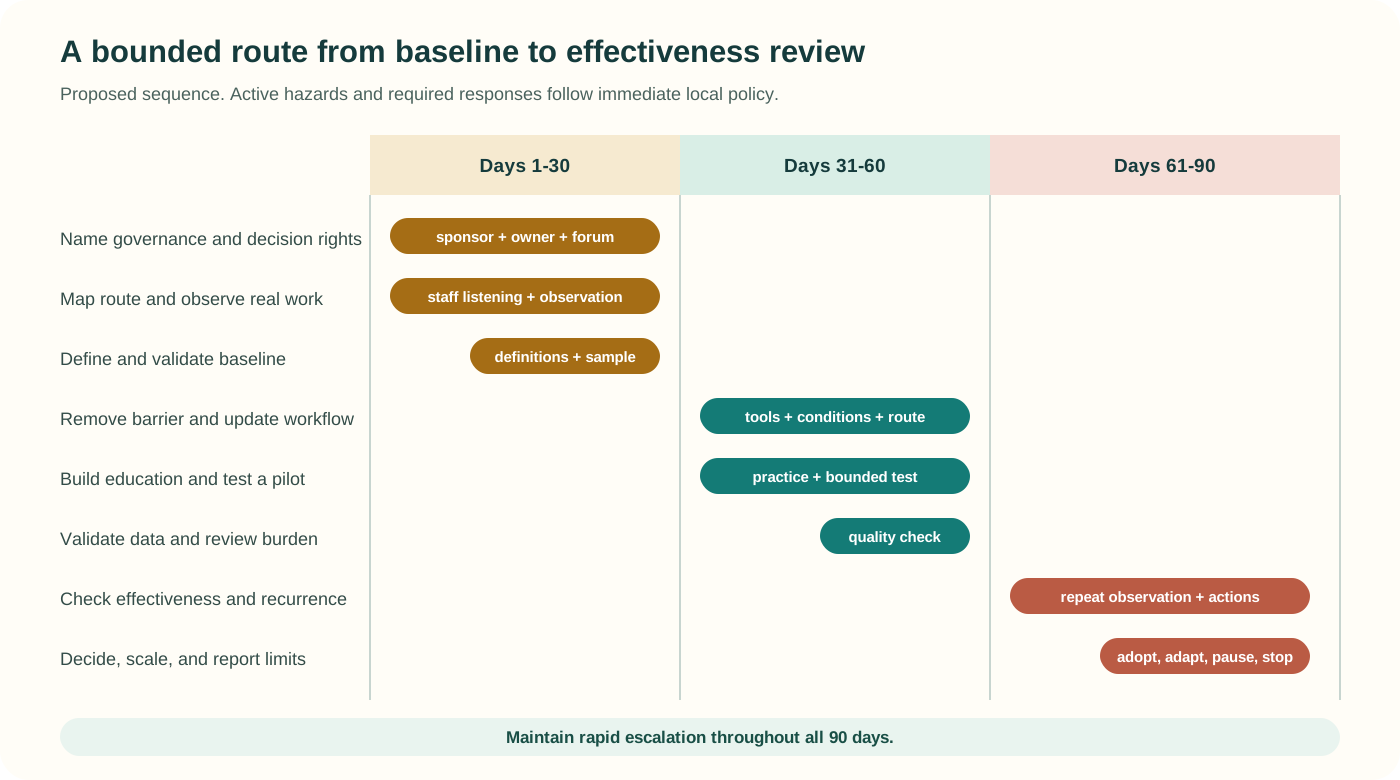
Days 1-30
Define and observe
- Name the sponsor, process owner, review forum, and decision rights.
- Select one route and define its start, finish, sites, populations, and exclusions.
- Observe real work across shifts and ask staff where the safe path becomes difficult.
- Validate a small baseline using explicit definitions.
- Choose one high-consequence barrier for redesign.
Days 31-60
Redesign and test
- Update the workflow, tools, language, equipment, or decision support that caused the barrier.
- Build role-specific education with practice and an observable completion criterion.
- Pilot in a bounded setting and provide rapid escalation.
- Review misses, near misses, burden, and unintended consequences with the users.
- Correct the design before expanding it.
Days 61-90
Verify and decide
- Repeat observation with the same operational definitions.
- Review open actions, repeat exceptions, data quality, and site variation.
- Decide whether to adopt, adapt, pause, or stop the change.
- Assign the next review date and update education or policy as required.
- Report results with limitations and no claims beyond the data.
Leadership close
Make the safe path easier to follow and harder to lose.
Food Safety Education Month can be more than a reminder. It can be a disciplined checkpoint for an operating system that reaches suppliers, workers, patients, visitors, and community partners. The executive contribution is to connect the pieces: accountable ownership, accessible education, workable conditions, clear handoffs, visible exceptions, and verified corrective action.
The evidence in this review does not support a universal benchmark or a claim that one intervention prevents illness in every setting. It does support a practical direction. Training performs inside a system. Knowledge and practice are related but not interchangeable. Infrastructure, supervision, equipment, language, regulation, supplier controls, and feedback affect whether safe work is possible. Leaders can use those findings to ask better local questions and require evidence that the route works.
Related reading
Continue the executive conversation.
Important: This executive brief is educational and does not replace applicable law, regulatory direction, organizational policy, food-safety plans, manufacturer instructions, or individualized advice from qualified clinical, nutrition, infection-prevention, public-health, environmental-health, or food-safety professionals.
Evidence base
Scholarly references
- Alawode, O. W., & Tabit, F. T. (2026). The conceptualisation and evaluation of a food safety training programme for street food vendors. African Journal of Food, Agriculture, Nutrition & Development, 26(6), 30009-30027. https://doi.org/10.18697/ajfand.153.27045
- Getyeza, A., Theron, M., & Swart, R. (2026). Assessment of food safety in public psychiatric hospitals in the Eastern Cape province, South Africa. South African Journal of Clinical Nutrition, 39(2), 74-81. https://doi.org/10.1080/16070658.2025.2603821
- Warner, C., & Kintziger, K. W. (2026). Regulatory monitoring of unapproved/unregulated foods in the United States. Journal of Environmental Health, 88(10), 16-21.
- Wogayehu, B. T. (2026). Food safety practice and associated factors among food handlers working in food and drinking establishments in Debre Birhan City, North Eastern Ethiopia: A convergent parallel mixed-method study. PLoS ONE, 21(4), e0346700. https://doi.org/10.1371/journal.pone.0346700
- Labbo, R., Unkart, S. D., DeVito, R., Gill, G., Randhawa, M., & Dyjack, D. (2026). Food handler knowledge retention and training effectiveness in the U.S. retail food service: A comprehensive analysis of 2,700 workers. Journal of Environmental Health, 88(8), 8-15. https://doi.org/10.70387/001c.160019
- Cruz, S. A., Blackmon, L., & Bailey, E. S. (2026). Mobile food unit operations and regulatory oversight in Johnston County, North Carolina: A cross-sectional evaluation. Journal of Environmental Health, 88(8), 16-21. https://doi.org/10.70387/001c.160020
- Roy, A., Mukherjee, J., Mohapatra, I., & Das, S. C. (2026). Factors associated with food safety practices among food-handlers: A facility-based cross-sectional study. Indian Journal of Community Health, 38(2), 417-422. https://doi.org/10.47203/IJCH.2026.v38i02.035
- Biftu, T. M., Negassa, B., & Soboksa, N. E. (2026). Food safety knowledge, practices, and determinants among meat handlers in abattoirs and retail meat shops in the Gedeo Zone, Southern Ethiopia. Discover Public Health, 23(1), 1-14. https://doi.org/10.1186/s12982-026-01404-4
- Seow, W.-L., Lee, K. W., Haris, R., Md Ariffin, U. K., Ng, S. W., Lim, S. Y., Mohd Saudi, M., Mohamad Gobil, A. R., Mohamed, N. A., Mohd Zulkefli, N. A., Tengku Jamaluddin, T. Z. M., Norowi, N. M., & Amin-Nordin, S. (2025). FOODAlyzer usability: Advances in food safety education. PLoS ONE, 20(10), e0333511. https://doi.org/10.1371/journal.pone.0333511
- Chen, H., Archila, J., & Feng, Y. (2025). Bridging the food safety gaps for low-income families: An evaluation of virtual dialogue-based food safety education program. Journal of Nutrition Education and Behavior, 57(8), S31. https://doi.org/10.1016/j.jneb.2025.05.069
- Hsu, T.-K., & Kuo, C.-Y. (2025). Using CFAHP and IPGA method to establish the importance criteria on the HACCP system for hospital kitchens in Taiwan. International Journal of Organizational Innovation, 17(4), 30-42.
- Smith, S., Arnold, N. L., Knechtges, P., & Richards, S. L. (2025). Relationship between employee food safety training and food safety risk factors at Fort Liberty Military Installation in North Carolina. Journal of Environmental Health, 87(6), 20-26. https://doi.org/10.70387/001c.129538
- Mavhutha, L., Ncube, L. J., & Kleynhans, I. C. (2025). Food service managers' views on food safety systems in Gauteng public hospitals. Health SA Gesondheid, 30, 1-10. https://doi.org/10.4102/hsag.v30i0.3097
- Madjdian, D. S., Dankwah Badu, V., Ilboudo, G., Lallogo, V. R., Dione, M., van Asseldonk, M., Knight-Jones, T. J. D., & de Vet, E. (2024). Fast food over safe food? A qualitative evaluation of a food safety training intervention for street vendors applying the COM-B model in Ouagadougou, Burkina Faso. PLoS ONE, 19(11), e0313635. https://doi.org/10.1371/journal.pone.0313635
- Placa, N. M., & Naig, A. (2024). Food allergy policies and procedures in independently owned restaurants in the Orlando Metropolitan Area, Florida. Journal of Environmental Health, 87(3), 8-14.