

September 2026 · Executive Brief
Healthy Aging® Month 2026: Build a More Usable and Accountable Route
Use the 2026 theme, “Curiosity Has No Age Limit,” to examine whether older adults can state what matters, reach age-friendly support, choose an accessible mode of care, and see identified needs move to verified follow-through.
Leadership signal
Make healthy aging an operating aim, not an age-based campaign.
September Is Healthy Aging® Month uses “Curiosity Has No Age Limit” as its official 2026 theme. That message can support learning, connection, movement, and engagement, but healthcare executives should resist turning it into a generic instruction for individuals to age well. People make health decisions inside systems. Access, affordability, transportation, language, technology, housing, social connection, clinical complexity, caregiver capacity, and the design of care all shape what is possible.
A useful executive definition begins with functional ability and what matters to the person. It asks whether care protects autonomy, supports safe movement, manages medication burden, recognizes changes in cognition or mood, reduces avoidable fragmentation, and connects clinical work with community resources. It also recognizes that older adults are not a single risk group. They differ in goals, health, culture, resources, experience, confidence, disability, geography, and preferred ways of communicating.
Recent scholarship supports an integrated approach. A 2026 scoping review identified 181 integrated-care studies across 26 countries. Most interventions were multidisciplinary, and common components included care coordination or personalized planning, physical activity, education, and psychosocial support.1 The review also found that implementation outcomes such as acceptability, feasibility, and fidelity were measured far less often than patient outcomes. That gap matters to executives because a promising intervention cannot improve care if the organization does not know whether people can use it, teams deliver it as intended, or adaptation has preserved its essential functions.
A separate 2026 systematic review and meta-analysis of integrated care for community-dwelling frail older adults found positive effects on frailty and functional ability, but not consistent benefits across hospitalization, nursing home admission, quality of life, mortality, or other outcomes. The review also reported limited evidence on cost-effectiveness, caregivers, professionals, and systematic process evaluation.2 The responsible leadership interpretation is not that one model solves every problem. It is that integrated care needs clear aims, realistic expectations, strong implementation measurement, and attention to the people and settings missing from the evidence.
Healthy Aging® Month should therefore produce a visible operating result. Select one route in which an identified need is frequently delayed, dropped, or difficult to navigate. Map the route with older adults, care partners, frontline teams, and receiving partners. Define one change that makes the route more usable. Name an executive sponsor and an operational owner. Establish a small set of measures that show reach, action, experience, equity, and unresolved exceptions. Then keep the work active after September.
Start with five questions
- How does the organization learn what matters to older adults and act on that information?
- Which needs become referrals without a receiving owner or completion signal?
- Where do mobility, medication, cognitive, social, or digital barriers change the route?
- Can people choose telephone, in-person, video, written, and caregiver-supported options when appropriate?
- Which results would reveal unequal reach or follow-through?
Evidence to action
The evidence supports coordinated components and disciplined implementation.
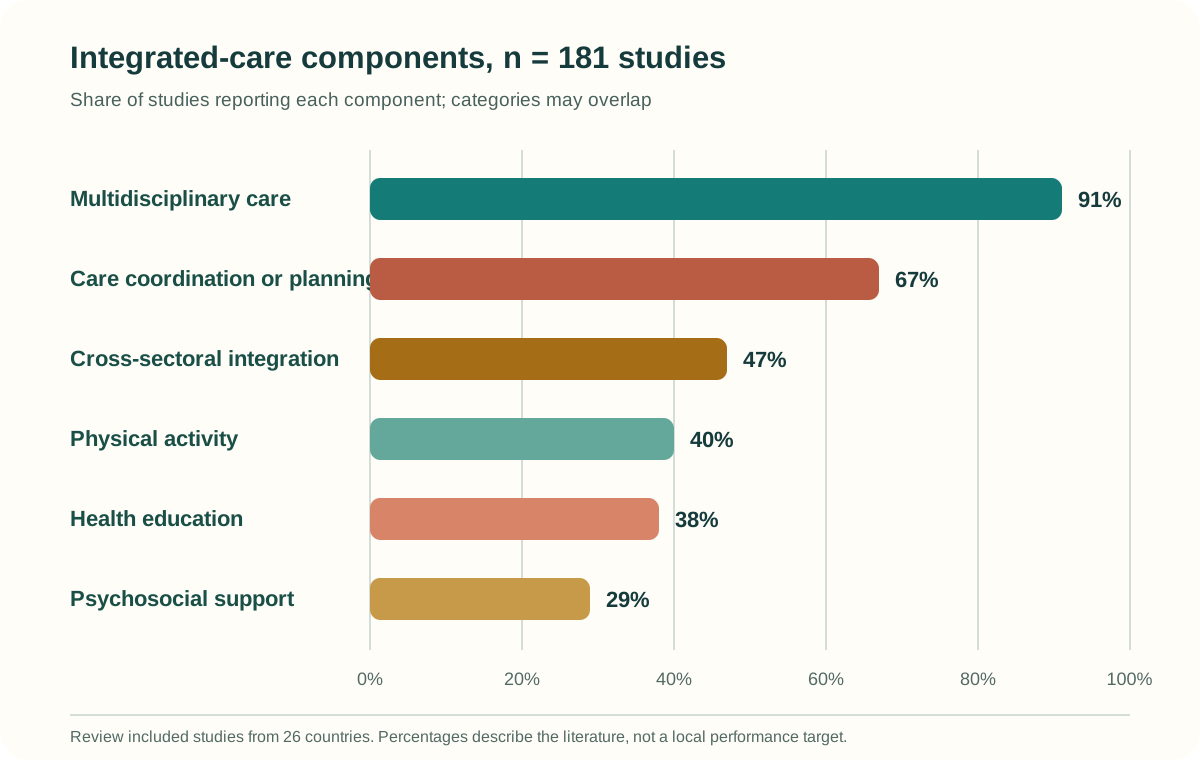
The integrated-care literature is broad, but it does not justify a single universal program. The 181-study scoping review found that 91% of interventions were multidisciplinary and 47% involved cross-sectoral integration. Care coordination or personalized care planning appeared in 67% of studies, physical activity in 40%, health education in 38%, and psychosocial support in 29%. Eighty-eight percent of studies reported positive outcomes, most often at the patient level, yet acceptability, feasibility, and fidelity were inconsistently assessed.1 These categories overlap and the review included varied interventions, settings, outcomes, and countries. Leaders should use the pattern to design a complete operating model, not as a recipe or benchmark.
Implementation research adds a practical warning. Interviews with 28 integrated-care deliverers and 16 recipients identified 56 determinants, including insufficient workforce capacity, complexity, lower priority compared with disease treatment, and beliefs about capability.3 A scalability assessment of an integrated program for older adults with diabetes and multiple chronic conditions supported phased horizontal spread, local adaptation, continuing evaluation, and accumulation of evidence. It also identified the need for funding, workforce capacity, diverse-setting evidence, and tailoring for different ethnocultural groups and levels of need.4
Figure 1. Common components in integrated care for older adults
| Component | Studies reporting component | Denominator | Important limitation |
|---|---|---|---|
| Multidisciplinary care | 91% | 181 studies | Overlapping categories across heterogeneous interventions |
| Care coordination or personalized planning | 67% | 181 studies | Presence does not establish effectiveness |
| Cross-sectoral integration | 47% | 181 studies | Implementation varied by setting and country |
| Physical activity | 40% | 181 studies | Intervention type and dose varied |
| Health education | 38% | 181 studies | Content and delivery were not uniform |
| Psychosocial support | 29% | 181 studies | Measurement of implementation was limited |
End-to-end control
Move every identified need to an accepted owner and a visible closure signal.
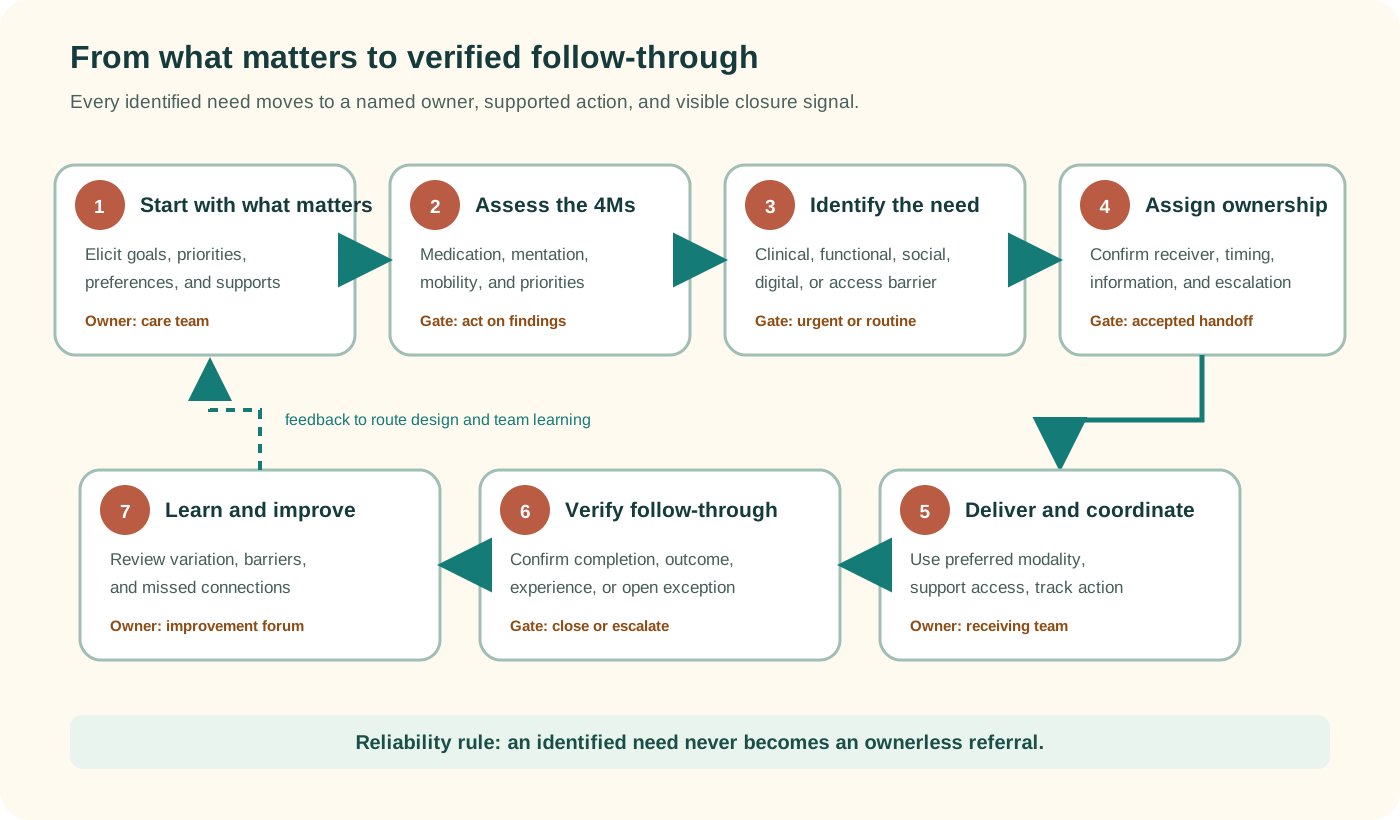
Many organizations screen for medication concerns, falls, cognitive change, mood, food insecurity, transportation, social isolation, or other needs. Screening can create a false sense of completion if a positive result only produces an instruction, phone number, or referral. A reliable route answers five questions: who receives the need, what information travels with it, when receipt is acknowledged, how an exception escalates, and what evidence shows completion or continuing risk.
Begin with what matters
The first step is not a service menu. It is a structured conversation about the person’s goals, priorities, tradeoffs, preferred communication, and available support. Age-Friendly Health Systems organizes care around What Matters, Medication, Mentation, and Mobility. A five-year Veterans Affairs implementation used a national steering committee, standardized note template, dashboard, action communities, training, and coaching. By 2025, 455 care settings had earned initial recognition across 138 of 139 parent facilities, although the study called for further evaluation of clinical impact and optimal implementation strategies.5
What matters should shape the response to the other Ms. A mobility plan that ignores a person’s living environment may be unusable. A medication change that ignores goals, cognition, caregiver support, or access may not hold. A digital appointment that conflicts with a person’s preference or ability can become another barrier. The route must preserve the person’s priorities as responsibility moves between teams and settings.
Require an accepted handoff
A referral is not complete when it is sent. The receiving role should acknowledge responsibility or return a defined exception. If the service is unavailable, unaffordable, inaccessible, or outside eligibility rules, the exception remains visible to an authorized owner. This prevents the sending team from assuming that another department or community organization has taken over.
The 2026 multisite implementation study offers practical design signals. Five clinical sites across three health systems used Plan-Do-Study-Act cycles, weekly meetings, chart review, and local adaptation. Leadership support, EHR use, and staff education facilitated implementation, while workflow variation and limited EHR capability created difficulty. Across reviewed charts, 49% of patients were assessed on all 4Ms and 33% had action documented for all 4Ms.6 Those figures come from one collaborative and are not a benchmark. They illustrate why organizations should distinguish assessment from action.

Figure 2. Proposed age-friendly care route
Age-friendly practice
Standardize the essential questions while adapting the work locally.
A framework becomes useful when teams can perform it during real work. Standardization should protect the essential functions: elicit what matters, assess medication, mentation, and mobility, act on findings, and verify the next step. Local adaptation should address who performs each action, where it is documented, how information is shared, which tools are available, and what happens when a need crosses a departmental or organizational boundary.
What matters
Capture priorities in a place that the next authorized team can find and use. Confirm when preferences change.
Medication
Connect medication review to a prescriber, pharmacist, goals, adverse-effect concerns, and an approved monitoring plan.
Mentation
Define the locally approved assessment, escalation, caregiver role, and follow-up route for cognitive or mood concerns.
Mobility
Assess function and environmental fit, then connect the person to safe, usable support rather than a generic instruction.
Handoff
Require the receiving role to accept, redirect, or escalate the need within a defined interval.
Verification
Measure whether action occurred and whether the route worked for the person, not only whether a field was completed.
A three-month nursing-home pilot involved 35 older patients and used chart review, staff education, EHR changes, shared decision-making, and goal-concordant care. Documentation of all 4Ms improved. Twelve patients completed a post-implementation survey, with an 83% top score and a mean of 3.94 out of 4 on the shared decision-making measure.7 The small single-site sample and limited post-implementation survey mean the result should not be generalized. Its value is operational: teams found missing documentation, introduced approved tools, embedded them into work, and assessed patient perception.
The larger VA experience and multisite collaborative similarly used infrastructure, not slogans: leadership, steering groups, standardized documentation, dashboards, coaching, weekly team meetings, and iterative testing.5,6 Executives should ask whether current governance supplies these conditions. If not, adding another required screen may increase documentation without increasing reliable action.
Access and connection
Offer digital support without making digital use the price of access.
Digital tools can reduce travel, extend specialty access, support monitoring, and maintain connection. They can also create new work for patients and care partners. Leaders should treat modality as a design choice, not a proxy for commitment. Telephone, video, in-person, written, interpreter-supported, and caregiver-supported routes should be available when clinically and operationally appropriate.
Measure offer, choice, and completion
A 2026 analysis of 2,723 device-owning adults age 65 and older from a nationally representative U.S. survey found that 31.4% used telehealth in 2024. Video and telephone-only use were each about 12%. Video use was associated with income, ability to use applications without help, and prior health-technology use. Nonusers most often cited a preference for in-person care or reported that telehealth had not been offered.8 The study was cross-sectional, relied on self-report, and excluded people without devices, so it may understate the full access problem.
An executive scorecard should therefore separate the percentage offered a modality, the percentage choosing it, the percentage successfully connecting, and the percentage completing the next step. A low video rate may reflect preference rather than failure. A high enrollment rate may hide repeated connection difficulty. Segment results by geography, language, disability, age group, insurance or payer factors, and other ethically appropriate dimensions when sample sizes support responsible interpretation.
Design support around real tasks
Support should cover device setup, password and authentication steps, accessibility settings, privacy, appointment preparation, interpreter access, caregiver participation, troubleshooting, and a clear alternative if technology fails. Training is most useful when it uses the person’s actual device and task. It should not assume that age predicts low capability. An international study of 1,314 internet users across nine countries found significant age effects, yet respondents age 50 and older reported higher self-rated eHealth literacy than younger respondents in that convenience sample.10 The result applies to internet users and should not be generalized to all older adults.
Keep alternate modes active
A 2025 systematic review of digital exclusion and equitable access in the United Kingdom used a three-domain framework: access, literacy, and assimilation. It found that digital expansion during the pandemic excluded some groups, especially people with lower socioeconomic status, while some older adults experienced improved access when barriers were addressed. The authors recommended effective in-person and telephone alternatives for people who need them.9 Context, policy, and health-system structure differ from the United States, but the operational principle travels well: digital transformation should widen choice rather than close the non-digital door.
Connect social needs to meaningful interaction
Social connection should not be reduced to sending information about a class. A 2025 meta-analysis of ten videoconference interventions with 1,034 participants found small-to-medium improvement in social support and small reductions in loneliness and depressive symptoms. Family interaction was important for loneliness, while trained-expert interaction was important for depressive symptoms.11 Effects were modest and interventions varied, so programs should be matched to the person’s goal and measured for participation, experience, and continuity.
Risk evidence supports proactive identification. A 2025 meta-analysis of 11 studies involving 103,408 older adults found that social isolation was associated with higher odds of depression. The pooled association was stronger among women, and subgroup findings also pointed to advanced age and lower education.12 These observational data do not prove that isolation causes depression in an individual. They support a route in which concern leads to qualified assessment and appropriate support, not a diagnostic assumption.

Function and medication
Protect function with realistic movement support and disciplined medication review.
Build movement into the care route
Physical activity messages become useful when people can reach an appropriate program, understand how it fits their health and goals, and continue safely. A 2026 systematic review of 18 walking studies with 1,174 participants found that walking programs, particularly structured aerobic and dual-task formats, improved mobility, strength, and executive function. Psychosocial results were smaller and more variable, and effects on depression and quality of life were limited or mixed.13 The review focused on adults age 60 and older without major comorbidities, which limits application to people with complex illness.
A separate 2026 meta-analysis of exercise for older adults with physical frailty included 14 studies and 2,719 participants. Exercise improved gait speed, timed-up-and-go performance, and five-times sit-to-stand performance in the short term. Evidence certainty was low to very low, heterogeneity was high, and data on fear of falling and fall incidence were limited.14 Leaders should avoid promising that one program prevents falls. The stronger action is to ensure that qualified teams match activity to the individual, monitor function, address environmental barriers, and review participation and safety.
Make medication review a shared, monitored process
Medication is one of the 4Ms because burden, interaction, adherence, adverse effects, and goal alignment can affect mobility, mentation, function, and quality of life. A medication list review is only the beginning. A safe route identifies the authorized prescriber and pharmacist roles, includes the person and care partner, documents the reason for any change, explains monitoring and return precautions, and verifies follow-up.
A 2026 systematic review examined 57 economic evaluations of deprescribing across community, outpatient, hospital, geriatric, nursing-home, primary-care, home, and online settings. Medication review was the most common strategy, and physicians and pharmacists were the main implementers. Forty-four studies reported cost savings, medication cost reduction, or improved cost-effectiveness, benefit, or utility. Methods and contexts varied, and some results were negative or inconclusive.15 Executives should treat economic benefit as plausible but context dependent. Local evaluation should include staff time, implementation support, monitoring, clinical outcomes, patient experience, and unintended consequences.

Work-system conditions
Investigate why follow-through fails before adding another reminder.
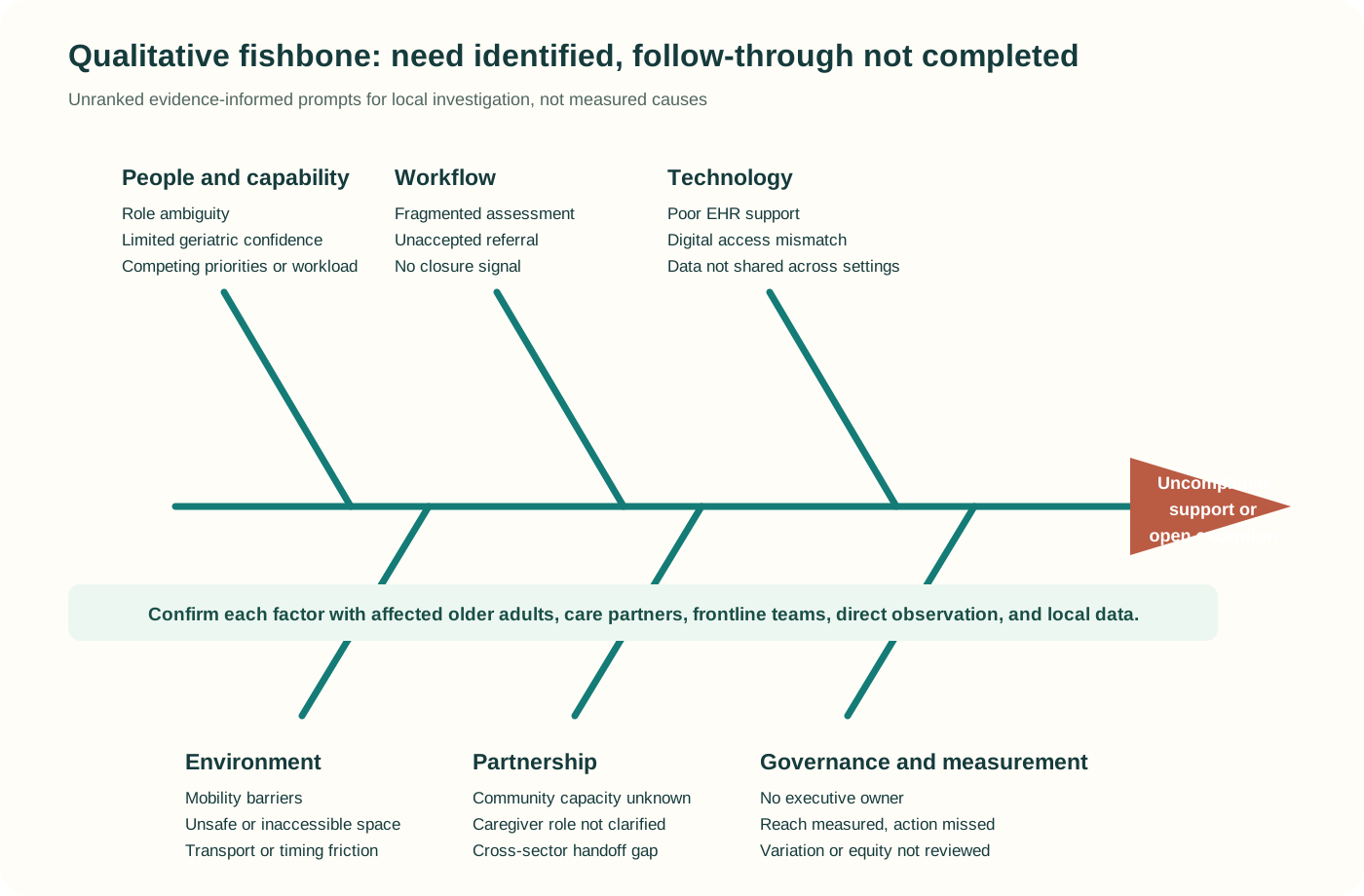
A missed connection can look like nonadherence when the route itself is difficult to use. The referral may have no receiving owner. Transportation may not align with appointment time. The portal may require a device, password, or skill the person does not have. The EHR may not carry what matters into the next setting. The community program may lack capacity. Staff may have responsibility without protected time or decision rights. A fair review distinguishes individual choice from design failure.
The qualitative integrated-care study found determinants across organizational and individual levels and from both implementers and recipients. Workforce shortages, complexity, competing priorities, and low confidence appeared among the barriers.3 The multisite Age-Friendly Health Systems work reported leadership, EHR support, and education as facilitators, with workflow variation and limited EHR capability as challenges.6 Digital-access research adds modality, literacy, socioeconomic, and geographic considerations.8,9
A fishbone can organize possible contributors, but it must not become a disguised ranking or blame exercise. The branches below contain evidence-informed prompts. They do not report frequency, effect size, or cause. Teams should confirm or reject each prompt using listening, direct observation, data, and process review in the local setting.
Figure 3. Qualitative fishbone for an age-friendly care gap
Use the fishbone in a learning review
- Define the gap narrowly. State the need, intended action, point of failure, and current consequence. Separate verified facts from assumptions.
- Include the person’s experience. Ask what the route required, which options were offered, what became difficult, and what would have made the next step usable.
- Invite sending and receiving teams. Include clinical, operational, digital, access, community, and caregiver perspectives when they are part of the route.
- Test every branch. Look for observable evidence. Do not select a factor because it is familiar or easy to blame.
- Choose controls at the right level. Correct ownership, capacity, EHR, modality, scheduling, environment, or policy when those conditions are the source.
- Verify the correction. Assign an owner, due date, effectiveness check, and escalation if the action does not hold.
Governance
Run healthy aging as a coordinated operating system.
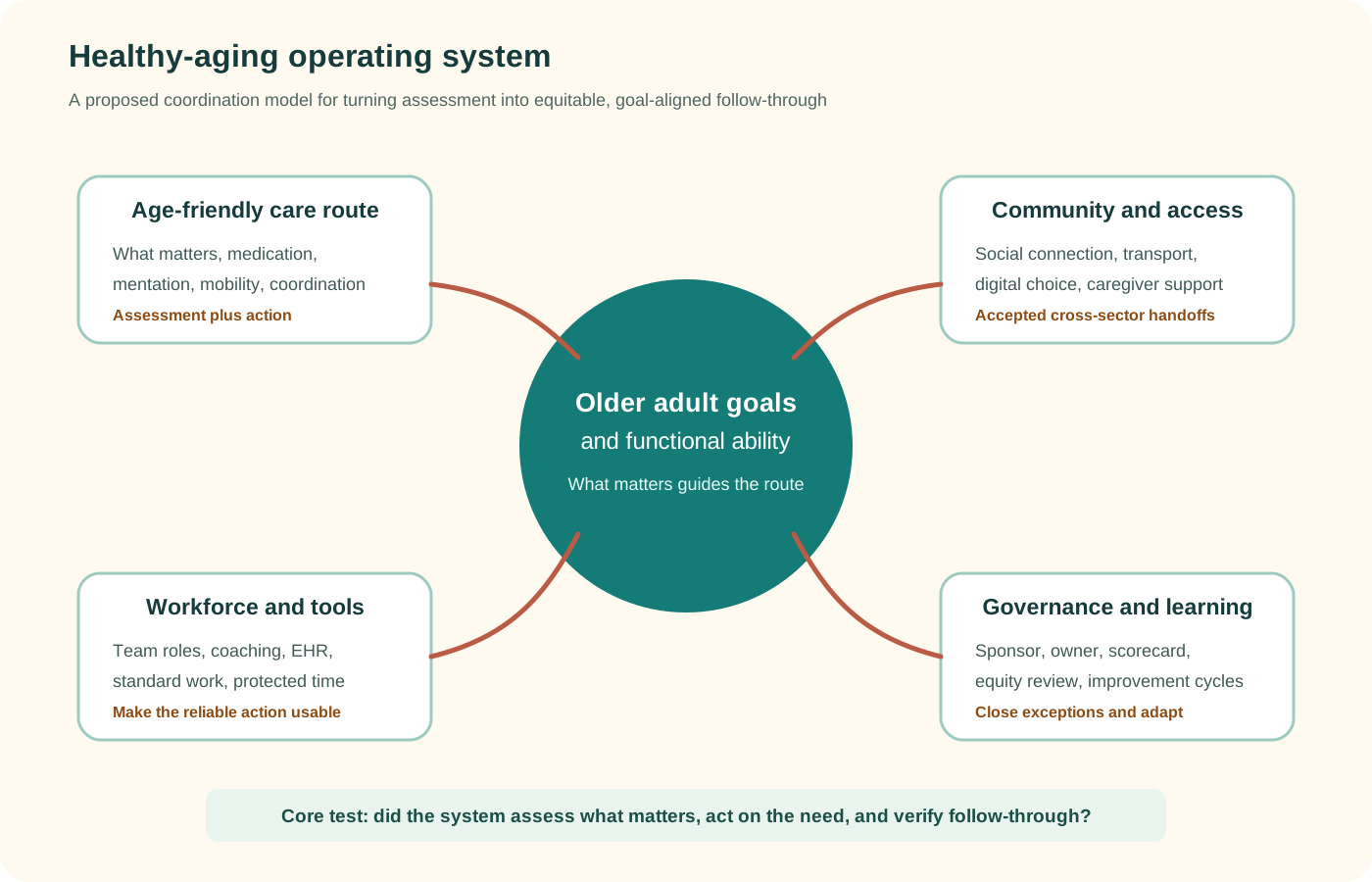
No single service controls the full route. Primary care, specialty care, pharmacy, nursing, rehabilitation, behavioral health, social work, patient access, digital support, community organizations, caregivers, and quality teams may each own part of the work. Executive governance connects them around a shared aim: assess what matters, act on identified needs, support equitable access, and verify follow-through.
The operating system should use existing governance where possible. It needs a sponsor with authority to remove cross-functional barriers, an operational owner who maintains the route, authorized clinical leadership, community and access partners, a defined source of truth, decision rights, an exception log, and a review cadence. It should not become a committee that only reviews participation counts.
Figure 4. Proposed healthy-aging operating system
Executive sponsor
Sets the aim, protects time and resources, resolves cross-functional barriers, confirms decision rights, and keeps high-risk exceptions visible.
Operational owner
Maintains the end-to-end route, data definitions, partner directory, standard work, training triggers, and action log.
Authorized clinical leaders
Define assessment, decision, escalation, monitoring, and clinical-safety requirements within scope and policy.
Access and community partners
Clarify capacity, eligibility, accepted handoffs, language and modality support, caregiver roles, and return pathways.
Frontline and patient partners
Test whether the route works in real conditions, identify friction, and verify whether changes improve experience.
Measurement and improvement
Review action after assessment, unresolved exceptions, variation, equity, experience, and whether the change held.
Measurement
Measure action and follow-through, not only reach.
Healthy Aging® Month can generate events, impressions, downloads, portal messages, screenings, and referrals. Those counts describe activity. They do not show whether the person’s priorities influenced care, whether a positive screen produced action, whether a receiving partner accepted responsibility, whether the person could use the selected modality, or whether an exception remained unresolved.
Build the scorecard around one selected route. Define the numerator, denominator, exclusion, source, owner, cadence, and escalation before publishing a percentage. Pair process data with older-adult and care-partner experience. Review variation across sites and ethically appropriate population dimensions. Annotate missing data, workflow changes, small denominators, and known limitations. The research cited in this article should not be converted into local performance targets because its settings, populations, measures, and designs differ.
Figure 5. Structured executive healthy-aging scorecard
| Signal | Definition | Numerator and denominator | Owner | Cadence | Escalation and limitation |
|---|---|---|---|---|---|
| What-matters documentation | Eligible encounters with a current priority recorded in the approved location | Eligible encounters with current documentation / all eligible encounters reviewed | Clinical operations | Monthly, with weekly improvement sample | Escalate missing workflow capability. Documentation does not prove the priority shaped care. |
| Action after positive assessment | Positive 4Ms findings with the required documented action | Positive findings with complete action / all positive findings reviewed | Authorized clinical and operational owner | Weekly exception review | Escalate urgent findings per policy. Chart review may miss action documented elsewhere. |
| Accepted handoff | Eligible referrals acknowledged by the receiving owner within the approved interval | Acknowledged eligible referrals / all eligible referrals sent | Sending and receiving leaders | Weekly | Escalate unaccepted high-risk needs. Acknowledgment does not prove service completion. |
| Access-supported completion | People needing language, mobility, digital, transport, or caregiver support who complete the next step | Supported completions / people identified as needing support | Patient access and operational owner | Monthly | Review failures by barrier type. Identification may be incomplete or inconsistent. |
| Preferred-modality match | Eligible encounters delivered through the person’s documented appropriate preferred mode | Matched completed encounters / eligible encounters with preference recorded | Access and digital-care leader | Monthly | Review safety, capacity, and choice. Preference can change and may not be clinically suitable. |
| Open exception aging | Unresolved needs beyond the locally approved due date | Count by age band, risk level, site, and receiving service | Operational owner | Biweekly | Escalate overdue high-risk exceptions. Counts require consistent closure rules. |
| Experience and goal alignment | Older adults reporting that the route was understandable and aligned with what mattered | Favorable responses / valid responses, with response rate | Patient experience and quality | Quarterly or after test cycles | Low response or inaccessible surveys can bias findings. Pair scores with qualitative feedback. |
Implementation
Use 90 days to build one durable route.
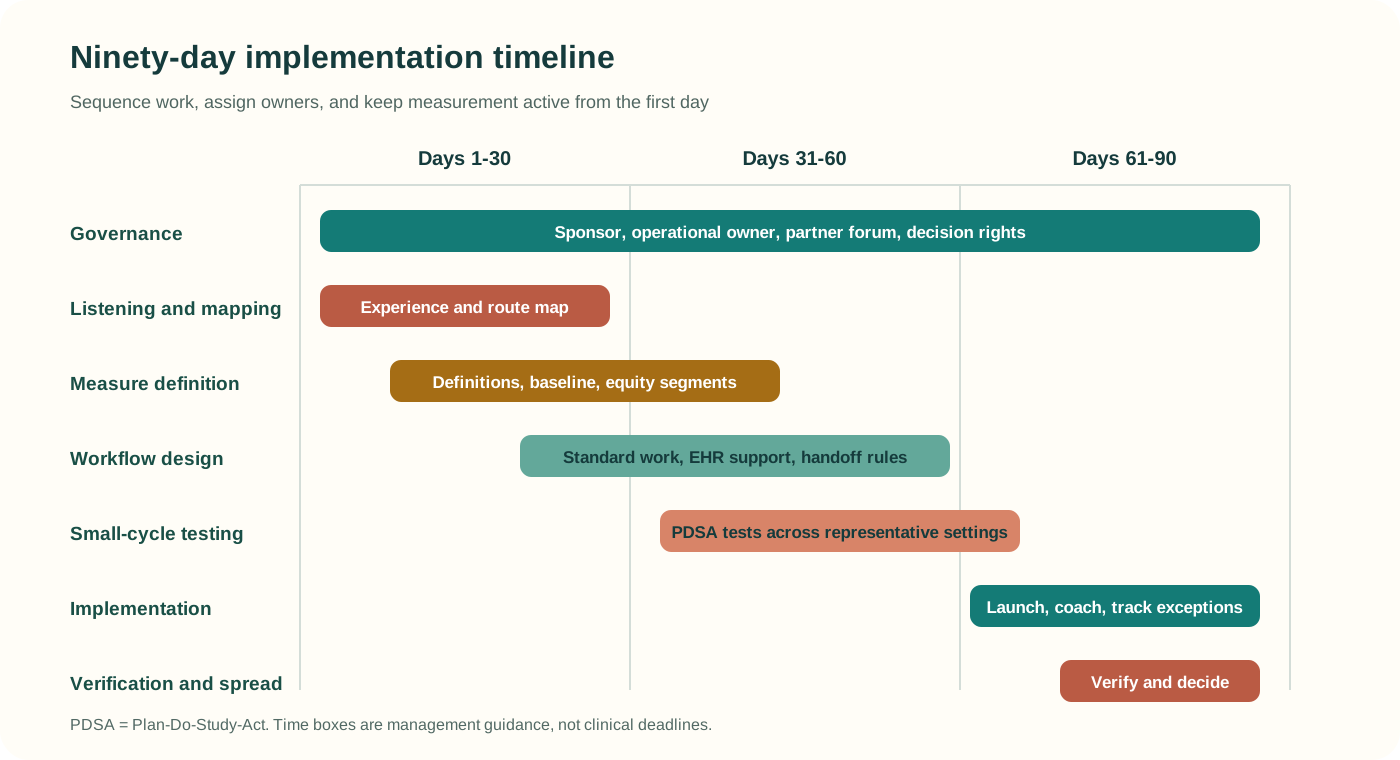
The 90-day structure below is management guidance, not a clinical timeline. Adjust it to risk, governance, workforce, regulatory requirements, local policy, partner capacity, and the people served. Keep clinical safety and urgent escalation active throughout.
Days 1-30
Listen, map, and define
- Name the executive sponsor, operational owner, clinical authority, and core partners.
- Select one recurring need with a measurable follow-through gap.
- Listen to older adults, care partners, sending teams, and receiving partners.
- Map the current route, including choice, handoffs, exceptions, and closure.
- Define measures, data sources, equity segments, and baseline limitations.
Days 31-60
Design and test
- Define the minimum information, receiving owner, acknowledgment, escalation, and completion signal.
- Build the EHR, telephone, written, interpreter, caregiver, and accessibility supports needed for use.
- Test the route in more than one representative setting or operating period.
- Review failures with a learning approach and correct verified design barriers.
- Confirm that adaptations preserve the essential function of the route.
Days 61-90
Implement and verify
- Launch the redesigned route with coaching and visible exception review.
- Track assessment, action, accepted handoff, completion, experience, and equity.
- Review older-adult and care-partner feedback alongside process data.
- Verify whether the improvement held and identify remaining dependencies.
- Decide whether to standardize, adapt, extend, pause, or stop the intervention.
Figure 6. Ninety-day healthy-aging implementation timeline
Leadership close
Curiosity becomes operational when leaders ask where the route stops working.
Healthy aging is not a promise that every person can avoid illness, disability, dependence, or loss. It is a commitment to build care and community routes that respect goals, protect function, reduce avoidable burden, and respond when needs become visible. The 2026 theme can invite learning and engagement, but healthcare organizations should pair the message with accountability for the conditions they control.
The most useful September result is not another campaign total. It is one improved route that older adults can understand and use, staff can operate reliably, partners can accept, and leaders can measure from what matters through verified follow-through. Start small enough to learn. Include the people affected. Keep exceptions visible. Report limitations honestly. Then use the evidence to decide what should spread.
Related executive resources
Continue the planning conversation.
Use note: This article supports executive planning, quality improvement, and education. It does not replace individualized medical advice, clinical judgment, professional standards, organizational policy, emergency procedures, legal advice, or applicable federal, state, and local requirements.
Scholarly references
Peer-reviewed evidence used in this article
- Sun M, Liu J, Yi M, et al. Implementing integrated care for older adults in primary health care: A systematic scoping review. International Journal of Nursing Studies. 2026;176:105342. https://doi.org/10.1016/j.ijnurstu.2026.105342
- Yu J, Si H, Zhou W, et al. Effectiveness, process, and economic outcomes of integrated care for community-dwelling frail older adults: A systematic review and meta-analysis. Journal of Advanced Nursing. 2026;82(6):6894-6915. https://doi.org/10.1111/jan.70275
- Yu J, Chen H, Yang Y, et al. Barriers to and facilitators of integrated care for community-dwelling frail older adults: A qualitative study applying implementation science frameworks. Maturitas. 2025;199:108650. https://doi.org/10.1016/j.maturitas.2025.108650
- Northwood M, Chambers T, Fisher K, et al. Readiness for scale up following effectiveness-implementation trial: Results of scalability assessment of the Community Partnership Program for diabetes self-management for older adults with multiple chronic conditions. BMC Health Services Research. 2025;25(1):1-15. https://doi.org/10.1186/s12913-025-12378-5
- Schwartz AW, Jindal SK, Wozneak KA, Burke RE. Implementation of the Age-Friendly Health Systems Initiative in the Department of Veterans Affairs: 5 years of improving quality for older veterans. Inquiry. 2025;62:1-10. https://doi.org/10.1177/00469580251366883
- Beck MS, Murdock CC, Woolverton CB, et al. Leveraging teams to implement Age-Friendly Health Systems across settings in a major academic medical center. Journal of Gerontological Nursing. 2026;52(2):37-43. https://doi.org/10.3928/00989134-20251010-06
- Kasmar EA, Yockey KJ, Keefner T, Fischbach C. Age-Friendly Health Systems pilot in a Veterans Health Administration community living center. Journal of Gerontological Nursing. 2026;52(3):35-38. https://doi.org/10.3928/00989134-20251112-05
- Chandrasekaran R. Postpandemic telehealth use: Patterns and barriers for older adults in the United States, 2024. American Journal of Public Health. 2026;116(S3):S218-S228. https://doi.org/10.2105/AJPH.2026.308575
- Connolly G, Costa-Font J, Srivastava D. Did COVID-19 reduce the digital divide? A systematic review. Health Policy and Technology. 2025;14(2):100979. https://doi.org/10.1016/j.hlpt.2025.100979
- Großschädl F, Marston HR, Ivan L, Prabhu V, Earle S. Age as an important predictor for digital health literacy: Cross-sectional evidence of internet users from an international multisite study in North America and EU countries. Educational Gerontology. 2026;52(5):488-501. https://doi.org/10.1080/03601277.2025.2505568
- Noh EY, Lee J, Kim HJ. Effectiveness and recommendation strategies for videoconference-based interventions to alleviate social isolation and loneliness in older adults: A systematic review and meta-analysis. Geriatric Nursing. 2025;63:353-361. https://doi.org/10.1016/j.gerinurse.2025.03.042
- Liu Y, Zhou Y, Sun D, et al. Association between social isolation and depression, and sex differences in older adults: A systematic review and meta-analysis. Archives of Gerontology and Geriatrics. 2025;137:105915. https://doi.org/10.1016/j.archger.2025.105915
- de la Casa-Pérez A, Conceição FAV, Párraga-Montilla JA, Cabrera-Linares JC, Latorre-Román PÁ. Is walking enough to promote health benefits in older adults? A systematic review. Educational Gerontology. 2026;52(7):669-698. https://doi.org/10.1080/03601277.2025.2515559
- Mehta P, Costa EC, Galliano LM, et al. Exercise to prevent falls in older adults with physical frailty: A systematic review and meta-analysis. The Journal of Frailty & Aging. 2026;15(4):100187. https://doi.org/10.1016/j.tjfa.2026.100187
- Zhang Y, Chen Z, Chen X, Tian F. Economic evaluation of deprescribing in older adults: A systematic review. Value in Health. 2026;29(3):521-529. https://doi.org/10.1016/j.jval.2025.10.001