


September 2026 · Executive Brief
National Childhood Obesity Awareness Month 2026: Make Access and Follow-Through Visible
Use September to test whether children and families can reach respectful, comprehensive, sufficiently supported care without being lost to stigma, capacity gaps, unaffordable design, or unowned referrals.
Leadership signal
Awareness should reveal whether the care route is respectful and usable.
An official federal observance resource identifies September as National Childhood Obesity Awareness Month. The calendar designation creates a leadership opportunity, but it does not define a clinical program. A useful observance should not end with a poster, a BMI flag, a handout, or a referral count. It should expose whether a child and family can move from an age-appropriate conversation through assessment, a shared plan, an accepted destination, treatment contact, follow-through, and review without avoidable harm or loss between teams.
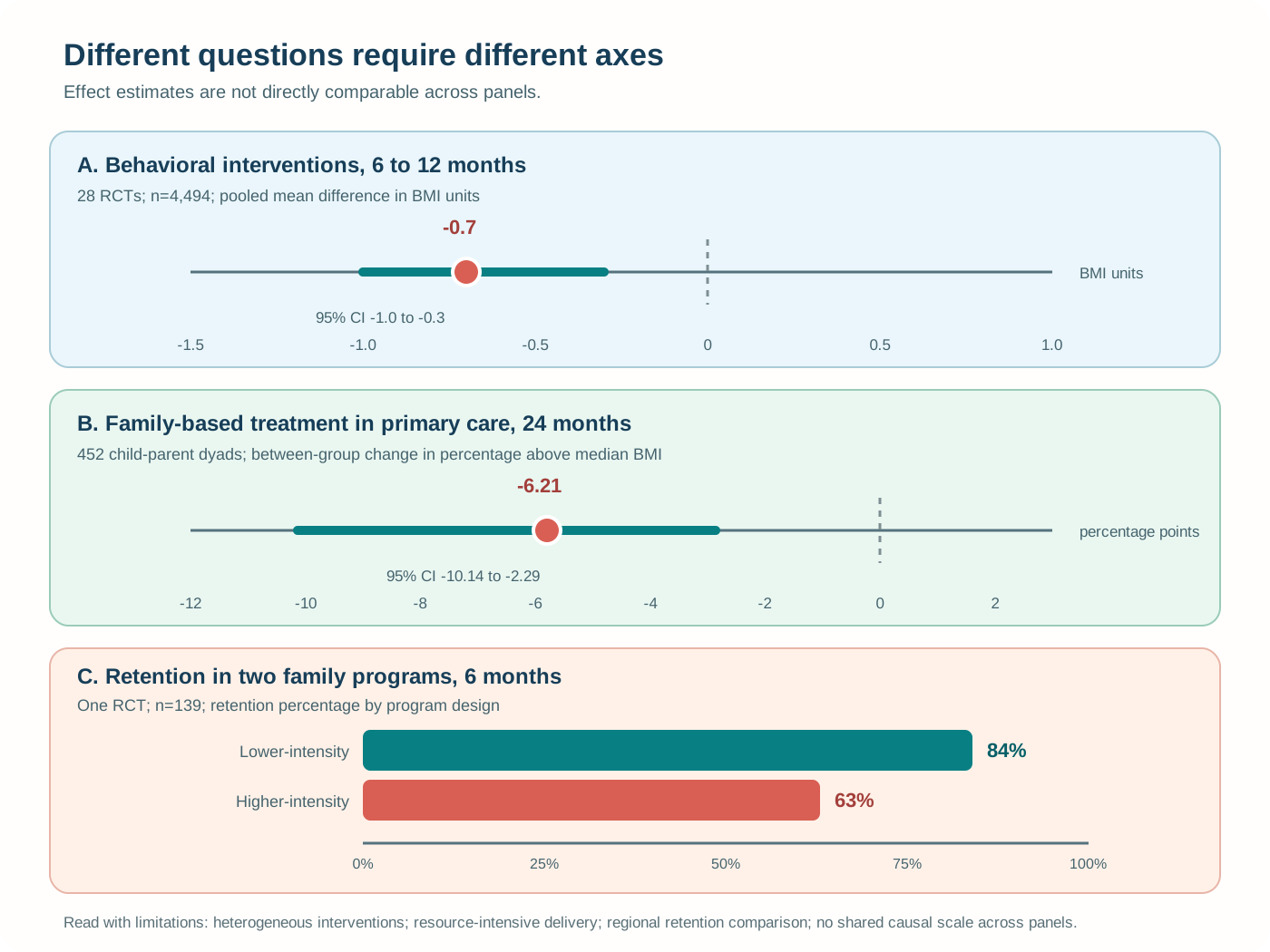
The evidence supports comprehensive family-based behavioral care, but it also resists simple campaign promises. A 2024 systematic review for the US Preventive Services Task Force included 58 randomized trials with 10,143 participants. Across 28 trials and 4,494 participants, behavioral interventions were associated with a small short-term BMI difference of -0.7 units, with a 95% confidence interval from -1.0 to -0.3 at six to 12 months. Programs with more contact and supervised activity tended to have larger effects, while long-term evidence and outcomes beyond BMI were limited.11
That finding supports access to adequately resourced care. It does not justify promising a particular result to every family. The trials varied in population, duration, setting, contact, content, and outcome measurement. Many outcomes important to families and health systems were sparsely reported. Leaders should therefore separate what the evidence says about an intervention from what the local operating system can deliver and what each family chooses.
One randomized primary-care trial demonstrates what sustained family-based treatment can require. The program enrolled 452 child-parent dyads at four US sites, sought 26 individualized sessions over 24 months, and used trained coaches. At 24 months, the between-group difference in change in percentage above median BMI was -6.21 percentage points, with a 95% confidence interval from -10.14 to -2.29. Effects were also observed for parents and siblings.12 This is an efficacy and implementation signal, not a license to assume that every primary-care practice has the staffing, time, financing, family availability, or referral infrastructure to reproduce it.
A different trial in a medically underserved region illustrates the burden question. Among 139 children, retention was 63% in a higher-intensity parent-child program and 84% in a lower-intensity parent-only program. Core-component engagement was also lower in the higher-intensity design, and neither program produced a statistically significant six-month BMI z-score change.13 More prescribed contact is not the same as more usable contact. Executives must measure reach, burden, engagement, experience, and outcomes separately.
Evidence to action
The portfolio supports a complete route, not one universal program.
Research answers different questions. A systematic review can estimate an average effect across heterogeneous trials. A single randomized trial can test a defined model under specified conditions. A hybrid trial can show how family routines change while anthropometric outcomes remain unchanged. A feasibility pilot can show whether a small team can deliver an approach, but not whether it caused the observed changes. A qualitative study can reveal how families or professionals experience care, but not how common an experience is. Executive decisions become safer when those distinctions remain visible.
Effectiveness signal
Comprehensive behavioral interventions produced a small pooled short-term BMI difference, and a sustained family-based primary-care model produced a larger effect on its specific normalized BMI measure.11,12 Units and designs differ, so they should not be combined into one target.
Implementation signal
Cost modeling at three primary-care sites estimated annual fixed costs from $65,252 to $79,024 and modeled break-even volume from 37 to 81 patients.5 These are study examples, not local budget benchmarks.
Experience signal
Parents and professionals describe both supportive, family-centered care and generic, blaming, or stigmatizing encounters.6,7,10 Local listening is necessary to learn what is occurring in each route.
Figure 1. Three evidence questions with separate axes
The portfolio also supports restraint. A 2026 Cochrane review of 30 randomized trials and 1,508 adolescents found small favorable differences for body weight, waist circumference, and body-fat percentage when physical-activity interventions were compared with no intervention. For example, the mean weight difference was -1.88 kg, with a 95% confidence interval from -3.34 to -0.42, across 17 studies and 749 participants. All included studies were judged at high risk of bias, and certainty was low or very low.1 Physical activity can belong in a comprehensive plan, but a leader should not turn one activity format into a universal prescription or outcome promise.
A 2026 structured narrative review of evaluated European programs found more consistent improvement in intermediate outcomes such as participation, selected behaviors, knowledge, and parental self-efficacy than in anthropometric outcomes. Short, single-setting education was often insufficient, while longer and multilevel programs appeared more promising and more resource intensive.4 Because the review did not pool a common effect and the programs differed substantially, its strongest executive use is architectural: connect settings, define roles, and measure outcomes on their own terms.
Two smaller models add implementation texture. A Greek primary-care pilot delivered four monthly family counseling sessions and analyzed 49 dyads. Delivery through trained primary-care professionals appeared feasible, and several reported food-frequency measures changed, but the study had no control group, relied on self-report, and was exploratory.2 A culturally and linguistically tailored program for Hispanic and Latino families combined bilingual education, activity, parent coaching, and goal setting. Behavioral differences appeared at selected time points, while BMI differences did not meet the conventional significance threshold. Randomization was abandoned after recruitment problems and follow-up attrition was substantial.3 Both studies can inform design. Neither should be presented as definitive proof.
Dignity and communication
Make the first outcome a respectful, age-appropriate conversation.
Families experience the care system before they experience a program. Language, tone, privacy, who is present, and what the clinician assumes can determine whether the next step feels safe and usable. A Swedish qualitative study interviewed 45 parents whose young children received standard treatment. Parents described validating, family-centered encounters as well as generic, blaming, or stigmatizing ones. They differed on whether children should be present for weight-related discussions and emphasized careful, age-appropriate framing.7 The study represents parent perspectives in one setting and does not estimate prevalence, but it makes communication design an operational requirement.
A cross-sectional survey of 113 pediatric healthcare workers and trainees at one Canadian center examined controllability beliefs, blame, and weight stigma. Stronger beliefs that weight was controllable were associated with greater stigma toward parents directly, with a coefficient of 0.58 and a 99% confidence interval from 0.27 to 0.89, and indirectly through blame, with a coefficient of 0.33 and a 99% confidence interval from 0.10 to 0.61.6 Self-report, selection, social-desirability bias, and cross-sectional design prevent causal claims. The result still supports treating stigma and blame as measurable experience and safety risks.
Define conversation safeguards
Organizations should establish a locally approved approach for consent, privacy, neutral language, age-appropriate participation, and documentation. The family should know why a topic is being raised, what choices are available, how information will be used, and whether they want to continue the discussion. Teams should avoid moral labels, assumptions about motivation, and conversations that reduce a child's health or identity to body size.
A qualitative study of 18 professionals experienced in integrated childhood-obesity care described complexity across biomedical, psychosocial, family, and system dimensions. Tailoring and family-professional relationships were facilitators, while sensitivity and stigma affected the route.10 The sample was small and professional, not a substitute for family evidence. It nevertheless shows why a whole-person assessment requires time, roles, and escalation pathways rather than clinician goodwill alone.
Training should therefore be evaluated in practice. Completion of a module is not proof of respectful care. Leaders can review de-identified documentation, observe simulated conversations, ask families about dignity and understanding, examine complaints, and include patient and caregiver partners in redesign. Where permitted and ethically appropriate, measures should distinguish whether the conversation occurred, whether permission was sought, whether the family understood the options, and whether any harm or stigma was reported.
Clinical assessment, safeguarding, and treatment decisions remain with qualified professionals under current policy. Executives own the conditions around that work: adequate visit time, trained roles, private space, interpreter access, documentation tools, referral visibility, and escalation when harm or access failure occurs.

Closed-loop access
Do not count a referral until the destination accepts the work.
A referral order documents an action by the sending team. It does not prove that the family received information in a usable language, that the destination is appropriate, that eligibility was met, that an appointment was available, that the cost was understood, or that another team accepted responsibility. The completion signal should match the stage. Offer, acceptance, connection, start, contact, retention, experience, behavior, and clinical outcome are distinct events with distinct denominators.
A survey of 38 professionals in specialist children's weight-management services in England found interest in social prescribing and community linkage alongside concerns about staff capacity, training, and the difficulty of identifying appropriate community services.8 These are professional attitudes in a small national sample, not evidence that social prescribing improves outcomes. The operational lesson is narrower and strong: community connection requires an owned directory, known eligibility, capacity confirmation, feedback, and a recovery plan when the destination cannot accept the family.
Provider research reaches a similar conclusion from the sending side. In one pediatric network, barriers clustered across provider, practice-system, parent, and environmental levels. Only 23.8% of surveyed providers wanted to conduct behavioral management themselves, and requested supports included team-based care, health educators, and electronic-record tools.15 The study is older, local, and based on reported views. It should not be used to estimate current workforce preferences. It does show why a health system cannot simply add a primary-care expectation without connected capacity and role design.
Figure 2. Proposed closed-loop family care route
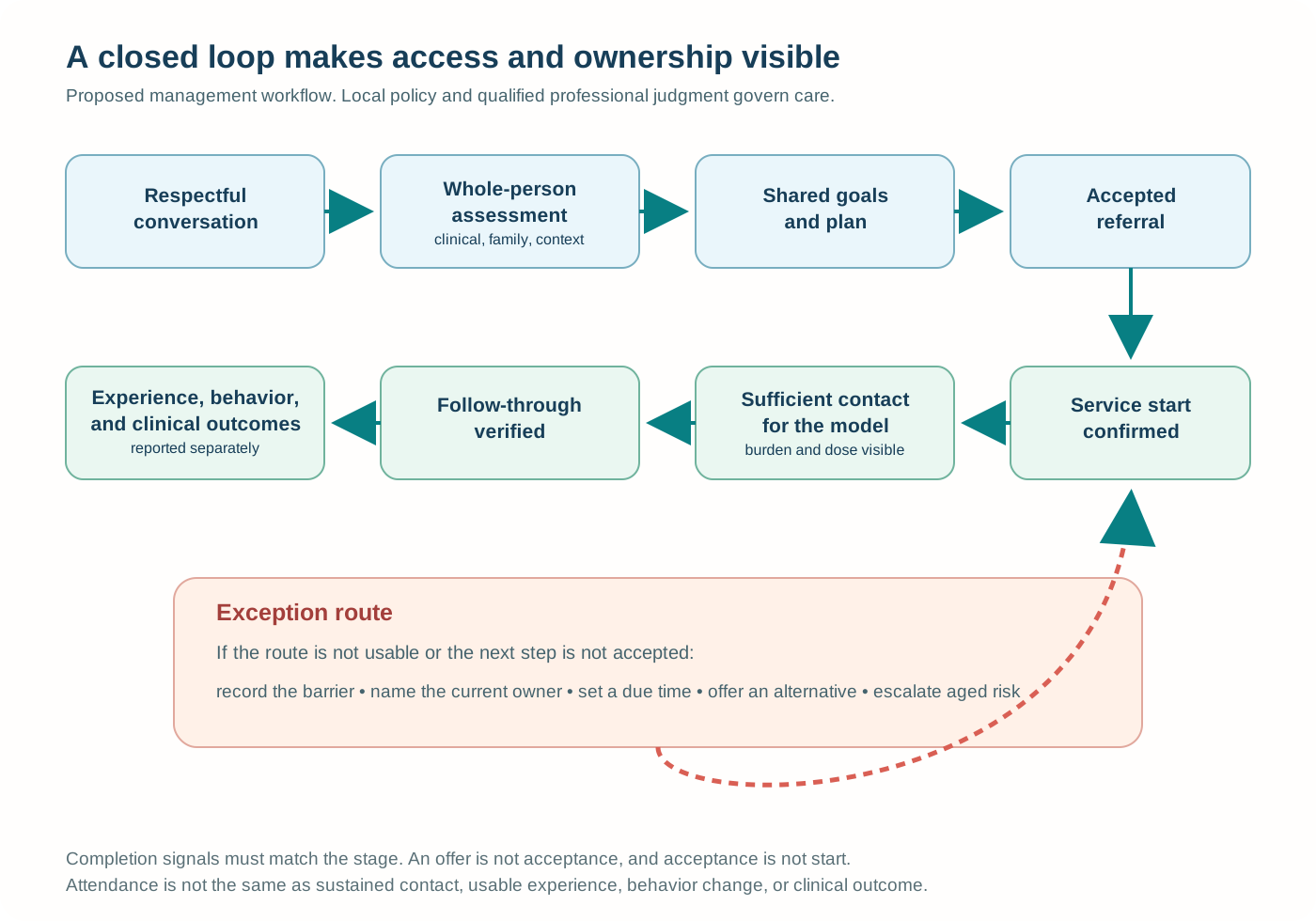
Build a minimum viable handoff
The sending and receiving teams should agree on the minimum information, consent, eligibility, expected response time, accepted owner, access needs, and completion signal. The family should receive the same practical information: why the referral is offered, what the service provides, what it may cost, where and how it occurs, how often contact is expected, who to call, and what happens if the first option does not fit. Referral data should contain only information authorized and necessary for the task.
An exception log should make failures visible without circulating unnecessary clinical detail. Useful fields include date, route stage, barrier category, current owner, next action, due time, status, and escalation. Examples include an inaccessible site, interpreter not scheduled, family unable to meet program hours, destination at capacity, eligibility mismatch, coverage uncertainty, repeated no-contact attempts, reported stigma, or a plan deferred without a named owner. The log should distinguish family preference from system constraint and protect privacy in executive forums.
Treatment design
Design for sufficient support and family usability at the same time.
Preserve the tested function
When leaders adapt an intervention, they should identify which functions plausibly matter. In the 24-month primary-care trial, the program used trained coaches, family participation, repeated individualized contacts, monitoring, goal setting, and support over time.12 Removing most of the contact or role support while retaining the program label creates a different intervention. Local adaptation should document what is preserved, what changes, why, and how fidelity and burden will be monitored.
Higher contact may improve average outcomes, but capacity and family burden can limit who benefits. The underserved-region trial found higher retention and engagement in the lower-intensity design, with no statistically significant BMI improvement in either group at six months.13 That result does not prove that less care is better. It shows that dose, usability, engagement, and outcome must be examined together rather than treating scheduled sessions as delivered care.
Report behavioral outcomes separately
A randomized type II hybrid trial involving 240 predominantly low-income and racially or ethnically diverse families found changes in child and family behaviors through improved family routines, while BMI and body-fat change did not differ between groups.14 Leaders should not erase behavioral progress because an anthropometric measure did not change. They should also not translate a behavioral change into an unmeasured clinical claim.
Finance the route before promoting it
The three-site cost tool illustrates why a referral campaign needs an operating model. Estimated annual fixed costs ranged from $65,252 to $79,024, estimated revenue from $806 to $1,663 per patient, and modeled break-even volume from 37 to 81 patients annually.5 Staffing, reimbursement, space, volume, and assumptions were specific to the cases. Executives should use the method, not import the numbers as targets.
A local model should identify trained roles, contact expectations, start-up work, documentation time, coordination, no-show policy, interpreter services, technology, supplies, community partner costs, and the capacity needed for access that does not worsen inequity. It should test what happens if volume is lower than expected, referral demand exceeds capacity, reimbursement changes, or families require different modes.
Use activity as one supported component
The Cochrane adolescent review supports including activity while emphasizing uncertainty.1 A usable activity offer should be enjoyable, age appropriate, accessible, safe, culturally relevant, and consistent with qualified clinical guidance. Families may need choices that fit disability, neighborhood conditions, cost, school schedules, caregiving, weather, and transportation. Activity should not become a public performance, punishment, or proxy for character.
Access and equity
Equal offers are not equal access.
A family may receive the same referral as another family and still face a different route. Transportation, rural distance, unsafe walking environments, work schedules, caregiving, language, disability access, technology, program hours, insurance, cost, trust, and prior stigmatizing experiences can shape whether the service is usable. An aggregate referral rate hides these conditions. Leaders need stage-specific denominators and local explanation.
The Familias Saludables study combined bilingual family education, child activity, parent coaching, and goal setting in Hispanic and Latino communities. It reported selected behavioral differences at three and nine months, while BMI differences did not reach the conventional threshold. Recruitment problems ended random assignment, attrition was substantial, and parent reports and pandemic-related changes limit interpretation.3 The design offers practical elements for co-design, including language alignment, community health workers, and community partnership. Its outcome estimates should not be generalized to all Hispanic or Latino families.
A review focused on regional and rural primary care during the first 2,000 days identified telemedicine, expanded nursing roles, community health workers, and formal health-social care partnerships as potential access strategies.9 The Australian, early-childhood scope and heterogeneous literature limit transferability. Each mode should be tested for reach, quality, privacy, workload, family preference, and the possibility that a digital option excludes the people it is meant to reach.

Segment stages, not just outcomes
For the chosen route, examine who was eligible, who had a respectful conversation, who wanted support, who received an offer, who accepted, who connected, who started, who received the intended contact, who remained engaged, and who reported a usable experience. Stratify only when definitions, privacy, sample size, and data quality support responsible interpretation. A difference is a signal for investigation, not proof of cause.
Offer multiple usable modes
Where clinically appropriate, test in-person, telephone, digital, group, individual, family, community, interpreter-supported, and accessible formats. Record which mode was offered, selected, available, started, and sustained. If a family declines, learn whether that decision reflects informed preference or a route that did not fit.

Work-system conditions
Investigate the route before blaming a child, family, or clinician.
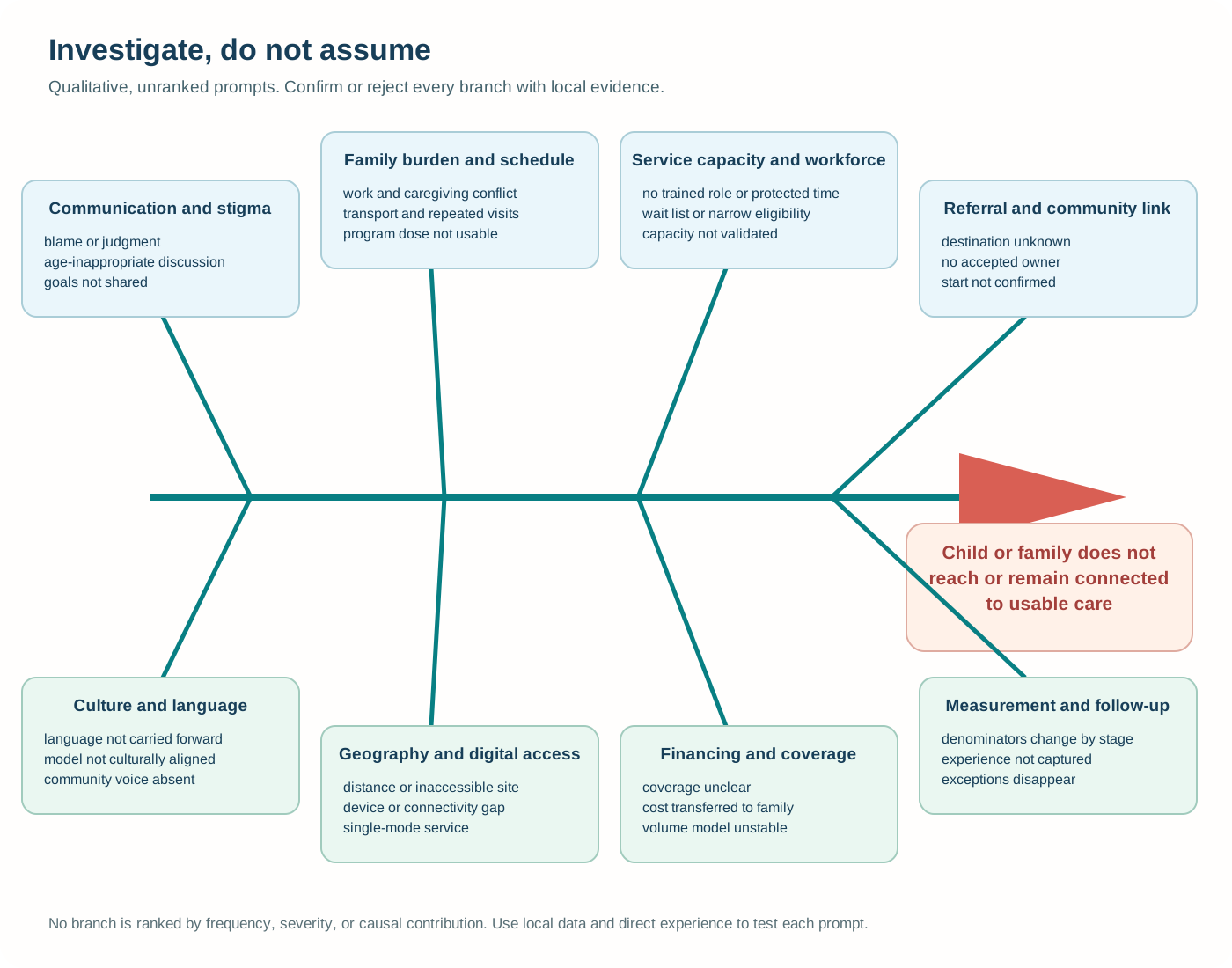
A missed appointment can be recorded as nonadherence even when the visit conflicted with work, the family lacked transportation, the site was inaccessible, the interpreter was unavailable, or the expected program dose was impossible. A clinician can appear not to act when the referral directory is obsolete, the queue has no accepted owner, the destination is full, or the visit did not include protected time. A community partner can appear unresponsive when the health system never established eligibility, secure feedback, or sustainable financing.
Qualitative, survey, cost, and implementation studies can seed a local investigation, but they cannot diagnose the local cause. Parent interviews identify supportive and stigmatizing communication.7 Professional surveys identify capacity, training, and referral-directory barriers.8,15 Rural reviews identify geography and delivery options.9 Cost cases identify fixed-cost and volume questions.5 Culturally tailored work identifies language and partnership considerations.3 Every branch must be tested with local evidence.
Figure 3. Qualitative fishbone for a route that is not usable
Run a short learning review
- State the gap precisely. Name the intended route stage, expected next action, actual event, elapsed time, and verified consequence. Separate observation from assumption.
- Reconstruct the family's route. Follow the actual sequence across visits, calls, portals, schools, community services, coverage checks, and transportation. Note every handoff and decision.
- Include the right voices. Invite the child and caregiver in an appropriate way, plus sending and receiving teams, access, interpreter services, community partners, finance, data, and clinical governance when relevant.
- Test competing explanations. Look for observable evidence. Do not select a familiar cause or use demographic identity as the explanation for a system difference.
- Correct the condition. Change ownership, capacity, information, scheduling, modes, financing, language support, technology, or policy when those conditions created the gap.
- Verify that the correction holds. Assign an owner, due date, balancing measure, and recheck. Escalate if risk or access failure remains unresolved.
Governance
Run the route as a cross-functional operating system.
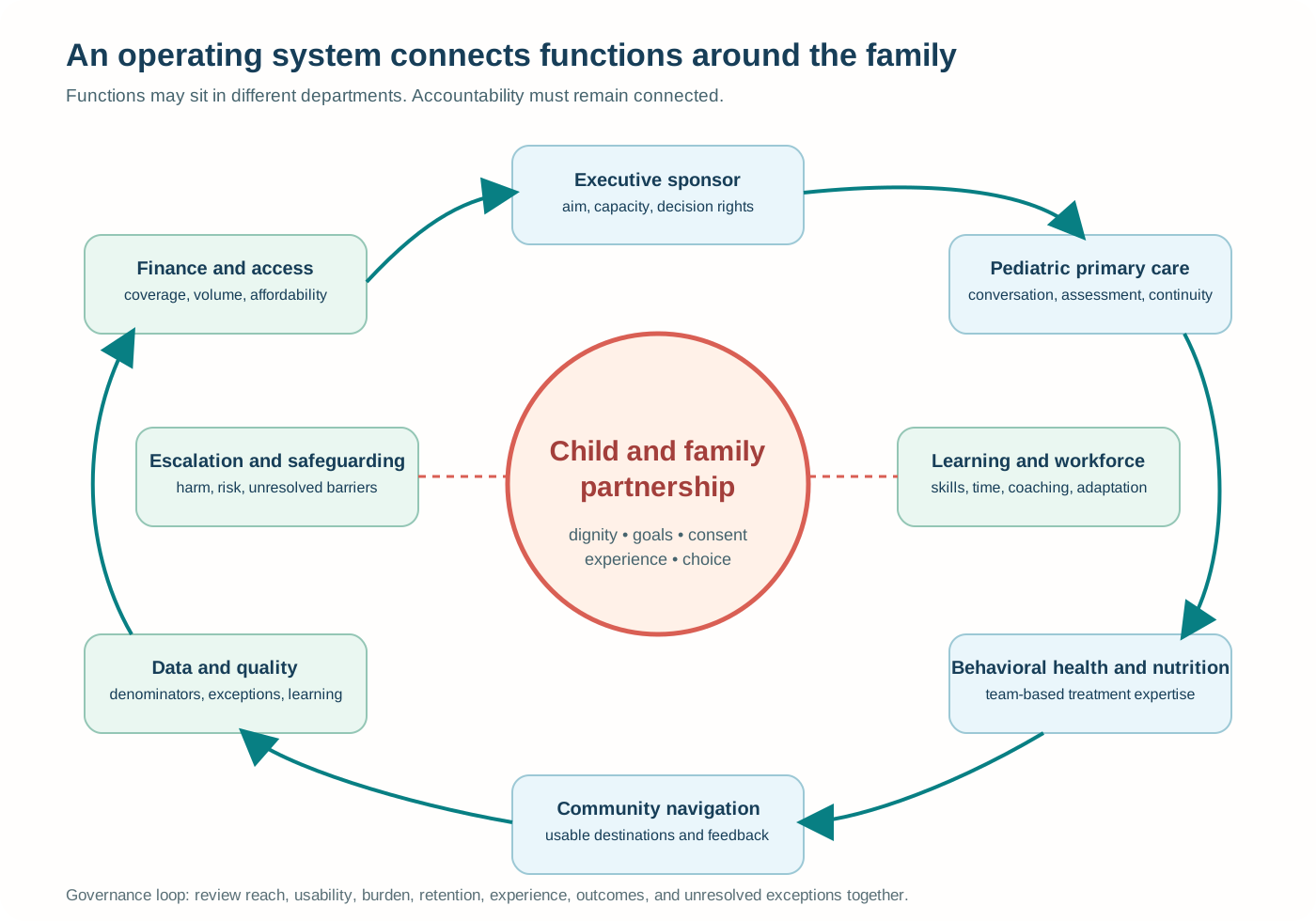
No single department controls the whole experience. Pediatric primary care may begin a conversation and assessment. Behavioral health, nutrition, nursing, health coaching, and specialty teams may provide treatment. Access and finance teams shape availability and affordability. Interpreter services and community health workers shape usability. Schools and community organizations may provide important settings, while data and quality teams make the route visible. Clinical governance controls safety, assessment, treatment, monitoring, and safeguarding. Executive governance must connect the functions around children and families.
The evidence points to accountable functions rather than one required org chart. The primary-care randomized trial relied on trained coaches and sustained family contact.12 Integrated-care interviews emphasized tailoring and relationship work.10 Rural reviews identified expanded roles and partnerships.9 Cost modeling showed the importance of staffing, volume, and reimbursement assumptions.5 Provider research identified demand for team-based support and electronic tools.15
Figure 4. Proposed family-centered operating system
Executive sponsor
Sets the measurable aim, protects capacity, resolves cross-functional barriers, establishes decision rights, and keeps aged exceptions visible.
Operational owner
Maintains the route, service directory, definitions, training triggers, access options, action log, partner agreements, and implementation calendar.
Authorized clinical governance
Controls assessment, diagnosis, treatment, monitoring, pharmacotherapy, urgent escalation, safeguarding, and clinical documentation under current evidence and policy.
Child and family partners
Help define respectful language, usable modes, acceptable burden, experience measures, education, and improvement priorities. Participation should be appropriate, voluntary, and supported.
Data and quality
Maintain stage-specific denominators, validate source data, monitor exceptions and balancing measures, protect privacy, and prevent misleading comparisons.
Finance and access
Model capacity and reimbursement, test affordability, maintain scheduling and interpreter access, support community partnerships, and prevent promotion from outrunning the service.
Measurement
A scorecard should show where the route narrows and why.
Counts should not be carried forward across stages. The denominator for accepted referrals is the number offered a referral, not every eligible child. The denominator for service start is the number whose referral was accepted, not everyone with a conversation. Treatment-contact and retention measures should use the population that began the defined model. Experience measures should report who had an opportunity to respond. Clinical outcome reporting should state the measure, unit, time point, missingness, and analysis population.
The scorecard below is a structured design template, not a required benchmark. Targets should be established only after local definitions, baseline performance, capacity, equity review, and clinical governance are validated. Small samples need privacy protection and cautious interpretation. Improvement teams should review numbers with qualitative information from children, families, staff, and community partners.
Figure 5. Structured route scorecard
| Measure | Numerator | Denominator | Source and owner | Cadence and stratification | Interpretation limit |
|---|---|---|---|---|---|
| Respectful conversation | Eligible encounters with documented consent and conversation | Eligible encounters in the defined entry point | EHR plus audit; clinical operations | Monthly; age, language, site, mode when reliable | Documentation does not prove experience quality |
| Assessment completed | Conversations followed by the locally required whole-person assessment | Conversations where assessment was indicated and accepted | EHR; clinical governance | Monthly; route stage and site | Completion does not imply diagnosis or treatment choice |
| Referral offered | Eligible families offered an available option | Assessments where referral was appropriate | EHR or referral platform; route owner | Monthly; language, payer, geography when valid | Offer is not acceptance or connection |
| Referral accepted | Families accepting a specific destination and mode | Referral offers | Referral platform; access owner | Weekly and monthly; destination and mode | Acceptance may precede eligibility or capacity confirmation |
| Service start | Accepted referrals with first completed contact | Accepted referrals | Receiving service feedback; program owner | Weekly; destination, wait time, mode | A first contact is not adequate treatment dose |
| Treatment contact | Participants receiving the contact defined for the tested model | Participants who started the model | Program record; clinical program owner | Monthly; contact band and family burden | Scheduled hours are not delivered or useful hours |
| Retention | Participants active or complete at the defined time point | Participants who started | Program record; operational owner | At model milestones; mode and access need | Definition and time point must be explicit |
| Unresolved access barriers | Open exceptions past the locally approved due time | All logged access exceptions | Exception log; executive sponsor | Weekly; barrier, age, owner | Depends on complete and consistent logging |
| Reported stigma or harm | Respondents reporting a specified harmful experience | Respondents with an opportunity to answer | Experience tool and complaints; experience leader | Monthly or quarterly; protect small cells | Underreporting and response bias are likely |
| Family experience | Respondents meeting the defined understanding, respect, and usability criteria | Eligible respondents | Experience survey or interview; family partnership lead | Quarterly; route stage and mode | Response rate and question wording affect results |
| Behavior and routine measures | Participants meeting a predefined change criterion | Participants with valid baseline and follow-up data | Program measure; evaluation lead | At defined time points; measure source disclosed | Self-report and missingness may bias estimates |
| Anthropometric or clinical outcomes | Participants meeting the defined clinical outcome | Specified analysis population with time point | Clinical record; clinical governance | At approved time points; unit and missingness stated | Do not infer causation from uncontrolled local change |
Implementation
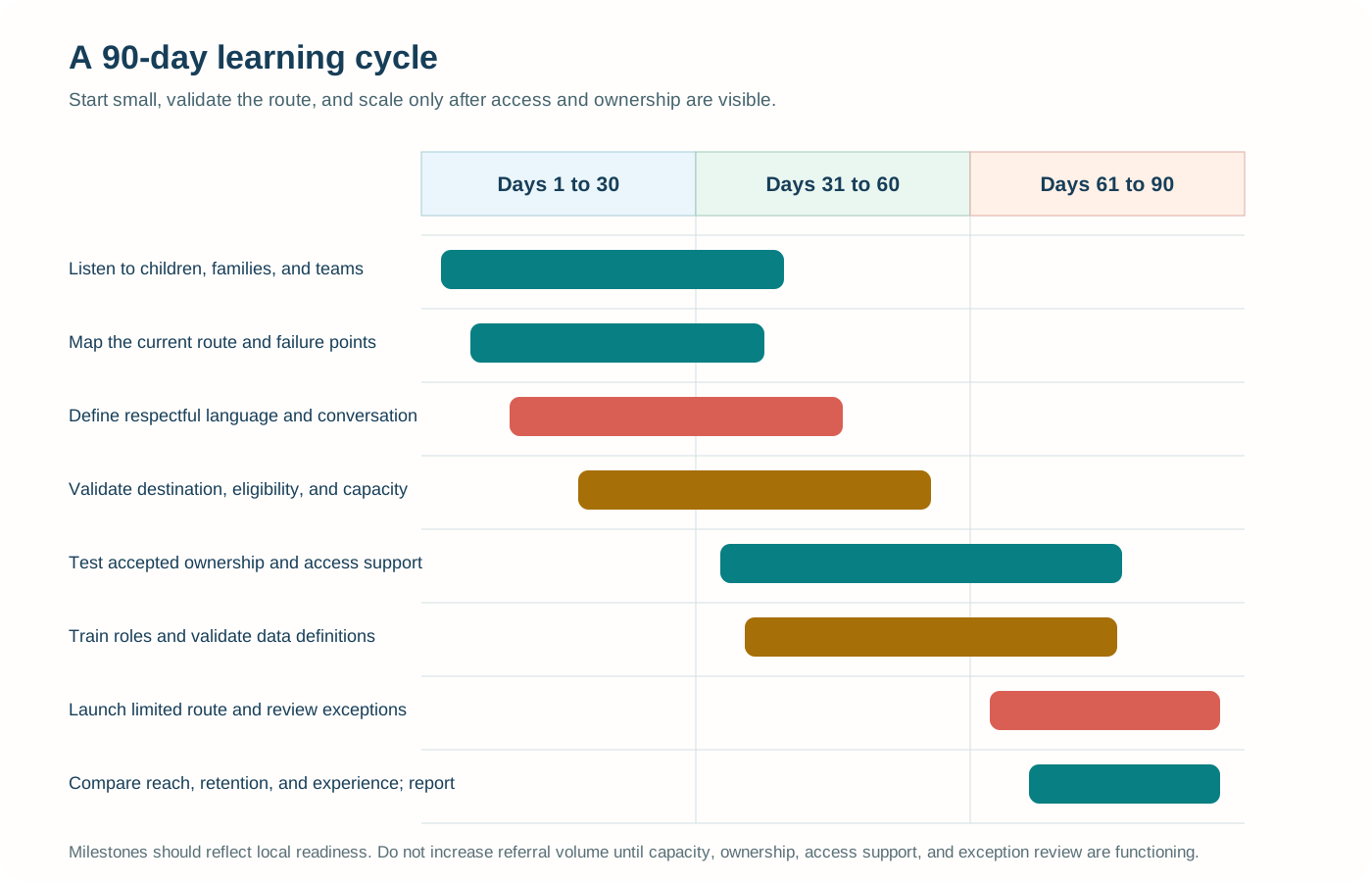
A 90-day agenda can convert awareness into a tested route.
Days 1 to 30
Listen, map, and validate capacity
Choose one entry point and population. Listen to children, caregivers, clinicians, access staff, and receiving services. Define respectful language and consent. Map the real handoffs. Validate eligibility, destination, schedule, interpreter access, modes, cost, workforce, and capacity before promoting the route.
Days 31 to 60
Test ownership and data
Agree on the minimum handoff, accepted owner, expected response, and completion signal. Test access support and alternative modes with a small number of families. Train teams in conversation safeguards, route roles, documentation, and escalation. Validate each scorecard denominator and source.
Days 61 to 90
Launch narrowly and learn
Launch the limited route. Review exceptions weekly. Compare reach, start, contact, retention, experience, and unresolved barriers. Ask families what the route required. Correct one system condition, verify that it holds, and report what changed, what remains uncertain, and what should scale next.
Figure 6. Gantt-style 90-day implementation timeline
Executive close
Make the system prove that support is reachable.
National Childhood Obesity Awareness Month can create attention. Leadership determines whether that attention becomes a safer and more usable route. The evidence supports comprehensive family-centered care, sufficiently sustained contact, trained roles, community and primary-care connections, and measurement that separates behavioral, clinical, experience, engagement, and implementation outcomes. It also warns that burden, stigma, weak capacity, uncertain financing, and unowned handoffs can narrow access.
The most credible September message is operational: children and families deserve dignity, informed choice, and a route that does not disappear after recognition. Map one real pathway. Validate the destination. Name the owner. Make access barriers visible. Report uncertainty honestly. Scale only when families can use the design and the organization can support the work.
Academic references
Peer-reviewed evidence portfolio
- Meneses-Echavez JF, Chavez Guapo N, Loaiza-Betancur AF, et al. Physical activity for the management of obesity in adolescents aged 10 to 19 years. Cochrane Database of Systematic Reviews. 2026;8:CD015987. doi:10.1002/14651858.CD015987.
- Magriplis E, Myrintzou N, Desli II, Papachatzi E, Vantarakis A. Feasibility and preliminary dietary outcomes of the Smart Family lifestyle counseling intervention in Greek primary care: A single-arm pilot study from Health4Eukids. Nutrients. 2026;18(12):1848. doi:10.3390/nu18121848.
- Aguirre D, Garcia ML, Buenrostro PT, et al. The Familias Saludables Study: A culturally tailored family-centered intervention for childhood obesity prevention among Hispanic communities. Journal of Racial and Ethnic Health Disparities. 2026;13(2):1481-1490. doi:10.1007/s40615-025-02348-2.
- Wójcik M, Kozioł-Kozakowska A, Iwańska A, et al. Evaluated childhood obesity prevention and management programs in Europe, 2015-2024: A structured narrative review of behavioral and anthropometric outcomes. Nutrients. 2026;18(7):1100. doi:10.3390/nu18071100.
- Ruggiero CF, French DD, Smith JD, et al. Development and application of a cost tool for a primary care-based intensive health behaviour and lifestyle treatment. Pediatric Obesity. 2025;20(9):1-5. doi:10.1111/ijpo.70028.
- Dennison T, Nutter S, Chauhan N. Weight stigma amid pediatric healthcare providers: A cross-sectional survey study assessing the roles of weight controllability beliefs and blame. BMC Pediatrics. 2025;25:625. doi:10.1186/s12887-025-05995-w.
- Sjunnestrand M, Neuman N, Ek A, et al. Not for children's ears? Parents' insights into early childhood overweight and obesity treatment. Scandinavian Journal of Primary Health Care. Published online July 15, 2025. doi:10.1080/02813432.2025.2531958.
- Garside M, Homer C, Dayson C, et al. Healthcare professionals' attitudes towards social prescribing in specialist children's weight management services. BMC Primary Care. 2025;26(1):1-9. doi:10.1186/s12875-025-02753-w.
- Betts JM, Gooey M, Chung A, et al. Childhood obesity in the first 2000 days: A focus on primary health care in regional and rural Australia. Australian Journal of Rural Health. 2025;33(1):e13208. doi:10.1111/ajr.13208.
- van den Eynde E, van der Voorn B, Koetsier L, et al. Healthcare professionals' perspectives on the barriers and facilitators of integrated childhood obesity care. BMC Health Services Research. 2024;24:1133. doi:10.1186/s12913-024-11532-9.
- O'Connor EA, Evans CV, Henninger M, Redmond N, Senger CA. Interventions for weight management in children and adolescents: Updated evidence report and systematic review for the US Preventive Services Task Force. JAMA. 2024;332(3):233-248. doi:10.1001/jama.2024.6739.
- Epstein LH, Wilfley DE, Kilanowski C, et al. Family-based behavioral treatment for childhood obesity implemented in pediatric primary care: A randomized clinical trial. JAMA. 2023;329(22):1947-1956. doi:10.1001/jama.2023.8061.
- Zoellner JM, You W, Hill JL, et al. Comparing two different family-based childhood obesity treatment programmes in a medically underserved region: Effectiveness, engagement and implementation outcomes from a randomized controlled trial. Pediatric Obesity. 2022;17(1):e12840. doi:10.1111/ijpo.12840.
- Smith JD, Berkel C, Carroll AJ, et al. Health behaviour outcomes of a family based intervention for paediatric obesity in primary care: A randomized type II hybrid effectiveness-implementation trial. Pediatric Obesity. 2021;16(9):e12780. doi:10.1111/ijpo.12780.
- Rhee KE, Kessl S, Lindback S, Littman M, El-Kareh RE. Provider views on childhood obesity management in primary care settings: A mixed methods analysis. BMC Health Services Research. 2018;18:55. doi:10.1186/s12913-018-2870-y.