

September 2026 · Executive Brief
National Pediculosis Prevention Month/Head Lice Prevention Month 2026: Turn Awareness into a Reliable Safety System
Use September to replace stigma, inconsistent instructions, unnecessary exclusion, and repeated treatment failure with a private, evidence-informed route that families, schools, pharmacies, and clinicians can use.
Leadership signal
Awareness should make the response calmer, clearer, and more reliable.
National Pediculosis Prevention Month, also recognized as Head Lice Prevention Month, gives healthcare executives and community partners a practical test of coordinated public health communication. Head lice usually move through direct head-to-head contact. Clinical reviews emphasize that an active infestation is confirmed by finding a living louse, while eggs or suspected nits alone can be misidentified.20,25 These facts matter operationally because a weak route can produce unnecessary school absence, repeated product use, family expense, anxiety, and conflicting advice.
The leadership assignment is not to choose treatment for an individual. It is to ensure that qualified professionals, schools, pharmacies, and families can follow one authorized route. Leaders should know who provides identification support, who gives treatment education, what information schools may communicate, when a clinician or pharmacist should be consulted, how failed treatment is reassessed, and how the organization prevents stigma or unnecessary disclosure. The response should work for families with limited time, transportation, money, digital access, health literacy, or English proficiency.
The evidence does not support a single prevalence estimate that can be transferred across settings. A 2026 cross-sectional study of 494 primary schoolgirls in three regions of Thailand reported a prevalence of 50.81%, with a 95% confidence interval from 46.31% to 55.20%.1 A 2025 study of 9,254 schoolchildren across 48 schools in central China reported 630 infestations, or 6.8%.5 These populations, sampling designs, social conditions, and diagnostic processes differ. Their values describe their studies. They do not establish a local rate or performance target.
Persistent or repeated infestation can create a different operating problem from an isolated episode. In a 2026 multimethod study of remote communities in Western Australia, mean prevalence across ten study timepoints was 48.4%, with a standard deviation of 15.3. Among 554 children in whom head lice were detected at least once, 370, or 66.8%, had repeated detection.2 Community conversations linked repeated infestation with physical and psychological burden and with housing conditions that affected healthy practices. The study involved a distinct remote-residing Aboriginal population and should not be generalized to every community. It does show why repeated detection should trigger a review of the work system, not an assumption that one person simply failed to comply.
Stigma is itself a system risk. A concept analysis based on 20 articles described shame, negative beliefs, economic cost, social cost, mistreatment, and overtreatment as consequences associated with head-lice stigma.17 A 2024 qualitative study of 15 adolescent girls identified themes involving fear, distress, concealment, and efforts to manage infestation.6 These studies cannot quantify the experience of every child. They establish a credible reason to protect privacy, avoid blame, and test communications with affected families before launch.
Evidence to action
Preserve the population, denominator, design, and limitation.
A credible executive brief separates evidence types. Cross-sectional studies describe a defined population at one time. Qualitative studies explain experiences and implementation conditions but do not estimate prevalence. Randomized trials test specific interventions under study conditions. Quasi-experimental studies may adjust for measured differences but cannot remove every source of bias. Systematic reviews summarize a body of evidence, yet their conclusions depend on the quality and comparability of the included studies. Each design supports a different management decision.
Identification signal
Current clinical reviews emphasize detection of a living louse and warn that suspected nits alone can be overcalled. A reliable route should distinguish a confirmed active infestation from a report that still needs qualified assessment.20,25
Implementation signal
Education studies suggest that correct use, family understanding, and peer or professional support can influence preventive behavior and treatment follow-through.7,22
Uncertainty signal
Resistance studies, product-specific trials, and heterogeneous reviews show why leaders should not convert one product result into a universal protocol. Qualified clinicians, current guidance, local availability, and individual circumstances control care.3,4,14
Figure 1. Four evidence panels that must remain separate
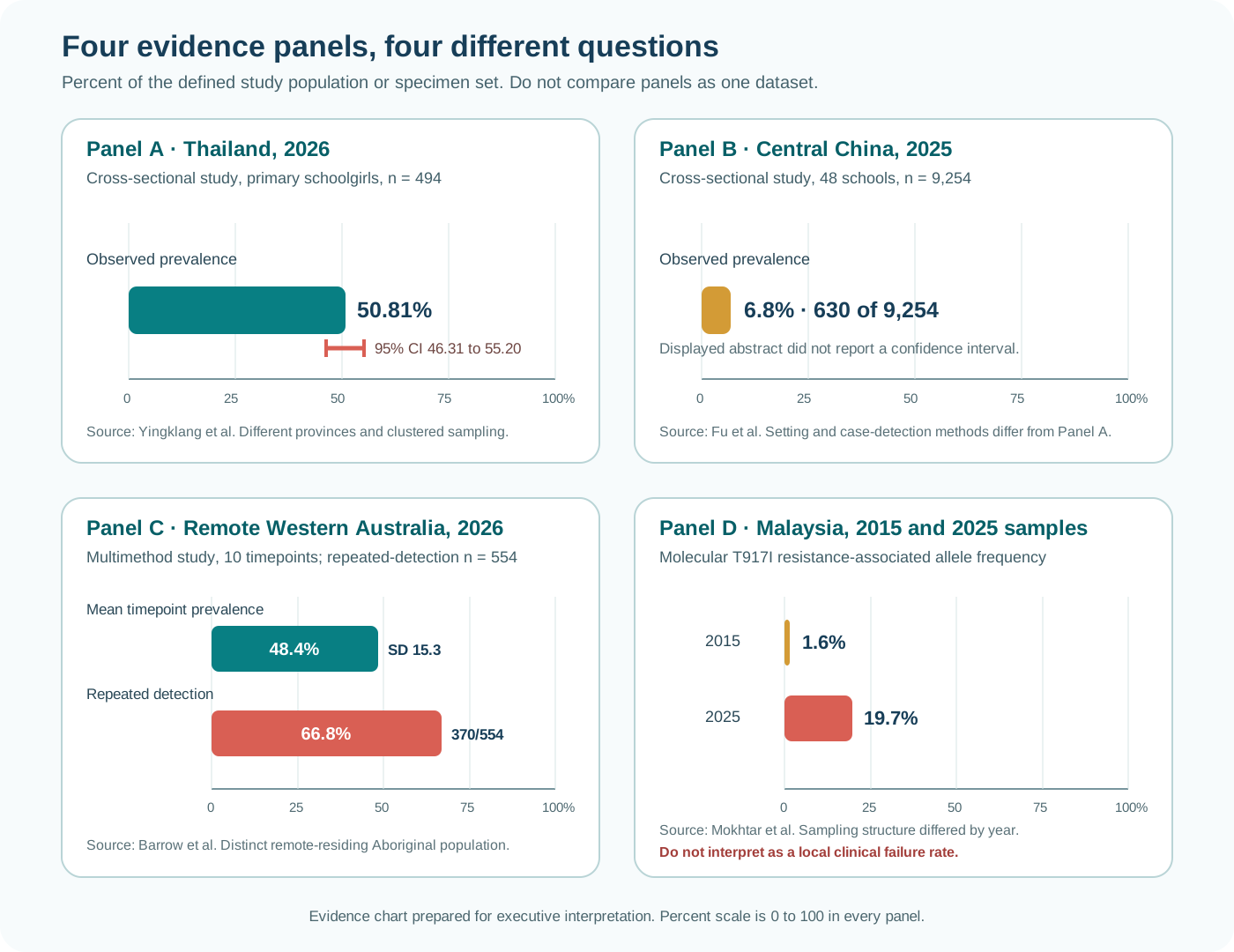
Resistance evidence deserves disciplined interpretation. A 2021 systematic review and meta-analysis included 24 articles and 5,033 lice specimens or study observations as reported by the authors. It estimated a mean pyrethroid-resistance frequency of 76.9%.14 The estimate pooled countries, periods, and molecular methods with substantial variation. It should not be treated as a local treatment-failure rate. A 2026 Malaysian study found the resistance-associated allele frequency increased from 1.6% in its 2015 collection to 19.7% in its 2025 collection, while the authors warned that differences in sampling structure require caution.3 The executive implication is narrower: maintain an authorized route for reassessment after correctly used treatment does not succeed, and monitor local experience without claiming molecular resistance that has not been measured.
Treatment studies also vary. A 2025 systematic review of plant-based therapies included 20 studies, of which 13 were randomized and seven were nonrandomized. Nine randomized trials entered the quantitative analysis. The pooled estimates favored some plant-based interventions, but heterogeneity was high at 83.2%, confidence intervals were wide, and methodological constraints limited certainty.4 A 2020 open-label study of a shampoo containing a coconut-oil derivative found only 12 of 31 participants, or 38.7%, were lice-free at study end.18 These findings argue against casual claims that every natural or alternative product is effective.
Additional surveillance and intervention studies reinforce the transfer problem. Resistance markers were reported in a 2024 study from northeastern Iran, while randomized, quasi-experimental, community, and product-specific studies from Indonesia, Iran, rural Thailand, Egypt, and Germany used different agents, application schedules, populations, and definitions of cure.8,9,10,15,19,21,23,24 The studies belong in clinical evidence review, not in a management dashboard as competing product scores.
Education can be part of the route, but it is not a substitute for access or correct identification. A 2017 randomized trial involving 179 fifth-grade students found that a peer-led, Health Belief Model intervention improved measured knowledge, model constructs, and preventive behavior one month after the program.22 A 2024 quasi-experimental study compared 100 participants receiving structured education with 400 controls and used propensity-score matching to address measured covariates.7 The nonrandom design leaves residual uncertainty, but the study supports a practical control: treatment education should be standardized, checked for understanding, and paired with follow-up.
Closed-loop reliability
A report of head lice needs an owned route, not a chain of conflicting advice.
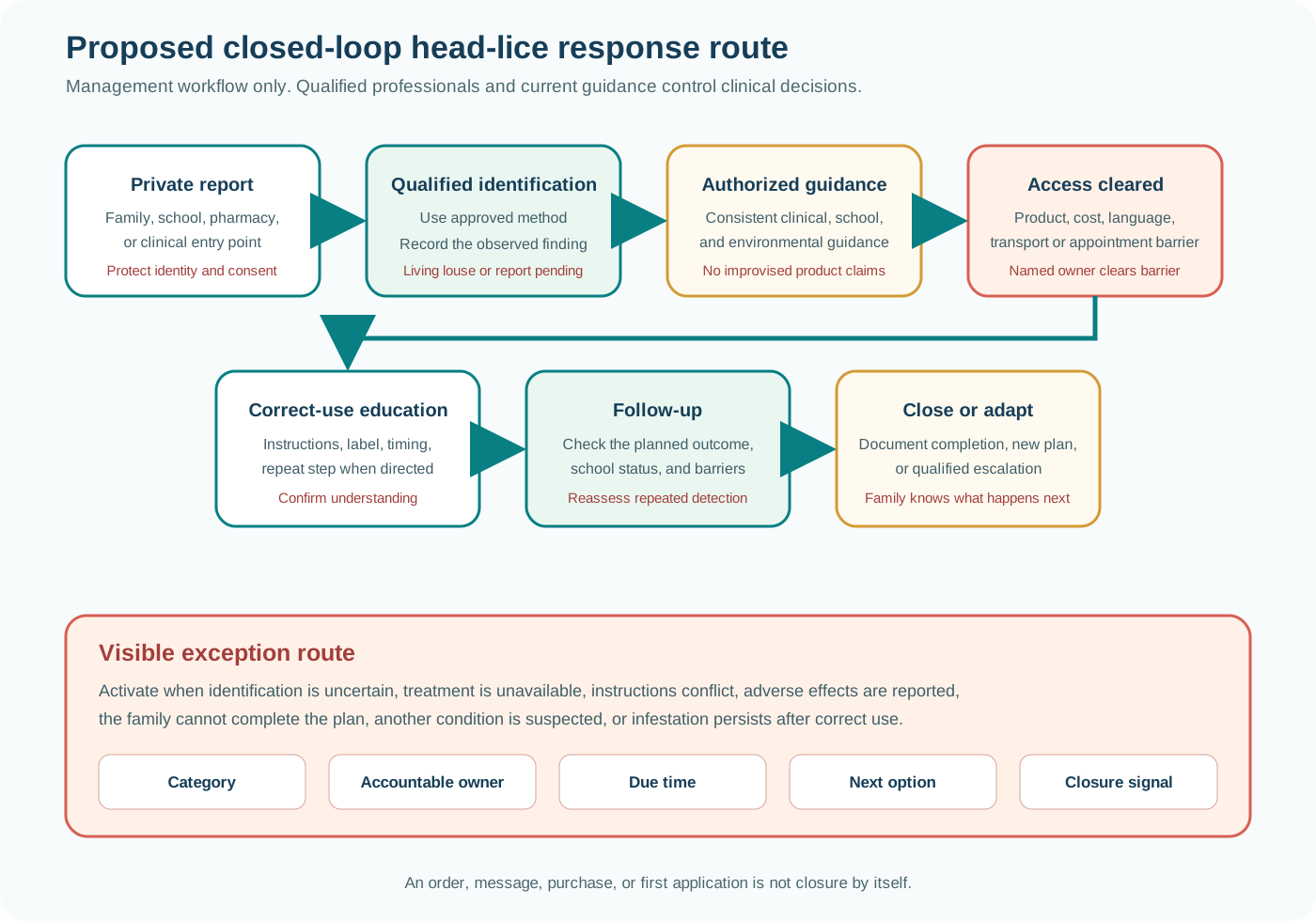
Design begins at the actual entry point. A parent may call a school, show a photograph through a portal, ask a pharmacist, contact a pediatric practice, or report that treatment failed. Each entry point needs a defined responsible role, a privacy rule, an approved information source, a method for distinguishing a confirmed active infestation from an unverified report, and a clear next step. Staff should not improvise product recommendations, school-exclusion rules, or environmental cleaning instructions.
The route should separate operational completion signals. A message sent is not a message understood. A suspected nit is not a living louse. A product purchased is not a treatment correctly used. A first application is not a completed course when repeat use is directed. A school notification is not a coordinated response. A second report is not proof of resistance. Each stage needs its own owner and evidence of completion.
Figure 2. Proposed closed-loop head-lice response route
Define the minimum viable handoff
When the issue moves between a school, family, pharmacy, and clinical practice, the receiving role should know what was observed, whether a living louse was identified, what information was already provided, what was used and when, what barriers exist, what consent governs communication, and who remains responsible until acceptance. The sender needs an acknowledgment, redirection, or escalation signal. Privacy should be protected by sharing only the information needed for the task.
The exception path belongs inside the standard. Uncertain identification, repeated detection, adverse effects, contraindication questions, unavailable products, conflicting instructions, inability to pay, language barriers, or concern for another condition should not return the family to a generic queue. Each exception needs an accountable role, due time, authorized interim instruction, next available option, and closure definition. Leaders should review aged exceptions without exposing unnecessary personal information.
Family burden and respectful communication
A technically correct plan can still fail if the family cannot use it.
Families may need to coordinate inspection, treatment, repeat applications when directed, combing, close-contact review, school communication, work schedules, child care, transportation, and product cost. The route should make the next step visible and reduce avoidable work. Leaders should test instructions with families from different literacy, language, disability, cultural, and digital-access backgrounds. The aim is not more information. It is usable information delivered at the right time.
A 2022 qualitative study of 23 parents, teachers, and healthcare practitioners in southern Iran identified determinants across economic and political conditions, family factors, social and cultural conditions, personal and psychological issues, geography, school and education, and medication or therapy factors.12 The study does not rank causes for another health system. It supports a multi-level response and warns against treating every failure as a knowledge deficit.
Childcare professionals and health coordinators in a 2022 Croatian qualitative study described themes involving prevention and control, information and knowledge, social issues, psychological issues, and disease perception.13 Participants reported that information was available but its uptake was uncertain. That distinction matters. Publishing a webpage or sending a flyer does not establish understanding.
Communication should avoid language that implies dirtiness, neglect, or low social status. Staff should use neutral terms, speak privately, avoid identifying a child to other families, and explain the approved route without blame. A stigma-sensitive script can acknowledge inconvenience and concern while correcting misinformation. Communications should state what is known, what remains uncertain, and where qualified help is available.
The 2024 qualitative study of adolescent girls shows why concealment and fear deserve attention.6 A response that humiliates a student can drive the problem out of view. A respectful route can encourage earlier reporting, make correct identification more likely, and help the organization learn where instructions or access fail. Those are plausible operational benefits, not causal outcomes proven by the qualitative study.
School policy and community coordination
Policy should reduce disruption without weakening follow-through.
School and childcare policies often determine whether a family experiences a manageable health issue or a disruptive crisis. A 2022 school-nursing update states that head lice do not transmit communicable disease and that school exclusion and no-nit policies are not warranted. It emphasizes the school nurse's role in education, treatment guidance within scope, environmental recommendations, and stigma reduction.11 A Canadian clinical update likewise describes head lice as a societal problem with substantial cost rather than a primary health hazard or disease vector, and states that diagnosis requires detection of a living louse.20
Executives should compare local school, childcare, employee-health, infection-prevention, and public-facing instructions against current authorized guidance. Any variation should have a named authority and documented rationale. The review should ask whether policies require evidence that staff cannot reliably obtain, whether they cause avoidable absence, whether they protect privacy, whether families receive the same message from every entry point, and whether a route exists for persistent or uncertain cases.
Transmission evidence also supports calibrated communication. A review published in 2016 describes direct head-to-head contact as the main route and reports that transmission through inanimate objects is not operationally important in most circumstances.25 Leaders should still defer environmental instructions to current clinical and public-health guidance. The management lesson is to avoid resource-intensive cleaning messages that outrun the evidence or distract from identification, correct treatment use, and close-contact coordination.
A natural experiment during COVID-19 restrictions provides an additional contact signal. An online survey in Buenos Aires analyzed 1,118 children from 627 responses and reported prevalence declining from 69.6% before restrictions to 43.9% during lockdown.16 The study relied on parent report and an uncontrolled before-and-during comparison, so it cannot isolate causation. It is consistent with the biological importance of close contact and should not be used to justify exclusion.
Failure review
Look for work-system conditions before assigning blame.
Repeated detection or treatment failure can reflect many conditions: the original report was not confirmed, instructions were inconsistent, application was incomplete, repeat treatment was missed, close contacts were not coordinated, product access failed, the family could not complete the plan, reinfestation occurred, an alternative product lacked evidence, or reduced susceptibility may be present. A fishbone is useful only if each branch remains a hypothesis until local evidence verifies it.
Figure 3. Qualitative fishbone for an unreliable head-lice route
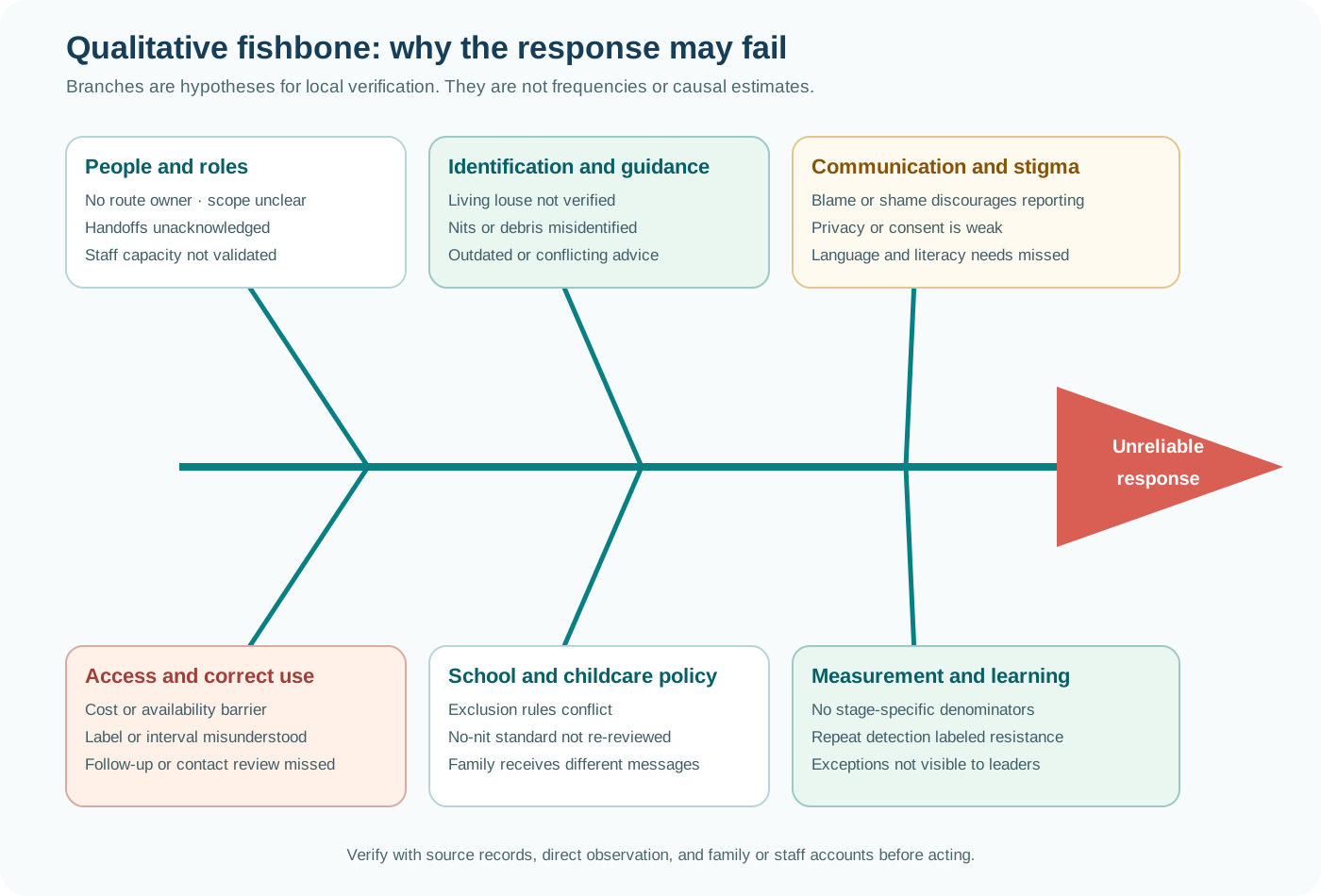
A useful review traces a small sample from report to follow-up. Compare the record with what the family, school nurse, pharmacist, clinician, scheduler, and public-health partner say happened. Confirm whether the failure is isolated, predictable, or produced by the design. Correct the verified condition, test the correction, and monitor whether it holds. Training cannot repair missing capacity, unaffordable products, contradictory policy, poor privacy controls, or an inaccessible route.
Operating system
Build one accountable network around the child and family.
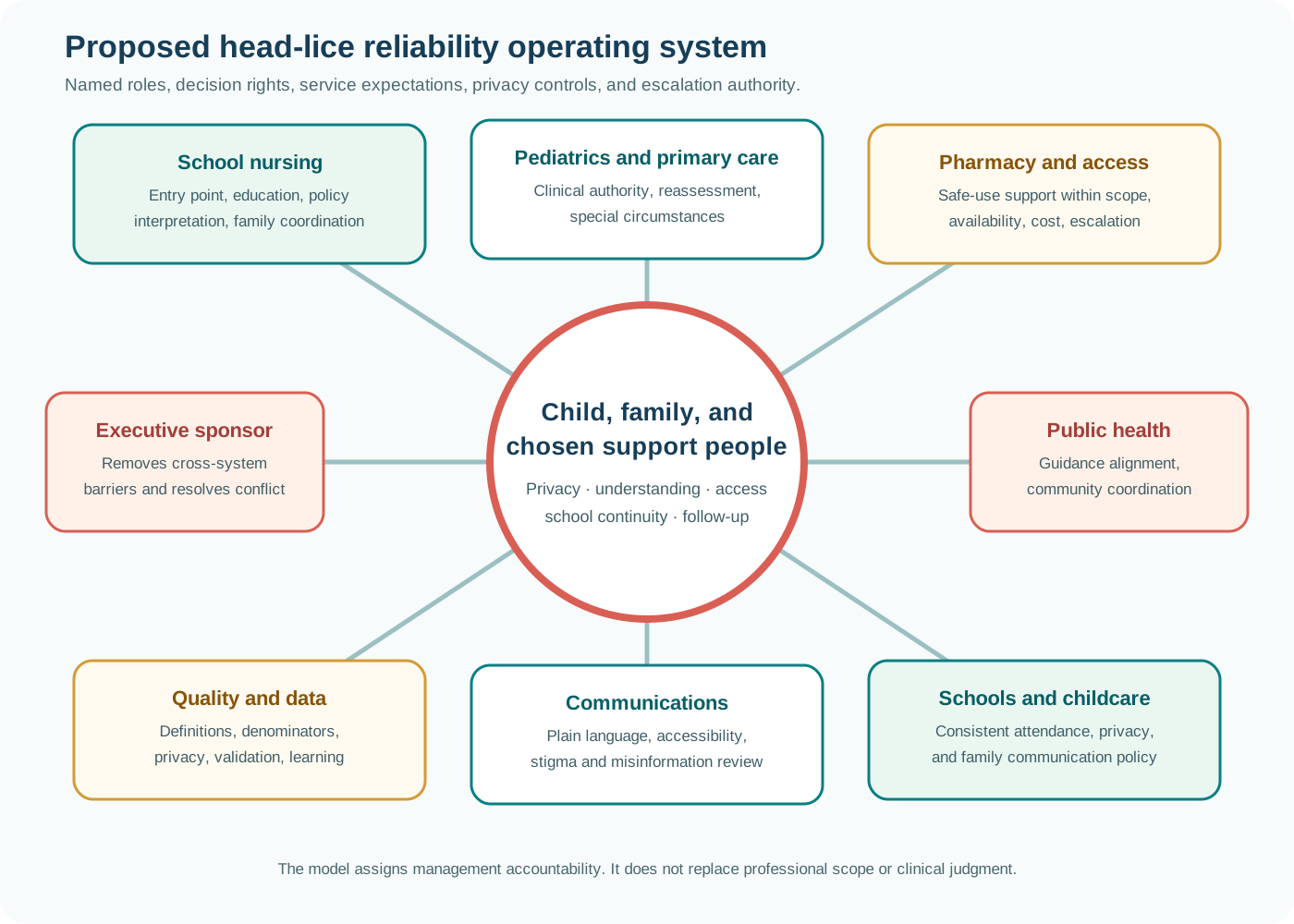
A dependable response needs distributed expertise and explicit accountability. The child, family, and chosen support people belong at the center. School nurses and childcare health staff provide an accessible entry point and policy interpretation. Pediatric and primary-care teams provide clinical authority. Pharmacists support safe product use within scope and identify access problems. Public-health and community partners align communications. Quality and data teams define measures and protect privacy. Communications teams test language for accuracy and stigma. An executive sponsor resolves conflicts that no single partner can correct.
Figure 4. Proposed head-lice reliability operating system
Data architecture should follow the route. Leaders need controlled definitions for reported concern, confirmed active infestation, education completed, treatment access barrier, follow-up due, repeated detection, school absence, and unresolved exception. Each measure needs a source, owner, missingness rule, and privacy threshold. Staff should not infer a local prevalence rate from the number of incoming calls because awareness, access, reporting behavior, and case definition all affect the count.
Governance should protect clinical boundaries. A dashboard must not recommend an individual product or diagnose infestation. Automated messages should not expose a child's identity or send unverified claims. Public communications should state the population, source, date, and limitation for every statistic. The purpose of measurement is to support consistent work and shared learning, not to create false precision.
Measurement architecture
Use a scorecard that separates identification, access, policy, and burden.
One closure rate cannot represent the whole route. The scorecard should distinguish response, qualified identification, understanding, access, treatment follow-through, school disruption, repeated detection, stigma or privacy concerns, and exceptions. External study values should never become local targets without a separate governance process.
Figure 5. Proposed head-lice response scorecard
| Measure | Numerator | Denominator | Source and owner | Cadence | Interpretation limit |
|---|---|---|---|---|---|
| Timely first response | Reports receiving the approved first response within the local service window | Eligible reports received | Call, portal, or school log; route owner | Weekly | Response is not confirmed infestation |
| Qualified identification | Reports with the locally approved identification result documented | Reports requiring identification support | Clinical or school-health record; clinical authority | Weekly and monthly | Documentation quality and staff scope affect the measure |
| Consistent instruction | Audited encounters using the current approved information set | Audited eligible encounters | Audit sample; education owner | Monthly | Script use does not establish understanding |
| Understanding confirmed | Families meeting the locally defined teach-back or comprehension criteria | Families offered the assessment | Encounter record; patient-experience lead | Monthly | Language, mode, and response bias affect results |
| Access barrier resolved | Logged product, cost, transportation, language, or appointment barriers closed by the due time | Logged access barriers | Navigation log; access owner | Weekly | Closure does not prove treatment success |
| Follow-up completed | People with the planned follow-up completed in the approved window | People with follow-up due | Clinical or school-health record; route owner | Weekly and monthly | The interval depends on the authorized plan |
| Repeated detection reviewed | Repeated detections receiving structured reassessment | Repeated detections meeting the local review definition | Clinical and route records; clinical authority | Monthly | Repeated detection does not establish resistance |
| Avoidable school disruption | Confirmed route episodes with absence beyond current local authorized policy | Episodes with school-status data | School record; school-health lead | Monthly | Attendance reasons and policy context must be verified |
| Privacy or stigma concern | Verified concerns receiving review and corrective action | Concerns reported through approved channels | Experience and compliance records; executive sponsor | Monthly or quarterly | Underreporting is likely and counts are not prevalence |
| Unresolved exceptions | Open route exceptions past the approved due time | All logged route exceptions | Exception log; executive sponsor | Weekly | Depends on consistent classification and logging |
| Equity review | Stage-specific numerator for the selected measure | Its matching stage-specific denominator | Validated linked data; quality team | Quarterly | Small cells need protection and observed differences do not establish cause |
Balancing measures should accompany every change. Faster response should not produce more unnecessary treatment. Reduced school absence should not weaken follow-up. More detection should not reduce privacy. Standardized education should not increase staff workload beyond available capacity. A successful observance leaves the route both more dependable and more humane.
Executive agenda
A focused 90-day test can make the route visible.
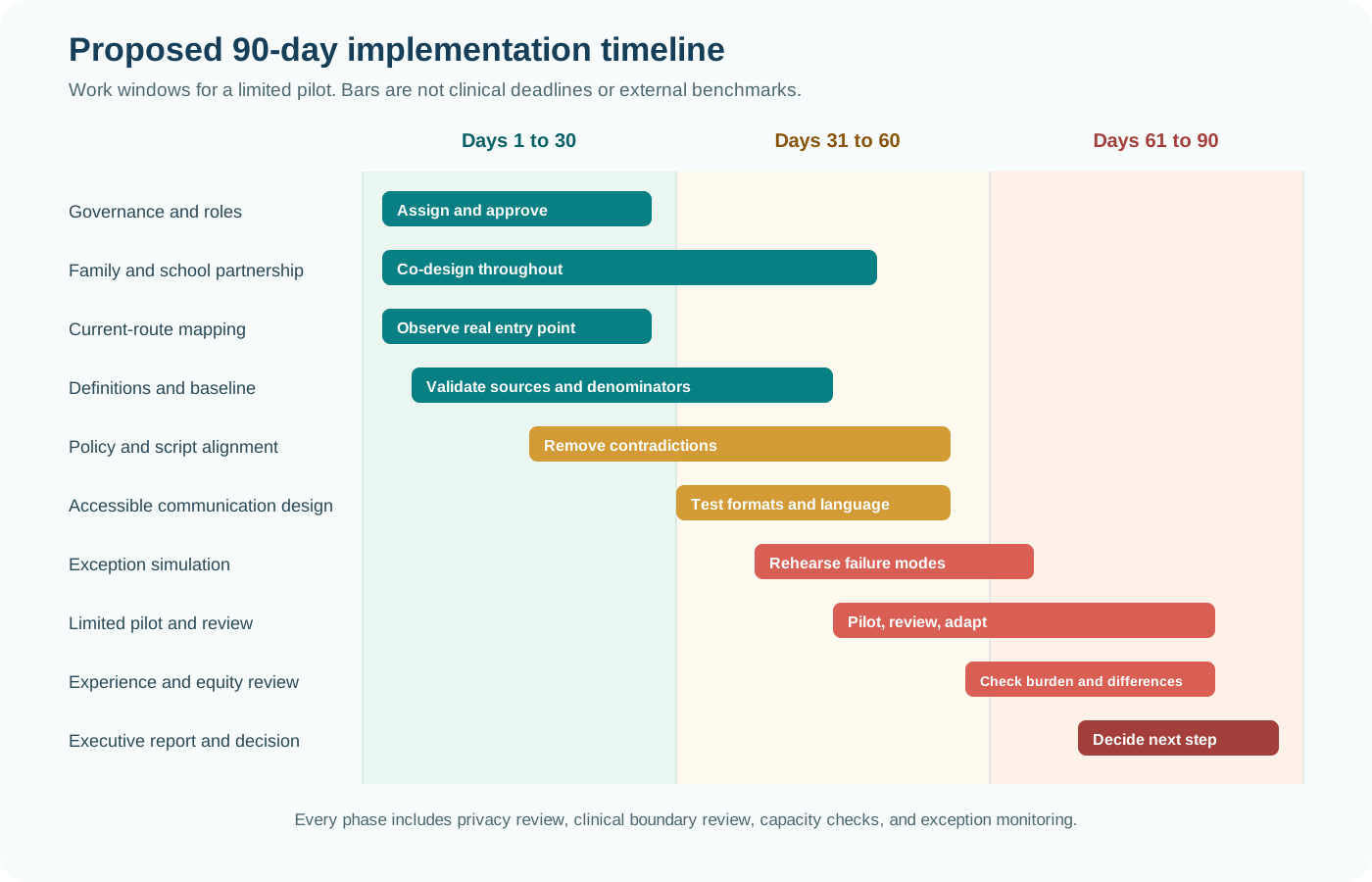
Days 1 to 30
Define and verify
- Name the executive sponsor, clinical authority, operational owner, school-health partner, pharmacy partner, and family advisor.
- Select one entry point and map the current route through identification, guidance, access, school communication, follow-up, and closure.
- Compare every script and policy against the current approved guidance and remove contradictions.
- Define denominators, completion signals, exception categories, owners, due times, and privacy rules.
- Validate a baseline sample against source records and direct staff or family accounts.
Days 31 to 60
Build and rehearse
- Create the minimum handoff and receiving-role acknowledgment.
- Test plain-language, translated, accessible, non-digital, and stigma-sensitive communication.
- Rehearse uncertain identification, product unavailability, cost barriers, conflicting school instructions, and repeated detection.
- Configure a small exception log with role-based access and verified closure rules.
- Begin a limited pilot with frequent family, school, pharmacy, and clinical review.
Days 61 to 90
Learn and decide
- Review stage-specific completion, elapsed time, family burden, school disruption, balancing measures, and aged exceptions.
- Trace failures with source records, direct observation, and family or staff accounts.
- Correct verified work-system conditions and test whether the correction holds.
- Report limitations, capacity, costs, privacy risks, and unintended effects.
- Decide to adapt, expand, pause, or stop through clinical, school-health, and executive governance.
Figure 6. Proposed 90-day implementation timeline
Executive review should include more than a dashboard. Ask whether families receive the same answer from every entry point, whether school disruption decreased without weakening follow-up, whether staff workload is sustainable, whether privacy is protected, whether repeated detection receives reassessment, and whether any group experiences a different rate of loss at a specific stage. If the evidence cannot support a causal claim, report an association or operational observation. If the data are incomplete, say so.
Peer-reviewed evidence portfolio
References
Newest first within the verified academic portfolio. Study designs and limitations are described in the article.
- Yingklang M, Jaidee PH, Janwan P, et al. Epidemiology, associated factors and implications for effective control of pediculosis among primary schoolgirls in Thailand: a cross-sectional study. Insects. 2026;17(4).
- Barrow T, Enkel S, Thomas H, et al. Burden and experiences of head lice infestation among children in Western Australia. Journal of Parasitology Research. 2026;2026:8631800.
- Mokhtar AS, Zahanuddin A, Lau YL, et al. Molecular detection of the kdr T917I mutation in head lice (Psocodea: Pediculidae) from Malaysia and its increasing frequency over a decade. Journal of Insect Science. 2026;26(2).
- Chen J, Mei A, Jacques A, et al. Therapeutic potential of plant-based therapies in pediculosis capitis: systematic review and meta-analysis. PLoS Global Public Health. 2025;5(7):e0004841. doi:10.1371/journal.pgph.0004841.
- Fu YT, Deng YP, Xie Y, et al. Impact factors and genetic characteristics of head lice infestation in schoolchildren: a cross-sectional study from 2018 to 2023 in central China. Parasites & Vectors. 2025;18:184.
- Banafshi Z, Khatony A. Exploring the lived experiences of adolescent girls affected by head lice infestation: a qualitative descriptive study. BMC Infectious Diseases. 2024;24:825.
- Moradi-Asl E, Saghafipour A, Hamta A, et al. The effect of educational intervention on efficacy of 1% permethrin shampoo and 4% dimeticone lotion to treat head lice infestation using propensity score matching. BMC Infectious Diseases. 2024;24:143.
- Taheri M, Ghahvechi Khaligh F, Hanafi-Bojd AA, et al. Epidemiological analysis of pediculosis and the distribution of kdr mutation frequency in head lice populations in Torbat Heydarieh city of Khorasan Razavi Province, Northeastern Iran. BMC Research Notes. 2024;17:323.
- Rahmayunita G, Pertiwi LK, Ascobat P, et al. Efficacy and safety of 1% and 5% permethrin lotion as treatment for pediculosis capitis in children: a double blind randomized controlled study. Journal of Pakistan Association of Dermatologists. 2023;33(2):513-518.
- Ghalandari N, Edalatkhah Tatafi A, Mohammadnezhad G, et al. Comparing the efficacy of three methods of permethrin application in pediculosis capitis: a randomized clinical trial. Journal of Cosmetic Dermatology. 2023. Published online ahead of print.
- Bultas MW, Smith S. Staying ahead of head lice: pediculosis treatment updates. NASN School Nurse. 2022;37(6):339-344.
- Toghroli R, Hosseini Z, Ziapour A, et al. Explaining the determinants of pediculosis control and prevention: a qualitative study in southern Iran. Inquiry. 2022;59:1-12.
- Neuberg M, Banfic I, Cikac T, et al. Knowledge, attitudes, psychosocial perspectives and applied epidemiology in the control of head lice in Croatian preschool children: a qualitative study on childcare professionals and health coordinators. Children. 2022;9(1):66. doi:10.3390/children9010066.
- Mohammadi J, Azizi K, Alipour H, et al. Frequency of pyrethroid resistance in human head louse treatment: systematic review and meta-analysis. Parasite. 2021;28:86.
- Martinez de Murguia Fernandez L, Puig Algora G, Bajona Roig M, et al. Effectiveness and tolerability of a squalane and dimethicone-based treatment for head lice. Parasitology Research. 2021;120(5):1883-1890.
- Galassi F, Ortega-Insaurralde I, Adjemian V, et al. Head lice were also affected by COVID-19: a decrease on pediculosis infestation during lockdown in Buenos Aires. Parasitology Research. 2021;120(2):443-450.
- Hurst SK, Dotson JAW, Butterfield P, et al. Stigma resulting from head lice infestation: a concept analysis and implications for public health. Nursing Forum. 2020;55(2):252-258.
- Burgess IF, Burgess NA. Anti-lice Protector Shampoo: clinical study shows lack of efficacy of coconut oil derivatives in the elimination of head louse infestation. Turkiye Parazitolojii Dergisi. 2020;44(4):211-215.
- Singhasivanon OU, Lawpoolsri S, Mungthin M, et al. Prevalence and alternative treatment of head-lice infestation in rural Thailand: a community-based study. Korean Journal of Parasitology. 2019;57(5):499-504. doi:10.3347/kjp.2019.57.5.499.
- Cummings C, Finlay JC, MacDonald NE. Head lice infestations: a clinical update. Paediatrics & Child Health. 2018;23(1):e18-e24.
- Soleimani-Ahmadi M, Jaberhashemi SA, Zare M, Sanei-Dehkordi A. Prevalence of head lice infestation and pediculicidal effect of permethrin shampoo in primary school girls in a low-income area in southeast Iran. BMC Dermatology. 2017;17:10. doi:10.1186/s12895-017-0062-9.
- Moshki M, Zamani-Alavijeh F, Mojadam M. Efficacy of peer education for adopting preventive behaviors against head lice infestation in female elementary school students: a randomised controlled trial. PLoS One. 2017;12(1):e0169361. doi:10.1371/journal.pone.0169361.
- Semmler M, Abdel-Ghaffar F, Gestmann F, et al. Randomized, investigator-blinded, controlled clinical study with lice shampoo versus dimethicone for the treatment of infestations with head lice. Parasitology Research. 2017;116(7):1863-1870.
- Wolf L, Eertmans F, Wolf D, et al. Efficacy and safety of a mineral oil-based head lice shampoo: a randomized, controlled, investigator-blinded, comparative study. PLoS One. 2016;11(6):e0156853. doi:10.1371/journal.pone.0156853.
- Meister L, Ochsendorf F. Head lice: epidemiology, biology, diagnosis, and treatment. Deutsches Arzteblatt International. 2016;113(45):763-772. doi:10.3238/arztebl.2016.0763.
Scope note: This executive brief supports healthcare management, school-health coordination, public-health communication, quality improvement, and governance. It does not diagnose infestation, recommend an individual product, replace product labeling, or provide personal medical advice. Qualified professionals should use current guidance, individual information, and local policy.