


September 2026 · Executive Brief
National Recovery Month 2026: Connect Awareness to Respectful Access and Follow-Through
Use September to turn recovery recognition into a dependable operating route: respectful entry, evidence-based options, shared decisions, supported transitions, visible barriers, and accountable follow-through.
Leadership signal
Recovery recognition is credible only when the operating system is ready.
National Recovery Month gives healthcare executives a practical opportunity to examine how people experience the route from first contact to sustained support. The observance should not reduce recovery to a slogan, a single clinical outcome, or one prescribed path. Recent research describes recovery as multidimensional and shaped by clinical care, relationships, housing, employment, community, safety, identity, and personal goals. A 2026 study integrating the perspectives of 43 service users and 10 healthcare workers found that workforce gaps, medication shortages, fragmented care, stigma, economic insecurity, untreated comorbidities, and high-risk post-treatment environments interacted with family support, peer mentorship, multidisciplinary care, and other recovery resources.1
For leaders, the assignment is not to define recovery for another person. It is to make a respectful, evidence-informed route available and reliable. Every entry point should identify the receiving role, the privacy rule, the expected response, the options that qualified professionals may discuss, the method for documenting acceptance, and the exception path when capacity or eligibility is uncertain. A message delivered is not a connection completed. A referral ordered is not a referral accepted. A list of phone numbers is not a closed loop.
Recovery housing research illustrates why completion and departure cannot be interpreted casually. A 2026 study used intake data from 2,021 residents and open-ended survey data from 822 respondents. Reasons for leaving recovery housing included recovery-related events as well as housing conditions, interpersonal conflict, and financial barriers.2 The executive implication is narrow but important: classify the transition before judging it, preserve the person's account, and do not treat every departure as individual failure.
Access improvement requires capacity, preparation, and supervision. In a stepped-wedge trial spanning 127 rural primary-care facilities, 172 healthcare workers received a ten-day training followed by quarterly supportive supervision. The intervention was associated with increased detection of several mental, neurological, and substance-use conditions and with improved provider and patient outcomes, although generalizability requires additional study.3 Training mattered within a larger implementation structure. Leaders should not infer that a one-time lecture will repair inadequate staffing, unavailable services, weak escalation, or missing feedback.
Research on opioid-related harm prevention in higher education reached a similar implementation conclusion. A 2026 scoping review included 46 studies across prevention, early intervention, treatment, and recovery. Primary prevention dominated the portfolio, while twelve studies examined overdose-prevention programs and supported the feasibility of peer education and naloxone distribution in college settings.4 The review describes one setting and does not establish a universal program. It demonstrates the value of mapping a complete cascade instead of measuring communications alone.
Evidence to action
Use the strongest evidence each decision requires, and preserve its limits.
The academic portfolio includes systematic and scoping reviews, an implementation trial, qualitative studies, surveys, and implementation research. These designs answer different questions. Reviews can map common barriers and strategies, but their conclusions inherit variation in the included studies. Trials can estimate an intervention effect under defined conditions, but transfer depends on setting and fidelity. Qualitative studies reveal experience and mechanisms without estimating prevalence. Surveys describe associations and attitudes without proving cause. Executive summaries should name the design, population, denominator, and transfer limit whenever a number is shown.
Implementation signal
Across 28 studies of substance-use service implementation for pregnant and birthing people in acute-care settings, the most frequently reported strategy group was education and learning collaboratives, followed by clinical workflows and pathways. Only five studies explicitly considered racial and ethnic equity in design or implementation.14
Stigma signal
A 2026 review identified 13 medical-school intervention studies, eight of which reported significant reductions in opioid-use-disorder stigma. The review found multiple educational approaches and insufficient evidence to isolate the most effective components.5
Digital signal
A 2026 scoping and commercial review included 34 academic studies and 21 commercial tools. Acceptance and feasibility were generally favorable, but efficacy evidence remained mixed and early, and privacy and safety required attention.9
Figure 1. Implementation strategies reported across 28 acute-care studies
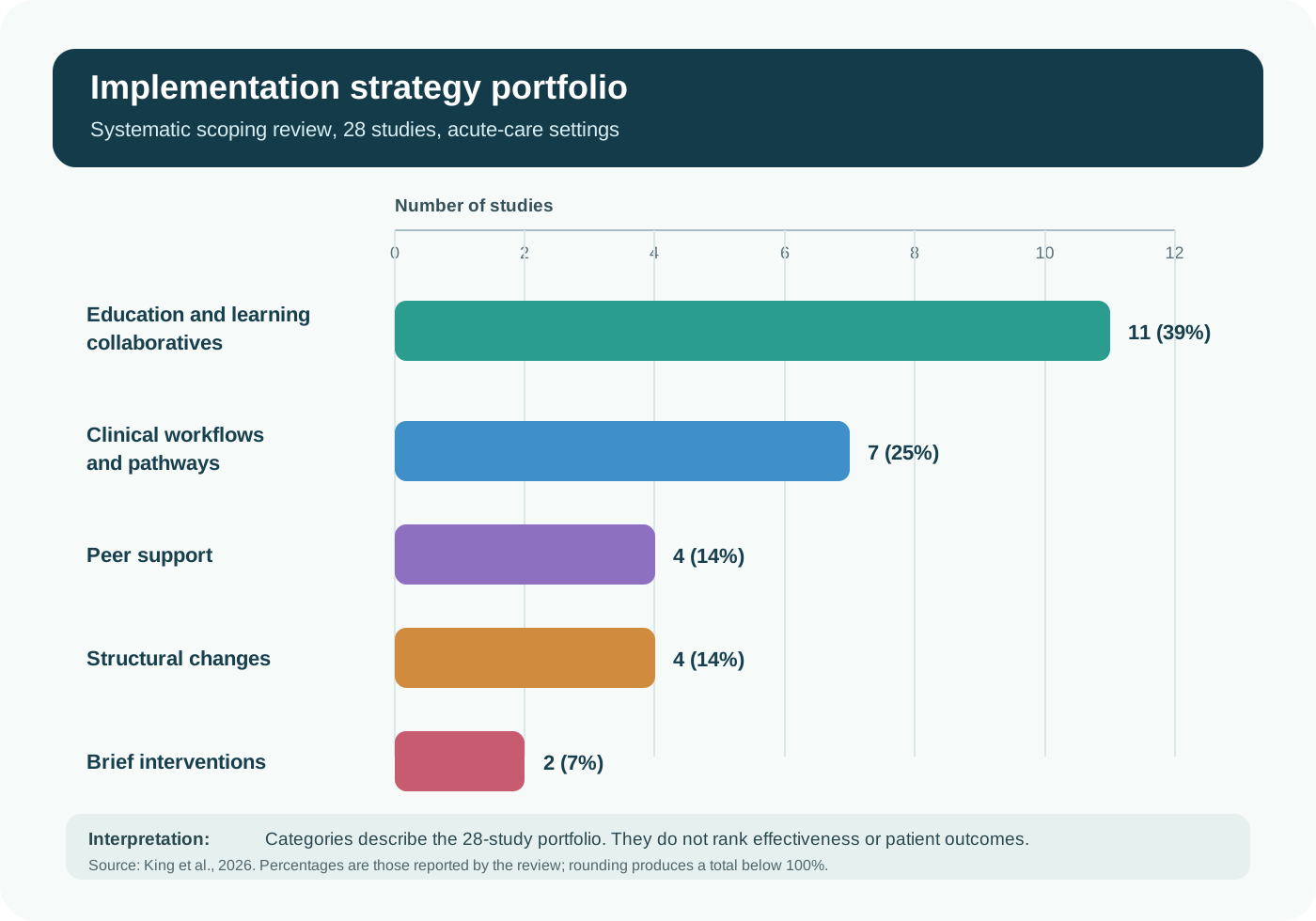
The chart answers a descriptive question: what strategy types appeared in the included studies? It does not show which strategy worked best. The review found that most studies were observational, only one was experimental, and downstream adoption and sustained service use were not consistently evaluated.14 Leaders should use the distribution to plan a balanced implementation package, then test locally whether the pathway is accepted, used, sustained, and equitable.
Workforce education can reduce stigma, but the evidence cautions against treating education as a stand-alone fix. The medical-school review found eight positive studies among thirteen, yet methods and intervention components varied.5 A 2025 primary-care scoping review synthesized 23 studies and grouped barriers to medications for opioid use disorder into logistical and institutional challenges, knowledge and training gaps, and stigma or fear of diversion. Reported facilitators included education, reimbursement changes, and supportive clinical policies and protocols.16 Education needs executive sponsorship, usable workflows, protected time, consultation, and operational support.
Person-centered choice also matters. A qualitative systematic review of 13 articles about extended-release buprenorphine identified themes involving normal life, stigma, physiological effects, time and financial investments, life goals, and autonomy.15 This evidence supports shared decision-making and respectful option presentation. It does not establish that one formulation is appropriate for every person. Qualified clinicians, current evidence, individual circumstances, consent, and local availability control care.
Peer support is promising, but role design and supervision determine whether it is safe and sustainable. A 2026 systematic review of peer interventions for cocaine and crack cocaine treatment reported four studies with statistically significant substance-use outcomes and three showing positive participation outcomes, while also identifying inconsistent reporting of peer training and limited qualitative research.11 A 2025 scoping review of peer-support supervision found little direct research at the intersection of peers, opioid-use care, medical settings, and supervision.18 Leaders should define scope, supervision, documentation, compensation, workload, escalation, confidentiality, and support for peer specialists rather than adding a peer role to an unrepaired pathway.
Broader recovery resources should be offered without prescribing a single worldview. A 2026 meta-analysis of 55 longitudinal studies with 540,712 participants found a protective association between spirituality and harmful or hazardous alcohol and other drug outcomes, with a pooled relative risk of 0.87 and a 95% confidence interval from 0.84 to 0.91.13 The analysis demonstrates association across the included studies. It does not justify requiring spiritual participation or assuming that a particular practice supports every person. Respectful systems make multiple evidence-informed and community-based supports visible while protecting choice.
Closed-loop reliability
Design the route around acknowledgment, choice, and continuity.
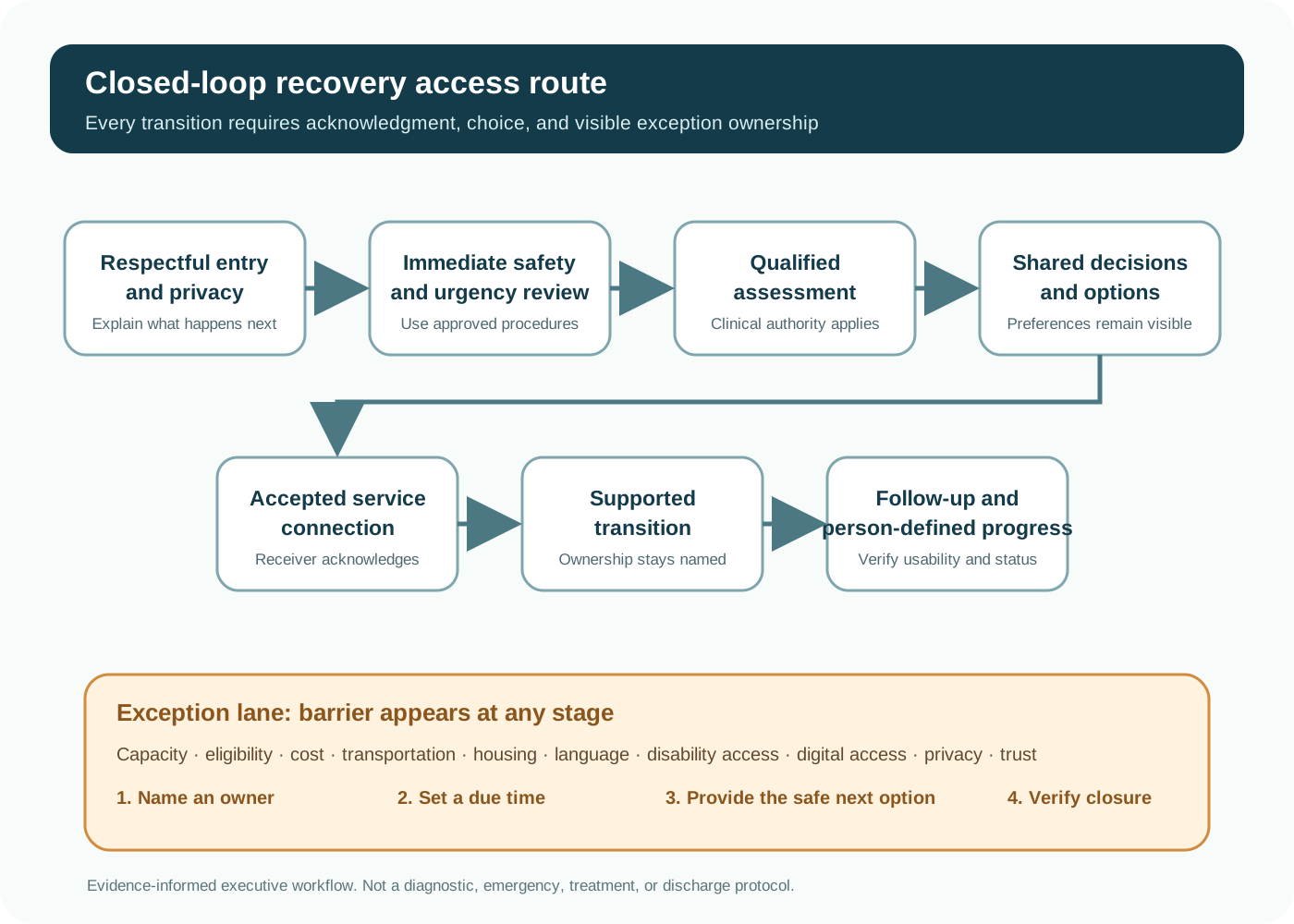
The route begins wherever people actually ask for help: primary care, emergency services, inpatient care, behavioral health, a community partner, a recovery organization, an employee-assistance program, a digital portal, or a family call. Every entry point should use neutral language, protect privacy, clarify urgent needs, identify the qualified receiving role, explain what will happen next, and establish who retains responsibility until acceptance.
The process should not require people to repeat sensitive information at every transition. Collect only what is needed, use approved channels, make consent visible, and distinguish an administrative handoff from a clinical decision. When a service cannot accept the person, the next step should be an owned redirection rather than a dead end. Capacity constraints, insurance questions, transportation, childcare, language access, digital access, housing instability, and fear of discrimination belong in the pathway record because they can determine whether a planned service is usable.
Figure 2. Proposed closed-loop recovery access route
Specify the minimum viable handoff
A reliable handoff identifies the sender, the qualified receiver, the person's consent and communication preference, the purpose of the connection, time-sensitive needs, barriers already identified, the expected response time, and the role that remains accountable until acceptance. The receiving service should acknowledge, accept, redirect with ownership, or escalate. Silence is not an outcome. The record should show whether the person could use the offered next step, not only whether staff transmitted it.
The exception lane belongs inside the standard. No capacity, uncertain eligibility, cost, transportation, housing instability, language or disability access, technology failure, privacy concern, fear of punitive consequences, or a missed contact should trigger an unowned return to the beginning. Each exception needs a named owner, a due time, a safe interim instruction within professional scope, a next available option, and an escalation threshold. Leaders should review aged exceptions while protecting sensitive information.
Access, dignity, and recovery resources
Respectful language is a control, not a courtesy added after design.
Stigma can shape disclosure, trust, service uptake, quality of life, and whether grief or support needs are recognized. A 2026 study of 300 people with substance-use disorders found that depression and stigma were associated with quality-of-life domains, although its cross-sectional and mediation analyses do not prove that changing one factor will produce a specific outcome.8 A qualitative study of six people bereaved by a peer's drug-related death described shame, survivor guilt, invalidated relationships, and difficulty finding support.12 These studies support a health-based, nonjudgmental route and a broader understanding of whose needs become invisible.
Leaders should audit public messages, intake forms, scripts, portal options, diagnosis labels, policies, and performance reports. Use person-first or person-preferred terms. Avoid language that equates recurrence with moral failure, labels a toxicology result as a person's character, or assumes one recovery goal. Ask people with lived experience to test whether messages preserve dignity, clarify choices, explain privacy, and identify a real next step.
Public attitudes can influence program implementation. A 2026 Pennsylvania survey found greater support for some harm-reduction strategies among respondents familiar with a person with substance-use disorder, while differences did not appear for every strategy.6 Familiarity was associated with support, not proven to cause it. Leaders should pair stories with accurate evidence, voluntary participation, privacy protection, and community dialogue rather than using personal disclosure as a persuasion tool.
Recovery resources often extend beyond treatment encounters. A 2026 overview of six vocational-rehabilitation reviews covering 69 unique studies and 11,236 participants found the strongest evidence for person-centered supported-employment models, while identifying fragmented services, employer stigma, and sobriety requirements as barriers.10 A separate implementation study of Individual Placement and Support in English drug and alcohol services emphasized integration, tailored communication, stigma reduction, and learning networks.7 Employment support should be integrated with, not made contingent upon, moral judgments or an unrealistic linear pathway.
Digital tools can extend reach but may also reproduce exclusion. The 2026 digital review found mixed and early efficacy evidence, limited peer-reviewed evaluation of commercial tools, and safety and privacy concerns.9 A digital option should not become the only option. Governance should address accessibility, language, device and data availability, identity verification, crisis boundaries, data sharing, vendor claims, clinical oversight, and a human alternative.
Qualitative failure review
When follow-through breaks, investigate the work system before assigning blame.
Barriers usually accumulate. A person may face an unclear entry point, a stigmatizing interaction, no appointment capacity, a transportation gap, a cost question, a digital barrier, and a referral that no one confirms. The visible event may be a missed visit, but the work-system conditions began earlier. Pregnancy-related reviews describe fear of stigma or custody loss, provider bias, knowledge gaps, fragmented services, geographic barriers, insurance limitations, and punitive policy as interacting access risks.17 These findings come from a specific population and should not be generalized mechanically, but they make multi-level investigation essential.
Figure 3. Qualitative fishbone for interrupted recovery access
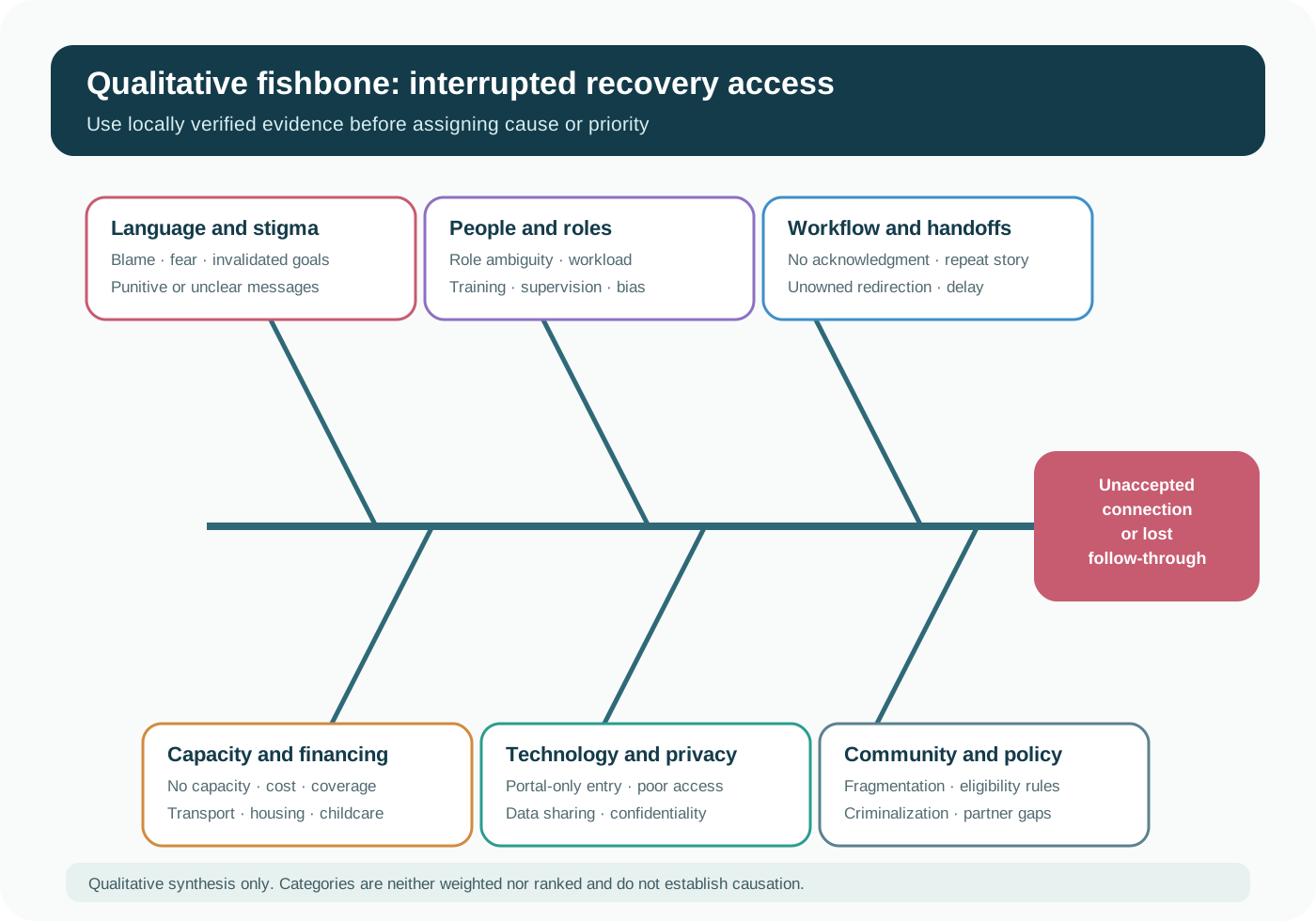
A useful review reconstructs a small sample from first contact to the current status. Compare the record with what the person, peer specialist, access staff, clinician, community partner, and receiving service say occurred. Identify the first point where ownership, information, capacity, choice, or trust became insufficient. Correct the verified condition, test the correction, and monitor whether it holds. Training cannot repair missing service capacity, unaffordable care, punitive policy, inaccessible transportation, poor privacy controls, or a referral process with no receiving owner.
Equity review belongs at each stage, not only in an annual aggregate. The acute-care implementation review found that only five of 28 studies considered racial and ethnic equity in design or implementation.14 Local organizations should examine stage-specific differences with appropriate privacy protection, community partnership, validated definitions, and cautious interpretation. Observed differences may signal a design problem, but they do not establish cause without further investigation.
Operating system
Build one accountable network around the person and their goals.
A reliable recovery system needs distributed expertise and explicit decision rights. The person and their chosen support people belong at the center. Access and navigation teams make entry understandable. Qualified clinical teams assess needs and discuss evidence-based options. Peer specialists contribute lived-experience expertise within a defined and supported role. Primary care, behavioral health, hospital services, pharmacy, and community organizations coordinate transitions. Housing, employment, transportation, and social-support partners address practical recovery resources. Quality and data teams define measures and protect privacy. Executive governance resolves structural barriers that no single team can correct.
Figure 4. Proposed recovery-oriented operating system
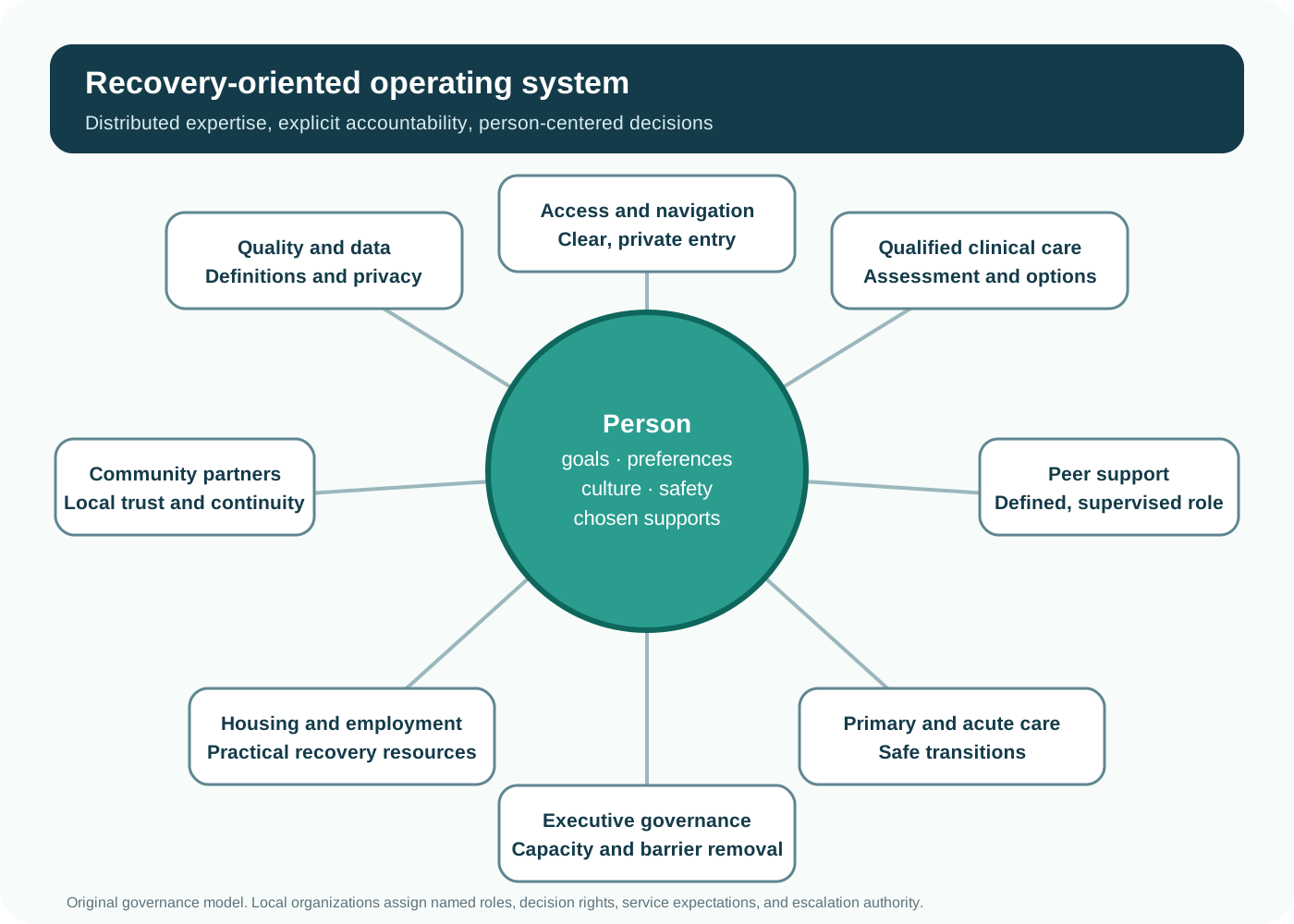
Governance should separate clinical outcomes, person-defined progress, operational reliability, and experience. A care plan, medication choice, or recurrence requires qualified clinical interpretation. Housing stability, employment, connection, safety, and quality of life may be important recovery resources, but their relevance and meaning vary by person. Operational measures can show whether the organization responded, connected, and followed through. Experience measures can show whether people felt respected and whether the route was usable. No single score should be used to label a person's recovery.
Workforce design deserves the same discipline. Peer specialists need training, supervision, psychological safety, role clarity, compensation, and escalation. Clinicians need current evidence, consultation, protected time, and support for complexity. Access teams need accurate eligibility and capacity information. Community partners need clear agreements and a two-way feedback channel. Leaders need an exception review that surfaces capacity, policy, financing, and technology barriers without exposing unnecessary personal information.
Measurement architecture
Measure whether the route works without turning people into performance labels.
A credible scorecard separates entry, acceptance, access, continuity, experience, person-defined goals, and exceptions. Every measure needs a numerator, denominator, source, owner, cadence, missingness rule, and interpretation limit. External research values belong in evidence summaries, not as local targets. Local targets require governance, baseline validation, capacity analysis, and community input.
Figure 5. Proposed recovery access and continuity scorecard
| Measure | Numerator | Denominator | Source and owner | Cadence | Interpretation limit |
|---|---|---|---|---|---|
| Timely first response | Eligible requests receiving the approved first response within the local service window | Eligible requests received | Contact system; access owner | Weekly | A response is not an accepted connection |
| Private, respectful entry | Audited encounters meeting approved privacy and language criteria | Audited eligible encounters | Audit and experience data; privacy and experience leads | Monthly | Audit scores may miss unreported harm |
| Qualified assessment offered | People offered the locally defined qualified assessment when indicated | People meeting the local offer criteria | Clinical record; clinical authority | Monthly | Offer does not establish completion or appropriateness |
| Accepted service connection | Connections acknowledged and accepted by the receiving role | Connections initiated | Referral and partner records; pathway owner | Weekly and monthly | Acceptance does not prove that the service was usable |
| Shared decision documented | Eligible encounters with options, preferences, questions, and decision documented | Eligible decision encounters | Clinical record; clinical authority | Monthly | Documentation does not prove the experience was person-centered |
| Access barrier resolved | Logged barriers closed by the locally approved due time | Logged barriers | Navigation log; access owner | Weekly | Closure needs confirmation from the person or receiving service |
| Transition follow-up completed | People with planned follow-up completed within the approved window | People with follow-up due | Care and partner records; continuity owner | Weekly and monthly | The interval depends on individual and clinical context |
| Person-defined goal review | People whose selected goals were reviewed at the agreed time | People with a goal review due | Care plan; qualified team and person | Monthly | Goal status is not a judgment of worth or recovery identity |
| Peer-support reliability | Eligible peer contacts meeting role, supervision, documentation, and escalation standards | Audited eligible peer contacts | Peer program record; peer lead | Monthly | Role fidelity is not a clinical outcome |
| Unresolved exceptions | Open pathway exceptions beyond the approved due time | All logged pathway exceptions | Exception log; executive sponsor | Weekly | Depends on consistent classification and logging |
| Equity review | Stage-specific numerator for the selected measure | Its matching stage-specific denominator | Validated linked data; quality and equity team | Quarterly | Protect small cells; observed differences do not establish cause |
| Experience and trust | Responses meeting locally defined respect, clarity, choice, and trust criteria | Eligible respondents | Experience survey and interviews; experience lead | Quarterly | Nonresponse and fear of disclosure may bias findings |
Balancing measures should accompany every improvement. Faster referral should not increase inappropriate or unwanted connections. Standardization should not reduce choice. Digital access should not eliminate human access. Stronger documentation should not create unnecessary surveillance. Peer-support expansion should not produce unsafe workload or role substitution. Equity analysis should not expose small groups. A successful observance leaves the system more dependable and more humane.
Executive agenda
A focused 90-day test can convert recognition into an accountable improvement.
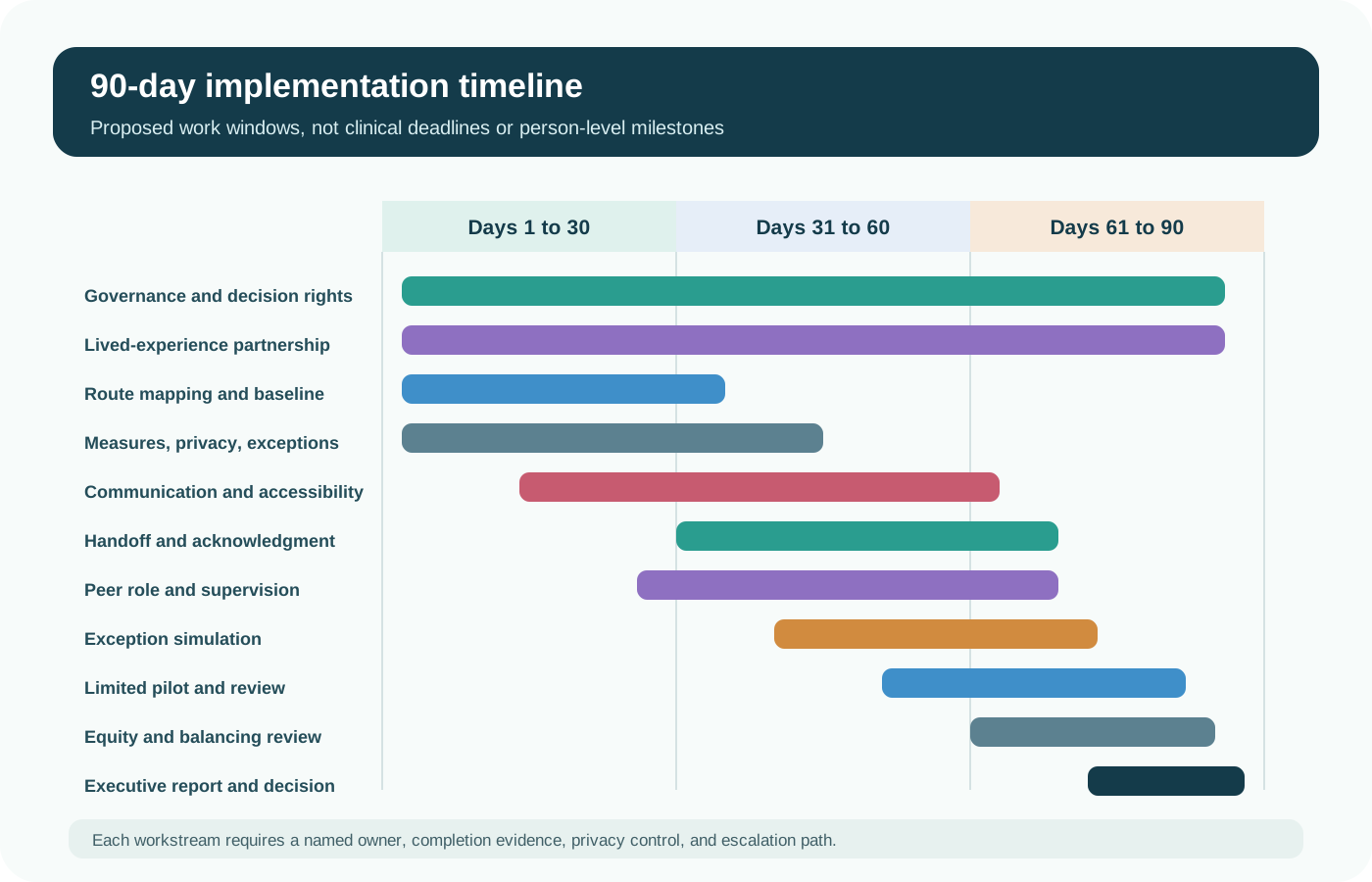
Days 1 to 30
Define and verify
- Name the executive sponsor, clinical authority, access owner, peer lead, community partner, privacy lead, and lived-experience advisors.
- Select one real entry point and map requests through assessment, options, acceptance, transition, follow-up, and person-defined progress.
- Trace a baseline sample and compare records with the accounts of people using and operating the route.
- Define completion signals, denominators, exception types, due times, privacy rules, and balancing measures.
- Identify language, disability, digital, transportation, housing, cost, eligibility, and trust barriers at each stage.
Days 31 to 60
Build and rehearse
- Create the minimum handoff, receiving-role acknowledgment, and owned redirection process.
- Test stigma-sensitive, plain-language, translated, accessible, and non-digital communication.
- Rehearse no capacity, uncertain eligibility, privacy concerns, missed contact, transition from acute care, and community-partner failure.
- Define peer-specialist scope, supervision, compensation, documentation, workload, and escalation.
- Begin a limited pilot with frequent review by people with lived experience, frontline teams, and receiving partners.
Days 61 to 90
Learn and decide
- Review stage-specific completion, elapsed time, experience, equity, balancing measures, and aged exceptions.
- Investigate failures with source records, direct observation, partner feedback, and the person's account when appropriate.
- Correct verified work-system conditions and test whether the correction holds.
- Report evidence limits, missing data, workforce capacity, privacy risks, costs, and unintended effects.
- Decide to adapt, expand, pause, or stop through clinical, community, peer, lived-experience, and executive governance.
Figure 6. Proposed 90-day implementation timeline
Executive review should include more than a dashboard. Ask whether people receive the same answer from every entry point, whether a receiving service accepts responsibility, whether choice and privacy are visible, whether peer specialists are supported, whether community partners can return status, whether capacity information is current, and whether any group experiences disproportionate loss at a specific stage. If the evidence cannot support a causal claim, report an association or an operational observation. If the data are incomplete, say so.
National Recovery Month can leave a durable result when recognition, evidence, operations, and accountability are joined. The goal is not a perfect linear pathway or a single definition of recovery. It is a system in which people are met without stigma, qualified support is reachable, decisions respect preferences, transitions have owners, practical barriers remain visible, and improvement continues after September.
Peer-reviewed evidence portfolio
References
Newest first using the recorded publication date when available. Study designs and transfer limits are described in the article.
- Biribawa C, Vanderplasschen W, Mutyoba JN, et al. Service user and healthcare-worker perspectives on substance use disorder treatment journeys, relapse, and recovery in Sub-Saharan Africa: evidence from Uganda. PLoS Global Public Health. 2026;6(8):e0005691.
- McCormick KA, York J, Lee C, et al. Understanding recovery capital and transitions out of recovery homes: socio-demographic factors and reported reasons for departure. Substance Use & Misuse. 2026:1-11.
- Bitta MA, Kariuki SM, Mwanga DM, et al. Reducing the diagnostic and treatment gap for priority mental, neurological and substance misuse disorders in primary care in rural Kenya: results of a stepped wedge cluster randomized trial from the EPINA study. PLoS One. 2026;21(8):e0352643.
- Freibott CE, Major E, Vest N, et al. Approaches to preventing opioid-related harms in US higher education: a PRISMA-guided scoping review. Journal of American College Health. 2026;74(7):1944-1955.
- Hartman C, Boose Q, Beauchamp G. Impact of interventions addressing stigma and opioid use disorder in medical schools: a scoping review. Substance Use & Misuse. 2026;61(9):1462-1467.
- Snoke JJ, Whipple CR, Kaynak O, et al. Familiarity and support: public perceptions of harm reduction strategies in Pennsylvania. Substance Use & Misuse. 2026;61(10):1573-1580.
- Nightingale M, Hofman J, Zhang K, et al. Effective adaptations in Individual Placement and Support delivery: lessons from the drug and alcohol treatment context. International Journal of Public Health. 2026;71:1609140.
- Cheng WL, Chang CC, Chang KC, et al. Quality of life among people with substance use disorders: a serial mediation model considering self-stigma and psychological distress. Psychology, Health & Medicine. 2026:1-17.
- D'Arcey JN, Zedan SA, Tackaberry-Giddens L, et al. Digital mental health tools for use by individuals in opioid use recovery: an academic scoping and commercial review. PLoS Digital Health. 2026;5(7):e0001544.
- Doostian Y, Asgari Z, Naghavi A. Systematic review overview: vocational rehabilitation interventions for persons with substance use disorders. Journal of Vocational Rehabilitation. 2026;65(1):112-120.
- Duopah YA, Kittle E, Moran L, et al. The effectiveness of peer support interventions for improving cocaine and crack cocaine treatment outcomes: a systematic review. Substance Use & Misuse. 2026;61(8):1192-1203.
- O'Callaghan D, Lambert S. The internalization of stigma and the shaping of the grief experience for peers bereaved by a drug-related death. Omega. 2026;93(3):2143-2170.
- Koh HK, Frederick DE, Balboni TA, et al. Spirituality and harmful or hazardous alcohol and other drug use: a meta-analysis of longitudinal studies. JAMA Psychiatry. 2026;83(4):363-378.
- King C, Fawole A, Laynor G, et al. Implementing substance use services into acute care settings for pregnant and birthing people: a systematic scoping review of implementation and quality improvement strategies. PLoS One. 2026;21(3):e0344389.
- Flam-Ross JM, Zampini GF. Reported patient experiences of extended-release buprenorphine for opioid dependence: a qualitative systematic review and thematic analysis. Drugs: Education, Prevention & Policy. 2026;33(1):7-17.
- Ukaoma SC, Kedia SK, Regmi S, et al. Barriers and facilitators to medications for opioid use prescribing in primary care in the United States: a scoping review. Drugs: Education, Prevention & Policy. 2025;32(6):507-519.
- Admass BA, Admassie BM, Chekol WB, et al. Barriers to opioid replacement therapy in pregnant women with opioid use disorder: a systematic review. Substance Abuse Treatment, Prevention, and Policy. 2025;20(1):39.
- Campbell M, Lucio R, Harris A. An AI-enhanced scoping review: supervision for peer support specialists treating opioid use disorders. Journal of Social Work Practice in the Addictions. 2025;25(4):459-474.
Scope note: This executive brief supports healthcare leadership, recovery-oriented systems, access, quality improvement, workforce design, community partnership, and governance. It does not diagnose a condition, define recovery for an individual, recommend a specific treatment, replace emergency procedures, or provide personal medical advice. Qualified professionals should use current evidence, individual information, informed consent, and local policy.