


September 2026 · Executive Brief
National Sickle Cell Month 2026: Turn Awareness into an Accountable Care Route
Use September to connect recognition with measurable access, respectful acute care, coordinated specialty and primary care, supported transitions, visible barriers, and accountable follow-through.
Leadership signal
Awareness becomes credible when the care system can receive, coordinate, and complete the next step.
National Sickle Cell Month gives executives a defined checkpoint for examining a care route that crosses organizational boundaries. Sickle cell disease is a lifelong inherited blood disorder with acute and chronic consequences, but the leadership problem is not limited to any single diagnosis code, location, or encounter. People may need emergency assessment, ongoing specialty care, primary and preventive care, diagnostic monitoring, reproductive or maternity services, behavioral health support, pharmacy access, pain care, kidney or other subspecialty care, and a dependable transition from pediatric to adult services. When ownership is fragmented, a clinically appropriate plan can still fail operationally.
A 2026 United States scoping review screened 708 records and included 70 studies of healthcare utilization among people living with sickle cell disease. The most commonly reported barrier categories were social, interpersonal, economic, and institutional. Facilitators included technology, education, autonomy, and a positive patient-provider relationship. Individualized pain plans and quality-improvement strategies appeared among interventions associated with reduced healthcare avoidance, although the review did not establish one universally effective model.1 For executives, the central message is that access is a multilevel operating condition. A referral directory or staff education module cannot repair every barrier by itself.
The executive task is to make responsibility visible from entry through follow-through. Every route should identify who receives the request, who makes the clinical decision, what information is required, how urgency is recognized under approved clinical procedures, what the person can expect next, how acceptance is documented, and who remains responsible when the intended service is unavailable. A referral sent is not a referral accepted. An appointment ordered is not an appointment completed. A discharge instruction is not a transition owned.
Population-based evidence shows why acute care cannot be treated as a separate system. An eight-state cross-sectional study using 2018 Sickle Cell Data Collection program data included 27,034 people. In that cohort, 40.2% had at least one hospital admission and 57.0% had at least one emergency department treat-and-release visit during the year.10 These percentages describe utilization in participating states during one year. They do not prove that every acute encounter was preventable or that a single outpatient intervention would change the pattern. They do show that emergency, inpatient, ambulatory, and community operations belong in the same executive view.
Care integration can change what the organization reliably delivers. A 2026 retrospective cohort study examined 388 adults at one tertiary center, including 174 who received care from a primary care clinician embedded in the adult sickle cell team. Embedded primary care was associated with higher odds of multiple general and sickle cell-specific preventive services. The subgroup also had more annual outpatient visits after the model began, 4.2 versus 2.7 before implementation. Annual inpatient admissions were lower numerically, 1.4 versus 1.9, but that difference was not statistically significant.3 The study supports integrated design and careful measurement. It does not prove that embedding one clinician will reproduce the same results in every setting.
Evidence to action
Build the executive narrative from study design, denominator, effect, and transfer limit.
The academic evidence portfolio includes scoping reviews, qualitative studies, cross-sectional analyses, a retrospective cohort, a quality-improvement evaluation, and an intervention feasibility study. These designs answer different questions. A scoping review maps the literature but does not determine that the most frequently reported barrier is the most powerful barrier. A cross-sectional association cannot establish cause. A single-center quality-improvement result may depend on staffing, workflow, population, and follow-up. Qualitative findings explain experience and mechanisms but do not estimate prevalence. Executive communication should name those limits whenever it uses a number.
Access signal
In the 70-study United States scoping review, social barriers appeared in 25 included studies, interpersonal barriers in 23, economic barriers in 15, and institutional barriers in 11. Categories were not mutually exclusive.1
Coordination signal
The embedded primary-care cohort associated integrated team membership with stronger preventive-service delivery across multiple measures, while the inpatient-admission change was not statistically significant.3
Sustainment signal
A 12-month regional quality-improvement initiative increased transcranial Doppler screening from 52.4% to 58.6% at participating sites, but the increase was not sustained one year later.17
Figure 1. Barrier categories reported across 70 United States studies
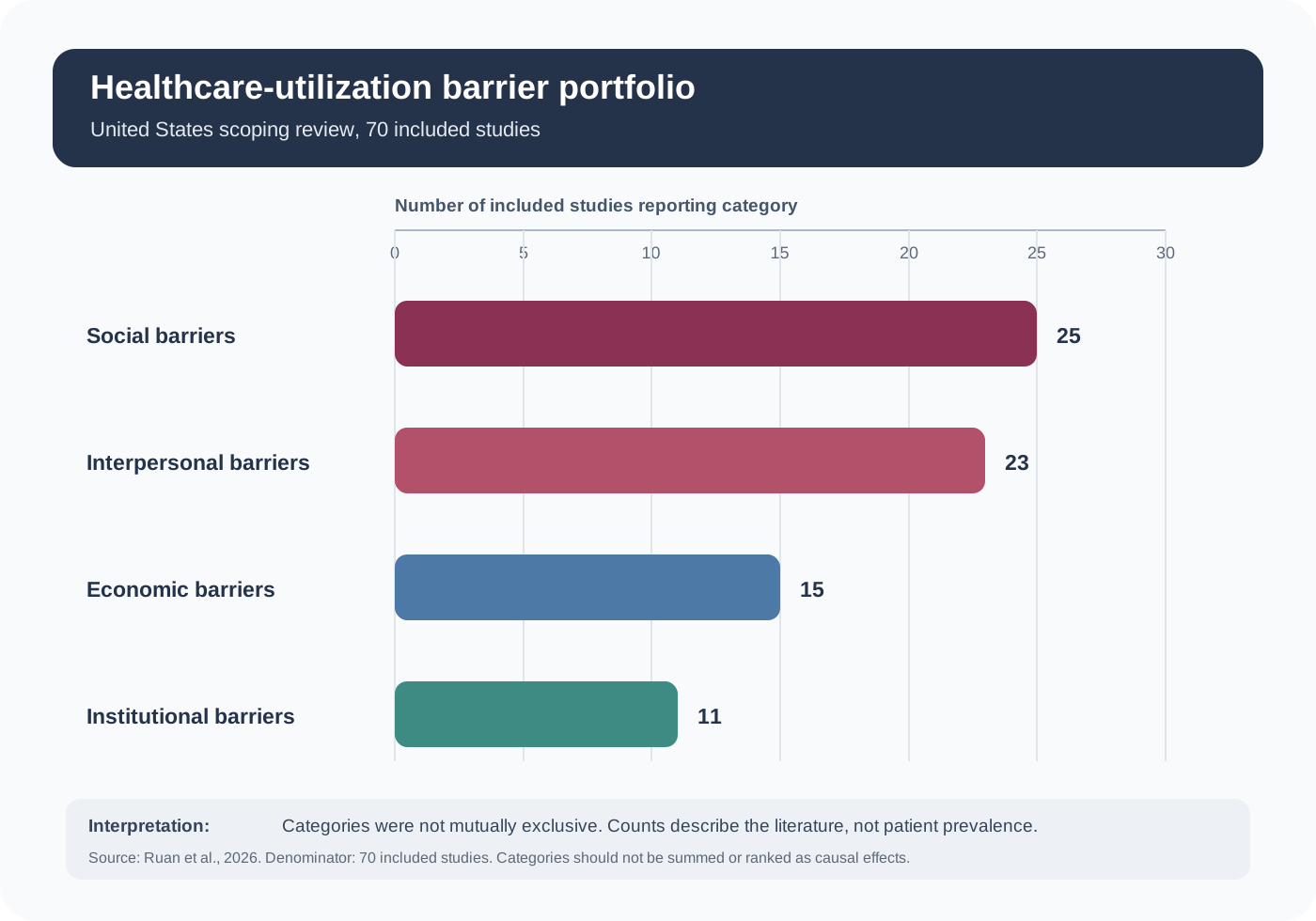
The chart is useful because it prevents a narrow explanation of missed care. Social conditions may affect transportation, work, family responsibilities, or practical access. Interpersonal barriers may involve trust, communication, stereotypes, or the quality of the patient-provider relationship. Economic barriers may include coverage, cost, reimbursement, and the financial sustainability of comprehensive services. Institutional barriers may include fragmented ownership, limited specialty capacity, inconsistent protocols, and weak transitions. Leaders should verify which conditions operate locally before assigning priority or cause.
Use acute-care evidence without turning association into a protocol.
A 2025 multisite cross-sectional study analyzed 9,233 emergency department visits by 2,538 children younger than 19 years at 12 United States pediatric emergency departments linked to comprehensive sickle cell centers. Among the included uncomplicated pain visits, 54.4% ended in hospitalization. Receipt of a first opioid dose within 60 minutes was associated with lower odds of hospitalization, and the lowest reported odds occurred when a timely first dose was paired with a second dose within 30 minutes. The study excluded visits with other sickle cell complications and did not randomize treatment, so the findings are associations within a defined pediatric cohort.12
Executives should not translate those associations into independent clinical instructions. Qualified clinical leaders must determine the current evidence-based protocol, assessment requirements, medication decisions, monitoring, exclusions, and escalation. The operational assignment is to remove avoidable delay after that protocol is approved. That includes a visible arrival time, rapid recognition of the appropriate pathway, trained staff, required medication and equipment availability, a patient-specific plan when applicable, repeat assessment capacity, pharmacy support, and reliable escalation. Measurement should distinguish the time to recognition, time to qualified assessment, time to ordered treatment, time to administration, reassessment interval, disposition, return visits, and balancing measures.
Recent research on non-pharmacologic pain practices also reinforces the need for an inventory of available options and staff capability.2 The executive goal is not to substitute one modality for clinically indicated care. It is to ensure that approved supportive options are known, accessible, documented, and offered through qualified practice rather than depending on who happens to be working. People should not be required to prove credibility before receiving a respectful assessment.
Integrate primary, specialty, and preventive care around one accountable plan.
The embedded primary-care study reported higher odds of cervical cancer screening, depression screening, tetanus-diphtheria-pertussis immunization, annual eye examinations, pneumococcal immunization, urine protein screening, and indicated renin-angiotensin system therapy among patients in the integrated model.3 The confidence intervals varied, and the design was observational. The useful leadership lesson is structural: a clinician became a full member of the sickle cell team, attended operational and educational meetings, and practiced alongside hematology. Integration involved team membership and shared work, not merely a referral order.
A 2025 case report of proactive insight-to-action workflows in a Southeast Pennsylvania sickle cell program described team-based methods for identifying gaps, engaging people outside office visits, and supporting medication and annual screening completion.11 As a case example, it does not supply comparative effectiveness. It helps leaders specify the operating components to test: registry visibility, gap identification, role assignment, outreach, response tracking, exception escalation, and closure evidence. The organization should examine whether the same people repeatedly appear on gap lists because of incorrect data, an unusable access route, a trust problem, or limited capacity.
Quality-improvement evidence also warns against announcing success too early. In the regional transcranial Doppler initiative, participating-site screening increased from 52.4% to 58.6%, while screening in a nonparticipant population moved from 48.3% to 38.3%. The participant improvement did not persist one year after the initiative.17 Leaders should distinguish an in-clinic process improvement from population reach, and an end-of-project rate from sustained performance. A campaign month can launch an improvement, but governance, staffing, data validation, and follow-up must continue.
Separate global lessons from local transfer.
Several recent studies describe access and implementation in settings outside the United States. A prospective birth cohort in Nigeria tested newborn screening linked with early comprehensive care.5 Qualitative work in Ghana described provider perspectives on hydroxyurea access and adherence, including resource and workflow constraints.6 A mixed-methods study in a tribal region of India examined how to refine a hospital-based model for a low-resource population.9 A separate qualitative study of healthcare providers in Gujarat explored knowledge, perceptions, and implementation needs.8 These studies can reveal transferable design questions, but executives should not import prevalence, staffing assumptions, financing rules, or intervention effects without local validation.
A 2026 policy and health-equity review called for collaboration across policy, research, care delivery, and community leadership.4 Cross-sector collaboration is most useful when it has defined decision rights. Community partners should know which requests they can receive, what information may be shared, how consent works, how urgent concerns are escalated, who returns status, and how capacity changes are communicated. A memorandum without an operating route does not close the loop.
Closed-loop care route
Design one visible route from recognition to accepted ownership.
The route may begin in a call center, primary care clinic, hematology practice, emergency department, inpatient unit, school, community organization, diagnostic service, pharmacy, maternity service, or digital portal. Entry points do not need identical clinical capability. They do need a shared method for recognizing the appropriate route, protecting privacy, setting expectations, and transferring responsibility. The person should know who is receiving the request and what will happen next.
A reliable handoff identifies the sender, the qualified receiver, the purpose, the person's communication preference, information required under policy, time-sensitive concerns, the expected response, and the role that retains accountability until acceptance. The receiver should acknowledge, accept, request clarification, redirect with ownership, or escalate. Silence is not an outcome. When the intended service cannot accept the person, the organization should offer an owned alternative rather than returning the burden to the beginning.
Figure 2. Proposed closed-loop sickle cell care route
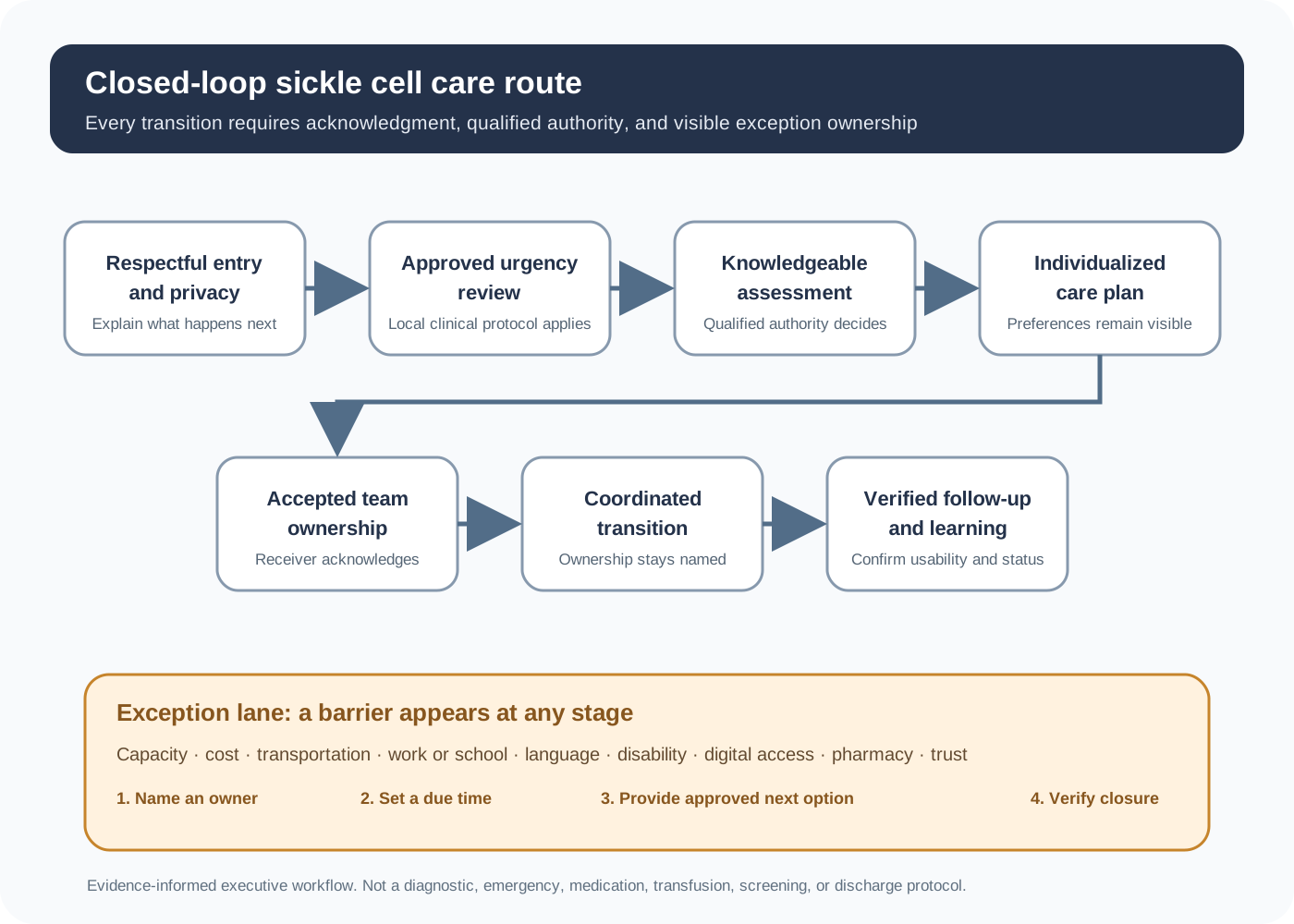
Pediatric-to-adult transition needs its own definition of completion. A 2022 transition-navigator intervention enrolled 60 adolescents and young adults, and 56 completed the intervention. Mean transition-readiness and disease-knowledge scores improved, along with selected confidence and medication-barrier measures. The study demonstrated feasibility and short-term change at one urban academic center, but the authors called for longer-term assessment of successful transfer and retention in adult care.18 Leaders should therefore measure more than education delivered. A transfer is incomplete until an adult-care team accepts the person, the first visit is usable and completed, medications and monitoring remain coordinated, urgent-care instructions are clear, and unresolved barriers have an owner.
The exception lane should cover limited capacity, insurance or cost problems, transportation, work or school conflicts, language and disability access, digital exclusion, inaccurate contact data, missed appointments, pharmacy barriers, mistrust, and uncertainty about eligibility. Each exception requires a named owner, due time, approved interim instruction, next available option, and escalation threshold. Aggregated exception data can guide capacity planning, but sensitive details should be limited to authorized roles.
Trust, experience, and equity
Respect, knowledge, and consistent process are safety and access controls.
Qualitative evidence describes barriers that executives can see and repair. A 2025 needs assessment used 19 key-informant interviews and a focus group with 10 participants representing administrators, patients, caregivers, and healthcare professionals. Four themes involved structural barriers, healthcare-professional knowledge and communication, discrimination and prejudice, and financial barriers. Participants described limited individualized care, inadequate pediatric-to-adult transition support, difficulty finding knowledgeable clinicians, communication gaps, and financing challenges for comprehensive care.16 These are qualitative themes, not prevalence estimates. They are appropriate inputs to local investigation.
A separate 2025 qualitative study conducted six focus groups with 18 adults receiving care in a specialized program. Participants described bias related to diagnosis and race, stereotyping as drug-seeking, limited understanding of sickle cell disease, poor communication, and delays in care.13 Leaders should audit where disbelief or labeling can enter the system: triage notes, pain plans, problem lists, handoff language, security procedures, utilization reviews, call-center scripts, and informal escalation. A respectful pathway uses the person's report as data, follows the approved assessment process, and records clinical reasoning without character judgments.
Provider bias research requires precise interpretation. A 2025 cross-sectional study of 52 pediatric sickle cell providers found pro-White implicit bias on adult and child race implicit-association tests, while explicit stereotype endorsement was low. The virtual-patient vignettes did not show significant differences in treatment decisions by race or diagnosis.14 The study does not establish that every provider acts on implicit bias, nor that protocols eliminate inequity. It supports standardized, evidence-based processes, measurement of actual care, and reflective workforce development rather than assumptions about individual intent.
A 2025 scoping review of stigma among youth found that reported experiences varied by informant, method, and measure, and that the literature remained limited.15 Organizations should not make children or families responsible for proving a systemwide pattern. They can combine confidential experience data, complaint themes, direct observation, chart review, wait-time measures, treatment-process measures, and participatory review. Small samples and nonresponse should be reported as limitations rather than hidden.
Figure 3. Qualitative fishbone for interrupted sickle cell care
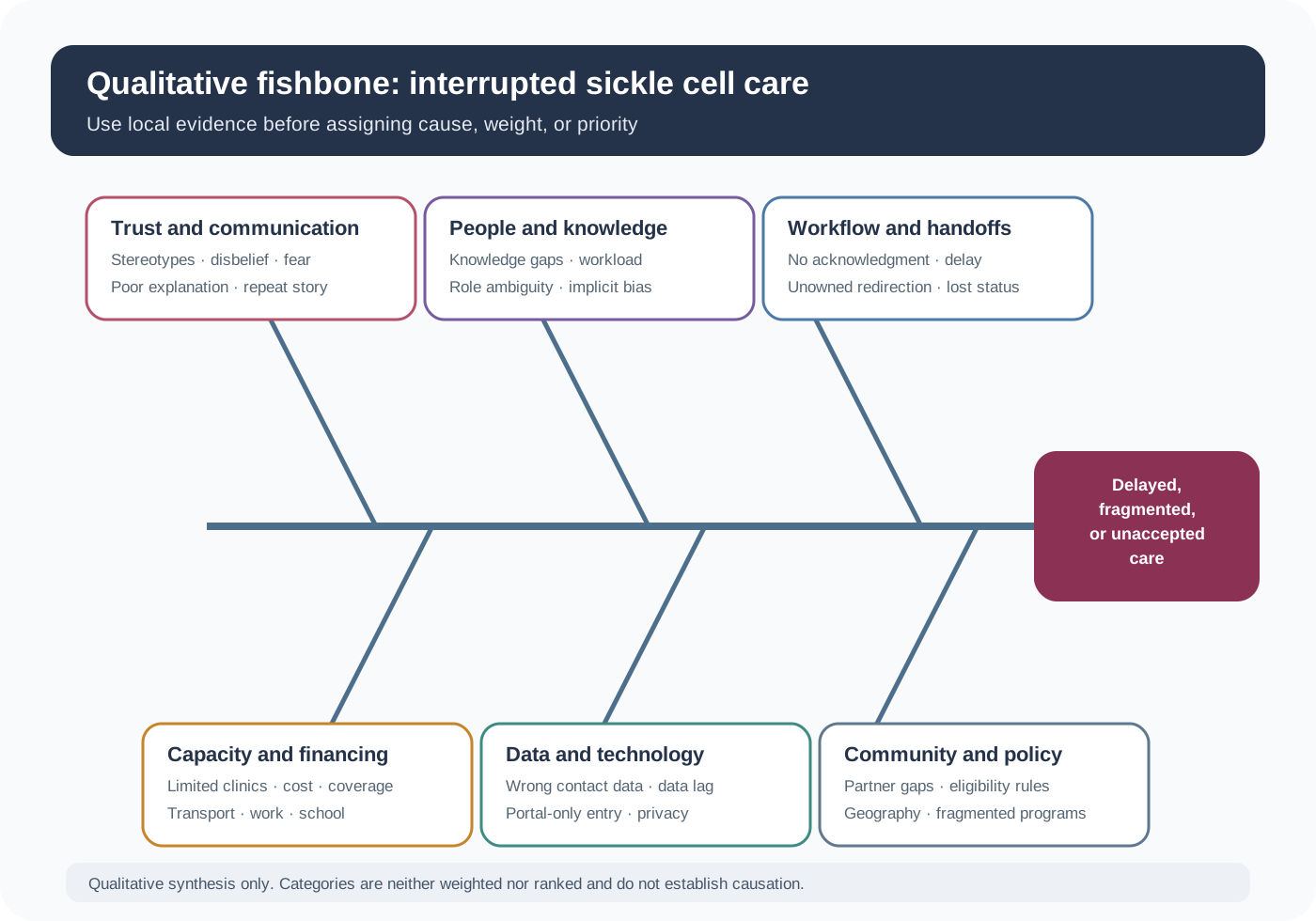
A fishbone session should begin with a specific effect, such as a delayed first clinical action, an unaccepted adult-care transfer, a missed screening opportunity, or an unresolved specialty referral. The team should then examine source records and direct experience. A broad label such as nonadherence should be decomposed into observable conditions: Was the appointment available? Could the person reach it? Was the instruction understandable? Did the receiving team accept responsibility? Was the contact information current? Did work, school, caregiving, cost, transportation, or fear make the next step unusable? Did the system offer a safe alternative?
Financial burden can also shape trust and utilization. A 2026 cross-sectional study of 110 people in the Jazan region of Saudi Arabia reported employment, transportation, out-of-pocket, psychological, and social burdens within its sample.7 The setting and financing model limit transfer to United States organizations. The operational question remains relevant: does the care plan account for the practical cost of using it? Local analysis should include travel distance, time away from work or school, dependent care, coverage, medication access, and the cost of repeated uncoordinated visits.
Operating system
Make distributed expertise work as one accountable system.
Sickle cell care can involve hematology, emergency medicine, hospital medicine, primary care, pediatrics, adult care, nursing, pharmacy, laboratory and imaging services, pain expertise, behavioral health, maternity services, nephrology and other specialties, care management, social work, schools, payers, and community organizations. The person and family experience the combined system, not the organizational chart. Governance should therefore define how decisions, information, and accountability move across teams.
Figure 4. Proposed sickle cell care operating system
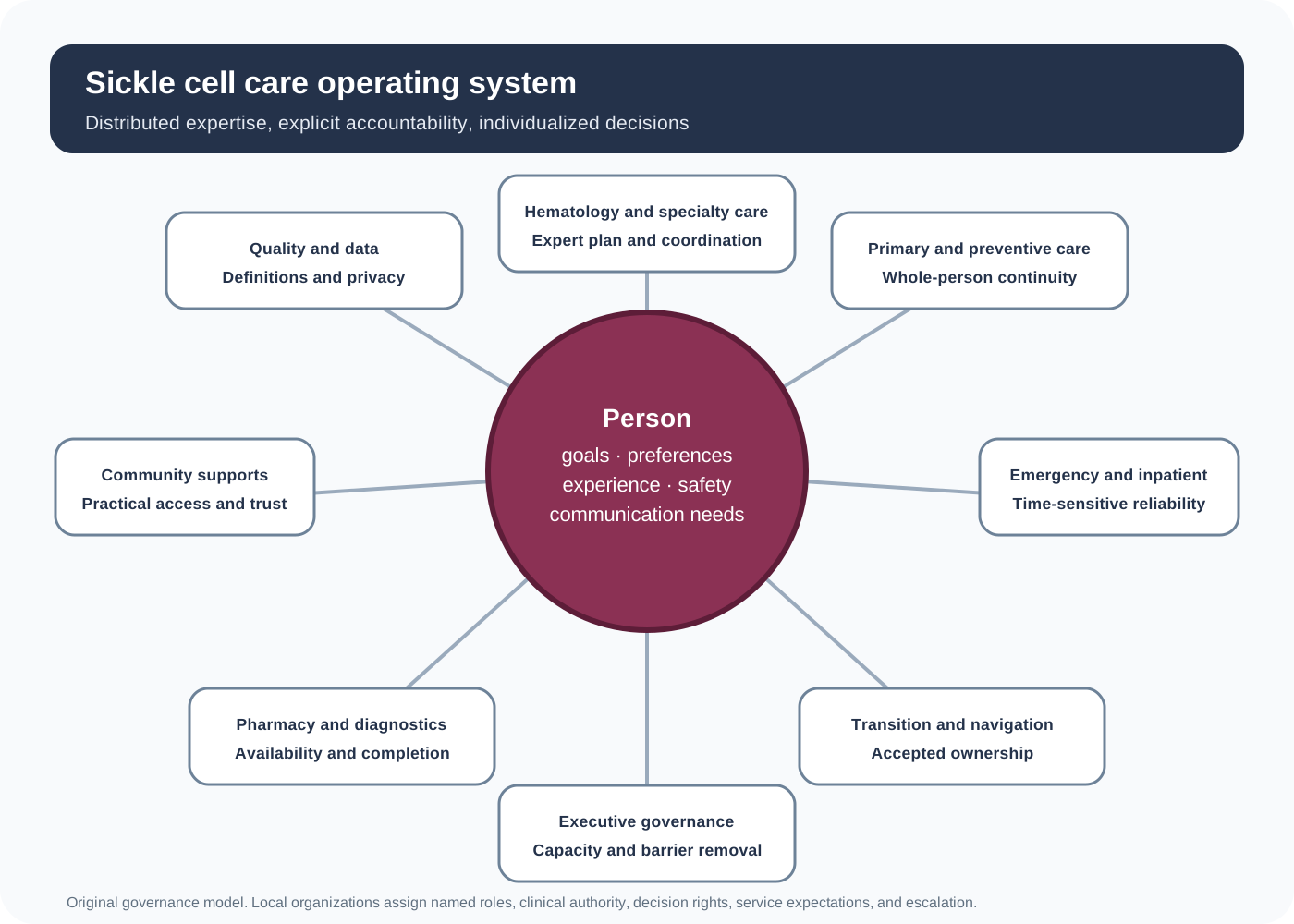
Govern the route, not only the department.
An executive sponsor should own cross-boundary barriers, resource decisions, and sustained review. Clinical leaders should own current protocols and clinical exceptions. Operational leaders should own access, handoffs, capacity visibility, scheduling, and escalation. Data leaders should own definitions, lineage, validation, privacy, and suppression. Experience and community partners should help test whether the route is usable and respectful. No committee should be allowed to discuss a recurring barrier indefinitely without assigning a decision owner and due date.
Capacity must be explicit. Leaders need to know which teams accept new patients, which services have wait lists, how urgent concerns are routed, what backup exists, and how changes reach every entry point. A public campaign that increases demand without checking capacity can create additional delay and distrust. Communications, clinical availability, access staffing, and community-partner readiness should be reviewed together before September outreach.
Use data to support action, not surveillance.
A registry or work list should help teams see upcoming needs, gaps, referrals, accepted transitions, and unresolved exceptions. It should not become an unexplained risk score or a punitive label. Every field needs a definition, authorized purpose, responsible owner, refresh cadence, and correction process. People should not be classified as disengaged when the contact data are wrong, the next service is unavailable, or the route itself is unusable.
Stratification can reveal differences, but it must protect privacy and avoid overclaiming. Review measures by age, care setting, geography, payer, language, disability access need, and other locally appropriate characteristics when sample sizes and governance permit. Report denominators, missingness, suppression rules, and uncertainty. A difference is a signal for investigation, not proof of individual behavior or causal mechanism.
Structured measurement
Define the scorecard before publishing a number.
National Sickle Cell Month should not be evaluated by impressions, social reach, or meeting counts alone. Communications matter, but the operational question is whether the care route became more usable and reliable. Every measure should identify the population, numerator, denominator, exclusions, data source, owner, review cadence, stratification plan, and limitation. Measures should be reviewed with experience evidence and balancing measures.
Figure 5. Executive scorecard data dictionary
| Domain | Candidate numerator | Candidate denominator | Owner and source | Cadence | Important limitation |
|---|---|---|---|---|---|
| Accepted access | Requests acknowledged and accepted by the appropriate receiving role within the locally defined interval | Eligible requests entering the selected route | Access operations; referral and scheduling records | Weekly during pilot | Electronic transmission alone does not establish acceptance or usability |
| Acute-care reliability | Eligible encounters completing the approved assessment, treatment, and reassessment steps within locally defined intervals | Eligible encounters under the current clinical protocol | Emergency and clinical leaders; time-stamped clinical record | Monthly | Case mix, exclusions, clinical judgment, and documentation quality affect interpretation |
| Transition completion | Youth whose adult team accepted transfer and whose first usable adult-care visit was completed | Youth meeting the locally defined transition cohort | Pediatric and adult transition owners; registry and encounter record | Monthly | Readiness education is not the same as completed transfer or retention |
| Preventive and specialty gaps | People completing the locally approved service within the measurement window | People eligible for that service after exclusions | Clinical and primary-care leads; validated registry | Monthly or quarterly | Eligibility, external completion, data lag, and missing records require validation |
| Aged exceptions | Unresolved barriers beyond the locally defined due time | All documented exceptions in the selected pathway | Operational owner; exception work queue | Weekly | Low reporting may reflect under-documentation, not reliable performance |
| Experience and trust | Responses meeting locally defined respect, clarity, knowledge, choice, and trust criteria | Eligible respondents using the route | Experience lead and lived-experience council; survey and interviews | Quarterly | Nonresponse, fear of disclosure, and small samples can bias findings |
| Equity review | Stage-specific completion or delay by approved characteristic | Eligible people in each protected analytic group | Quality, privacy, and equity leads; linked operational data | Quarterly | Protect small cells; observed differences do not establish cause |
| Sustainment | Measures remaining at or above the locally approved performance level after active support ends | Measures selected for sustainment review | Executive sponsor and quality lead; run chart and audit | At 3, 6, and 12 months | A short improvement period does not demonstrate durable performance |
Balancing measures should accompany every improvement. Faster access should not bypass qualified assessment. Standardization should not erase individualized care. More outreach should not create unwanted disclosure. Better documentation should not increase surveillance or workload without purpose. Increased outpatient visits should not be assumed beneficial without examining access, need, experience, and outcomes. Reduced emergency use should never become a target that discourages necessary care.
Executive agenda
A focused 90-day test can turn September recognition into a durable improvement.
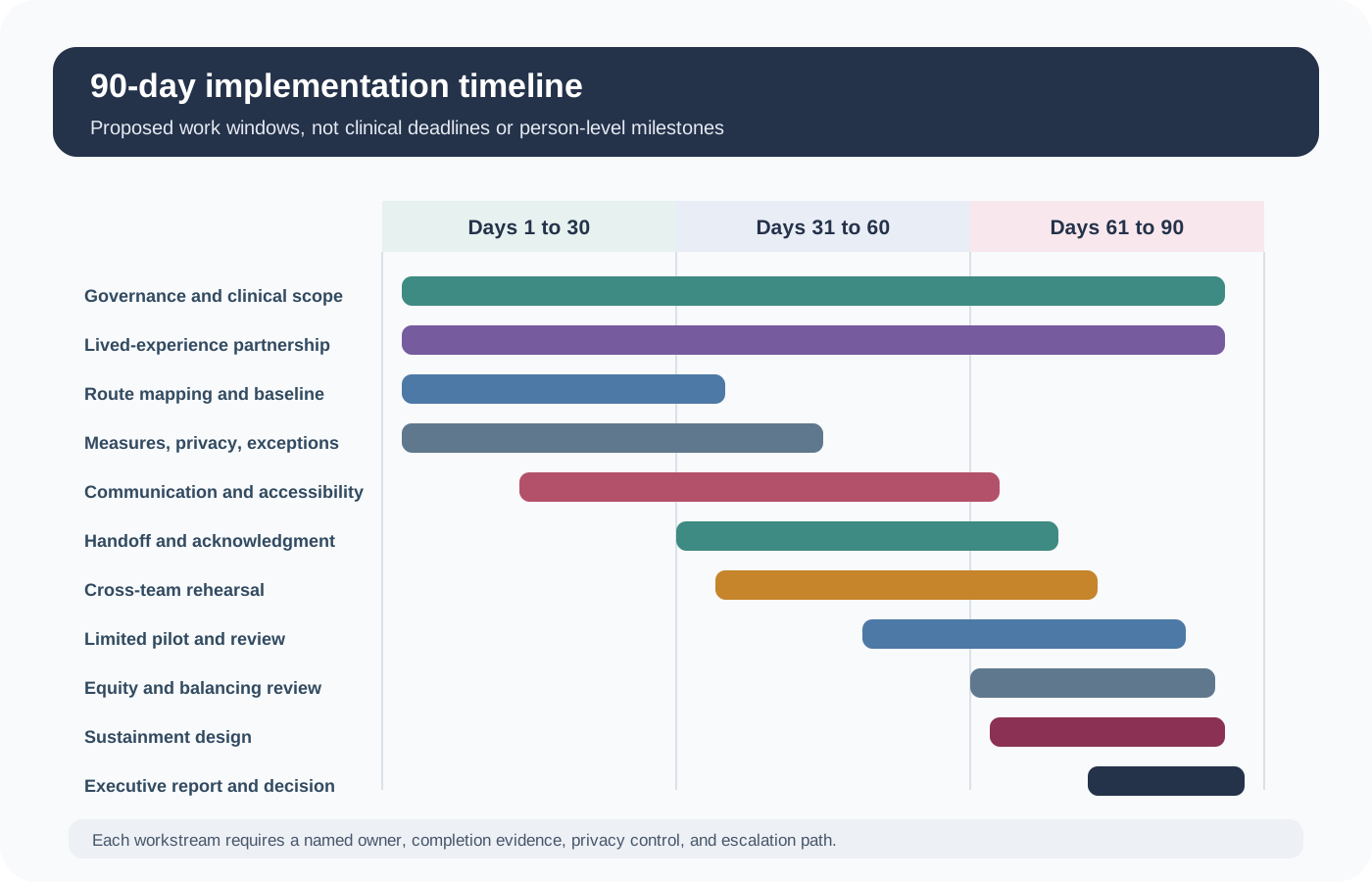
Days 1 to 30
Define and verify
- Name the executive sponsor, clinical authority, operational owner, data steward, privacy lead, and lived-experience partners.
- Select one care route and define the eligible population, entry points, receiving roles, clinical boundary, acceptance signal, and escalation path.
- Trace a baseline sample from first contact through accepted ownership and follow-up.
- Compare records with the accounts of people using and operating the route.
- Define denominators, exclusions, due times, exception categories, balancing measures, and privacy rules.
Days 31 to 60
Build and rehearse
- Create the minimum handoff, acknowledgment, owned redirection, and closed-loop status process.
- Align acute, specialty, primary-care, diagnostic, pharmacy, transition, and community roles.
- Test respectful scripts, accessible formats, language support, and a non-digital option.
- Rehearse limited capacity, missed contact, uncertain eligibility, delayed diagnostic service, pharmacy barriers, and urgent escalation.
- Begin a limited pilot with frequent clinical, operational, experience, and equity review.
Days 61 to 90
Learn and decide
- Review stage-specific completion, elapsed time, experience, equity, balancing measures, and aged exceptions.
- Investigate failures with source records, direct observation, staff feedback, and the person's account when appropriate.
- Correct verified work-system conditions and test whether the correction holds.
- Report evidence limits, missing data, capacity, privacy risks, cost, and unintended effects.
- Decide to adapt, expand, pause, or stop, and schedule 3-, 6-, and 12-month sustainment review.
Figure 6. Proposed 90-day implementation timeline
Executive review should ask whether every entry point gives the same reliable answer, whether the receiving role acknowledges responsibility, whether approved clinical processes are operationally supported, whether the person can use the next step, and whether any group experiences disproportionate loss at a specific stage. Leaders should review both success and failure cases. A closed loop is not demonstrated by a high completion percentage alone if unresolved exceptions are missing from the data.
National Sickle Cell Month can leave a durable result when awareness, evidence, care operations, trust, and accountability are joined. The goal is not to promise that one workflow will eliminate every acute event or care barrier. It is to build a system in which people are met with knowledge and respect, time-sensitive care is operationally supported, primary and specialty work is coordinated, transitions have owners, practical barriers remain visible, and improvement continues after September.
Peer-reviewed evidence portfolio
References
Newest first using the recorded publication date when available. Study designs, denominators, and transfer limits are described in the article.
- Ruan C, Gyamfi J, Osei-Tutu N, et al. Barriers and facilitators to healthcare utilization amongst people living with sickle cell disease in the United States: a scoping review. PLoS One. 2026;21(7):e0349441. doi:10.1371/journal.pone.0349441.
- Kolipaka S, Axe ML, Wright CS, et al. Assessing current non-pharmacologic pain management practices for sickle cell disease in adults. Frontiers in Pain Research. 2026:1-10. doi:10.3389/fpain.2026.1751622.
- Della-Moretta S, Li Welkie R, Quaye N, et al. Embedding a primary care provider in sickle cell teams improves sickle cell care. PLoS One. 2026;21(6):e0352670. doi:10.1371/journal.pone.0352670.
- Peprah EK Jr, Gyamfi J, Kanneh N, et al. Sickle cell disease 115 years later: improving health outcomes through policy, research, and collaboration, to achieve health equity. Frontiers in Health Services. 2026:1-10. doi:10.3389/frhs.2026.1842019.
- Ibrahim UA, Musa AB, Aliu-Isah OO, et al. Implementation of a prospective birth cohort for newborn screening and early linkage to comprehensive sickle cell disease care in a low-resource setting. International Journal of Neonatal Screening. 2026;12(2):42. doi:10.3390/ijns12020042.
- Mensah J, Marfo AFA, Opare-Addo MNA, et al. Challenges and opportunities in hydroxyurea access and adherence for sickle cell disease patients at Komfo Anokye Teaching Hospital: insights from healthcare providers. PLoS One. 2026;21(5):e0347848. doi:10.1371/journal.pone.0347848.
- Meraya AM, Banji OJF, Menachery SJ, et al. Clinical, humanistic, and economic burden of sickle cell disease in the Jazan Region, Saudi Arabia. PLoS One. 2026;21(5):e0348759. doi:10.1371/journal.pone.0348759.
- Surti SB, Babu BV, Parmar A, et al. Knowledge and perceptions of the healthcare providers related to sickle cell disease: a qualitative study from Chhotaudepur District of Gujarat. Journal of Racial and Ethnic Health Disparities. 2026;13(2):879-888. doi:10.1007/s40615-025-02300-4.
- Dave K, Nirgude A, Desai G, et al. A mixed-methods evaluation to optimize the existing hospital based sickle cell disease care model from a tribal area of Gujarat, India. Journal of Public Health Research. 2026;15(1):22799036261428569. doi:10.1177/22799036261428569.
- Parks P, Miller JI, Cromartie Jones S, et al. Acute care use among people with sickle cell disease, Sickle Cell Data Collection Program, 8 US states, 2018. Public Health Reports. 2026;141(2):252-259. doi:10.1177/00333549251387081.
- Rubin D, Brooks E, Biblow R. Improving healthcare efficiency and patient outcomes through proactive insight to action: a sickle cell disease case example. Journal of Patient Experience. 2025;12:1-4. doi:10.1177/23743735251405721.
- Gwarzo I, Coleman KD, McKinley K, et al. Opioid timeliness in the emergency department and hospitalizations for acute sickle cell pain. JAMA Pediatrics. 2025;179(11):1194-1202. doi:10.1001/jamapediatrics.2025.2967.
- Crusto CA, Kaufman JS, Harvanek ZM, et al. Perceptions of care and perceived discrimination: a qualitative assessment of adults living with sickle cell disease. Journal of Racial and Ethnic Health Disparities. 2025;12(5):3521-3530. doi:10.1007/s40615-024-02153-3.
- Mulchan SS, Theriault CB, DiVietro S, et al. Provider implicit racial bias in pediatric sickle cell disease. Journal of Racial and Ethnic Health Disparities. 2025;12(4):2743-2751. doi:10.1007/s40615-024-02086-x.
- Abelson ER, Jastrowski Mano KE, Crosby LE, et al. Stigma among youth with sickle cell disease in community and medical settings: a scoping review. Journal of Pediatric Psychology. 2025;50(6):511-524. doi:10.1093/jpepsy/jsaf028.
- Grismore C, Roberts LR, Lister ZD, et al. Barriers to care for adults with sickle cell disease: a qualitative descriptive study. Health Expectations. 2025;28(3):e70310. doi:10.1111/hex.70310.
- Vissa M, Parikh P, McCulloch C, et al. Improving completion rates of transcranial Doppler ultrasounds in children with sickle cell disease using quality improvement efforts: in-clinic versus population-based assessments. Pediatric Blood and Cancer. 2025;72(4):e31549. doi:10.1002/pbc.31549.
- Manwani D, Doyle MH, Davidson L, et al. Transition navigator intervention improves transition readiness to adult care for youth with sickle cell disease. Academic Pediatrics. 2022;22(3):422-430. doi:10.1016/j.acap.2021.08.005.
Scope note: This executive brief supports healthcare leadership, access, care coordination, quality improvement, workforce design, community partnership, experience, and governance. It does not diagnose sickle cell disease, recommend a medication or treatment, define an emergency threshold, replace clinical guidelines or emergency procedures, or provide personal medical advice. Qualified professionals should use current evidence, individual information, informed consent, and local policy.