

September 2026 · Executive Brief
National Yoga Awareness Month 2026: Turn Awareness into an Accountable Care Route
Use September to move beyond general wellness messaging and build an evidence-informed, person-centered, accessible, and measurable route for yoga services that are offered safely within or alongside healthcare.
Leadership signal
Awareness is useful only when the organization can connect interest with a safe, usable, and accountable service.
National Yoga Awareness Month creates an opportunity to review how a healthcare organization presents, refers to, delivers, or partners around yoga. Yoga may be offered through rehabilitation, integrative health, oncology support, behavioral health, employee well-being, community benefit, chronic pain services, older-adult programs, or virtual care. These programs can appear simple from the outside. Operationally, they involve clinical boundaries, informed choice, instructor capability, modality, scheduling, technology, physical space, accessibility, documentation, privacy, escalation, and evaluation.
The evidence does not support one undifferentiated claim that yoga produces the same result for every person, condition, setting, or format. Recent reviews describe promising findings across hospitalization, cancer survivorship, musculoskeletal conditions, cardiovascular rehabilitation, and older-adult stress. They also identify heterogeneity, small samples, limited randomized evidence, low or very low certainty for some outcomes, and gaps in standardization.1,2,4,7,13,14,18 Leaders should communicate this mixed evidence plainly. Yoga can be considered an adjunct within qualified care, not a substitute for indicated assessment, treatment, rehabilitation, emergency response, or individualized clinical advice.
The executive problem is therefore not whether the organization is for or against yoga. The problem is whether the organization can make a bounded service dependable. A dependable service identifies the intended population, referral or self-entry rules, clinical exclusions and precautions under qualified authority, instructor qualifications, adaptation expectations, physical and digital access, response to symptoms or concerns, feedback channels, and a measurable completion point. If those controls are absent, awareness may generate demand without a reliable route.
A 2024 systematic review of yoga during hospital stays included 13 studies. Five studies reported feasibility, with no negative effects or symptom increases described in those reports. Four of five studies reporting pain found a statistically significant reduction, and six of eight studies reporting anxiety found a statistically significant decrease. The authors also emphasized the limited number of randomized trials, low methodological quality, and small samples.14 The result is a leadership signal, not a universal hospital protocol. Feasibility in selected studies does not remove the need for clinical review, infection prevention, mobility precautions, equipment decisions, staff coordination, or documentation.
Digital delivery creates another operating choice. A 2025 systematic review screened 6,266 records and included 14 studies of online yoga for people with cancer. The review reported potential improvements in stress and sleep quality, with moderate effects on anxiety, depression, and fatigue, but methodological variability complicated overall interpretation.5 Virtual access can reduce transportation barriers, yet it can also introduce device, connectivity, digital literacy, privacy, visual-assessment, and emergency-response concerns. A technology channel is not automatically an equity solution.
Evidence to action
Use the evidence portfolio to define boundaries, not to manufacture a single promise.
The recent literature includes systematic reviews, meta-analyses, an umbrella review, qualitative implementation studies, mixed-methods pilots, feasibility studies, and a conceptual standardization framework. These designs answer different questions. Meta-analysis can pool effects across studies, but the estimate still depends on intervention definitions, comparison groups, outcomes, duration, risk of bias, and statistical assumptions. Qualitative studies explain barriers and workable adaptations but do not estimate population prevalence. Feasibility studies can show whether a service can operate in a defined setting, but they do not establish comparative clinical effectiveness.
Promise with limits
A network meta-analysis of 40 randomized trials involving 3,238 cancer survivors associated yoga with improvement in anxiety and depression compared with controls. The authors still called for stronger head-to-head trials across diverse cancer populations.1
Choice matters
An older-adult network meta-analysis included 23 randomized trials. Yoga was one option in the comparison, but reminiscence therapy and exercise ranked above yoga for perceived stress. More high-quality trials were needed.7
Certainty matters
A 2026 knee osteoarthritis meta-analysis included 14 studies and 1,183 participants. Evidence for pain and physical function was low certainty, and evidence for impairment outcomes was very low certainty.4
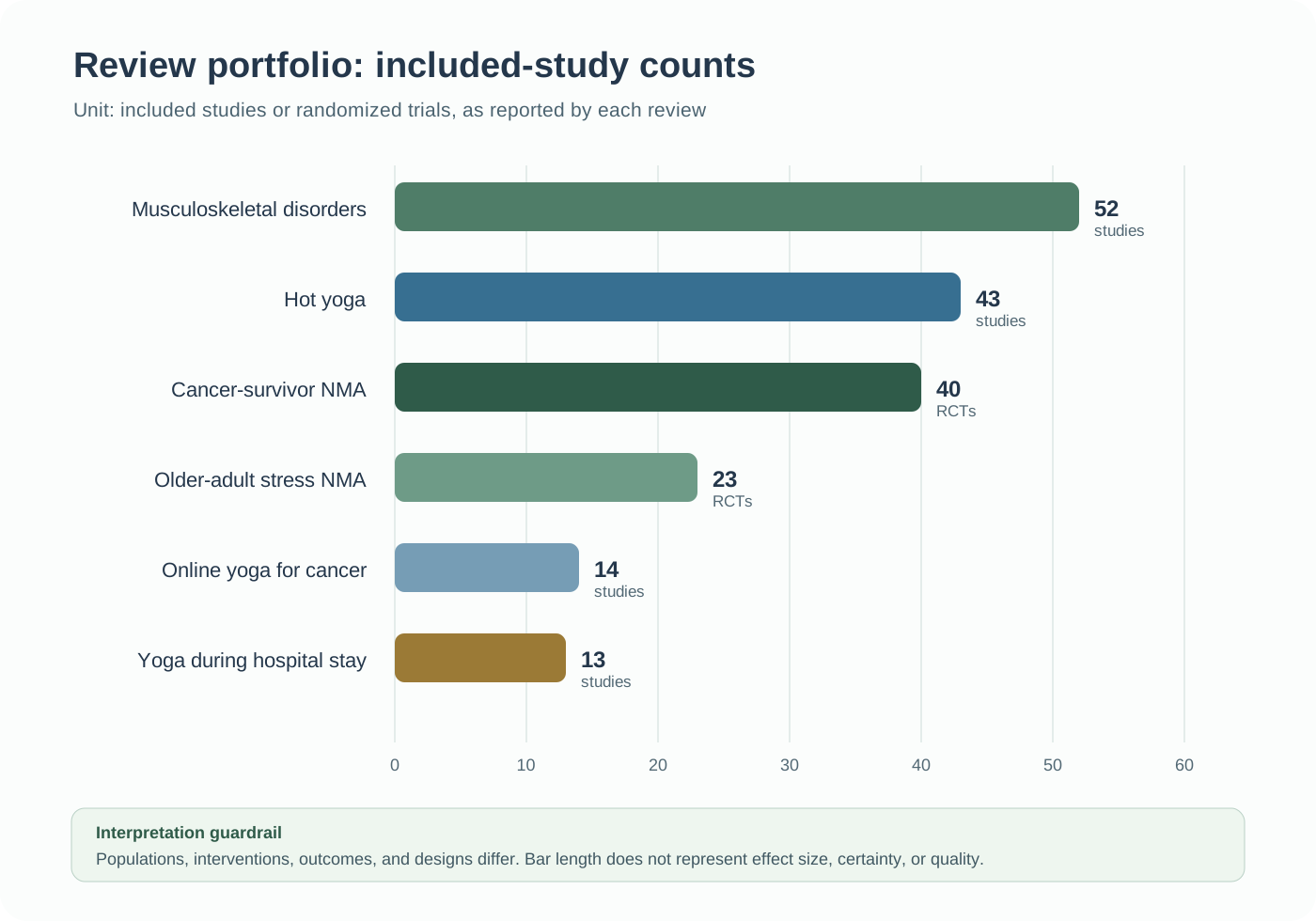
Figure 1. Included-study counts across six recent Yoga evidence reviews
Do not convert review size into certainty.
The six reviews in the chart contain different units and overlapping possibilities. One review may include prospective studies, another only randomized trials, and another a mix of qualitative and quantitative work. A larger count does not establish a stronger effect. It may reflect a broader question, wider inclusion criteria, or a longer research history. Leaders should pair any headline number with the population, setting, comparison, outcome, confidence interval when available, certainty rating, and transfer limit.
The 2026 cancer-survivor network meta-analysis found that yoga improved anxiety compared with controls, standardized mean difference minus 0.37 with a 95% confidence interval from minus 0.66 to minus 0.09. Yoga also improved depression, standardized mean difference minus 0.46 with a 95% confidence interval from minus 0.76 to minus 0.16. The review included 40 randomized trials and 3,238 survivors, but qigong ranked highest for both outcomes in the full network.1 An executive summary should not omit the comparator, uncertainty, or the fact that a ranking depends on the network and included evidence.
A separate 2025 systematic literature review included 10 studies involving women with gynecological cancers. Most included studies reported improvements in anxiety, stress, depression, or quality of life, and the review reported no yoga-related adverse events. The authors still called for larger randomized trials before stronger conclusions are drawn.6 Leaders should treat the review as supportive evidence for carefully governed adjunctive services, not as proof that every cancer population, yoga format, or outcome will respond the same way.
Cardiovascular literature also supports careful positioning. Recent systematic reviews have examined yoga and mindfulness after myocardial infarction, and yoga interventions among people with coronary artery disease.2,15 These reviews justify executive attention to rehabilitation integration and research quality. They do not authorize a wellness program to replace cardiac rehabilitation, medication, medical follow-up, or individualized risk assessment. Clinical leaders must decide whether a program belongs inside a formal rehabilitation pathway, alongside it as a supportive option, or outside the organization.
Safety depends on population, modality, dose, environment, and adaptation.
A 2025 systematic review of hot yoga included 43 studies and 942 participants, 76% of whom were female. Sessions occurred in environments ranging from 30 to 52 degrees Celsius and 20% to 60% relative humidity. Acute hot yoga increased body temperature and heart rate. The review described promising adaptations, but concluded that claims of greater health benefit than non-heated yoga or traditional exercise were unsubstantiated. It also noted case reports of ill health and heat illness, and advised hydration and safe-practice precautions.8 A general statement that yoga is safe is too broad for operational use.
Musculoskeletal evidence illustrates the same boundary. An umbrella review of chronic low back pain included 45 systematic reviews. It found low-to-moderate evidence of mainly small, short-term benefits for several exercise categories, including yoga, with no major difference among exercise types. Review quality ranged from high to critically low.18 A 2025 critical review screened 1,150 articles and included 52 prospective studies with 4,151 participants across musculoskeletal disorders. The authors reported potential benefits while emphasizing intervention heterogeneity and risk of bias.13 A 2026 knee osteoarthritis meta-analysis found improvements in pain and physical function but rated the evidence low certainty.4
The practical conclusion is not to abandon yoga. It is to match the offer to the evidence and the person. Use qualified clinical judgment for appropriateness. Distinguish gentle, chair-based, restorative, strength-oriented, heated, and other formats. Define expected modifications. Provide a route for pain, dizziness, shortness of breath, distress, falls, technology failure, or other concerns. Document adverse events and symptom increases rather than treating attendance as the only safety signal.
Closed-loop service route
Connect interest to fit, informed choice, qualified delivery, and verified follow-through.
A service route may begin with a clinician, rehabilitation professional, social worker, employee health team, community partner, patient portal, call center, or public observance message. Entry points do not need identical expertise. They do need a shared answer about what the service is, what it is not, how to enter, who can answer clinical questions, what accommodations are available, and what to do if the service does not fit.
The route should separate clinical determination from administrative enrollment. A scheduler should not independently decide whether a person with complex symptoms, mobility limitations, pregnancy, recent surgery, cardiovascular concerns, cognitive impairment, or another condition is appropriate for a specific program. Qualified roles should define the clinical boundary, required review, precautions, and escalation. The administrative team should make the approved route easy to use, explain costs and technology, confirm accessibility needs, and document acceptance.
Figure 2. Proposed closed-loop Yoga service route
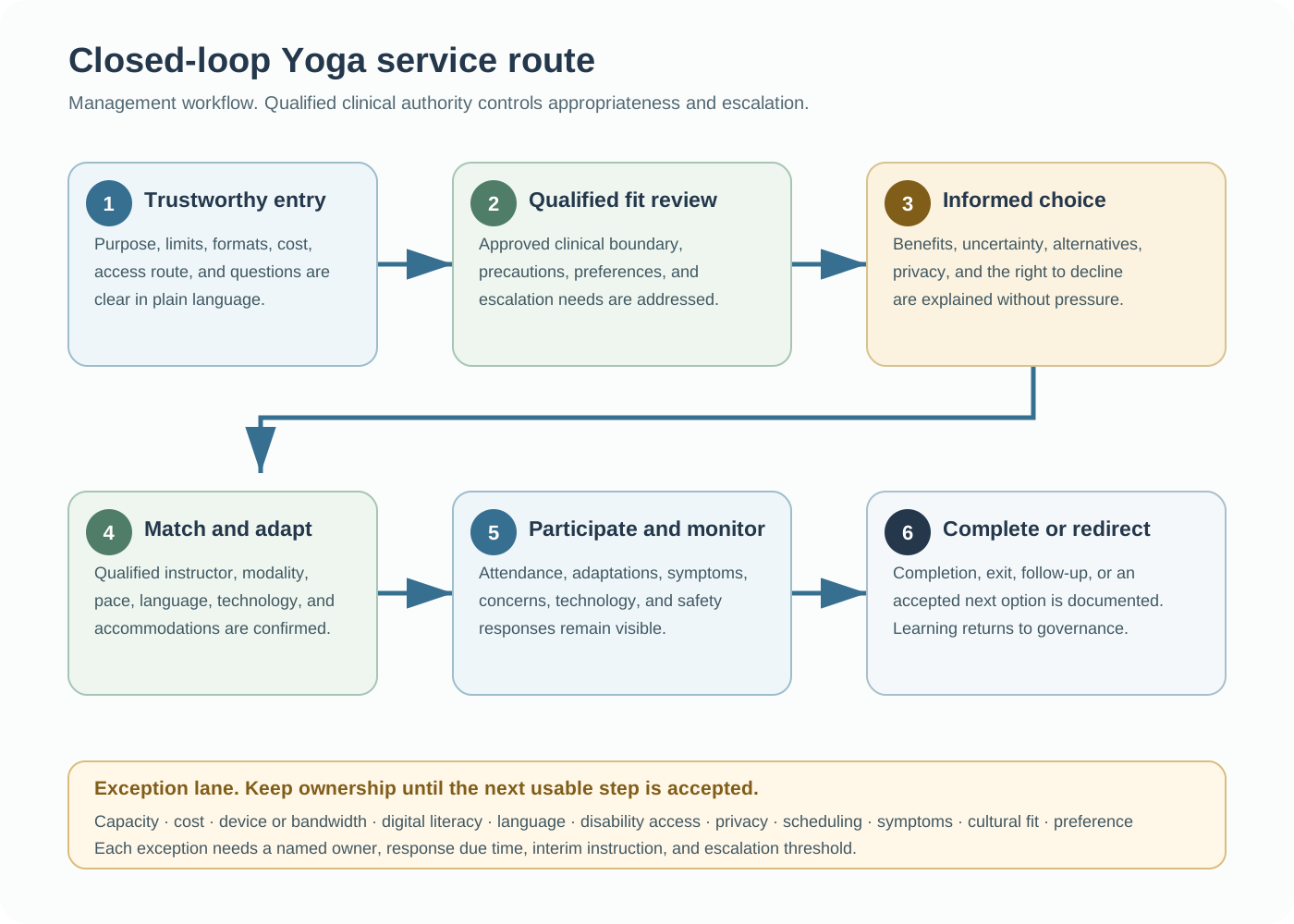
A completed handoff identifies the sender, receiving role, purpose, known access needs, approved information, response due time, and role that retains accountability until acceptance. The receiver should accept, request clarification, redirect with ownership, or escalate. A referral placed into an inbox is not accepted care. A registration link sent is not usable access. A class attended is not proof that the program fit the person's needs.
The exception lane should include unavailable capacity, cost, device access, bandwidth, digital literacy, transportation, language, disability access, privacy, scheduling, cultural fit, lack of instructor diversity, symptoms during participation, inability to follow visual or verbal instruction, and preference for another option. Each exception needs a named owner, due time, interim instruction, and escalation threshold. When the service does not fit, the organization should provide an owned redirection rather than implying that the person failed the program.
Standardization should support reliability without erasing adaptation. A 2026 conceptual framework proposed a structured language for healthcare yoga interventions because heterogeneity limits reproducibility and implementation.3 As a theoretical framework, it does not prove outcomes. It reinforces a practical requirement: define what the intervention contains, who delivers it, how it is adapted, what dose is intended, how fidelity is assessed, and which elements may change in response to individual needs.
Access, experience, and equity
Virtual reach, trusted referral, affordability, and adaptation determine who can actually use the offer.
Equity-focused implementation research shows that a clinically plausible program can still exclude people through its design. A 2025 prenatal yoga study used four virtual focus groups with 18 pregnant participants and interviews with 11 healthcare professionals. Reported themes included knowledge and attitudes, logistics, intervention content and instructor, cost, and advertising. Safety information, relevant modifications, a virtual option, affordability, and referral from a trusted medical professional appeared among facilitators. Time, financial constraints, physical limitations, limited diversity, and concern about safety or appropriateness appeared among barriers.11 These are qualitative findings from a proposed intervention, not prevalence estimates.
Older-adult evidence adds detail. A process evaluation of online chair-based yoga interviewed 18 participants aged 66 to 91 with two to eight chronic conditions and nine instructors. Five themes covered accessibility, technology, delivery adaptations, safety, and implementation. Participants and instructors described simple access procedures, basic audiovisual instruction, repetitive directions, visible clothing, personalized communication, equipment loans, and community-based digital learning as practical supports.10 An online link alone does not provide those supports.
Leaders should ask who is absent from enrollment and why. Examine whether outreach assumes English proficiency, private space, reliable broadband, a modern device, comfort with group video, transportation, paid time, flexible work, cultural familiarity, or ability to move between the floor and standing. Offer a non-digital route, accessible materials, language assistance, reasonable modifications, transparent cost, and a way to ask questions without public disclosure.
A qualitative study of 13 Veterans Health Administration yoga teachers across six healthcare systems identified four implementation categories: equipment and information technology, physical space, accessibility and safety, and administrative responsibilities with end-user support.9 Teacher experience is an operational resource. Instructors need onboarding to the health system, role clarity, documentation expectations, escalation contacts, privacy requirements, and support when technology or space fails.
A Veterans tele-yoga pilot used the RE-AIM framework and reached 70 veterans, including 40 new participants, across 1,208 unique encounters. Referral sources expanded from two to six facilities. Fourteen participants completed structured interviews and generally valued convenience and experience, while technology quality remained an improvement opportunity.16 The program evaluation did not establish comparative effectiveness. It did show that infrastructure, orientation, and referral adoption belong in the implementation plan.
Digital programs also need a clear response to symptom burden and adherence. A mixed-methods post-COVID feasibility study enrolled 11 participants. Half attended more than 50% of live sessions. No serious adverse events were reported, but some participants experienced increased symptoms, and 60-minute sessions were sometimes considered too long.12 A service should therefore distinguish nonattendance caused by lack of interest from nonattendance caused by fatigue, symptom fluctuation, access, session design, or competing responsibilities.
Figure 3. Qualitative fishbone for an unusable or unsafe Yoga pathway
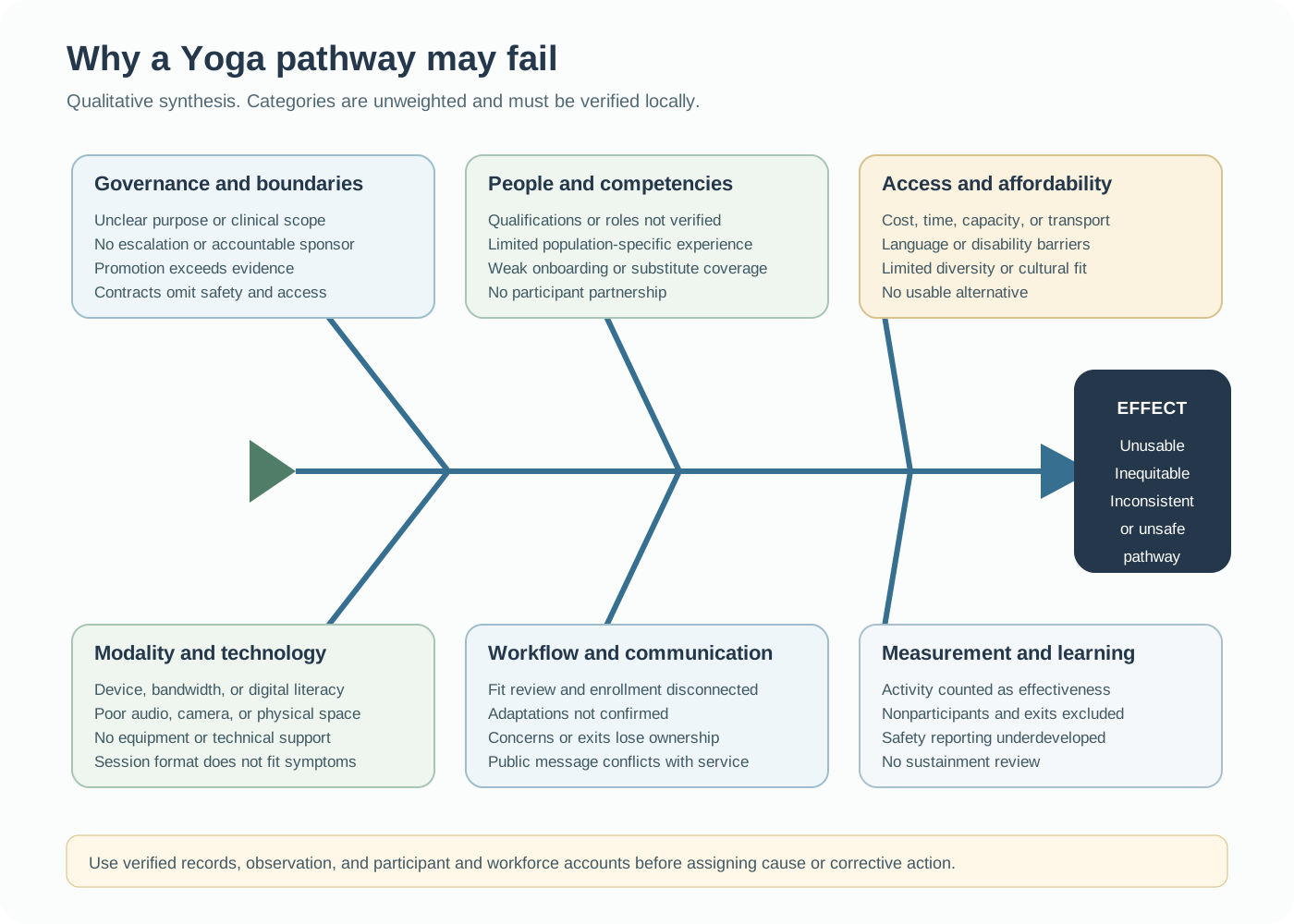
The fishbone should begin an investigation, not end one. Review actual enrollment, referral, attendance, exit, concern, and experience records. Observe sessions with appropriate consent. Ask participants, nonparticipants, instructors, clinicians, access staff, disability specialists, interpreters, community partners, and technology teams what the route requires. Verify the condition before assigning a corrective action.
Operating system
Make clinical boundaries, qualified delivery, access operations, and learning work as one system.
Yoga services can cross departments and organizations. A clinical sponsor may define appropriateness and escalation. A rehabilitation or integrative health team may own the service. Contracted instructors may deliver sessions. Access teams may schedule. Technology teams may host the platform. Community organizations may provide space or outreach. Quality teams may measure participation and concerns. The person experiences the combined system, not its contracts and reporting lines.
Figure 4. Proposed healthcare Yoga operating system
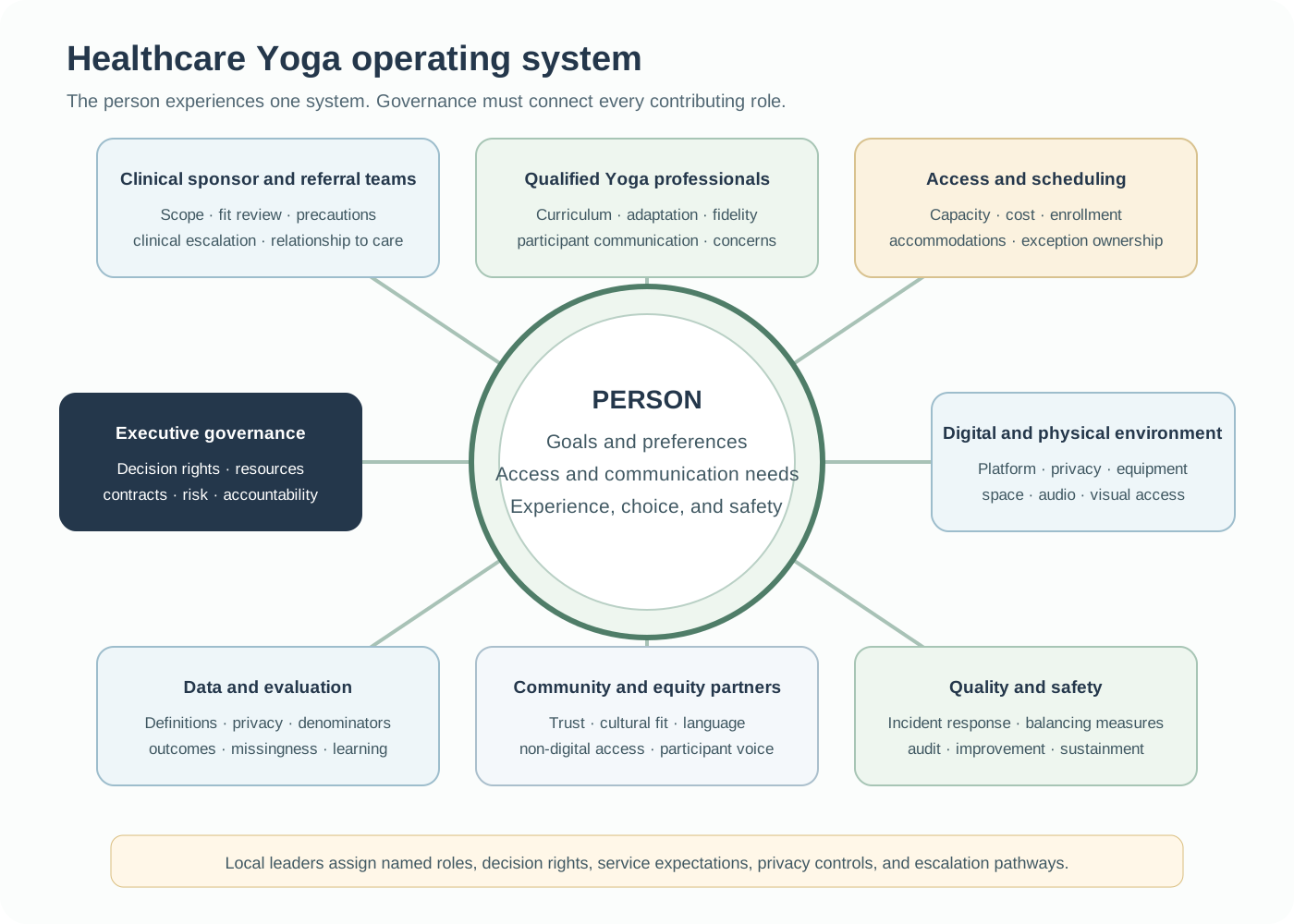
Define governance before promotion.
An executive sponsor should own cross-boundary decisions, resources, contracts, and sustained review. Qualified clinical leaders should own the clinical scope, referral requirements, precautions, exclusions, symptom escalation, and relationship to standard care. Program leaders should own curriculum definition, instructor verification, adaptation expectations, session fidelity, and participant communication. Operations should own capacity, scheduling, costs, accessibility, and exception closure.
Contracts should specify instructor credentials, experience with the intended population, background and compliance requirements, liability, privacy, documentation, substitutions, incident reporting, technology, accessibility, and quality review. A generic vendor wellness description is insufficient when a health system promotes the service to patients or integrates it with care.
Capacity should be visible before outreach. Leaders need to know how many participants can be supported, whether clinical review creates delay, which formats are available, how often sessions occur, whether equipment is supplied, and what happens when a class is full. A campaign that increases interest without preparing capacity may widen the gap between promise and access.
Measure fit and safety without turning the program into surveillance.
Collect only the information needed for safe delivery, access, evaluation, and improvement. Explain its purpose, who can see it, and how a person can correct it. Avoid collecting sensitive health details in a public group, general registration platform, or instructor chat when a protected clinical route is required. Define when documentation belongs in the health record and when it belongs in a program system.
Experience data should include people who decline, cannot enroll, leave early, or need another option. A high satisfaction score among completers can conceal exclusion. Review wait time, abandoned enrollment, technology failure, accommodation completion, symptom concerns, instructor continuity, and owned redirection. Stratify only when governance, sample size, and privacy permit.
A teleyoga feasibility study involving 15 people with mild Alzheimer disease and chronic pain plus 15 caregivers reported participant adherence of 85.1%, caregiver adherence of 86.3%, and retention of 87%. Preliminary symptom changes were encouraging, but the small feasibility design does not establish comparative effectiveness.17 Leaders can use the study to ask whether caregiver involvement, simplified access, and tailored delivery may support participation, while keeping outcome claims appropriately limited.
Structured measurement
Define the scorecard before calling the program accessible, safe, or effective.
National Yoga Awareness Month should not be evaluated only by impressions, registrations, social reach, or class counts. Those measures describe activity. They do not establish whether the right people reached a usable service, received the needed adaptation, participated safely, or found a better option when yoga did not fit. Every measure needs an explicit population, numerator, denominator, exclusions, data source, owner, cadence, stratification plan, and limitation.
Figure 5. Executive Yoga pathway scorecard
| Domain | Candidate numerator | Candidate denominator | Owner and source | Cadence | Important limitation |
|---|---|---|---|---|---|
| Accepted access | Eligible requests acknowledged and accepted within the locally defined interval | Eligible requests entering the selected pathway | Access operations; referral and scheduling records | Weekly during pilot | A referral or link sent does not establish acceptance or usability |
| Fit review | Participants completing the locally required clinical or program fit review before first session | Participants for whom review is required | Clinical sponsor and program lead; approved record | Weekly | Completion does not prove that the review was appropriate or person-centered |
| Accommodation completion | Approved language, disability, technology, equipment, or format needs fulfilled before participation | Participants with a documented need and consent | Access and equity leads; accommodation work queue | Weekly | Low counts may reflect under-identification or reluctance to disclose |
| Participation and retention | Participants completing the locally defined minimum participation window | Participants who began the program | Program operations; attendance system | Monthly | Noncompletion may reflect symptoms, access, preference, or program design rather than motivation |
| Safety and symptom response | Reported concerns receiving documented assessment, response, and closure within the defined interval | All reported concerns under the program policy | Clinical and safety leads; incident and clinical records | Monthly and event review | Few reports can mean under-reporting; absence of reports is not proof of safety |
| Owned redirection | People for whom yoga did not fit who received and accepted an appropriate next option | People requiring another option | Clinical and access owners; referral record | Monthly | A recommendation without receiving-team acceptance is not a closed loop |
| Experience and trust | Responses meeting locally defined clarity, respect, choice, cultural fit, and confidence criteria | Eligible respondents across enrollment, participation, exit, and decline groups | Experience and community partners; survey and interviews | Quarterly | Completer-only surveys can overstate usability |
| Sustainment | Locally selected access, safety, experience, and outcome measures maintained after active support ends | Measures selected for sustainment review | Executive sponsor and quality lead; validated run chart | At 3, 6, and 12 months | Short-term activity does not demonstrate durable performance |
Outcome measures should match the program purpose and study evidence. A program intended to support rehabilitation needs different outcomes from an employee well-being class or a cancer-support program. Preselect the primary outcome and timing. Use validated instruments when appropriate. Report missing data and loss to follow-up. Do not select only the outcomes that improved.
Balancing measures should accompany every performance target. Faster enrollment should not bypass qualified fit review. Higher attendance should not pressure people to continue despite symptoms. Standardization should not block necessary adaptation. Virtual expansion should not eliminate non-digital access. Reduced cost should not weaken instructor qualifications. Improved self-reported symptoms should not be represented as disease modification without supporting evidence.
Executive agenda
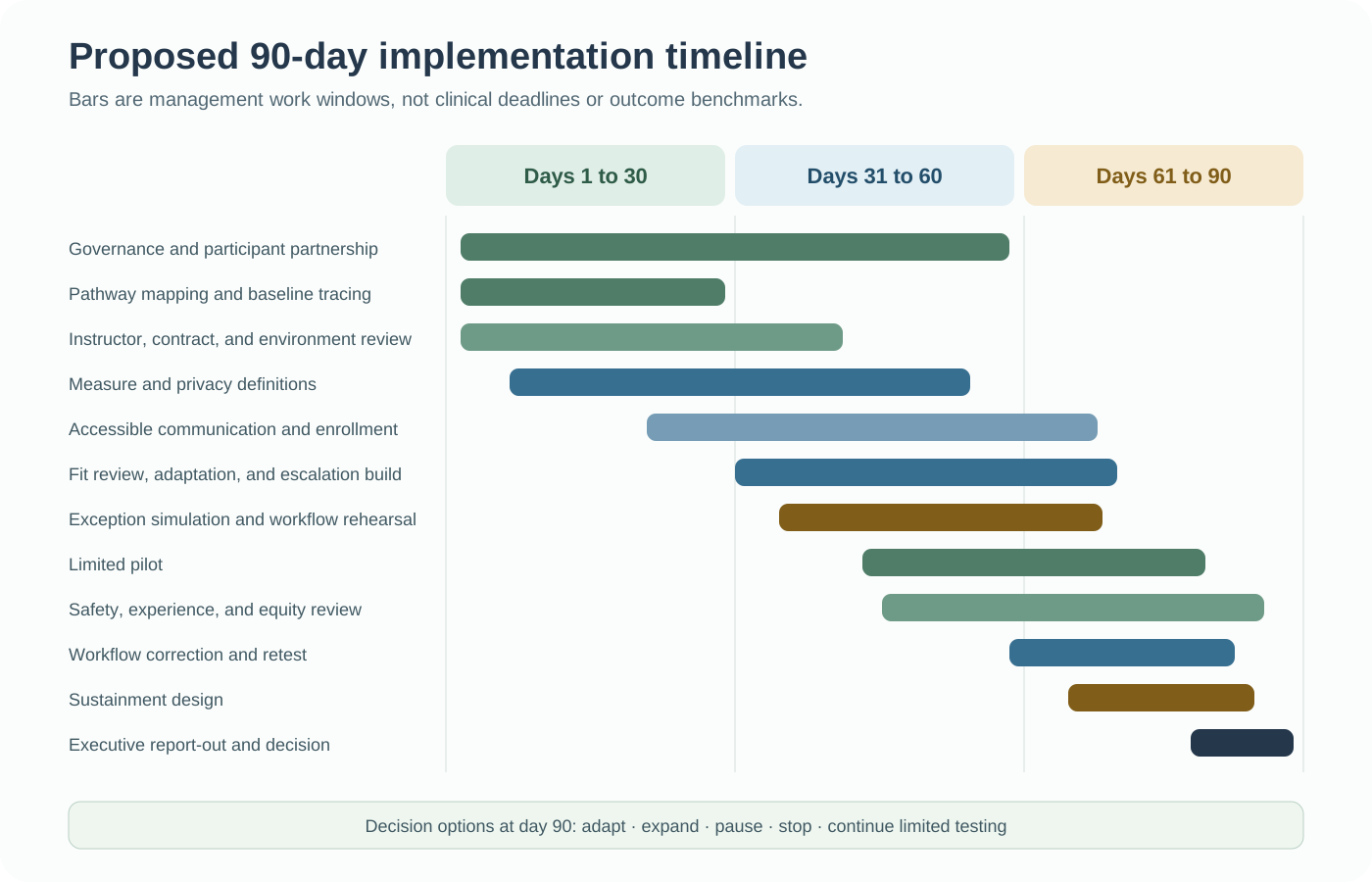
A focused 90-day test can turn September recognition into a durable service improvement.
Days 1 to 30
Define and verify
- Name the executive sponsor, clinical authority, program owner, access lead, safety lead, data steward, privacy lead, and participant partners.
- Select one yoga pathway and define population, purpose, entry points, clinical boundary, instructor requirements, formats, adaptations, and exit routes.
- Trace a baseline sample from initial interest through completion or owned redirection.
- Review contracts, technology, physical space, accessibility, communication, and incident processes.
- Define denominators, exclusions, due times, exception categories, outcomes, and balancing measures.
Days 31 to 60
Build and rehearse
- Create the minimum fit-review, enrollment, adaptation, acknowledgment, symptom-response, and closed-loop status process.
- Verify instructor onboarding, service scope, substitute coverage, documentation, privacy, and escalation contacts.
- Test plain-language information, accessible formats, language support, a non-digital option, and transparent cost.
- Rehearse technology failure, class capacity, symptom increase, mobility limitation, language need, inability to participate, and urgent escalation.
- Begin a limited pilot with frequent clinical, operational, safety, experience, and equity review.
Days 61 to 90
Learn and decide
- Review accepted access, fit review, accommodations, participation, safety response, experience, outcomes, and aged exceptions.
- Compare records with participant, nonparticipant, instructor, clinician, access, and technology accounts.
- Correct verified work-system conditions and retest them.
- Report evidence limits, missing data, privacy, capacity, cost, and unintended effects.
- Decide to adapt, expand, pause, or stop, and schedule 3-, 6-, and 12-month sustainment review.
Figure 6. Proposed 90-day implementation timeline
Executive review should ask whether public messaging matches the actual service, whether clinical boundaries and instructor responsibilities are explicit, whether people can choose among usable formats, whether adaptations are completed, whether concerns receive a timely response, and whether another option remains owned when yoga does not fit. Review both success and failure cases. A program can have high satisfaction among completers while still excluding people who could not enroll.
National Yoga Awareness Month can leave a durable result when evidence, clinical authority, qualified delivery, access, experience, safety, and accountability are connected. The goal is not to promise that one modality will resolve every symptom or substitute for established care. The goal is to create a bounded service in which people receive trustworthy information, individualized fit decisions, meaningful choice, appropriate adaptations, qualified instruction, visible responsibility, and transparent learning.
Peer-reviewed evidence portfolio
References
Newest first using the recorded publication date when available. Study designs, denominators, findings, and transfer limits are described in the article.
- Tundealao S, Okunlola P, Titiloye T, et al. A network meta-analysis of randomized controlled trials comparing the efficacy of mind-body exercises for reducing anxiety and depression in cancer survivors. Discover Public Health. 2026;23(1):1-19. doi:10.1186/s12982-026-01934-x.
- Bianchi C, Rotondo L, Bersani C, et al. Yoga and mindfulness-based rehabilitation after myocardial infarction: a systematic review. Healthcare. 2026;14(8):1106. doi:10.3390/healthcare14081106.
- Wahlström M, Krutzén P, Krutzén J, Hägglund E. A theoretical framework and model for standardizing yoga interventions in healthcare, MOSI. Global Advances in Integrative Medicine and Health. 2026;15:1-10. doi:10.1177/27536130261446906.
- Zhou J, Jawis MN, Li S. Effects of yoga on pain, physical function, and biomechanical or impairment outcomes in knee osteoarthritis: a systematic review and three-level meta-analysis. Journal of Back and Musculoskeletal Rehabilitation. 2026;39(4):1170-1185. doi:10.1177/10538127261421867.
- Gatti F, Perego G, Milano F, et al. The effects of online yoga practice on cancer patients: a systematic review. Healthcare. 2025;13(3):225. doi:10.3390/healthcare13030225.
- Khan S, Edema C. Effects of yoga on the mental health of women with gynecological cancers: a systematic literature review. Open Journal of Occupational Therapy. 2025;13(4):1-15. doi:10.15453/2168-6408.2383.
- Zhu M, Chen H, Wang Q, et al. Comparative efficacy of various interventions to reduce perceived stress among older adults: a systematic review and network meta-analysis. Worldviews on Evidence-Based Nursing. 2025;22(1):1-11. doi:10.1111/wvn.70004.
- Willmott AGB, James CA, Jewiss M, et al. Hot yoga: a systematic review of the physiological, functional and psychological responses and adaptations. Sports Medicine Open. 2025;11(1):1-20. doi:10.1186/s40798-025-00917-7.
- Pomales TO, Good MK, Delzio M, et al. Teaching group yoga-for-wellness classes via video-based telehealth: perspectives from Veterans Health Administration yoga teachers. Global Advances in Integrative Medicine and Health. 2025;14:1-13. doi:10.1177/27536130251382175.
- Ward L, Bissell L, Howsam J, et al. Acceptability and feasibility of online delivery of chair-based yoga for older adults with multimorbidity: lessons from a process evaluation of the Gentle Years Yoga trial. BMC Complementary Medicine and Therapies. 2025;25(1):107. doi:10.1186/s12906-025-04838-6.
- Santarossa S, Haley EN, Coyne P, et al. Equity-focused barriers and facilitators to implementing a prenatal yoga intervention in a healthcare system: patient and provider perspectives. BMC Pregnancy and Childbirth. 2025;25(1):1-12. doi:10.1186/s12884-025-08383-5.
- Lundberg M, Klompstra L, Orwelius L, et al. Feasibility of teleyoga for people with post COVID-19 condition: a mixed method design. BMC Complementary Medicine and Therapies. 2025;25(1):1-10. doi:10.1186/s12906-024-04735-4.
- Gandolfi MG, Zamparini F, Spinelli A, et al. Yoga for musculoskeletal disorders: a review of prospective clinical studies. Global Advances in Integrative Medicine and Health. 2025;14:1-43. doi:10.1177/27536130251388385.
- Rees T, Li H, Sharma NK. Yoga as an adjunct treatment to manage pain, anxiety, depression, and stress during hospital stays: a systematic review. International Journal of Yoga Therapy. 2024;34. doi:10.17761/2024-D-23-00047.
- Neto MG, Saquetto MB, Roever L, Carvalho VO. The effect of yoga intervention on psychological symptoms, health-related quality of life, and cardiovascular risk factors in people with coronary artery disease: a systematic review and meta-analysis. Heart and Mind. 2024;8(4):300-309. doi:10.4103/hm.HM-D-23-00063.
- Pham C, Hildebrand C, Tarasovsky G, et al. Implementation of virtual, livestream yoga classes for veterans at home during the COVID-19 pandemic: a mixed-methods pilot program evaluation. Global Advances in Integrative Medicine and Health. 2024:1-10. doi:10.1177/27536130241268107.
- Allende S, Mahoney L, Francisco JM, et al. Teleyoga for patients with Alzheimer disease and chronic musculoskeletal pain and their caregivers: a feasibility study. Global Advances in Integrative Medicine and Health. 2024:1-12. doi:10.1177/27536130241240405.
- Grooten WJA, Boström C, Dedering Å, et al. Summarizing the effects of different exercise types in chronic low back pain: a systematic review of systematic reviews. BMC Musculoskeletal Disorders. 2022;23(1):801. doi:10.1186/s12891-022-05722-x.
Scope note: This executive brief supports healthcare leadership, program governance, access, care coordination, quality improvement, workforce design, community partnership, experience, and evaluation. It does not diagnose a condition, prescribe yoga or exercise, determine individual appropriateness, replace clinical guidelines or emergency procedures, or provide personal medical advice. Qualified professionals should use current evidence, individual information, informed consent, and local policy.