

September 2026 · Executive Brief
Newborn Screening Awareness Month 2026: Build a Reliable Path from Awareness to Action
Use September to verify the full screening pathway, from family preparation and eligible-birth capture through result communication, diagnostic closure, early intervention, equity review, and accountable learning.
Leadership signal
Newborn screening is not one test. It is a time-sensitive operating system with many chances to lose the family.
Newborn Screening Awareness Month gives healthcare executives a focused opportunity to examine a pathway that is often discussed as though completion occurs when a specimen is collected or a bedside screen is performed. In practice, the pathway spans family preparation, birth registration, eligibility rules, specimen or physiologic screening, transport, laboratory or device processing, result classification, family contact, repeat or confirmatory work, specialist access, early intervention, data exchange, and long-term program learning. Each stage can work well while the whole route remains unreliable.
Recent scoping and systematic reviews of newborn hearing screening describe wide protocol variation, structural inequality, inconsistent definitions, and weak integration between screening, diagnosis, and follow-up.1,2,18 These reviews do not prove that one workflow is best. They do establish an executive concern: a completed initial screen is not the same as a completed care pathway. A result that is technically available but not communicated, accepted, acted on, and closed remains an operational risk.
The leadership task is to make responsibility visible across organizational boundaries. Birth facilities, laboratories, public health programs, primary care, specialty services, early-intervention partners, technology teams, and families may each hold part of the route. No single participant can compensate indefinitely for unclear ownership, disconnected data, inaccessible appointments, ambiguous result language, or an exception queue that no one reviews. A dependable system defines the next expected action, the receiving role, the due interval set by governing authorities, the status that proves acceptance, and the escalation path when the expected action does not occur.
This brief does not prescribe an individual screening method, specimen window, threshold, confirmatory test, diagnosis, or treatment. Those decisions belong to current state programs, qualified clinicians, laboratories, specialists, and applicable professional guidance. The executive responsibility is different: ensure that approved clinical requirements can be performed reliably, communicated clearly, and completed equitably.
A 2026 before-and-after study of a newborn hearing screening database included 8,290 newborns. Screening within one month rose from 83.47% before implementation to 96.64% after implementation. Referral rates fell from 18.44% to 6.47%. Diagnostic auditory brainstem response completion within three months rose from 7.41% to 52.63%, and completion within six months rose from 59.26% to 84.21%.6 These changes are important, but they are not a causal verdict. The study occurred at one center, used a before-and-after design without a control group, included concurrent protocol changes, and used different denominators for different measures. The six-month comparison had a reported p value of 0.06.
A separate randomized trial provides a more focused signal about family communication. Among 271 randomized families after a non-pass hearing result, loss to follow-up was 10.37% with detailed verbal plus written education and 21.32% with usual verbal communication. The difference was statistically significant at p=0.021, with a reported 95% confidence interval of 1.6 to 20.3 percentage points.10 The finding supports deliberate, understandable communication. It does not prove that one script, communicator, or workflow will transfer unchanged to every program.
Executives should connect these signals. A tracking system can improve visibility, while family communication can improve the likelihood that the next step is understood and completed. Neither is sufficient alone. Technology without workflow ownership creates a better list of unresolved cases. Education without appointment access, transportation, language support, or receiving-team acceptance asks families to overcome system defects on their own.
Evidence to action
Use research to strengthen the pathway while preserving design, denominator, uncertainty, and transfer limits.
The evidence portfolio includes scoping reviews, systematic reviews, a meta-analysis, randomized and prospective studies, retrospective implementation studies, qualitative research, caregiver studies, and policy analysis. These designs answer different questions. A randomized trial can estimate the effect of a defined communication intervention in a defined group. A qualitative study can explain barriers and opportunities but cannot estimate how common they are. A before-and-after implementation study can detect an association with changed process measures, but concurrent changes and secular trends may account for part of the difference. A diagnostic-accuracy study depends on case mix, screening definition, reference-standard verification, timing, thresholds, and exclusions.
Track the full route
One systematic review found 58 studies reporting referral, eight reporting loss to follow-up, and 35 reporting both, but only 15 studies defined loss to follow-up.18 A score without a shared definition cannot support reliable comparison.
Communicate for action
Family education lowered loss to follow-up in one randomized hearing-screen trial, but local teams still need to test language, comprehension, appointment availability, and handoff acceptance.10
Keep equity visible
A six-state policy analysis found different downstream associations by racial group after pulse-oximetry mandates.16 The observational design supports equity review, not individual causal claims.
Figure 1. Process measures before and after one newborn hearing screening database implementation
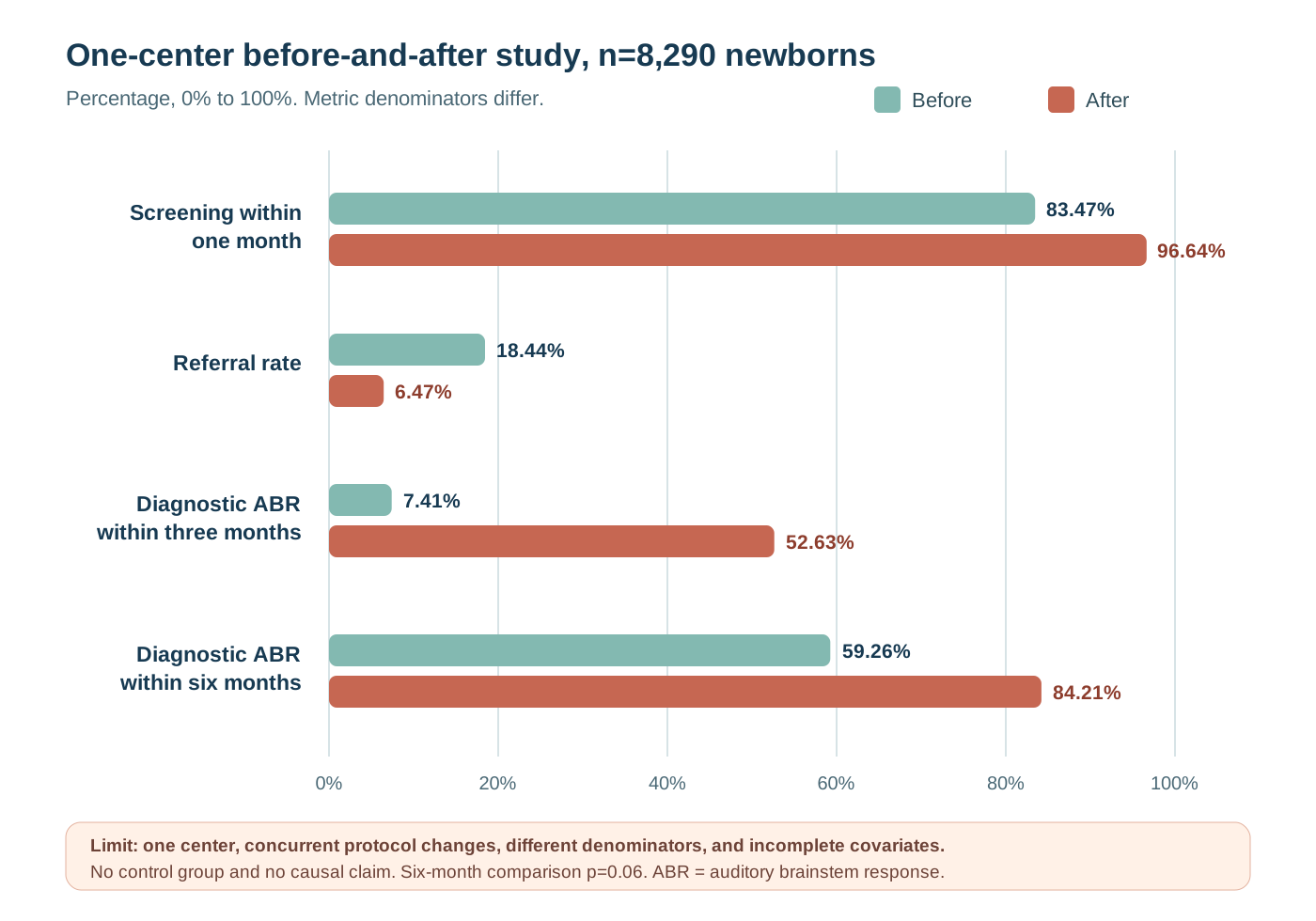
Technology can make status visible, but status definitions determine whether the data are trustworthy.
The database study demonstrates why a pathway needs more than a final completion rate. Screening timeliness, referral, diagnostic work, and loss to follow-up describe different points in the route. Leaders should retain the denominator for each point, distinguish eligible newborns from completed screens, and separate screen-positive results from referrals that were actually accepted. If a team changes the definition of completion during a pilot, the run chart should show the change rather than blending incompatible periods.
Feasibility evidence adds context. A prospective substudy at a primary health facility in Zambia reported that 678 of 726 infants were screened, or 93%. Nine were referred and three were lost to follow-up.7 The result shows that initial screening can operate in a primary-facility setting while referral completion remains vulnerable. It does not provide a universal incidence rate or performance target. Its practical value is to keep the denominator visible after the initial screen.
Scoping reviews of infant hearing-loss detection identified thousands of records but found persistent variation in program structure, follow-up, and system integration. One review screened 16,946 records and included 58 studies.1 Another review of universal neonatal hearing screening in China and India included 19 papers and described different levels of program integration and heterogeneous hospital-based implementation.2 These counts show breadth, not comparative effectiveness. They support local mapping, explicit protocol documentation, and careful transfer of any reported performance estimate.
Cardiac screening evidence demonstrates complementarity and the danger of treating a screen as a diagnosis.
A 2024 systematic review and meta-analysis included 20 articles and 872,549 screened newborns. Pooled sensitivity was 0.69 for physical examination, 0.78 for pulse oximetry, and 0.93 for the combined method. Corresponding specificity estimates were 0.98, 0.99, and 0.98.15 Those estimates remain attached to their reported confidence intervals and study limitations. In many included studies, only suspected cases received the reference standard, creating verification concerns. The results support complementary screening components. They do not create an individual diagnostic guarantee.
Large and small observational cohorts reinforce the context problem. A study of 44,147 live births reported 498 suspected cases and 458 echocardiographically confirmed cases after combined auscultation and pulse oximetry.17 A prospective study of 23,614 infants reported pulse-oximetry sensitivity of 85.7% for critical congenital heart disease but 33% for major congenital heart disease requiring surgery in infancy, with specificity of 99.3%. Positive screens also identified significant noncardiac illness.19 One maternity center or regional unit cannot establish universal performance, but both studies underline a core operating principle: screen-negative status does not erase clinical concern, and screen-positive status requires an owned diagnostic route.
Other single-center studies reported context-dependent diagnostic characteristics. A prospective study of 1,009 term newborns found 71.93% sensitivity, 95.8% specificity, 50.62% positive predictive value, and 98.28% negative predictive value for a combined screening algorithm in that cohort.11 Another observational study included 3,037 newborns, 304 screen-positive results, and 215 confirmed congenital heart disease cases.12 A third study included 1,117 eligible newborns from 1,333 births and reported high accuracy at its selected threshold.14 Case mix, timing, exclusions, altitude, threshold selection, selective verification, and follow-up limit direct transfer. An executive dashboard should never lift one performance statistic away from its study population and method.
False-positive and inconclusive results are not merely technical events.
Parent and caregiver research on false-positive results supports rapid, careful communication and explicit follow-through. Recent studies examined parental experience after false-positive severe combined immunodeficiency screening and caregiver emotional responses after a false-positive very-long-chain acyl-CoA dehydrogenase deficiency result.3,9 A program analysis across congenital hypothyroidism, congenital adrenal hyperplasia, and maple syrup urine disease also highlighted the value of reducing avoidable inconclusive and false-positive results.13 These condition-specific findings do not quantify one universal effect. They do establish that uncertainty has a family, communication, capacity, and trust cost.
Leaders should ask how the organization communicates the difference between screening and diagnosis, who answers questions, how quickly clarifying work can occur, what families should do while waiting, and which role retains accountability. The purpose is not to minimize the importance of screening or to promise that every false-positive result can be avoided. It is to prevent preventable distress caused by vague language, contradictory instructions, inaccessible appointments, and silent delays.
Closed-loop screening route
Define completion as accepted action and verified closure, not message transmission.
The route begins before birth or at the earliest practical family contact. Families need plain-language information about the purpose of screening, the difference between screening and diagnosis, possible result categories, how results will arrive, who will call, and how contact information can be corrected. Preparation should support informed participation without shifting system navigation onto the family.
Eligible-birth capture requires reconciliation across birth registration, admission and discharge systems, laboratory or device records, transfers, home or out-of-hospital births within program scope, neonatal intensive care, and other locally defined exceptions. A simple total of completed screens can hide newborns who never entered the denominator. Daily or otherwise locally appropriate reconciliation should identify who is expected, who is complete, who has a documented exception, and who is unresolved.
Figure 2. Proposed closed-loop newborn screening route
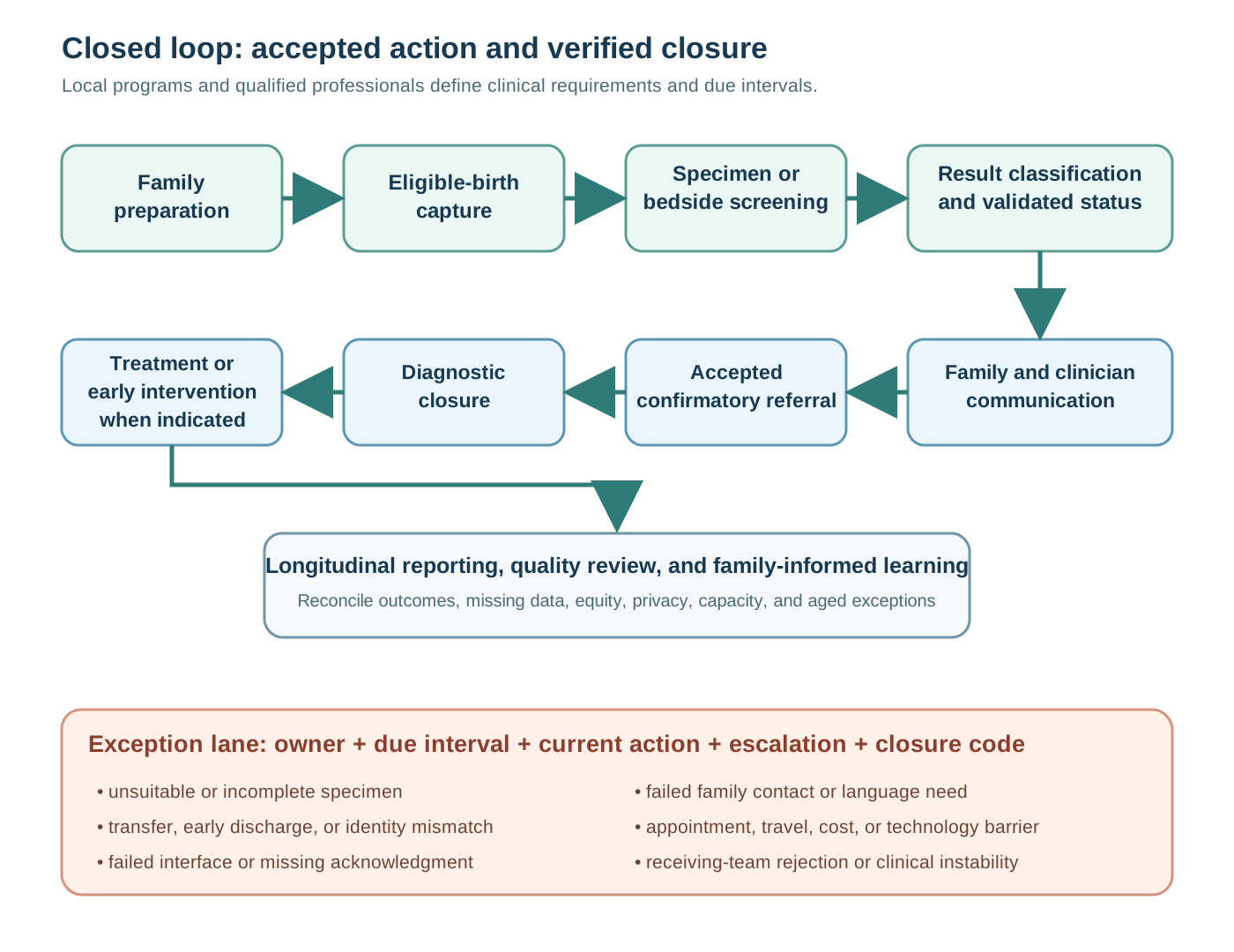
Every transition needs a sender, receiver, purpose, due interval, accepted status, retained owner, and exception code. Sending an interface message, fax, portal alert, or referral does not prove receipt. A closed-loop handoff requires the receiving role to accept, request clarification, redirect with ownership, or escalate. Until acceptance, the sending role or another explicitly designated role retains accountability.
Result classification should be understandable to both clinical teams and families. Operational language needs to distinguish routine completion, repeat needed, unsatisfactory specimen, out-of-range or non-pass result, pending clarification, diagnostic referral, and verified closure. The exact categories vary by program. Whatever the categories, they must map to a defined next action and owner. Free-text workarounds and local abbreviations can conceal urgency and prevent reliable reporting.
Neonatal intensive care and parenteral-nutrition contexts illustrate why clinical and operational rules must remain connected. A peer-reviewed review described how physiologic immaturity, early collection, altered metabolic flux, and parenteral-nutrition amino acids can complicate interpretation of metabolic screening in preterm infants.8 Operational teams should not improvise clinical interpretation. They should make the approved protocol, qualified review, specimen status, repeat plan, and follow-up ownership visible.
The exception lane is a first-class part of the pathway. It should cover incomplete or unsuitable specimens, transfer between facilities, discharge before completion, failed interface transmission, duplicate or mismatched identity, family contact failure, language need, transportation, cost, appointment capacity, technology, rural access, refusal or preference, clinical instability, and receiving-team rejection. Each exception needs an owner, due interval, current action, escalation point, and closure code. An aging list without decision rights is not exception management.
Teleaudiology can improve reach but may replace one access barrier with another. Three focus groups with nine experienced infant diagnostic audiologists identified potential geographic advantages alongside communication, error, financial, motivation, and facilitator-training concerns.5 These qualitative views are unweighted and do not estimate effectiveness or family preference. Leaders considering remote diagnostic pathways should test technology, local facilitation, privacy, image or signal quality, interpreter workflow, family comprehension, and contingency plans before counting an appointment as usable access.
Family experience and equity
Trust depends on clear information, usable access, and a system that does not confuse a family response problem with a system design problem.
Families enter newborn screening while recovering from birth, caring for a newborn, absorbing clinical information, and coordinating practical needs. A nonroutine result can arrive when sleep, transportation, employment, language, insurance, housing, caregiving, and geographic constraints are already intense. Communication should be concise, specific, respectful, and repeated in accessible forms. It should explain what is known, what is not known, what happens next, who is responsible, when the family should expect contact, and where to call if that contact does not occur.
A nationwide French survey of 1,640 parents reported 93% support for expanded newborn screening and 89% support for genomic newborn screening. Acceptability was shaped by emotional orientation, perceived effectiveness, ethics, tolerance of uncertainty, trust, and social distance.4 This cross-sectional survey does not establish actual uptake or transfer to another country. It does show why program expansion needs transparent governance, not only technical capability.
Consent and education materials should separate present program requirements from future possibilities. Avoid implying that a screen will diagnose every condition, predict every outcome, or remove the need for routine clinical assessment. Explain data use, privacy, storage, access, and any research or secondary-use choices in language families can understand. Provide interpretation, disability access, non-digital contact, and a way to correct demographic and contact information.
Equity review must follow the complete pathway. The proportion screened can appear similar across groups while time to family contact, appointment acceptance, diagnostic completion, or early-intervention entry differs. A difference-in-differences analysis across six states examined 9,147 emergency hospitalizations for critical congenital heart disease. After pulse-oximetry mandates, emergency hospitalizations declined 22%, with a 95% confidence interval from 6% to 36%, among non-Hispanic White infants. The decline was 65% smaller among non-Hispanic Black infants.16 This observational policy study cannot establish individual benefit or causation. Coding, state context, and residual confounding remain important. The responsible use is to ask whether downstream benefit is distributed equitably.
Stratification should be governed, purposeful, and privacy-protective. Relevant dimensions may include language, geography, payer or financial barriers, race and ethnicity, birth setting, neonatal intensive care, transfer status, disability access, and other locally justified factors. Small groups require careful suppression and interpretation. A gap should trigger verification with families, frontline teams, and community partners before leaders assign a cause.
Figure 3. Qualitative fishbone for a screen completed but pathway not closed
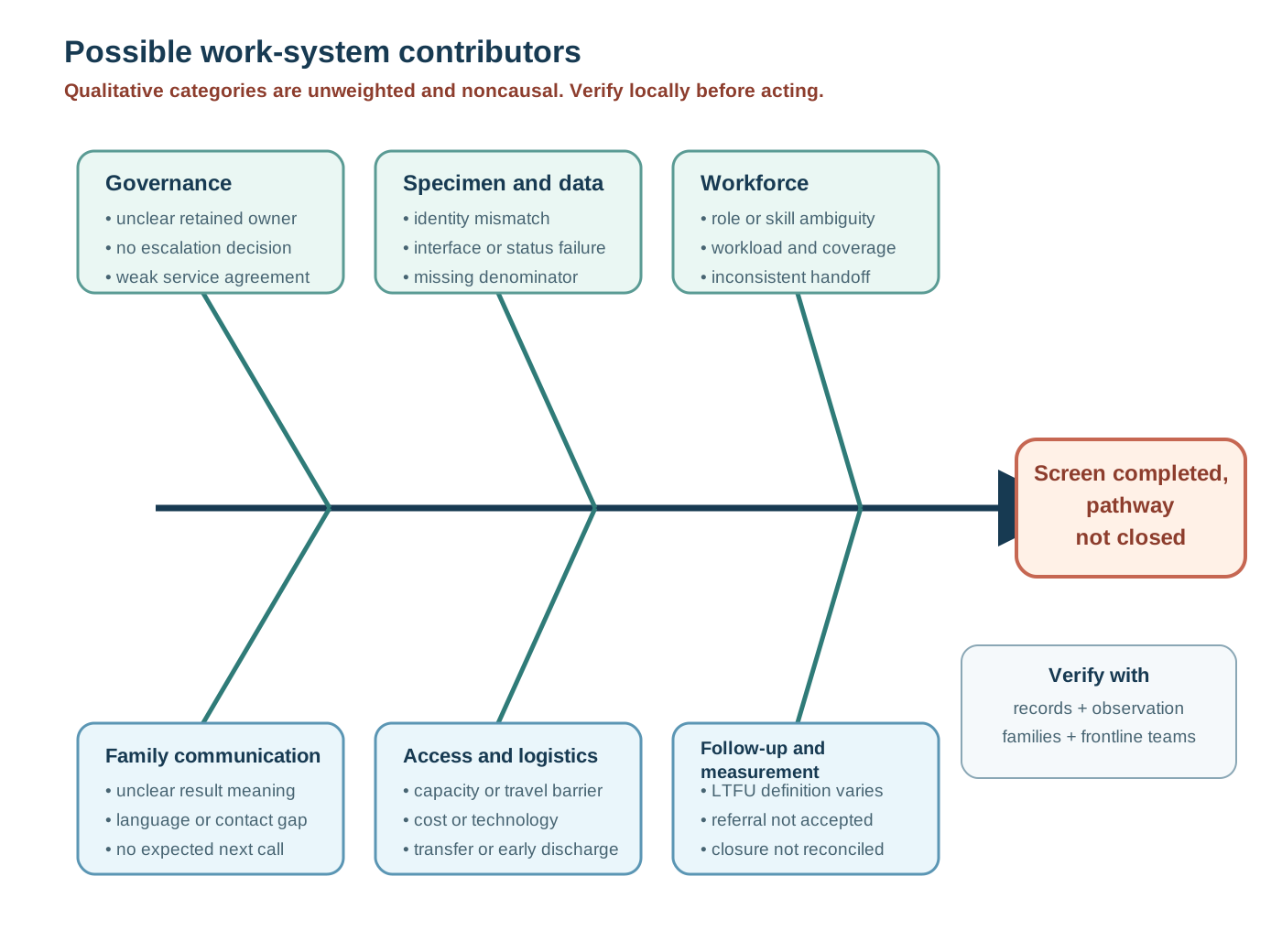
Use the fishbone as a question set, not a blame map. For example, failed family contact may reflect an incorrect phone number, an unrecognized language preference, unclear caller identity, a portal-only message, or contact made before the result was ready for explanation. A missed appointment may reflect scheduling delay, travel distance, out-of-pocket cost, newborn care needs, or a referral that the receiving service never accepted. The corrective action should address the verified work-system condition.
Operating system
Align governance, data, clinical authority, access, communication, and community partnership around the newborn and family.
Figure 4. Newborn screening operating system
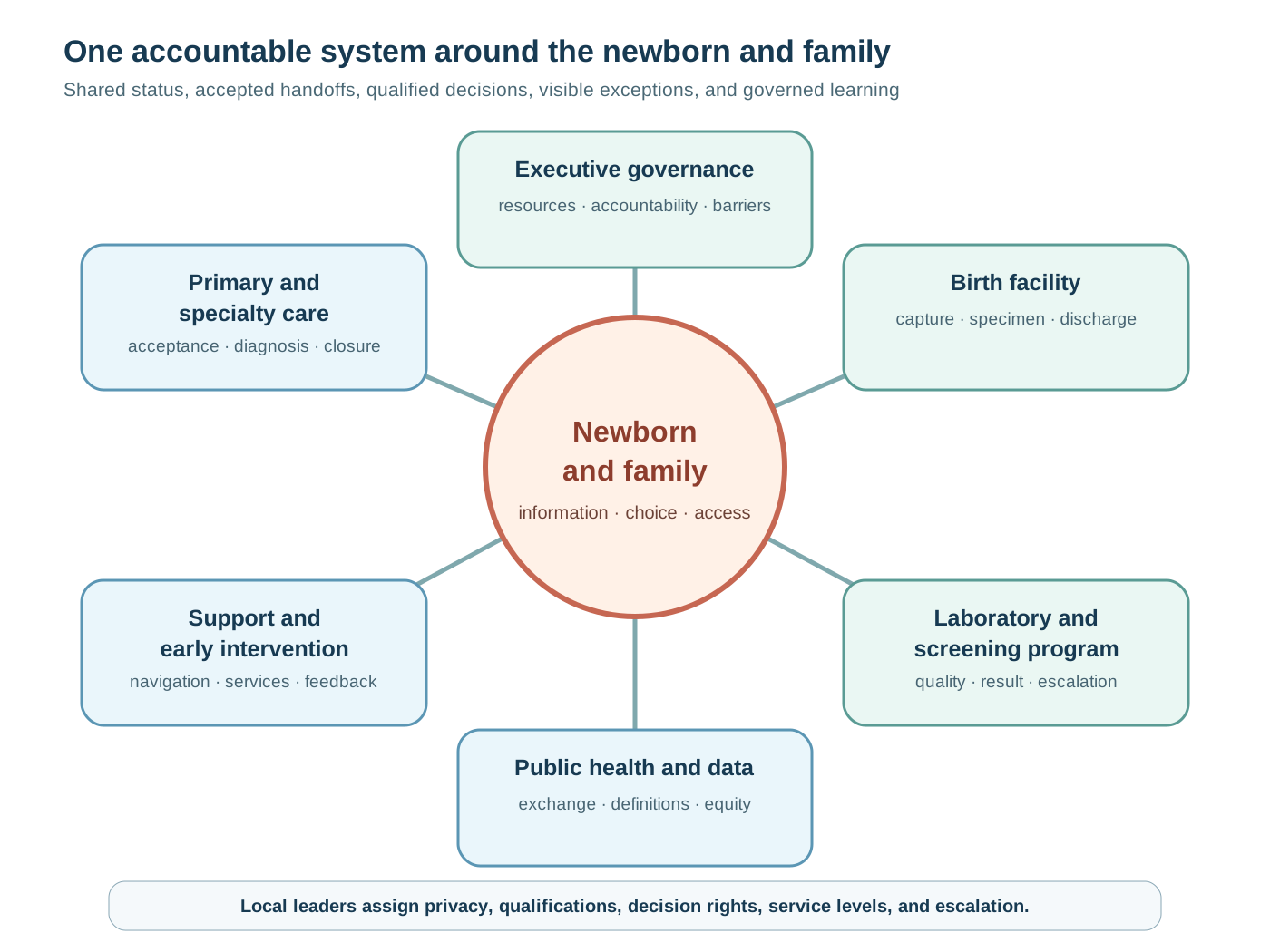
Make governance operational.
An executive sponsor should own cross-boundary performance, resources, contracting, and barrier removal. Qualified clinical and laboratory leaders should own clinical requirements, interpretation boundaries, result categories, escalation, and relationship to current guidance. Operations should own eligible-birth reconciliation, specimen logistics, appointment capacity, family contact workflows, and exception queues. Public health and data stewards should own authorized exchange, definition alignment, privacy, matching, completeness, and reporting.
Decision rights must be explicit. Frontline staff need to know who can classify a result, who can change a protocol, who can speak with a family, who can order or arrange confirmatory work, who can close a case, and who can override a due interval. Escalation should be available when clinical urgency, identity mismatch, failed contact, transfer, or capacity prevents the standard route.
Service agreements should specify receiving criteria, acknowledgment status, information needed, communication expectations, capacity response, after-hours coverage, interpreter access, record exchange, privacy, rejected referrals, and responsibility during transfer. A directory entry is not a service agreement. A specialty clinic should not first discover an urgent pathway expectation when a case arrives.
Data design should support work, not only reporting. Teams need a shared identifier strategy, versioned definitions, timestamp sources, result provenance, reconciliation logic, and an auditable history of status changes. Dashboards should reveal aged exceptions and missing data. They should not convert a blank field into success or blend screen completion with diagnostic closure.
Build capacity before increasing awareness.
Public promotion can increase questions, requests, and referral volume. Before expanding outreach, leaders should review laboratory capacity, specimen transport, bedside equipment, trained staff, contact-center support, diagnostic appointments, interpreter availability, telehealth readiness, and early-intervention access. Awareness without capacity can widen the interval between a family receiving a concerning message and receiving meaningful clarification.
Workforce preparation should include role-specific simulation. Registration teams can rehearse identity and contact correction. Nurses and screeners can rehearse exceptions and family explanation. Laboratory and program teams can rehearse unsuitable specimens, interface failure, and result escalation. Access teams can rehearse rejected referrals and unavailable appointments. Specialty and early-intervention teams can rehearse acceptance and closure communication. Leaders should observe the handoffs, not only completion of training modules.
Communication should be treated as a clinical-operational control. The randomized education trial shows that detailed verbal plus written communication can affect follow-up in one defined setting.10 Organizations should test comprehension, caller identity, timing, interpreter workflow, written material, portal design, contact retries, and the transition from explanation to accepted appointment. Avoid making families translate technical result language into an action plan.
Community and family partners should review materials, contact workflows, data use, access assumptions, and equity findings. Their role is not ceremonial approval. They can identify whether messages appear trustworthy, whether scheduling is usable, whether non-digital routes exist, and whether the system treats a request for clarification as resistance rather than informed participation.
Structured measurement
Measure the whole route with explicit denominators and balancing measures.
A reliable scorecard distinguishes activity from completion. Number of specimens, screens, portal messages, referrals, or appointments describes work performed. It does not establish that eligible newborns were captured, families understood the result, the receiving team accepted responsibility, diagnostic work was completed, or early intervention began. Every measure needs a population, numerator, denominator, exclusions, timestamp source, owner, review cadence, stratification plan, and known limitation.
Figure 5. Executive newborn screening pathway scorecard
| Domain | Candidate numerator | Candidate denominator | Owner and source | Cadence | Important limitation |
|---|---|---|---|---|---|
| Eligible-birth capture | Eligible newborns reconciled to completed screening or a documented, authorized exception | All newborns meeting the locally governed eligibility definition | Birth facility and program operations; birth, encounter, and screening records | Daily during pilot | A completed-screen list cannot reveal newborns missing from the denominator |
| Specimen or screen quality | Initial specimens or bedside screens meeting the locally governed quality definition | Initial specimens or screens completed | Laboratory or screening lead; device and laboratory records | Weekly | Definitions and exclusions differ by test, setting, and program |
| Result interval | Results reaching the authorized receiving role within the governing interval | Results expected during the period | Program and data steward; laboratory, interface, and acknowledgment logs | Weekly | Transmission does not establish understanding or action |
| First family contact | Families receiving documented, understandable contact within the governing interval | Results requiring direct family communication | Clinical and communication owner; approved contact record | Weekly | An attempted call is not completed contact; language and comprehension matter |
| Confirmatory completion | Cases reaching documented diagnostic closure within the governing pathway | Cases requiring confirmatory or diagnostic work | Clinical owner and receiving service; referral and diagnostic records | Weekly | A referral sent or appointment scheduled is not diagnostic closure |
| Loss to follow-up or documentation | Unresolved cases meeting the locally defined loss-to-follow-up or loss-to-documentation status | Cases expected to complete the defined next step | Program owner; reconciled case registry | Weekly and monthly trend | Definitions vary and can conceal system barriers or missing external documentation |
| Equity review | Locally selected pathway steps completed within the governing interval by group | Eligible cases in each governed analytic group | Equity and data stewards; validated analytic file | Monthly or quarterly | Small cells, missing data, and group-level associations require careful interpretation |
| Exception closure | Aged exceptions resolved with documented action and owner | Exceptions open beyond the locally defined review point | Executive sponsor and operations; exception work queue | Weekly | Closing a record administratively does not prove the family received the next step |
Pair outcome measures with process and balancing measures. Faster result communication should not increase ambiguous messages or bypass qualified interpretation. Lower referral rates should not conceal missed cases or classification changes. Higher follow-up completion should not rely on coercive communication. Virtual access should not eliminate in-person or non-digital routes. Increased data exchange should not exceed authorized use or weaken privacy.
Report missingness directly. If race, ethnicity, language, geography, contact completion, receiving-team acceptance, or diagnostic closure is incomplete, show the missing proportion. A dashboard that quietly excludes unresolved records can appear to improve while the pathway deteriorates. Review case-level exceptions alongside aggregate trends so leaders can see both recurring system conditions and urgent individual risks.
Executive agenda
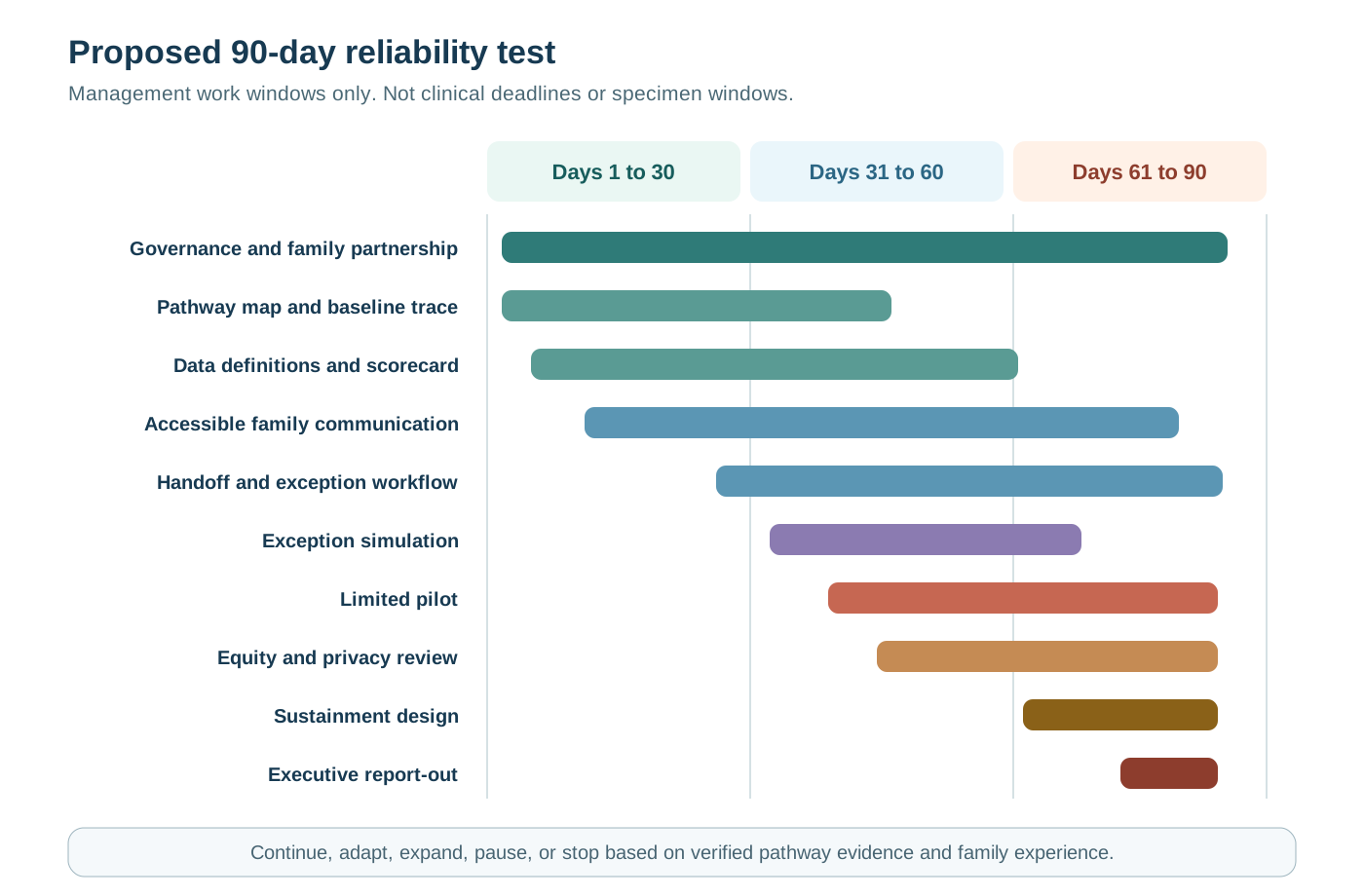
A focused 90-day test can convert observance messaging into a durable reliability improvement.
Days 1 to 30
Define and trace
- Name the executive sponsor, clinical authority, laboratory or screening lead, birth-facility owner, access lead, data steward, privacy lead, equity lead, and family partners.
- Select one screening pathway and document eligibility, result categories, receiving roles, due intervals, accepted handoff status, exceptions, escalation, and closure.
- Reconcile a baseline sample from birth through diagnostic or intervention closure.
- Review family information, contact methods, interpreter access, referral capacity, service agreements, and data exchange.
- Define each scorecard denominator, exclusion, timestamp source, balancing measure, and privacy rule.
Days 31 to 60
Build and rehearse
- Create the minimum reconciliation, acknowledgment, family-contact, referral-acceptance, and exception workflows.
- Test plain-language verbal and written communication, contact correction, accessible formats, interpretation, and non-digital options.
- Rehearse unsuitable specimens, interface failure, transfer, identity mismatch, failed contact, unavailable appointments, and rejected referrals.
- Verify receiving-service capacity, after-hours escalation, interim responsibility, and diagnostic closure status.
- Begin a limited pilot with frequent review of safety, timeliness, family experience, equity, privacy, workload, and exceptions.
Days 61 to 90
Learn and decide
- Review eligible-birth capture, specimen or screen quality, result interval, family contact, accepted referrals, diagnostic closure, and aged exceptions.
- Compare records with family, frontline, laboratory, primary-care, specialty, public-health, access, and technology accounts.
- Correct verified work-system conditions, then retest the handoff and exception.
- Report data limits, subgroup missingness, privacy, capacity, cost, workload, and unintended effects.
- Decide to adapt, expand, pause, or stop, and schedule sustainment review.
Figure 6. Proposed 90-day newborn screening reliability timeline
Executive review should begin with unresolved newborns, not presentation slides. Ask whether the denominator is complete, whether the family received understandable information, whether the receiving team accepted responsibility, whether access barriers were addressed, and whether diagnostic or intervention closure is documented. Review at least one case that moved smoothly, one that required recovery, one that remains unresolved, and one in which an apparent family follow-up problem was traced to a system barrier.
Newborn Screening Awareness Month can produce more than a campaign. It can leave a reliable operating system in which every eligible newborn is visible, every result has a next action, every family receives understandable information, every handoff is accepted, every exception has an owner, and every leader can distinguish screening activity from pathway closure.
Peer-reviewed evidence portfolio
References
Newest first using the recorded publication date when available. Study designs, denominators, findings, and transfer limits are described in the article.
- Lopes ADS, Carvalho Filho AP, Silva SA, et al. A survey of strategies for the early diagnosis of hearing loss in infants: a scoping review. CoDAS. 2026;38(5):e20250375. doi:10.1590/2317-1782/e20250375pt. PMID 42561304.
- Hatzopoulos S, Cardinali L, Skarzynski PH, Zimatore G. The otoacoustic emissions in universal neonatal hearing screening in China and India: an update on the Asian states, 2005 to 2025. Children. 2026;13(6):751. doi:10.3390/children13060751.
- Holder P, Musa C, Keetharuth A, et al. Parental views on the psychosocial impact of false-positive results following newborn screening for severe combined immunodeficiency in England. International Journal of Neonatal Screening. 2026;12(2):26. doi:10.3390/ijns12020026.
- Level C, Faivre L, Lemaitre M, et al. Parental acceptability of newborn screening expansion in the genomic era: a nationwide French survey informed by the Theoretical Framework of Acceptability. PLOS ONE. 2026;21(6):e0343754. doi:10.1371/journal.pone.0343754. PMID 42296145.
- Phillips J, Tomlin D, Graydon K, Sarant J. Teleaudiology for infant diagnostic assessments: audiologists' views on challenges and opportunities in a well-established screening program. American Journal of Audiology. 2026;35(2):619-627. doi:10.1044/2026_AJA-25-00166. PMID 41940777.
- Parangrit K, Sillabutra J, Isaradisaikul SK, Kulprachakarn K. Implementation and evaluation of a newborn hearing screening database in a resource-limited setting: advantages and limitations. Children. 2026;13(1):22. doi:10.3390/children13010022.
- Zulu E, Herlihy JM, Harper M, et al. From silent threat to early intervention: evaluating the universal hearing screening program in infants at a primary health facility in Zambia. Perspectives of the ASHA Special Interest Groups. 2026;11(2):607-613. doi:10.1044/2025_PERSP-25-00107.
- Tan ND, Bockhold K. Interpretation of abnormal newborn screening results in preterm infants receiving parenteral nutrition. Neonatology Today. 2026;21(1):39-42.
- Morishima S, Shimada Y, Ihara K. Caregivers' emotional responses triggered by a false-positive VLCADD in newborn screening in Oita Prefecture. International Journal of Neonatal Screening. 2025;11(4):90. doi:10.3390/ijns11040090.
- Pitathawatchai P, Wanachottrakul P, Prayuenyong P. Education on loss to follow-up after newborn hearing screening in Thailand: a randomised controlled trial. International Journal of Audiology. 2025;64(11):1204-1210. doi:10.1080/14992027.2025.2496238. PMID 40266260.
- Rajani HS, Narayanappa D. Diagnostic accuracy of a combined screening algorithm for early detection of congenital heart disease among term newborns in India. Journal of Medical Screening. 2025;32(3):117-125. doi:10.1177/09691413241313434. PMID 39828971.
- Li M, He D, Peng T, et al. Utility of the joint index in newborn congenital heart disease screening. Scientific Reports. 2025;15:26204. doi:10.1038/s41598-025-10450-y. PMID 40681572.
- Martens RC, Boelen A, van der Kemp MH, et al. The value of reducing inconclusive and false-positive newborn screening results for congenital hypothyroidism, congenital adrenal hyperplasia and maple syrup urine disease in the Netherlands. International Journal of Neonatal Screening. 2024;10(4):70. doi:10.3390/ijns10040070.
- Nathawani RR, Chandra NS, Abhijith YV, et al. Role of pulse oximetry as a screening tool for the detection of congenital heart disease in newborn babies. Apollo Medicine. 2024;21(1):19-21. doi:10.4103/am.am_55_23.
- van Vliet JT, Majani NG, Chillo P, Slieker MG. Diagnostic accuracy of physical examination and pulse oximetry for critical congenital cardiac disease screening in newborns. Children. 2024;11(1):47. doi:10.3390/children11010047.
- Sakai-Bizmark R, Kumamaru H, Marr EH, et al. Pulse oximetry screening: association of state mandates with emergency hospitalizations. Pediatric Cardiology. 2023;44(1):67-74. doi:10.1007/s00246-022-03027-3. PMID 36273322.
- Huang Y, Zhong S, Zhang X, et al. Large-scale application of pulse oximeter and auscultation in screening of neonatal congenital heart disease. BMC Pediatrics. 2022;22:483. doi:10.1186/s12887-022-03540-7. PMID 35962379.
- Mackey AR, Bussé AML, Del Vecchio V, et al. Protocol and programme factors associated with referral and loss to follow-up from newborn hearing screening: a systematic review. BMC Pediatrics. 2022;22:473. doi:10.1186/s12887-022-03218-0. PMID 35932008.
- Singh Y, Chen SE. Impact of pulse oximetry screening to detect congenital heart defects: five years' experience in a UK regional neonatal unit. European Journal of Pediatrics. 2022;181(2):813-821. doi:10.1007/s00431-021-04275-w. PMID 34618229.
Scope note: This executive brief supports healthcare leadership, program governance, care coordination, access, quality improvement, family experience, equity, data stewardship, and evaluation. It does not diagnose a condition, select a screening method, prescribe a specimen window or threshold, interpret an individual result, direct treatment, replace state programs or clinical guidelines, or provide personal medical advice. Qualified professionals should use current evidence, individual information, governing requirements, informed participation, and local policy.