


2026 Health Observance Executive Brief
Pain Awareness Month 2026: Turn Awareness into an Accountable Care Route
Pain awareness becomes operationally meaningful when a person can move from concern and functional impact to qualified biopsychosocial assessment, shared goals, an individualized multimodal plan, accepted service connections, reassessment, and continuing support without becoming the coordinator of a fragmented system.
Can your organization show, with an explicit denominator and a named owner, whether every person entering a selected pain care route reaches an accepted next action, or a documented exception with active follow-up?
Leadership signal
Pain Awareness Month should reveal whether the care system can listen, assign ownership, connect services, and sustain a patient-centered route.
Pain may affect function, sleep, mood, relationships, work, caregiving, mobility, and participation in daily life. Yet the care route is often divided among primary care, emergency services, specialty care, pharmacy, rehabilitation, behavioral health, nursing, social services, community resources, and payer processes. Each service can perform its own task while the person experiences the whole system as a series of disconnected instructions, repeated histories, rejected referrals, unavailable appointments, and uncertain responsibility.
The executive opportunity is not to choose one treatment for everyone or to reduce a complex human experience to a score. It is to build the conditions in which qualified professionals and patients can make individualized decisions. That requires a reliable route, clear decision rights, usable information, access to multiple appropriate service options, a way to detect unmet need, and a response when the expected next step cannot occur. Clinical judgment and informed patient choice remain central. The management system should support them, not replace them.
Awareness campaigns can increase requests for care. If leaders do not also examine capacity, referral acceptance, language access, transportation, digital access, affordability, service availability, and follow-up ownership, the campaign may increase demand while leaving the route unchanged. People with time, money, health literacy, flexible work, transportation, and established relationships may navigate the system. Others may wait, stop trying, or be labeled disengaged when the actual barrier is structural.
Replace activity counts with route measures.
Impressions, downloads, events, educational sessions, referrals sent, and screenings completed describe activity. They do not show whether a person obtained a qualified assessment, understood available options, helped set goals, connected with an accepted service, received a response to reported impact, or had an exception actively managed. Count the people who enter the route and reconcile what happened to every case.
Protect individualized decisions.
A management pathway can define acknowledgment, ownership, service connection, reassessment, and exception escalation without prescribing a universal medication, procedure, taper, exercise, technology, visit cadence, or score target. The article and proposed visuals are an operating framework. Local clinical governance and each patient determine appropriate care.
Select one bounded pain care route, trace a real denominator from entry through accepted next action, and correct at least one verified work-system condition that causes delay, fragmentation, unequal access, or loss of patient voice.
Evidence with transfer limits
Use the evidence to design a more reliable system while keeping setting, sample, uncertainty, and applicability attached to every claim.
Listen for access barriers
Interviews with 24 people living with chronic pain identified physical and cognitive limitations, information access, financial constraints, self-efficacy, social connection, autonomy, and accessibility as influences on engagement with app-based self-management.1 The qualitative study informs design questions, not a ranking of barriers or a universal digital solution.
Make equity operational
Among 4,585 adult solid-cancer survivors in 2019 to 2020 National Health Interview Survey data, lower household income was associated with higher adjusted odds of chronic pain and high-impact chronic pain.18 The cross-sectional association supports stratified access review but does not establish causation or describe every pain population.
Resource implementation
A 32-clinic cluster randomized deimplementation trial found that delivery cost and total budget impact differed across system, clinic, and prescriber strategies.9 The finding supports explicit implementation budgeting, not adoption of a particular opioid strategy or cost target.
Figure 1. Delivery cost and total budget impact for four implementation strategies in one 32-clinic trial
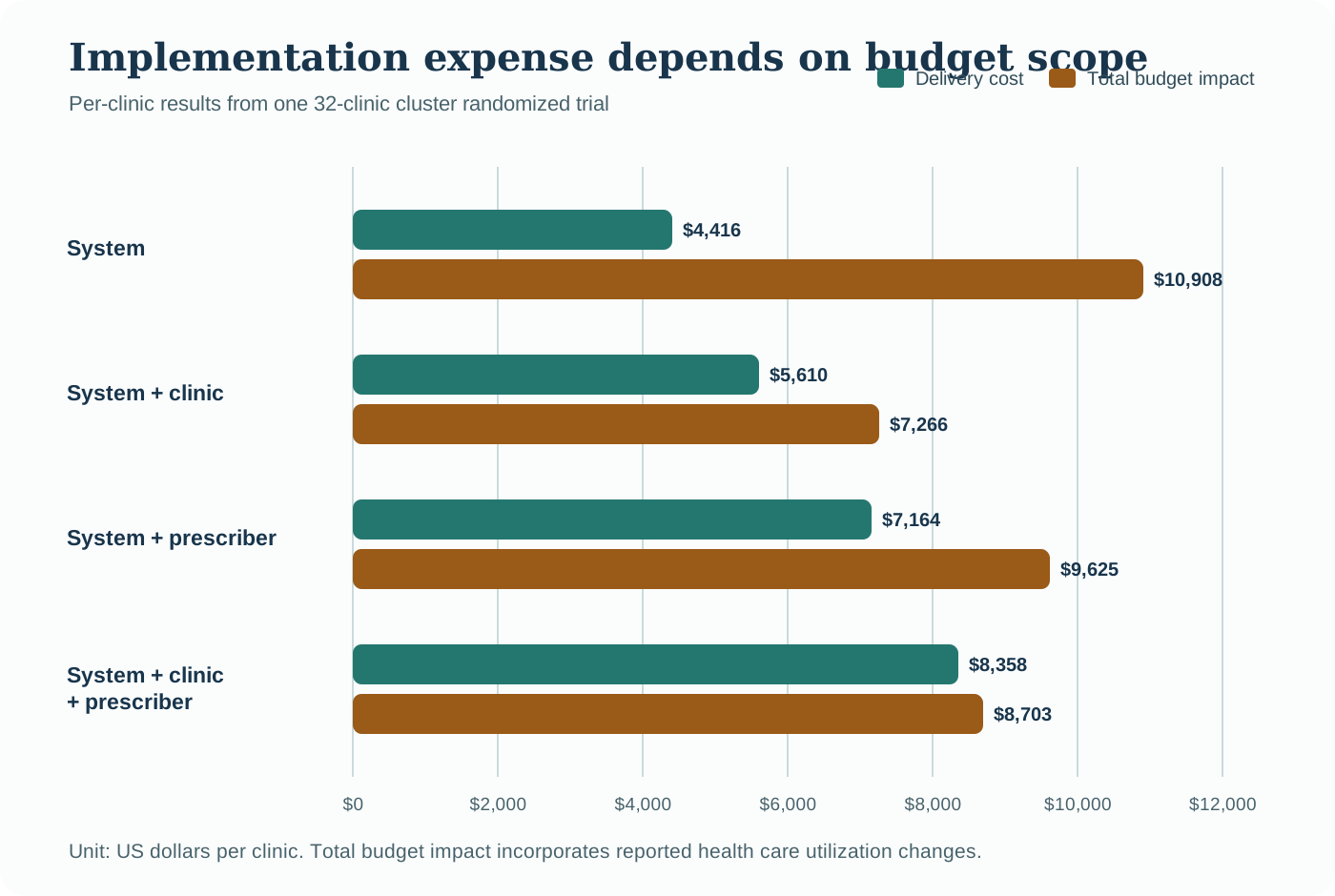
A lower-cost launch can create a higher total budget impact.
The Balanced Opioid Initiative compared four strategies. All clinics received system-level education and audit with feedback. Randomization added practice facilitation at the clinic level and peer consulting at the prescriber level. The least expensive delivery strategy, system support alone, had the highest reported budget impact after utilization changes. Higher-intensity strategies reduced mean morphine milligram equivalents and increased pain and function screening, while some risk-mitigation measures decreased.9 This is a useful warning against evaluating an implementation solely by launch expense or one favored process measure.
Executives should ask what work is required for adoption, what work is displaced, how fidelity is supported, which measures could move in the wrong direction, and how downstream utilization is calculated. Medication-related improvement must remain clinically governed and patient-centered. A population management program should not impose an automatic dose, taper, or discontinuation on an individual. The systematic review by Hill and colleagues examined interventions intended to reduce opioid use safely and effectively, underscoring that implementation should keep harms, patient experience, clinical context, and uncertainty visible.6
Patient voice is a safety and equity input, not a satisfaction ornament.
A 2026 secondary analysis used complete data from 735 participants in a national multisite trial of acute kidney or back pain. Unmet opioid preference was reported by 21.8% of Black participants and 15.0% of White participants. Black participants had lower median analgesia satisfaction and higher median Current Opioid Misuse Measure scores. In adjusted analysis, Black participants had a higher score, unmet preference was associated with a higher score, and satisfaction was associated with a lower score.7 The study does not justify satisfying every requested treatment, predicting individual behavior, or using race as a clinical shortcut. It does support respectful elicitation of preferences, understandable explanation, shared decision-making, and equity review of experience and follow-up.
A separate qualitative study in Nigeria interviewed 26 people who use drugs and had sought care for chronic non-cancer pain. Participants described stigma as normalized, questioned their legitimacy as patients, and sometimes responded by leaving care.2 Setting and population limit direct transfer. The management signal is still important: organizations should test whether policies, language, security practices, documentation, and staff behaviors create avoidable barriers. A complaint rate alone will miss people who do not return.
Outcome measures require purpose, interpretation, and a response owner.
A 2025 systematic review and meta-analysis evaluated psychometric properties of patient-reported outcome measures used in chronic pain conditions with central sensitization.11 A separate secondary analysis estimated minimal important change for a composite chronic low-back-pain impact score using computer-adaptive PROMIS measures in a military population.13 Together, these studies reinforce a basic governance principle: a score is meaningful only when leaders know what construct it measures, how it performs in the intended population, what change is interpretable, how missing data are handled, and what action follows.
Do not select an instrument because it fits a dashboard. Begin with the decision. Is the measure intended to support a conversation, track function over time, identify a need for reassessment, compare program performance, or evaluate research? Who reviews it, within what clinically governed process, and what happens when the response indicates deterioration or urgent concern? What non-digital route is available? A patient-reported measure that is collected but not reviewed transfers work and worry to the patient without creating care.
Digital access can extend reach only when implementation conditions are designed.
Recent reviews have evaluated conversational agents, internet-based cognitive behavioral therapy, nurse-led self-care interventions, digital nursing technologies, and implementation frameworks for digital pain self-management.3,4,8,10,17 The portfolio suggests potential for access, support, and patient-reported outcomes, but it does not establish that one modality fits every person or setting. Reviews differ in included conditions, interventions, comparators, outcomes, duration, certainty, and implementation detail.
Pragmatic trials add context. EPIO randomized 266 people to a digital self-management program or care as usual.20 A remotely delivered complementary and integrative health intervention enrolled 364 veteran-partner dyads with chronic pain and posttraumatic stress disorder.19 These designs show that remote support can be studied with patient-centered outcomes, but they do not eliminate the need to assess digital literacy, disability access, privacy, device and broadband availability, language, caregiver roles, clinical escalation, and the option to receive care another way.
Closed-loop route
Define completion as an accepted next action, a documented informed preference, or an exception with active ownership.
A referral sent is not a referral accepted. A portal message is not a response. An educational handout is not shared planning. A prescription is not a multimodal route. A program enrollment is not engagement. Reliability requires a sending owner, a receiving owner, acknowledgment, current state, due review, exception reason, and evidence of closure. These management elements should support clinical judgment rather than impose a clinical sequence.
Figure 2. Proposed closed-loop pain concern and care route
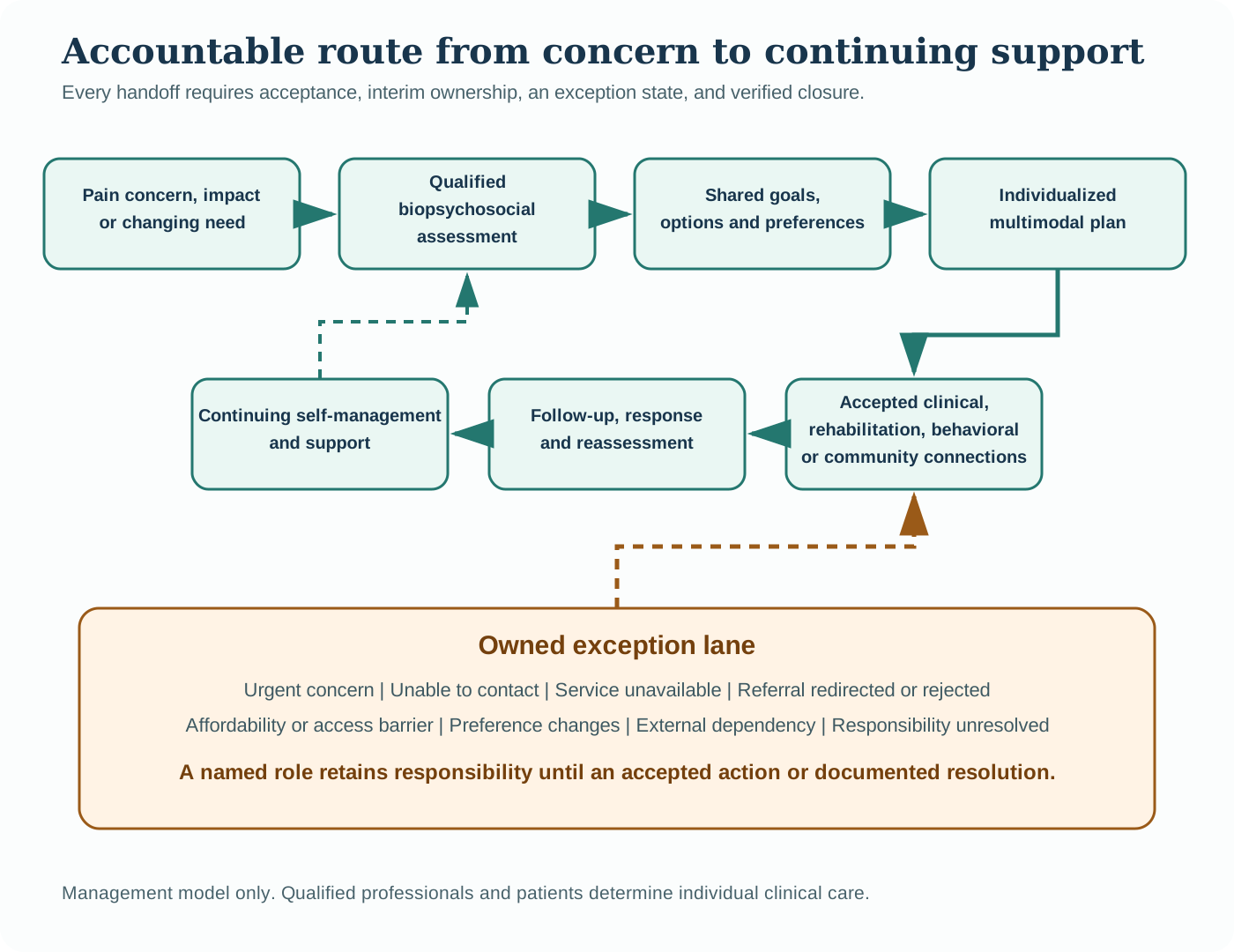
Give every handoff a visible state.
Useful states include received, reviewed, more information requested, accepted, scheduled, started, completed, redirected, deferred, declined after informed discussion, unable to contact, unavailable, and escalated. Define which timestamp counts, who records the state, what evidence closes it, and who owns the person while the next service is pending.
Measure goals and function without reducing the person to a number.
Document what matters to the patient, the agreed plan, how progress will be reviewed, and what circumstances should prompt reassessment. A score may support the conversation, but it should not replace the narrative, the examination, the patient’s priorities, or qualified interpretation.
Start the route with impact, context, and clinical assessment.
The entry point may be a new concern, persistent symptoms, change in function, a transition from acute to longer-duration pain, a medication-related issue, or difficulty obtaining an existing service. The first operational requirement is not a standardized treatment. It is a reliable way to receive the concern, identify whether existing urgent pathways apply, gather relevant information, and connect the person with qualified assessment. The organization should know where people enter, how duplicate histories are reduced, and how accessibility and interpretation needs are recorded.
The rural nurse care management trial protocol illustrates one attempt to extend comprehensive pain care in settings where multidisciplinary services are limited. The planned trial includes 450 adults in rural health systems and combines effectiveness and implementation evaluation.5 As a protocol, it does not provide completed outcome evidence. It does, however, reinforce the management need to study both whether a model helps and whether the workforce, referral network, technology, and local context can sustain it.
Shared goals should precede service orchestration.
An individualized plan may involve education, self-management support, rehabilitation, behavioral health, medication management, procedures, specialty input, sleep or mental health services, social support, and other appropriate resources. Not every person needs every element, and service availability should not silently determine the clinical narrative. The route should document what was considered, what was agreed, what could be accessed, and what barrier remains.
Nurse-led self-care research, internet-based cognitive behavioral therapy research, and reviews of multidisciplinary activity-based programs demonstrate that multiple models are being studied.4,8,15 Heterogeneity across populations and interventions prevents a universal package. Leaders should therefore govern a portfolio of appropriate options and the connection process, while clinicians and patients choose based on context, evidence, preferences, benefits, risks, and feasibility.
Build the exception lane before the happy path is launched.
Exceptions are predictable. A receiving service may reject a referral or request more information. A patient may face transportation, cost, work, caregiving, language, disability, device, or trust barriers. A service may have no capacity. A plan may change. Contact may fail. An urgent concern may emerge. External records may not arrive. Coverage may be denied. The management design should identify a current owner, exception reason, next action, review interval, and escalation route. A queue cannot own a patient.
Review exceptions by cause, age, service, and appropriate equity variables. Do not interpret a declined service as a failure when informed choice is documented. Do not label a person noncompliant when the organization has not examined whether the option was understandable, accessible, affordable, culturally responsive, and realistically available. Exception learning should improve the work system without coercing the patient.
Experience and equity
Equity review should examine who reaches the next step, who carries the coordination burden, and who disappears from the denominator.
The Valvi study offers a clear example of why stratification matters. Among 4,585 solid-cancer survivors, 1,649, or 36.3%, reported chronic pain and 554, or 12.6%, reported high-impact chronic pain. Compared with income at or above 400% of the federal poverty level, income below 200% was associated with adjusted odds ratios of 1.60 for chronic pain and 1.73 for high-impact chronic pain. The study also reported differences in opioid and alternative pain-management use by income.18 Cross-sectional data cannot determine why the differences occurred. Leaders can still ask whether access to evaluation, rehabilitation, behavioral health, self-management, pharmacy, and follow-up differs by financial position.
Equity measurement should not stop at a completed visit. Examine referral acceptance, wait, failed contact, cancellation, program start, response to patient-reported concerns, affordability, transportation burden, language access, disability accommodation, digital versus non-digital completion, and exception cause. Display missing demographic information. Protect privacy when subgroup counts are small. A difference is a signal for investigation, not proof of discrimination or a biological explanation.
Figure 3. Qualitative fishbone for a pain route that does not close
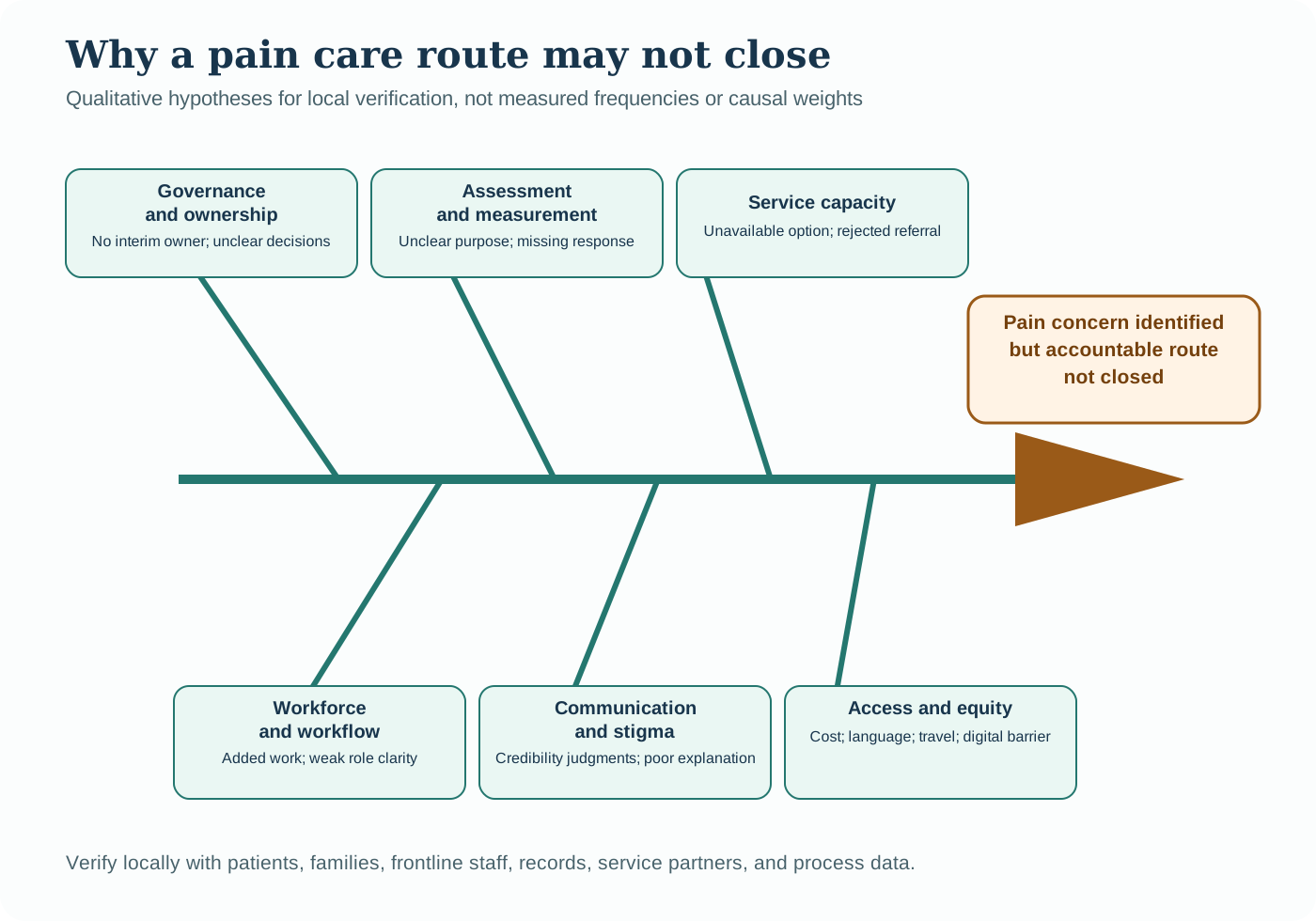
Stigma can be embedded in ordinary workflow.
Stigma is not limited to overt disrespect. It may appear as credibility judgments, inflexible policies, unexplained decisions, repeated proof requirements, labels that follow a person across encounters, or a lack of options. Nelson’s interviews show how people may tolerate stigma because they expect it, then resist by dropping out when the experience becomes intolerable.2 The safest response is not a one-time communication training. Review policy, documentation, security, medication agreements, access rules, complaint pathways, and the words used in team discussions.
Patient experience data should include open text and a route for response. Ask whether people felt heard, understood the rationale for decisions, knew whom to contact, and could obtain the agreed next service. Include people who left, declined, or could not engage. If data come only from completed program participants, the organization may systematically exclude the experience most relevant to access failure.
Peer and community models require role clarity and realistic support.
A qualitative study nested in a volunteer peer-coaching trial explored why a chronic pain self-management intervention had low adherence and no statistically significant differences on key outcomes.12 Peer support may reduce isolation and extend reach, but volunteer status does not remove the need for training, supervision, boundaries, escalation, privacy, scheduling, and workload support. Leaders should not use peers as a low-cost substitute for unavailable clinical or social services.
A community health worker trial protocol for older adults in an underserved urban community combines brief videos, weekly calls, activity tracking, goal support, screening for social needs, and community referrals.14 Because it is a protocol, outcomes are not yet established. It illustrates a design principle: self-management support can be linked to social needs and community connection, but the receiving resources and escalation pathways must be real.
Operating system
Reliable pain care requires coordinated clinical, operational, data, access, and community functions around the person’s goals.
The route should not depend on one heroic clinician, navigator, or patient. It needs governance that defines scope, clinical authority, service responsibilities, minimum information, accepted handoff, exception ownership, data protection, measure definitions, and escalation. Leaders should know which services are internal, which depend on external partners, what capacity exists, and what happens when the network cannot deliver the agreed plan.
Figure 4. Proposed pain care operating system
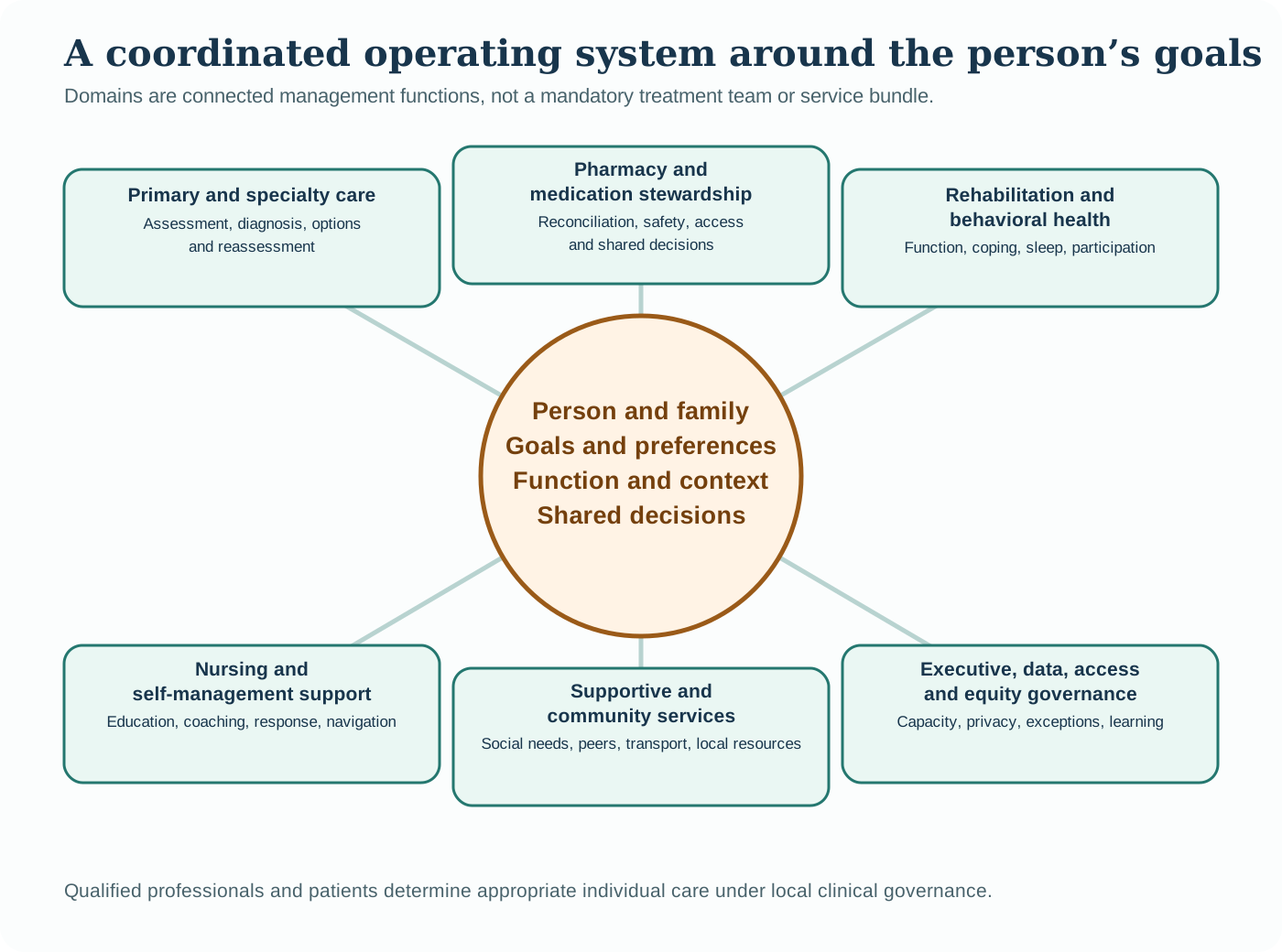
Practice facilitation can support the work, but local ownership remains essential.
Mogk and colleagues used virtual practice facilitation to establish interdisciplinary opioid safety committees in eight Kaiser Permanente Washington clinics. Each clinic participated in an average of 17.5 virtual meetings over eight months. Average attendance was 75%, retention was 84%, and participants reported high satisfaction. The mixed-methods implementation evaluation found the approach feasible and acceptable in that setting.16 It did not establish effectiveness for every outcome or every organization.
Executives can transfer the implementation discipline: protected meeting time, facilitation, population review, feedback, technical support, and attention to fidelity. They should not assume that a committee alone creates coordination. The committee needs decision rights, access to data, an operational owner, connection to clinical governance, and authority to resolve recurring barriers. Meeting counts are inputs. The meaningful question is whether the route becomes more reliable and patient-centered.
Pathway adoption depends on fit with real work.
Interviews with 14 professionals across seven sites examined implementation of a multifaceted pathway for chronic pain after total knee replacement.22 A separate formative evaluation interviewed 26 clinicians at nine Veterans Affairs sites before implementing cognitive behavioral therapy for chronic pain in clinician-delivered and technology-assisted formats.21 Both studies support prospective inquiry into training, workflow, local context, referral behavior, perceived value, and resources.
Before launch, walk the route with each role. Identify what information is already collected, what new work is being added, what can be removed, where staff must switch systems, how a receiving service acknowledges the handoff, and what occurs when the planned service is unavailable. Rehearse difficult cases. Implementation should include operational testing, not only education about the intended model.
Data governance should connect measurement to action.
Specify the eligible population, numerator, exclusions, timestamp source, missing-data rule, current-state logic, stratification fields, privacy controls, owner, and review cadence for each measure. Audit electronic states against records and patient accounts. A scheduled appointment does not prove that a visit occurred. A referral completed field does not prove that the receiving service accepted responsibility. A questionnaire completed field does not prove that anyone responded.
Use a small scorecard at first. Pair central tendency with distributions and open-case views. A median among completed cases can improve while unresolved cases age. Report the number and age of exceptions, not only the percentage closed. When subgroup denominators are small or data are missing, show the limitation and protect privacy. Do not turn observational differences into causal claims.
Executive scorecard
Measure route closure, patient voice, access, safety, equity, and implementation burden with explicit denominators.
The scorecard below is a design aid. Local clinical, operational, data, privacy, and equity leaders must define specifications, exclusions, review points, and targets. No proposed measure supplies a clinical deadline, treatment threshold, prescribing standard, or expected rate. Begin with measures that can be reconciled manually, then automate only after the states are valid.
Figure 5. Executive pain care route scorecard
| Route domain | Example operational definition | Denominator and exclusions | Equity or stratification view | Balancing measure |
|---|---|---|---|---|
| Accepted next service | Receiving service acknowledges the referral and records an accepted next action, redirected route, informed decline, or active exception | All referrals initiated in the selected route; report duplicate, incomplete, rejected, and external referrals separately | Language, geography, payer, race and ethnicity where appropriate, age, disability, referral source | Referral volume, rework, inappropriate routing, receiving capacity, patient burden |
| Assessment completeness | Locally governed minimum information for qualified assessment is present, or a reason for noncompletion is documented | All people reaching the selected assessment milestone; show missing and deferred states | Entry site, language, digital or non-digital channel, disability, geography | Documentation time, duplicated questions, missing records, urgent escalations |
| Shared plan documentation | Goals, options discussed, informed preferences, agreed actions, responsible roles, and reassessment plan are documented | All people completing assessment; do not treat informed decline as failure | Language, payer, age, geography, race and ethnicity where appropriate | Visit duration, plan changes, understanding, decision conflict, staff workload |
| Patient-reported response | Reported impact or concern is reviewed, acknowledged, and connected to a documented response under clinical governance | All reports received plus people offered the channel who could not or did not use it | Language, channel, age, disability, broadband or device barrier where collected | Alert load, response workload, false reassurance, unanswered reports, urgent use |
| Multimodal service connection | Agreed service is accepted and started, declined after informed discussion, deferred, redirected, or exception-owned | All agreed connections; report service type and availability without implying every person needs every service | Geography, payer, language, site, disability, work or transportation barrier | Wait, cancellations, duplicative visits, out-of-pocket burden, network capacity |
| Medication-safety follow-up when applicable | Locally required assessment, monitoring, shared decision, and follow-up steps are documented for the individual context | People for whom the locally governed process applies; exclusions and clinical exceptions explicit | Site, clinician, language, payer, race and ethnicity where appropriate | Withdrawal or symptom burden, unintended discontinuation, acute use, patient experience |
| Aged exceptions | Open cases beyond a governed review point, grouped by cause and current owner | Every open exception, including failed contact, unavailable service, affordability, missing information, preference change, and external dependency | Compare cause and age by appropriate subgroup | Escalation volume, override use, staff workload, privacy, avoidable rework |
| Implementation burden | Staff time, facilitation, technology, training, referral capacity, and downstream utilization reviewed with route outcomes | All implementation resources for the pilot scope; accounting assumptions published | Role, site, shift, service, patient channel | Burnout, displaced work, cost, access bottlenecks, sustainability |
Use denominators that include people still waiting.
Completion percentages can look favorable when the denominator excludes rejected referrals, people who never scheduled, missing responses, external services, or open exceptions. Reconcile the route from the entry event. Show every case as closed, open, redirected, deferred, declined, unable to contact, unavailable, or missing. Publish which states count in the numerator and denominator.
Review the longest waits and the most common exception causes. Pair aggregate data with individual route tracing. Compare the dashboard with patient and frontline accounts. If the electronic record says a service connection closed but the patient never reached the service, correct the data logic and the workflow. Measurement is useful when it reduces uncertainty and directs action.
Balance access, outcomes, safety, and burden.
No single measure represents pain care quality. A program could increase screening while reducing access. It could reduce a medication metric while worsening withdrawal, trust, or acute utilization. It could improve average outcome scores while excluding people with the greatest access barriers. It could expand digital reach while increasing unanswered alerts. Review the scorecard as a system, investigate tradeoffs, and retain clinical review of individual circumstances.
90-day executive agenda
A bounded 90-day pilot can turn the observance into a durable improvement in route reliability.
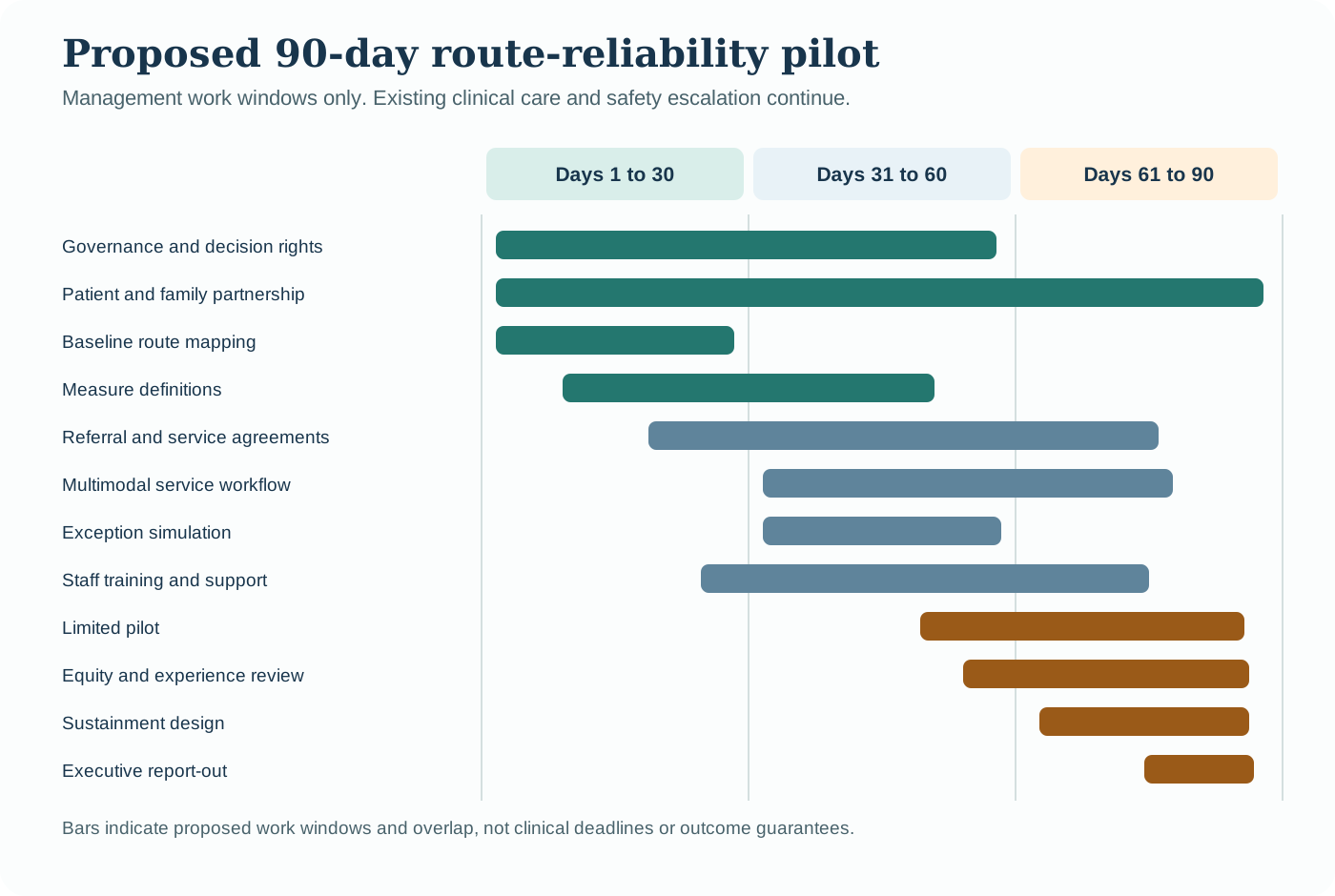
Select one site, population, transition, or service connection where the organization has authority to learn. The timeline is a management sequence, not a clinical schedule. Existing urgent pathways, clinical follow-up, and safety escalation continue throughout the pilot.
Days 1 to 30
Define and reconcile
- Name the executive sponsor, clinical authority, operational owner, pharmacy partner, rehabilitation or behavioral health partner, access lead, data steward, privacy lead, equity lead, and patient or family partners.
- Select one route and define entry, assessment, shared plan, accepted connection, reassessment, closure, exception states, interim responsibility, and escalation.
- Trace a baseline denominator through actual records, including open, rejected, redirected, deferred, and unreachable cases.
- Inventory internal and external capacity, language and disability access, digital and non-digital routes, affordability, transportation, and referral agreements.
- Specify a small scorecard and balancing measures.
Days 31 to 60
Build and rehearse
- Create the minimum acknowledgment, patient-contact, referral-acceptance, shared-plan, exception, and closure workflow.
- Prepare plain-language information and test understanding, accessibility, interpretation, and non-digital options.
- Rehearse urgent concern, incomplete information, unavailable service, referral rejection, coverage denial, failed contact, preference change, and external delay.
- Train and support participating roles, then confirm decision rights and protected review time.
- Begin a limited pilot with frequent review of safety, access, workload, privacy, patient experience, and equity.
Days 61 to 90
Learn and decide
- Review accepted service connections, assessment and plan completeness, patient-reported response, medication-safety follow-up when applicable, and aged exceptions.
- Compare the data with patient, family, frontline, pharmacy, rehabilitation, behavioral health, specialty, access, and community accounts.
- Correct verified work-system conditions, then retest the specific handoff or exception.
- Report denominator limits, subgroup missingness, capacity, cost, workload, privacy, unintended effects, and unresolved risks.
- Decide to adapt, expand, pause, or stop, and assign sustainment review.
Figure 6. Proposed 90-day pain route-reliability timeline
Questions for the day-90 executive review
- Can the team produce the complete denominator, including people still open, rejected, redirected, deferred, declined, or unreachable?
- Which handoff or exception failed most often, and what verified work-system condition contributed?
- Did people understand options, help set goals, and know who owned the next step?
- Did any subgroup experience a different acceptance rate, wait, response, exception cause, or coordination burden? How complete are the subgroup data?
- Did the pilot create new workload, alert burden, privacy risk, unintended medication consequences, service bottlenecks, or out-of-pocket burden?
- Which improvement is stable enough to sustain, and who owns the next review?
Leave the organization with a named route owner, a reconciled denominator, an accepted-service definition, an exception lane, a small scorecard, and one verified reliability improvement that remains after the observance ends.
Closing perspective
Awareness becomes accountable when the person does not have to discover who owns the next step.
Pain care involves uncertainty, individual variation, changing goals, multiple appropriate options, and services that cross organizational boundaries. Leaders cannot eliminate every uncertainty, and an executive article should not substitute for clinical judgment. Leaders can remove avoidable ambiguity. They can make the route visible, require acknowledgment, protect interim responsibility, resource service connections, preserve patient voice, prepare exception paths, measure access and equity, and learn from people whose route did not close.
The most credible observance message is an operating commitment: when a person enters the selected route, the organization can show what happened next, who owns the current state, what preference or exception exists, and how the route will move toward an appropriate, patient-centered resolution.
Peer-reviewed evidence portfolio
References
- Harding RP, Passaportis M, Miles E, et al. Barriers and facilitators of engagement with app-based pain self-management strategies among chronic pain patients. Journal of Health Psychology. 2026;31(9):3727-3743.
- Nelson EU. Drug consumption stigma and patient legitimacy: experiences of people who use drugs seeking care for chronic non-cancer pain in Nigeria. Health Sociology Review. 2026;35(2):156-170.
- Zamora-Tortosa J, Heredia-Ciuró A, Cruz Herrera C, et al. Effectiveness of conversational agents on patient-reported outcomes in chronic pain management: a systematic review and meta-analysis. Healthcare. 2026;14(10):1360.
- Liu Y, Ji H, Bai S, et al. Efficacy of internet-based cognitive behavioural therapy on pain symptoms and sleep quality improvement in chronic pain patients: a meta-analysis of randomised controlled trials. Nursing Open. 2026;13(5):1-16.
- Keiser B, Cortez K, Hoffman E, et al. Expanding rural access to chronic pain care through nurse care management: a hybrid type I effectiveness-implementation trial protocol. PLOS One. 2026;21(5):e0349526.
- Hill R, Maden M, Duarte R, et al. Interventions to safely and effectively reduce use of opioids in chronic non-cancer pain: a systematic review. Health & Social Care Delivery Research. 2026;14(8):1-249.
- Nguemeni Tiako MJ, Engel-Rebitzer E, Friedman A, et al. Racial disparities in unmet pain treatment preference, pain treatment satisfaction and subsequent opioid misuse: a secondary analysis of a national multisite randomized trial. Journal of General Internal Medicine. 2026;41(4):1041-1047.
- Huang Y, Song Z, Xie L, et al. Nurse-led self-care interventions for chronic pain: a systematic review and meta-analysis of randomized controlled trials. Worldviews on Evidence-Based Nursing. 2026;23(1):1-24.
- Quanbeck A, Li X, Cohen A, et al. Budget impact analysis of the Balanced Opioid Initiative: a cluster randomized trial aimed at deprescribing opioids for chronic pain in primary care settings. Annals of Family Medicine. 2026;24(1):36-43.
- Lee J, Mowat R, Blamires J, et al. Recent advances in non-invasive digital nursing technologies for chronic pain assessment and management: an integrative review. Journal of Advanced Nursing. 2025;81(11):7332-7347.
- Akhter MF, Bobos P, Otalike EG, et al. Psychometric properties of patient-reported outcome measures in chronic pain conditions with central sensitization: a systematic review and meta-analysis. Journal of Patient-Reported Outcomes. 2025;9(1):1-27.
- Matthias MS, Adams JM, Eliacin J. Volunteer peer support for chronic pain self-management: a qualitative study of benefits and barriers. Journal of General Internal Medicine. 2025;40(16):3956-3964.
- Flynn DM, Burke LA, Steffen AD, et al. Estimating minimal important change of the National Institutes of Health Research Task Force impact score using computer adaptive measures: a secondary analysis of two randomized clinical trials in a military population with chronic pain. BMC Musculoskeletal Disorders. 2025;26:137.
- Janevic MR, Lindsay R, Brines E, et al. A community health worker-delivered intervention to support chronic pain self-management among older adults in an underserved urban community: protocol for a randomized trial. Trials. 2025;26:186.
- Mojdehi S, Brady B, Tang C, et al. The effectiveness of multidisciplinary, activity-based chronic pain interventions for adults of ethnoculturally diverse backgrounds: a systematic review with meta-analysis. Disability and Rehabilitation. 2025;47(2):314-323.
- Mogk J, Allen CL, Levitz CE, et al. Virtual practice facilitation as an implementation strategy for launching opioid safety committees for quality improvement in primary care: feasibility, acceptability, and intervention fidelity. BMC Primary Care. 2024;25(1):1-10.
- de la Vega R, Bartels SL, Wicksell RW. Implementation frameworks guiding digital self-management intervention in chronic pain: a scoping review. European Journal of Pain. 2024;28(8):1257-1275.
- Valvi N, Tamargo JA, Braithwaite D, et al. Household income is associated with chronic pain and high-impact chronic pain among cancer survivors: a cross-sectional study using National Health Interview Survey data. Cancers. 2024;16(16):2847.
- Haun JN, Fowler CA, Venkatachalam HH, et al. Outcomes of a remotely delivered complementary and integrative health partnered intervention to improve chronic pain and posttraumatic stress disorder symptoms: randomized controlled trial. Journal of Medical Internet Research. 2024;26:e57322.
- Bostrøm K, Børøsund E, Eide H, et al. Short-term findings from testing EPIO, a digital self-management program for people living with chronic pain: randomized controlled trial. Journal of Medical Internet Research. 2023;25:e47284.
- Mattocks KM, LaChappelle KM, Krein SL, et al. Pre-implementation formative evaluation of cooperative pain education and self-management expanding treatment for real-world access: a pragmatic pain trial. Pain Practice. 2023;23(4):338-348.
- Moore AJ, Wylde V, Bertram W, et al. Healthcare professionals’ views on implementing the STAR care pathway for people with chronic pain after total knee replacement: a qualitative study. PLOS One. 2023;18(4):e0284406.