


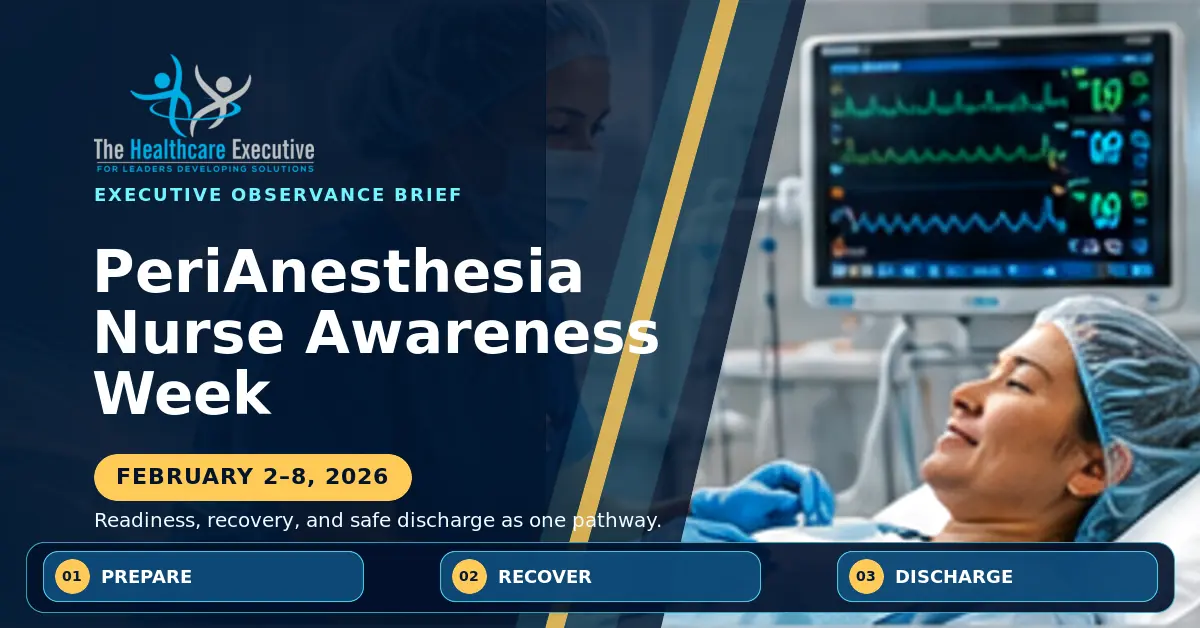
PeriAnesthesia Nurse Awareness Week · February 2–8, 2026
Make readiness, recovery, and safe discharge one continuous operating pathway
Perianesthesia nurses protect the transitions where a patient moves from preparation to procedure, from anesthesia to recovery, and from clinical surveillance to the next level of care. Leaders honor that work by designing the whole pathway for reliable handoffs, early recognition, humane recovery, and discharge that remains safe after the patient leaves the unit.
PeriAnesthesia Nurse Awareness Week is observed February 2–8, 2026. The American Society of PeriAnesthesia Nurses recognizes the specialty across preanesthesia and postanesthesia care. For healthcare executives, the week is an opportunity to see a high-consequence operating system that is often treated as a collection of rooms, shifts, or isolated clinical tasks.
A patient experiences one journey. The organization may divide that journey among scheduling, preadmission testing, procedural services, anesthesia, the postanesthesia care unit, inpatient nursing, ambulatory discharge, pharmacy, transportation, and follow-up. Risk accumulates when those parts use different readiness rules, incompatible handoff expectations, unclear escalation authority, or discharge criteria that do not account for the patient's home situation. Perianesthesia nurses frequently absorb those gaps in real time.
Leadership signal
The recovery unit reveals how well the entire surgical system works
Postanesthesia care is a concentrated test of system reliability. Residual anesthetic effects, pain, nausea, airway vulnerability, hemodynamic change, cognitive disturbance, surgical complications, and anxiety can appear together while the next patient, bed, transport team, and discharge deadline are already pressing on the workflow. The nurse must continuously distinguish expected recovery from deterioration, coordinate competing priorities, and translate clinical change into a safe next decision.
That work is not a buffer that permits upstream variation to continue unchecked. A long stay may reflect a necessary recovery, but it may also reveal a default medication, incomplete readiness, late transport, unclear orders, unavailable inpatient capacity, or discharge teaching that began too late. Ainooson and colleagues reported that removing a default 600-mg gabapentin order in one outpatient gynecology service was associated with a decrease in average PACU stay from about 183 to 159 minutes, a 12.6% reduction, with no change in pain scores.3 The single-center quality-improvement design does not prove that the same change belongs elsewhere. It shows why leaders should investigate workflow causes rather than normalize delay.
The highest-value question is not how quickly a patient can leave. It is whether the patient reaches the appropriate next level of care without preventable harm, avoidable rework, or burden shifted to the ward, family, or emergency department. Speed without readiness is not throughput. Surveillance without a response pathway is not safety. Education without verified understanding is not discharge.
Executives should frame the observance around three promises. First, the patient arrives with the information and resources needed for an appropriate procedure. Second, the transfer into recovery is structured, interruption-resistant, and clinically complete. Third, discharge or transfer occurs only after readiness, risk, destination capability, and patient understanding are reconciled. Those promises require shared governance among nursing, surgery, anesthesia, medicine, pharmacy, quality, informatics, access, and capacity leaders.
One order-set change and observed PACU time
| Measure | Baseline | Post-change | Interpretation |
|---|---|---|---|
| Default gabapentin use | 92.17% | 1.25% | The default order was removed; pain scores did not change. |
| Average PACU stay | ~183 min | ~159 min | Observed 12.6% reduction, p<0.0001. |
Readiness before arrival
Begin recovery planning before anesthesia begins
Many recovery defects are visible before the procedure. They include incomplete medication instructions, untreated anxiety, uncertain transportation, unsupported language or communication needs, unclear baseline cognition, unrecognized sleep-disordered breathing, missing equipment, or a home setting that cannot support the planned discharge. When those needs are discovered late, the perianesthesia nurse must solve them while the schedule is moving and the patient is already exposed to procedural risk.
Readiness review should therefore connect clinical assessment with operational and social conditions. A documented plan should clarify fasting and medication instructions, airway and respiratory risk, prior anesthesia experience, pain and nausea history, cognitive baseline, mobility and assistive needs, communication preferences, caregiver availability, destination capability, and the person authorized to resolve exceptions. The goal is not to turn every patient into an identical checklist. It is to make essential variation visible early enough to act.
Günen and Emeksiz studied 111 adults undergoing elective surgery and found that greater surgery-specific anxiety was associated with lower Modified Aldrete scores during early recovery.14 The descriptive, single-hospital design cannot establish causation or a universal screening threshold. It does reinforce a practical point: psychological readiness is part of clinical readiness. A patient who does not understand what will happen, cannot communicate a concern, or lacks a trusted contact route may reach recovery with avoidable distress and slower functional progression.
Risk-based planning is especially important for patients with obstructive sleep apnea or other respiratory vulnerability. Lin and colleagues compared 107 surgical patients with obstructive sleep apnea in a retrospective cohort and reported better minimum oxygen saturation and Aldrete scores, fewer respiratory adverse events, lower opioid use, and earlier ambulation in an individualized nursing group.9 Confounding and local practice limit causal inference. Leaders should take from the study the need for consistent preoperative risk identification, a recovery plan matched to that risk, and continuity into the first 48 hours rather than a one-size intervention.

A proposed readiness-to-discharge control pathway
- Risk and context reviewOwner: preadmission teamBaseline, airway, medications, cognition, communication, caregiver, destination
- Readiness reconciliationOwner: procedural teamConfirm missing data, instructions, consent, equipment, and exception plan
- Procedure and emergence planOwner: anesthesia and surgeryExpected course, risk controls, analgesia, nausea, respiratory and delirium strategy
- Structured PACU handoffOwner: sender and receiverMonitor first, pause, minimum dataset, questions, explicit concerns
- Recovery surveillanceOwner: perianesthesia nurseTrend physiology, comfort, cognition, mobility, and response to intervention
- Readiness decisionOwner: authorized clinicianCriteria plus trajectory, residual risk, destination capability, and escalation
- Transfer and follow-upOwner: receiving teamTeach-back, acceptance, contact route, pending items, and post-discharge learning
The handoff into recovery
Protect the first minutes in PACU from omission and interruption
A safe handoff is a joint clinical event, not a document read aloud. The receiving nurse must first stabilize monitoring and understand the patient's immediate condition. The sender must remain available long enough to transfer essential information, surface concerns, and answer questions. A checklist can support the exchange, but the operating design must also address physical setup, interruptions, simultaneous arrivals, responsibility for the airway, and what happens when the receiver is not ready.
Martins and colleagues identified 182 records in a scoping review, reviewed 49 full texts, and included 17 studies of interventions intended to guide transfer to PACU.15 Reported outcomes included more complete information, better teamwork, greater presence of surgical professionals, receiver questions, and reductions in omitted information, interruptions, distractions, task errors, hypoxemia, nausea, vomiting, and excessive pain. Study designs and intervention components varied, so the review does not identify one universally superior tool. It does provide a useful design brief: structure, receiver participation, monitoring, and an interruption-resistant moment all matter.
Dubey and Santha evaluated a standardized PACU handover checklist in a single-center pre-post observational study with 65 participants in each group. Reported hypoxemia decreased from 21.5% before implementation to zero after implementation, alongside improvements in transferred information and fewer consultant calls.18 The dramatic change should be interpreted carefully because the study was nonrandomized, small, and conducted in one setting. Leaders should not promise replication of that result. They can reasonably require local testing, direct observation, adherence review, and balancing measures.
A 2025 cross-sectional study of 521 nurses across four hospitals reported overall postoperative handover quality of 76.8% and found that quality varied by setting, experience, and handover direction.17 A score from one health system is not a benchmark for another. Its leadership value lies in the reminder that the same form may perform differently between theater and recovery, recovery and ward, or ambulatory discharge and home. Standardization should define the minimum. Local observation should reveal whether the standard is usable under actual workload.

Recovery surveillance
Turn early signals into explicit observation, escalation, and destination decisions
Recovery scores are valuable because they make important domains visible. They should not compress complex judgment into an automatic discharge. A patient can meet a threshold while still showing an unsafe trajectory, an unresolved respiratory signal, new confusion, escalating pain, repeated nausea, or a destination that lacks the required capability. The operating rule should combine criteria, trends, residual risk, and the nurse's concern, with authority to pause progression.
Deljou and colleagues analyzed 95,870 patients after general anesthesia. Within 24 hours after PACU discharge, 186 patients, or 0.19%, required naloxone for respiratory depression on the ward. PACU naloxone administration was the strongest reported marker of later naloxone use, followed by severe oversedation and caffeine administration for impaired arousal.6 The absolute event rate was low and the study was retrospective at one academic center. The authors support selective risk-based vigilance, not indiscriminate monitoring expansion. A practical leadership response is to ensure that high-risk PACU events follow the patient into the destination handoff and trigger a defined observation plan.
Capnography can identify ventilatory decline that pulse oximetry alone may not show promptly, especially when supplemental oxygen is present. In a quality-improvement study, McClanahan and colleagues reviewed 92 records and trained 15 nurses. Twenty-five patients had end-tidal carbon dioxide values above 45 mmHg while average oxygen saturation remained high; nurse knowledge and confidence increased after education.8 Missing documentation, limited equipment, a small sample, and one hospital constrain the findings. Technology should therefore be deployed with risk criteria, training, alarm governance, documentation design, response expectations, and a plan to evaluate unintended burden.
Respiratory support also has to match the studied population. Han and colleagues randomized 100 patients after esophageal cancer surgery to conventional oxygen or high-flow nasal cannula therapy. The high-flow group had fewer hypoxic events, 12% versus 28%, and fewer seven-day pulmonary complications, 10% versus 36%.7 This is not evidence for routine high-flow therapy in every PACU patient. It illustrates the value of identifying a defined high-risk group, specifying an intervention, and measuring both immediate physiology and later complications.
Unexpected escalation is another learning signal. Zhang and colleagues reviewed 98,539 eligible PACU patients and identified 113 unplanned ICU transfers, an incidence of 0.115%. Hypoxemia and delayed awakening were the most common reasons; emergency surgery, higher ASA classification, multiple comorbidities, blood loss, longer surgery, and lower preoperative hemoglobin were among identified risk factors.11 The case-control model requires external validation. Boards and executive teams can still ask whether each unplanned transfer is reviewed for recognition, escalation, staffing, bed-placement, and preoperative planning opportunities.
Why recovery becomes delayed, fragmented, or unsafe
Readiness
Missing history, unresolved medication instructions, anxiety, destination mismatch
Handoff
Interruptions, omitted risk, receiver not ready, unclear accountability
Clinical plan
Default orders, pain or nausea strategy mismatch, unclear escalation
Surveillance
Alarm burden, documentation friction, incomplete trend visibility
Capacity
Arrival clustering, skill-mix mismatch, blocked inpatient beds, transport delay
Discharge
Late teaching, communication barriers, caregiver or transport gap, no follow-up route
Cognition, comfort, and person-centered recovery
Treat confusion, pain, nausea, anxiety, and family communication as safety work
Recovery is not complete when vital signs are stable but the patient is frightened, confused, unable to communicate pain, or unclear about what happens next. These domains affect safety, experience, time, staffing, and the likelihood that risk will reappear after transfer. Leaders should make assessment tools, interpreter access, sensory accommodations, caregiver roles, and nonpharmacologic strategies part of the standard pathway rather than optional work added when time allows.
Fu and colleagues synthesized 20 pediatric studies involving 2,369 children. Nurse-led interventions were associated with a lower incidence of emergence delirium, with a pooled risk ratio of 0.50, but heterogeneity was substantial and the interventions did not significantly shorten PACU stay.4 The result cautions against using length of stay as the only sign of value. Reduced distress or safer behavior can matter even when minutes do not change. It also argues for locally defined intervention bundles and evaluation by age, procedure, family preference, and resource use.
Chen and colleagues interviewed 20 PACU nurses after delirium-focused education and implementation of a pediatric assessment tool. Nurses described emotionally charged episodes, intuitive interpretation, the complex role of parents, growing trust in structured assessment, and system barriers to timely recognition.5 The qualitative findings are setting-specific, yet they offer an important governance insight: introducing a tool without training, workflow integration, family communication, and response capacity does not create a reliable clinical system.
Older adults also require deliberate cognitive surveillance. Kisku and colleagues randomized 130 older surgical patients and reported postoperative delirium in 10.8% of the dexmedetomidine group and 19.2% of the saline group.2 Medication choice belongs to clinicians and local protocols, and the small single-setting trial should not be generalized into a universal regimen. Leadership responsibility is broader: establish baseline cognition, use validated assessment, reduce avoidable environmental stress, communicate new change, and ensure the destination knows what was observed.
Equity enters this work through usability. A technically complete discharge can still fail if instructions are not accessible, an interpreter is unavailable, the caregiver is excluded, a patient cannot afford a prescribed item, or follow-up assumes internet access and flexible transportation. Stratify experience and completion measures carefully, examine missing data, protect privacy for small groups, and pair rates with patient narratives. Do not attribute a gap to patient behavior before examining whether the pathway was understandable and reachable.
Workforce and capacity
Staff the risk and arrival pattern, not only the average census
Perianesthesia capacity is shaped by arrival variability, acuity, phase of recovery, airway needs, isolation, age, destination, simultaneous admissions, breaks, competencies, and the ability to respond when one patient deteriorates. A schedule that looks adequate by daily volume can become unsafe when several high-acuity patients arrive together or inpatient beds are blocked. Leaders need demand profiles by time and acuity, not only monthly totals.
Missed care provides another signal. Gillespie and colleagues surveyed 612 Australian perioperative nurses. Time-intensive tasks and communication with multiple team members were among the most frequently missed activities, while staffing numbers, skill mix, fatigue, and complacency were commonly reported reasons.16 Self-report and national context limit generalization. Still, the pattern supports direct observation, workload review, relief planning, and protection of communication-heavy safety work. When handoff, teaching, reassessment, or documentation are repeatedly deferred, the answer should not be another reminder alone.
Retention is connected to how work is experienced. Odom-Forren and colleagues surveyed 1,436 perioperative nurses. More years in practice, higher compassion satisfaction, and a positive perception of workload predicted greater intent to stay, while heavier perceived workload predicted lower intent.12 The pandemic context and cross-sectional design prevent causal conclusions. The practical implication is that recognition must be paired with operating conditions that make good work possible: credible staffing escalation, psychological support, professional growth, participation in improvement, and visible action on recurring defects.
New specialty nurses need structured development. Mahoney and colleagues described a three-month rotation for 20 novice perioperative nurses across 14 specialty areas, supported by mentors and an educational package. Nineteen reported greater knowledge and confidence, while staffing and time pressure remained barriers.13 The uncontrolled case study cannot establish effectiveness across organizations. It does show why competency development, preceptor capacity, protected learning time, and retention should be treated as one workforce portfolio.
The continuous perianesthesia pathway
Clinical governance
Criteria, escalation, case review, evidence translation, and scope of authority
Flow and capacity
Demand by time and acuity, staffed bays, bed readiness, transport, and surge response
Workforce
Competency, skill mix, relief, preceptors, psychological safety, and retention
Information
Minimum handoff dataset, trend visibility, alerts, pending results, and documentation
Patient partnership
Language access, anxiety support, caregiver roles, teach-back, and reachable follow-up
Learning system
Outcome, process, equity, experience, and balancing measures with accountable action
Safe discharge and transfer
Close the loop after the patient leaves the recovery bay
Discharge readiness is a clinical and operational decision, not a signature. The patient must meet locally approved criteria, but the pathway must also address residual risk, mobility, pain and nausea control, cognition, hydration as appropriate, medication understanding, access to prescriptions, caregiver readiness, transportation, destination support, pending results, and a reachable contact route. If any essential condition is missing, the nurse needs a clear escalation pathway that does not depend on personal persistence.
Glosser and colleagues described 14 years of total and completion thyroidectomy care using a PACU parathyroid hormone-guided supplementation pathway. Same-day discharge rose to 70.9% in 2023, while 30-day all-cause readmission across the case-level cohort was 1.71%.1 The retrospective single-institution study did not have PACU PTH values available for causal analysis. The leadership lesson is not that every patient should go home sooner. It is that expanded same-day discharge should be built on a procedure-specific protocol, explicit supplementation and follow-up, longitudinal outcome review, and readiness to refine the pathway.
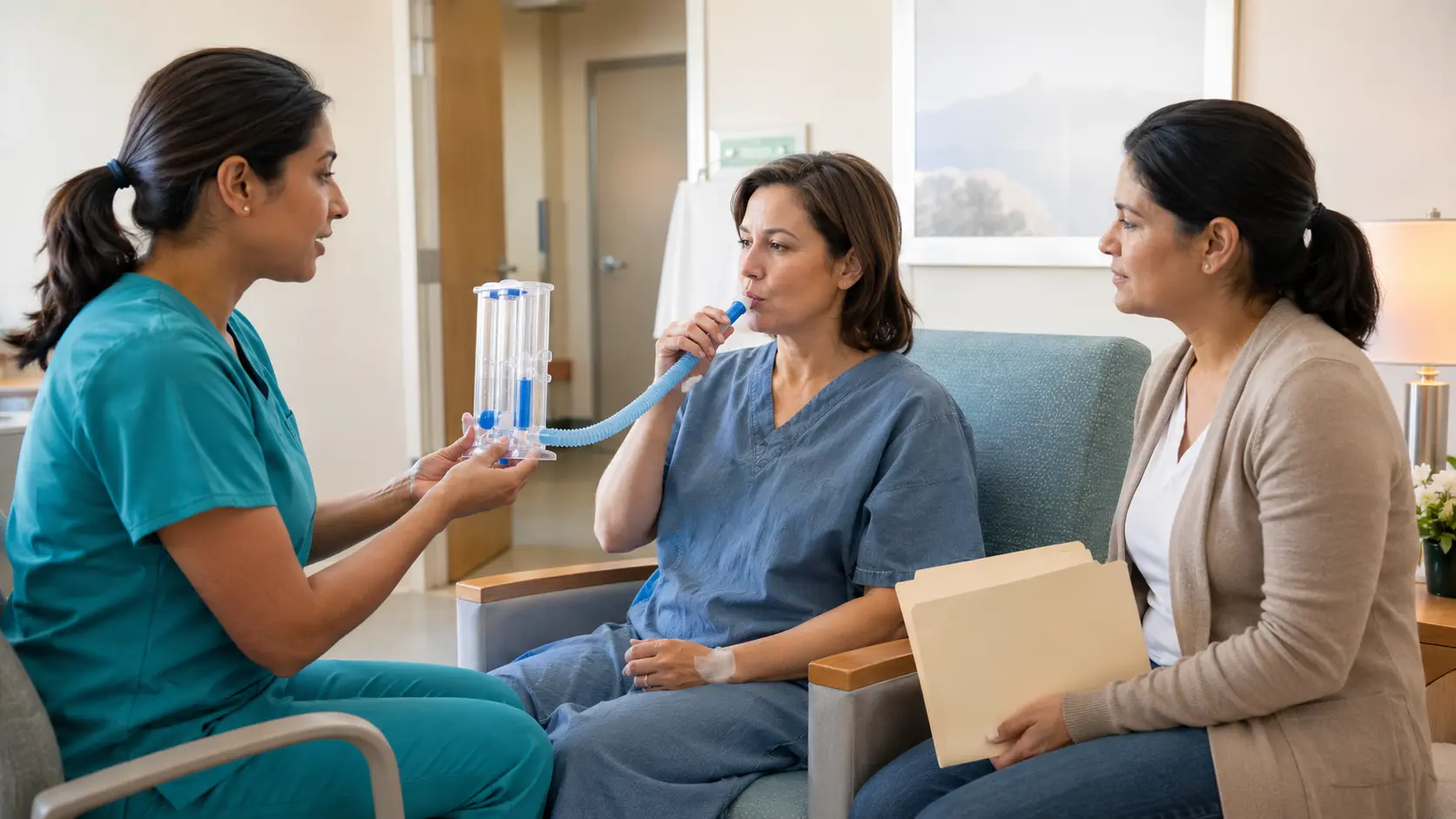
Respiratory and cognitive signals observed in PACU should travel with the patient. A ward that receives a patient after oversedation, naloxone, recurrent airway obstruction, or new confusion needs an explicit surveillance plan and escalation trigger. A homegoing patient needs plain-language instructions about expected recovery, medication safety, breathing concerns, bleeding or fever as relevant, whom to call, and when emergency care is appropriate. The message should be delivered early enough for questions and verified with teach-back.
Zhao and Xia studied 276 older adults and reported that an Integrated Pulmonary Index had an area under the receiver-operating-characteristic curve of 0.843 for PACU hypoxemia, with an optimal cut point of 7.5 in that sample.10 Retrospective methods and one setting require external validation; the cut point should not be imported as a universal rule. The study illustrates a broader requirement: if a score enters a readiness pathway, leaders should define its population, action threshold, overrides, false-positive burden, data source, and performance review.
Operating dashboard
Measure safe progression, not isolated unit activity
A balanced perianesthesia dashboard should link outcome, process, experience, workforce, equity, and balancing measures. Unit volume and average length of stay describe activity, but they cannot show whether criteria were met, deteriorating patients were recognized, handoffs were complete, education was understood, or burden moved downstream. Pair averages with distributions, rates with counts, and electronic data with structured case review.
Definitions need governance. Decide when PACU time starts and ends, how a patient waiting for an inpatient bed is classified, what counts as an unplanned escalation, how respiratory interventions are captured, and which events trigger review. Separate clinical readiness from physical departure. Otherwise, a blocked bed can make recovery appear slow, while pressure to free a bay can make transfer appear efficient even when the destination is not prepared.
Use stratification only when the variables are reliable, ethically appropriate, and actionable. Examine language needs, age, disability accommodations, procedure type, payer or coverage variables where lawful, time of day, site, and destination when they can reveal pathway friction. Review missingness and small-cell privacy before interpreting a difference. Patient comments, interpreter delays, caregiver availability, and transport failures can explain patterns that a numerical dashboard cannot.
A structured perianesthesia performance scorecard
| Domain | Example measure | Definition guardrail | Leadership question |
|---|---|---|---|
| Readiness | Cases with essential clinical, communication, caregiver, and destination elements reconciled before procedure | Define eligible cases and documented exception route. | Which missing elements repeatedly surface on the day of care? |
| Handoff | Observed transfers completing the minimum dataset, monitor-first pause, questions, and risk statement | Audit actual practice, not form completion alone. | Where do interruptions or omissions persist? |
| Recognition | Time from qualifying deterioration signal to documented assessment and response | Approve signal definitions; review false alarms and missing timestamps. | Can nurses escalate without delay? |
| Progression | Time to clinical readiness and time from readiness to physical departure | Separate recovery from downstream bed or transport delay. | Is constraint inside PACU or elsewhere? |
| Outcome | Unplanned ICU transfer, rescue intervention, return, readmission, or post-discharge contact | Use counts and rates; conduct case review; avoid attributing every event to PACU. | What pathway changes follow the review? |
| Experience and equity | Teach-back completion, communication access, caregiver participation, and reported confidence | Offer non-digital and multilingual response options; protect small groups. | Who receives a technically complete but unusable plan? |
| Workforce | Demand-to-staff alignment by time and acuity, missed breaks, missed care, overtime, competency, and vacancy | Review skill mix and simultaneous arrivals, not ratio alone. | When does workload exceed safe response capacity? |
| Balancing | Alarm burden, documentation time, ward monitoring burden, cancellations, and discharge delays | Track unintended effects when adding tools or rules. | Did improvement move risk or work elsewhere? |
Questions for governance
Ask whether the pathway can remain safe on the hardest ordinary day
- Who owns the patient journey from preadmission readiness through post-discharge follow-up?
- Which findings authorize a perianesthesia nurse to pause transfer or discharge?
- Can every destination receive the surveillance level communicated in the handoff?
- How does the unit respond to simultaneous high-acuity arrivals?
- Are handoffs observed for usability, interruption, and receiver participation?
- Which respiratory, cognitive, pain, and nausea signals trigger escalation?
- Does the record distinguish clinical readiness from departure delay?
- Can patients obtain instructions in an accessible language and format?
- Is teach-back measured as understanding rather than a checked box?
- Which missed-care signals indicate staffing or workflow failure?
- How are novice nurses supported without overloading preceptors?
- What happens when an inpatient bed, caregiver, transport, or pharmacy is unavailable?
- Are unplanned ICU transfers and post-discharge calls reviewed across departments?
- Do equity data lead to a change the organization can make?
- Does the board see balancing measures when throughput improves?
A 90-day plan
Use the observance to improve one transition and build durable control
Begin with one transition that produces visible risk or rework. Good candidates include preadmission testing to day-of-procedure readiness, operating room to PACU handoff, PACU respiratory event to ward surveillance, or ambulatory discharge to first follow-up contact. Keep the initial scope narrow enough to observe directly and broad enough to include the teams that create and receive the handoff.
During the first 30 days, name an executive sponsor, clinical owner, perianesthesia nurse lead, data partner, and patient or caregiver advisor. Map several successful journeys and several difficult ones. Validate timestamps, eligibility, exclusions, and existing workarounds. During days 31–60, test a minimum intervention bundle in a small setting. During days 61–90, evaluate outcome, process, experience, equity, workforce, and balancing measures, then decide whether to adapt, expand, or stop.
The control plan matters as much as the pilot. Specify who maintains the checklist or order set, trains new staff, audits performance, reviews exceptions, and responds when conditions change. Include nights, weekends, surge periods, staff absence, downtime, and blocked destinations. A pathway that works only when the project team is present is not yet reliable.
Three phases from pathway visibility to sustained control
Days 1–30 · Assess
Define the population, map the real workflow, validate data, identify risk and burden, and listen to patients and frontline teams.
Days 31–60 · Test
Pilot a small bundle with explicit owners, escalation, training, and balancing measures during representative operating conditions.
Days 61–90 · Sustain
Review outcomes and unintended effects, refine the design, train coverage roles, and establish monthly governance.
Executive close
Recognize perianesthesia nurses by fixing the conditions around their work
PeriAnesthesia Nurse Awareness Week rightly recognizes specialized clinical judgment, vigilance, advocacy, coordination, and patient teaching. The most credible executive response is to make that expertise visible in pathway design. Invite perianesthesia nurses into decisions about schedules, order sets, monitoring, handoff tools, staffing, bed placement, documentation, discharge, and capital investment before a solution is selected.
Choose one promise the organization can keep. Make readiness exceptions visible before the day of care. Protect a monitor-first handoff. Define a respiratory-risk bridge into the ward. Separate clinical readiness from blocked-bed delay. Start discharge teaching earlier. Review a small sample of difficult recoveries with the people who delivered and received the care. Assign an owner and return to the measure after the observance ends.
Reliability is demonstrated when the pathway remains usable during simultaneous arrivals, high acuity, interpreter need, staffing strain, delayed transport, or an unavailable bed. Publish the definition. Report the range, not only the average. Pair throughput with safety and workforce measures. Tell teams what changed because they raised a concern. Recognition becomes durable when the organization reduces avoidable friction and strengthens the authority, capacity, and learning system that surround perianesthesia practice.
This synthesis includes systematic and scoping reviews, randomized trials, retrospective cohorts, cross-sectional surveys, qualitative research, and quality-improvement studies. Populations, procedures, measures, and settings differ. Several studies are single-center or nonrandomized. Findings should guide local inquiry and improvement design, not individual diagnosis, treatment, staffing mandates, or universal performance thresholds.
Authoritative resources
Professional information for perianesthesia teams and leaders
Continue exploring
Related leadership resources
Evidence base
Peer-reviewed references
References are ordered newest first. Links open DOI records.
- Glosser LD, Bettis TL, Tran Q, et al. Low readmission and expanding same-day discharge after total and completion thyroidectomy during use of a PACU PTH-guided supplementation pathway. The American Surgeon. 2026. doi:10.1177/00031348261471505.
- Kisku G, Nitu N, Kumar T, et al. Evaluation of dexmedetomidine on delirium in elderly patients postoperatively: a randomized controlled trial. Annals of African Medicine. 2026;25(4):922–926. doi:10.4103/aam.aam_166_25.
- Ainooson J, Williams MAC, Yi R, Hervey-Jumper H, Chen LL, Lim S. Modification of pre-operative order set to reduce PACU stay times for outpatient benign gynecological surgery. PLoS ONE. 2026;21(6):e0336194. doi:10.1371/journal.pone.0336194.
- Fu CH, Ju MJ, Li Y, Liu J, Yang XY, Xu TT. Effectiveness of nurse-led interventions on emergence delirium in pediatric patients: a systematic review and meta-analysis. Journal of Clinical Nursing. 2026;35(6):2606–2621. doi:10.1111/jocn.70189.
- Chen YC, Schmied V, Marks A, et al. Nurses' perceptions and experiences of paediatric emergence delirium in the post-anaesthesia care unit: an interpretative qualitative study. Journal of Advanced Nursing. 2026;82(6):6660–6672. doi:10.1111/jan.70310.
- Deljou A, Ghafouri K, Sprung J, Schroeder DR, Weingarten TN. Early postanesthesia recovery room markers associated with delayed respiratory depression. The American Surgeon. 2026. doi:10.1177/00031348261455090.
- Han L, Ren D, Zhu M, Pan L, Zhu Y. High-flow nasal cannula oxygen therapy in post-anesthesia care unit reduces postextubation atelectasis in patients undergoing esophageal cancer surgery: a randomized controlled trial. PLoS ONE. 2026;21(5):e0348511. doi:10.1371/journal.pone.0348511.
- McClanahan A, Hantouli A, Struwe L, Gonzales K. Capnography in the post anaesthesia care unit: a quality improvement study. Journal of Perioperative Practice. 2026;36(5):309–313. doi:10.1177/17504589251330599.
- Lin Q, Yang Y, Huang C, et al. Effectiveness of individualized nursing in perioperative management of patients with obstructive sleep apnea: a retrospective cohort study. Canadian Respiratory Journal. 2026;2026:e9293028. doi:10.1155/carj/9293028.
- Zhao WN, Xia SH. Predictive value of IPI for PACU hypoxemia in elderly patients after general anesthesia: a retrospective study. British Journal of Hospital Medicine. 2025;86(12):1–12. doi:10.12968/hmed.2025.0541.
- Zhang N, Xue Z, Xu B, et al. Incidence and risk factors for unplanned intensive care unit transfer from the postanesthesia care unit: a case-control study. BMC Anesthesiology. 2025;25:553. doi:10.1186/s12871-025-03444-w.
- Odom-Forren J, Wente S, Rayens MK, Hooper V. Perioperative nurses' experience during the COVID-19 pandemic and predictors of intent to stay. Research in Nursing & Health. 2025;48(6):662–674. doi:10.1002/nur.70012.
- Mahoney K, Hammerling S, Chapman L, Tucker J. Supporting novice nurses in perioperative nursing: a case study of an educational intervention. Australian Journal of Advanced Nursing. 2025;42(4):41–47. doi:10.37464/2025.424.2057.
- Günen HK, Emeksiz B. Effect of anxiety specific to surgery on Modified Aldrete Score in patients undergoing general anesthesia. Journal of Academic Research in Nursing. 2025;11(3):132–138. doi:10.55646/jaren.galenos.2025.45712.
- Martins FZ, de Lima LB, Trevilato DD, Hemesath MP, de Magalhães AMM. Protocols for postanesthesia care unit handoff and patient safety: a scoping review. Journal of Advanced Nursing. 2025;81(7):3528–3544. doi:10.1111/jan.16673.
- Gillespie BM, Harbeck E, Chaboyer W. The frequency and reasons for missed nursing care in Australian perioperative nurses: a national survey. Journal of Clinical Nursing. 2025;34(3):883–893. doi:10.1111/jocn.17082.
- Alotaibi AM, Mansour EA, Yakout SM, Alabdullah AAS. Assessing postoperative handover quality among nurses across surgical and recovery units: a cross-sectional study. Healthcare. 2025;13(23):3106. doi:10.3390/healthcare13233106.
- Dubey S, Santha N. Effectiveness of the practice of standardized handover process using a checklist in the postanesthesia care unit: an observational study. Annals of African Medicine. 2024;23(4):611–616. doi:10.4103/aam.aam_47_24.
Evidence was reviewed through August 2026. Inclusion in this leadership synthesis does not endorse a product, medication, device, technology, organization, or universal benchmark.