


2026 Health Observance Executive Brief
Prostate Cancer Awareness Month 2026: Make Access and Follow-Through Visible
Awareness becomes accountable when a person can move from a question, risk conversation, symptom, or test result to an appropriate next action, understandable choices, accepted handoffs, and continuing support without becoming the coordinator of a fragmented system.
Can your organization show, with a defined denominator and a named owner, what happened after every person entered one selected prostate-cancer access or follow-through route?
Leadership signal
Prostate Cancer Awareness Month should expose whether access, decisions, and handoffs are designed as a reliable route.
Prostate cancer does not enter a health system through one door. A person may ask about screening in primary care, respond to a community event, arrive with urinary or other concerns, receive an elevated prostate-specific antigen result, undergo imaging or biopsy, enter active surveillance, compare treatment options, start systemic therapy, seek rehabilitation, return to work, or move between community and specialty settings. Each step can be clinically appropriate while the route around it remains difficult to see.
The management risk is not only delay. It is ambiguity. Who acknowledges a concerning result? Who explains uncertainty? Who owns the interval between referral and acceptance? Who verifies that imaging, pathology, or biomarker information is available at the next decision? Who follows a person who postpones, declines, cannot afford, or cannot reach a service? Who responds when active-surveillance monitoring is overdue? Who connects urinary, sexual, cardiovascular, bone, emotional, cognitive, work, and caregiver needs to the cancer plan? If those questions depend on individual memory, the organization has a person-dependent process rather than a reliable operating system.
Executives should not convert an observance into a universal instruction to screen, biopsy, image, operate, irradiate, treat, or monitor on one timetable. The evidence and available options require qualified clinical judgment, current guidance, patient-specific risk, informed consent, and attention to individual priorities. Leadership owns a different set of conditions: understandable information, timely acknowledgment, role clarity, accepted handoffs, visible exceptions, equitable access, capacity planning, data integrity, and learning from routes that do not close.
Replace campaign counts with route evidence.
Impressions, event attendance, web traffic, orders, referrals sent, and appointments scheduled show activity. They do not show whether the person understood the issue, reached an appropriate assessment, received results, participated in a decision, obtained an accepted service connection, or knew who owned the next step. Select a bounded route and reconcile every entry.
Keep uncertainty visible.
Screening tradeoffs, equivocal findings, negative imaging or biopsy, active surveillance, treatment selection, emerging technologies, and survivorship all involve uncertainty. Reliable organizations do not hide that uncertainty or abandon the person inside it. They document the current state, explain what is known, define the next review, and assign ownership.
Select one prostate-cancer access, diagnostic, treatment, surveillance, or survivorship route. Define its start, closure state, denominator, handoffs, exception path, and accountable owner. Then correct one verified operating barrier that causes delay, inequity, confusion, or loss of follow-through.
Evidence with transfer limits
Use academic evidence to design the route, while keeping study design, sample, uncertainty, and setting attached to every claim.
Make benefit and harm discussable
A 2026 Cochrane review included six randomized trials and 789,086 participants. The trials differed in strategies, eras, and contamination, so the review did not support a one-line campaign message.8 Executives should resource information and consent, not dictate an individual choice.
Design beyond the initial test
Modern pathways can include risk assessment, repeat testing, imaging, biopsy, surveillance, or treatment discussion. A negative result may reduce immediate concern without ending future follow-up. A route must show the current state and next responsible owner.1,7
Treat equity as route performance
Recent observational evidence reports differences in surveillance adequacy, treatment progression, surgery use, and readmission.5,14,17 These studies do not prove one cause. They justify local measurement with complete denominators.
Figure 1. Selected screening outcomes reported in a 2026 Cochrane review
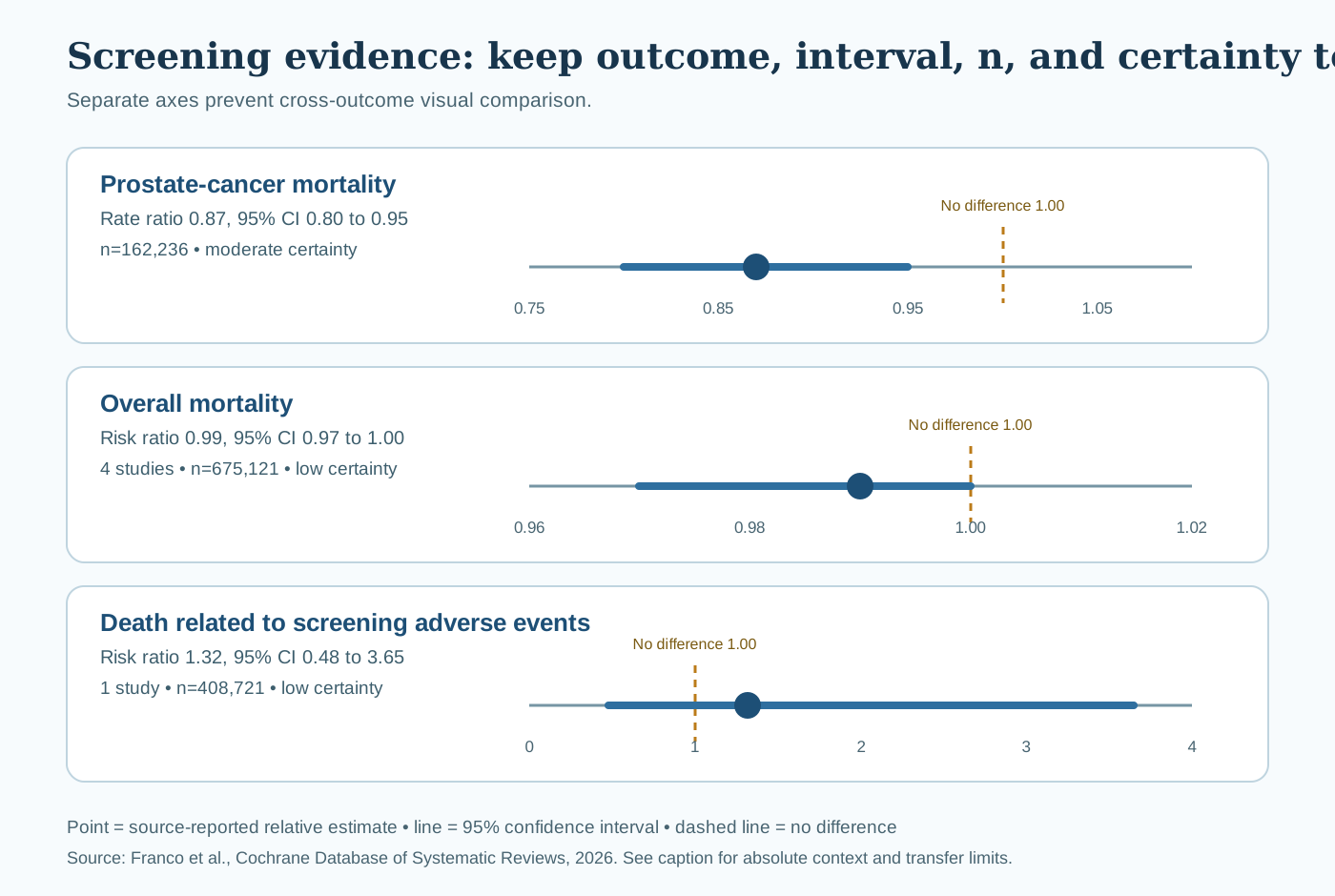
Screening evidence requires precision, not slogans.
The Cochrane review found that PSA-based screening probably reduces prostate-cancer mortality slightly in the ERSPC sensitivity analysis, while evidence for overall mortality and some harms remained low certainty. The review also examined diagnosis, stage, false-positive results, biopsy, overdiagnosis, and treatment-related consequences.8 A separate 2026 systematic review of four large randomized trials and one cohort reported a similar small potential disease-specific benefit, about 0.96 fewer prostate-cancer deaths per 1,000 people invited to screening over 9.5 to 22 years, along with reported overdiagnosis ranging from 2.3% to 10.3% across relevant studies. The authors rated the evidence low or very low certainty.9
Those findings are not a reason for operational paralysis. They are a reason to make the decision process reliable. People need information that distinguishes an invitation or offer from a mandate; explains that PSA is not a cancer diagnosis; describes possible next steps, benefits, burdens, and uncertainty; supports questions; and documents consent or decline without creating abandonment. Filella’s critical review also highlights why aggregated results are difficult to interpret: PSA thresholds, screening intensity, assays, follow-up, control-group testing, and modern risk-stratified pathways differ across studies.7
One 2026 analysis challenges whether PSA screening should be described as preference sensitive and argues that information and consent may be more important than formal preference elicitation.10 That is a contested perspective, not a universal operating rule. Leaders should preserve the practical requirements that remain common across positions: accurate information, understandable consequences, voluntary consent, documentation, access to questions, and a route for the next step.
A negative test state still needs an owner.
A 2026 subanalysis of the prospective MULTIPROS study followed 99 biopsy-naive men with both negative multiparametric MRI and negative systematic biopsy. Four clinically significant cancers were observed, and the estimated clinically significant cancer-free probability was 97.3% at 60 months.1 The cohort was highly selected, the number of events was small, and repeat imaging or biopsy occurred when clinically indicated. The result should not be converted into a universal follow-up interval or individual prognosis.
The operational lesson is more durable than any single interval. A negative state must be represented accurately, communicated clearly, linked to a documented review plan under local clinical guidance, and available to the next clinician. “No cancer found now,” “no clinically significant cancer found,” “test incomplete,” “follow-up not indicated,” and “follow-up planned” are not interchangeable. Data design should prevent a reassuring label from erasing a future responsibility.
Active surveillance is a care model, not passive waiting.
A systematic review and qualitative meta-synthesis of 13 studies found that men on active surveillance lived with uncertainty while also developing agency and resilience. The synthesis described how communication, relationships, information, and confidence in monitoring shaped experience.4 Qualitative evidence does not provide prevalence or a universal service design, but it identifies questions that matter: Does the person understand why surveillance is appropriate? Are monitoring expectations clear? Can questions be raised between visits? Does the record show what is due and who responds when it is missed?
In a real-world cohort of 864 men, Finocchiaro and colleagues reported lower surveillance adequacy among non-Hispanic Black men than non-Hispanic White men, 38% versus 50%, and greater progression to treatment, 45% versus 36%. The adjusted hazard ratio for progression to treatment was 1.46, 95% CI 1.14 to 1.87. Ten-year prostate-cancer-specific mortality estimates were also higher in the Black cohort, although the number of deaths was limited and confidence around some estimates was wide.5 This single-system observational study cannot identify one cause. It is a strong prompt to examine who receives an adequate surveillance opportunity, whose monitoring becomes overdue, and what access or work-system conditions are present.
Closed-loop route
Define completion as an appropriate shared next action, or a documented exception with active ownership.
A test ordered is not a test completed. A result filed is not a result explained. A referral sent is not a referral accepted. A consultation completed is not an informed decision. A treatment selected is not treatment prepared. A discharge is not a safe transition. A survivorship plan stored in the record is not support that a person can use. Every important handoff needs a sending owner, receiving owner, acknowledgment, current state, due review, exception reason, and evidence of closure.
Figure 2. Proposed closed-loop prostate-cancer access and follow-through route
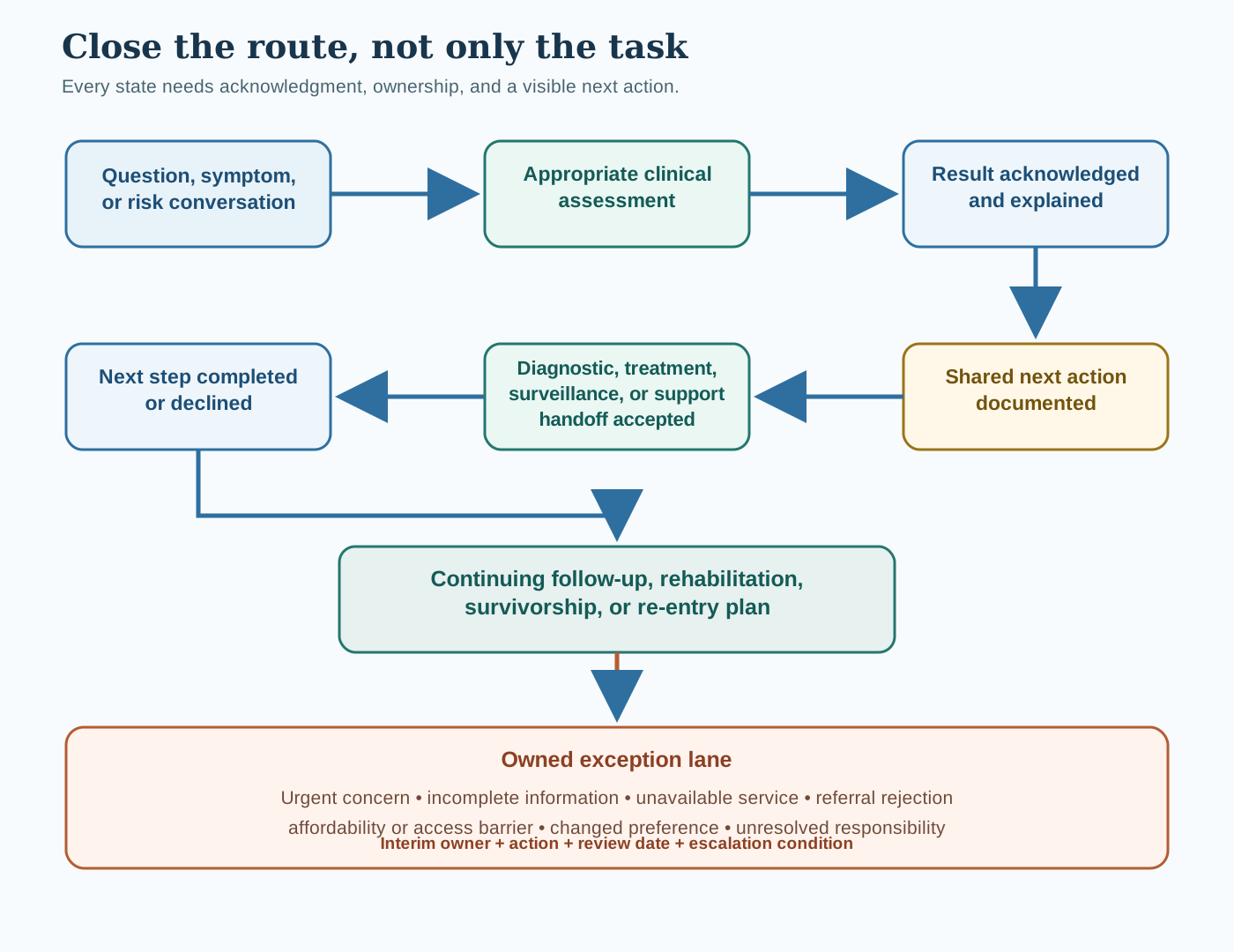
Start with a bounded entry state.
“Prostate-cancer pathway” is too broad for a first improvement denominator. Choose one entry state that can be reconciled, such as people with a defined concerning result requiring acknowledgment, people referred for a diagnostic evaluation, people beginning active surveillance, people moving from treatment decision to preparation, people discharged after a selected episode, or people referred for rehabilitation. State who is included, who is excluded, when the clock begins for management review, and what counts as closure. Clinical urgency and timing remain governed by qualified clinicians and local policy.
The route should preserve the person’s stated priorities. Some people want detailed risk information; others need help understanding the immediate next step. Some may prioritize cancer control, urinary or sexual function, work, caregiving, travel, treatment burden, fertility, privacy, cost, or avoiding repeated procedures. Priorities can change. A reliable route makes room for change without treating it as noncompliance.
Make the decision state explicit.
Focal therapy illustrates why selection cannot be reduced to a technology offer. A 2026 narrative review describes how tumor characteristics, multifocal disease, the possibility of missed lesions, imaging, biopsy, anatomy, functional priorities, technology, and follow-up all affect selection. It also emphasizes limited long-term comparative evidence.12 The management standard should therefore document the option set discussed, evidence limits, the person’s priorities, the agreed action, the next owner, and what will happen if the preferred option is unavailable.
A population study of 917,194 men with localized or regional disease found that treatment selection varied with age, marital status, race, year, and other factors. Black men had lower adjusted odds of radical prostatectomy than White men, OR 0.547, 95% CI 0.539 to 0.555.17 Surgery is not appropriate for every person and is not a quality target. The result identifies a need to examine local opportunity, counseling, referral, capacity, and patient preference rather than assume that variation is either justified or unjustified.
Build an exception lane before launch.
Exceptions are not noise. They reveal the system. Common states include incomplete records, discordant information, inability to reach the person, referral rejection, service unavailable, insurance or authorization delay, transportation, language access, digital access, work or caregiving constraints, changed preference, clinical change, and disagreement about ownership. The route should show an interim owner, the action being taken, a review date, escalation conditions, and the person’s preferred contact method.
Exception review should avoid blame. A declined appointment may reflect an understandable choice, insufficient explanation, financial exposure, previous harm, conflicting responsibilities, or a service that does not fit the person’s needs. Separate patient preference from structural constraint. Preserve the right to decline while making it possible to re-enter the route when appropriate.
Equity and experience
Measure who can enter, move through, understand, and return to the route.
Awareness campaigns can increase reach while leaving the service route unchanged. A train-the-trainer cancer advocacy program involving immigrants of African descent prepared 30 survivors, caregivers, and community advocates. Nineteen advocate-led events reached 2,045 community members, and 875 were navigated to research opportunities. Most respondents found the information useful.11 The program covered multiple cancers, had no control group, and measured research navigation rather than clinical completion. It demonstrates community capacity, not proof of a closed care pathway.
A separate pilot in two South African districts trained 210 traditional health practitioners, community health workers, and faith-based leaders using a culturally tailored module. Reported prostate-cancer awareness increased from 52.5% before the intervention to 98.3% after it, while screening-related fears remained.16 The pre-post design lacked a control group and covered several cancers. The practical lesson is to pair education with an accessible next step and to ask whether fear, trust, cost, language, transportation, and prior experience affect follow-through.
Figure 3. Qualitative fishbone for an unclosed prostate-cancer route
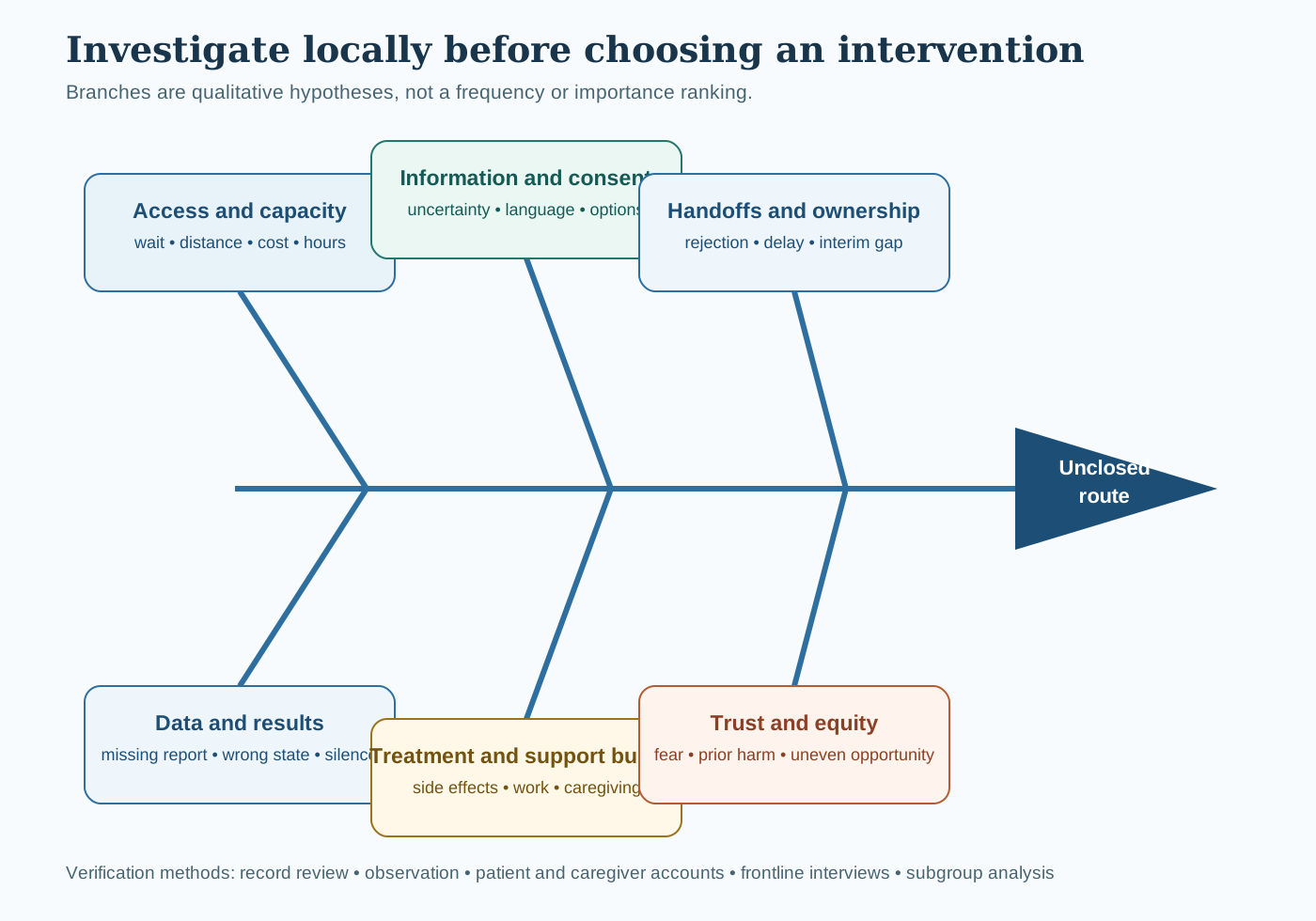
Look for differences at each handoff.
A 2026 cross-sectional survey of 494 clinicians in Spain found large differences between general practitioners and urologists in reported PSA attitudes, guideline knowledge, testing patterns, and shared decision-making. Urologists reported greater guideline knowledge, 91.0% versus 24.1%, while general practitioners reported more frequent shared decision-making when ordering PSA, 69.7% versus 10.0%. Three-quarters of urologists reported that updated recommendations had not changed their practice.13 The self-reported and country-specific findings cannot define another system’s practice. They show why leaders should not assume that one message, role, or workflow exists across settings.
Local analysis should compare acknowledgment, appointment acceptance, wait, diagnostic completion, decision documentation, surveillance adequacy, rehabilitation connection, and unresolved exceptions by variables relevant to the served population. Race and ethnicity, language, geography, insurance, income proxy, disability, digital access, age, caregiver availability, and distance may matter. Missing subgroup data must be reported as missing rather than silently excluded. Small groups require privacy protection and cautious interpretation.
Readmission and biomarker testing expose different forms of follow-through.
Using 2016 state inpatient data for 43,781 people with four common cancers, Enogieru and colleagues found higher adjusted odds of 60-day readmission among Black patients with prostate cancer, OR 1.19, 95% CI 1.02 to 1.40. Their observed-to-expected prostate-cancer readmission ratio for Black patients was 1.23, 95% CI 1.08 to 1.41.14 Administrative observational data cannot explain an individual readmission. It supports review of discharge understanding, medication access, symptom response, early follow-up, caregiver preparation, and the conditions to which people return.
In a regional community oncology network, Mahmud and colleagues identified 20,810 patients with prostate cancer, including 4,985 with metastatic disease. Thirty-four percent of the metastatic subgroup received biomarker testing, and the median time from diagnosis to first test order was 98 days. Among those tested, 25% had an actionable alteration, and 15% of that group received targeted therapy.15 Eligibility, recommendations, and available treatments evolve. The study is not a benchmark for every system. It shows why leaders should define the eligible denominator under current governance, track orders through results, make results available to the decision, and document why a route is not completed.
Operating system
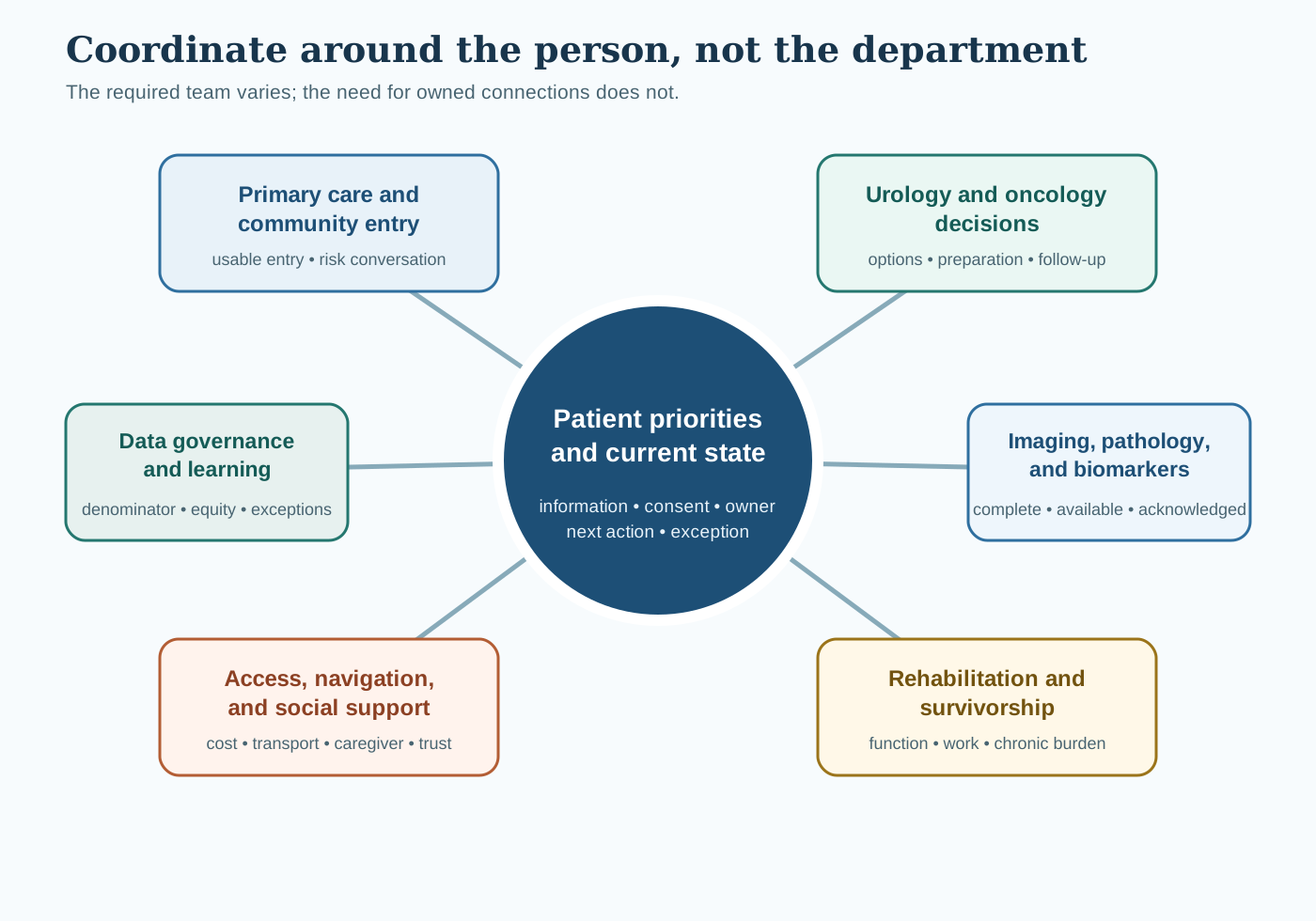
Build coordination around the person’s priorities, not around organizational boundaries.
A dependable prostate-cancer route may involve primary care, urology, medical oncology, radiation oncology, radiology, pathology, genetics, pharmacy, nursing, rehabilitation, behavioral health, cardiology, bone health, sexual health, palliative care, social work, navigation, financial counseling, community partners, employers, and caregivers. Not every person needs every service. The operating model should define how needs are recognized, how the right connection is accepted, how information travels, and who remains responsible while the connection is pending.
Figure 4. Prostate-cancer access and follow-through operating system
Rehabilitation begins before a problem becomes invisible.
A secondary mediation analysis of the randomized Prostate Cancer-Patient Empowerment Program included 128 men with localized disease. The digital program combined pelvic-floor muscle training, fitness, nutrition, intimacy support, and weekly self-monitoring. Men receiving the program early reported greater self-monitoring completion, 98.8% versus 64.1%, and better six-month urinary incontinence scores, 81.5 versus 68.2. The analysis estimated that self-monitoring mediated 41% of the intervention effect.2 The measure was self-reported, the analysis was secondary, and the program is not a universal prescription. The operational message is to prepare people, support adherence, monitor needs, and provide a response when recovery is not proceeding as expected.
Rehabilitation should not be limited to urinary function. Sexual health, fatigue, physical capacity, nutrition, emotional health, relationship strain, transportation, financial toxicity, and work can affect whether a person can carry out the plan. The team should ask what matters before treatment, revisit it afterward, and make support connections as explicit as clinical referrals.
Survivorship includes work, cognition, and chronic treatment burden.
An exploratory cross-sectional study of 51 employed prostate-cancer survivors found that 37% endorsed changes in thinking as a treatment side effect. That single-item perception was associated with reported changes in ability to work or work duties, although validated cognitive scales were not significantly associated with the occupational outcomes.3 The sample was small and self-reported, so it cannot establish population prevalence. It shows that a work concern may be visible to the person before it appears in a standard clinical measure.
For people living longer with metastatic disease, survivorship can include cumulative effects of prolonged systemic therapy. A 2026 review describes bone health, cardiovascular risk, physical function, psychological wellbeing, and patient-reported outcomes as important domains.6 Because it is a narrative review, it does not define one program. Leaders can still require a usable ownership model: which service monitors each domain, how results are shared, how urgent concerns are routed, and how competing appointments or recommendations are coordinated.
Define a minimum information set for every handoff.
- Reason for the handoff and the decision or service requested.
- Current clinical state in language that the receiving team can interpret.
- Relevant results, reports, images, pathology, medications, and prior decisions.
- Patient priorities, communication needs, access barriers, and preferred contact method.
- Sending owner, receiving owner, acknowledgment status, and expected next action.
- Interim responsibility, exception state, escalation condition, and review date.
- What the person was told and who to contact if the plan changes or no response arrives.
Measurement architecture
Use a small scorecard that keeps the denominator, current state, equity, experience, and balancing effects visible.
A dashboard can create false reassurance when its denominator contains only people who completed care. Include every person who entered the selected route, then show completed, open, redirected, declined, unable to reach, and exception states. Separate clinical timing from management review cadence. The scorecard should not create a universal clinical deadline or target.
Figure 5. Proposed prostate-cancer route-reliability scorecard
| Domain | Measure | Denominator and owner | Review | Interpretation guardrail |
|---|---|---|---|---|
| Entry | Acknowledged route entries | All qualifying entries; access owner | Weekly | Acknowledgment is not assessment or diagnosis. |
| Result | Results explained with next action recorded | Results requiring communication; clinical route owner | Weekly | Use locally governed urgency and communication standards. |
| Handoff | Accepted service connections | Connections sent; sending and receiving owners | Weekly | A sent referral is not accepted care. |
| Decision | Option set, evidence limits, priorities, and agreed action documented | Eligible decision encounters; clinical leader | Monthly | Documentation quality matters more than a checked box. |
| Exception | Open exceptions with interim owner and review date | All open exceptions; operations owner | Twice weekly | Preference, access constraint, and clinical change are different states. |
| Equity | Entry, acceptance, open-state, and closure differences | Complete route denominator; equity and analytics leads | Monthly | Report missingness, small numbers, privacy limits, and uncertainty. |
| Experience | Person reports understanding the plan and current owner | Representative route users; patient-experience lead | Monthly | Offer accessible, interpreted, and non-digital response options. |
| Balancing | Workload, repeated testing, wait shift, cost, harm, and alert burden | Participating teams and route users; executive sponsor | Monthly | Improvement in one step may move burden elsewhere. |
Pair process data with human accounts.
Counts cannot explain why a route remains open. Review records with appropriate authorization, observe the work, and invite people from different states to describe what happened. Include those who completed, waited, were redirected, declined, could not be reached, re-entered, or stopped using the route. Ask frontline staff which workarounds are required and which data fields do not reflect reality.
Experience measures should be specific enough to guide action: Did the person receive an explanation they could use? Were questions answered? Were benefits, burdens, alternatives, and uncertainty discussed? Did the person help identify priorities? Did they know who owned the next step and how to seek help? Was interpretation or accessibility support effective? Did cost or scheduling information arrive early enough to influence the plan?
Use subgroup findings as questions, not verdicts.
A difference in rates may reflect need, preference, access, capacity, documentation, data quality, or several conditions at once. Do not assume causation from a dashboard. Verify the route, protect privacy, involve affected people, and examine whether criteria or processes create avoidable barriers. A small number can be important even when it is not statistically stable.
Report uncertainty and missingness to the executive team. If language, race, geography, or disability data are absent for a substantial portion of the denominator, the correct conclusion is not that no difference exists. The conclusion is that equity cannot yet be assessed reliably.
90-day executive agenda
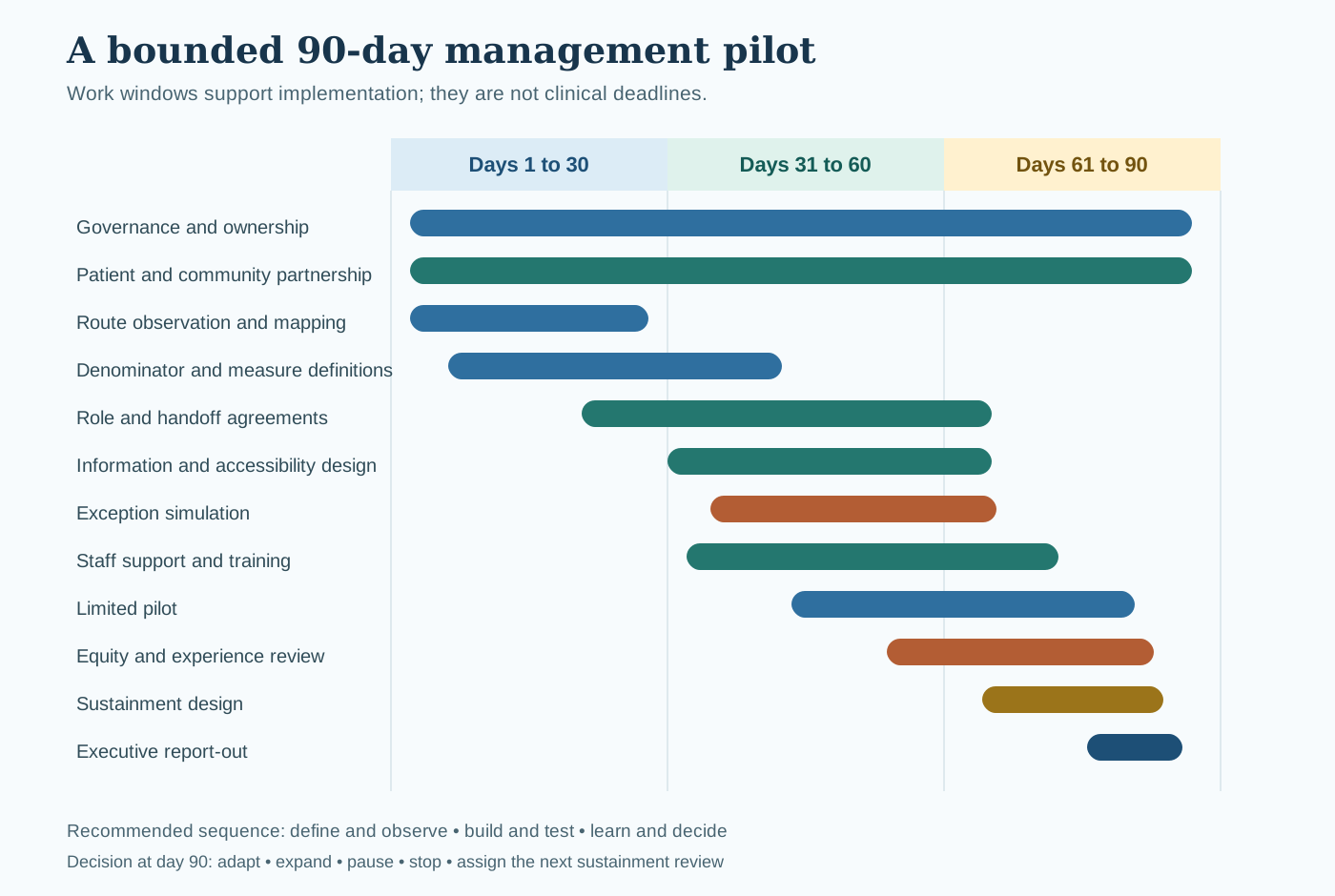
Use the observance to test one bounded route, correct one verified barrier, and leave an accountable operating capability behind.
Days 1 to 30
Define and observe
- Name an executive sponsor, clinical route owner, operations owner, data steward, and patient or community partner.
- Select one bounded entry, diagnostic, surveillance, treatment, transition, or survivorship route.
- Define the denominator, current states, closure, exceptions, and data-quality limits.
- Observe work across representative settings and review records with appropriate authorization.
- Interview people who completed, remain open, were redirected, declined, or stopped using the route.
Days 31 to 60
Build and test
- Create the minimum acknowledgment, result-explanation, accepted-handoff, exception, and closure workflow.
- Clarify sending, receiving, and interim ownership for each handoff.
- Prepare plain-language information and test comprehension, accessibility, interpretation, and non-digital options.
- Rehearse referral rejection, incomplete information, unavailable service, cost barrier, changed preference, and clinical change.
- Train participating roles and begin a limited pilot with frequent review.
Days 61 to 90
Learn and decide
- Reconcile the complete denominator, including open and exception states.
- Compare route data with patient, community, frontline, primary-care, specialty, and support-service accounts.
- Correct one verified work-system condition and retest the affected handoff.
- Report equity, experience, workload, cost, privacy, missingness, and unintended effects.
- Decide to adapt, expand, pause, or stop, and assign the sustainment review.
Figure 6. Proposed 90-day prostate-cancer route-reliability timeline
Questions for the day-90 executive review
- Can the team produce the complete denominator, including people still open, rejected, redirected, declined, unreachable, or in an exception state?
- Which handoff failed most often, and what verified work-system condition contributed?
- Did people understand the issue, participate in the decision, and know who owned the next step?
- Were clinically important results available and acknowledged at the next decision point?
- Did any subgroup experience different entry, acceptance, wait, open-state, or closure patterns? How complete are the subgroup data?
- Did the pilot create new workload, alert burden, privacy risk, repeated testing, financial burden, or a bottleneck elsewhere?
- Which improvement is stable enough to sustain, and who owns the next review?
Leave the organization with a named route owner, a reconciled denominator, an accepted-handoff standard, an exception lane, a small scorecard, and one verified reliability improvement that remains after the observance ends.
Closing perspective
Awareness becomes accountable when people do not have to carry the route alone.
Prostate-cancer care crosses organizations, professions, decisions, and years. No article can remove uncertainty or replace individual clinical judgment. Leadership can remove avoidable ambiguity. Executives can make entry points usable, require acknowledgment, clarify ownership, improve information, resource accepted handoffs, protect interim responsibility, support rehabilitation and survivorship, measure equity, and learn from every route that remains open.
The strongest observance message is an operating commitment: when a person enters the selected route, the organization can show what happened next, who owns the current state, what decision or exception exists, and how the person can move toward an appropriate, informed, and supported resolution.
Peer-reviewed evidence portfolio
References
- Aloufi WD, Zhang X, Szewczyk-Bieda M, et al. Long-Term Observed Risk of Clinically Significant Prostate Cancer After Negative mpMRI and Systematic Biopsy in Biopsy-Naive Men: A MULTIPROS Subanalysis. Prostate Cancer. 2026;2026:9470087. doi:10.1155/proc/9470087.
- Chedrawe E, Smith NK, Ilie G. Mediation analysis of adherence to pelvic floor muscle training and weekly self-monitoring on urinary symptoms in men with localized prostate cancer: a secondary analysis of the PC-PEP randomized controlled trial. Canadian Urological Association Journal. 2026;20(8):E304-E312. doi:10.5489/cuaj.9525.
- Pembroke L, Sherman KA, et al. Perceived cognitive impairment and occupational functioning in prostate cancer survivors: an exploratory cross-sectional analysis. Journal of Cancer Survivorship. 2026;20(4):1412-1420. doi:10.1007/s11764-025-01743-2.
- Briggs RJ, Dunn J, Chambers SK, et al. The lived experience of active surveillance for prostate cancer: a systematic review and meta-synthesis. Journal of Cancer Survivorship. 2026;20(4):1462-1479. doi:10.1007/s11764-025-01748-x.
- Finocchiaro A, Chiarelli G, Stephens A, et al. Active Surveillance for Prostate Cancer in “Real-World” Setting: Exploring Racial Disparities. Journal of Racial and Ethnic Health Disparities. 2026;13(4):3265-3273. doi:10.1007/s40615-025-02497-4.
- Cano Garcia C, Moryousef J, Pinthus JH. Survivorship Challenges in Metastatic Prostate Cancer in the Era of Prolonged Survival: A Review. Cancers. 2026;18(15):2465. doi:10.3390/cancers18152465.
- Filella X. The evolving role of PSA in prostate cancer screening: revisiting the evidence in the era of personalized medicine. Advances in Laboratory Medicine. 2026;7(2):81-89. doi:10.1515/almed-2025-0187.
- Franco JV, Hwang EC, Jung JH, et al. Prostate-specific antigen test for prostate cancer screening. Cochrane Database of Systematic Reviews. 2026;(5):CD004720. doi:10.1002/14651858.CD004720.pub4.
- Bennett A, Vyas N, Shaver N, et al. The Benefits and Harms of Screening for Prostate Cancer in Adults Aged 18 Years and Older: A Systematic Review. Current Oncology. 2026;33(4):199. doi:10.3390/curroncol33040199.
- Vickers A, Carlsson S. Should there be informed decision-making for prostate cancer screening? An analysis of preference sensitivity. Journal of Medical Screening. Published online August 12, 2026. doi:10.1177/09691413261478762.
- Bolajoko OO, Ramirez-Rivera CO, Bolajoko OS, et al. Impact of community-led cancer advocacy program on cancer health outreach and research navigation among immigrants of African descent. Frontiers in Health Services. 2026;6:1820297. doi:10.3389/frhs.2026.1820297.
- Dinckal M, Rodrigues Pessoa R, Pow-Sang J, Yu A. Patient and Technology Selection for Focal Therapy in Prostate Cancer. Cancers. 2026;18(13):2070. doi:10.3390/cancers18132070.
- Lumbreras B, Parker LA, Alonso-Coello P, et al. Disparities in prostate cancer screening practices among general practitioners and urologists: the PROSHADE cross-sectional study. PLOS One. 2026;21(5):e0349758. doi:10.1371/journal.pone.0349758.
- Enogieru I, Osazuwa-Peters OL, Vin-Raviv N, et al. Racial and Ethnic Differences in 60-Day Hospital Readmissions for Patients with Breast, Colorectal, Lung, and Prostate Cancer. Journal of Racial and Ethnic Health Disparities. 2026;13(4):3331-3342. doi:10.1007/s40615-025-02502-w.
- Mahmud S, Orr LD, Cline M, et al. Biomarker testing patterns among patients newly diagnosed with metastatic non-small cell lung cancer, prostate cancer, and bladder cancer. The Oncologist. 2026;31(8):1-13. doi:10.1093/oncolo/oyag243.
- Lubuzo B, Buthelezi U, Luvuno ZP, et al. Improving Cancer Awareness and Knowledge in Johannesburg and iLembe Districts Through a Tailored Community-Based Educational Intervention: A Pilot Study. International Journal of Environmental Research and Public Health. 2026;23(7):871. doi:10.3390/ijerph23070871.
- Pustake M, Railkar A, Ongsyping S, et al. Clinical and Sociodemographic Determinants of Treatment Selection in Prostate Cancer: A Population-Based Study in the United States, 2004-2022. Cancers. 2026;18(12):1962. doi:10.3390/cancers18121962.