


2026 Health Observance Executive Brief
Sepsis Awareness Month 2026: Make Access and Follow-Through Visible
Awareness becomes operational when every concerning signal can reach qualified clinical assessment, an appropriate response, accepted handoffs, visible reassessment, and post-sepsis follow-through without relying on memory or leaving the patient and family to coordinate the system.
Can your organization reconcile every entry into one selected sepsis recognition or transition route and show the current state, accountable owner, unresolved exception, equity signal, and balancing effect?
Leadership signal
Sepsis Awareness Month should test whether the organization can recognize, respond, hand off, and learn as one operating system.
Sepsis is clinically time-sensitive, but the executive problem is larger than any one clock. A person can enter the route through emergency medical services, an emergency department, an inpatient unit, a procedure area, a maternal or pediatric setting, a transfer, or a return after discharge. The first visible signal may be a patient or family concern, a change in observations, a clinician’s judgment, a laboratory pattern, an electronic alert, or deterioration recognized during routine care. Each signal can be appropriate while the route around it remains fragmented.
Leaders should be able to answer practical questions. Which populations and locations are covered by the recognition design? What happens when the screen is positive, negative, incomplete, overridden, or silent? Who evaluates the signal, and how is acceptance recorded? Which response is controlled by qualified clinical judgment and current local policy? Who monitors reassessment, diagnostic information, antimicrobial stewardship, transfer readiness, and source-control capacity? Who owns the patient when responsibility crosses services? What happens after discharge, and how can a survivor or family re-enter the system when recovery changes?
An alert is not a sepsis program. A bundle checkbox is not a patient outcome. A pathway order is not a closed handoff. A discharge instruction is not a recovery connection. A quality report can look complete while important work remains invisible. Reliable performance requires governance, clinical leadership, nursing and medical workflow, data integrity, available diagnostics and treatment capacity, pharmacy and stewardship coordination, escalation support, equitable communication, transition ownership, and learning from the routes that do not close.
This article does not define who has sepsis, recommend a screening tool, interpret a score or laboratory value, set a treatment deadline, select an antimicrobial or fluid strategy, or replace emergency procedures and qualified clinical judgment. Those decisions belong to current evidence-based guidance, local policy, the treating team, and the individual clinical situation. The leadership work is to make the approved route usable and observable.
Replace isolated compliance with route reliability.
Measure whether an eligible signal was captured, reviewed, acted on under clinical governance, reassessed, handed off, and connected to the next accountable state. Keep false positives, overrides, missed signals, exclusions, unresolved work, and people who leave the route visible. A complete denominator prevents success from being calculated only among patients who completed the easiest steps.
Design for variation without normalizing inequity.
Presentation, setting, age, language, disability, resources, staffing, technology, and clinical risk differ. Standardization should create reliable entry, acknowledgment, ownership, and escalation while preserving judgment. Local subgroup review should determine whether the route works differently for people with different opportunities, language preferences, geographies, or recovery resources.
Select one bounded recognition, response, handoff, discharge, or post-sepsis route. Define its denominator, current states, owners, clinical governance, exception lane, equity review, and balancing measures. Then correct one verified work-system condition that contributes to delay, confusion, unsafe burden, or loss of follow-through.
Evidence with transfer limits
Academic evidence supports system design, but the intervention, population, workflow, and uncertainty must remain attached to every result.
Pathways can improve process time
A 2026 systematic review and meta-analysis of 33 studies found that emergency-department pathways were associated with faster antibiotics, but the mortality signal was fragile and most studies had serious risk of bias.1 Speed alone does not validate every pathway design.
Screening is a work system
A large stepped-wedge trial paired a qSOFA-based ward alert with staff training and performance feedback.2 Its results describe that intervention in five Saudi hospitals, not electronic alerts in general.
Recovery belongs in the route
Large observational cohorts show substantial post-discharge utilization and readmission among sepsis survivors.14-17 These data justify transition visibility without declaring that every return is preventable.
Figure 1. Selected outcomes from the SCREEN stepped-wedge cluster randomized trial
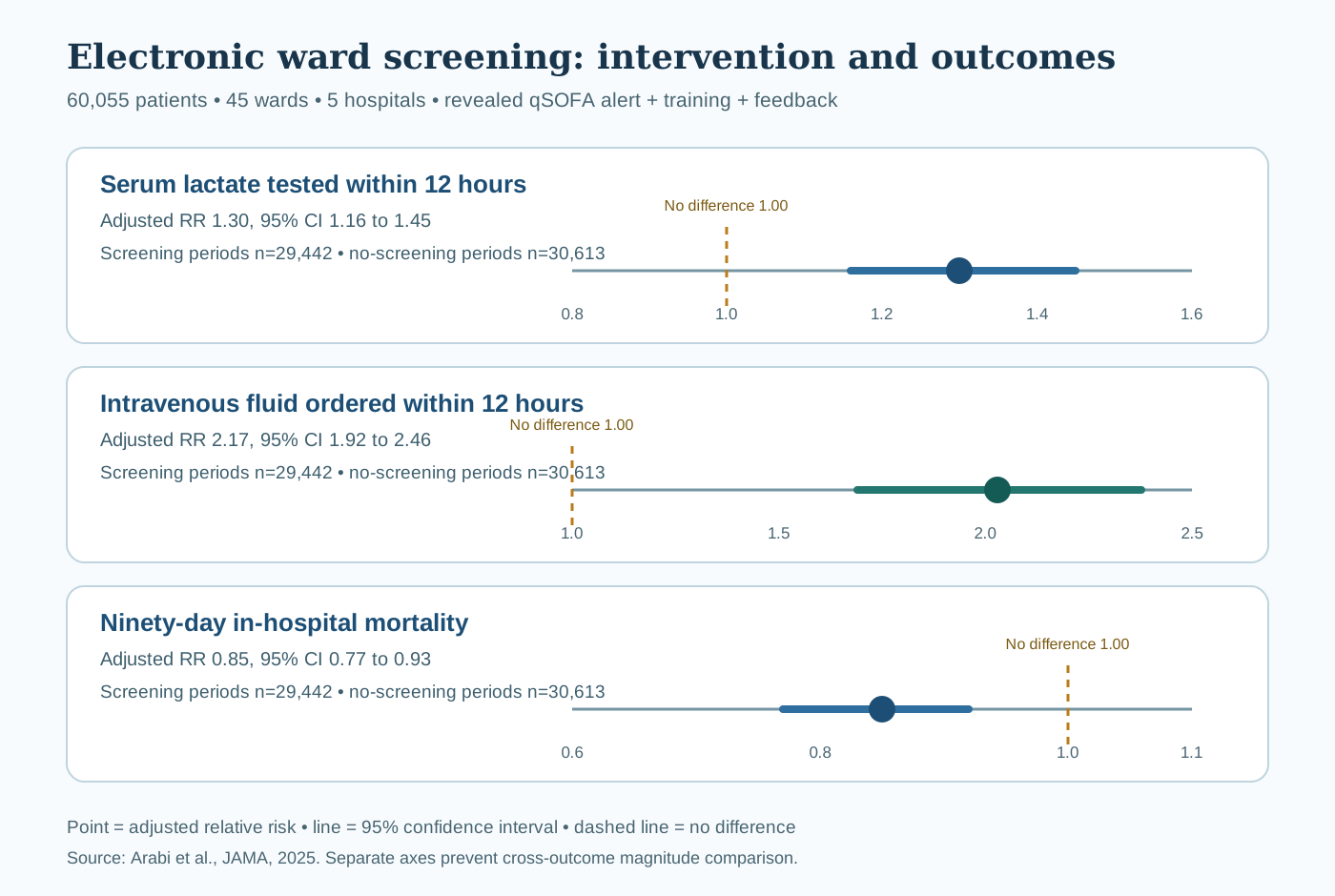
Pathway evidence is strongest when process improvement is separated from outcome certainty.
McKinlay and colleagues reviewed 33 studies of adult or pediatric emergency-department sepsis pathways. Reported time to antibiotics decreased from 135 minutes before implementation to 93 minutes after implementation, a mean difference of 43 minutes, p<.001. The primary analysis suggested a 2.4 percentage-point reduction in in-hospital mortality, p=.032, but that result was fragile in sensitivity analysis and was not observed in prospective or randomized designs. Apparent length-of-stay improvement was driven by pediatric and low- and middle-income studies and was not significant when analysis was restricted to adults.1
The transfer limit matters. Most included studies were retrospective cohorts with serious risk of bias. Patient identification, time zero, pathway components, screening, and background care varied. A leader can reasonably expect a well-designed pathway to make work more visible and may improve important processes. The review does not justify attributing a mortality change to the pathway without stronger design, nor does it establish that a single timing measure is an adequate definition of quality.
A 2026 systematic review of manual sepsis screening found 17 eligible studies among 10,469 records. Fifteen were single-center and 15 used pre-post designs. Seven of 10 studies reported improvement in at least one process outcome, while 6 of 13 reported statistically significant mortality reductions. The reviewers judged the overall evidence low quality and noted that much of it predated contemporary practice.4 Manual assessment remains clinically important, but the review cautions against assuming that a screening form itself produces the outcome.
Electronic decision support works through people, roles, and feedback.
The SCREEN trial offers a valuable system-level example because it randomized the rollout across 45 wards. The revealed alert was not the full intervention. Nurses and physicians were trained, and medical and nursing leads received feedback about acknowledgment performance.2 A leader considering decision support should therefore review the full sociotechnical design: what data generate the signal, whether those data are timely and accurate, how the signal appears in workflow, who receives it, what action is expected, how clinical disagreement is documented, what workload the signal creates, and how performance is reviewed.
A pivotal 2019 patient-level randomized evaluation provides a useful counterpoint. An electronic severe-sepsis alert among 1,123 non-ICU adult inpatients did not significantly increase new antibiotic orders within three hours, 35% versus 37%, and did not improve mortality, length of stay, ICU transfer, or fluid administration.18 It is retained outside the main date window because it demonstrates why leaders should not treat “electronic alert” as one homogeneous intervention. Trigger performance, population, routing, clinical trust, competing alerts, and available response capacity determine how technology functions.
The 2026 PRONTO multicenter randomized trial evaluated rapid procalcitonin testing added to NEWS2-based usual care in 20 emergency departments across 17 NHS trusts or health boards. The algorithm was guidance only, and clinicians could use, ignore, or depart from it.3 The study underscores two principles. First, diagnostic uncertainty cannot be eliminated by one biomarker or score. Second, responsible implementation preserves clinician judgment while making the reason for action or nonaction visible enough to learn from.
Standardization requires iterative testing, not a one-time launch.
Biederman and colleagues used four Plan-Do-Study-Act cycles to standardize emergency-department triage screening across a tertiary urban hospital, a freestanding emergency department, and two rural affiliates that together managed about 138,000 visits annually. Baseline documented screening ranged from 1.7% to 36.5% across sites. After the cycles, rates ranged from 91.9% to 99.0%. Improvement was slowest at the large academic center, which required progressive adaptation.5 Screening completion is not diagnosis or outcome, but the work illustrates that one technical build does not behave identically across settings.
A 2026 cluster randomized trial tested near-real-time feedback based on large-language-model abstraction of the SEP-1 measure. Sixty-six physicians at two academic emergency departments treated 301 qualifying patients. Compliance was 70.1% in the control group and 82.9% in the intervention group, an absolute improvement of 13.0 percentage points, 95% CI 2.5 to 23.4.6 The largest difference involved a documentation-sensitive component. The study suggests that timely measurement and feedback can change reported performance, but it does not establish that the quality measure captures every dimension of appropriate care or that the intervention improves patient outcomes.
Implementation also must fit available resources. A 2026 multidisciplinary consensus process for low-resource settings used literature review, a Delphi survey, stakeholder input, and public comment to develop ten adaptable domains spanning governance, prevention, recognition, response, post-sepsis care, data, quality improvement, respect, and wellbeing.12 It is a consensus roadmap rather than comparative evidence for one program. Its value for executives is the insistence that acute clinical work, infrastructure, community conditions, follow-through, and learning be designed together.
Closed-loop route
Define closure as an appropriate next clinical state with accepted ownership, or an unresolved exception that remains actively owned.
A screen completed is not a clinician review. A clinician review is not a diagnosis. An order placed is not a treatment delivered. A handoff sent is not a handoff accepted. A transfer is not a shared plan. A discharge is not post-sepsis follow-through. Every stage should show the patient’s current state, the accountable owner, the information required for the next decision, an acknowledgment signal, and an exception path.
Figure 2. Proposed closed-loop sepsis recognition and follow-through route
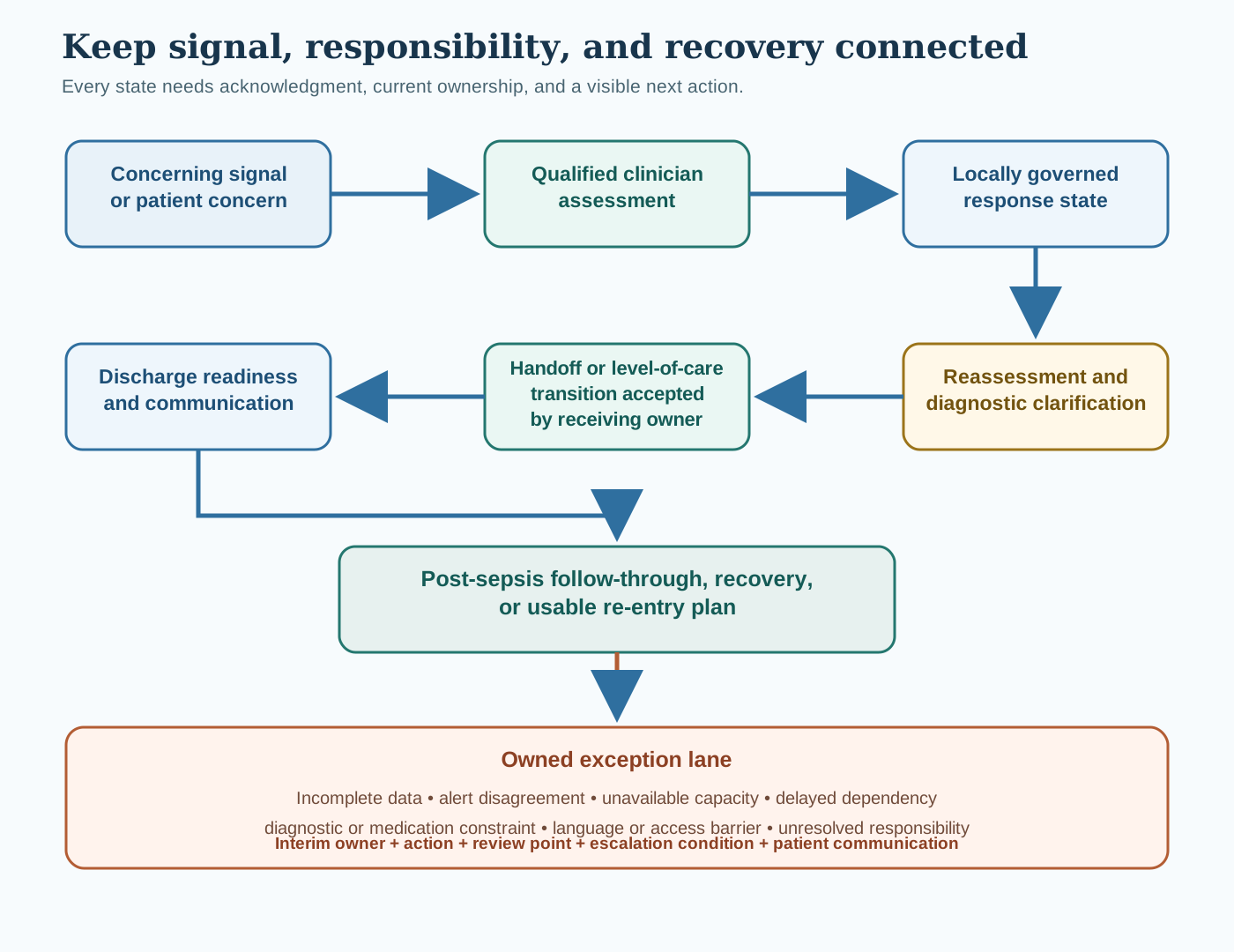
Start with a denominator that leadership can reconcile.
“All sepsis care” is too broad for a first pilot. Select one entry state, such as all alerts on defined adult wards, all emergency encounters meeting a locally approved screen, all clinician-initiated sepsis escalations, all transfers into an ICU from selected units, all sepsis-coded discharges to a defined destination, or all survivors referred to a transition service. State inclusion, exclusions, locations, patient populations, data sources, and the management review point. Clinical urgency remains governed by the treating team.
Then define every state in the route. A signal may be pending review, accepted for immediate assessment, determined not to represent the governed route, superseded by a different clinical concern, or incomplete because required data are absent. A patient may be under active response, awaiting a diagnostic or capacity dependency, moving between teams, preparing for discharge, connected to follow-up, readmitted, or in an unresolved exception. Avoid collapsing clinically and operationally different states into “complete” or “not complete.”
Require acknowledgment at every transfer of responsibility.
Accepted ownership should be observable. The sending team should know which role is expected to receive the work. The receiving role should acknowledge the current state and next action. Until acceptance occurs, the route needs an interim owner. This standard applies to emergency-to-inpatient transfers, ward-to-rapid-response escalation, ICU transfer, diagnostic or procedural dependencies, pharmacy or stewardship review, movement to post-acute care, and discharge to outpatient follow-up.
A hospital survey of 55 Polish institutions found major variation across settings. Sepsis screening was reported by 27% of emergency departments, 21% of wards, and 62% of ICUs. Standardized management was reported by 38.2%, 30.8%, and 86.7%, respectively. Only 6.6% reported regular sepsis training across departments. Hospitals with quality-improvement programs more often monitored cases, mortality, time to antibiotics, bundle compliance, and stewardship.7 The survey is country-specific and self-reported, but it shows why executives should not assume that capacity or governance is uniform across departments.
Build the exception lane before testing the main route.
Common exceptions include incomplete observations, delayed laboratory data, duplicate or conflicting alerts, clinician disagreement with the signal, unavailable beds or staff, diagnostic capacity constraints, medication availability, delayed procedural evaluation, transfer rejection, language or communication barriers, inability to contact a family or decision maker, unclear discharge destination, incomplete medication information, and uncertainty about who owns follow-up. Each exception should have an interim owner, current action, review point, escalation condition, and patient or family communication plan.
Exception review must protect clinical judgment and psychological safety. A dismissed alert may be appropriate. A delayed element may reflect a competing emergency, a contraindication, diagnostic uncertainty, or a capacity dependency that cannot be resolved by frontline staff. The purpose is not to punish deviation. It is to distinguish appropriate variation from preventable work-system failure and to escalate conditions that leaders, rather than individuals, must correct.
Figure 3. Qualitative fishbone for an unclosed sepsis route
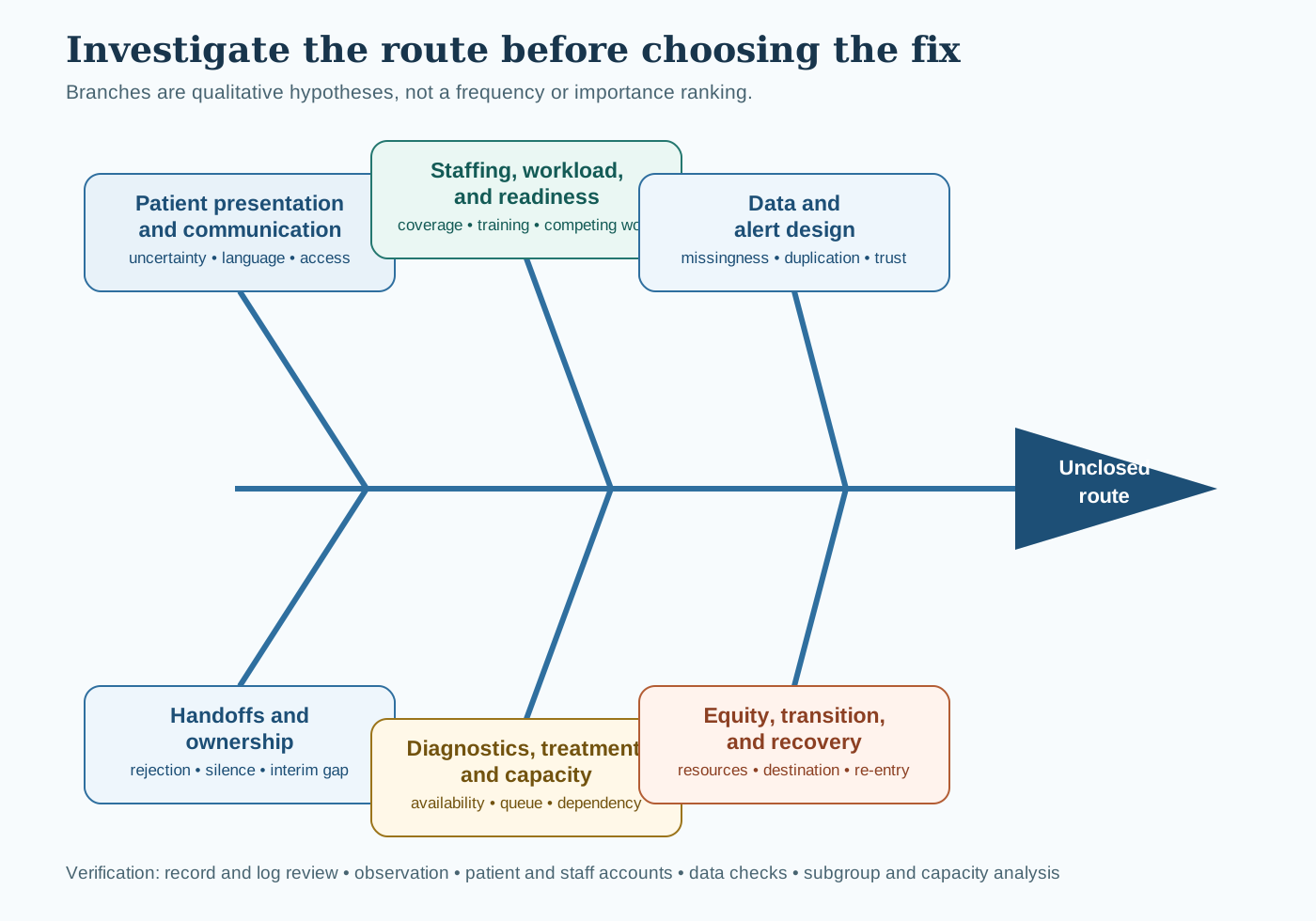
Equity and access
Measure whether recognition, response, communication, transition, and recovery work across different opportunities and constraints.
Equity cannot be reduced to a demographic field added after implementation. It begins with design. Can a patient or family express concern in the preferred language and accessible format? Does the screen depend on data that are measured reliably in all locations? Do lower-resource units have the same escalation support? Can rural or affiliate facilities obtain consultation, diagnostics, transfer, and feedback? Does the discharge plan assume transportation, digital access, paid leave, caregiving support, medication affordability, or a primary-care relationship that may not exist?
A 2026 systematic review and meta-analysis included 13 observational studies involving 3,951,677 patients. Lack of private insurance was associated with higher mortality, adjusted odds ratio 1.34, 95% CI 1.19 to 1.51, with high-certainty evidence. Lower neighborhood socioeconomic status was probably associated with higher mortality, aOR 1.35, 95% CI 1.29 to 1.41, with moderate certainty. Lower income, less education, and unemployment also showed associations, with varying certainty.9 These pooled observational findings do not prove how disadvantage caused any individual outcome. They support routine collection and responsible use of equity-relevant variables.
Language effects can vary within a route. Schwei and colleagues found no overall difference in time to a sepsis alert or antibiotics between patients with non-English and English language preference. In subgroup analysis, non-English preference was associated with a faster clinician-initiated alert among higher-acuity patients and a slower alert among lower-acuity patients, with an absolute difference of 17 minutes in each direction. The authors noted that thoughtfully designed best-practice alerts may support equitable practice.11 The observational result should not be generalized as a fixed language effect. It is a prompt to examine triage assignment, clinician-initiated versus automatic signals, interpreter access, and local workflow.
In a pediatric quality-improvement collaborative, 31,260 cases from 24 hospitals were linked to the Child Opportunity Index. Children in the highest-opportunity quintile were most likely to receive standardized recognition and the collaborative’s recommended bundle. Recognition improved for all groups over time, with the largest improvements among inpatients in the lowest-opportunity quintile.8 The study does not establish that the index itself caused differences. It suggests that standardization, shared learning, and explicit subgroup review may reduce some delivery gaps.
Assess whether the organization is ready to act on an equity signal.
A measurement that finds a difference can create harm if the organization lacks trust, governance, or capacity to respond. Toraman Turk and colleagues developed a 30-item survey in the context of Champions Advancing Racial Equity in Sepsis. Thirty multidisciplinary champions participated. The instrument covered learning and problem solving, system stress and pressure, psychological safety, senior leadership support, and strategic planning. Overall reliability was high, Cronbach alpha .908, although one domain had lower reliability.10 The developmental sample was small, and a survey does not produce equity. Its domains are useful executive questions: Are staff safe to name inequity? Is leadership visibly supportive? Can the system investigate and redesign rather than blame?
Local reporting should include missingness, data provenance, small-number protections, privacy limits, and confidence around estimates. Do not interpret absence of a statistically significant difference as proof of equity. Pair quantitative signals with patient, family, community, interpreter, frontline, rural-site, and transition-partner accounts. Distinguish clinical need and informed preference from unequal opportunity or service capacity.
Operating system and recovery
Coordinate acute response, stewardship, transition, and recovery around the patient and family.
Sepsis work crosses emergency care, inpatient units, critical care, laboratory services, imaging, pharmacy, antimicrobial stewardship, infection prevention, procedural or surgical services, rehabilitation, case management, social work, post-acute facilities, primary care, and community support. No organization will use the same configuration for every patient. The operating requirement is consistent: the current state and next owner should remain visible when the team changes.
Figure 4. Proposed sepsis recognition, response, and recovery operating system
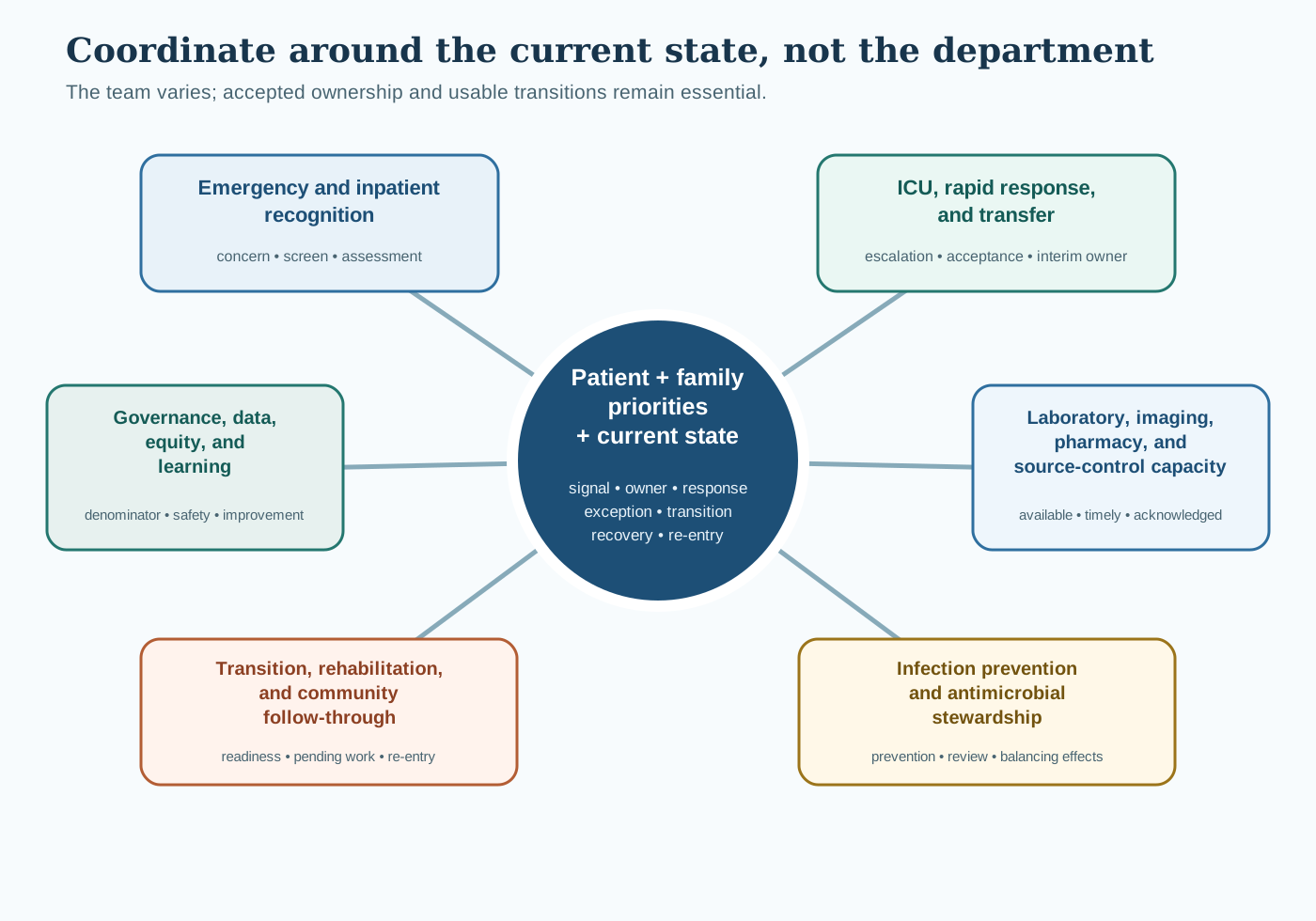
Make post-sepsis follow-through a visible operating state.
A German nationwide claims cohort included 234,874 hospital survivors. Within 12 months, 53.2% had at least one rehospitalization for an ambulatory-care-sensitive condition and 21.3% had at least one infection-related ambulatory-care-sensitive rehospitalization. Returns were more common among older, male, care-dependent, and rural patients.14 These claims-defined outcomes do not mean that half of readmissions were preventable by one local program. They identify a large post-discharge period in which risk, access, and coordination matter.
Another analysis of the same national context found that 94.4% of 234,874 survivors saw a general practitioner, 47.7% had at least one hospital readmission, and 42.8% had at least one emergency treatment within 90 days. Outpatient physicians were the most common first and second contacts.15 Contact is not the same as coordinated recovery. A useful transition design should make the hospital’s summary, medication changes, current concerns, pending results, functional and cognitive needs, escalation instructions, and accountable follow-up available to the next clinician and understandable to the patient and family.
Hou and colleagues studied 330 older adult survivors at one infectious-disease center. Discharge readiness was associated with the quality of discharge teaching, length of stay, payment arrangement, and self-efficacy, together explaining 43.0% of variance. Lower readiness was associated with higher 30-day unplanned readmission.13 The cross-sectional design does not prove that a specific teaching intervention prevents a return. It supports direct assessment of whether the patient and caregiver understand the plan, can carry it out, and know how to seek help.
Track economic and social constraints without treating them as patient failures.
A U.S. analysis of the 2018 Nationwide Readmissions Database identified 2,850,357 sepsis survivors. The 90-day all-cause readmission rate was 17.3% overall and 30.8% among survivors in the lowest-income quartile. Increasing income was associated with lower readmission odds, OR .87, 95% CI .86 to .89. Multiple comorbidities and discharge against medical advice also showed strong associations.16 Administrative data cannot fully represent need, preference, trust, access, or recovery resources. Leaders should ask whether medication access, transportation, home support, post-acute availability, communication, and timely outpatient care are visible before discharge.
In New South Wales, 18,731 of 125,370 adult survivors, 14.9%, returned through an emergency department within 30 days. Among those readmissions, 10.2% had a sepsis diagnosis and 25.6% an infection diagnosis.17 The Australian setting and coding definitions limit transfer. The operational lesson is to keep rapid re-entry usable and nonpunitive. A return may reflect new illness, recurrence, complications, unresolved needs, or an appropriately cautious response to warning signs.
Define a minimum transition information set.
- The governed diagnosis or clinical state and unresolved uncertainty.
- Important events, results, cultures, procedures, medications, and changes during the episode.
- Pending information, who owns it, how it will be reviewed, and how the patient will be contacted.
- Functional, cognitive, psychological, communication, medication, nutrition, mobility, caregiver, and social needs that require follow-through.
- Current destination, receiving clinician or service, acknowledgment status, and next accountable action.
- Accessible instructions for urgent concerns, routine questions, and re-entry when recovery changes.
- Patient and family priorities, preferred language and format, contact method, and identified barriers.
Measurement architecture
Use a small scorecard that keeps the complete denominator, exceptions, equity, workload, stewardship, and recovery visible.
Every measure needs an explicit numerator, denominator, data source, owner, review cadence, inclusion and exclusion rule, and limitation. Separate clinical timing from management review. A dashboard is not permission to impose one universal treatment on every patient. Report why an element was not indicated, contraindicated, unavailable, delayed, declined, or superseded when that distinction can be governed safely.
Figure 5. Proposed sepsis route-reliability scorecard
| Domain | Measure | Denominator and owner | Review | Interpretation guardrail |
|---|---|---|---|---|
| Recognition | Eligible signals with documented qualified review | All qualifying signals; clinical and nursing route owners | Weekly | A reviewed signal is not a diagnosis or mandated treatment. |
| Acknowledgment | Signals accepted by the designated role with current state recorded | Signals routed; sending and receiving owners | Twice weekly | Measure alert burden, duplicates, and appropriate disagreement. |
| Response | Locally governed response and reassessment state complete or exception-owned | Patients entering the selected route; clinical lead | Weekly | Preserve contraindication, judgment, and patient-specific variation. |
| Handoff | Accepted transfers with minimum information set available | All selected transfers; sending and receiving leaders | Weekly | A transfer order or bed request is not accepted ownership. |
| Exception | Open exceptions with interim owner, action, and review point | All open states; operations owner | Each operating day | Distinguish clinical uncertainty from avoidable capacity or process failure. |
| Equity | Recognition, review, handoff, open-state, and transition variation | Complete route denominator; equity and analytics leads | Monthly | Report missingness, small numbers, privacy limits, and uncertainty. |
| Transition | Discharges with accepted next owner, pending-result owner, and usable re-entry instructions | Selected survivors; transition lead | Weekly | Documentation does not prove comprehension or access. |
| Balancing | Alert burden, antibiotic exposure, diagnostic workload, transfer demand, staff workload, and unintended delay | Patients and participating teams; executive sponsor | Monthly | Improvement in one step may move burden or risk elsewhere. |
Pair process measures with outcome and balancing signals.
The SCREEN trial found favorable changes in lactate testing, fluid orders, and 90-day in-hospital mortality, but it also reported fewer vasopressor therapies and multidrug-resistant organisms alongside more code-blue activations, incident kidney-replacement therapy, and Clostridioides difficile.2 These secondary findings do not yield a simple causal story. They demonstrate why implementation review should look beyond the headline outcome.
Measure staff workload and alert burden directly. Ask whether clinicians can distinguish urgency, whether duplicate signals occur, whether data entry is reliable, whether response roles have capacity, and whether documentation demands compete with care. Track antimicrobial and diagnostic consequences under stewardship governance. Review whether one unit’s improvement creates a queue in laboratory, pharmacy, imaging, transport, ICU, post-acute care, or primary care.
Use human accounts to explain the dashboard.
Review a representative sample of completed, overridden, missed, delayed, transferred, discharged, readmitted, and unresolved routes with appropriate authorization. Ask patients and families whether concerns were heard, explanations were understandable, transitions felt coordinated, and re-entry instructions were usable. Ask frontline teams which workarounds are necessary, which alerts are trusted, which exceptions cannot be resolved locally, and which data fields do not reflect real work.
When subgroup differences appear, do not jump from association to cause. Examine severity, clinical need, data capture, opportunity, communication, staffing, access, geography, and destination. Involve affected people in interpretation. Report what remains unknown. A small or incomplete subgroup may still reveal a serious operational barrier even when a statistical comparison is unstable.
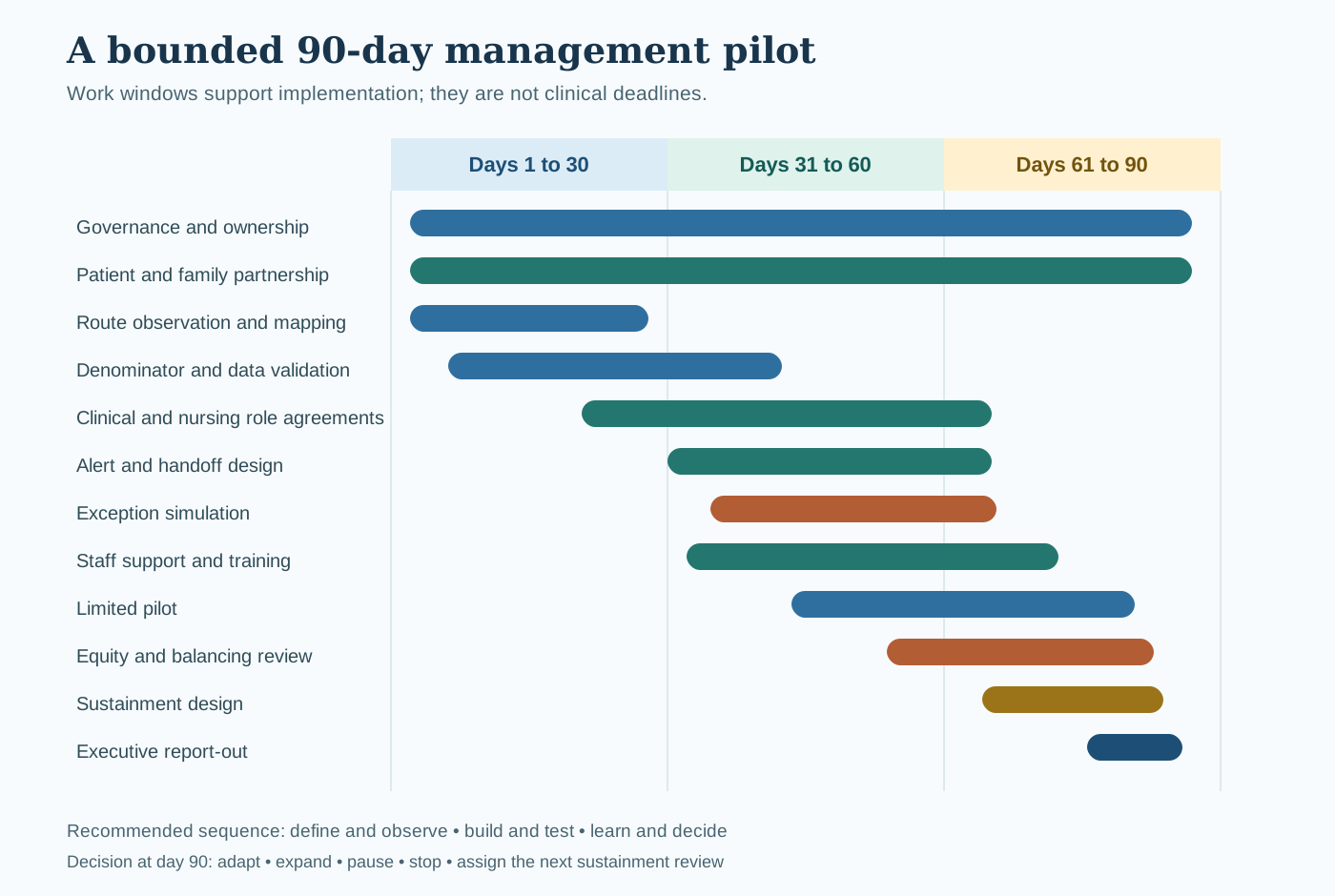
90-day executive agenda
Use the observance to test one bounded route, correct one verified condition, and leave a durable learning system behind.
Days 1 to 30
Define and observe
- Name an executive sponsor, clinical owner, nursing owner, operations owner, data steward, equity partner, and patient or family partner.
- Select one bounded recognition, response, transfer, discharge, or recovery route.
- Define the denominator, current states, closure, exceptions, clinical governance, and balancing measures.
- Observe work across representative locations and operating periods.
- Review records, alert logs, capacity dependencies, patient accounts, and staff workarounds with appropriate authorization.
Days 31 to 60
Build and test
- Clarify the signal recipient, expected acknowledgment, interim owner, minimum handoff information, and escalation conditions.
- Validate data quality, alert logic, role capacity, clinical exceptions, and privacy controls.
- Prepare accessible patient and family communication and a usable re-entry path.
- Simulate missing data, alert disagreement, unavailable capacity, transfer rejection, language needs, and pending results at discharge.
- Begin a limited pilot with rapid review and visible support for frontline teams.
Days 61 to 90
Learn and decide
- Reconcile the complete denominator, including overrides, missed signals, open states, and exceptions.
- Compare process, outcome, equity, experience, stewardship, workload, and capacity signals.
- Correct one verified work-system condition and retest the affected handoff.
- Report what changed, what did not, and what evidence remains uncertain.
- Decide to adapt, expand, pause, or stop, and assign the next sustainment review.
Figure 6. Proposed 90-day sepsis route-reliability timeline
Questions for the day-90 executive review
- Can the team produce the complete denominator, including signals that were negative, overridden, missed, duplicated, delayed, redirected, or still unresolved?
- Which transfer of responsibility failed most often, and what verified system condition contributed?
- Did the intervention improve the selected route without creating unsafe alert burden, antimicrobial exposure, diagnostic demand, staff workload, or delay elsewhere?
- Were clinical exceptions represented accurately and protected from punitive interpretation?
- Did recognition, response, handoff, discharge, or re-entry vary by language, geography, opportunity, unit, age group, or destination? How complete are the data?
- Did patients and families understand the current state, next owner, pending information, and re-entry plan?
- Which improvement is reliable enough to sustain, and who owns the next review?
Leave the organization with a named route owner, a complete denominator, an acknowledgment standard, an owned exception lane, an equity and balancing review, a visible transition state, and one verified reliability improvement that remains after the observance ends.
Closing perspective
Awareness becomes accountable when concern, action, responsibility, and recovery stay connected.
Sepsis crosses settings, disciplines, technologies, and organizational boundaries. No campaign can remove clinical uncertainty, and no dashboard can replace qualified judgment. Leadership can remove avoidable ambiguity. Executives can make the approved route observable, resource the people who operate it, require acknowledgment, protect interim ownership, connect acute response to transition and recovery, measure equity and balancing effects, and learn from every route that remains open.
The strongest observance message is an operating commitment: when a concerning signal enters the selected route, the organization can show who reviewed it, what governed state followed, who owns the current responsibility, what exception or dependency remains, how the patient and family were informed, and how the system will respond if the route changes.
Peer-reviewed evidence portfolio
References
- McKinlay A, Barrington G, Prior SJ, et al. Clinical Outcomes for Emergency Department Presentations of Sepsis Managed on a Clinical Pathway: A Systematic Review and Meta-Analysis. Healthcare. 2026;14(11).
- Arabi YM, Alsaawi A, Alzahrani M, et al. Electronic Sepsis Screening Among Patients Admitted to Hospital Wards: A Stepped-Wedge Cluster Randomized Trial. JAMA. 2025. doi:10.1001/jama.2024.25982.
- Todd S, Euden J, Condie J, et al. Procalcitonin testing combined with NEWS2 evaluation compared with usual care based on NEWS2 for identification of sepsis and antibiotic initiation in the emergency department in England and Wales (PRONTO): a multicentre, randomised, controlled, open-label, phase 3 trial. The Lancet Respiratory Medicine. 2026.
- Hechtman RK, Garamani N, Anabtawi YR, et al. Impact of manual sepsis screening in hospitalized adult patients: A systematic review. Journal of Hospital Medicine. 2026;21(5):539-548.
- Biederman S, Batheja A, Bednar S, et al. Toward Standardization and High Reliability: Improved Sepsis Screening in Emergency Department Triage Across an Academic Health System. Joint Commission Journal on Quality and Patient Safety. 2024;50(11):809-816.
- Boussina A, Allison C, Quintero K, et al. Medical Record Abstraction for Quality Improvement in Sepsis Care Using Artificial Intelligence: A Cluster Randomized Trial. JAMA Network Open. 2026;9(6):e2611885.
- Śmiechowicz J, Scheer CS, Bartczak J, et al. Sepsis Recognition and Management Gaps in Hospitals: A Post Hoc Analysis of a Subset of Data from the European Sepsis Care Survey. Infectious Diseases and Therapy. 2026;15(8):2181-2198.
- Rutman L, Richardson T, Auletta J, et al. Association between Child Opportunity Index and paediatric sepsis recognition and treatment in a large quality improvement collaborative: a retrospective cohort study. BMJ Quality & Safety. 2026;35(2):106-117.
- Almoosawy SA, Fernando SM, Rochwerg B, et al. The Association Between Socioeconomic Position and Mortality in Patients With Sepsis and Septic Shock: A Systematic Review and Meta-Analysis. Critical Care Medicine. 2026;54(4):692-700.
- Toraman Turk S, Cherlin E, Boatright D, et al. Measuring system readiness for equity in sepsis care: Survey development and psychometrics. Journal of Hospital Medicine. 2026;21(6):629-637.
- Schwei RJ, Shank C, Tsuchida RE, et al. A Comparison of Time to Sepsis Alert and Antibiotics in Emergency Department Patients by Language Preference. Journal of Emergency Medicine. 2026;81:19-29.
- Kortz TB, Hidalgo JL, Akech SO, et al. 10 Steps to Improve Sepsis Care in Low-Resource Settings. Critical Care Medicine. 2026;54(4):939-949.
- Hou S, Wei L, Gong Y, et al. Readiness for Hospital Discharge and 30-Day Unplanned Readmission in Older Adult Sepsis Survivors from Internal Medicine Wards: A Cross-Sectional Study. Patient Preference and Adherence. 2026;20:1-12.
- Wedekind L, Rose N, Freytag A, et al. Rehospitalizations for ambulatory care sensitive conditions in sepsis survivors: a nationwide cohort study using health claims data 2016-2019. Infection. 2025;53(5):2227-2233.
- Ruhnke T, Storch J, Freytag A, et al. Transitional care after hospitalization for sepsis in Germany: results from the population-based AVENIR cohort study. Infection. 2025;53(6):2533-2542.
- Umberger RA, Womeodu R, Abrar MNF, et al. The Impact of Baseline Economic Disparity on All-Cause 90-Day Readmissions Within a National Cohort of Sepsis Survivors. Dimensions of Critical Care Nursing. 2025;44(6):320-327.
- Ackermann K, Aryal N, Westbrook J, et al. Infection-related hospital readmissions after surviving sepsis: A retrospective population level study of adult sepsis survivors in Australia. Journal of Critical Care. 2026;93:155443.
- Downing NL, Rolnick J, Poole SF, et al. Electronic health record-based clinical decision support alert for severe sepsis: a randomised evaluation. BMJ Quality & Safety. 2019;28(9):762-768.