
2026 Health Observance Executive Brief
Sports Eye Safety Awareness Month 2026: Turn Awareness into a Reliable Safety System
Eye safety becomes dependable when leaders connect activity-specific risk review, approved protection, access and fit, pre-play checks, rapid response, qualified follow-up, and learning in one accountable system.
Can your organization show that each selected sport or recreation program has a current eye-hazard review, an approved protection standard, a practical route to correctly fitted equipment, a pre-play verification process, and an owned response from injury through qualified follow-up and organizational learning?
Leadership signal
Sports Eye Safety Awareness Month should test whether prevention works during ordinary play, not whether a poster was published.
Sports and recreation create widely different eye hazards. A fast ball or puck, an opponent's finger, a racquet or paddle, debris, a fall, a collision, an elastic exercise band, and ultraviolet exposure require different controls. Age, visual function, prescription needs, prior injury, contact-lens use, competition level, facility design, coaching practice, equipment rules, and emergency access can change the operating context. A generic message to “wear eye protection” does not tell a participant which device is appropriate, whether it fits, whether it can be used with other required equipment, who verifies it, or what happens when protection is unavailable.
The evidence also resists simple rankings. Emergency-department studies show who reached sampled facilities, not every injury or every hour of participation. Clinical series show burden among patients who received care, not population incidence. Surveys can reveal reported practice while depending on memory, social desirability, and question design. Case reports identify plausible hazards but cannot show frequency. Prevention programs combine education, examinations, equipment requirements, supervision, and context, making it difficult to isolate one component. Executives should use these studies to ask better local questions, not to manufacture a universal league table of risk.
A reliable safety system starts with a bounded activity and a defined population. Leaders identify the governing rule or standard, confirm which protective device is approved for that activity and participant, make the device available in usable sizes, support prescription and other accommodation needs, verify fit and condition, and assign a role to check readiness before exposure. The system also needs an incident route that distinguishes first response from clinical assessment, keeps follow-up visible, documents the relevant exposure and protection state, and feeds verified learning back into rules, procurement, coaching, facilities, and participant communication.
This brief does not select protective equipment, prescribe an examination or screening interval, diagnose an injury, define return to play, or replace emergency procedures, qualified eye-care judgment, governing-body requirements, applicable standards, informed consent, or current clinical guidance. Those decisions depend on the activity, device, participant, injury, jurisdiction, and responsible professional. The leadership task is to make the approved decision executable and observable.
Separate awareness from reliable use.
People can understand that protection matters and still lack an approved device, a comfortable fit, prescription compatibility, a replacement process, a coach who reinforces use, or confidence that the equipment will not impair performance. Measure each condition rather than treating nonuse as a single attitude problem.
Measure the route after an incident.
An incident log is incomplete if it stops at the field, gym, court, clinic, or emergency department. Keep referral, qualified review, restrictions, follow-up, unresolved symptoms, and safe re-entry visible to the authorized roles without turning private clinical information into a public team record.
Select one high-participation or high-concern activity. Validate its complete participant and exposure denominator, protection standard, equipment access and fit route, pre-play check, incident response, follow-up ownership, privacy boundary, and balancing measures. Correct one verified condition that makes safe participation harder than unsafe participation.
Evidence with transfer limits
Academic evidence shows meaningful injury burden and uneven protective practice, while study design determines what leaders can safely infer.
Use is not assured
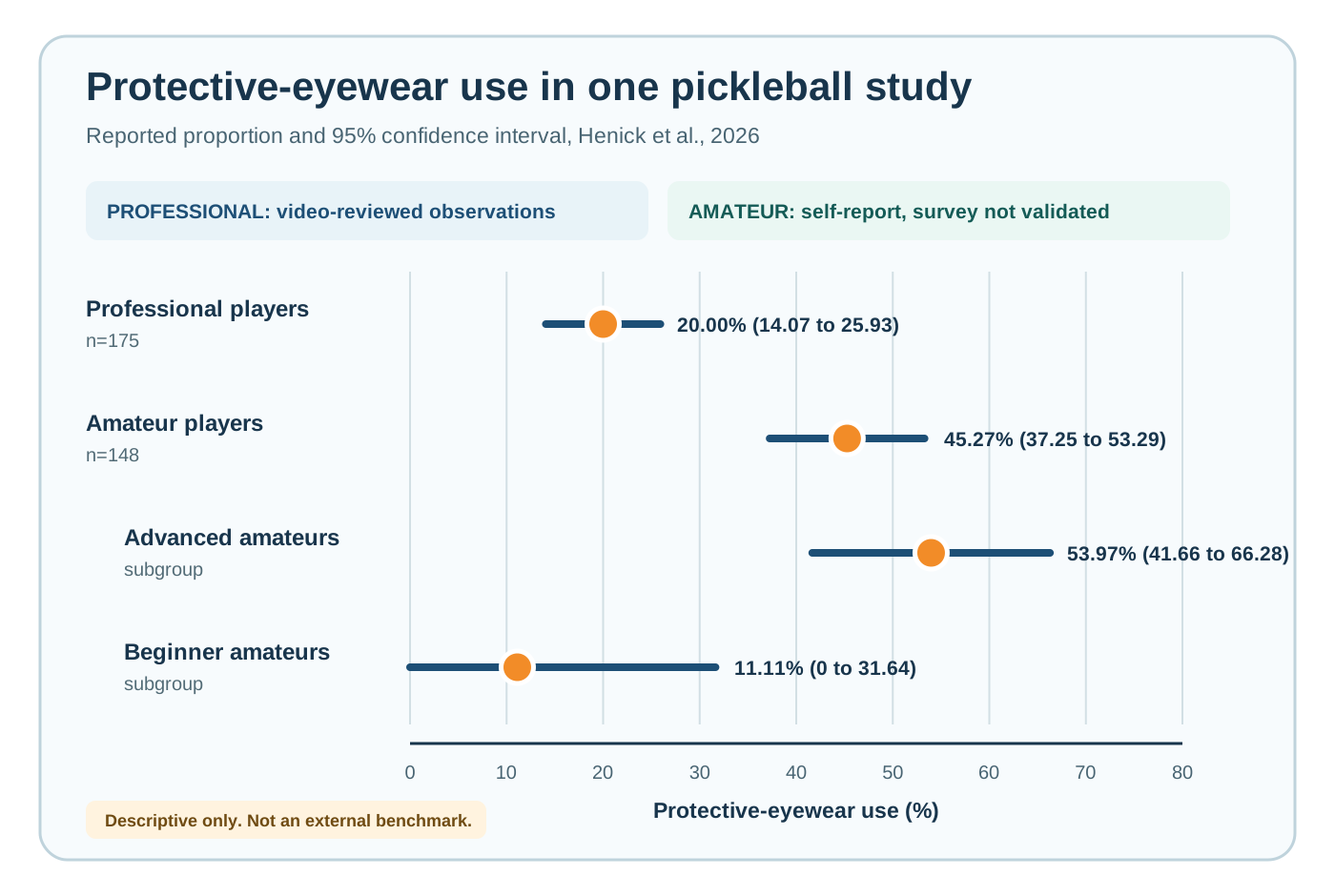
Protective-eyewear use was observed or reported by 20.00% of 175 professional pickleball players and 45.27% of 148 amateurs in one 2026 study.1 Measurement methods differed, so this is a descriptive signal rather than a direct performance benchmark.
Burden can grow quickly
A national emergency-department analysis estimated 1,262 pickleball ocular injuries in 2024 from an unweighted sample of 33 cases.2 Weighted estimates need their underlying counts and setting limits.
Follow-up matters
In a pediatric clinical series of 223 sports-related eye injuries, 14.7% required surgery and patients averaged five follow-up visits.5 Prevention and post-incident continuity belong in the same operating review.
Figure 1. Descriptive protective-eyewear use in one pickleball study
Injury distributions identify planning questions, not universal risk rankings.
A United States emergency-department study identified 4,671 sports-related ocular injuries. Mean age was 19.4 years, median age was 15, 79% of patients were male, and ages 12 to 17 accounted for 38.6% of the sample. Basketball represented 37.8% of injuries, baseball 13.8%, and football 12.3%. Minor anterior injuries accounted for 68.8%, major anterior injuries 7.7%, minor posterior injuries 0.7%, major posterior injuries 1.7%, and 21.2% could not be classified from the available record.3 These proportions reflect participation, exposure, care seeking, coding, and the sampled emergency departments. They should prompt a local review of high-volume activities and vulnerable age groups, not a claim that one sport is intrinsically most dangerous for every program.
Pickleball offers a current example of changing demand. A 2025 study estimated 3,112 ocular injuries treated in United States emergency departments from 2005 through 2024, based on 73 unweighted cases. The authors estimated 1,262 injuries in 2024 from 33 unweighted cases and an annual increase of 405 cases during 2021 to 2024 (95% CI 288 to 522; p=.004). Adults age 50 or older had a 39% higher estimate than younger adults (95% CI 6% to 65%; p=.03). Ball, paddle, and fall mechanisms were represented.2 The analysis does not include every care setting or an exposure denominator. It supports readiness for an expanding activity, including older participants, rather than a prediction for a specific club or health system.
Regional and sport-specific studies reinforce the need for local context. Among 255 patients in a Swedish sports-eye-injury study, floorball accounted for 39%, padel for 20%, and football for 15%; padel became the leading activity in 2021, and 4% of patients had severe consequences.10 A narrative review of soccer-related maxillofacial and ocular injuries described direct ball impact as a prominent mechanism and summarized contusions, lacerations, and hyphema across heterogeneous studies.7 Sport popularity, referral pathways, playing rules, facilities, and data capture vary. An executive team needs its own activity denominator and mechanism review.
Clinical series make the downstream burden visible.
A pediatric study of 223 sports-related eye injuries reported that 78.9% of patients were boys. Hyphema was present in 72.2%; soccer represented 23.3% of cases, baseball 17.0%, and basketball 11.7%. Surgery was required for 14.7%, and patients averaged five follow-up visits.5 The series cannot estimate risk for every young athlete, yet it makes an operational point: the burden may extend well beyond the first encounter. Family communication, referral acceptance, school and activity instructions, specialty capacity, and authorized follow-up tracking deserve design attention.
In a clinical sample of 529 closed-globe injuries, only 2% of sports injuries had documented sports eye protection. Surgery was required for 16.8%, and the sample generated 123 operating-theatre visits.9 Documentation may undercount equipment use, and the cost environment is local. The study still shows why a prevention discussion belongs in resource planning. A separate series of 402 ocular injury patients identified 34 bilateral injuries; 17.7% were attributed to sports or recreation, and 82.4% of the bilateral group had not used protective devices.12 Case-series proportions cannot prove device effectiveness. They support consistent documentation of activity, mechanism, protection type, fit or failure, and follow-up state.
Delayed consequences complicate a simple “treated and closed” label. A review of post-traumatic glaucoma in contact-sport contexts describes the need to consider later complications after ocular trauma.13 The review does not create one schedule for every injury. Qualified clinicians must determine the appropriate examination, follow-up, restrictions, and return-to-play decision. The management system should make the responsible owner and next state visible without exposing unnecessary clinical information.
Program evidence supports a bundle, but not a universal effect estimate.
A prospective prevention program at a military hospital in India combined pre-participation eye examinations, education for players, parents and coaches, and mandatory protection. From 2010 to 2018, the program reported reductions greater than 70%, with some sports near 80% and p<.01.4 The abstract did not provide the sample size or confidence intervals needed for a precise effect chart, and the setting was specialized. The result should not be converted into a promised reduction. It supports a systems hypothesis: coordinated governance, assessment, education, equipment rules, and reinforcement may be more reliable than a stand-alone message.
A small collegiate men's basketball program screened 44 players. Refractive errors were identified in 29.5%. Across 8.6 roster-equivalent seasons, the program recorded eight eye injuries, with a median five days lost.11 The program is too small to define an examination policy or general risk. It shows the value of connecting identified visual needs, team operations, injury surveillance, and time-loss measures. Any screening or examination decision must follow current guidance and qualified judgment for the actual population.
Among 88 professional athletes in another study, 80% were male and 62% participated in collision sports. Peripheral retinal findings varied by sport and were more frequent in selected collision groups than in a noncollision comparison.6 The sample was small and specialized. Leaders should not turn it into universal retinal-screening policy. Its safe use is to ensure that high-risk questions are reviewed by qualified eye-care professionals, not improvised by administrators or coaches.
Frequency and severity must be interpreted separately.
A retrospective Major League Baseball analysis compared ocular injuries before and after a pitch-clock change. Across 56 injuries, frequency did not differ significantly, 8.25 versus 11.5 injuries per season (p=.481). Time missed after pitching-related injuries differed, 3.25 versus 34.64 days (p=.001).8 The association does not prove that the rule change caused more severe injury. It illustrates why a dashboard that counts incidents without mechanism, severity, time loss, clinical follow-up, participation exposure, and concurrent changes can mislead.
Rare hazards also need a route. A case report described serious ocular injury caused by an elastic exercise band.14 One case cannot estimate frequency, yet it can justify checking anchoring, condition, user instruction, inspection, spacing, and reporting in programs that use resistance equipment. The appropriate response is a verified local hazard review, not a universal claim about all bands or all exercise.
Reliable safety system
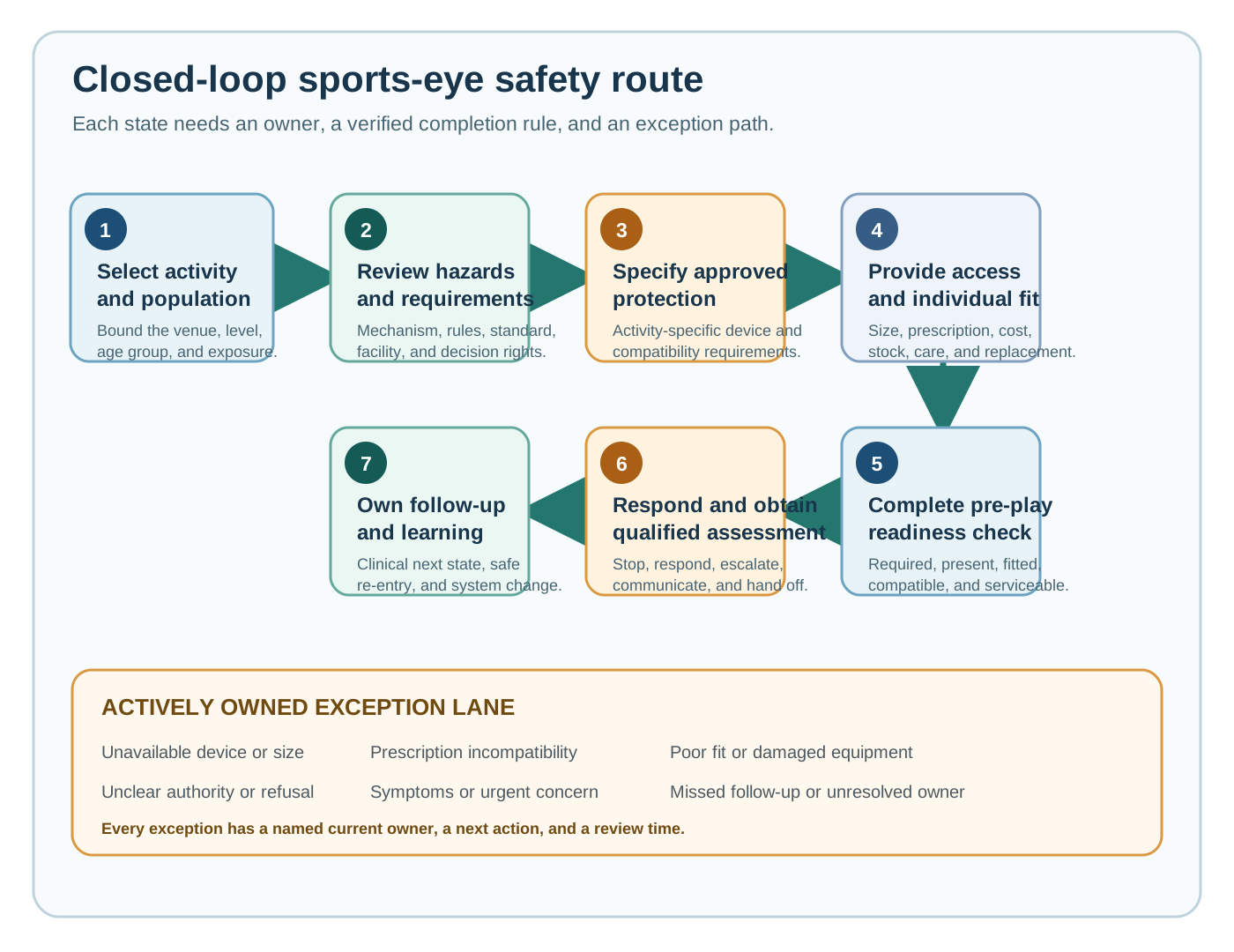
Define prevention as a closed route from activity selection through protection, response, follow-up, and learning.
A policy published is not an activity-specific risk review. A device listed is not a device in hand. Equipment distributed is not correctly fitted or compatible with other gear. A coach reminder is not a completed pre-play check. An incident form is not qualified assessment. A referral issued is not accepted care. A return-to-play note is not a shared understanding of restrictions. Each transition requires a current state, accountable owner, minimum necessary information, and exception path.
Figure 2. Proposed closed-loop sports-eye safety route
Start with the activity, not the inventory catalog.
Choose a bounded activity, venue, age group, and level of play. Map the mechanisms actually present: ball or puck speed and size, racquet or paddle proximity, body contact, falls, fingers and elbows, projectiles, debris, sunlight, equipment tension, facility obstacles, and participant movement. Identify who owns the governing rules, which current standard applies, and how exceptions are resolved. A central equipment list cannot replace local confirmation that the selected device is approved for the exact activity and can be worn with helmets, face protection, prescription correction, hearing devices, or other required equipment.
Use injury evidence as a prompt, then examine local exposure. A high count may reflect a popular activity, while a severe event in a smaller program may reveal a different priority. Track participation sessions, athlete-exposures, or another defensible denominator where feasible. Define what counts as an incident, near miss, equipment failure, and open follow-up. Validate who reports, where data flow, how duplicates are reconciled, and how small numbers are protected.
Make the safest choice practical before play begins.
Procurement should translate policy into sizes, fit support, prescription-compatible options, replacement stock, cleaning, storage, inspection, and a clear route for damaged or lost equipment. Financial assistance and loan programs need eligibility, privacy, maintenance, and replacement rules. Coaches and officials need a concise readiness standard and authority to pause participation when the required condition is not met. Participants and families need plain-language explanations of purpose, limitations, care, symptom escalation, and how to raise a fit problem without being labeled uncooperative.
The pre-play check should be short because it confirms work already completed. It is not the time to discover that an athlete cannot see through a scratched lens, a device conflicts with a helmet, a required size is missing, or no one knows whether the equipment is approved. Repeated failures at the check are system data. They should trigger procurement, fit, scheduling, policy, or communication review rather than repeated last-minute improvisation.
Design response and follow-up before the first event.
Emergency and clinical procedures should specify who stops play, who provides immediate response within role and training, how urgent evaluation is accessed, what information accompanies the participant, who can receive updates, and who monitors the next authorized state. Eye symptoms and mechanisms can require qualified assessment even when external injury appears limited. Administrative staff should not diagnose or interpret. Their role is to ensure the correct pathway is available and that ownership does not disappear at the handoff.
Post-incident review should separate care from learning. Clinical information remains private and role-limited. The prevention team may need a minimum dataset such as activity, location, mechanism, equipment state, rule or facility condition, first-response timing, referral status, and whether follow-up ownership is resolved. The aim is not blame. It is to identify a verified condition that can be corrected and retested.
Access, fit, and sustained use
Protective behavior depends on the work system around the participant.
One study of 83 functionally one-eyed children found that 99% of caregivers knew protective eyewear was recommended, yet 31% did not know its true purpose. Thirty-five percent reported wear during at least 90% of the day, 31% reported part-time wear, and 34% reported rare or no use. Reported barriers included discomfort, appearance, cost, and reduced vision.15 This high-risk pediatric population is not equivalent to every sports program, and caregiver report may differ from observed use. The result demonstrates why awareness and availability must be measured separately from understanding, fit, comfort, and sustained use.
Qualitative focus groups with 31 farmers, mean age 55.8 years, identified protective-eyewear themes involving hazards, current practices, perceived benefits, discomfort, poor fit, appearance, possible breakage, and suggestions for improvement.16 The occupational and rural setting limits transfer to sports. These themes are useful as local interview prompts. Ask participants which activities create difficulty, whether lenses fog or shift, whether fit changes with other equipment, whether replacement is easy, whether visual performance feels affected, and what happens when the preferred option costs more.
An awareness-to-practice gap appears outside athletics as well. Among 512 dental professionals, 86.1% reported familiarity with safety regulations and 93.6% acknowledged the need for protective eyewear, yet 42.6% reported consistent use. Sixty-two and one-half percent reported ocular injuries.17 This cross-sectional self-report study cannot measure sports practice or causal effects. It supports one management lesson: high awareness does not prove reliable execution.
School implementation can also leave eyewear underemphasized. In one Australian school sun-safety study, only 11.1% of schools encouraged protective eyewear.18 Sun safety differs from impact protection, and the country and policy context matter. The study supports reviewing whether school communication, procurement, supervision, and activity rules actually include the intended eye-safety action.
Figure 3. Qualitative fishbone for inconsistent protective-eyewear use
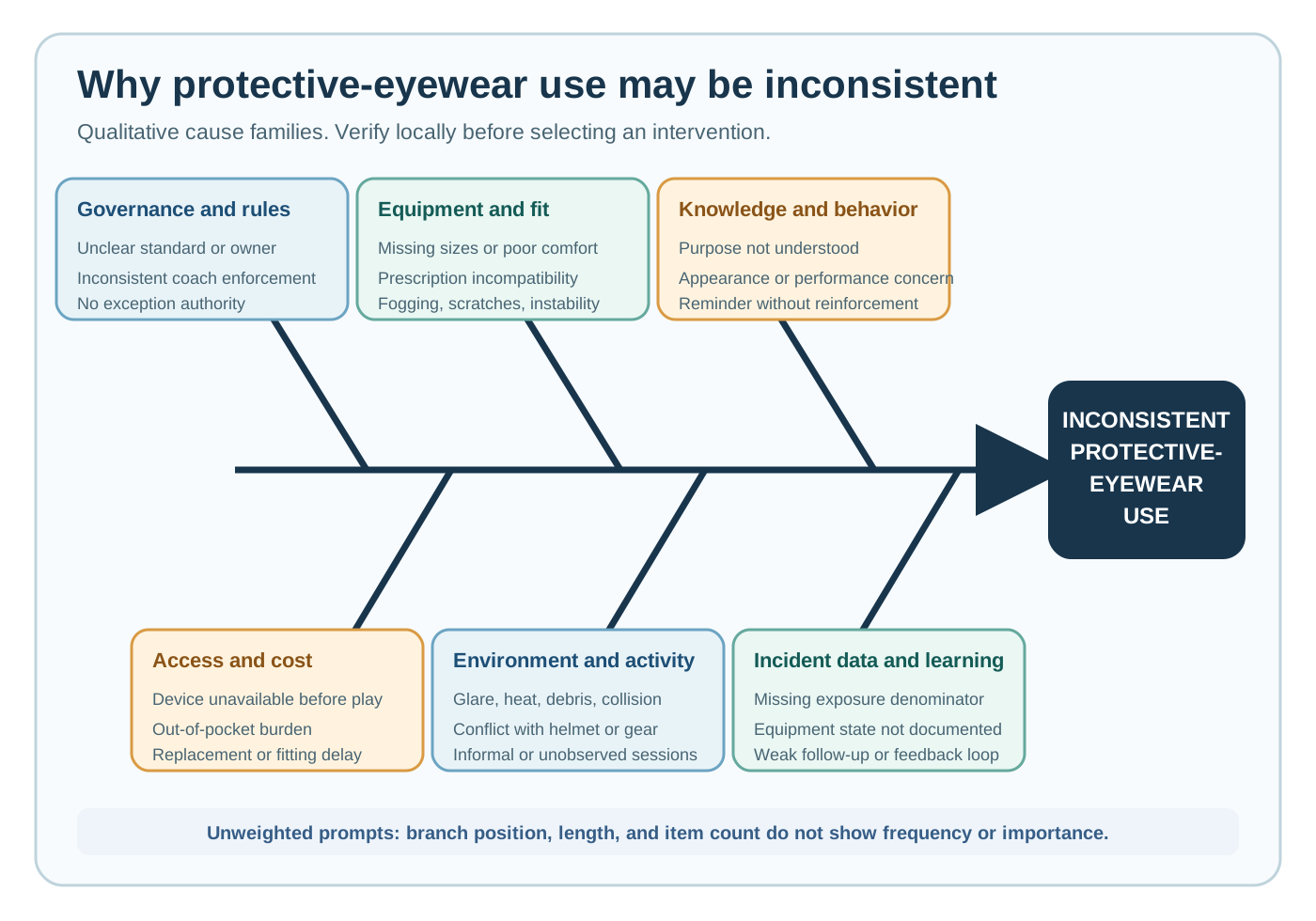
Equity review starts with opportunity to use the approved control.
Stratify access and completion only where data are sufficiently complete, appropriate, and safe. Locally relevant questions may include age, language, disability, prescription need, geography, insurance, school or club resources, device size, and level of play. Do not assume a difference proves discrimination or individual reluctance. Trace the stage where opportunity changed: recommendation, explanation, fitting, acquisition, replacement, pre-play verification, or continued use.
Protect privacy when the population is small. A rare injury, one functionally one-eyed athlete, or one participant needing an uncommon accommodation can be identifiable even without a name. Use role-based access, minimum-necessary fields, suppression or aggregation rules, and careful narrative review. Participants should understand what information is collected, why it is needed, who can see it, and how it affects participation.
Balance safety with unintended burden. A protection requirement can reduce access if the approved device is unaffordable or unavailable. A check can stigmatize a participant if performed publicly. A generic device can impair vision or conflict with other equipment. A strict replacement rule can create missed participation without a loan pathway. These are not reasons to lower the safety standard. They are reasons to resource a usable route and monitor both protection and participation.
Accountable operating system
No single role can make sports eye safety reliable.
Executive leadership sets the boundary, resources the work, and resolves conflicts between policy and operational reality. Risk, legal, compliance, and clinical governance confirm current requirements without converting broad guidance into an unsupported product or clinical mandate. Coaches and officials make readiness visible at the point of play. Sports medicine and eye-care professionals handle qualified assessment, accommodation, injury decisions, follow-up, and clinical escalation. Procurement and equipment staff translate standards into available, maintained, correctly sized devices. Participants and families report fit, symptoms, and barriers. Emergency and data teams keep response, referral, denominator, and learning states visible.
Figure 4. Proposed sports-eye safety operating system
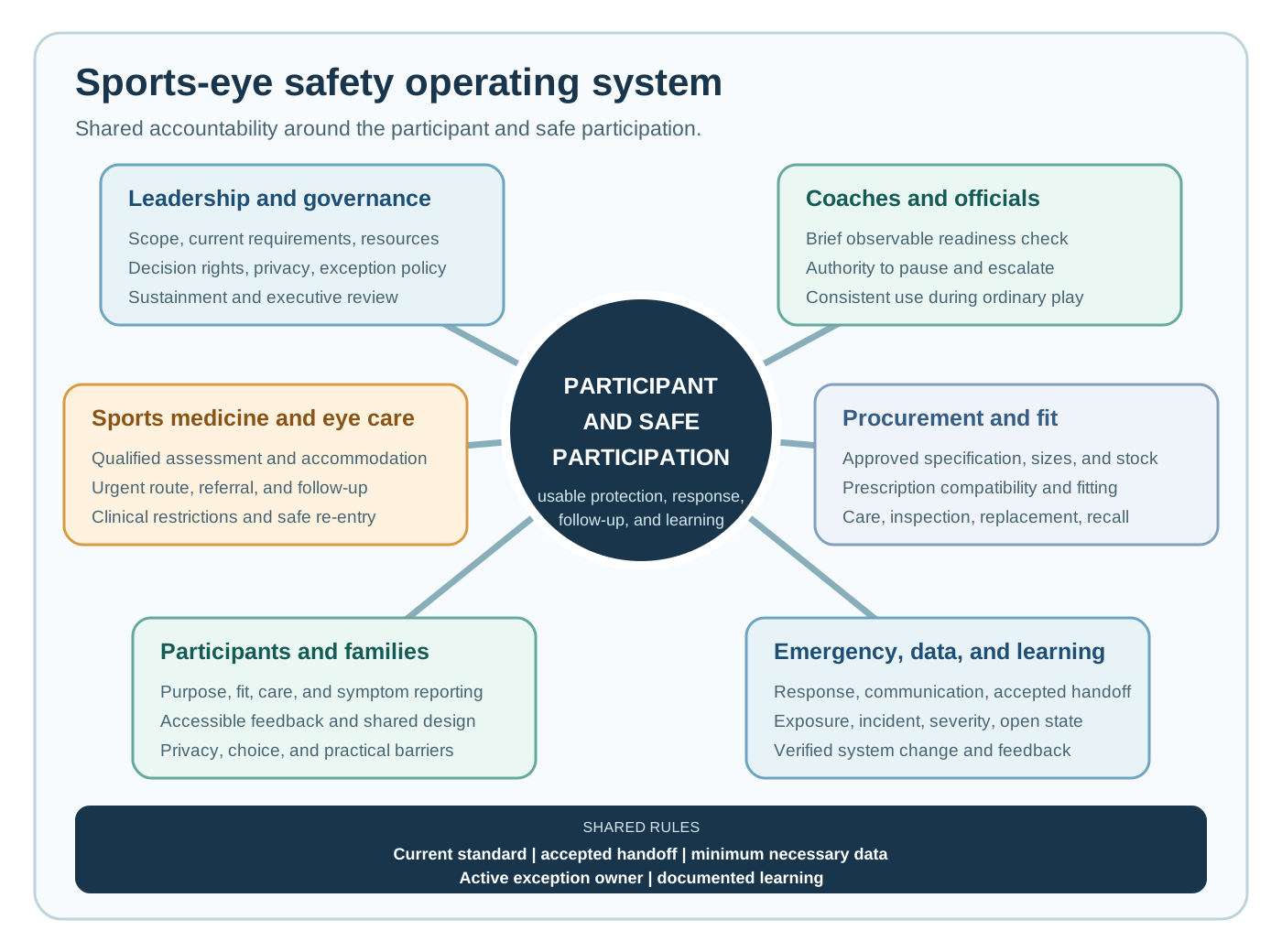
Leadership and governance
Name an executive sponsor, an operational owner, and a qualified clinical adviser. Define the selected activity, population, time window, and decision the observance will support. Confirm the current policy and standard owner. Document how changes are approved, how old instructions are retired, how exceptions are escalated, and how budgets support access, fit, replacement, training, and referral capacity.
Coaches, instructors, and officials
Translate requirements into a brief observable readiness check. Give frontline leaders a response when equipment is missing, damaged, incompatible, or refused. Include substitutes, visiting participants, informal practice, and noncompetition sessions. Avoid asking coaches to make product, diagnosis, examination, or return-to-play decisions outside their authority.
Sports medicine and eye care
Define routes for prescription needs, prior injury, functional vision concerns, symptoms, urgent assessment, specialty referral, follow-up, and safe re-entry. Clarify the minimum information the operations team needs and what remains private. Current clinical guidance and individual judgment govern actual care.
Procurement, equipment, and facilities
Maintain the approved specification, size range, stock level, cleaning and storage process, inspection criteria, replacement route, and recall response. Observe where fogging, glare, scratches, straps, frames, helmet interfaces, or facility conditions create failure. Test the route with the people who use it.
Participants and families
Co-design clear explanations of purpose, limitations, fitting, care, symptoms, reporting, privacy, and re-entry. Provide more than one accessible way to report a concern. Treat reported performance or comfort problems as data to assess, not proof of resistance.
Emergency response, data, and learning
Prepare field or facility response, urgent access, communication, handoff, documentation, and follow-up visibility. Reconcile incident, clinical, equipment, and exposure data without creating unnecessary duplicates. Review patterns with denominators, small-number protections, severity, and transfer limits.
Decision-ready measurement
Every measure needs a denominator, owner, cadence, and guardrail.
A count of distributed devices does not show whether the right participants received the approved device, whether fit was verified, or whether use was sustained. A percentage without the underlying numerator and denominator can hide small numbers and missing observations. A low incident count can reflect safer play, underreporting, lower participation, or incomplete follow-up. Use a compact scorecard that links each measure to a decision and a balancing signal.
Figure 5. Proposed sports-eye safety scorecard specification
| Measure | Numerator and denominator | Owner and cadence | Decision use | Guardrail or balancing signal |
|---|---|---|---|---|
| Approved-protection access | Participants with the approved device available before exposure / all participants for whom the current activity rule requires it. Show n/N and missing status. | Program and equipment owner; before season and monthly. | Size stock, loan, purchase, and replacement action. | Participation delay, out-of-pocket burden, unavailable size, prescription incompatibility. |
| Fit verified | Required participants with fit and compatibility verified by the defined process / required participants present. Show n/N. | Qualified or trained designated role; initial issue and after replacement. | Fitting capacity and escalation. | Discomfort, visual limitation, public disclosure, repeat adjustment. |
| Pre-play readiness | Observed required participants meeting the defined protection condition / required participants observed. Report observation coverage. | Coach or official; each selected session, summarized weekly. | Immediate correction and recurrent-failure review. | Cancelled participation, unobserved sessions, inconsistent enforcement. |
| Eye incidents by exposure | Defined eye incidents / validated athlete-exposures, participant sessions, or other local exposure denominator. Stratify cautiously. | Safety and data lead; monthly and after serious events. | Mechanism and activity review. | Reporting completeness, severity mix, duplicates, changes in participation. |
| Response and accepted handoff | Incidents reaching the defined next accountable state within the local operational window / incidents requiring that state. Show unresolved exceptions. | Clinical pathway owner; weekly until closed. | Capacity, referral, and handoff correction. | Privacy exposure, inappropriate urgency, patient coordination burden. |
| Owned follow-up | Cases with qualified follow-up completed or an active named exception owner / cases requiring follow-up. Show n/N. | Authorized clinical or care-coordination owner; weekly. | Prevent loss between referral, review, restrictions, and re-entry. | Missed visits, unsafe contact, unnecessary data sharing, staff workload. |
Interpret change before celebrating it.
When a measure changes, ask what else changed. Did participation volume, observation coverage, reporting ease, activity rules, staff, facility, equipment supply, or referral access change? Did one serious case drive a small denominator? Did a device requirement reduce access for participants needing prescription or uncommon sizes? Did follow-up appear better because unresolved cases were excluded? A short data-quality note should accompany every executive interpretation.
Do not build a Pareto chart from incomplete incident categories or a heat map from cells with unstable small numbers. Do not combine incomparable studies in a forest plot. Do not call a bar chart a trend if the underlying exposure denominator changed. The six-figure portfolio in this brief uses one verified descriptive confidence-interval chart and five clearly labeled management tools because that is what the evidence can support.
90-day executive agenda
Use the observance to make one bounded activity safer and more reliable.
Days 1 to 30
Define and observe
- Name the sponsor, operational owner, clinical adviser, and frontline partners.
- Select one activity, population, venue, and decision window.
- Confirm the current rule, standard, approved protection, and exception authority.
- Observe access, fitting, pre-play checks, incident response, referral, and follow-up.
- Validate participation, exposure, equipment, incident, and open-case denominators.
- Interview participants and families about fit, performance, cost, privacy, and reporting.
Days 31 to 60
Build and test
- Correct the highest-confidence barrier that leaders can influence.
- Align stock, sizes, prescription route, replacement, cleaning, storage, and inspection.
- Write the brief readiness check and incident handoff rule.
- Simulate missing equipment, poor fit, damaged equipment, symptoms, urgent referral, and missed follow-up.
- Pilot the scorecard with complete n/N reporting and balancing measures.
- Review privacy, accessibility, equity, and frontline workload before expansion.
Days 61 to 90
Learn and decide
- Reconcile every participant, observation, incident, referral, and open exception in scope.
- Compare access, fit, readiness, incident, severity, follow-up, and burden signals.
- Retest the corrected condition during ordinary operations.
- Report what improved, what did not, and which evidence remains uncertain.
- Decide to adapt, expand, pause, or stop the pilot.
- Assign sustainment ownership, review cadence, and the next standard check.
Figure 6. Proposed 90-day sports-eye safety implementation timeline
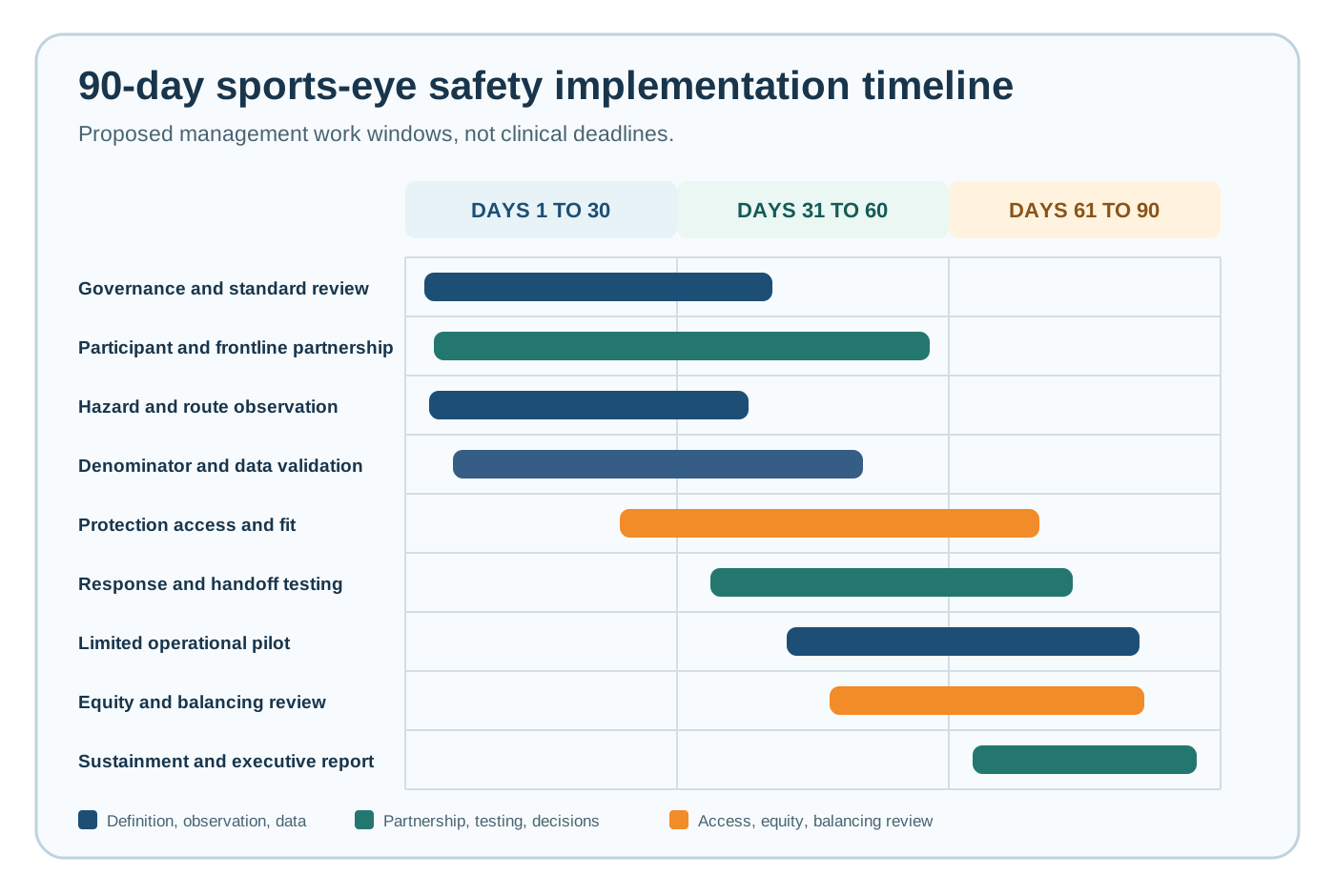
Questions for the day-90 executive review
- Can the team produce the complete participant and exposure denominator, the observation coverage, and every open incident or follow-up exception?
- Which governing requirement and approved protection specification are current, and who owns the next review?
- Did access and verified fit improve without increasing cost burden, participation delay, stigma, visual difficulty, or frontline work?
- Which transfer failed most often: recommendation to acquisition, acquisition to fit, fit to readiness, incident to assessment, or referral to owned follow-up?
- Did incident frequency, severity, time loss, reporting completeness, participation, or exposure change at the same time?
- Where did opportunity differ by a locally relevant population or equipment need, and how complete and safe are those data?
- What verified condition changed, what remains uncertain, and what decision should leadership make next?
Leave the organization with one validated activity-specific standard, an accessible protection and fit route, a brief pre-play check, an accepted incident handoff, actively owned follow-up exceptions, a denominator-based scorecard, and one verified reliability improvement that remains after the observance ends.
Closing perspective
Awareness becomes protection when the safer action is available, fitted, expected, checked, and supported.
Sports eye safety crosses governance, coaching, clinical care, procurement, facilities, emergency response, data, families, and participant experience. No campaign can remove every hazard, and no device can replace appropriate rules, supervision, qualified assessment, or follow-up. Leaders can remove avoidable ambiguity. They can make the current standard easy to find, make approved equipment practical to obtain and use, make readiness observable, and keep responsibility connected after an incident.
The strongest observance message is an operating commitment: for the selected activity, the organization can show what protection is required, how each participant can obtain and use it, who verifies readiness, who responds when something goes wrong, who owns the next clinical or operational state, what remains unresolved, and how verified learning changes the system.
Peer-reviewed evidence portfolio
References
- Henick TM, Debroff BM, Tahvildari M. Pickleball players' reported use of protective eyewear. JAMA Ophthalmology. 2026.
- Lacher A, Koc B, Tsui E. Pickleball-related ocular injuries in United States emergency departments. JAMA Ophthalmology. 2025.
- Patel S, et al. Sports-related ocular trauma in United States emergency departments. Seminars in Ophthalmology. 2023.
- Mishra A, et al. Prevention of sports-related eye injuries through a comprehensive program. International Ophthalmology. 2024.
- Dockery A, et al. Youth sports-related eye injuries: clinical characteristics and outcomes. Journal of Pediatric Ophthalmology and Strabismus. 2021.
- Arej N, et al. Retinal screening findings in elite athletes. Sports Medicine - Open. 2025.
- Mergoum A, et al. Maxillofacial and ocular injuries in soccer: a narrative review. Sports Medicine - Open. 2026.
- Teebagy D, Armstrong GW, Heinze N. Major League Baseball ocular injury frequency and severity before and after the pitch clock. Orbit. 2025.
- Lee A, Samarawickrama C. Closed-globe injury burden, costs, and reported eye protection. Clinical & Experimental Ophthalmology. 2023.
- Kasiga T, Bro T. Sports-related eye injuries and the emerging contribution of padel. Acta Ophthalmologica. 2024.
- Wisely CE, Legault GL, Kim T. Eye screening and injuries in a collegiate men's basketball program. The Physician and Sportsmedicine. 2021.
- Maurya RP, et al. Bilateral ocular trauma: causes, protection, and clinical characteristics. International Ophthalmology. 2022.
- Iannucci V, et al. Post-traumatic glaucoma and contact sports. Life. 2023.
- Dinçer N, et al. Ocular injury caused by an elastic exercise band: a case report. Turkish Journal of Sports Medicine. 2022.
- Yahalomi T, et al. Protective-eyewear compliance among functionally one-eyed children. Graefe's Archive for Clinical and Experimental Ophthalmology. 2025.
- Madheswaran S, et al. Barriers and facilitators to protective-eyewear use: a qualitative study. BMC Public Health. 2025.
- Borkar DS, et al. Ocular injury awareness, knowledge, and safety practices among dental professionals, students, and supporting staff: a cross-sectional analysis. PLoS One. 2026.
- Lissner K, Stevenson M. School sun-safety implementation and protective-eyewear practices. Australasian Journal of Dermatology. 2025.