

2026 Health Observance Executive Brief
Suicide Prevention Awareness Month 2026: Build a Clear, Private, and Accountable Support Route
Awareness becomes dependable when every person can enter through a private route, reach a qualified response, move through an accepted handoff, and remain connected until the next accountable state is confirmed.
Can your organization show, for one defined population and setting, how a person privately signals concern, who responds, how immediate safety is addressed, how the next care team accepts responsibility, how follow-up remains visible, and how leaders learn without exposing unnecessary personal information?
If a person may be in immediate danger, follow current local emergency procedures now. In the United States and its territories, call or text 988 for the Suicide & Crisis Lifeline. This executive brief is not personal medical advice and does not replace emergency response, qualified assessment, current clinical guidance, or local policy.
Leadership signal
Suicide Prevention Awareness Month should test the reliability of the support system, not the visibility of a campaign.
A message can encourage help-seeking while the underlying route remains hard to find, public at the point of entry, dependent on one person, closed after hours, disconnected from behavioral health capacity, or silent after referral. Screening can identify concern while leaving staff unsure what to do next. A discharge instruction can look complete while no receiving service has accepted responsibility. A follow-up message can be well intended while using an unsafe channel or language the person did not approve. These are operating conditions, not communication defects.
Academic evidence supports several components of safer systems, including collaborative safety planning, follow-up contacts, suicide-specific emergency-department practices, primary-care integration, and structured implementation support. It also shows important limits. Effects come from particular populations and settings. Interventions are often delivered as bundles. Documentation may not equal fidelity. A positive screen does not by itself describe urgency or need. A short pilot cannot establish mortality effects. A qualitative study can explain acceptability and barriers but not estimate comparative effectiveness. Leaders need an evidence-informed operating model that preserves these distinctions.
The most useful executive goal is not to promise that one tool will prevent every event. It is to remove avoidable ambiguity from a defined route. Who can notice concern? How can the person respond privately? Which trained role completes the next assessment? What information is required for an accepted handoff? What happens if the next service is unavailable, the person cannot be reached safely, or the original channel is inappropriate? When is the route complete, and which open exceptions remain owned?
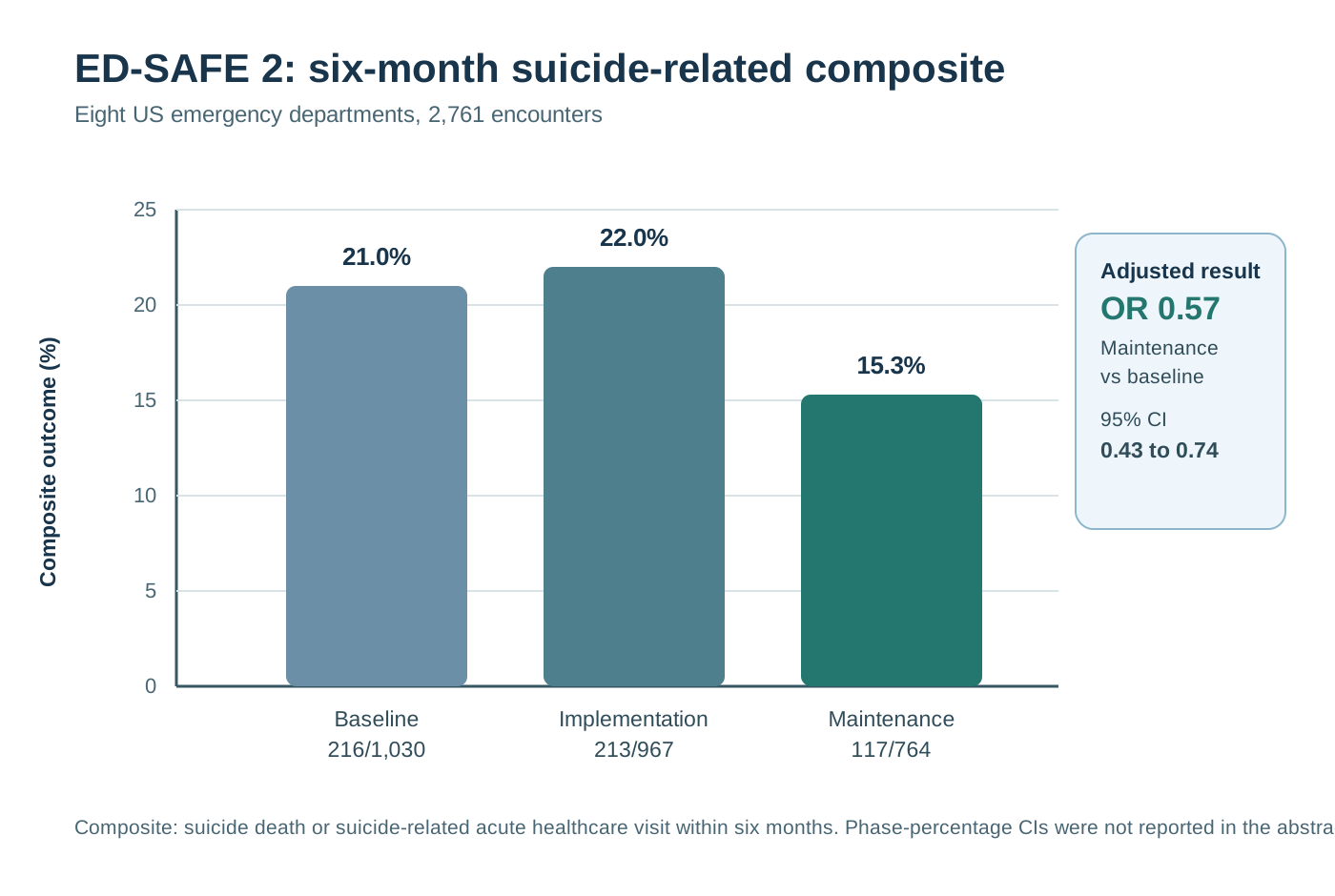
In the ED-SAFE 2 cluster randomized clinical trial, eight emergency departments used continuous quality improvement, universal screening, and collaborative safety planning. The maintenance phase had a lower six-month composite of suicide death or suicide-related acute care than baseline, with an adjusted odds ratio of 0.57 (95% CI 0.43 to 0.74).1 A separate stepped-wedge implementation study across 19 primary-care practices found more documented safety planning and a lower 90-day suicide-attempt rate during the suicide-care period than usual care.2 These studies support system design, yet neither proves that copying one component into a different setting will reproduce the observed result.
A 2023 systematic review found that training for general emergency-department staff generally improved knowledge, while effects on skills, attitudes, and confidence were less consistent and evidence on patient outcomes from training was limited. Patient-level interventions that combined safety planning and follow-up contact were consistently linked to pre-post reductions in repeat attempts, but only one randomized trial was identified among the included intervention studies.3 The executive implication is practical: training is necessary infrastructure, but leaders must also test whether the complete route is used, accepted, and sustained in ordinary work.
Protect privacy at the front door.
Offer a private, accessible way to respond, explain who will see the information, and define when immediate safety needs require broader action. Do not force a person to disclose sensitive information at a reception desk, in a group setting, through a shared device, or through a channel that others may monitor.
Own the transfer, not just the referral.
A referral is an invitation. An accepted handoff identifies the receiving role, the information transferred, the expected next state, the exception owner, and the action if connection does not occur. The originating team retains responsibility until the local handoff rule is satisfied.
Select one population and one entry setting. Observe the route from private signal through qualified response, collaborative planning, accepted handoff, follow-up, and learning. Correct one verified failure condition and publish the owner, denominator, guardrail, and review date.
Evidence with transfer limits
The strongest evidence favors a coordinated care process, while every number still belongs to its study.
Emergency care
Across 2,761 encounters in ED-SAFE 2, the six-month composite occurred in 21.0% during baseline, 22.0% during implementation, and 15.3% during maintenance.1 The package included quality-improvement coaching, screening, and collaborative safety planning.
Primary care
Across 19 practices, suicide attempts within 90 days were estimated at 6.0 per 10,000 patients during usual care and 4.5 per 10,000 during the suicide-care period, a 25% relative reduction.2
Brief contacts
A meta-analysis of randomized trials reported pooled RR 0.62 (95% CI 0.48 to 0.77) for repeat attempts with brief contact interventions.4 Intervention duration and type contributed to heterogeneity.
Figure 1. Six-month suicide-related composite across ED-SAFE 2 phases
Safety planning belongs inside a supported pathway.
Safety planning is a collaborative process, not a form handed to a person at the end of an encounter. ED-SAFE 2 combined local workflow review, quality-improvement teams, universal screening, and collaborative safety planning. The improvement appeared during maintenance, after sites had time to embed the package.1 That timing matters. Leaders should not judge implementation after training attendance or the first month of template use. They should examine whether the process is completed with the person, accessible after the encounter, connected to immediate and continuing supports, and visible to the next authorized role.
A Delphi study identified 74 key performance elements across emergency-department domains including comprehensive assessment, means-safety counseling, crisis planning, behavioral skills, psychoeducation, and engagement with people who have lived experience. Experts reached full consensus for 70 elements, while one lived-experience domain did not reach full consensus.8 The checklist is useful for fidelity thinking, but expert consensus is not an outcome trial. Each organization must align a local fidelity specification with current guidance, scope, population, and qualified clinical leadership.
Electronic health-record measures can help, but they can also create false confidence. In six integrated systems, natural-language-processing measures identified selected documented safety-planning practices with sensitivity, specificity, and positive predictive value of at least 82%. Among visits with a high-risk screening result, 40% had a structured safety-planning template within one year of implementation, with a range from 2% to 73% by system.9 The variation is a signal to investigate workflow and documentation. It is not proof that all undocumented care was absent or that every completed template reflected a collaborative, useful plan.
Follow-up contacts can support connection, but design details matter.
The brief-contact meta-analysis estimated a pooled absolute risk difference of 4 percentage points (95% CI 2 to 6) and a pooled risk ratio of 0.62 (95% CI 0.48 to 0.77) for repeat attempts. Longer intervention periods, intervention type, age, and sex were potential sources of heterogeneity.4 A pooled estimate does not define one required schedule, channel, or message. Leaders should ensure that any contact model has qualified oversight, consent and channel preferences, opt-out handling, escalation rules, delivery monitoring, and a response when a message cannot be delivered safely.
A mixed-method quality-improvement study used patient and community feedback to revise caring-contact messages. Focus-group participants preferred shorter, more visually appealing, personalized, recovery-focused messages. In a 27-person pilot after psychiatric hospitalization, most participants said the messages increased connection and encouraged help-seeking, while symptom scores decreased over seven days.5 The sample was small and uncontrolled. The safe conclusion is that co-design can improve acceptability and that pilot measures should include connection, preferences, and unintended effects, not that a short message series has proven comparative effectiveness.
In four Alaska Native and American Indian communities, 189 community members, healthcare providers, and leaders participated in focus groups and interviews about adapting caring contacts. Participants broadly considered the approach acceptable, while requested adaptations addressed eligibility, measures, timing, frequency, content, access, and cultural fit.6 Local partnership is not an optional communications step. It determines whether the intervention fits relationships, language, community authority, and practical access.
Means-safety conversations require respectful practice and reliable support.
Among 17,194 Veterans discharged home after a suicide risk evaluation in emergency or urgent care, 15.2% had documented firearm access and 7.4% had unknown access. Among the 2,624 with documented access, 80.6% had a documented safety intervention within 24 hours. Documented interventions included counseling, distribution of a safety device, or safety-plan creation or review.7 This study describes documentation in one national system. It cannot establish what every person was asked, what was accepted, or whether documentation differences reflected reporting, workflow, or actual care.
Interviews with 27 adults who had personal or family experience of suicidal thoughts or attempts emphasized communication under high emotionality, the challenge of initiating and sustaining engagement, and the importance of context.10 In four hospital networks, 23 clinicians reported greater comfort after training and implementation support for conversations with caregivers of adolescents. Clinicians also valued being able to offer practical storage resources.11 These qualitative studies do not estimate outcome effects. They support training, respectful language, practical resources, and attention to the person's context.
Provider interviews across eight rural Veterans Affairs medical centers identified understaffing, workload, weak communication between programs, culture, and limited knowledge about involving caregivers as system barriers.12 Leaders should therefore measure whether qualified conversations and practical supports are feasible in real workflows. A policy cannot substitute for time, relationships, training, and a safe way to include trusted supporters when the person agrees and applicable rules allow it.
Reliable support route
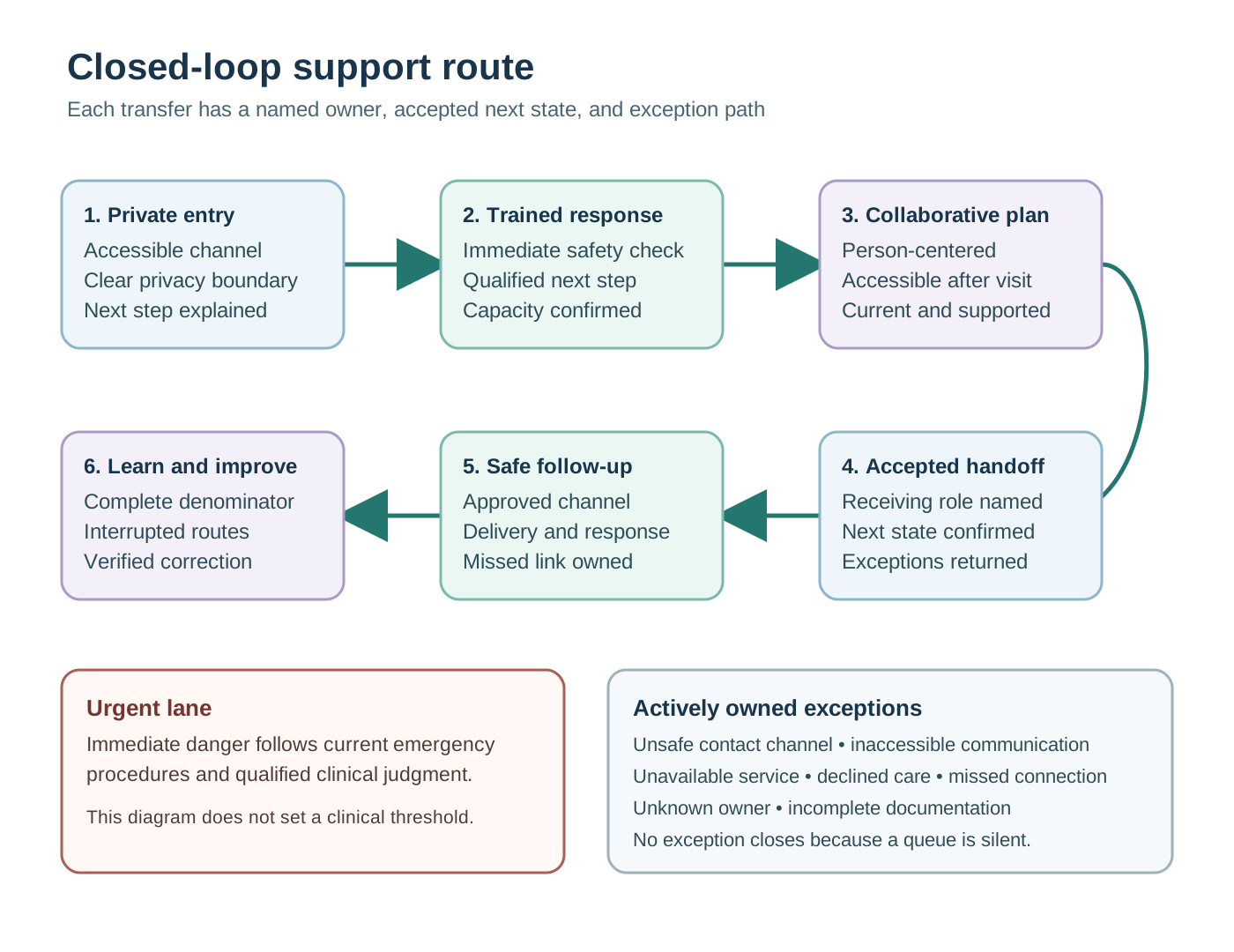
Build a closed loop from private entry to accepted care, follow-up, and learning.
The route begins before a person shares sensitive information. Leaders define the available entry points, privacy boundaries, accessibility supports, language options, after-hours response, and immediate-safety exception. The person should know what will happen after a response, which team will see it, and which circumstances require urgent action. The process should not depend on a public explanation to reception staff or a digital account that a family member, employer, or other person may monitor.
Once concern is identified, a trained role completes the next qualified step according to current policy and guidance. Screening is not assessment, and assessment is not a prediction of an individual event. The organization needs a clearly assigned response, a way to distinguish immediate danger from other needs, and capacity to create or update a collaborative plan. If specialty care is indicated, the handoff remains active until the receiving team accepts responsibility or an exception owner acts.
Follow-up is a continuing state, not a reminder sent. Delivery failure, a changed phone number, a shared inbox, language mismatch, missed appointment, declined service, unavailable clinician, transportation barrier, or concern about confidentiality may interrupt the route. Each exception needs a bounded response and an accountable role. Completion should reflect an accepted next state, not the absence of a new note.
Figure 2. Proposed closed-loop suicide-prevention support route
Define an accepted handoff.
The referring team should know the receiving role, the minimum necessary information transferred, the expected next action, and the condition that confirms acceptance. An automated referral status can support this work but should not be the only source of truth when urgency, privacy, or capacity changes. If the receiving service declines, cannot reach the person, or cannot meet the need, responsibility must return to a named owner rather than to an unmonitored queue.
Community infrastructure matters. Crisis Intercept Mapping workshops conducted from 2020 through 2022 found limited and inconsistent implementation of screening, safety planning, means-safety work, and follow-up. Collaboration varied and affected transitions between services.17 The study describes participating communities and does not establish national performance. It does show why an internal route must connect to the actual capacity, hours, eligibility, and contact rules of community partners.
A learning collaborative with 13 community organizations reported implementation of 92 Veteran suicide-prevention program components over 16 months. Participating organizations interacted with more than 24,000 community members and more than 5,000 Veterans.23 This quality-improvement work suggests that cross-organizational learning can accelerate implementation. It does not prove an effect on suicide outcomes. Executives can use the model to align definitions, practice scenarios, referral agreements, and exception ownership across organizational boundaries.
Use outreach to connect, not to expose.
Consent and contact preferences should be captured in a form that frontline teams can use. Ask which channel is safe, when contact is acceptable, what identifying detail may appear, whether a message may be left, which language and accessibility supports are needed, and whether a trusted supporter may be included. Reconfirm preferences when circumstances change. A technically delivered message can still create harm if it reveals sensitive information on a shared device or account.
A 2026 randomized trial among 355 treatment-naive Veterans transitioning from military service tested four brief video messages delivered weekly through a mobile app for one month. Participants receiving the messages were nearly twice as likely to initiate mental health treatment by two months; the reported number needed to treat was 15.24 The study supports targeted communication as a possible engagement tool for that population. It does not establish that generic campaigns, mandatory outreach, or the same content and channel will work in other groups.
Access, trust, and equity
A route is not equitable when access, privacy, response, or follow-up differ by channel or population.
Digital entry can increase convenience while changing who participates and what happens next. In a quality-improvement study across 33 primary-care sites, 1,683 records involved endorsement of a self-harm item. Hispanic and Latino patients and Medicare beneficiaries were less likely to complete the questionnaire asynchronously. People completing it asynchronously were more likely to receive a structured suicide assessment and less likely to receive a psychiatry referral.19 These associations do not show that one channel is better. They show that channel choice can shape access and response.
Universal requirements can still produce unequal completion. In 219,673 Veterans Health Administration primary-care visits, 62% of patients due for suicide screening were screened. Black patients had the lowest unadjusted completion rate at 58% and were 1.2 percentage points less likely than White patients to be screened after adjustment. Patient-provider race concordance was associated with a 0.4 percentage point higher probability of screening.18 The effect was small, and the study does not show the mechanism. Leaders should examine local completion, refusal, deferral, response, and follow-up by relevant population while protecting privacy and avoiding unstable small-cell interpretations.
In a network of 60,181 adolescents, autistic adolescents had lower depression-screen completion than nonautistic adolescents, 67.0% versus 78.9%. Among those screened, autistic adolescents had higher positivity for depression and suicidal thoughts or behavior.21 The retrospective study does not determine why completion differed or define a universal screening protocol. It supports accessible communication, sensory and cognitive accommodations, caregiver boundaries, and co-design with autistic people.
A pediatric primary-care project screened 271 people ages 12 to 25; 31 screened positive and one endorsed imminent risk. Most patients, parents, and staff supported routine implementation after a pilot acclimation period and use of a clinical pathway.20 The convenience sample was small and came from one suburban practice. Pediatric implementation must address assent and consent, confidentiality, caregiver involvement, developmental needs, immediate response, and a clear plan for every positive result before screening expands.
Older adults may enter through primary care and physical-health services rather than specialty mental health. A review of older-adult service use emphasized multiple transitions, rapid access to specialist support, clear roles, targeted training, and a navigator function.16 Leaders should include sensory, mobility, cognitive, transportation, caregiver, bereavement, disability, and chronic-illness contexts without assuming that age itself defines need or preference.
Implementation with Afghan refugee communities in Michigan found linguistic, social, economic, medical, and behavioral-health barriers. Community-based organizations had trusted relationships and interest in adapting the Zero Suicide model, but adaptations needed to reflect community diversity and organizational resources.13 The qualitative study demonstrates feasibility questions, not effectiveness. Partner organizations should have real decision rights in language, outreach, privacy, referral design, staffing, and evaluation.
Do not reduce trust to an education problem.
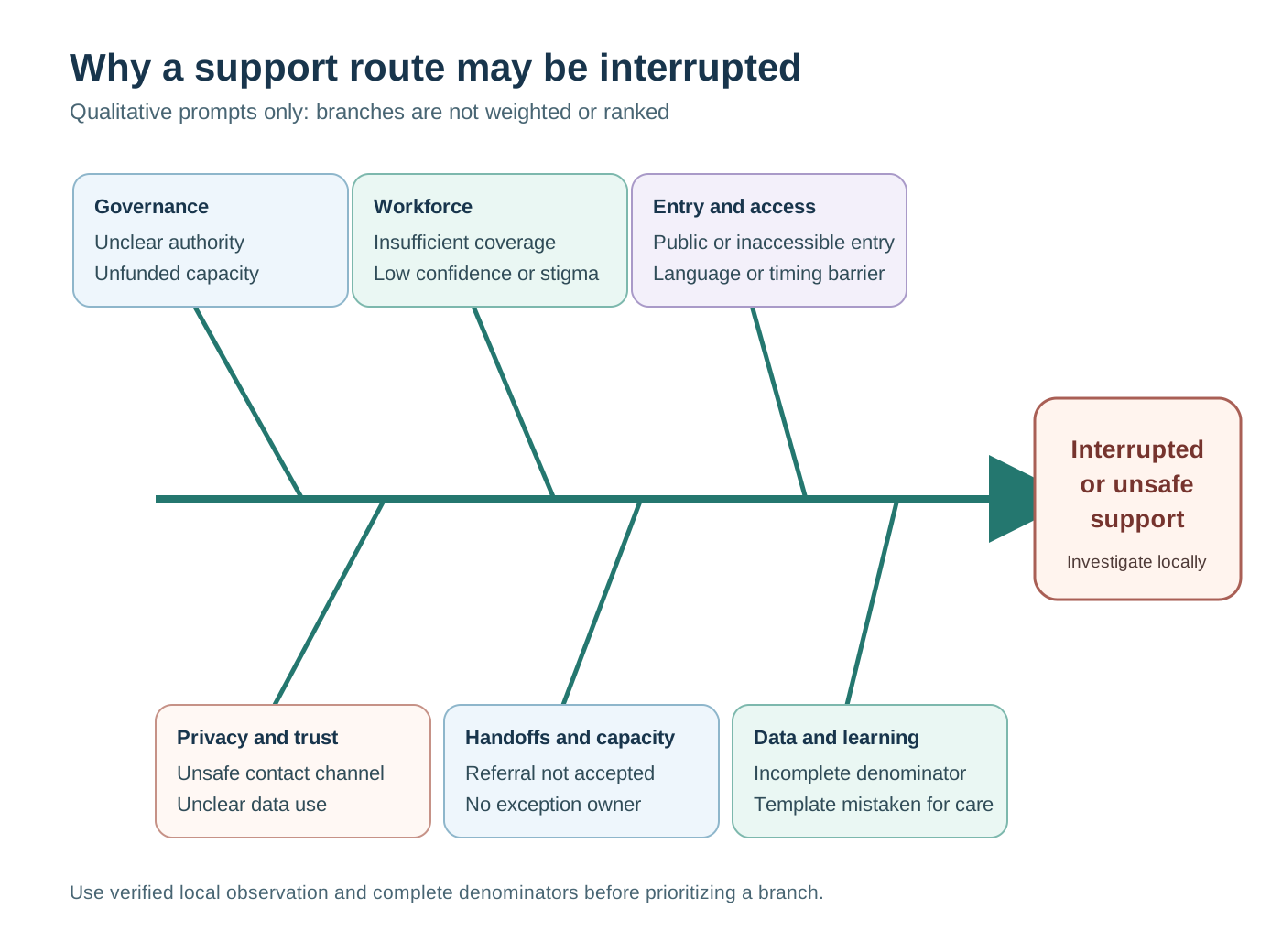
A person may hesitate because the setting is public, the contact channel is unsafe, prior care was stigmatizing, the workforce does not reflect the community, interpreter access is limited, the next service is unaffordable, or a positive response may affect family or work. More education will not fix a route that confirms these concerns. Leaders should observe the actual experience and correct the operating condition.
A 2026 scoping review of 28 studies across 14 countries found barriers among pre-registration nursing students that included limited knowledge, stigma, fear, and low confidence. Enablers included lived experience, clinical exposure, education, simulation, and role play.22 Student evidence does not directly describe an experienced workforce, but it supports practice-based learning and attention to attitudes as well as knowledge.
Figure 3. Qualitative fishbone of conditions that can interrupt a support route
Run the privacy and access test before launch.
- Can a person use the route without disclosing the reason in a public space?
- Can the person choose a safe contact channel, language, format, and time?
- Are interpreter and accessibility services available at the response point, not only at the first encounter?
- Does every positive response reach a trained role within the local operational expectation?
- Are pediatric, older-adult, disability, rural, veteran, refugee, and culturally specific needs addressed with affected communities rather than assumed?
- Can leaders compare completion and follow-up without exposing small groups or creating a new surveillance burden?
- Does a person who declines one option receive an appropriate alternative and continued respect?
Accountable operating system
Connect leadership, frontline care, behavioral health, community response, data, and lived experience.
No one team owns the entire route. Governance defines scope, decision rights, privacy boundaries, and resources. Frontline teams provide private entry and a trained first response. Behavioral-health and clinical leaders maintain current care standards and escalation support. Community partners make transitions real beyond the organization. Digital and data teams support safe communication, status visibility, and denominator integrity. People with lived and living experience identify conditions that make the route trustworthy or unsafe.
Compliance cannot be inferred from training completion. In a retrospective audit of 334 records across six mental-health teams, clinicians did not consistently use all trained Zero Suicide elements.14 Interviews in the same broader implementation context found increased confidence alongside concerns about culture, organizational structure, resources, and the need for continued, tailored training.15 Leaders need direct observation, record review, simulation, feedback, and workload measures.
Figure 4. Proposed suicide-prevention support operating system
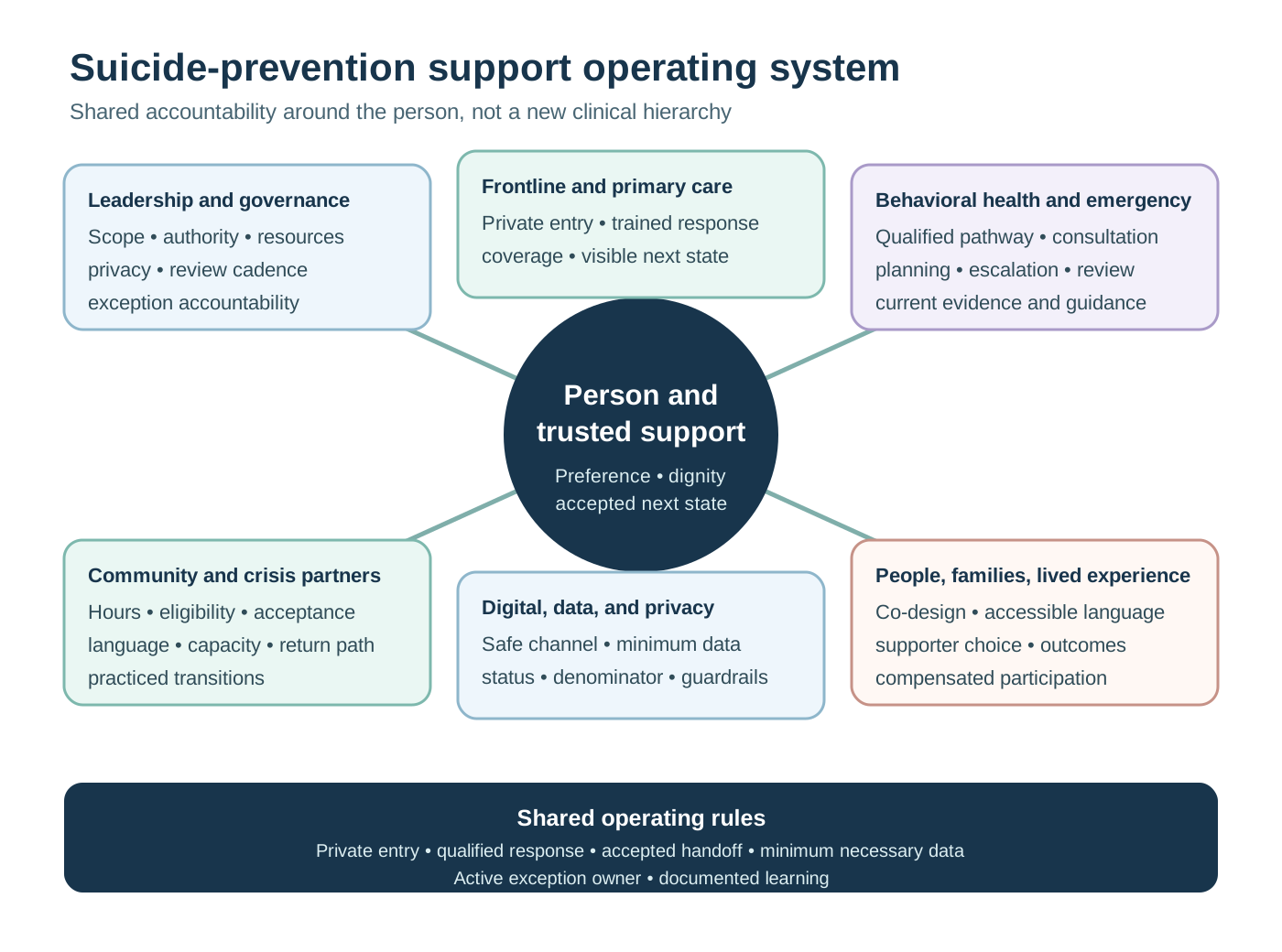
Leadership and governance
Name an executive sponsor, an operational owner, a qualified clinical leader, and a privacy partner. Define the population, entry setting, time window, and decision. Approve the current route, immediate-safety escalation, accepted-handoff rule, contact safeguards, exception ownership, and review cadence. Fund response and follow-up capacity before increasing identification volume.
Frontline and primary care
Offer private and accessible entry, explain the next step, complete the trained response, and activate qualified support. Do not ask untrained staff to interpret risk or promise confidentiality beyond policy. Build coverage for evenings, absences, and high-volume periods. Make the next accountable state visible without spreading sensitive detail.
Behavioral health and emergency care
Maintain the clinical pathway, collaborative planning, consultation, escalation, handoff, and follow-up standards. Review difficult cases and interrupted routes. Confirm which elements are documented because they support care, which measures indicate implementation, and where narrative context remains necessary.
Community and crisis partners
Verify actual hours, eligibility, language access, geography, virtual options, wait times, urgent capacity, and acceptance process. Practice transitions together. Define what happens when a partner cannot accept, cannot reach, or must redirect a person. Avoid publishing a resource list that no one has tested.
Digital, data, and privacy
Limit access to the minimum necessary roles. Protect shared-device and portal risks. Monitor failed delivery, changed contact preferences, duplicate records, referral state, missing denominators, and inappropriate reuse. Provide leaders with aggregate process signals and guarded subgroup views rather than personal clinical detail.
People, families, and lived experience
Give affected people meaningful authority in language, entry design, contact content, timing, accessibility, supporter involvement, outcome selection, and review. Compensate participation and protect confidentiality. A single advisory meeting does not establish co-design.
Decision-ready measurement
Measure the route with denominators, ownership, balancing signals, and privacy guardrails.
A screening total is not a care result. A documented plan is not necessarily collaborative or current. A referral count is not an accepted handoff. A delivered message is not a safe connection. A low follow-up rate may reveal capacity, contact safety, transportation, cost, trust, or documentation problems. Each measure needs a clear population, numerator, denominator, time window, missing-data rule, owner, decision use, and balancing signal.
Figure 5. Proposed suicide-prevention support-route scorecard
| Measure | Numerator and denominator | Owner and cadence | Decision use | Guardrail or balancing signal |
|---|---|---|---|---|
| Private entry completed | Eligible people offered and able to use the defined private, accessible route / all eligible people in the selected setting. Report n/N and missingness. | Frontline operations; weekly. | Correct room, device, language, accessibility, and workflow barriers. | Public disclosure, delay, declined offer, inaccessible format, staff burden. |
| Trained response reached | Signals receiving the required next response within the locally approved operational window / signals requiring that response. | Clinical pathway owner; daily review and monthly trend. | Coverage, escalation, and capacity action. | Inappropriate urgency, queue growth, overtime, abandoned contacts. |
| Collaborative plan documented | People meeting the local indication with a current collaborative plan documented / people meeting that indication. Show n/N and record-review sample. | Qualified clinical owner; weekly. | Fidelity review, coaching, template correction. | Template-only completion, person unable to access plan, unsafe detail sharing. |
| Accepted handoff | Required transfers accepted by a named receiving role / transfers initiated. Report unresolved exceptions separately. | Care-transition owner; daily until closed. | Partner capacity, referral rule, and exception correction. | Duplicate outreach, inappropriate transfer, coordination burden, delay. |
| Consent-aware follow-up | Required contacts completed through the approved channel or actively owned as an exception / contacts due. Show delivery and response separately. | Follow-up program owner; daily operations and monthly review. | Channel, staffing, content, and schedule improvement. | Unsafe disclosure, opt-out failure, undelivered message, distress, inequitable reach. |
| Open-route exceptions | Cases without the required next accountable state / all cases entering the selected route. Age exceptions by locally defined operational categories. | Operational owner; daily huddle and executive monthly review. | Remove the highest-confidence failure condition. | Premature closure, hidden workarounds, privacy exposure, staff moral distress. |
Interpret every change before acting.
If the identification rate rises, ask whether the population, channel, completion, or documentation changed. If handoff acceptance improves, check whether difficult referrals were excluded. If contact completion falls, examine whether the organization newly honored unsafe-channel preferences. If subgroup differences narrow, verify that denominators are complete and small numbers are protected. If staff time increases, determine whether work shifted from an invisible queue into a safer process.
Do not use a Pareto chart when failure categories are incomplete or mutually inconsistent. Do not produce a heat map from unstable small cells. Do not combine different interventions and populations in a forest plot without a defensible review method. Do not call a count a rate without an exposure denominator. The six visual aids here use one verified study chart and five explicitly proposed management tools because that is what the evidence can support.
90-day executive agenda
Use the observance to repair one bounded support route.
Days 1 to 30
Define and observe
- Name the sponsor, operational owner, qualified clinical leader, privacy partner, and community partners.
- Select one population, entry setting, and decision window.
- Confirm the current emergency procedure, clinical pathway, privacy boundary, and handoff rule.
- Observe private entry, trained response, planning, transfer, follow-up, and exception handling.
- Validate every numerator, denominator, missing state, and small-cell rule.
- Listen to people with lived experience and frontline teams about safety, trust, access, and workload.
Days 31 to 60
Build and test
- Correct one high-confidence failure condition within leadership control.
- Align response coverage and follow-up capacity with identification volume.
- Write the minimum accepted-handoff and active-exception rules.
- Test safe contact preferences, interpreter access, accessibility, and opt-out handling.
- Simulate immediate danger, unavailable service, declined care, failed message, and missed appointment.
- Pilot the scorecard with n/N reporting and balancing measures.
Days 61 to 90
Learn and decide
- Reconcile every route in scope and every unresolved exception.
- Compare entry, response, planning, handoff, follow-up, equity, privacy, and workload signals.
- Retest the corrected condition during ordinary operations.
- Report what improved, what did not, and which claims remain uncertain.
- Decide to adapt, expand, pause, or stop the pilot.
- Assign sustainment ownership, audit cadence, partner review, and the next evidence check.
Figure 6. Proposed 90-day suicide-prevention support-route implementation timeline
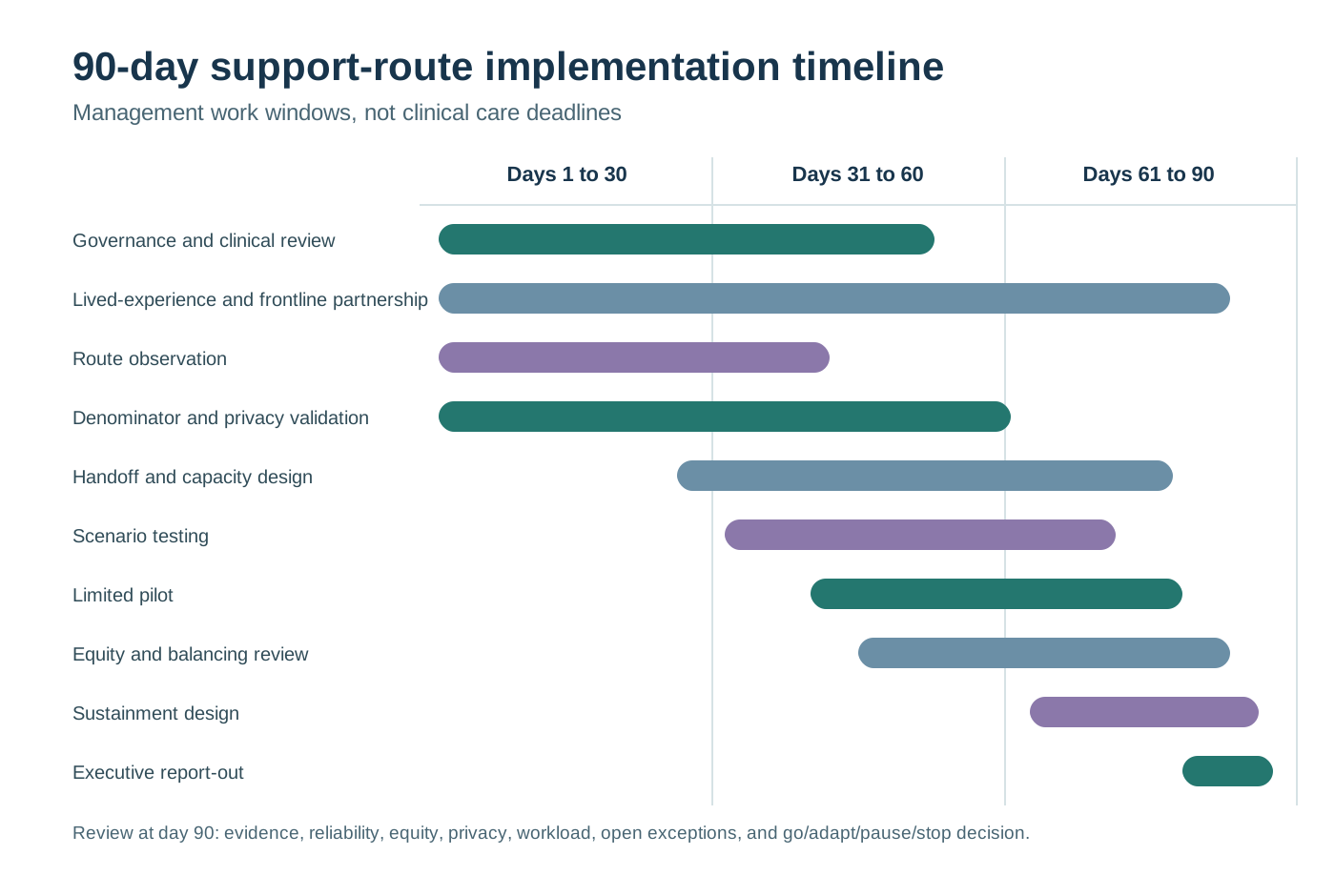
Questions for the day-90 executive review
- Can the team produce every eligible person, entry offer, response, accepted handoff, completed follow-up, and open exception in scope?
- Did the route remain private, accessible, and safe across in-person, telephone, portal, text, interpreter, and caregiver-supported use?
- Did identification volume exceed qualified response or follow-up capacity at any time?
- Which transfer failed most often, and is that conclusion supported by complete categories and denominators?
- Where did completion, response, or follow-up differ by a locally relevant population, and how safe and stable are those data?
- Did staff workload, overtime, moral distress, duplicate outreach, privacy events, or inappropriate escalation change?
- What verified condition changed, what remains uncertain, and what decision should leadership make next?
Leave the organization with one private and accessible entry route, a trained response, qualified clinical oversight, an accepted-handoff rule, consent-aware follow-up, actively owned exceptions, a denominator-based scorecard, and one verified reliability improvement that remains after the observance ends.
Closing perspective
Awareness becomes support when the next safe action is private, reachable, accepted, and owned.
Suicide prevention crosses leadership, primary care, emergency care, behavioral health, community crisis response, digital systems, privacy, families, and lived experience. No campaign removes every barrier, and no score predicts one person's future. Leaders can remove avoidable ambiguity. They can make entry private, assign a trained response, ensure capacity follows identification, define an accepted transfer, protect contact preferences, and keep exceptions visible until someone accepts responsibility.
The strongest observance message is an operating commitment: when a person signals concern, the organization knows who responds, how immediate safety is addressed, how a collaborative plan is supported, where the next care state is accepted, how follow-up remains safe, what is still unresolved, and how verified learning changes the system.
Peer-reviewed evidence portfolio
References
- Boudreaux ED, Larkin C, Vallejo Sefair A, et al. Effect of an emergency department process improvement package on suicide prevention: the ED-SAFE 2 cluster randomized clinical trial. JAMA Psychiatry. 2023.
- Angerhofer Richards J, Cruz M, Stewart C, et al. Effectiveness of integrating suicide care in primary care: secondary analysis of a stepped-wedge, cluster randomized implementation trial. Annals of Internal Medicine. 2024.
- Zarska A, Barnicot K, Lavelle M, et al. A systematic review of training interventions for emergency department providers and psychosocial interventions delivered by emergency department providers for patients who self-harm. Archives of Suicide Research. 2023;27(3):829-850.
- Azizi H, Fakhari A, Farahbakhsh M, et al. Prevention of re-attempt suicide through brief contact interventions: a systematic review, meta-analysis, and meta-regression of randomized controlled trials. Journal of Prevention. 2023;44(6):777-794.
- Steinberg R, Amini J, Sinyor M, et al. Implementation of caring contacts using patient feedback to reduce suicide-related outcomes following psychiatric hospitalization. Suicide and Life-Threatening Behavior. 2024;54(6):1041-1052.
- Jansen KJ, Shaw JL, Comtois KA, et al. Culturally adapting Caring Contacts for suicide prevention in four Alaska Native and American Indian communities. Archives of Suicide Research. 2023;27(1):89-106.
- Simonetti JA, King SE, Holliday R, et al. Clinician-documented firearm access and safety interventions for Veterans receiving suicide risk evaluation in VA emergency care settings. Western Journal of Emergency Medicine. 2026;27(3):784-793.
- Dimeff LA, Jobes DA, Tyndal T, et al. Using the Delphi method for determining key performance elements for delivery of optimal suicide-specific interventions in emergency departments. Archives of Suicide Research. 2023;27(2):246-260.
- Boggs JM, Yarborough BJH, Clarke G, et al. Development and validation of electronic health record measures of safety planning practices as part of Zero Suicide implementation. Archives of Suicide Research. 2025;29(3):654-667.
- Siry BJ, Knoepke CE, Ernestus SM, et al. Lethal means counseling for suicidal adults in the emergency department: a qualitative study. Western Journal of Emergency Medicine. 2021;22:47-53.
- Salhi C, Berrigan J, Azrael D, et al. “It’s changed how we have these conversations”: emergency department clinicians’ experiences implementing firearms and other lethal suicide methods counseling for caregivers of adolescents. International Review of Psychiatry. 2021;33(7):617-625.
- Houtsma C, MacWilliams K, Pardue-Bourgeois S, et al. Provider perspectives on healthcare system barriers to engaging caregivers of rural US Veterans in firearm suicide prevention. Journal of General Internal Medicine. 2025;40(15):3675-3683.
- Kaljee LM, Ahmedani B, Srinivasan S, et al. Feasibility of implementation of the Zero Suicide model in community-based organizations serving Afghan refugees resettled in Michigan. BMC Public Health. 2025;25:2769.
- Porter JE, Dabkowski E, Connolly O, et al. Compliance with the Zero Suicide Initiative by mental health clinicians at a regional mental health service: development and testing of a clinical audit tool. Nursing Reports. 2023;13(1):29-42.
- Porter JE, Dabkowski E, Connolly O, et al. Exploring mental health clinicians’ perceptions of the Zero Suicide Prevention Initiative. International Journal of Mental Health Nursing. 2022;31(3):536-543.
- McKay R, Pond D, Wand A. Towards Zero Suicide for older adults: implications of healthcare service use for implementation. Australasian Psychiatry. 2022;30(3):294-297.
- Harris BR, Harris D, Flanagan E, et al. Crisis Intercept Mapping for community-based suicide prevention: an assessment of the crisis infrastructure and future considerations for 988. Community Mental Health Journal. 2025;61(1):87-94.
- Tran LD, Wagner TH, Bahraini N, et al. Patient-provider race concordance and primary care suicide risk screening in the Veterans Health Administration. Health Services Research. 2025;60(4):e14459.
- Sattler A, Dunn J, Albarran M, et al. Asynchronous versus synchronous screening for depression and suicidality in a primary health care system: quality improvement study. JMIR Mental Health. 2024;11:1-12.
- Horowitz LM, Bridge JA, Tipton MV, et al. Implementing suicide risk screening in a pediatric primary care setting: from research to practice. Academic Pediatrics. 2022;22(2):217-226.
- Hamdan SZ, Davis M, Faig W, et al. Lower completion of depression screening and higher positivity among autistic adolescents across a large pediatric primary care network. Academic Pediatrics. 2023;23(8):1561-1571.
- Molloy R, Hayward B, Scott S, et al. Barriers and enablers to pre-registration nurses providing safe care for individuals experiencing suicidal distress: a scoping review. Journal of Advanced Nursing. 2026;82(6):5638-5658.
- DeBeer B, Mignogna J, Borah E, et al. A pilot of a Veteran suicide prevention learning collaborative among community organizations: initial results and outcomes. Suicide and Life-Threatening Behavior. 2023;53(4):628-641.
- Karras E, Stokes CM, Sisk L, et al. Campaign use to increase treatment initiation in US Veterans transitioning from military service. American Journal of Public Health. Published online August 20, 2026:e1-e10.