
World Leprosy Day 2026
Dignity becomes operational when every person can enter through any appropriate door, receive an informed assessment, move through a closed referral pathway, complete treatment safely, and remain connected to rehabilitation and community life.
Make dignity part of every care path
World Leprosy Day is observed on the last Sunday of January, which falls on January 25 in 2026. The World Health Organization identifies the 2026 theme as “Leprosy is curable, the real challenge is stigma.” The theme joins two responsibilities that health systems sometimes separate. The clinical responsibility is to recognize, diagnose, treat, and prevent disability. The social responsibility is to remove the fear, exclusion, and discrimination that can continue long after treatment ends. Neither responsibility can be delegated to a once-a-year campaign.
Leprosy, also called Hansen disease, is treatable. Yet a treatable condition can still produce preventable harm when recognition is late, specialist access is remote, nerve function is not documented, treatment reactions are missed, or people avoid care because disclosure feels unsafe. It can also produce institutional harm when screening results are communicated as diagnoses, contact programs expose private information, or education repeats frightening stereotypes. An executive strategy should therefore be judged by the experience of the whole path, not only by the availability of medicine.
Current evidence shows why a whole-path view is necessary. A national surveillance analysis from Uganda found persistent geographic concentration, a high proportion of multibacillary disease, child cases, and grade 2 disability among new diagnoses. Those indicators suggest both ongoing transmission and delayed detection, but they do not reveal a single cause or assign failure to an individual clinic.6 A Ghana registry analysis likewise found regional variation and disability at diagnosis even while treatment completion was high.2 Leaders need both views: care completion among people already found and detection performance among people not yet connected.
The evidence also cautions against universal claims. Most studies in this brief come from endemic or historically endemic settings. Their results can guide operating design, but their prevalence values should not be converted into United States benchmarks. A Washington State analysis identified 131 clinically diagnosed cases from 2001 through 2023 and emphasized focused physician awareness for populations with disproportionate burden.12 That finding supports culturally safe recognition and access. It does not support profiling people by country of birth, ethnicity, occupation, or travel history without a clinical assessment.
Evidence snapshot
Signals leaders can use without overstating them
Build recognition into ordinary care
A rare diagnosis in one setting may be an expected diagnosis in another, but the reliability problem is similar. A patient should not depend on the chance presence of one experienced specialist. Primary care, dermatology, neurology, infectious diseases, emergency care, rehabilitation, and community health teams need a shared threshold for considering leprosy, a basic assessment that protects dignity, and a defined route to expert confirmation. Training should emphasize patterns and uncertainty rather than a single dramatic image.
The Washington State study offers a practical United States signal. Most identified cases were among people born outside the United States, and one-third were among Micronesian or Marshallese people. The authors recommended focused public-health interventions and increased physician awareness.12 Executives should translate that recommendation carefully. Community partnership, language access, clinician education, and accessible consultation are appropriate. Stereotyping or adding stigmatizing prompts to registration is not. A demographic clue can inform a complete clinical history, but it is never a diagnosis.
Recognition must include peripheral-nerve function. Skin findings may be subtle, and pure neural or paucibacillary presentations may not produce a strong laboratory signal. The 2026 review of a contact serology tool in Brazil notes that a negative result does not exclude disease and that serology alone is not diagnostic. Its value depends on counseling, dermato-neurological examination, structured follow-up, and a reliable referral path. That implementation warning is broadly useful even when a local system uses different tests. A screening tool should change the next step, not close the case.
A small molecular-diagnosis study in Côte d’Ivoire illustrates both opportunity and boundary. Among 48 samples from 20 clinically diagnosed patients, microscopy detected 18.8% as positive, while two real-time PCR extraction approaches detected 72.9% and 64.6%. PCR positivity among paucibacillary patients reached 59.5%.5 The result supports investment in confirmatory capacity where it fits the care model. It does not justify molecular screening of asymptomatic populations, and it does not replace clinical examination. The sample was small, selected, and drawn from clinically diagnosed patients.
Closed-loop care path
Turn a possible finding into safe, accountable care
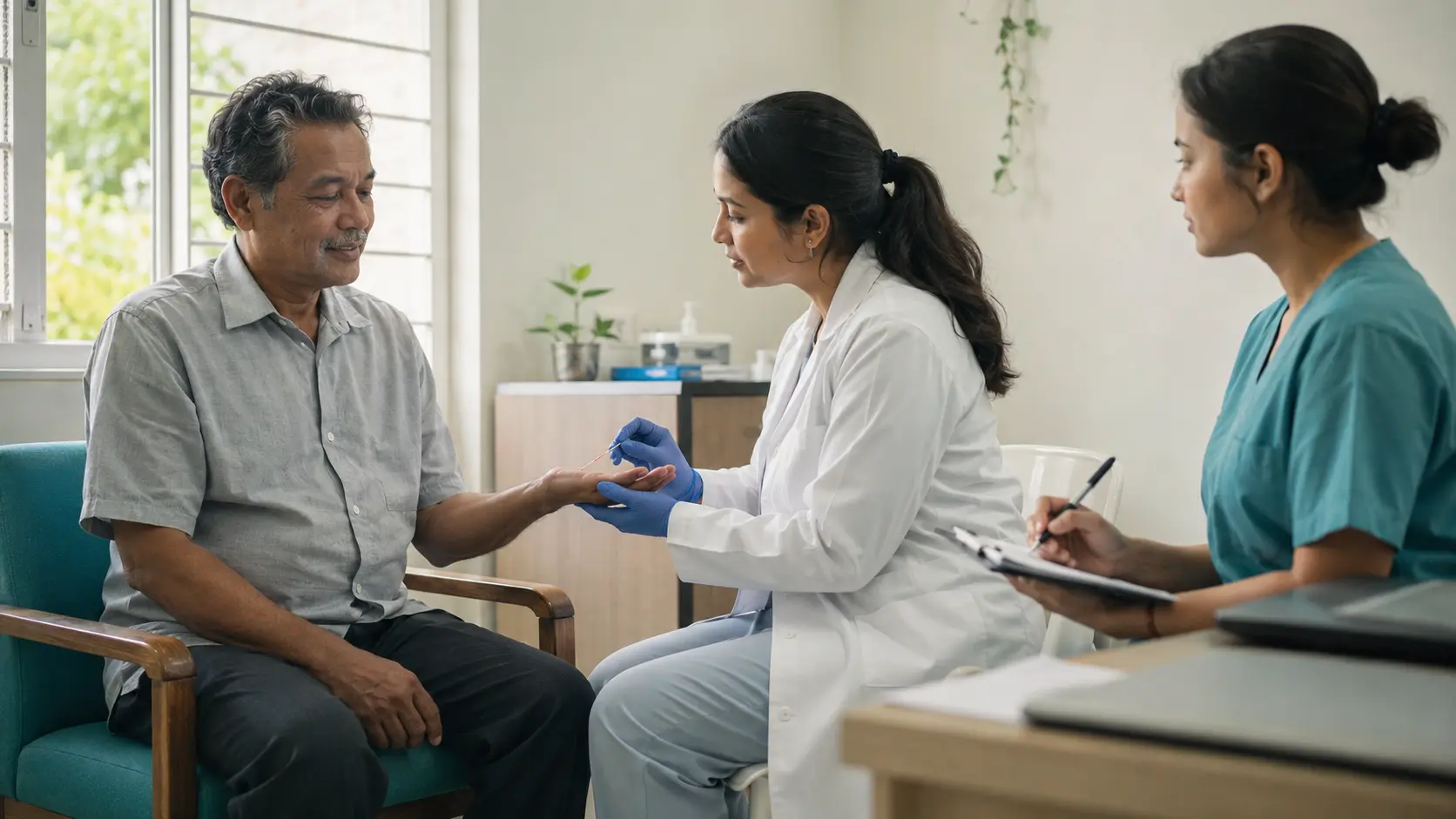
Leaders should test this path using cases that do not look textbook. Can a clinician obtain a timely expert consult? Does the referral state what has been examined and what remains uncertain? Is nerve function documented in a repeatable way? Can the receiving service see the referral, and does the sending team receive the conclusion? A pathway is not closed because an order was placed. It is closed when responsibility is accepted, the patient understands the next step, and the result returns to the originating team.
Treat contact management as a clinical program, not a medicine event
Contact screening can identify additional cases earlier and create an opportunity for post-exposure prophylaxis, but it also introduces privacy, consent, supply, and communication risks. A reliable program begins with the person who has been diagnosed. Teams should agree on safe language, map household and other eligible contacts according to local guidance, protect disclosure, and explain that exposure does not equal disease. The contact should know what will happen during screening, what prophylaxis can and cannot do, and how to return if symptoms appear later.
A 2024 observational study compared two Nepal districts implementing single-dose rifampicin post-exposure prophylaxis plus contact screening with two comparator districts. The risk of leprosy among contacts was lower in intervention districts, with a hazard ratio of 0.28 and an estimated protective effect of 72%.16 The association is encouraging, but allocation was not randomized and district-level differences may remain. Leaders should use the result as implementation support, not as a guaranteed local effect size.
A five-year Bangladesh analysis provides an equally important caution. The Maltalep cluster-randomized trial compared BCG revaccination followed by single-dose rifampicin with BCG revaccination alone among nearly 15,000 contacts. Overall, the analysis did not find a statistically significant difference between the two trial arms, although selected higher-risk groups appeared to benefit and contact risk varied by index-case and relationship characteristics.15 This is why prophylaxis should be implemented through current public-health guidance and eligibility criteria, not reduced to a universal slogan.
Programme conditions determine whether evidence becomes benefit. Interviews with 12 experts across six low-endemic countries found recurring needs for national leadership, sustained funding, active coordination, reliable rifampicin procurement, and integration into routine services.14 In practice, that means an executive dashboard should not stop at “doses given.” It should show contacts offered confidential screening, contacts reached, clinical examinations completed, new cases routed to treatment, eligible contacts accepting prophylaxis, contraindications addressed, adverse events reviewed, and planned follow-up completed.
Population-level serology may eventually add a monitoring layer, but it must not be confused with diagnosis. In more than 17,000 contacts in the Comoros and Madagascar, a field-friendly assay was used to monitor anti-PGL-I antibody levels during active case finding and post-exposure prophylaxis. Seroprevalence declined across study sites after two years, yet reductions among initially seropositive contacts occurred irrespective of whether an individual received prophylaxis.13 The study supports programme monitoring research. It does not prove that one component alone caused the population change, and an antibody result should not be communicated as a diagnosis.
Leprosy-care operating system
One control layer across clinical and community settings
Make treatment safe, continuous, and reaction-ready
Multidrug therapy is central, but an executive treatment pathway must also manage medicine safety, adherence, leprosy reactions, emerging disability, and the practical burden of repeated visits. A completed prescription is not the same as a completed care plan. The patient needs a named team, an explanation of expected treatment and warning signs, a route for urgent questions, and a schedule for repeat nerve-function and disability assessment.
Dapsone hypersensitivity is a serious safety concern in some genetically susceptible populations. A 2026 Nepal study enrolled 34 hypersensitivity cases and 82 dapsone-tolerant controls. HLA-B*13:01 was strongly associated with hypersensitivity, and a real-time PCR screening method showed high concordance with next-generation sequencing. The meta-analysis component also found a strong association across eligible studies.1 The same study reported that some cases were HLA-B*13:01 negative and that the test’s positive predictive value in the Nepal population was about 24%. Screening can reduce risk in an appropriate population, but it does not replace clinical vigilance.
A separate retrospective cohort compared 120 HLA-B*13:01-positive people receiving dapsone-free alternative regimens with 151 HLA-B*13:01-negative people receiving standard multidrug therapy. Five-year cure estimates and several other outcomes were similar, but the study was observational and the alternative regimens were heterogeneous.10 Leaders should not turn that result into a universal formulary rule. The operational lesson is to establish a specialist-approved alternative pathway before a positive screen, suspected reaction, or drug shortage forces an improvised decision.
Leprosy reactions require the same level of preparedness. A secondary analysis of an international randomized trial followed adults with severe erythema nodosum leprosum for 60 weeks using a standardized severity scale. The study examined responsiveness, trajectories, clinical features, treatment exposure, and dermatology-specific quality of life.4 The executive value is not a single threshold. It is the discipline of measuring severity repeatedly, connecting scores to clinical judgment, and planning for a condition whose course may recur well beyond an initial visit.
Medication access should therefore be paired with a reaction-response standard. Define who can recognize type 1 and type 2 reactions, who can initiate or adjust therapy, when ophthalmology or surgical consultation is needed, and how urgent neurologic changes are escalated. Pharmacy should know the approved regimens and safety checks. Primary care should know how to reach the specialty team. The patient should not have to restart the diagnostic journey when pain, swelling, weakness, sensory loss, eye symptoms, or new lesions appear.
Prevent disability, then support function after cure
Disability at diagnosis is a late signal. It may reflect delayed recognition, access barriers, weak referral, limited public knowledge, stigma, or a combination of these factors. Uganda’s 2020–2024 surveillance analysis reported that 21% of new cases had grade 2 disability and 14% occurred among children, with substantial spatial concentration.6 Ghana’s 2017–2019 registry analysis found grade 2 disability in 7.6% of 816 new cases and identified one pediatric case with grade 2 disability.2 Different settings and periods prevent direct comparison. Both analyses nevertheless show why disability at detection belongs on the executive scorecard.
Regional concentration should drive targeted service design, not blame. A 70-year interrupted time-series analysis from Gansu, China, documented a large decline in new case detection over time while identifying persistent geographic clustering and a rising proportion of multibacillary disease.9 Long-run success can coexist with vulnerable local pockets. When a programme reaches low endemicity, experience and funding may recede before the need disappears. Leaders should protect consultation capability, case review, and contact services even when annual counts are small.
Rehabilitation must begin before treatment ends. A 2026 mixed-methods study in Bangladesh examined community-based rehabilitation among 356 people with grade 2 disability, 15 key informants, and five focus groups. Acceptability was high, but only 67.4% of participants could independently perform ulcer self-care despite prior training. The study also described staff reluctance, equipment limitations, discontinuous training, travel distance, coordination gaps, and misconceptions about transmission.3 The result is not a universal performance target. It is a warning that teaching a skill once does not establish reliable self-care.
An effective rehabilitation pathway includes repeated nerve-function assessment, skin and eye protection, footwear or assistive technology where indicated, wound prevention, occupational and physical rehabilitation, pain management, reconstructive consultation when appropriate, and support for work and daily roles. Each element needs an owner and an access route. Leaders should track whether a referral was completed and whether function improved, not merely whether a referral order exists.
Unranked contributor map
Why diagnosis or functional recovery may be delayed
Treat stigma as a safety and access risk
Stigma is not an abstract communication problem. It can change whether a person seeks care, shares a symptom, names a contact, completes treatment, accepts rehabilitation, returns to work, or participates in community life. It can also shape family relationships and mental health. If a health system measures diagnosis and treatment but ignores fear and exclusion, it may declare success while the person continues to carry the heaviest consequences.
A qualitative study in far-western Nepal included 38 interviews and eight focus-group discussions with 80 people affected by leprosy, family members, and healthcare workers. It found that stigma was shaped by culturally specific beliefs, honor, family and community roles, and gendered expectations. Family support could both intensify and reduce stigma depending on how it was expressed.8 The lesson is not to import a generic anti-stigma script. Effective communication should be co-designed with people who understand what dignity, disclosure, work, marriage, family responsibility, and belonging mean in that community.
Post-treatment quality of life also needs direct attention. In a small Ghana cross-sectional study of 35 people who had completed treatment, 68.6% reported pain or discomfort, 51.4% reported difficulty with usual activities, and 48.6% reported anxiety or depression problems.7 The sample is too small and localized for a broad prevalence claim. It is strong enough to challenge the assumption that microbiological cure ends the care obligation.
A 2026 scoping review synthesized 85 qualitative studies across leprosy, tuberculosis, HIV, diabetes, and schizophrenia, including 20 leprosy studies. Healing was commonly described through physical, psychological, socioeconomic, social-relational, and spiritual dimensions rather than cure alone.11 Because the review compared heterogeneous chronic conditions and settings, the proposed five-dimensional framework should be treated as a design prompt. Its value is to help teams ask what their current discharge definition leaves out.
Health-system language should be audited with the same seriousness as a clinical form. Use “person affected by leprosy” or the term preferred by the individual. Avoid labels that define a person by a diagnosis. Explain that the condition is treatable, casual contact does not transmit it, and public-health follow-up is confidential. Do not place frightening imagery in waiting rooms or social media. Do not require a person with lived experience to disclose publicly in order to participate in programme design. Compensation, consent, and the right to withdraw are part of respectful partnership.
Continuum control table
Define the minimum reliable handoff at every stage
| Stage | Minimum reliable action | Failure signal | Patient-centered confirmation |
|---|---|---|---|
| Possible finding | Document skin and nerve assessment; explain uncertainty | Referral without examination or urgency | Patient can state why follow-up is needed |
| Diagnostic review | Named receiving service and accepted appointment | Order placed but no owner or result | Patient knows who will contact them and when |
| Treatment start | Regimen, safety checks, reaction education, access plan | Medicine dispensed without monitoring route | Patient can reach a team for new symptoms |
| Contact pathway | Consent, confidentiality, eligibility, screening, follow-up | Exposure described as diagnosis or identity disclosed | Contact understands options and privacy protections |
| Rehabilitation | Function goals, repeated self-care demonstration, equipment access | Referral count without completion or function outcome | Patient identifies a meaningful daily-role goal |
| Post-treatment | Pain, mental health, participation, and recurrence or reaction route | Cure recorded while needs remain invisible | Patient agrees the plan supports recovery and dignity |

Build a balanced measurement system
A single case count cannot tell leaders whether a programme is improving. More detected cases may reflect worsening transmission, stronger active case finding, restored services, or several forces at once. Lower counts may reflect progress, missed detection, reporting delay, or loss of expertise. The scorecard needs clinical, operational, experience, and equity measures read together.
Surveillance studies provide examples of useful indicators: new-case detection by place and population, child cases, multibacillary classification, grade 2 disability at diagnosis, and treatment completion.26 Executives should add process measures that can change faster than annual incidence, including referral acceptance time, time to diagnostic review, documentation of nerve function, treatment interruption, reaction response, contact-screening completion, prophylaxis eligibility documentation, and rehabilitation completion.
Experience and functional outcomes are equally important. Measure whether communication was understandable, privacy was protected, people felt respected, family involvement matched patient preference, and discrimination was reported. Track pain, self-care confidence, daily activity, return to work or school where appropriate, assistive-technology access, and mental-health referral completion. These measures should be co-designed and interpreted with people affected by leprosy. A satisfaction average alone can hide avoidable harm.
Stratification should be purposeful and safe. Geography can identify service deserts or clusters, as the Uganda and Gansu analyses illustrate.69 Demographic analysis can expose inequitable access, but small numbers create re-identification risk. Establish suppression rules, limit access, involve privacy and community representatives, and avoid publishing maps that identify households or small communities. Data should direct resources, not intensify stigma.
Balanced executive scorecard
Read detection, delivery, dignity, and recovery together
A 90-day executive start
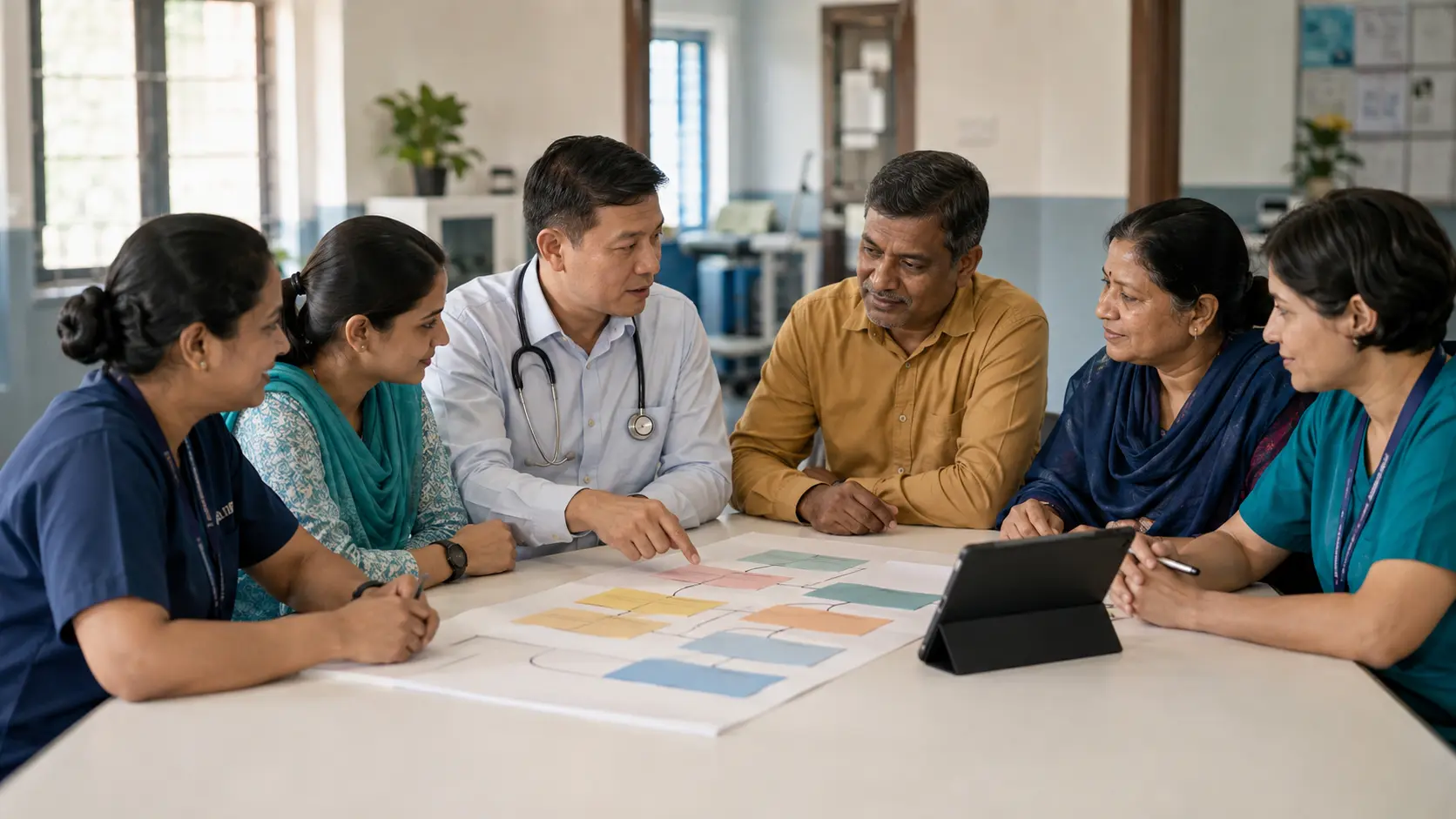
The first 90 days should create a visible operating path, not a broad promise. Begin with one accountable executive sponsor and one clinical-public-health lead. Map the current route from possible finding through diagnosis, treatment, contact management, reaction care, rehabilitation, and post-treatment support. Include the points where the patient must repeat information, travel, wait, disclose, or coordinate services. Those are high-value redesign targets.
Engage people affected by leprosy before standardizing language or measures. Participation should be voluntary, compensated, and supported by privacy choices. Include primary care, dermatology, neurology, infectious diseases, rehabilitation, pharmacy, laboratory, infection prevention, public health, mental health, community health, social work, quality, privacy, and communications. In a low-incidence system, regional partnership may be more realistic than maintaining every capability in every facility.
Then test the pathway with real operating questions. Can an urgent nerve deficit reach expert review today? Can a rural clinician send the needed findings without a duplicate visit? Does pharmacy know the treatment and alternative-regimen route? Can contact staff explain confidentiality and the limits of prophylaxis? Can a person who has completed treatment access pain, mental-health, and rehabilitation support without being told the disease is already “finished”?
Implementation timeline
Move from mapping to controlled rollout
- Name executive, clinical, and public-health owners.
- Map the current path and preserve the patient perspective.
- Inventory diagnostic, medicine, referral, and rehabilitation capability.
- Review recent cases for delay, disability, reactions, privacy, and follow-up.
- Define recognition, assessment, consultation, and escalation standards.
- Create consent and counseling controls for contact screening and prophylaxis.
- Establish reaction, alternative-regimen, and rehabilitation routes.
- Approve a balanced scorecard and small-number privacy rules.
- Run tabletop and live pathway tests across one region.
- Audit referral acceptance, patient understanding, and loop closure.
- Review measures with people affected by leprosy and frontline teams.
- Correct failure points before scaling or public reporting.
World Leprosy Day can concentrate attention, but the durable work is quieter: a clinician who considers the diagnosis, a referral that is accepted, a contact conversation that protects privacy, a treatment plan that anticipates reactions, a rehabilitation service that restores function, and a community that does not withdraw a person’s place in it. Dignity is the result of those linked choices. It is measurable in whether the system remains present from first uncertainty through recovery and participation.
References
Peer-reviewed sources are ordered newest first. Study settings and designs differ, so the article keeps local limitations beside quantitative claims.
- Rsjb Rana, D., Shah, M., Baral, S., et al. (2026). Evaluating the risk of dapsone hypersensitivity syndrome in Nepalese leprosy patients via HLA-B*13:01 screening using real-time PCR and comparative meta-analysis of international data. PLoS Neglected Tropical Diseases, 20(8), e0014568. https://doi.org/10.1371/journal.pntd.0014568
- Njillo, A. K., Boateng, S. A., Omansen, T., et al. (2026). Surveillance data and progress assessment of the targets of the WHO Global Leprosy Strategy 2016–2020: A retrospective registry-based analysis in Ghana. PLoS Neglected Tropical Diseases, 20(8), e0014604. https://doi.org/10.1371/journal.pntd.0014604
- Akhtar, K., Khanam, F., Mita, A. K., Rahman, M. S., Osama, T. S., & Khan, M. A. S. (2026). Acceptability and challenges of community-based rehabilitation of leprosy patients with grade-2 disability in Bangladesh. PLOS Global Public Health, 6(8), e0006994. https://doi.org/10.1371/journal.pgph.0006994
- de Barros, B., Hamza, A., Getachew, A., et al. (2026). Longitudinal performance of the ENLIST ENL severity scale in individuals with severe erythema nodosum leprosum: Responsiveness, trajectories and clinical features. PLoS Neglected Tropical Diseases, 20(8), e0014410. https://doi.org/10.1371/journal.pntd.0014410
- Dehe, B. R., Amon, A. C., Ban, O. V., et al. (2026). Real-time PCR-based detection of Mycobacterium leprae from multiple clinical samples for molecular diagnosis of leprosy in Côte d’Ivoire. Journal of Tropical Medicine, 2026, 9962633. https://doi.org/10.1155/jotm/9962633
- Abbo, G., Migisha, R., Mfitundinda, E., et al. (2026). Temporal and spatial patterns of leprosy in Uganda, 2020–2024: A nationwide surveillance analysis. PLoS Neglected Tropical Diseases, 20(7), e0014450. https://doi.org/10.1371/journal.pntd.0014450
- Dalaba, M. A., Immurana, M., Dongu, R. K., et al. (2026). Health-related quality of life among cured leprosy patients in the Volta Region of Ghana: A cross-sectional study. Advances in Public Health, 2026, 1627259. https://doi.org/10.1155/adph/1627259
- Visser, M. J., Kc, E. A., Sopamena, Y., et al. (2026). Cultural mechanisms of leprosy-related stigma: A gendered analysis using the What Matters Most framework in far-western Nepal. Qualitative Health Research, 36(4–5), 440–455. https://doi.org/10.1177/10497323251318604
- Wu, S., Zhang, H., Yu, M., Yan, L., & Feng, S. (2026). Epidemiological trends and impact of leprosy control strategies in Gansu, China: A 70-year interrupted time-series analysis (1950–2020). American Journal of Tropical Medicine and Hygiene, 114(5), 821–831. https://doi.org/10.4269/ajtmh.25-0633
- Li, Y., Wang, Z., Chu, T., et al. (2026). Outcomes of alternative therapy in HLA-B*13:01 positive leprosy patients without dapsone versus standard MDT in negative patients: A comparative effectiveness study. PLoS Neglected Tropical Diseases, 20(3), e0014114. https://doi.org/10.1371/journal.pntd.0014114
- Darlong, J., Kim, J., Goswami, S., et al. (2026). Understanding healing: A comparative analysis in chronic diseases with leprosy, a scoping review. PLoS Neglected Tropical Diseases, 20(3), e0013748. https://doi.org/10.1371/journal.pntd.0013748
- Bennett, J. C., Goldoft, M. J., Lewis, J. W., et al. (2026). Epidemiology of leprosy (Hansen disease) in Washington State, 2001–2023. Public Health Reports, 141(2), 278–285. https://doi.org/10.1177/00333549251387916
- Pierneef, L., Braet, S. M., de Jong, D., et al. (2025). Large-scale field application of a fingerstick blood test for Mycobacterium leprae infection: Monitoring population-wide effects of case finding and post-exposure prophylaxis on transmission in the Comoros and Madagascar. PLOS Global Public Health, 5(12), e0005270. https://doi.org/10.1371/journal.pgph.0005270
- van der Putten Hadik, S. M. T., Fastenau, A., Schoenmakers, A., Ortuño-Gutiérrez, N., & Janssen, R. (2025). Making post-exposure prophylaxis effective for leprosy elimination: Insights from a multi-country study on low-endemic settings. PLoS Neglected Tropical Diseases, 19(11), e0013716. https://doi.org/10.1371/journal.pntd.0013716
- Saha, U. R., Chowdhury, A. S., Roy, J. C., et al. (2025). Risk factors and leprosy incidence among contacts in Bangladesh: A multilevel analysis. PLoS Neglected Tropical Diseases, 19(9), e0013465. https://doi.org/10.1371/journal.pntd.0013465
- Banstola, N. L., Hasker, E., Mieras, L., et al. (2024). Effectiveness of ongoing single-dose rifampicin post-exposure prophylaxis implementation under routine programme conditions: An observational study in Nepal. PLoS Neglected Tropical Diseases, 18(12), e0012446. https://doi.org/10.1371/journal.pntd.0012446