

Executive evidence brief | August 20, 2026
World Mosquito Day 2026: Build an Integrated Mosquito-Borne Disease Readiness System
Awareness becomes credible when leaders connect surveillance, community authority, environmental operations, clinical readiness, vector control, and accountable learning before transmission accelerates.
Observance verification. World Mosquito Day is observed on August 20. The date is recognized by the U.S. Centers for Disease Control and Prevention as an opportunity to increase awareness of mosquito-borne diseases and prevention. This brief does not imply that the observance is an official World Health Organization campaign.
The leadership signal
Turn one awareness day into year-round readiness
World Mosquito Day offers healthcare executives a practical test of preparedness. Can the organization detect a changing mosquito-borne disease risk, interpret the signal with public health partners, communicate without causing fear, protect workers and patients, support clinicians, and help launch a proportionate response? The answer depends on operating relationships that usually cross organizational boundaries. No hospital, clinic, health department, mosquito control district, laboratory, community organization, or environmental agency can reliably manage the entire pathway alone.
The hazard is broader than a single disease. Mosquito-borne threats differ by vector, geography, travel, ecology, season, immunity, prevention options, and public health context. An executive brief therefore should not collapse dengue, malaria, West Nile virus infection, chikungunya, Zika, and other diseases into one generic protocol. The common leadership task is to create a system that notices relevant change, verifies it, assigns decisions, connects public communication with clinical operations, and evaluates what happened.
Recent European analysis argues that emerging mosquito-borne disease risk requires coordinated preparedness across sectors while noting limited cost-effectiveness evidence for many control methods, a narrow range of authorized products, and pressure from insecticide resistance.9 The paper is a policy analysis, not a comparative trial. Its value for executives is structural: mosquito control is a public health capability whose readiness depends on governance, workforce, tools, surveillance, community participation, and shared learning.
A health system may first see a risk through emergency visits, laboratory orders, travel history, clinician questions, occupational health concerns, a public health alert, or community reports. Environmental and mosquito control partners may see it through traps, species identification, insecticide susceptibility, weather conditions, or breeding-site patterns. Each signal is incomplete. Readiness comes from combining them without confusing an early warning with a confirmed outbreak.
Executives should make four commitments. First, establish a joint readiness forum with named decision rights. Second, define the signals that trigger review, verification, escalation, or de-escalation. Third, maintain a menu of locally lawful, technically appropriate responses instead of relying on one favored intervention. Fourth, publish a short learning record after an activation so that gaps in data, handoffs, access, and communication become visible.
The goal is not permanent alarm. It is disciplined proportionality. A credible system can distinguish routine seasonal monitoring from a concerning signal, a confirmed transmission event, and a sustained emergency. It can explain uncertainty, avoid stigmatizing places or populations, and match action to current evidence and local authority. World Mosquito Day becomes meaningful when it leaves behind stronger relationships, clearer triggers, and a funded improvement agenda.
See the whole signal
Connect epidemiologic, entomologic, laboratory, clinical, environmental, weather, travel, and community information without treating any one source as complete.
Assign decisions
Name who verifies a signal, who selects a response, who communicates, who protects workers, and who can escalate unresolved risk.
Preserve choice
Maintain a locally appropriate intervention menu and document benefits, limits, feasibility, resistance, acceptability, and equity considerations.
Learn in public
Track local denominators, incomplete handoffs, unintended effects, community feedback, and action closure without inventing universal targets.
The evidence landscape
Use a large literature with honest limits
A 2026 Cochrane mapping review identified 550 dengue-prevention studies: 505 primary studies and 45 systematic reviews. The primary studies included 197 randomized controlled trials and 308 nonrandomized comparative studies. Only eight of the 45 systematic reviews were rated high or moderate quality with AMSTAR 2.1 This is an evidence map, not an effect-size synthesis. It shows where research exists, how it is distributed, and where synthesis is weak. It does not prove that one intervention is best for a particular community.
The map found extensive study of community education but important gaps in high-quality synthesis of implementation outcomes. Adult mosquito interventions and aquatic-stage interventions also had synthesis gaps, and the authors cautioned against relying on entomologic outcomes alone. For healthcare leaders, that warning is central. A change in mosquito counts, knowledge, behavior, infection, clinical demand, or access represents a different outcome. A program should state which outcome it expects to influence and what evidence connects the chosen action to that outcome.
Figure 1. Reported dengue-prevention evidence landscape
| Evidence group | Reported count | Relationship |
|---|---|---|
| Primary studies | 505 | Includes 197 randomized trials and 308 nonrandomized comparative studies |
| Systematic reviews | 45 | Separate evidence-synthesis group |
| High or moderate-quality systematic reviews | 8 | Subset of the 45 systematic reviews |
Evidence quality also differs within intervention categories. A 2026 randomized before-after-control-intervention field trial evaluated a spatial repellent in 80 households in a high-transmission area of Mozambique.10 A 2026 experimental study evaluated a multi-active-ingredient insecticidal net against pyrethroid-resistant Anopheles funestus in western Kenya using bioassays, tunnel tests, hut trials, and chemical analysis.3 These studies address specific tools, vectors, populations, and settings. They do not authorize a health system to recommend, purchase, or deploy a product outside applicable guidance, labels, regulations, procurement standards, or expert review.
Models contribute another evidence type. Recent studies model insecticide-resistance evolution, West Nile virus transmission with vertical transmission, combined larvicide and Wolbachia strategies, and the interaction between bed-net use and pyrethroid resistance.8111314 Models can clarify assumptions, test scenarios, and identify sensitive parameters. They cannot by themselves establish what will happen in a new setting. Every model-informed proposal should display its population, assumptions, time horizon, comparator, uncertainty, and validation limits.
An executive evidence process should therefore label study type at the point of decision. Ask whether a claim comes from a systematic review, randomized or nonrandomized evaluation, observational surveillance, ecological analysis, qualitative or survey research, laboratory work, or modeling. Then ask whether the population, vector, ecology, intervention, outcome, and operating conditions resemble the local question. This discipline protects teams from treating the newest paper as the final answer while still allowing useful evidence to shape readiness.
Surveillance to action
Design the handoff between a signal and a decision
Surveillance is not one dashboard. It is a chain of collection, interpretation, verification, decision, action, and evaluation. A trap result without location and sampling context can be misread. A cluster of symptoms without testing and exposure history may be nonspecific. Weather data without vector competence or local habitat data can create false precision. Community reports may identify conditions that formal surveillance misses, but they still need a respectful verification route. The operating goal is to preserve each signal's meaning as information moves between organizations.
A 2026 study of routine entomologic surveillance in southern Iran analyzed biweekly ovitrap and larval-survey data from 2022 through 2025 to describe the emergence of Aedes aegypti in an urban setting.12 The retrospective descriptive design cannot prove that a particular surveillance method prevented disease. It illustrates why cadence, geographic coverage, species identification, data completeness, and timely interpretation matter before an emergency.
A nationwide ecological analysis of dengue admissions in Bangladesh from 2021 through 2025 used population-adjusted incidence and spatial methods across 64 districts. It described a shift from concentrated burden toward broader geographic risk and emphasized that raw case counts and per-capita risk can identify different priorities.5 Aggregate data, suspected and confirmed cases, population projections, and ecological design limit individual inference. The executive lesson is that a single numerator can conceal the population context and geographic distribution needed for resource decisions.
Figure 2. Proposed surveillance-to-action pathway
Community feedback, new observations, and evaluation results return to signal definitions and response design.
Locally acquired dengue outbreaks in Italy during 2024 provide another surveillance lesson. Investigators analyzed 296 cases with detailed spatiotemporal information and reconstructed transmission patterns across several foci.16 The analysis was specific to dengue virus serotype 2, Italy, the 2024 period, recorded exposure sites, and a model-based reconstruction. It should not be converted into a universal distance, timing, or control threshold. It does show why public health, laboratories, clinicians, and local control operations need a shared event definition and fast information exchange.
A readiness compact should maintain a signal dictionary. Each signal needs a source, steward, geographic level, refresh cadence, expected delay, missing-data rule, verification step, privacy rule, and escalation path. Teams should identify what can be shared before an event and what requires an agreement, legal review, or secure exchange. A tabletop exercise can test whether the compact can answer basic questions: What changed? Compared with what? Who is affected? What remains uncertain? Who owns the next decision? When will the group review the signal again?

Communication should follow the same discipline. Leaders should distinguish what is known, what is suspected, what people can do now, what the organization is doing, and when an update will follow. Avoid blaming a neighborhood, traveler, occupational group, or community for transmission. Provide language access, disability access, phone and offline options, and a way to ask questions. A correction process should be ready before a rumor spreads. The objective is not to eliminate uncertainty from a complex event. It is to make uncertainty visible while preserving a usable route to action.
Community authority
Build with communities, not around them
Community participation is often described as outreach, but readiness requires more. Residents, community health workers, schools, employers, faith communities, housing organizations, local businesses, and trusted messengers understand places, routines, constraints, languages, and histories that a central operations team may not see. Their expertise should shape the definition of a feasible action, the timing and channel of communication, the design of reporting routes, and the interpretation of unintended effects.
A 2026 scoping review found only 14 studies of community health worker engagement in mosquito-borne disease prevention. Reported roles included education, early detection, community mobilization, adherence support, and vector-control activities. The review identified barriers such as insufficient training, limited resources, and role ambiguity.2 A scoping review maps a literature; it does not establish that every role improves disease outcomes. It supports an implementation question: if an organization asks community health workers to support readiness, are scope, training, supervision, safety, compensation, escalation, and data responsibilities clear?
Cross-sectional household research in East Sumba, Indonesia surveyed 757 people about malaria risk, mosquito control, and acceptability of a spatial repellent.6 A separate cross-sectional study in Malaysia surveyed 866 respondents across 12 states and reported geographic and urban-rural differences in mosquito-control knowledge and practices.7 Neither study proves which communication strategy will work elsewhere, and self-reported knowledge or practice is not equivalent to reduced transmission. Together they caution against assuming that one message, channel, or household action fits every setting.
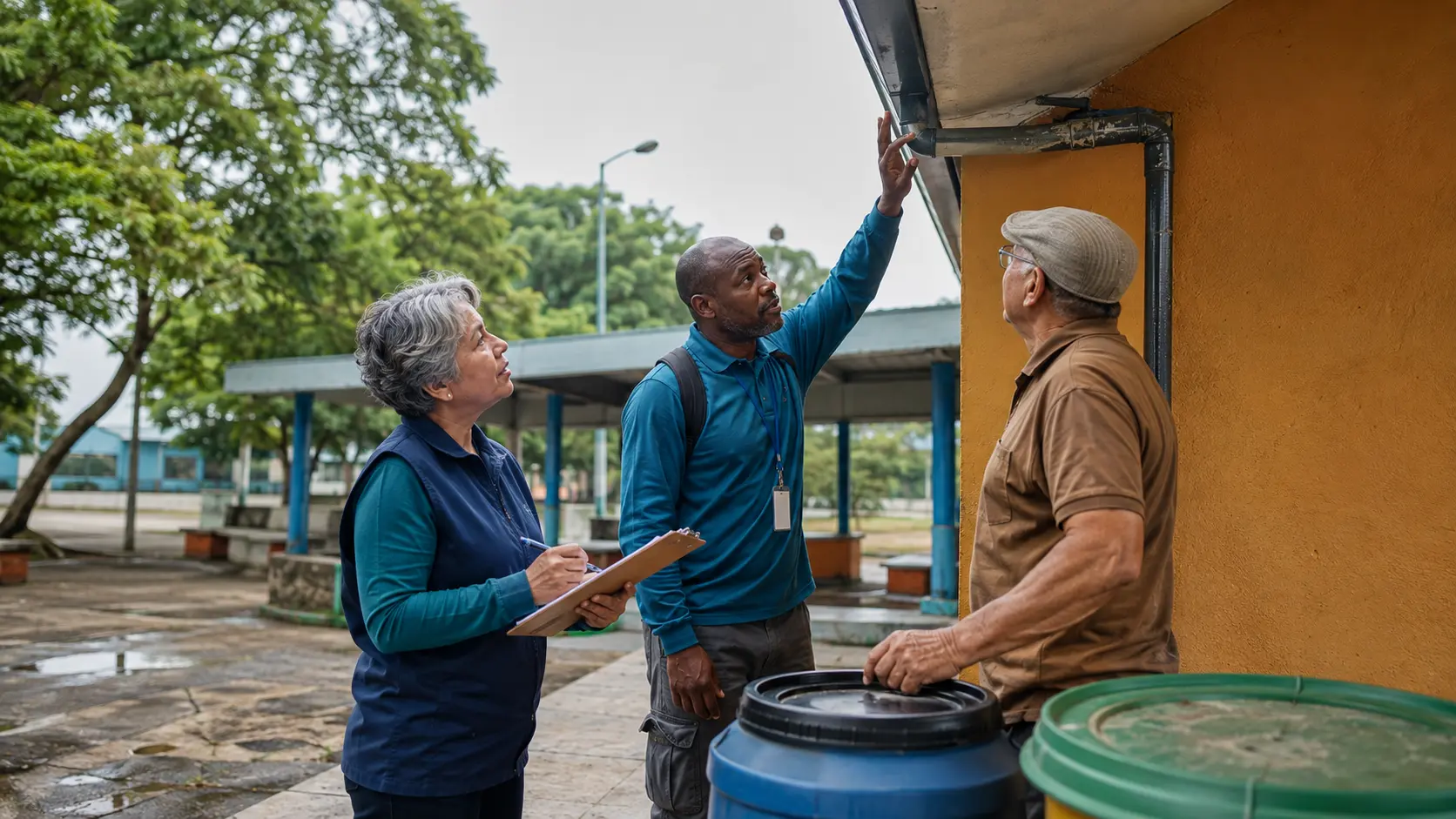
A community compact should define decision rights before an activation. Community partners should know which plans they can change, which messages require their review, what information can be shared, who responds to a concern, and how urgent feedback reaches operations. Participation should be funded. Meetings, training, translation, transportation, child care, protective equipment, mobile data, and staff time are program costs, not favors that community organizations should absorb.
Risk communication should preserve dignity and agency. People need clear, current information about locally relevant protective actions and available services, but messages should not imply that every household has the same control over housing conditions, drainage, work exposure, supplies, or access to care. Executive teams should identify structural barriers that require landlord, municipal, employer, school, environmental, or public health action. A campaign that tells residents to remove standing water while ignoring a persistent infrastructure problem transfers responsibility without transferring authority.
Feedback must produce a visible loop. Every accepted concern should receive an acknowledgment, an owner, a due date, and an outcome. Aggregate themes can be reviewed without exposing individuals. The compact should distinguish a request for information, a service problem, an environmental report, a misinformation concern, a worker-safety issue, and a possible health signal. That classification makes response faster and helps the organization learn which routes are accessible and trusted.
Intervention stewardship
Choose a portfolio, then monitor the conditions that can weaken it
Integrated readiness avoids the false choice between awareness and control. Communication, environmental management, surveillance, clinical preparedness, personal protection, biological approaches, and regulated chemical methods can serve different purposes. The appropriate portfolio depends on the disease, vector, setting, timing, evidence, feasibility, acceptability, resistance profile, cost, workforce, and legal authority. Leaders should require a written rationale rather than allowing urgency to erase these distinctions.
Wolbachia-based strategies demonstrate why implementation and surveillance must stay connected. After releases of Aedes aegypti infected with the wMel Wolbachia strain in Medellín, Colombia, researchers assessed prevalence across five geographic areas to inform long-term post-release monitoring.4 The study addresses persistence and surveillance in one established program. It does not show that every organization should adopt the approach or that prevalence alone proves a clinical effect. Leaders considering any biological intervention need expert governance, community engagement, regulatory alignment, monitoring, and a plan for unexpected findings.
Resistance is another system condition, not merely a laboratory result. A 2026 study evaluated larval and adult susceptibility in Aedes albopictus collected from three sites in Algiers and investigated target-site and metabolic resistance mechanisms.15 The findings cannot be generalized beyond the sampled populations and tested products. They illustrate why intervention decisions should use current local susceptibility information where applicable and why repeated use of a tool should not be assumed to have stable performance.
Two 2026 modeling studies explored how insecticide-treated nets interact with resistance evolution and malaria transmission.814 Their scenarios reinforce the value of monitoring utilization, product characteristics, vector susceptibility, and time. They do not supply a universal procurement formula. A decision record should name which assumptions are supported locally, which are borrowed, and what signal would cause the organization or public health partner to revise the approach.
Figure 3. Why mosquito-borne disease readiness can fail
A failure review should begin with a defined event. Examples include an unverified signal that triggered broad communication, a confirmed alert that did not reach urgent care, a field report without follow-up, a product decision without current resistance information, or a community concern that crossed several agencies without ownership. Bring together people who experienced the route. Separate facts from assumptions, identify where authority changed hands, and document the conditions that allowed the failure.
Positive deviance matters too. If one clinic rapidly recognized relevant travel history, one laboratory completed a difficult notification, or one community partner closed a reporting loop, leaders should identify the enabling conditions. The lesson may be a simple contact list, protected staff time, a trusted relationship, a clear script, a standing agreement, or a manual workaround. The aim is to convert that success from heroic individual effort into a reliable system capability.
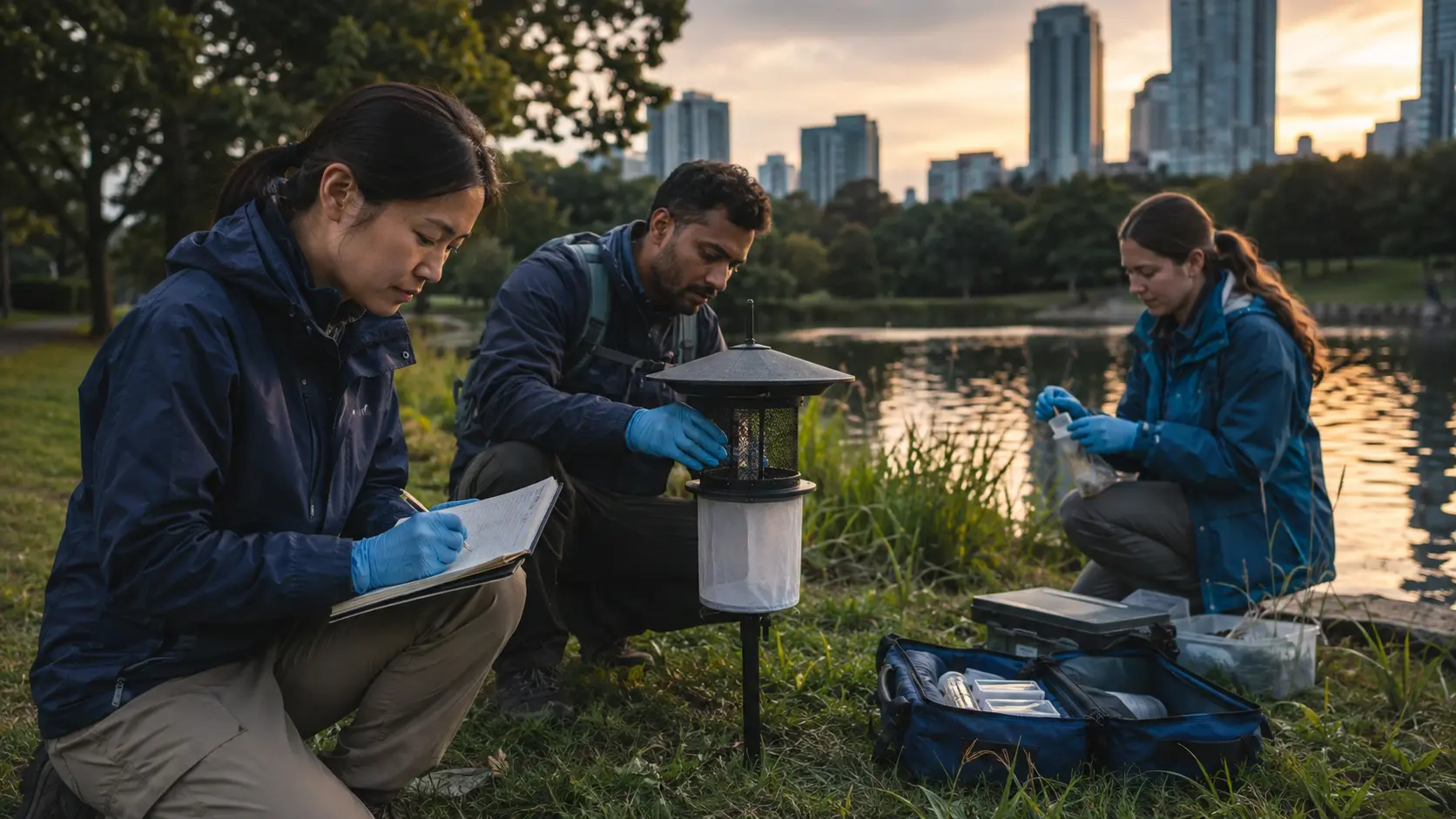
The operating model
Govern the interfaces around one readiness compact
An integrated mosquito-borne disease readiness system needs a forum with authority to see the full pathway. Existing emergency preparedness, infection prevention, population health, quality, community benefit, occupational health, laboratory, public health, or executive structures may provide the foundation. The name is less important than the ability to connect decisions across community partners, clinical care, public health, environmental health, vector control, laboratories, communications, finance, procurement, facilities, workforce, data, and emergency management.
Figure 4. Integrated mosquito-borne disease readiness system
Signals, community feedback, implementation barriers, clinical demand, resistance information, and evaluation results return to every interface.
The compact needs an executive sponsor and an operational owner. It should also have a public health liaison and funded community co-lead. A clinician cannot authorize municipal vector control. A communications team cannot interpret species-specific surveillance alone. A community organization should not be expected to absorb unfunded reporting, translation, or navigation work. A facilities leader cannot solve a housing condition outside the organization's property without a partner. The compact names who owns each decision and who escalates when an interface fails.
Clinical readiness belongs in this system without becoming the whole system. Organizations should follow current disease-specific guidance from relevant public health authorities and professional sources. Operational preparation can include an accessible alert route, a clinical consultation contact, appropriate testing and reporting workflows, travel and exposure history support, infection prevention review, occupational health coordination, pharmacy awareness where relevant, and a plan for increased demand. Training should be role specific and should identify what a staff member must recognize, what they should not infer, and where they obtain current guidance.
Facilities readiness should also remain within professional boundaries. Health systems can inspect and maintain their own buildings and grounds, coordinate contractors, manage water and drainage conditions under their control, and establish a route for concerns. Any vector-control activity should comply with applicable law, product labels, safety requirements, procurement controls, environmental protections, and expert direction. The organization should document where responsibility transfers to a landlord, municipality, school, housing authority, employer, or public health agency.
Figure 5. Proposed executive scorecard for readiness and response
| Measure | Local definition and denominator | Owner and cadence | Source | Interpretation limit |
|---|---|---|---|---|
| Signal verification completion | Signals receiving documented source, time, place, definition, and uncertainty review divided by signals accepted for verification | Surveillance liaison, each activation | Signal and decision ledger | Completion does not mean the signal is confirmed or important |
| Alert-to-clinical update | Relevant sites receiving and acknowledging the current clinical operations update divided by sites included in the activation scope | Clinical readiness lead, each activation | Distribution and acknowledgment records | Acknowledgment does not establish comprehension or practice change |
| Community feedback closure | Accepted questions or concerns receiving an owner, action, and response by the agreed date divided by accepted items | Community co-lead, weekly during activation | Protected feedback ledger | Low reporting can reflect weak trust or access, not low concern |
| Environmental action closure | Verified conditions under an identified party's control with completed action divided by verified conditions assigned for action | Facilities or partner owner, locally defined cadence | Inspection and work records | Conditions outside organizational control require a separate partner pathway |
| Surveillance data timeliness | Records available within the locally defined decision interval divided by expected records in the review period | Data steward, routine and activation review | Surveillance systems | The interval depends on source, purpose, capacity, and current public health requirements |
| Intervention monitoring completeness | Active interventions with documented reach, process, outcome, safety, acceptability, and resistance plan divided by active interventions in scope | Response lead, monthly or each cycle | Implementation and evaluation records | Complete monitoring does not prove effectiveness |
| Corrective-action closure | Accepted readiness gaps with verified completion by the agreed date divided by gaps due in the period | Executive sponsor, monthly | Risk and action register | Closure should require evidence, not a status label alone |
Measurement should connect action to a defined population and period. Report raw counts alongside rates where useful. Explain missing data and delayed data. Stratify only when privacy is protected and the result can inform a decision. Avoid ranking neighborhoods or populations without context. A high report volume may indicate risk, better access to reporting, stronger surveillance, or several conditions at once. A low count may indicate low risk or an inaccessible system. Every dashboard needs a narrative that states what the data can and cannot support.
| Question | Decision record | Required challenge |
|---|---|---|
| What is the local problem? | Vector, disease, setting, population, place, period, signal, and uncertainty | Are we responding to measured risk, a plausible scenario, or general awareness? |
| What outcome matters? | Clinical, epidemiologic, entomologic, behavioral, implementation, equity, or safety outcome | Does the evidence measure that outcome or a proxy? |
| What evidence applies? | Study design, population, comparator, effect or theme, limitations, and recency | What changes when local ecology, regulation, resources, or acceptability differ? |
| Who has authority? | Decision owner, public health jurisdiction, community role, contractor role, and escalation | Are we asking a partner to act without authority, funding, or protection? |
| How will we know? | Denominator, source, timing, missingness, safety, unintended effects, and stop or revise rule | What signal would cause us to continue, change, pause, or stop? |
The first 90 days
Build the compact, test one pathway, and close the gaps
A 90-day agenda should improve a real operating route, not attempt to solve every mosquito-borne disease risk at once. Choose a scope that leadership can complete: one market, one service region, one clinical alert pathway, one community reporting route, or one facilities and public health handoff. Define what will remain outside the pilot and how urgent issues outside scope will be escalated.
Figure 6. Proposed 90-day readiness build
Days 1-30: Charter and map
Name the executive sponsor, operational owner, public health liaison, and funded community co-lead. Define scope, decision rights, privacy, urgent escalation, meeting cadence, and the conditions that activate the compact. Map the current signal route, clinical update route, community feedback route, environmental handoff, laboratory contacts, procurement constraints, and after-hours coverage. Record assumptions and unresolved authority.
Days 31-60: Build and verify
Create the signal dictionary, contact roster, role-specific clinical update process, accessible communication templates, facilities and partner handoffs, worker-safety review, and intervention decision record. Verify that contacts work and that receiving partners accept their roles. Test one record from end to end without using real patient information.
Days 61-75: Exercise
Run a tabletop scenario with clinical, laboratory, environmental, communications, emergency management, public health, community, workforce, finance, and executive participants. Introduce uncertainty, a misinformation concern, an access barrier, a delayed data source, and a jurisdiction question. Observe how decisions are made and how community feedback changes the response.
Days 76-90: Correct and assure
Prioritize gaps by safety, access, likelihood, and controllability. Assign an owner, due date, evidence of completion, and escalation route. Update the charter and tools. Give the executive team and community partners a plain-language record of what changed, what remains open, and when the compact will be tested again.
The executive sponsor should ask six closing questions. Can every priority signal reach a named reviewer? Can the reviewer obtain the context needed for a decision? Can clinical, environmental, and communication actions launch without searching for authority? Can community partners challenge an interpretation and receive a response? Can the organization monitor safety, access, implementation, and resistance without overstating effectiveness? Can unresolved actions remain visible until evidence of closure is verified?
World Mosquito Day should leave more than a campaign artifact. A strong observance can produce a signed compact, a functioning contact route, a verified signal dictionary, an exercised pathway, funded community participation, a short corrective-action register, and a scheduled reassessment. Those are modest outputs, but they create the conditions for faster, safer, more equitable action when the next signal arrives.
Peer-reviewed evidence
References
References are ordered newest first by publication date. All 16 records were reviewed with full-text and peer-reviewed database filters. DOI links resolve to publisher records. Study designs and limits are stated in the article so that observational, ecological, field, review, and modeling evidence are not treated as interchangeable.
- Choi L, et al. Interventions for preventing dengue: a mapping review. Cochrane Database of Systematic Reviews. 2026;8:CD016299. https://doi.org/10.1002/14651858.CD016299.pub2
- Sierra LA, et al. A scoping review: Community health workers engagement in mosquito borne disease prevention activities. PLoS Neglected Tropical Diseases. 2026;20(8):e0014621. https://doi.org/10.1371/journal.pntd.0014621
- Kipsum M, et al. Efficacy of MiraNet Combi, a novel alpha-cypermethrin, pyriproxyfen, and piperonyl butoxide long-lasting insecticidal net against pyrethroid-resistant Anopheles funestus in western Kenya. PLoS One. 2026;21(8):e0331995. https://doi.org/10.1371/journal.pone.0331995
- Barrientos LM, et al. Wolbachia prevalence in Aedes aegypti across five comunas of Medellín, Colombia: Implications for post-release surveillance. PLoS Neglected Tropical Diseases. 2026;20(8):e0014630. https://doi.org/10.1371/journal.pntd.0014630
- Hasan P, et al. Urban hyperendemicity and emerging coastal per-capita risk of dengue in Bangladesh, 2021-2025: A nationwide spatiotemporal ecological analysis. Journal of Tropical Medicine. 2026:3012361. https://doi.org/10.1155/jotm/3012361
- Bandzuh JT, et al. Knowledge, attitudes, and practices related to spatial repellent for mosquito control and malaria risk perception in East Sumba, Indonesia. PLOS Global Public Health. 2026;6(8):e0006929. https://doi.org/10.1371/journal.pgph.0006929
- Mahfodz Z, et al. Uneven mosquito control knowledge, attitudes, and practices in Malaysia shape sustainable dengue prevention across urban and rural settings. Scientific Reports. 2026;16(1). https://doi.org/10.1038/s41598-026-54066-2
- Hobbs NP, et al. Impact of insecticide resistance evolution on malaria vector control. PLoS Computational Biology. 2026;22(8):e1014612. https://doi.org/10.1371/journal.pcbi.1014612
- Briët OJ, et al. Strengthening mosquito control to manage emerging mosquito-borne diseases. Euro Surveillance. 2026;31(33). https://doi.org/10.2807/1560-7917.ES.2026.31.33.2600306
- Lequechane JD, et al. Field evaluation of 3-(N-acetyl-n-butyl) aminopropionic acid ethyl ester, IR3535, as a spatial repellent to control malaria: A randomised before-after-control-intervention trial. PLoS One. 2026;21(7):e0353351. https://doi.org/10.1371/journal.pone.0353351
- Mbaoma OC, et al. Incorporating vertical transmission into mechanistic modeling of West Nile virus for optimized control in Germany. Scientific Reports. 2026;16(1). https://doi.org/10.1038/s41598-026-58371-8
- Bagheri F, et al. Enhancing entomological surveillance to combat Aedes-borne diseases in southern Iran. Journal of Tropical Medicine. 2026:8874426. https://doi.org/10.1155/jotm/8874426
- Birba W, et al. Mathematical analysis of a vector model using larvicides and Wolbachia-infected male mosquitoes: An optimal and impulsive control approach. Mathematical Biosciences and Engineering. 2026;23(7):2132-2177. https://doi.org/10.3934/mbe.2026078
- Sseguya I, et al. Modelling the impact of mosquito bed net utilization on malaria transmission and evolution of pyrethroid resistance. PLoS One. 2026;21(7):e0353301. https://doi.org/10.1371/journal.pone.0353301
- Bouledroua R, et al. Evaluation of insecticide resistance in Aedes albopictus population from Algiers, Algeria. Insects. 2026;17(7):696. https://doi.org/10.3390/insects17070696
- Molina Grané C, et al. Autochthonous transmission patterns of dengue virus serotype 2 in Italy: Evidence from outbreaks in 2024. Euro Surveillance. 2026;31(27). https://doi.org/10.2807/1560-7917.ES.2026.31.27.2600035