


Heart Valve Disease Awareness Day 2026
Listen for risk, make diagnosis timely, and build a reliable route from symptoms to lifelong valve care.
The first failure is often not hearing what changed.
Awareness becomes useful when it changes the route from a symptom, murmur, or abnormal study to an owned plan.
Heart valve disease can narrow a valve, prevent it from closing completely, or combine both problems. The heart may compensate for a long time, so a person can feel well while pressure, volume, or chamber damage accumulates. When symptoms appear, they may be subtle: walking pace slows, stairs require a pause, fatigue becomes routine, ankles swell, sleep changes, or dizziness is explained as age. The person may not use the words “shortness of breath.” They may say, “I do less than I used to.”
That ambiguity creates an operating problem. The symptom may enter through primary care, urgent care, an emergency department, oncology follow-up, nephrology, a dental history of endocarditis risk, or a conversation with a family caregiver. A clinician may hear a murmur, but auscultation alone does not identify every important lesion and does not establish severity. An imaging report may document moderate or severe disease, yet the finding can remain buried in the record if no one accepts responsibility for communication, referral, surveillance, or treatment review.
Heart Valve Disease Awareness Day on February 22 is therefore more than a reminder to listen with a stethoscope. It is a prompt to ask whether the system listens to changes in function, completes indicated evaluation, reconciles discordant findings, includes the patient in a lifetime decision, and keeps follow-up visible after the first study or procedure. The 2026 campaign phrase, “Listen to Your Heart,” is especially useful because it speaks to both the person and the organization: notice the signal, then make the next responsibility explicit.
Recent evidence shows why a broad pathway matters. In a prospective community study of 4,237 asymptomatic adults age 60 and older, nontrivial valve disease was found in 28.2%, while clinically significant disease was found in 2.4%. The number needed to scan to find one clinically significant case was 42 among those 60 and older and 15 among those 75 and older (Tsampasian et al., 2024). Those findings do not prove that every older adult should be screened. They do show that absence of symptoms is not the same as absence of disease and that age changes the prior probability.
A separate multicenter study of referred patients found 946 newly diagnosed cases among 12,610 echocardiograms, a detection rate of 7.5%. About one-third of the new cases were moderate or severe. Among patients described as needing intervention, only 24.2% consented, while others declined or remained undecided (Chen et al., 2025). The study’s Malaysian tertiary-care context limits generalization, but the operational lesson travels: finding disease and reaching a decision are different processes. Communication, trust, competing illness, perceived age, fear of surgery, access, and patient goals all shape whether an abnormality becomes care.
What community echocardiography found in adults age 60+
Prospective U.K. cohort, 4,237 eligible asymptomatic volunteers. Categories can overlap; trivial regurgitation was excluded. This is prevalence evidence, not a universal-screening recommendation.
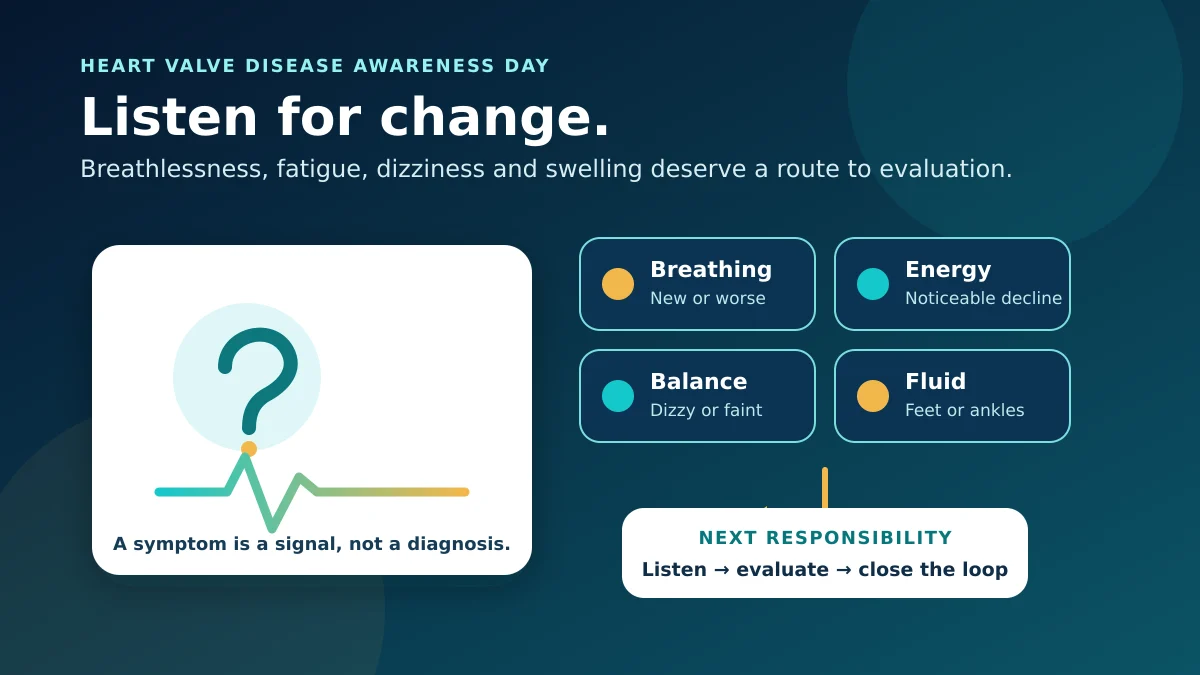
Build a route that begins before the echo order.
Recognition needs a defined front door, urgency rule, communication standard, and fallback when the patient cannot complete the first step.
A dependable pathway starts by defining what should trigger attention. New exertional breathlessness, reduced activity tolerance, chest pressure, fainting or near-fainting, palpitations, swelling, and signs of heart failure require clinical assessment. Risk context matters: older age, congenital valve anatomy such as a bicuspid aortic valve, prior rheumatic fever, infective endocarditis, radiation to the chest, and established cardiac disease may change the threshold for evaluation. A caregiver’s observation that someone has slowed down can be as important as a symptom checklist.
The front door must also separate emergencies from routine work. New or severe chest pain, severe shortness of breath, fainting, collapse, or other signs of a possible heart emergency should never wait for an awareness event or outpatient screening slot. The pathway should state how staff respond, what the patient is told, and where emergency escalation is documented. For nonemergency concerns, the pathway should specify the expected diagnostic action and who checks completion.
Auscultation remains a practical part of the examination, but a murmur is neither necessary nor sufficient for diagnosis. Body habitus, heart rate, clinician experience, lesion type, and hemodynamics can affect what is heard. Conversely, an incidental murmur may be innocent. The safe operating rule is to combine symptoms, risk, physical findings, and clinical judgment, then use appropriate imaging to define anatomy, mechanism, severity, and cardiac response.
Emerging digital tools may widen case finding, particularly where specialist imaging capacity is constrained. A 2024 systematic review and meta-analysis of 10 artificial-intelligence screening studies reported pooled sensitivity of 0.83, specificity of 0.81, and an area under the curve of 0.909 across inputs such as electrocardiograms, radiographs, heart sounds, and wearable signals (Popat et al., 2024). The same review identified heterogeneity and publication bias. Those limits matter: a promising screening result is not a diagnosis and may perform differently across sites and populations.
Fisher et al. (2026) reported a large retrospective training and validation program plus prospective validation in 209 patients scanned by noncardiologists using handheld ultrasound. Performance was strongest for reduced ejection fraction and right-ventricular dysfunction and lower for mitral regurgitation in the prospective cohort. The model did not assess the aortic valve, the prospective group came from one health system, and commercial relationships were disclosed. A responsible pilot would therefore measure image adequacy, false-positive and false-negative patterns, demographic performance, confirmatory echocardiography completion, and whether referral capacity can absorb the new demand.
Technology should shorten the path only when ownership is designed with it. An alert that no one receives, an abnormal scan that cannot be confirmed, or an algorithm that performs less well in an underrepresented group can create a new inequity. Leaders should treat case-finding tools as part of a closed clinical workflow, not as a standalone innovation.
The accountable diagnostic flow
Each transition has an urgency rule, expected interval, communication step, and named owner.
Notice change and risk
Capture symptoms in the person’s own words, compare function with baseline, record risk context, and separate emergency from outpatient needs.
Examine and order
Use auscultation and clinical assessment appropriately. Place the indicated test or referral with a clear reason and urgency.
Complete and interpret
Track imaging through acquisition, expert interpretation, result communication, and reconciliation of discordant measures.
Assign the next plan
Document surveillance, medical management, heart-team review, or treatment evaluation—and who is responsible while the decision is pending.
Reliability rule: Do not count an order, referral, or offered appointment as a completed transition. Confirm acceptance, completion, communication, and the next owner.
Recognition
Symptoms normalized as aging; functional decline not compared with baseline; murmur absent or undocumented; risk history fragmented.
Access
Long imaging waits; transportation or cost barriers; rural specialist scarcity; language, disability, or scheduling needs not accommodated.
Information
Result lacks severity or comparison; discordant measurements are not reconciled; prior studies are unavailable; escalation criteria are unclear.
Decision
Options described without patient goals; frailty and cognition assessed late; family questions unresolved; fear or uncertainty treated as refusal.
Handoff
Referral is sent without acceptance; primary care assumes cardiology owns follow-up; specialty service assumes the referring team will monitor.
Surveillance
No expected study date; symptom escalation instructions missing; post-procedure plan fails to reach primary care; overdue patients are invisible.
One number rarely tells the whole valve story.
Severity review should integrate symptoms, multiple imaging measures, anatomy, ventricular response, comorbidity, and change over time.
Echocardiography is central because it can identify the affected valve, distinguish narrowing from leakage, estimate severity, and show how the heart is responding. Yet real patients do not always fit one clean category. Flow, pressure, body size, loading conditions, rhythm, and measurement technique can produce discordant findings. A report that lists a grade without explaining uncertainty or the next interval can leave both clinicians and patients with false confidence.
Sex-based differences show why reconciliation matters. In a cohort of 5,360 patients with moderate or severe aortic stenosis by valve area, women were more likely than men to be placed in a normal-flow, low-gradient category and assigned a lower severity grade. The difference appeared in both moderate and severe disease, even though mortality was similar to normal-flow, high-gradient groups (Sidwell et al., 2025). This single cohort does not justify automatic reclassification, but it supports a deliberate review when valve area, gradient, symptoms, and cardiac response do not agree.
Wiens et al. (2024) likewise synthesized evidence that biological sex can influence valve-disease epidemiology, presentation, diagnosis, intervention, and outcomes. The review is narrative and the evidence varies by lesion, but it reinforces an operational point: equity cannot be assessed from aggregate completion rates alone. Systems should look for differences in time to imaging, severity at first specialist review, treatment evaluation, and loss to follow-up, while protecting privacy and interpreting small samples cautiously.
Staging should also examine damage beyond the valve. In the multicenter LAPLACE-TAVI registry, Edamura et al. (2025) created a four-item score using echocardiographic measures of pressure, filling, atrial volume, and ventricular mass. Among 1,285 patients with preserved ejection fraction, the score predicted cardiovascular death or heart-failure rehospitalization with an AUC of 0.74. Because the study was retrospective, post-TAVI, and conducted in Japan, the score should not be copied into local triage without validation. Its broader message is useful: a normal ejection fraction does not mean the heart is unaffected, and post-treatment risk can remain visible in chamber-level damage.
For congenital bicuspid aortic valve disease, surveillance may span decades. Aschauer et al. (2024) followed 581 consecutive patients in a specialist valve-clinic program. Ten-year survival was high, yet 158 developed an indication for surgery; risk rose with stenosis, regurgitation, aortic dilation, and age. This younger specialist cohort does not represent every person with bicuspid anatomy, but it illustrates why follow-up is a longitudinal program rather than a one-time reassurance.
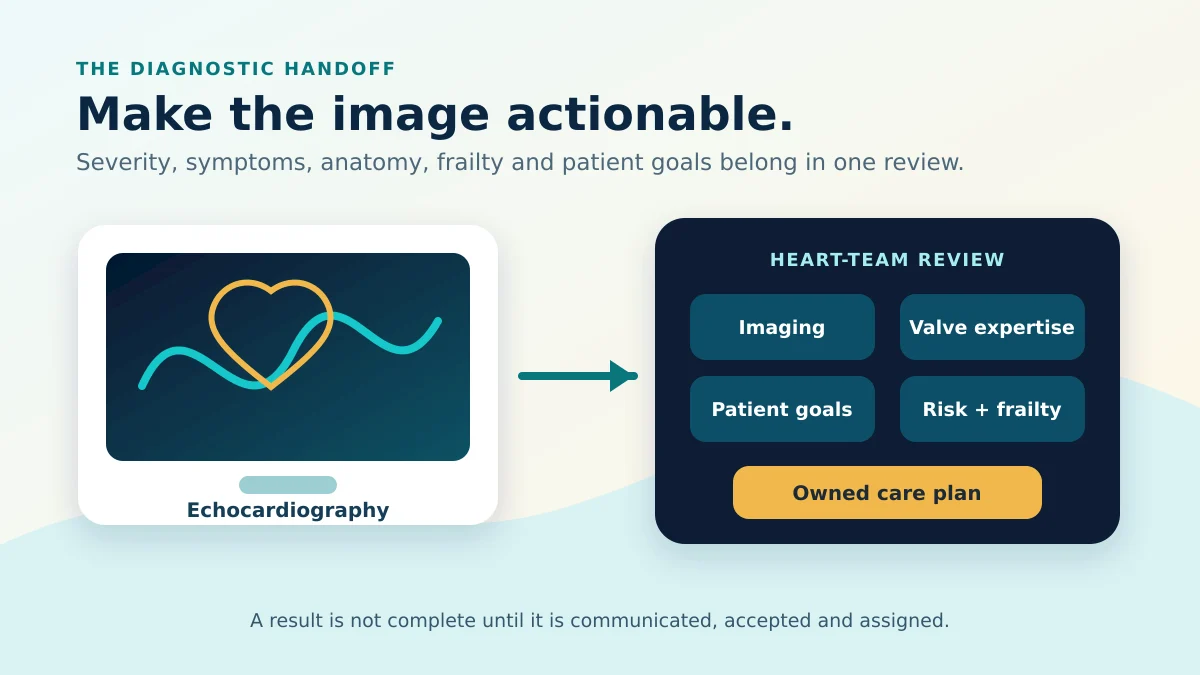
Make the decision multidisciplinary—and visibly patient centered.
A lifetime valve plan is more than a procedure choice. It connects timing, anatomy, risk, recovery, future options, and what the person values.
Current valve care offers medical management, surveillance, surgical repair or replacement, and transcatheter approaches, depending on the lesion and the person. The right choice can turn on age, anatomy, comorbidity, frailty, expected durability, need for anticoagulation, coronary access, recovery priorities, and the possibility of future procedures. No public awareness article should reduce that decision to “surgery versus catheter” or imply that one path is best for everyone.
A systematic review of 20 heart-team implementation studies found substantial variation in team composition, organization, and outcome measurement. Studies using structured templates reported more consistent decisions, and included valve studies suggested outcome benefits, but the evidence was heterogeneous and largely observational (Arjomandi Rad et al., 2024). The practical response is not to claim that any meeting labeled “heart team” guarantees better care. It is to define the team’s purpose, required inputs, decision record, patient participation, follow-up responsibility, and measures.
Frailty belongs in that work. Among 568 valve-surgery patients age 70 and older, the Edmonton Frailty Scale added prognostic information beyond EuroSCORE II, and minimally invasive surgery was associated with lower mortality among frail patients but not with the broader composite outcome (Cimaglia et al., 2026). Observational treatment comparisons can be confounded, so the finding should not determine a procedure. It supports earlier frailty assessment and a conversation about cognition, mobility, function, recovery, caregiver support, and outcomes that matter to the patient.
Shared decision-making also needs infrastructure. The IMPACT SDM study is testing a patient decision aid plus clinician training at eight U.S. sites using a stepped-wedge implementation design (Sepucha et al., 2024). Because it is a protocol, it does not yet show effectiveness. Its design still offers an important lesson: adoption, reach, barriers, decision quality, and clinical workflow all need measurement. Handing a brochure to a patient is not the same as shared decision-making.
The patient’s desired outcome may be living independently, returning to caregiving, walking without stopping, avoiding a burdensome recovery, or preserving future treatment options. In a prospective study of 88 patients assessed before and 12 months after TAVI, half reported a clinically significant improvement in physical function and 52% improved in physical-role scores. Routine baseline variables did not clearly identify who would improve (Sævik et al., 2025). The cohort was small and selected, but it argues for measuring quality of life rather than assuming technical success produces the same benefit for everyone.
Clinical signal
Symptoms, function, risk, examination, imaging, and change over time.
Diagnostic synthesis
Lesion, mechanism, severity, discordance, cardiac response, and uncertainty.
Decision capability
Valve expertise, imaging, surgery, transcatheter care, anesthesia, geriatrics, and nursing as needed.
Patient partnership
Goals, options, tradeoffs, comprehension, language access, caregiver needs, and decision support.
Continuity
Referral acceptance, procedure preparation, rehabilitation, primary-care handoff, and surveillance.
Learning system
Timeliness, fallout, equity, patient-reported outcomes, safety, case review, and improvement.
Do not let the pathway end at diagnosis—or discharge.
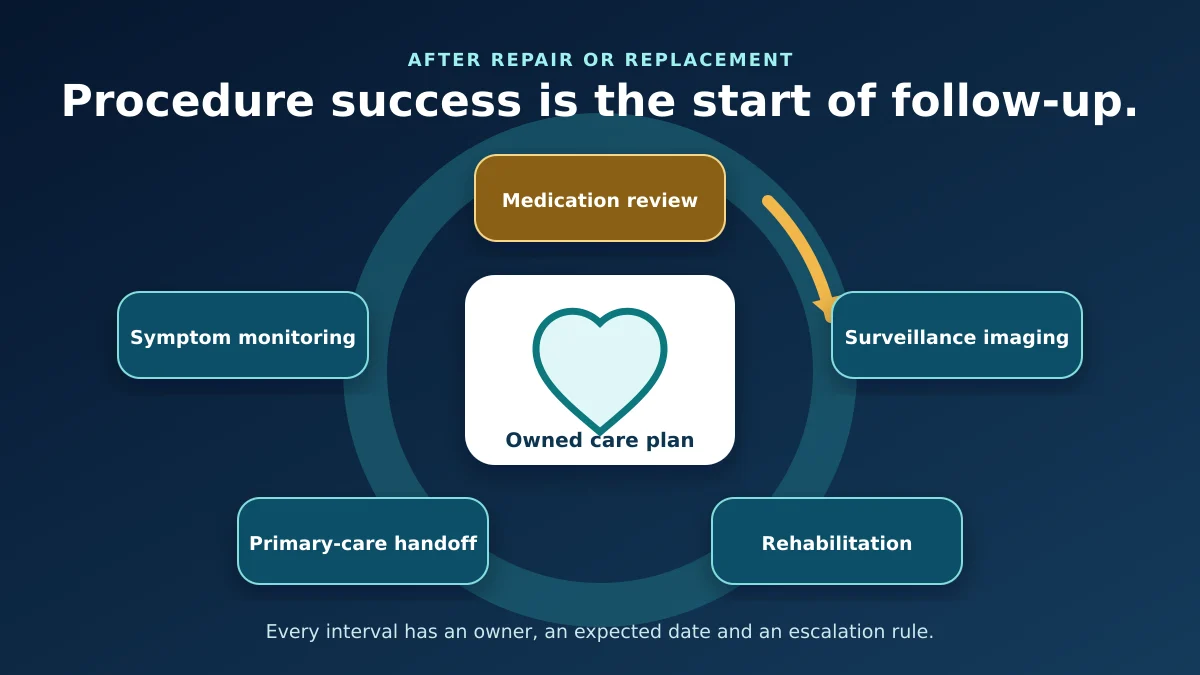
Surveillance before intervention and continuity afterward require the same disciplines: expected dates, clear communication, and named ownership.
Valve disease can be clinically important even when an intervention is not immediately indicated. A surveillance plan should state what is being monitored, when the next assessment is expected, which symptoms should trigger earlier contact, and who is responsible for recalling the patient. “Follow up with cardiology” is not enough if no appointment is accepted, no interval is documented, or the patient believes the absence of symptoms means the condition has resolved.
Real-world data show how easily significant findings can remain outside specialist review. In a retrospective database representing 25 U.S. institutions, two-year heart-team evaluation occurred in 43.5% of patients with moderate-to-severe aortic regurgitation and 65.4% with severe disease. Among untreated patients, two-year mortality increased with severity and reached 20.7% in severe disease (Amoroso et al., 2024). The industry-linked observational design cannot prove that referral would have changed every outcome. It does support examining why a substantial share of patients with significant disease never reached a valve team.
Severe aortic stenosis shows a similar treatment gap. A population-based Minnesota study of 1,069 incident cases over 20 years found that valve replacement became faster, but undertreatment remained above 40%. Early replacement was associated with better survival, while overall three-year mortality remained 36% (Benfari et al., 2024). Historical practice, regional patterns, selection, and confounding limit causal interpretation. The leadership question is still urgent: does every patient with severe disease receive timely specialist evaluation, a documented decision, and follow-up when treatment is deferred?
After repair or replacement, continuity expands rather than disappears. Depending on the procedure and the person, the plan may include wound or access-site care, medication reconciliation, anticoagulation management, endocarditis-prevention education, rehabilitation, dental care guidance, surveillance imaging, rhythm follow-up, and assessment of residual or recurrent disease. Primary care needs a concise summary, and the patient needs language they can use: what happened, what changed, what to watch, whom to call, and when the next study is due.
Leaders should be able to identify people who are overdue, not only count visits that occurred. A registry or reliable reporting view can combine diagnosis, lesion, severity, last study, next expected assessment, decision status, responsible service, and escalation events. The data do not need to be perfect before teams begin case review. A small sample of overdue or unresolved cases often exposes interface failures that aggregate dashboards hide.
Measure the handoffs where people become invisible.
Use stable definitions, display distributions, review exceptions, and stratify only when the denominator supports responsible interpretation.
A useful scorecard follows the person rather than the department. Imaging can meet its internal turnaround target while the patient still waits weeks for result communication. Cardiology can offer an appointment while the referring team assumes the case is accepted. A valve program can complete a procedure while primary care never receives the surveillance plan. Measures should therefore connect steps and reveal unresolved responsibility.
Choose operational definitions before comparing sites. “Referral complete” might mean the receiving service accepted the referral, the patient scheduled, the visit occurred, or the valve team documented a decision. Those are different events. “Result communicated” should identify the recipient and date, not rely on a report being available in the portal. “Surveillance current” should reflect the locally adopted interval and documented clinical exceptions.
| Measure | Operational definition | Equity view | Accountable review |
|---|---|---|---|
| Signal to diagnostic action | Days from the first documented symptom, murmur, or abnormal study to the first completed indicated diagnostic step; show median, upper quartile, and unresolved cases. | Site, age, sex, language, geography, payer, disability accommodation, and referral source where appropriate. | Primary care, clinical operations, imaging, and quality each month. |
| Imaging completion | Orders completed, interpreted, and communicated within the adopted interval; separate patient cancellation, capacity delay, clinical deferral, and unreachable status. | Compare completion and fallout, not only wait time among completers. | Diagnostic services and ambulatory access each month. |
| Significant finding to valve review | Moderate, severe, or discordant findings accepted by cardiology or a valve service, with a documented next action and owner. | Review severity at first specialist visit and reasons for nonacceptance. | Cardiology, valve program, and referring services each month. |
| Decision quality | Options, patient goals, tradeoffs, frailty or functional assessment when appropriate, comprehension, and decision status documented before treatment or deferral. | Language access, decision-aid reach, caregiver inclusion, and no-show recovery. | Heart team, nursing, patient experience, and quality each quarter. |
| Surveillance reliability | Known valve disease with lesion, severity, last study, next expected review, escalation instructions, and named owner recorded. | Overdue rate and time overdue by population and care site. | Valve clinic, ambulatory leadership, and primary care each month. |
| Outcome that matters | Patient-reported function or quality of life collected at the locally chosen baseline and follow-up points, alongside mortality, rehospitalization, and complications. | Completion and improvement patterns, with missingness reported. | Service-line leadership and patient partners each quarter. |
Close one gap between listening and longitudinal care.
Select one failure point, establish a baseline, change standard work, and test whether the handoff becomes more reliable and equitable.
A 90-day pilot should be narrow enough to finish and important enough to matter. Good targets include incomplete echocardiography after a documented murmur, significant results without specialist acceptance, discordant aortic-stenosis studies without synthesis, or known valve disease without a current surveillance plan. Define the population and exclusions before looking at performance.
Begin with case tracing. Review a recent sample from the first signal to the latest documented responsibility. Interview patients, schedulers, sonographers, clinicians, and referral teams. Separate clinical judgment from avoidable delay. Then choose one standard handoff: a referral template with required severity fields, a result-communication script, an overdue registry, or a weekly review of unresolved significant findings. Build escalation for patients who cannot be reached or who face transportation, language, cost, or scheduling barriers.
Measure both completion and consequences. A new alert may improve referral volume while overwhelming specialty capacity. A stricter template may increase documentation but delay urgent cases. An AI screening pilot may identify more candidates while increasing false positives. Review balancing measures, unintended effects, and patient experience every week. At day 90, decide whether to adopt, adapt, or stop the change, and publish the reasoning internally.
| Workstream | Days 1–30 | Days 31–45 | Days 46–60 | Days 61–90 |
|---|---|---|---|---|
| Trace current cases and define baseline | Trace + define | |||
| Co-design the handoff with patients and teams | Interview | Finalize standard | ||
| Test in one pathway or care site | Launch | Weekly cycles | Sustain test | |
| Review unresolved cases and equity | Baseline cases | Weekly review | Weekly review | Weekly review |
| Decide: adopt, adapt, or stop | Decision + report |
Listen to the heart, then make the system respond.
Heart Valve Disease Awareness Day should leave behind more than recognition. It should create an earlier, clearer, more equitable, and more accountable route to diagnosis, decision, treatment, and lifelong follow-up.
Peer-reviewed references
- Cimaglia, P., Mikus, E., Trichilo, M., et al. (2026). Correlation between frailty status, surgical access, and outcomes in older adults with valvular heart disease undergoing cardiac surgery. NPJ Aging, 12(1), 1–7. https://doi.org/10.1038/s41514-026-00382-w
- Fisher, L., Fiman, M., Segal, E., et al. (2026). Artificial intelligence assessment of valvular disease and ventricular function by a single echocardiography view. Frontiers in Digital Health, 1–10. https://doi.org/10.3389/fdgth.2025.1684933
- Wojakowski, W., Tendera, M., & Praz, F. (2026). The 2025 European Society of Cardiology/European Association for Cardio-Thoracic Surgery joint guidelines for the management of valvular heart disease: Revolution or evolution? Kardiologia Polska, 84(4), 459–463. https://doi.org/10.33963/v.phj.111320
- Edamura, S., Tamura, H., Watanabe, T., et al. (2025). Scoring of cardiac damage evaluated by echocardiography predicts prognosis of patients with severe aortic stenosis undergoing transcatheter aortic valve implantation: Analysis of the LAPLACE-TAVI registry. Heart and Vessels, 40(12), 1146–1159.
- Sidwell, C., Curtis, A., Kolias, T., Harris, A., Joseph, M., & LaBounty, T. (2025). Women with moderate or severe aortic stenosis by aortic valve area are disproportionately classified with normal-flow low-gradient aortic stenosis and assigned lower severity grades than men. Echocardiography, 42(8), 1–7. https://doi.org/10.1111/echo.70270
- Chen, T. M., Ang, J. S., Josephine, P., et al. (2025). Echocardiography detection rate of newly diagnosed valvular heart disease amongst patients 12 years old and beyond, referred for transthoracic echocardiography in tertiary care settings. Medical Journal of Malaysia, 80(4), 436–442.
- Sævik, M., Andersen, M. H., Beitnes, J. O., Aaberge, L., & Halvorsen, P. S. (2025). Health related quality of life after transcatheter aortic valve implantation in aortic stenosis patients: Exploring a novel threshold for clinically significant improvement after 12 months. Journal of Patient-Reported Outcomes, 9(1), 1–10. https://doi.org/10.1186/s41687-025-00894-1
- Arjomandi Rad, A., Streukens, S., Vainer, J., Athanasiou, T., Maessen, J., & Sardari Nia, P. (2024). The current state of the multidisciplinary heart team approach: A systematic review. European Journal of Cardio-Thoracic Surgery, 67(1).
- Sepucha, K., Elmariah, S., Valentine, K. D., et al. (2024). The IMPACT SDM study: Study protocol for a cluster randomized stepped wedge trial. Trials, 25(1), 820.
- Wiens, E. J., Kawa, K., Kass, M., & Shah, A. H. (2024). Impact of biological sex on valvular heart disease, interventions, and outcomes. Canadian Journal of Physiology and Pharmacology, 102(10), 585–593. https://doi.org/10.1139/cjpp-2023-0390
- Popat, A., Saini, B., Patel, M., et al. (2024). Diagnostic accuracy of AI algorithms in aortic stenosis screening: A systematic review and meta-analysis. Clinical Medicine & Research, 22(3), 145–155.
- Tsampasian, V., Militaru, C., Parasuraman, S. K., et al. (2024). Prevalence of asymptomatic valvular heart disease in the elderly population: A community-based echocardiographic study. European Heart Journal–Cardiovascular Imaging, 25(8), 1051–1058.
- Amoroso, N. S., Sharma, R. P., Généreux, P., et al. (2024). Clinical journey for patients with aortic regurgitation: A retrospective observational study from a multicenter database. Catheterization and Cardiovascular Interventions, 104(1), 145–154.
- Benfari, G., Essayagh, B., Michelena, H. I., et al. (2024). Severe aortic stenosis: Secular trends of incidence and outcomes. European Heart Journal, 45(21), 1877–1886. https://doi.org/10.1093/eurheartj/ehad887
- Aschauer, J., Zilberszac, R., Gleiss, A., et al. (2024). Long-term outcome of bicuspid aortic valve disease. European Heart Journal–Cardiovascular Imaging, 25(3), 425–435.
Authoritative resources
- Heart Valve Disease Awareness Day, Alliance for Aging Research
- Listen to Your Heart, Alliance for Aging Research
- About Heart Valve Disease, Centers for Disease Control and Prevention
- Heart Valve Diseases, National Heart, Lung, and Blood Institute
Naming note: The Alliance for Aging Research, which leads the campaign, uses “Heart Valve Disease Awareness Day” and confirms February 22, 2026. This page follows the organizer’s wording and omits “National.”