

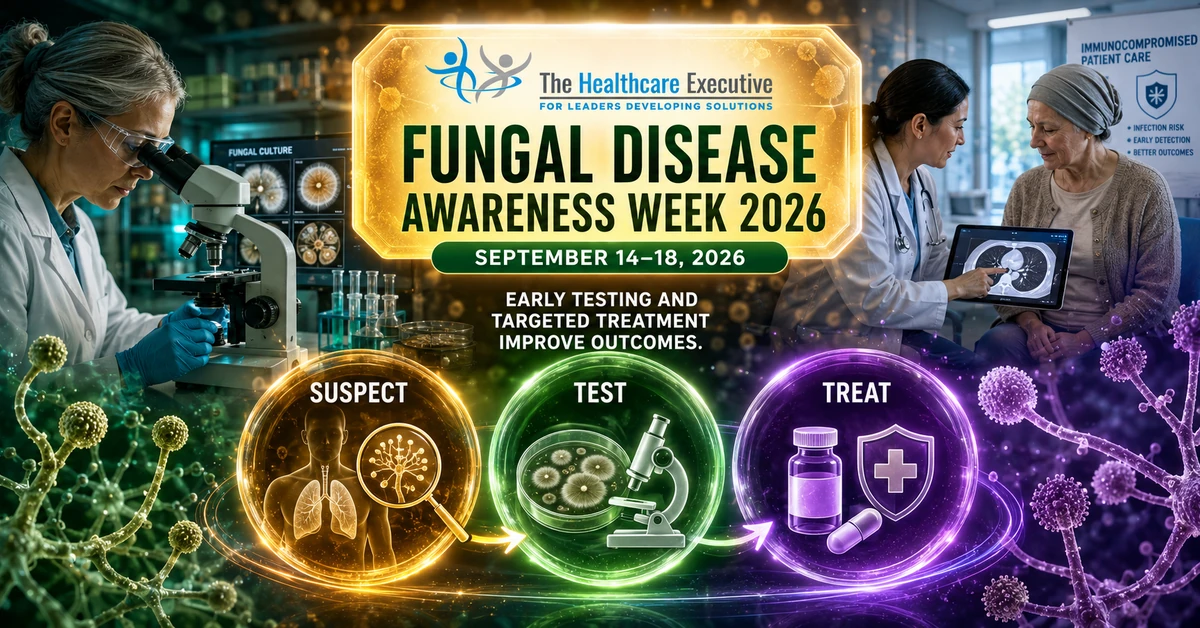
Fungal Disease Awareness Week | September 14–18, 2026
Fungal Disease Awareness Week 2026: Turn Awareness into an Accountable Care Route
A credible observance helps healthcare organizations move from clinical suspicion to appropriate specimens, capable mycology, timely interpretation, antifungal stewardship, infection prevention, public-health coordination, and closed-loop follow-through.
Observance identity: The U.S. Centers for Disease Control and Prevention identifies September 14–18, 2026 as the tenth annual Fungal Disease Awareness Week. The theme is a prompt for recognition and system readiness, not a diagnostic campaign or a replacement for individualized medical care. Review the official CDC observance page.
Recognition connected to responsibility
Use the observance to test the route from suspicion to coordinated action
Fungal diseases range from common superficial infections to rare, life-threatening invasive disease. The people at greatest risk of severe illness often intersect with oncology, transplant, intensive care, surgery, neonatal care, dialysis, pulmonary medicine, infectious diseases, and long-term care. Yet fungal disease does not always arrive with an unmistakable label. Symptoms can be nonspecific, conventional cultures may be slow or insensitive for particular questions, unfamiliar organisms may be misidentified, and a positive finding may require careful distinction among infection, colonization, or contamination.
That uncertainty creates an enterprise problem before it becomes a communications problem. A clinician may suspect disease but be unsure which specimen or test is available. A laboratory may need clinical context, specialized identification, susceptibility testing, or reference support. Pharmacy may be asked to review empiric treatment without a complete diagnostic picture. Infection prevention may learn about a transmissible organism after a transfer has already occurred. A patient can move through all of these functions while no one owns the whole route.
Active surveillance across four Atlanta hospitals illustrates why a narrow risk script is insufficient. Among 449 classified invasive mold disease cases, 35% occurred without the classic host factors used in the study's consensus framework; the surveillance design also required clinical, radiologic, laboratory, and treatment information to classify many episodes.1 These data do not define a universal screening rule. They support a leadership question: does the local pathway help clinicians escalate uncertainty when a patient falls outside the expected pattern?
Healthcare-associated Candida auris adds another operating challenge. It can spread within and between facilities, persist in the environment, and show antifungal resistance. Evidence from dialysis settings identified communication lapses when a patient's known status did not reliably reach the receiving facility.3 The lesson is broader than one organism. Critical microbiology information needs an accountable handoff that travels with the patient and is usable at the point of care.
Recognizable
Clinicians and the public receive plain-language signals without a symptom list being presented as a diagnosis.
Reachable
Teams know how to reach appropriate clinical, laboratory, stewardship, infection-prevention, and public-health expertise.
Owned
A named role remains accountable for specimen, result, treatment review, transmission precautions, and follow-through.
Measurable
Leaders review timeliness, completeness, access, prescribing quality, transmission risk, equity, and workload together.
Fungal Disease Awareness Week should therefore be used as a readiness checkpoint. Can an emergency department or inpatient team identify whom to call when fungal disease enters the differential? Can a specimen reach the correct laboratory with enough context? Does the result arrive in a work queue with a defined response expectation? Can clinicians obtain infectious-diseases, pulmonary, surgical, pathology, pharmacy, and public-health support without inventing a pathway during the event? If a patient transfers, is a relevant colonization or infection status communicated in time for the receiving team to act?
A strong observance does not promise that every diagnostic delay is preventable. It does not imply that more testing is always better. It creates a visible, governed route for uncertainty, ensures that specialized capacity is reachable, and turns exceptions into learning. That is the difference between awareness as a message and awareness as an operating capability.

Evidence with controlled claims
Use a mixed evidence set to design the system, not to manufacture certainty
The selected evidence set contains 16 peer-reviewed records reviewed through the University of Phoenix Library and listed newest first. Seven address outbreak response, transmission, or infection prevention; five address diagnosis, surveillance, capacity, or access; and four address stewardship or implementation. Designs include active surveillance, multicenter and single-center observational studies, cross-sectional capacity surveys, a systematic literature review, pre-post improvement work, a prescribing audit, and qualitative implementation research.
This variety is useful for operating design. Surveillance studies make case-finding and classification challenges visible. Capacity surveys show that the availability of culture does not guarantee access to biomarkers, molecular tests, susceptibility testing, or therapeutic drug monitoring. Outbreak reports show the importance of screening, environmental controls, interfacility communication, and epidemiologic support. Stewardship studies identify team design, training, diagnostic access, audit, and prescribing review as practical levers. The same variety prevents one pooled estimate of burden, effect, or return on investment.
| Evidence group | Count | Appropriate use | Do not infer |
|---|---|---|---|
| Outbreak and infection prevention | 7 | Identify recurring handoff, screening, environmental, communication, and epidemiology needs. | That one bundle will prevent transmission in every setting. |
| Diagnosis, surveillance, capacity, and access | 5 | Map capability gaps, classification challenges, and candidate access measures. | A universal test sequence or a national prevalence estimate for the local system. |
| Stewardship and implementation | 4 | Inform team design, audit, training, diagnostic stewardship, and learning cycles. | Causation from uncontrolled pre-post or descriptive studies. |
Evidence boundary: The bars are exact counts of selected records, not effect sizes, quality grades, or certainty ratings. Each record appears in one display group even when it spans several domains. This implementation-oriented selection is not a formal systematic review or clinical guideline.
Diagnostic capacity is uneven, even where conventional testing exists
A 2026 survey of 619 institutions across 23 Latin American and Caribbean countries found that culture was widely available, while reported access to galactomannan, beta-D-glucan, molecular testing, therapeutic drug monitoring, and several antifungal agents was substantially lower. Availability also varied with national income and institutional complexity.2 The survey is self-reported and regional; it does not measure the performance of every institution. It provides a strong reason to inventory the capabilities on which a local pathway quietly depends.
Two smaller country studies point in the same operational direction without being directly comparable. A survey of 24 public hospitals in Vietnam found that microscopy and culture were broadly available, while non-culture methods were rarely used and specialized mycology personnel were not present in every responding hospital.12 An Italian survey of 49 centers reported broad access to many tests and agents but more limited therapeutic drug monitoring, along with inconsistent routine use of direct microscopy when invasive fungal disease was suspected.15 Self-selection and national context limit generalization. The executive implication is a capability map, not an international ranking.
Testing has to be connected to a clinical question and an action
More testing is not automatically safer. In 503 episodes of prolonged febrile neutropenia among pediatric oncology and transplant patients, a single-center retrospective study found differing diagnostic yields and positive predictive values across imaging, biomarkers, and bronchoalveolar lavage.14 The study population is highly specialized, the data span many years, and local practice affects yield. It supports diagnostic stewardship: define the question, choose the test in context, understand limitations, and connect the result to a responsible decision.
Surveillance itself also requires judgment. The Atlanta active-surveillance project identified 968 potential patients and classified 449 as invasive mold disease through consensus criteria and an additional surveillance definition.1 The work shows why a raw positive culture count or pharmacy utilization report cannot substitute for governed case review. Leaders need explicit definitions, accessible expertise, and a way to resolve ambiguous episodes.
Outbreak evidence supports bundles and learning, not one magic intervention
A systematic review conducted for the Public Health Agency of Canada included 32 medium- to high-quality articles on C. auris infection-prevention and control. Reports with no transmission beyond an index case more often described risk-factor screening, private accommodation with dedicated toileting, consistent gown-and-glove use, and no-touch cleaning or disinfection. The authors also emphasized variable intervention reporting and incomplete burden measurement.11 The appropriate leadership conclusion is to implement locally approved bundles with process fidelity and measurement, not to credit a single component for an uncontrolled outcome.
Individual outbreak reports show why context matters. A quaternary-center investigation in Riyadh described 122 colonized or infected patients and a comprehensive response involving screening, early identification, environmental cleaning, hand hygiene, isolation, and contact precautions.4 A 45-hospital retrospective study in Saudi Arabia described 511 cases and recommended retrospective and prospective surveillance around an index event.9 Neither design can isolate the causal contribution of one intervention. Both reinforce the need for predefined outbreak governance and data.
A two-case report from France highlights the paired roles of the mycology laboratory and infection-prevention team in identifying contacts and possible environmental contamination.5 Its small size makes it a process illustration, not an effectiveness estimate. A two-year burn intensive-care outbreak in Illinois used traditional and genomic epidemiology to identify multiple introductions and within-unit clusters rather than one persistent source.7 This supports an investigation capability that can revise its hypothesis when the data do not fit the initial story.
Stewardship outcomes require careful interpretation
A standardized audit across 11 Australian hospitals assessed 516 systemic antifungal prescriptions. Overall appropriateness was 77.1%, with lower appropriateness in empiric than prophylactic or directed therapy and common problems involving unnecessary therapy, dose or frequency, and duration.6 The audit is descriptive and participation was voluntary. It demonstrates a usable measurement method and candidate improvement targets, not a benchmark every organization should copy uncritically.
A single-hospital Chinese program used a plan-do-check-act approach, team building, rules, information support, prescription review, and training. The report described lower antifungal consumption and higher measured prescription appropriateness after implementation.13 An Indian pre-post program added algorithms, training, tests, therapeutic drug monitoring, and a stewardship team; prescribing measures improved in some subgroups, while mortality was higher in the post-intervention period.8 Confounding, case mix, implementation timing, and uncontrolled design prevent causal claims. The responsible takeaway is to measure prescribing, diagnostics, patient outcomes, and balancing signals together.
A closed-loop suspicion-to-action continuum
Build one visible route while protecting clinical judgment
The route begins when fungal disease becomes a reasonable clinical concern or when a laboratory finding, exposure, transfer history, or public-health alert creates a new question. It ends only when the episode has a documented disposition: the finding is addressed, treatment and prevention actions are reviewed, the patient and receiving teams understand the plan, and required follow-up or reporting has an owner. The route should be simple enough to use under pressure and detailed enough to prevent responsibility from disappearing between functions.
Clinical boundary: This is an operating flow, not a test-ordering or treatment algorithm. The relevance and sequence of every step vary by organism, syndrome, specimen, host, setting, and locally approved clinical guidance. Urgent care must not wait for completion of an administrative workflow.
Make the clinical question travel with the specimen
A specimen label is not a complete request for complex mycology. The laboratory may need the body site, host context, suspected syndrome, travel or exposure history, prior antifungal therapy, and concern for an unusual or transmissible organism. The minimum necessary information should be defined with privacy, usability, and laboratory leaders. Required fields should support decisions rather than become a barrier that forces clinicians to create workarounds.
Build a rapid consultation option for ambiguous cases. This can be a defined phone route, electronic consult, on-call schedule, or escalation rule. The goal is not to centralize every decision. It is to prevent a frontline team from choosing among unfamiliar tests or shipping a time-sensitive specimen without support. The pathway should also identify when a reference laboratory, pathology review, public-health laboratory, or species-level identification is needed.
Treat turnaround time as a chain, not one laboratory number
Time to result begins before the specimen reaches an analyzer. It includes recognition, order, collection, transport, accession, processing, interpretation, reporting, notification, and clinician action. A laboratory can meet its analytic target while the patient still experiences delay because the specimen was collected late, sent to the wrong destination, or reported into an unattended queue. Measure the chain in components so improvement is directed at the true constraint.
Critical-result communication should specify who is notified, how receipt is acknowledged, when infection prevention or public health is included, and what happens after hours. Results that require nuanced interpretation should have access to microbiology or infectious-diseases expertise. When certainty remains limited, the record should capture the current interpretation, planned reassessment, and the person responsible for revisiting the decision.
Connect treatment review to diagnostic milestones
Every systemic antifungal start should have an indication, intended duration or review date, relevant monitoring, and a plan for de-escalation, escalation, or discontinuation as evidence changes. The review should account for organism identification, susceptibility when appropriate, organ function, interactions, therapeutic drug monitoring when indicated and available, source control, and patient-specific goals. Stewardship is not a gate that delays urgent therapy. It is the disciplined reassessment that keeps therapy aligned with the evolving diagnostic picture.
Failure modes before blame
Investigate delayed diagnosis or uncontrolled transmission as a system outcome
When a fungal disease episode is recognized late or a healthcare-associated organism spreads, the explanation is rarely one careless person. Contributing conditions can exist across recognition, specimen collection, laboratory capacity, antimicrobial decisions, room and equipment processes, patient transfers, public-health communication, and workforce availability. A qualitative fishbone gives leaders a disciplined starting point for inquiry without pretending that the branches are ranked or causal.
Interpretation boundary: The branches are qualitative prompts drawn from the selected evidence and operating analysis. They are not ranked, weighted, or proven causes. A local review should confirm contributing factors with event-specific data and people who performed the work.
Design transfer communication for the receiving team's moment of need
The dialysis containment report found that five of six patients' C. auris status was initially unknown to the facilities providing dialysis.3 Standard dialysis infection-prevention practices appeared to support safe care in these small investigations, but the authors emphasized interfacility communication. A policy stored in a document repository is not enough. The sending organization needs a minimum communication dataset, the receiving organization needs an acknowledgment path, and both need an escalation contact when information is incomplete.
The communication process should cover acute care, long-term care, post-acute services, dialysis, home health, transport, and public-health partners as locally relevant. It should protect privacy while delivering what the next team needs to provide safe care. Monitor both transmission of the message and confirmed receipt. A note entered after the patient arrives does not meet the same purpose as an actionable handoff before or at transfer.
Make room and equipment readiness observable
For organisms that require enhanced precautions or specific disinfection, a reliable process names the product, contact time, frequency, shared-equipment rules, terminal-cleaning responsibility, and method for verifying completion. Environmental services, nursing, infection prevention, facilities, and clinical engineering should build the process together. The goal is usable reliability, not an additional checklist that can be completed without the work occurring.
Audit should focus on a small number of critical behaviors and provide timely learning. Pair observed process with supply availability, room constraints, staffing, and equipment flow. If performance differs by shift or unit, investigate workload and design before assigning blame. Outbreak literature supports multimodal action, while its heterogeneity makes it unsafe to claim that one cleaning technology or one screening rule guarantees control.11

Address access as a safety dependency
Access gaps are not confined to lower-resource countries. Every system has a practical boundary around after-hours expertise, specimen transport, reference testing, susceptibility methods, therapeutic drug monitoring, drug formulary, infusion capacity, prior authorization, and follow-up. Create a current map of what is available locally, what is sent out, typical and urgent turnaround, cost exposure, and the person authorized to resolve an exception.
Review whether the route works for rural sites, small hospitals, long-term care, uninsured or underinsured people, people who need language or disability access, and facilities without on-site mycology. The multinational survey demonstrates large capacity differences, but local equity cannot be inferred from regional averages.2 Stratify appropriate access and completion measures under governed privacy rules, then investigate differences with patients, caregivers, and frontline teams.
An accountable operating system
Connect executives, clinicians, laboratories, stewardship, infection prevention, and public health
No single department can deliver the fungal disease route alone. Executive sponsors establish scope, resources, accountability, and learning expectations. Clinical teams identify risk and make patient-specific decisions. Laboratories connect specimens to methods and limitations. Pharmacy and stewardship teams support therapy selection, monitoring, and reassessment. Infection prevention and environmental services operationalize containment. Data and public-health partners support surveillance, reporting, and cross-facility response.
Operating boundary: The diagram shows shared functions, not a universal organizational chart. Titles, regulatory duties, reporting requirements, and clinical privileges vary. Local leaders must assign one accountable owner to each transition and define urgent escalation outside routine governance.
Make decision rights explicit
The system needs answers to practical questions before a difficult case or outbreak. Who can authorize send-out or molecular testing? Who receives an unusual identification after hours? Who starts the contact investigation? Who communicates with the health department? Who decides whether transfers require additional precautions? Who can secure a scarce antifungal or therapeutic drug monitoring? Who resolves disagreement among the clinical, laboratory, and operational interpretations?
Document decision rights in a one-page response map and test it with scenarios. Include a suspected invasive mold disease case without classic host factors, a C. auris result after transfer, a culture that may represent colonization, an empiric antifungal with major interaction risk, a specimen requiring reference testing, and an environmental-services staffing gap. Scenario testing reveals where the written route depends on personal relationships or unavailable expertise.
Build stewardship as a multidisciplinary service
Qualitative research in a large UK teaching hospital identified collective multidisciplinary decision-making as a key driver of antifungal prescribing, while access to therapies and diagnostics were important barriers.16 The sample was small and the work was supported by industry, so the findings should inform local inquiry rather than be treated as a prevalence estimate. They support a service model in which pharmacy, infectious diseases, microbiology, and the treating specialty can make time-sensitive decisions together.
Training should match real work. Instead of a generic annual module, use short cases that teach how to reach the pathway, supply clinical context, interpret local test availability, document the review date, communicate transfer status, and escalate an exception. Monitor whether the training changes route use and whether it creates unintended burden. Knowledge without access cannot produce reliable action.
Create a learning cadence that survives the observance
A weekly multidisciplinary exception review during the pilot can examine delayed specimens, unresolved results, antifungal starts without review dates, transfer communication failures, infection-prevention gaps, and cases requiring public-health support. Keep the review psychologically safe and focused on design. The purpose is to identify recurring constraints and authorize repairs, not to retrospectively judge individuals with information they did not have at the time.

Decision-grade measurement
Measure whether the route resolves uncertainty and protects people
A dashboard should follow the route rather than count campaign activity. Web views, posters distributed, or staff completing an education module can describe reach, but they do not show whether a clinically relevant episode reached the laboratory, whether the result prompted action, or whether a transfer team received the information it needed. Begin with a small set of governed measures and review their data quality before setting performance targets.
| Measure | Operational definition | Owner and cadence | Source | Limitation |
|---|---|---|---|---|
| Suspicion-to-specimen interval | Median and distribution from documented pathway activation to collection of the locally appropriate first specimen, among eligible pilot episodes. | Clinical and laboratory leads, weekly | EHR event times and laboratory accession | Activation time depends on documentation; appropriateness requires governed review. |
| Specimen-to-action interval | Time from accession to documented clinical action or acknowledged disposition for predefined result types. | Laboratory and service-line leads, weekly | LIS, result acknowledgment, EHR review | Different tests have different analytic times; a faster result is not automatically a better decision. |
| Diagnostic episode resolution | Eligible episodes with a documented disposition, patient explanation, owner, and follow-up plan divided by episodes reaching the resolution window. | Clinical owner, monthly | Structured pathway record and sampled audit | Resolution does not equal diagnostic certainty or favorable outcome. |
| Antifungal review reliability | Systemic antifungal starts with indication, dose review, monitoring needs, and a documented reassessment date, reported by therapy type. | Stewardship lead, weekly | Medication orders, stewardship note, pharmacy audit | Documentation can overstate decision quality; urgent starts may precede complete information. |
| Transfer communication | Relevant transfers with required fungal organism status transmitted and receipt acknowledged before or at handoff. | Infection prevention and care-transition leads, weekly | Transfer form, alert log, receiving acknowledgment | The denominator needs explicit inclusion rules and privacy safeguards. |
| Outbreak response readiness | Time to convene the response team, define the working case definition, assign actions, and establish a contact or environmental plan for qualifying signals. | IPC and incident lead, per event | Event timeline and action log | Rare events limit trend analysis; shorter time does not prove response effectiveness. |
| Access and equity review | Selected pathway entry, completion, and delay measures examined across locally governed site, payer, language, rurality, disability, or other access dimensions. | Equity and data leads, monthly | Linked operational data with small-cell protection | Differences do not explain cause and may reflect missing or misclassified data. |
| Workforce burden | Specialist queue, send-out coordination time, unresolved exceptions, overtime signals, and brief staff-reported friction reviewed together. | Operational sponsor, weekly | Queues, staffing data, and team pulse | No single workload measure represents complexity, safety, or well-being. |
Measurement boundary: These are pilot specifications, not national benchmarks. Denominators, exclusions, result classes, time windows, acceptable thresholds, privacy controls, and data-quality rules require local approval. Do not use the dashboard to grade individual patients or clinicians.
Separate diagnostic access from diagnostic value
Measure whether a test is reachable, whether it is used for an appropriate question, whether the specimen is adequate, whether the result arrives within the expected window, and whether someone acts on it. These are different properties. A system can improve access while increasing low-value use. It can reduce test volume while missing people who need evaluation. Pair utilization with sampled appropriateness review, episode resolution, and balancing measures.
Use denominators that match the decision
A result count is not a rate without a defined population and observation window. Outbreak and surveillance studies use different case definitions, settings, and denominators; their numbers should not be pasted into a local target.19 Decide whether the denominator is pathway activations, qualifying admissions, antifungal starts, transfers, laboratory signals, or reviewed events. Publish the definition beside the result.
Pair numbers with structured listening
Ask patients and caregivers whether the next step was clear, whether they could obtain medication and follow-up, and whether transfer information appeared to reach the next team. Ask clinicians which test or consultation was hardest to access. Ask laboratory, pharmacy, infection-prevention, environmental-services, and public-health partners where the route creates rework. Summarize themes without presenting a small qualitative sample as prevalence.
A bounded implementation agenda
Use 90 days to map, test, learn, and make an explicit decision
The pilot should improve one bounded route, not attempt to solve every fungal disease problem. A practical scope could be one high-risk service line, one transfer pathway, one hospital-to-reference-laboratory interface, or one stewardship review process. The charter should name the executive sponsor, clinical owner, laboratory lead, pharmacy or stewardship lead, infection-prevention lead, data partner, access partner, public-health contact, and patient or caregiver input method.
| Window | Primary owners | Dependencies | Milestone |
|---|---|---|---|
| Days 0–30 | Executive sponsor, clinical lead, laboratory, stewardship, IPC, data, access, public-health contact | Approved scope; clinical and reporting guidance; capability inventory; privacy review | Signed charter, current-state route, escalation map, definitions, scenarios, and stop rules |
| Days 31–60 | Operational lead, clinicians, laboratory, pharmacy, IPC, care transitions, environmental services | Training complete; work queues active; send-out and after-hours paths tested | Bounded launch with weekly exception review and documented repairs |
| Days 61–90 | Sponsor, quality, equity, finance, workforce, clinical and patient partners | Sufficient data quality; qualitative feedback; balancing-measure review | Documented scale, adapt, pause, or stop decision with named owners and dates |
Timeline boundary: Ninety days is an implementation learning window, not a promise of clinical or transmission impact. Reduce scope, extend, or pause when governance, laboratory capacity, workforce, data quality, or patient-safety prerequisites are not met.
Days 0 through 30: define the route and expose dependencies
Select the pilot boundary and map the current journey from the first suspicion or laboratory signal to disposition. Include frontline clinicians, mycology or microbiology, pathology when relevant, pharmacy, infection prevention, environmental services, care transitions, data, public health, access services, and patient or caregiver partners. Inventory routine and urgent testing, specimen requirements, send-out destinations, reference support, result categories, expected turnaround, after-hours contacts, therapy-review capacity, and communication tools.
Approve the minimum operating tools: a pathway activation cue, clinical-context fields, consultation route, specimen and transport guide, critical-result matrix, antifungal review standard, isolation or reporting escalation, transfer communication dataset, event log, and pilot dashboard. Test the route with realistic scenarios. Include missing clinical context, a weekend send-out, an unusual organism, a patient transferred before final identification, a therapy interaction, a rural site, interpreter need, and an environmental-services capacity constraint.
Days 31 through 60: launch small and review every exception
Start in the bounded setting and review unresolved exceptions weekly. Examine delayed or rejected specimens, unacknowledged results, missing review dates, conflicting interpretations, transfer communication failures, environmental-process gaps, patient access problems, and staff workarounds. Repair the route with version control over forms, scripts, result classes, and definitions. If new demand exceeds laboratory, specialist, pharmacy, or infection-prevention capacity, narrow scope before expanding awareness.
Conduct brief structured listening with people who used the route. Ask what was unclear, which handoff required repeated effort, which test or medication was difficult to obtain, and whether the next owner was visible. Ask staff where the pathway added rework and what they would need to follow it reliably. Do not treat anecdotes as rates. Use them to explain the operational data and design the next test.
Days 61 through 90: evaluate the whole system and decide
Review timeliness, episode resolution, antifungal reassessment, transfer communication, infection-prevention readiness, access, equity, data completeness, patient understanding, and workforce burden together. Examine missing data and denominator quality before interpreting trends. A short uncontrolled pilot can show feasibility and process change; it usually cannot establish causation or durable clinical impact.
Make the executive decision explicit. Scale if the route is safe, used, owned, feasible, and measurable. Adapt if the concept is sound but a test, role, handoff, site, or access assumption failed. Pause when governance, workforce, or data quality prevents responsible interpretation. Stop when burden or risk exceeds likely value. Every decision should name the next owner, date, resources, and conditions for reconsideration.
Leadership close: awareness is credible when the route works
Fungal Disease Awareness Week can make an often-overlooked risk more visible. Visibility matters, but it is not the final deliverable. The final deliverable is a route that helps the right people recognize uncertainty, reach capable testing and interpretation, align therapy with evidence, protect patients and staff, communicate across facilities, and maintain responsibility until the episode is resolved.
The evidence does not offer one universal blueprint. It shows recurring operating needs and important limitations: diagnostic capacity varies; surveillance definitions matter; outbreak reports cannot isolate every intervention effect; prescribing audits reveal improvement targets but not automatic solutions; and implementation outcomes depend on context. The executive opportunity is to choose a bounded starting point, make decision rights visible, test the route under real conditions, and keep the learning cycle active after September 18.
For practical public-health information, review the CDC overview of fungal diseases and the CDC overview of Candida auris. Organizations should align local content with current clinical, infection-prevention, and reporting guidance.
Peer-reviewed evidence
References
The references are listed newest first. DOI links lead to public publisher or resolver records. Publication year does not remove the need to assess design, population, setting, conflicts, and study limitations.
- Sajewski ET, Mackey C, Thomas S, et al. Active Surveillance for Invasive Mold Disease—Four Hospitals, Atlanta, Georgia, 2020–2024. MMWR Surveillance Summaries. 2026;75(5):1–19. doi:10.15585/mmwr.ss7505a1.
- Pasqualotto AC, Berrio I, Ortiz B, et al. Fungal diagnostics and antifungal drug access in Latin America and the Caribbean: an ESCMID EFISG multinational survey. Nature Communications. 2026;17(1). doi:10.1038/s41467-026-73165-2.
- Kurutz A, Innes GK, Sherman A, et al. Candida auris Containment Responses in Health Care Facilities that Provide Hemodialysis Services—New Jersey, North Carolina, South Carolina, and Tennessee, 2020–2023. MMWR Morbidity and Mortality Weekly Report. 2025;74(25):415–421. doi:10.15585/mmwr.mm7425a1.
- Khanum N, Alfaraj SH, Alboqmy KN, et al. Implementation of effective strategies to prevent Candida auris transmission in a quaternary care center, Riyadh, Saudi Arabia. Journal of Chemotherapy. 2025;37(3):213–228. doi:10.1080/1120009X.2024.2370207.
- Cottrel C, Regad M, Arnal C, et al. Clustered cases of Candida auris colonization: Roles of the infection prevention and control department and the mycology laboratory in controlling transmission. Medical Mycology. 2025;63(4). doi:10.1093/mmy/myaf033.
- Khanina A, Singh N, James R, et al. Assessing the appropriateness of antifungal prescribing: key results from the implementation of a novel audit tool in Australian hospitals. Journal of Antimicrobial Chemotherapy. 2025;80(4):1127–1136. doi:10.1093/jac/dkaf044.
- Barbian HJ, Lie L, Kittner A, et al. Candida auris Outbreak and Epidemiologic Response in Burn Intensive Care Unit, Illinois, USA, 2021–2023. Emerging Infectious Diseases. 2025;31(3):438–447. doi:10.3201/eid3103.241195.
- Sachdev J, Gourav S, Xess I, et al. Impact of an institutional antifungal stewardship program on antifungal usage and outcomes in patients with invasive fungal infections. Medical Mycology. 2025;63(2). doi:10.1093/mmy/myaf003.
- Alanazi KH, Roushdy HM, Alzubaidi WI, et al. An overview of healthcare-associated Candida auris outbreaks in Ministry of Health hospitals—Saudi Arabia 2020–2022: retrospective multicentric study. PLoS One. 2025;20(1):e0313589. doi:10.1371/journal.pone.0313589.
- Meletiadis J, Siopi M, Spruijtenburg B, et al. Candida auris fungaemia outbreak in a tertiary care academic hospital and emergence of a pan-echinocandin resistant isolate, Greece, 2021 to 2023. Eurosurveillance. 2024;29(45). doi:10.2807/1560-7917.ES.2024.29.45.2400128.
- Ettles S, Wellon T, Hardy H, et al. Candida auris: What literature exists to inform control of outbreaks in healthcare settings? Canadian Journal of Infection Control. 2024;39(3):153–164. doi:10.36584/cjic.2024.003.02.153.164.
- Hieu VN, Hiep NL, Hang LM, et al. Mycology laboratory diagnostic capacity for invasive fungal diseases in public hospitals in Vietnam. Medical Mycology. 2024;62(8). doi:10.1093/mmy/myae082.
- Zhang H, Wang Y, Diao R, et al. The practice and evaluation of antifungal stewardship programs at a tertiary first-class hospital in China. BMC Infectious Diseases. 2024;24(1):506. doi:10.1186/s12879-024-09405-x.
- Whitehurst DA, Friedman DL, Zhao Z, et al. A comprehensive assessment of the prolonged febrile neutropenia evaluation in pediatric oncology patients. Pediatric Blood & Cancer. 2024;71(3):e30818. doi:10.1002/pbc.30818.
- Vena A, Bassetti M, Mezzogori L, et al. Laboratory and clinical management capacity for invasive fungal infections: the Italian landscape. Infection. 2024;52(1):197–208. doi:10.1007/s15010-023-02084-x.
- Micallef C, Sung AH, Gheorghe M, et al. Using Behavior Change Theory to Identify Drivers and Barriers for Antifungal Treatment Decisions: A Case Study in a Large Teaching Hospital in the East of England, UK. Infectious Diseases and Therapy. 2023;12(5):1393–1414. doi:10.1007/s40121-023-00796-z.