
Median time to optimal therapy in a standardized telemonitored pathway versus usual care.
Source [1]Heart Failure Awareness Week 2026: Build one accountable system for diagnosis, treatment optimization, transition, and living well with heart failure


- Posted by Greg Wahlstrom, MBA, HCM
- Posted in Health Observance Calendar
Healthcare Observance Calendar
Heart failure care works best as one accountable system, not a series of disconnected encounters.
Executive issue
Build one visible pathway that connects recognition and diagnosis, guideline-directed treatment, the hospital-to-home transition, and the daily work of living well with heart failure. Assign an owner to every decision and an escalation route to every exception.
Executive case
Turn an awareness week into a reliability test for the full heart failure pathway.
Heart Failure Awareness Week is an opportunity to examine whether the organization has designed care around a progressive condition or around departmental boundaries. People may enter through primary care, urgent care, an emergency department, a cardiology clinic, a hospitalization, or a remote alert. They may have reduced, mildly reduced, or preserved ejection fraction, multiple chronic conditions, functional limitations, medication intolerance, transportation barriers, or a caregiver who is already carrying substantial work. A reliable system must recognize these differences while keeping the next decision visible.
The executive question is not whether clinicians know the evidence. It is whether the care delivery system makes evidence-based action easier at the moment it is needed. That requires a defined diagnostic route, prompt classification, medication and nonpharmacologic treatment, laboratory and symptom surveillance, a high-reliability discharge process, early follow-up, rehabilitation and activity support, self-care education, caregiver preparation, and access to supportive or palliative care according to need. Each element can be strong in isolation while patients still experience delay and fragmentation at the interfaces.
Contemporary research shows why implementation deserves the same attention as clinical knowledge. In a 2026 observational comparison, a standardized home titration pathway supported by telemonitoring was associated with a median 48 days to optimal medical therapy, compared with 321 days in a contemporaneous usual-care group [1]. This is not randomized evidence, and the participating population and safety infrastructure matter. It does show how much time can accumulate when every dose change depends on another visit, another message, or another unowned handoff.
A large Australian implementation study used data-supported identification and a nurse-led remote optimization program for 2,004 people with heart failure with reduced ejection fraction. Four-pillar therapy increased from 11.1% before the intervention to 49.8% afterward, and the team documented barriers when therapy remained submaximal [10]. The before-and-after design cannot isolate every cause of change, but it makes a useful operational point: finding eligible patients, assigning a team, acting through protocols, and recording reasons for exceptions create a measurable treatment system.
Diagnosis also has an operating model. A 2026 economic evaluation modeled a digital pathway for suspected heart failure, using faster access to diagnostic information and earlier treatment as the mechanism. The model estimated about 0.056 incremental quality-adjusted life-years and a cost of £5,882 per quality-adjusted life-year [3]. Those values should not be transferred directly to another health system. The study is useful because it connects diagnostic delay to downstream clinical and economic consequences and makes the assumptions visible.
Remote care evidence is promising but not uniform. A 2026 systematic review and meta-analysis of 16 randomized trials reported lower all-cause mortality, all-cause hospitalization, and heart-failure hospitalization with telemedicine strategies, while also finding that effects differed by intervention mechanism [2]. A 2025 systematic review of 32 randomized trials reached a more cautious conclusion: noninvasive telemonitoring produced mixed effects across mortality, readmission, and quality of life, with substantial variation in devices, feedback, clinical review, and patient participation [12]. Leaders should therefore buy a care process, not a device. Monitoring must have a target population, an accountable reviewer, decision thresholds, response times, escalation pathways, and an equity plan.
Disease-management programs offer the broadest frame. A contemporary review describes an integrated model that combines identification and risk stratification, multidisciplinary care, therapy optimization, patient education, transitional follow-up, remote monitoring, performance measurement, and social support [9]. A nurse-coordinated multidisciplinary program evaluated with propensity matching also supports the value of connecting disciplines within one management structure [11]. Neither source provides a universal blueprint. Together, they support a design principle: the patient needs one coherent system with explicit accountability across settings.
Use of four-pillar therapy before and after a remote optimization program.
Source [10]Randomized evidence evaluated by intervention mechanism across 8,618 participants.
Source [2]Modeled result for one United Kingdom digital pathway, not a local budget forecast.
Source [3]Interpretation: The first two findings are observational, the third pools heterogeneous randomized interventions, and the fourth is a model. Use them to frame local tests and measures, not to promise identical outcomes.
Connected pathway
Design from first suspicion through living well, with a closed loop at every transition.
The first gate is recognition. Breathlessness, fatigue, swelling, exercise intolerance, weight change, sleep disruption, or confusion can be attributed to aging, lung disease, obesity, kidney disease, deconditioning, or another chronic condition. A pathway should tell primary care, urgent care, emergency, and specialty teams what constitutes suspicion, which initial tests are expected, what result triggers escalation, and how quickly definitive assessment should occur. It should also state who follows an abnormal result when the patient has already moved to another setting.
Symptom recognition is not only a patient education problem. A 2025 study of 500 patient-caregiver dyads found that most dyads agreed about symptom recognition, but self-care and caregiver contribution scores were often below the study's adequacy threshold [14]. Agreement can therefore coexist with weak action. Education should connect a symptom to a specific response: what to monitor, whom to contact, how urgently to act, and what information to have ready. The organization should test whether those instructions work after hours, in multiple languages, and for people with limited digital access.
After diagnosis, classification and treatment planning must travel together. A label without a current ejection-fraction category, likely cause, comorbidity review, laboratory plan, treatment intent, and named follow-up owner creates ambiguity. The Danish Heart Failure Registry analysis found persistent gaps in real-world use and dosing of guideline-directed therapy [6]. A separate multicenter analysis reported socio-demographic and ethnic variation in therapy implementation during hospitalization [7]. These findings support stratified review of the treatment funnel, but they do not prove the cause of a local difference.
Rapid optimization should be paired with safety, patient preference, and documentation of clinical reasons for nonuse. In a propensity-matched analysis, early prescription of quadruple therapy during acute decompensated heart failure was associated with favorable outcomes [8]. Observational designs remain vulnerable to selection and residual confounding. The practical lesson is to remove avoidable delay while preserving individualized decisions about blood pressure, kidney function, potassium, frailty, adverse effects, access, adherence, and competing priorities.
The hospital-to-home transition deserves its own reliability standard. Before discharge, the team should reconcile medications, explain what changed and why, schedule required laboratory testing, provide a written symptom and escalation plan, confirm access to medicines and equipment, identify the responsible outpatient team, and complete an early contact. A transition is not complete when instructions are printed. It is complete when the receiving team and the patient can act.
Caregiver preparation belongs in the pathway when the patient wants or needs it. A 2025 pretest-posttest study involving 380 patient-caregiver pairs found that a caregiver education program was followed by improved caregiver contribution to self-care and better patient symptom and quality-of-life scores [13]. Without a concurrent control group, the study cannot establish that education alone produced the changes. It does reinforce that caregivers should receive role-specific preparation, not only a copy of patient instructions.
A prospective observational study found that greater caregiver preparedness was associated with lower short-term mortality and readmission and with shorter length of stay among people with insufficient self-care [16]. Association does not establish causation, and the results should not shift accountability from the health system to families. The operational implication is to assess preparedness, ask what work the caregiver can realistically perform, provide training and contacts, and offer an alternative when a family cannot safely fill a care gap.
Living well extends beyond medications and monitoring. People need support for physical activity and rehabilitation, nutrition, sleep, emotional health, work and family roles, sexual health, financial or transportation barriers, and changing goals. A 2025 study of care dependency underscores the burden of daily life and the importance of assessing functional support needs [15]. This should trigger tailored services and shared planning, not a static label.
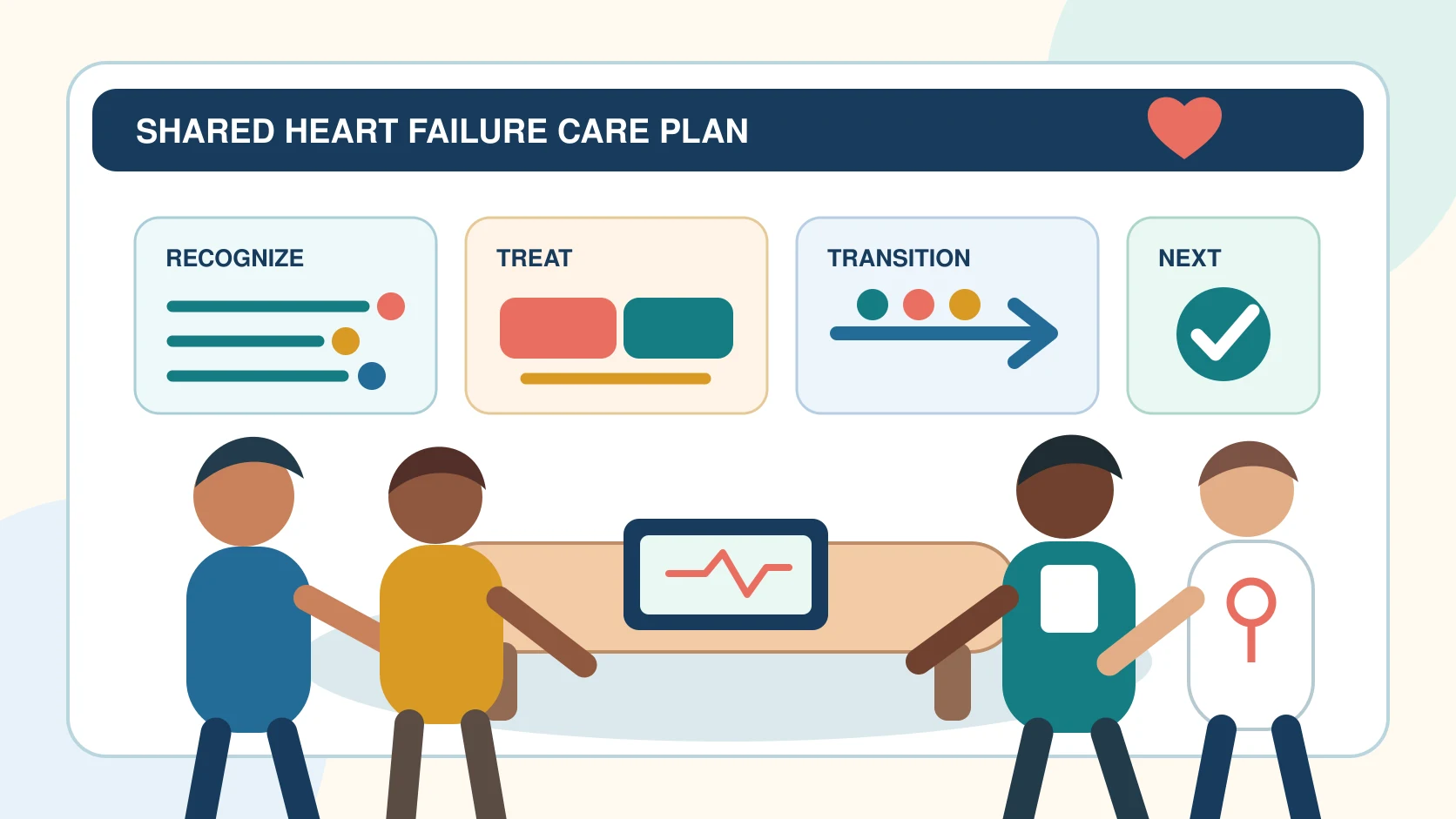
- RecognizeSymptoms, risk, exam, first tests, urgent triggers
- ConfirmDiagnostic testing, phenotype, cause, comorbidities
- StartTherapy, education, safety checks, access plan
- TransitionReconciliation, early contact, laboratory plan, closed loop
- OptimizeTitrate, monitor, document barriers, escalate exceptions
- Live wellFunction, self-care, caregiver support, goals, supportive care
Use: Adapt time windows and clinical criteria to local guidance and scope. This is an operating map, not a clinical protocol.
Failure modes
Find delay, ambiguity, and inequity at the interfaces before adding another program.
Fragmentation often appears as a clinical problem but originates in workflow. An abnormal test may be available but not assigned. A discharge order may list a medication without a laboratory plan. A patient may receive a scale but no monitored channel. A primary care clinician may assume cardiology will titrate, while cardiology assumes the referring team will act. Every queue can look busy while no one owns the next decision.
Medication inertia is similarly multicausal. Clinicians may face limited visit time, uncertain recent laboratory results, unclear titration authority, competing acute concerns, or difficulty reaching the patient. Patients may encounter cost, pharmacy access, adverse effects, misunderstanding, or a regimen that exceeds daily capacity. Standard work should separate clinical reasons, patient preference, access barriers, and process delay. A simple "not on target therapy" measure cannot tell a team what to fix.
Digital programs create another interface. A monitor can detect information but cannot decide who responds, how quickly, or what happens when data stop. The qualitative study of caregivers performing home telemonitoring found that caregiving experience and responsibility shape how monitoring is performed [17]. The evidence base on telemonitoring also shows that intervention components vary widely [2] [12]. Procurement should therefore include clinical workflow, patient and caregiver burden, interoperability, alert governance, after-hours coverage, accessibility, and a plan for nonparticipation.
Equity cannot be inferred from an overall improvement. The 2025 analysis of socio-demographic and ethnic determinants in therapy implementation illustrates why leaders should examine who receives and advances through treatment [7]. Stratification should be selected with patient, community, legal, privacy, and data-governance input. Small numbers require suppression and cautious interpretation. A gap is a signal for investigation, not automatic proof of mechanism.
The most useful equity review connects quantitative and qualitative evidence. If follow-up is slower for a group, teams should examine scheduling rules, geography, transportation, language, digital access, work hours, caregiving demands, trust, medication cost, and the quality of the original handoff. They should also ask patients and staff how the process functions in practice. The goal is not to explain the gap away. It is to identify a changeable barrier and test a response.
Supportive and palliative care can also be lost between services. A formative evaluation of a dyadic intervention found value in bringing self-management, social support, communication about care values, and awareness of palliative care into one design [18]. More recent mixed-methods work found that serious-illness conversations could be worthwhile while still producing ambivalence or distress for some participants [4]. Leaders should avoid both late referral and a scripted conversation that ignores readiness, culture, relationships, or follow-up.
DiagnosisNonspecific symptoms, unclear route, delayed tests, lost results
TreatmentUnclear authority, missing laboratories, access, adverse effects
TransitionReconciliation gaps, no early contact, incomplete handoff
MonitoringAlert overload, missing response standard, digital exclusion
Daily lifeSymptoms, function, cost, transport, caregiver workload
GovernanceMultiple owners, changing definitions, unclosed exceptions
EffectDelayed action, preventable deterioration, or care that does not match patient goals
Evidence basis: Categories synthesize implementation, remote-care, dyadic, and disease-management evidence [1] [9] [12] [14] [17]. This is a cause-discovery tool, not a Pareto ranking.
Operating model
Create one accountable care system with distributed clinical work.
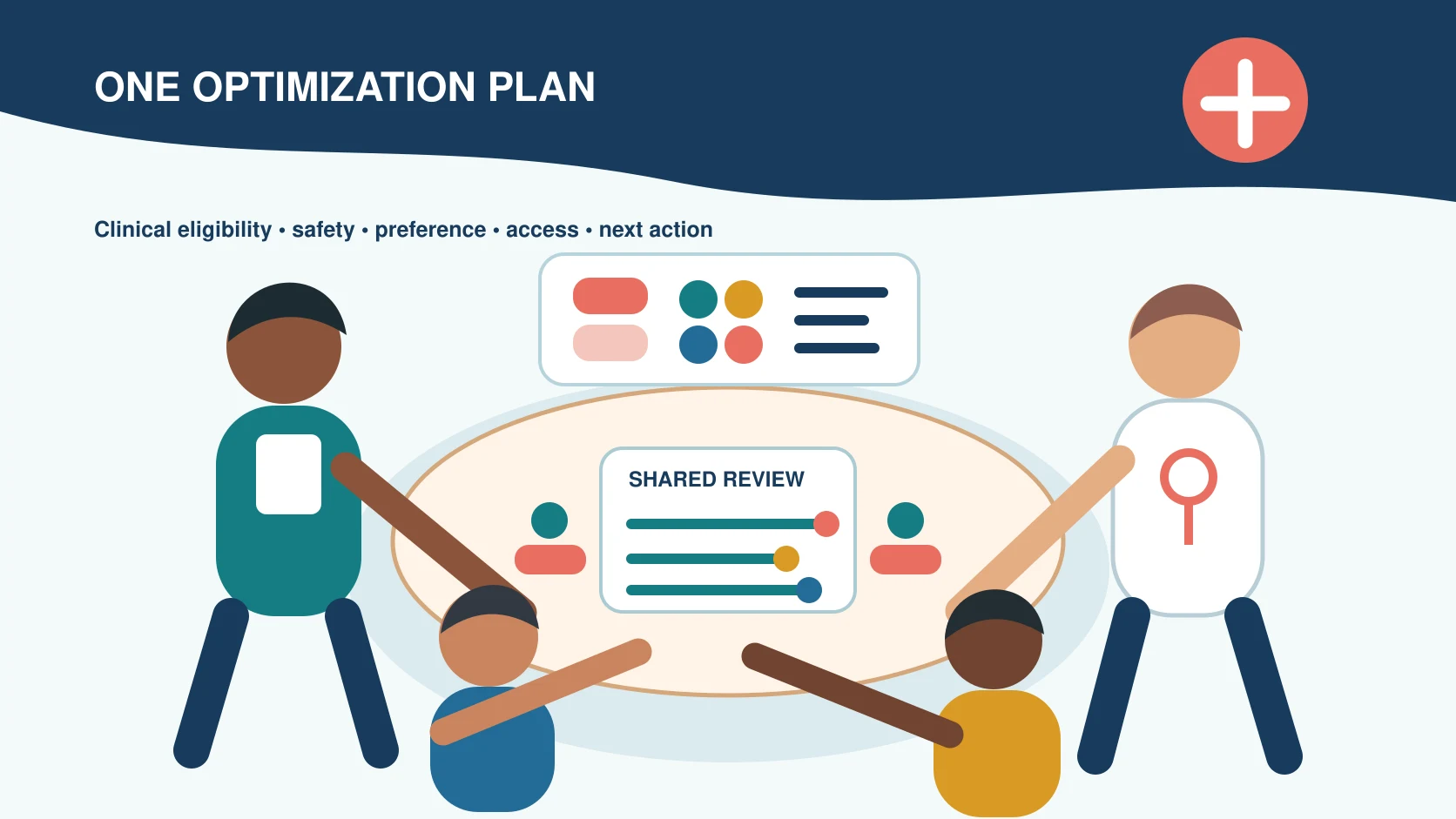
One accountable system does not mean one department performs every task. It means the patient can move across teams without losing the plan. A service-line owner should define the pathway, measures, decision rights, and escalation structure. Clinical leaders should define evidence-based protocols and safety boundaries. Nurses, pharmacists, physicians, rehabilitation professionals, primary care teams, social care partners, palliative care teams, and digital operations can each perform work within clear scope.
The central operating artifact should be a shared longitudinal plan. It should show the diagnosis and phenotype, likely cause, current therapies and reasons for exceptions, laboratory and monitoring schedule, symptoms and functional goals, recent transitions, caregiver role with permission, social needs, advance-care planning status when appropriate, and the next accountable action. A plan that cannot be seen across settings becomes another document rather than an operating tool.
Decision rights should be explicit. Who may start or titrate each therapy? Who reviews laboratory results? Who contacts the patient after discharge? Who responds to a remote alert? Who can route directly to same-day assessment? Who evaluates functional decline, caregiver strain, or worsening symptom burden? When the answer is "it depends," the dependency should be encoded in a rule that staff can use.
The model also needs an exception queue. Standard work will not fit every person, and that is expected. The queue should capture the reason, patient preference, responsible owner, due date, next action, and resolution. Leaders can then distinguish appropriate clinical variation from process failure. Repeated exceptions can identify missing capacity, an access barrier, an overly rigid protocol, or a need for education.
Patient and caregiver partnership should be built into governance. The 2026 qualitative evaluation of a culturally adapted health-coaching program found that participants valued personalized information and consistent access while still identifying persisting gaps [5]. A program can be clinically comprehensive and still be difficult to live with. Patient and caregiver advisors should review education, monitoring workload, contact routes, dashboard measures, and improvement priorities.
Finally, leaders should protect learning time. A weekly operational huddle can resolve current exceptions. A monthly performance review can examine pathway conversion, treatment progress, transition reliability, symptoms, function, experience, safety, and equity. A quarterly clinical review can update protocols and examine adverse events, evidence, capacity, and external partnerships. The cadence should lead to decisions, not more reporting.
Shared centerLongitudinal plan, next action, and exception queue
Recognition and diagnosis
Therapy and safety
Hospital-to-home transition
Monitoring and escalation
Function and living well
Supportive and palliative care
Use: The operating system defines interfaces and accountability. Local clinical governance defines criteria, scope, and escalation thresholds.
| Role | Primary decision | Visible evidence | Escalation trigger |
|---|---|---|---|
| Primary or first-contact team | Does this presentation require a heart failure diagnostic route? | Symptoms, risk, examination, tests ordered, result owner | Urgent instability, high-risk findings, or delayed definitive testing |
| Heart failure clinical team | What phenotype, treatment plan, and monitoring schedule fit this person? | Classification, therapies, exceptions, laboratories, goals | Intolerance, uncertainty, deterioration, or complex comorbidity |
| Transition owner | Can the patient and receiving team safely execute the plan? | Reconciliation, access, education, appointments, early contact | Missing medicine, laboratory, contact, transport, or understanding |
| Navigator or care manager | What is preventing the next completed step? | Barrier, preference, action owner, due date, resolution | Repeated failed contact, cost, language, digital, or caregiver gap |
| Supportive-care partner | What symptom, function, caregiver, communication, or goals support is needed? | Need, preference, referral, conversation, follow-up plan | High burden, conflict, distress, repeated hospitalization, or uncertainty |
| Executive owner | Which system constraint is limiting reliable and equitable care? | Stratified funnel, capacity, exceptions, safety, experience, outcomes | Persistent gap, backlog, unsafe workaround, or unclear accountability |
Governance note: The table is an accountability aid, not a staffing mandate or substitute for clinical judgment.
Executive scorecard
Measure the pathway from suspicion to daily life, not one isolated encounter.
Begin with a diagnostic funnel. Define the population in whom heart failure is suspected, the expected initial evaluation, the time to definitive testing, the time to classification, and the time to a documented plan. Track tests without an owner and referrals that do not reach a decision. If the denominator cannot be defined reliably, leaders should first improve data capture rather than publish a precise rate built on incomplete identification.
The treatment view should show eligibility and clinical exceptions, not simply medication prevalence. For each therapy or treatment domain, report the eligible denominator, initiation, dose or optimization status when clinically meaningful, time to next review, safety monitoring, patient decline, access barrier, and unresolved exception. Registry and implementation studies show why these distinctions matter [1] [6] [10].
The transition view should measure medication reconciliation, patient understanding, access to medicines and equipment, scheduled laboratory testing, early contact, attended follow-up, and closed-loop communication to the receiving team. Readmission is important but is too distal and confounded to diagnose the process by itself. Pair utilization with measures that reveal whether the transition work occurred.
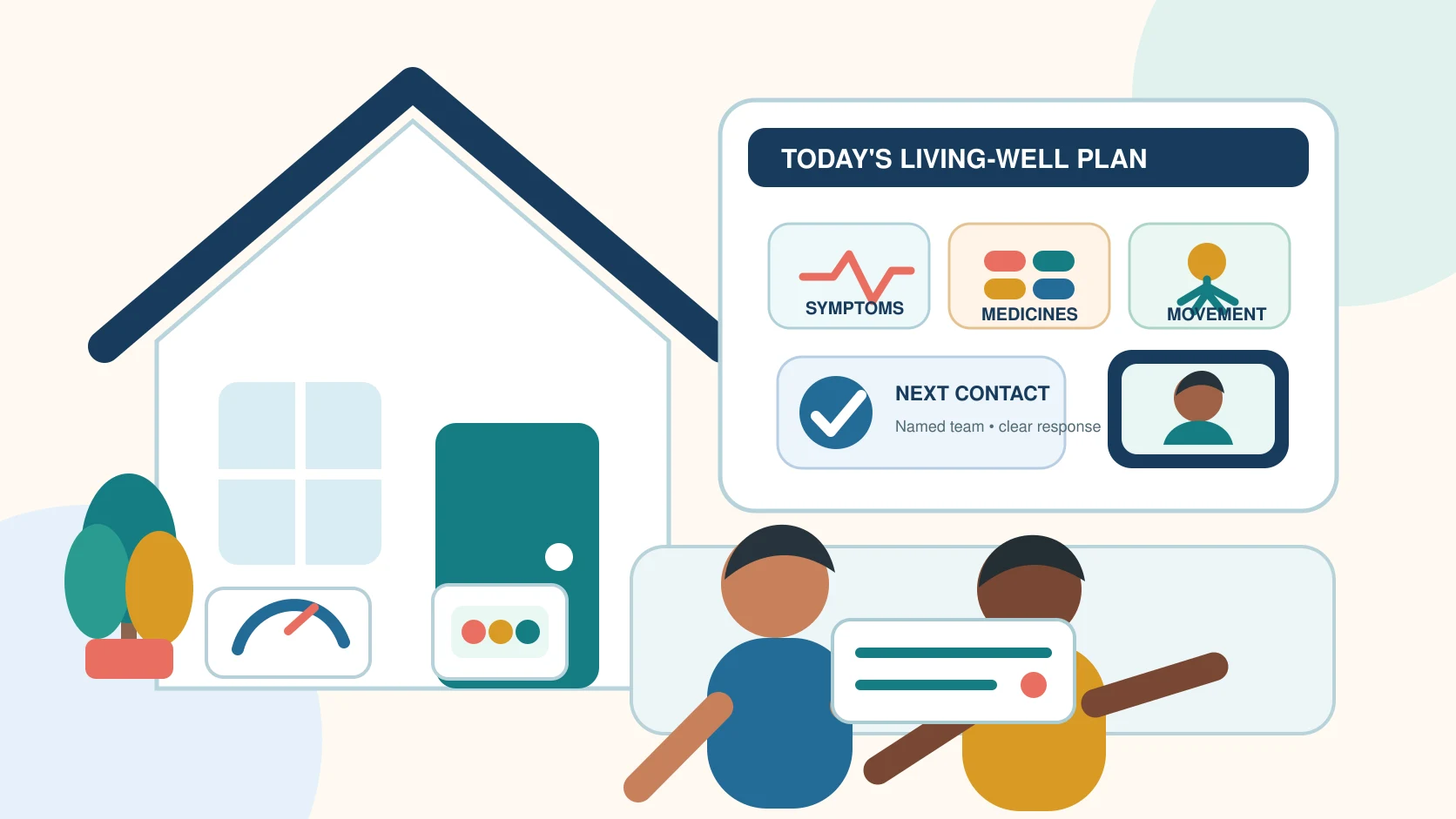
Living-well measures should include symptoms, function, quality of life, confidence, rehabilitation or activity participation, caregiver preparedness when relevant, and the alignment of care with patient goals. Caregiver education, dyadic recognition, and care-dependency studies support assessment of the household care system, while also reminding leaders that families should not become unpaid substitutes for missing professional care [13] [14] [15] [16].
Remote-monitoring measures should include reach, sustained participation, missing-data patterns, alert volume, review timeliness, action rates, false or low-value alerts, patient and caregiver workload, technical support, and outcomes. Report results by access-relevant groups. The mixed telemonitoring literature argues against treating enrollment or device activation as the outcome [2] [12].
Every dashboard should state definitions, time windows, exclusions, data completeness, and small-number rules. A difference between sites or groups is a starting point for review. It is not proof of quality, causation, or inequity without context. The scorecard should connect each signal to an owner, a review rule, and an action.
- Time from suspicion to definitive assessment
- Results with a named owner
- Classification and cause documented
- Stratified access and delay
- Eligible patients initiated
- Time to review and optimization
- Laboratory surveillance
- Reasons for exceptions
- Reconciliation and medicine access
- Early contact and attended follow-up
- Understanding and confidence
- Closed-loop handoff
- Symptoms, function, and quality of life
- Caregiver preparedness
- Remote-workload and response reliability
- Utilization, capacity, and equity
Measurement note: This is a framework, not a validated composite index. Choose a small executive set and retain clinical detail for improvement and safety review.
Ninety-day action plan
Use a focused learning cycle to make the next action visible.
Start with a narrow population and a real pathway, such as adults discharged after acute heart failure or people newly referred with reduced ejection fraction. Define the start and end of the test. Bring together clinical, operational, pharmacy, nursing, primary care, rehabilitation, digital, data, equity, and supportive-care partners. Include patient and caregiver voices from the beginning.
Map the current state using records and observation. Follow several recent patients from first suspicion through the next decision. Record waiting, rework, missing information, unclear ownership, failed contact, patient and caregiver workload, access barriers, and safety concerns. Compare the documented workflow with what actually happened. Select one high-value interface rather than attempting to redesign the entire system at once.
Build the minimum reliable pathway. Specify entry criteria, required information, decision owner, expected time, completion rule, and escalation route. Create an exception queue. Choose measures that can reveal both progress and unintended harm. Test the pathway with a small group, review frequently, and change the design when work does not fit clinical reality or patient capacity.
During implementation, protect the distinction between protocol and judgment. Protocols can reduce avoidable delay and variation, while clinicians and patients still need space to adapt to risk, tolerance, goals, and competing conditions. Document why the pathway changes for an individual. That information is essential for learning and for fair performance interpretation.
By the end of ninety days, the team should be able to show more than a completed project plan. It should demonstrate who owns each decision, how patients move through the test pathway, what proportion reaches the next gate, how quickly exceptions close, what patients and caregivers experience, and whether any group is being left behind. The executive decision is then whether to revise, expand, stop, or invest.
Heart Failure Awareness Week can create visibility, but reliability is built in daily operating work. The enduring goal is a system in which the patient, caregiver, and every team can answer the same question: what is the next action, who owns it, and what happens if the plan is not working?
Select the population, owner, interfaces, and patient-caregiver advisors.
Output: scope, charter, safety boundaryTrace real cases, identify delay and rework, define baseline measures.
Output: current-state map and failure modesSet decision rights, completion rules, escalation, and the exception queue.
Output: minimum reliable pathwayRun a small cohort, review weekly, and examine safety, workload, and equity.
Output: test results and revised designReview evidence, capacity, patient experience, and readiness to expand.
Output: scale, revise, pause, or stop decisionImplementation note: The timeline is an operating guide. Regulatory, clinical, technical, labor, privacy, and contracting requirements may change the sequence.
Make the pathway legible to the people who depend on it.
A high-performing heart failure system does not eliminate complexity. It makes complexity governable. Recognition leads to a named diagnostic action. Diagnosis leads to a shared plan. Treatment changes have safety checks and follow-up. Transitions close. Monitoring triggers a reliable response. Support for function, caregivers, and goals is available before crisis. Every exception has an owner.
That is the executive promise behind Heart Failure Awareness Week: one accountable system for diagnosis, treatment optimization, transition, and living well.
Official and related resources
Official observance source
Related Healthcare Observance Calendar articles
References
- Hamah Saed Hevar, Winstedt TD, Louca A, et al. Standardised, telemonitored titration of guideline-directed medical therapy in heart failure is associated with faster optimisation and improved persistence compared to standard of care. Open Heart. 2026;13(1):e004085. https://doi.org/10.1136/openhrt-2026-004085
- Surducan DA, Margan MM, Gavrilescu DM, et al. Digital Health Strategies in Heart Failure: Effects of Telemedicine and Remote Monitoring on Clinical Outcomes, A Systematic Review and Meta-Analysis. Journal of Clinical Medicine. 2026;15(10):3880. https://doi.org/10.3390/jcm15103880
- McMeekin N, Davies A, Petrie MC, et al. A digital diagnostic pathway for heart failure: an economic evaluation. Cost Effectiveness and Resource Allocation. 2026;24(1):24. https://doi.org/10.1186/s12962-025-00695-9
- Ng A, Yeo SM, Neo SHS. What makes serious illness conversations acceptable? A mixed-methods study of patient and caregiver experiences in oncology and cardiology. Palliative Care and Social Practice. 2026;20:1-13. https://doi.org/10.1177/26323524261460927
- Yeo SM, Ng A, Neo SHS. Navigating life with heart failure: Patient and caregiver perspectives of the culturally adapted Educate, Nurture, Advise, Before Life Ends health coaching programme. Palliative Care and Social Practice. 2026;20:1-10. https://doi.org/10.1177/26323524261435000
- Schjødt I, Valentin JB, Johnsen SP, et al. Real-World Use of Guideline-Directed Therapy for Heart Failure: Insights From the Danish Heart Failure Registry. ESC Heart Failure. 2025;12(4):3003-3017. https://doi.org/10.1002/ehf2.15320
- Laborante R, Delvinioti A, Tomassini F, et al. Impact of socio-demographic and ethnic determinants in guideline-directed medical therapy implementation during heart failure hospitalization. European Heart Journal Open. 2025;5(6). https://doi.org/10.1093/ehjopen/oeaf149
- Echeverría LE, Rojas LZ, Serrano-García AY, et al. Early Prescription of Quadruple Therapy in Acute Decompensated Heart Failure with Reduced Ejection Fraction: A Propensity Score-Matched Analysis. ESC Heart Failure. 2025;12(4):2814-2826. https://doi.org/10.1002/ehf2.15286
- Inam M, Sangrigoli RM, Ruppert L, Saiganesh P, Hamad EA. Advancing Heart Failure Care Through Disease Management Programs: A Comprehensive Framework to Improve Outcomes. Journal of Cardiovascular Development and Disease. 2025;12(8):302. https://doi.org/10.3390/jcdd12080302
- Freedman G, Watt R, Chowdhury EK, et al. Nurse-Led, Remote Optimisation of Guideline-Directed Medical Therapy in Patients with Heart Failure and Reduced Ejection Fraction Across Australia. Journal of Clinical Medicine. 2025;14(15):5371. https://doi.org/10.3390/jcm14155371
- Chan CMC, Li PWC, Lee DPH, et al. Nurse-Coordinated Multidisciplinary Comprehensive Heart Failure Management Programme: A Propensity-Matched Trial. ESC Heart Failure. 2025;12(6):4160-4170. https://doi.org/10.1002/ehf2.15418
- Kwaah PA, Olumuyide E, Kassem F, et al. Non-Invasive Telemonitoring in Heart Failure: A Systematic Review. Medicina. 2025;61(7):1277. https://doi.org/10.3390/medicina61071277
- Türker E, Bedük T. Effect of an Educational Program Intervention for Caregivers of Heart Failure Patients on Patient Symptoms and Quality of Life: A Pretest-Posttest Study. Western Journal of Nursing Research. 2025;47(11):1036-1043. https://doi.org/10.1177/01939459251359208
- Locatelli G, Fabrizi D, Ausili D, et al. Dyadic symptom recognition in heart failure. European Journal of Cardiovascular Nursing. 2025;24(6):873-882. https://doi.org/10.1093/eurjcn/zvaf051
- Özmen S, Özmen M, Yurttaş A, et al. Determining Care Dependency of Patients With Heart Failure: Analytical and Cross-Sectional Study. Nursing Forum. 2025;2025:1-6. https://doi.org/10.1155/nuf/7301141
- Cheng M, Zhu C, Ge Y, et al. The impact of informal caregivers' preparedness on short-term outcomes of heart failure patients with insufficient self-care. European Journal of Cardiovascular Nursing. 2023;22(6):628-637. https://doi.org/10.1093/eurjcn/zvac102
- Aamodt IT, Lie I, Lycholip E, et al. Informal Caregivers' Experiences with Performing Telemonitoring in Heart Failure Care at Home: A Qualitative Study. Healthcare. 2022;10(7):1237. https://doi.org/10.3390/healthcare10071237
- Sebern MD, Sulemanjee N, Sebern MJ, et al. Does an intervention designed to improve self-management, social support and awareness of palliative-care address needs of persons with heart failure, family caregivers and clinicians? Journal of Clinical Nursing. 2018;27(3-4):e643-e657. https://doi.org/10.1111/jocn.14115