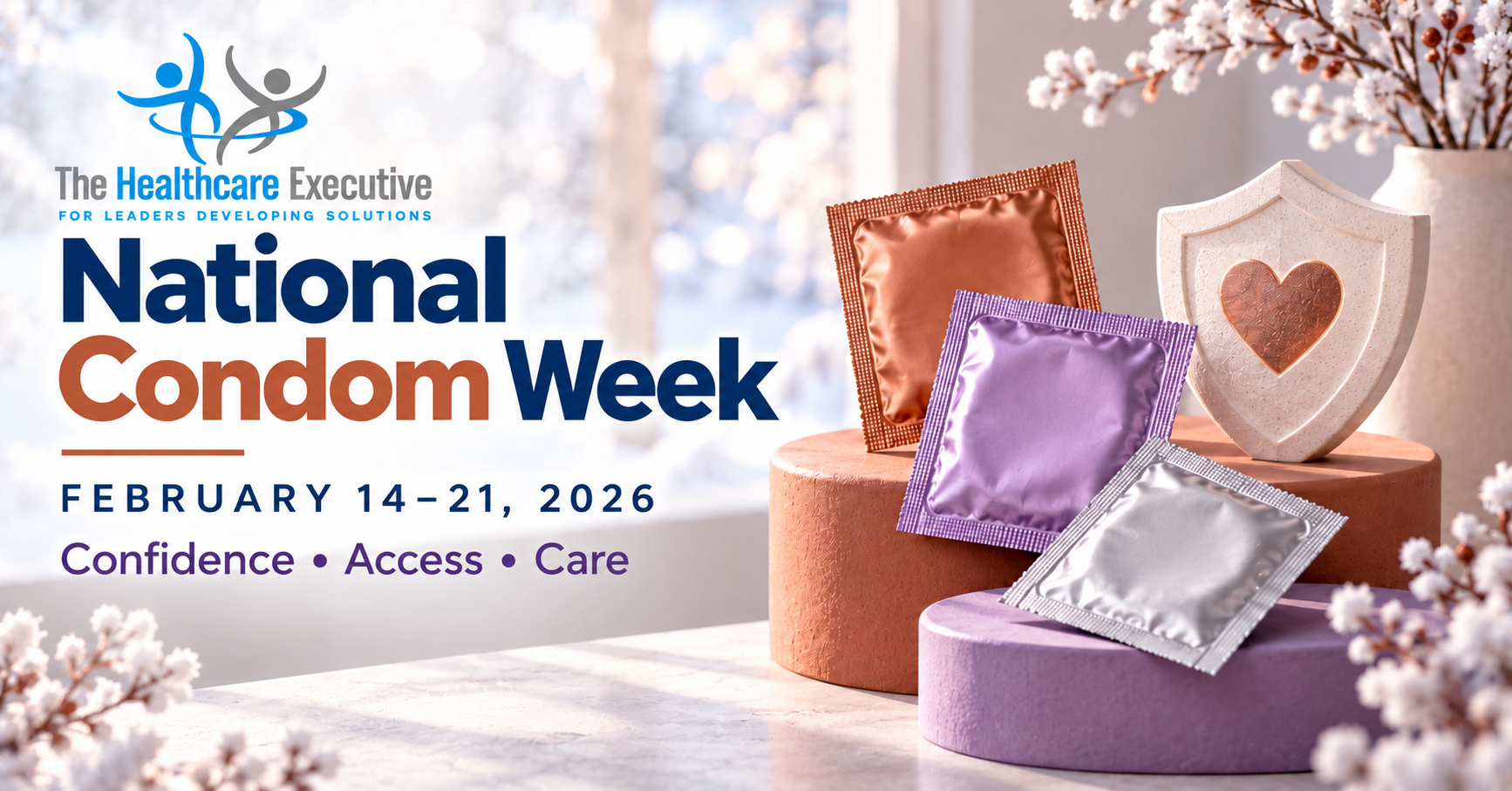


National Condom Week 2026
Make barrier protection, accurate counseling, and confidential sexual health services easier to access without stigma.
Prevention works best when it is easy, private, and free of judgment.
National Condom Week, observed February 14–21, is a simple prompt with a serious operational message. CDC reports that more than 2.2 million sexually transmitted infections were reported in the United States in 2024. Although combined reported cases declined for a third consecutive year, CDC also reports that congenital syphilis increased for the 12th year in a row, with nearly 4,000 reported cases in 2024.
CDC states that consistent use of condoms is highly effective in preventing the spread of HIV and that latex condoms provide an effective barrier against even the smallest STD pathogens. CDC also notes that condoms do not provide absolute protection and cautions that they will not protect against STDs spread by skin-to-skin contact, such as genital herpes or syphilis. That is why barrier protection belongs inside a broader set of services, including counseling, testing, vaccination where appropriate, and treatment.
For health systems, the question is whether those services are genuinely easy to reach. Are condoms available without asking, in exam rooms, restrooms, emergency departments, and school-based or community sites? Can a person request STI testing without a long wait or an uncomfortable conversation at a front desk? Are results delivered confidentially, including for adolescents and people using a parent’s or partner’s insurance?
CDC notes that many STIs have no symptoms or only mild symptoms, so people can have an infection without knowing it. Routine, respectful testing offers therefore matter as much as walk-in access. Clinicians need time, training, and scripts to take a sexual history without judgment, and organizations need billing and communication practices that do not disclose sensitive services to others on a shared account.
National Condom Week is a chance for leaders to review sexual health access as a system: supplies, counseling, testing, treatment, partner services, and follow-up. The goal is not a one-week distribution campaign but a standing expectation that anyone who walks into the organization can get accurate information, barrier protection, and confidential testing without stigma.
Audit where condoms and confidential STI testing are available across your sites, and close at least one access or confidentiality gap before the next quarter.
CDC reports that there were more than 2.2 million reported STIs in the United States in 2024.
CDC reports that congenital syphilis increased for the 12th year in a row, with nearly 4,000 reported cases in 2024.
CDC reports that combined chlamydia, gonorrhea, and syphilis cases declined 9% from 2023 to 2024, a third consecutive year of decline.
Figures are summarized from the authoritative sources linked below. Definitions and denominators should be read with each source.
A confidential route to sexual health care
Four steps make prevention and testing easy to reach and easy to trust.
-
Make supplies visible
Offer condoms and other barrier methods freely across clinical and community sites without requiring a request.
-
Counsel without judgment
Equip clinicians and staff to take sexual histories and discuss prevention options respectfully and accurately.
-
Test routinely and privately
Offer STI testing routinely and make walk-in or self-requested testing simple, with confidential results delivery.
-
Treat and follow up
Ensure timely treatment, partner services where appropriate, and follow-up testing as clinically indicated.
Reliability rule: No sexual health service should require a person to disclose sensitive information in a public space or risk unwanted disclosure through billing or communications.
What leaders should watch
Four instruments show whether access is real and confidential.
Supply availability
Confirm that barrier protection is available where people receive care.
Testing access
Track how quickly people can get STI testing when they ask for it.
Treatment timeliness
Measure how quickly positive results lead to treatment.
Confidentiality protection
Monitor whether confidential services are protected in billing and communications.
Handoffs that protect privacy
Each handoff should carry the clinical information and the confidentiality preference.
From front desk to clinician
- Allow visit reasons to be shared privately rather than at check-in.
- Record the person’s preferred confidential contact method.
- Flag any confidentiality concerns related to insurance or shared accounts.
From laboratory to clinician and patient
- Route results promptly to the ordering clinician.
- Deliver results through the person’s chosen confidential channel.
- Escalate positive results that need timely treatment.
From clinic to public health and partner services
- Complete required reporting accurately and on time.
- Offer partner services as appropriate and with the person’s involvement.
- Confirm follow-up testing plans when clinically indicated.
Confidentiality preferences should travel with the record so that every team member can honor them.
A scorecard for sexual health access
Four questions keep prevention and testing on the leadership agenda.
| Signal | Executive question | Accountable owner | Review cadence |
|---|---|---|---|
| Supply | Can anyone get barrier protection at our sites without asking? | Ambulatory operations and community health leaders | Monthly |
| Testing | Can people get STI testing quickly and confidentially? | Primary care and sexual health service leaders | Monthly |
| Treatment | Are positive results treated promptly with appropriate follow-up? | Infectious disease and quality leaders | Quarterly |
| Respect | Do patients report respectful, judgment-free sexual health care? | Patient experience leaders | Quarterly |
A 90-day plan
Turn one week of attention into standing access.
Start with a site-by-site inventory of supplies and services. Fix confidentiality gaps before expanding volume. Train staff with practical scripts rather than general awareness. Measure access the way patients experience it.
Days 1–30: Inventory access
- Map where condoms, counseling, and STI testing are available.
- Review billing and communication practices for confidential services.
- Collect patient and staff feedback on barriers.
Days 31–60: Close gaps
- Place barrier protection in high-traffic clinical and community locations.
- Simplify walk-in or self-requested STI testing.
- Train staff on respectful sexual history taking.
Days 61–90: Sustain and report
- Review supply, testing, and treatment measures.
- Address any confidentiality concerns reported.
- Report progress to executive leadership and community partners.
Make prevention the easy choice.
National Condom Week is a reminder that prevention depends on access, accuracy, and trust. Health systems can make those conditions part of everyday care.
Turn National Condom Week into accountable action.
Make barrier protection, accurate counseling, and confidential sexual health services easier to access without stigma.
Leadership focus
Make counseling, barrier protection, STI testing, treatment, and respectful care easy and confidential to access.
Workforce lens
Train clinicians and front-line staff to discuss sexual health respectfully and to protect confidentiality at every step.
Patient and community lens
Offer barrier protection freely and make testing and results confidential and simple to request.
Equity and access lens
Review access by age, neighborhood, language, and coverage, and place services where people who face the most barriers already go.
Inspect the operating sequence
CDC reports more than 2.2 million STIs in 2024 and a continued rise in congenital syphilis. We will audit access to barrier protection and confidential testing across our sites and close the gaps we find.
- 01Make supplies visible
- 02Counsel without judgment
- 03Test routinely and privately
- 04Treat and follow up
Leadership actions for this week
- Name an executive sponsor and frontline operating owner.
- Ask people using and operating the pathway where ownership becomes unclear.
- Test one representative route from first question to acknowledged next step.
- Select one barrier that can be corrected without overstating the evidence.
- Set a review date and define how completion will be verified.
Candidate measures
Define every numerator, denominator where relevant, owner, data source, exclusions, cadence, and limitation locally. These are management prompts, not external benchmarks.
- Share of sites with condoms freely available at every scheduled check
- Median days from request to completed STI test
- Median days from positive result to documented treatment
Department readiness checklist
- The public and staff entry points match the actual approved process.
- A specific role accepts each request, referral, or escalation.
- Handoffs include acknowledgment and a visible unresolved state.
- Language, disability, digital, transportation, and trust barriers receive explicit review.
- Communications do not introduce unsupported themes, statistics, or clinical advice.
- A named leader will review what changed after the observance.
Intended audiences
- Executive and Operational Leaders
- Public Health and Community Partners
Staff communication template
During National Condom Week, our organization will review how easily people can get barrier protection, counseling, and confidential STI testing. Please help us identify places where access or privacy could be improved.
Community communication template
National Condom Week is a reminder that sexual health services are part of routine care. Ask our staff or community partners where to find free condoms and confidential testing.
Measurement worksheet
- Signal
- What observable condition will show whether the route works?
- Definition
- What is included, excluded, and counted?
- Owner
- Who reviews the signal and acts on exceptions?
- Cadence
- When will leaders review it?
- Equity check
- Which differences require protected, locally appropriate review?
- Closure
- What evidence will confirm the improvement was completed?
Authoritative resources
- Sexually Transmitted Infections Surveillance, 2024 (Provisional), Centers for Disease Control and Prevention
- Condom Use: An Overview, Centers for Disease Control and Prevention
- About Sexually Transmitted Infections (STIs), Centers for Disease Control and Prevention
- National Condom Week, National Coalition of STD Directors
Verification note: The National Coalition of STD Directors lists National Condom Week as February 14–21. No single official campaign owner or 2026 theme was verified on the pages reviewed.