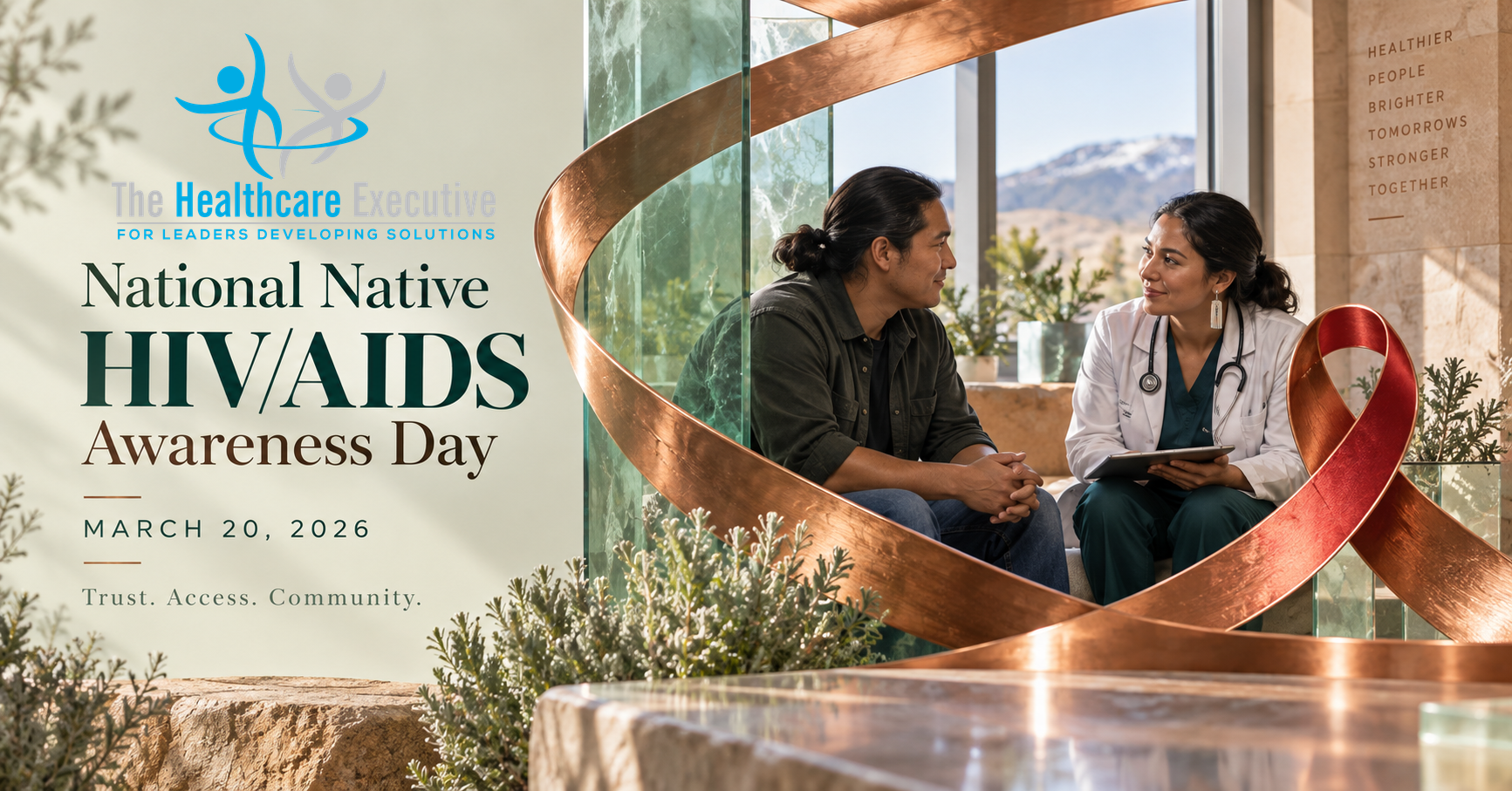


National Native HIV/AIDS Awareness Day 2026
Support Tribal and Native-led, culturally grounded routes to HIV testing, prevention, treatment, and freedom from stigma.
HIV progress in Native communities follows Native leadership.
National Native HIV/AIDS Awareness Day is observed every March 20 and was first observed in 2007. The National Institutes of Health describes it as highlighting efforts to address HIV and its impact in American Indian and Alaska Native communities and encouraging HIV education, testing, prevention, and treatment. The March 20 date was chosen by the Native community as a celebration of life for all people, and health systems should approach the day in that spirit.
The data show why sustained attention matters. The Indian Health Service reports 191 new HIV diagnoses among American Indian and Alaska Native people in 2024, and a diagnosis rate of 9.2 per 100,000, nearly twice the rate of 4.8 among White people. IHS also reports that the rate among American Indian and Alaska Native women was more than twice that among White women. These are not abstractions for systems that serve Tribal communities or urban Native populations.
Awareness of status is a critical gap. NIH reports that for every 100 American Indian and Alaska Native people with HIV, an estimated 80 are aware of their status, the lowest rate of any racial or ethnic group. People who do not know their status cannot benefit from treatment. Testing that is routine, confidential, culturally respectful, and easy to reach is therefore a leadership responsibility, not only a clinic task.
The right starting point is partnership. Tribal Nations are sovereign governments, and Tribal health programs, IHS facilities, and urban Indian organizations already lead much of this work. Health systems add value by supporting Native-led strategies, aligning referral routes, sharing capacity, and respecting Tribal authority over programs and over data about their communities, including how data are collected, shared, and reported.
Stigma remains a barrier to testing, prevention, and staying in care. Culturally grounded services, Native staff and community health representatives, and clinicians trained in respectful, trauma-informed practice all help. A reliable system makes sure that a positive test leads quickly to treatment, that prevention options such as PrEP and PEP are explained and accessible, and that people are not lost between Tribal, IHS, urban, and hospital services.
Formalize a partnership with the Tribal and urban Indian health programs your system serves that covers HIV testing, linkage to care, and data governance on terms those partners set.
IHS reports that there were 191 new HIV diagnoses among American Indian and Alaska Native people in 2024, up 2.1% from 187 in 2023.
IHS reports that in 2024 the rate of new HIV diagnoses among American Indian and Alaska Native people was 9.2 per 100,000, nearly twice the rate of 4.8 among White people.
NIH reports that for every 100 American Indian and Alaska Native people with HIV, an estimated 80 are aware of their HIV status, the lowest rate of any racial or ethnic group.
Figures are summarized from the authoritative sources linked below. Definitions and denominators should be read with each source.
Build one route with Native partners, from testing to thriving.
The route below is a framework to adapt with Tribal and urban Indian health partners, not a model to impose.
-
Partner and listen
Agree priorities, roles, and data governance with Tribal and urban Indian health programs before designing services.
-
Test routinely
Make confidential, culturally respectful HIV testing a routine offer in emergency, primary care, and prenatal settings under local protocols.
-
Prevent and link
Explain and provide access to prevention options, and link every person with a positive result to treatment quickly.
-
Support without stigma
Keep people in care with culturally grounded support, Native staff and community partners, and respectful clinical practice.
Reliability rule: Every positive HIV test should have a named owner responsible for confirmed linkage to care, coordinated with the person’s chosen Tribal, IHS, or urban Indian provider.
Measure testing, linkage, and partnership.
These instruments are local management prompts; data about Native communities should be collected and shared on terms agreed with Tribal partners.
Testing reach
Track whether HIV testing is offered routinely in the settings agreed with partners.
Linkage to care
Track how quickly people with a new positive result begin HIV care.
Prevention access
Track whether people who could benefit from prevention are offered it.
Partnership health
Track whether agreed actions with Tribal and urban Indian partners are completed.
Protect the handoffs between systems of care.
Native patients often move between Tribal, IHS, urban Indian, and hospital services.
From hospital testing to HIV care
- Communicate results confidentially and in person where possible.
- Book the first HIV care visit before the person leaves.
- Ask which Tribal, IHS, or urban Indian provider the person wants involved.
From hospital to Tribal, IHS, or urban Indian programs
- Share information only with the person’s consent and under agreed data rules.
- Send the care plan, medications, and follow-up dates.
- Name a contact on each side for questions.
From emergency care to prevention follow-up
- Offer PEP information promptly after a possible exposure under local protocol.
- Arrange follow-up testing and a prevention conversation.
- Connect the person to culturally grounded support if they want it.
Consent, confidentiality, and Tribal data governance should shape every handoff, especially in small communities where privacy risks are higher.
Give the board four questions it can repeat.
A short scorecard keeps HIV care for Native patients visible and accountable to partners.
| Signal | Executive question | Accountable owner | Review cadence |
|---|---|---|---|
| Testing | Are we routinely offering respectful, confidential HIV testing? | Emergency and primary care leaders | Quarterly |
| Linkage | Are people with a new diagnosis starting care quickly? | Infectious diseases and care coordination leaders | Monthly |
| Partnership | Are we delivering what we agreed with Tribal and urban Indian partners? | Community health and executive sponsor | Quarterly |
| Stigma | Do Native patients report being treated with respect? | Patient experience and equity leaders | Quarterly |
Run a 90-day partnership sprint.
National Native HIV/AIDS Awareness Day is a practical anchor for starting or renewing work with Native partners.
Start by meeting Tribal and urban Indian health partners and asking what they need from the health system. Agree data governance before collecting or sharing new data. Choose one or two shared actions, such as routine testing or faster linkage, and deliver them well. Report progress to partners and executive leadership together.
Days 1–30: Listen
- Meet Tribal and urban Indian health partners to hear their priorities.
- Agree how data will be governed and shared.
- Name an executive sponsor and a clinical lead.
Days 31–60: Act together
- Implement one agreed testing or linkage improvement.
- Offer cultural humility and stigma-reduction training to relevant staff.
- Confirm referral routes and named contacts on both sides.
Days 61–90: Review together
- Share agreed measures with partners first.
- Review what worked and what partners want changed.
- Agree the next shared actions and timelines.
Celebrating life means making care reachable.
National Native HIV/AIDS Awareness Day 2026 calls attention to HIV in American Indian and Alaska Native communities; health systems can respond by supporting Native-led, culturally grounded routes to testing, prevention, treatment, and freedom from stigma.
Turn National Native HIV/AIDS Awareness Day into accountable action.
Support Tribal and Native-led, culturally grounded routes to HIV testing, prevention, treatment, and freedom from stigma.
Leadership focus
Support Tribal and Native-led, culturally grounded routes to HIV testing, prevention, treatment, and freedom from stigma, with respect for Tribal sovereignty and data governance.
Workforce lens
Offer cultural humility and stigma-reduction training, and support Native staff and community health partners in HIV testing and care.
Patient and community lens
Make HIV testing confidential, respectful, and routine, and explain prevention and treatment options clearly.
Equity and access lens
Work with Tribal and urban Indian partners to address distance, transportation, privacy in small communities, and coordination across systems of care.
Inspect the operating sequence
National Native HIV/AIDS Awareness Day is observed every March 20. IHS reports that the rate of new HIV diagnoses among American Indian and Alaska Native people is nearly twice that among White people. Our task is to support Native-led work on testing, prevention, treatment, and stigma, on terms our partners set.
- 01Partner and listen
- 02Test routinely
- 03Prevent and link
- 04Support without stigma
Leadership actions for this week
- Name an executive sponsor and frontline operating owner.
- Ask people using and operating the pathway where ownership becomes unclear.
- Test one representative route from first question to acknowledged next step.
- Select one barrier that can be corrected without overstating the evidence.
- Set a review date and define how completion will be verified.
Candidate measures
Define every numerator, denominator where relevant, owner, data source, exclusions, cadence, and limitation locally. These are management prompts, not external benchmarks.
- Share of eligible encounters with a documented HIV test offer
- Median days from positive result to first HIV care visit
- Share of eligible patients with a documented PrEP discussion or referral
Department readiness checklist
- The public and staff entry points match the actual approved process.
- A specific role accepts each request, referral, or escalation.
- Handoffs include acknowledgment and a visible unresolved state.
- Language, disability, digital, transportation, and trust barriers receive explicit review.
- Communications do not introduce unsupported themes, statistics, or clinical advice.
- A named leader will review what changed after the observance.
Intended audiences
- Executive and Operational Leaders
- Public Health and Community Partners
Staff communication template
During National Native HIV/AIDS Awareness Day, our organization will review how we offer HIV testing and linkage to care with our Tribal and urban Indian health partners. Please share where Native patients face barriers to respectful, confidential HIV care.
Community communication template
March 20 is National Native HIV/AIDS Awareness Day, a celebration of life for all people. We stand with Tribal and Native community partners in encouraging HIV education, testing, prevention, and care free from stigma.
Measurement worksheet
- Signal
- What observable condition will show whether the route works?
- Definition
- What is included, excluded, and counted?
- Owner
- Who reviews the signal and acts on exceptions?
- Cadence
- When will leaders review it?
- Equity check
- Which differences require protected, locally appropriate review?
- Closure
- What evidence will confirm the improvement was completed?
Authoritative resources
- National Native HIV/AIDS Awareness Day, NIH HIVinfo
- HIV Statistics, Indian Health Service
- National Native HIV/AIDS Awareness Day Toolkit 2026, AIDSVu
- Preventing HIV with PEP, CDC
Safety note: CDC states that PEP must be started within 72 hours (3 days) after a recent possible exposure to HIV, and advises talking right away to a health care provider, an emergency room doctor, or an urgent care provider about PEP after a possible exposure.
Verification note: NIH HIVinfo confirms National Native HIV/AIDS Awareness Day is observed annually on March 20 and was first observed in 2007. No official 2026 theme was found on NIH, IHS, or HIV.gov pages reviewed.