

National Women’s Health and Fitness Day • September 30, 2026
National Women’s Health and Fitness Day 2026: Turn Awareness Into an Equitable Route to Participation
A practical executive framework for connecting a one-day observance to person-defined goals, safe clinical guidance, accessible community options, dependable handoffs, and measurable follow-through.
National Women’s Health and Fitness Day can be more than a collection of exercise tips. For healthcare executives, it can be a focused test of whether the care system makes physical activity understandable, acceptable, safe, and realistically available to women with different goals, bodies, identities, abilities, schedules, and life-stage needs.
The executive opportunity
An observance earns operational value when a woman who responds to it can move from interest to a suitable option without navigating disconnected departments alone. That path may begin in primary care, obstetrics, rehabilitation, behavioral health, an employee program, a community organization, or a digital channel. The entry point matters less than whether the route respects the woman’s priorities and leads to a credible next step.
The evidence does not support one universal campaign or one ideal form of exercise. It points toward multilevel design: clear safety guidance, choice, social support, accessible facilities, culturally relevant options, family-aware scheduling, human follow-up, and attention to neighborhood conditions. It also shows why leaders should distinguish a message sent, a referral accepted, a first session attended, and participation sustained.
Three decisions for September 30
- Name one accountable route owner. Give one leader responsibility for the path from awareness to follow-up across clinical and community partners.
- Offer choices, not a single prescription. Match options to preferences, readiness, function, safety, culture, cost, location, and time.
- Measure the handoff. Track who receives an offer, accepts a connection, participates, reports a safe experience, and returns for reassessment.
Evidence review
Physical activity is personal, but access is produced by a system
Leaders can unintentionally frame participation as a motivation problem. Recent research presents a more complex picture. In a qualitative synthesis of 23 studies involving young adult women, reported influences included time, body image, family duties, social support, culture and religion, facilities, safety, and the physical environment. These contributors interact; the review did not rank them or estimate their individual effects.13 A qualitative meta-synthesis of Asian American women’s experiences similarly found that activity may be embedded in daily life rather than understood as formal exercise. Cultural norms, gender roles, family support, safe settings, the built environment, car dependence, and cultural relevance shaped participation.5
The implication is operational. A standard gym referral may fit one person and fail another who prefers walking with family, uses transit, needs an accessible entrance, does not feel safe in a particular setting, or has caregiving responsibilities. A system should ask what meaningful movement looks like to the person, then match the route to that answer. It should also test whether the option is affordable, geographically reachable, physically accessible, psychologically safe, and available at a workable time.
Research focused on women with physical disabilities reinforces that participation depends on the social and physical environment, not only individual intention. A systematic review grouped reported barriers into eight types and emphasized the importance of inclusive settings and access conditions.12 The categories do not provide prevalence estimates, and the review excluded rehabilitation activity and temporary impairments. They nevertheless give leaders a practical warning: promotion without an accessible route can amplify inequity by creating demand that the system cannot serve.
Figure note. Lorenzo and colleagues reviewed 13 reports representing nine interventions and 2,303 Hispanic women. The chart displays intervention-study counts for two target levels. These values are not participant response rates, comparative effect sizes, or proof that one level causes greater improvement. No included intervention evaluated maintenance beyond nine months.7
Multilevel design is more credible than motivation-only messaging
The systematic review summarized in Figure 1 found that successful interventions used techniques addressing confidence, goals, problem-solving, partner support, childcare, access, weather, and safety. Only self-efficacy and family participation were tested as mediators associated with post-intervention activity. This is not a recipe that can be copied mechanically, and the limited maintenance window matters. It is evidence that the operating environment and family context deserve the same executive attention as education.
This distinction should shape the observance message. “Be more active” assigns the next step to the individual. “Tell us what would make movement workable, and we will connect you to a fitting option” assigns responsibility to the system as well. The second promise is harder because it requires capacity, navigation, and accountability. It is also more likely to reveal correctable barriers.
Life-stage design
Use one front door with different clinical and community pathways
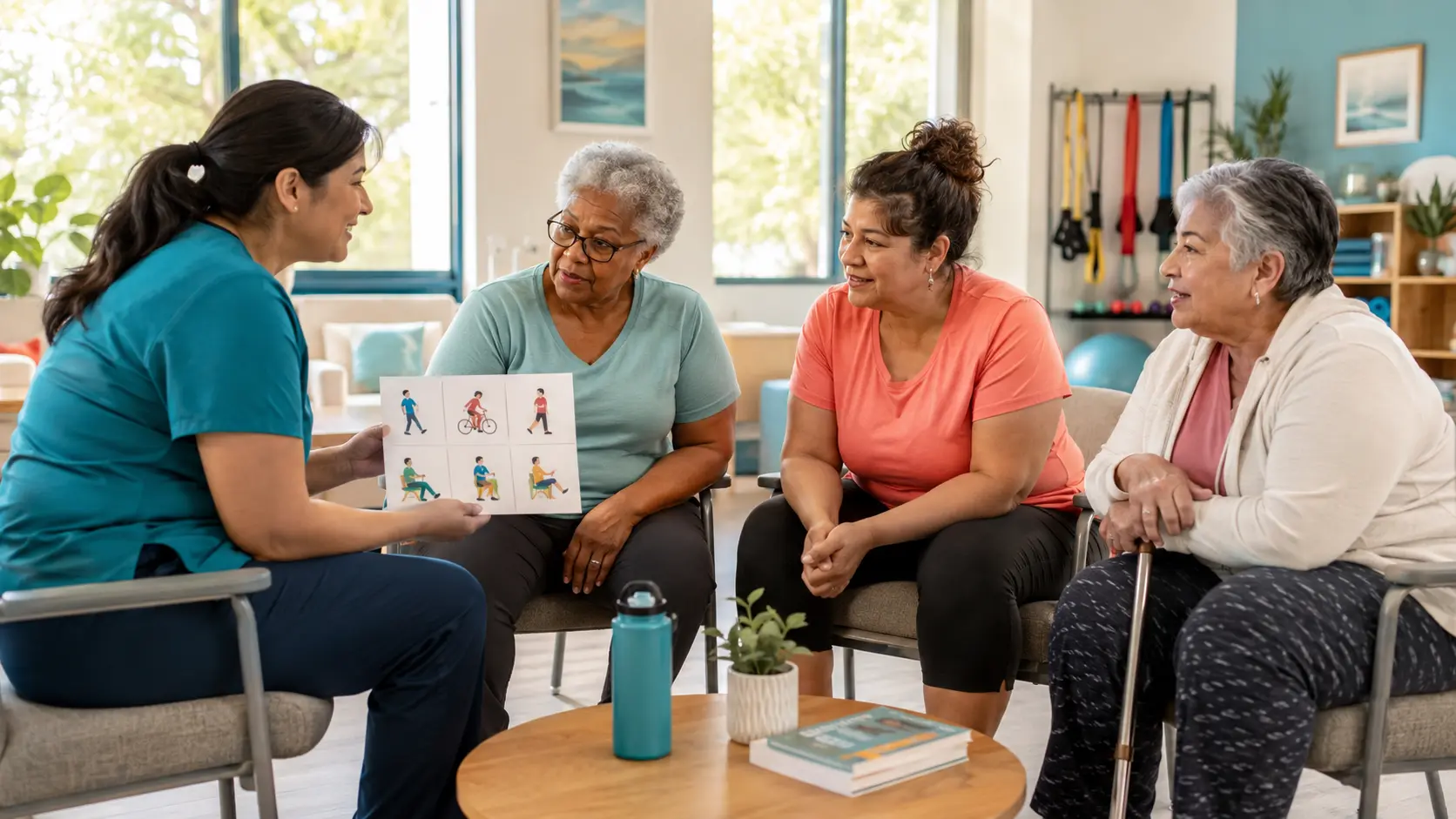
Women do not enter the route with identical questions. Some want more energy or social connection. Others are managing pain, pregnancy symptoms, postpartum recovery, chronic conditions, mental-health symptoms, disability, or changes in strength and balance. A single front door can still work if it branches into clinically appropriate and personally acceptable pathways.
Pregnancy and postpartum
A qualitative systematic review of 25 studies found that pregnancy symptoms, uncertainty about safe activity, and opinions within a woman’s social circle commonly functioned as barriers. Social support and perceived physiological, psychological, and social benefits could enable participation.14 The lesson is not simply to distribute a target number of minutes. It is to create a reliable place for questions about safety, symptoms, progression, and support.
Guidelines themselves require careful implementation. A 2026 systematic appraisal of 18 postpartum physical-activity guidelines found AGREE II scores ranging from 50% to 92%, with seven guidelines, or 39%, meeting the review’s satisfactory methodological-quality threshold. Recommendations commonly included moderate-intensity activity plus pelvic-floor and strengthening exercise, but the review identified limitations in implementation evidence and guidance related to delivery mode.3 Executives should therefore avoid treating a numeric recommendation as a complete pathway. A postpartum route needs individualized progression, symptom escalation, clinician availability, and connection to suitable programs.
For women with a history of gestational diabetes, expectations should remain balanced. A 2026 meta-analysis of 17 randomized trials involving 6,535 women found small reductions in weight, waist circumference, and systolic blood pressure after combined diet and physical-activity interventions, but no significant effect on blood lipids, glycemic outcomes, diastolic pressure, or type 2 diabetes incidence at the assessed interval.1 The interventions combined diet and activity, and some outcomes were heterogeneous. An observance campaign should not promise broad cardiometabolic risk reduction. It can promise a supported route to evidence-informed care and follow-up.
Midlife and menopause
Physical activity may support mental health during menopausal transition and menopause. A meta-analysis of 21 randomized studies with 2,020 participants reported improvements in depressive and anxiety symptoms, but several subgroup analyses showed substantial heterogeneity and intensity comparisons were not statistically distinct.9 Leaders can communicate the potential benefit while preserving choice and avoiding a universal dose claim beyond established guidance.
Midlife also presents an opportunity to discuss function. A systematic review and meta-analysis of 26 observational studies found that many apparent differences in physical function by menopausal status weakened after adjustment for age, although handgrip strength was a notable exception.4 Because these data are observational, they do not establish that menopause caused the differences. A constructive pathway focuses on what can be assessed and supported now: strength, balance, mobility, symptoms, confidence, and goals.
Older adulthood and fall-related function
Preferred activities should not be oversold. A systematic review of randomized trials evaluating yoga for fall-related physical function in older women found inconsistent results for balance, gait, and lower-limb strength and did not establish a definitive fall-prevention effect.8 Yoga may still be an acceptable activity for some women, but it is not a substitute for individualized risk assessment or a complete fall-prevention strategy. Executives should connect older adults to routes that can identify functional needs, provide safe progression, and coordinate with rehabilitation or clinical care when appropriate.
Participation route
Design the handoff as a measurable clinical-community process
A referral is not the same as a completed connection. A meta-analysis of 52 physical-activity referral-scheme studies found a small increase over usual care, Hedges’ g 0.18. Uptake and adherence were higher in experimental studies than in nonexperimental studies, and a person-centered approach, screening, and brief advice were positively associated with adherence.10 Component meta-regression did not identify predictors of physical activity or uptake, so leaders should not assume that a single feature guarantees success.
The trial-to-practice gap is visible in another review. Across nine exercise-referral studies involving people referred for mental-health reasons, programs combining face-to-face consultation and telephone contact reported mean uptake of 91.5% and adherence of 71.7%. Trial uptake and adherence were 86.8% and 55.3%, compared with 57.9% and 37.2% in routine practice.15 The studies were few and heterogeneous, but the operational warning is useful: leaders should test the route under ordinary staffing, scheduling, transportation, and communication conditions.
- Awareness responseWoman chooses a digital, clinical, workforce, or community entry point.
- Readiness and preferenceAsk about goals, confidence, safety questions, culture, cost, access, and time.
- Accepted connectionOffer a matched option and confirm that the woman wants the handoff.
- ParticipationConfirm first contact or first session without making attendance punitive.
- Safe follow-upCheck experience, symptoms, fit, barriers, and need for an alternate route.
- ReassessmentReview function and person-defined goals; continue, adapt, or escalate.
Figure note. This is a proposed operating process, not a validated clinical protocol. The separation of referral, uptake, adherence, and follow-up reflects findings from reviews of physical-activity and mental-health exercise-referral schemes.10, 15
Make the first conversation weight-neutral and function-centered
Communication can either open or close the route. A cross-sectional study of 154 women living in larger bodies found that implicit and internalized weight bias were associated with physical-activity-related cognitions and lower self-regulatory efficacy.6 The design does not establish causation, but it supports a safeguard against shame-based messaging. Teams should ask about energy, mobility, strength, sleep, connection, stress, enjoyment, or another goal the woman identifies. Weight may be clinically relevant in some encounters, but it should not be the price of entry or the only outcome that defines success.
Psychological safety also requires attention to identity and environment. In focus groups with 70 queer women, participants described identity visibility, hypervigilance related to safety and gender-based violence, and the importance of spaces that support belonging and connection.2 These qualitative findings do not estimate prevalence. They do make several operating questions unavoidable: Can a participant use her name and pronouns safely? Are bathrooms and changing areas inclusive? Can she choose privacy? Is harassment addressed? Does the program visibly support belonging?
Figure note. The contributors are synthesized as an unranked planning aid from qualitative evidence. The diagram does not estimate frequency, severity, or causal contribution.13
Give digital tools a supporting role
Digital engagement can extend reach, but reach is not the same as effectiveness. A systematic review of technology-supported interventions for girls and young women included 23 studies and 10,233 participants. Only 19 of 53 measured physical-activity outcomes were positive, 18 studies relied mainly on self-report, and just nine were theory-based.11 Mixed designs and variable quality limit generalization. A digital tool should therefore support the route through choice, reminders, navigation, or feedback. It should not replace human support, accessible community capacity, or outcome verification.
Operating model
Connect the interfaces around woman-defined goals
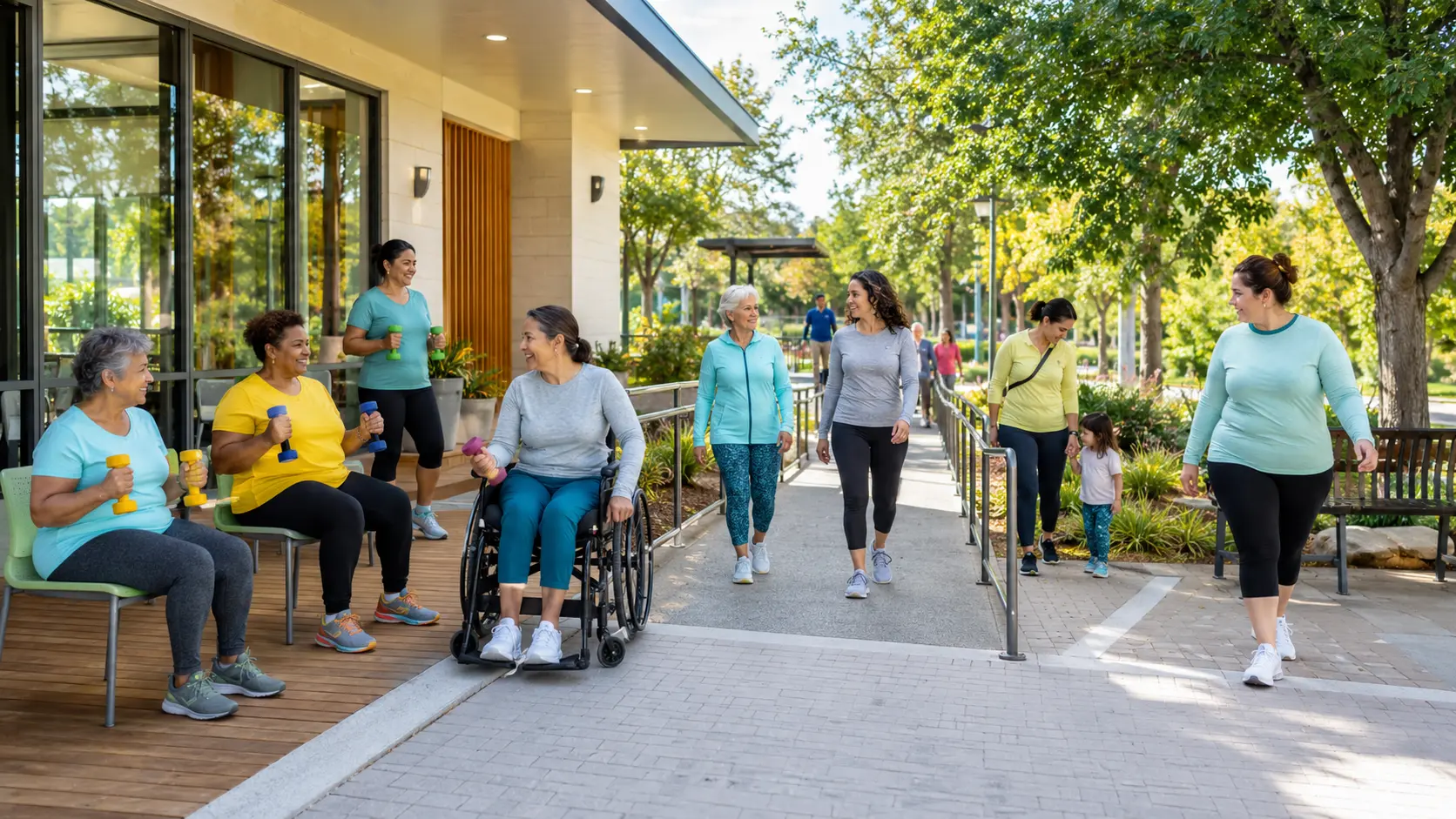
The day should not launch a parallel program that disappears in October. It should expose and improve the interfaces already used by women: the point where a clinician gives advice, a navigator offers options, a community partner receives the connection, and the care team learns what happened. The same operating model can support many populations while allowing pathways to differ.
Figure note. This is a proposed executive operating model. It synthesizes recurring implementation implications across the cited evidence and should be adapted with local participants, clinicians, community organizations, disability-access expertise, and data governance.
Define ownership at every interface
Clinical teams need a small set of questions, a current option directory, and a clear escalation path. Navigators need authority to solve scheduling, transportation, cost, childcare, accessibility, language, and technology barriers. Community partners need a simple way to accept a connection and report whether contact occurred. Participants need to know what information will be shared and must be able to decline without penalty. Program leaders need a feedback loop that changes the route when patterns emerge.
This is also a capacity problem. A campaign can create disappointment if it points women toward wait-listed, unaffordable, inaccessible, or culturally mismatched programs. Before promotion begins, leaders should call or test the listed options, verify schedules and costs, confirm accessibility details, and determine how urgent clinical questions will be handled. Capacity checks are a form of trust protection.
Community design should recognize that not every woman defines activity through a gym or structured class. The Asian American women’s qualitative synthesis found that activity was often part of daily life and was influenced by cultural relevance, family, safety, and the built environment.5 A useful directory might therefore include walking groups, culturally relevant dance, family activities, adapted recreation, home-based choices, strength and balance options, parks, and clinically supervised pathways where indicated.
Measurement
Measure a route, not a campaign impression
Impressions, clicks, and event registrations can describe reach, but they do not show whether women received a usable option. A small measurement set should follow the operating sequence and preserve the denominator at each step. For example, the acceptance rate should use the number receiving a specific offer, not all people exposed to a campaign. First participation should use accepted connections as the denominator. Follow-up should include those who did not attend so the system can learn why.
| Domain | Operational question | Example measure | Interpretation safeguard |
|---|---|---|---|
| Reach | Who encountered the invitation? | Eligible people reached by entry point | Do not treat impressions as participation. |
| Readiness | Was a preference and safety conversation available? | Completed conversations / eligible encounters | A decline is not failure and should not reduce access. |
| Accepted connection | Did the woman choose a specific next step? | Accepted connections / specific offers | Record fit concerns without pressuring acceptance. |
| Participation | Did first contact or first session occur? | Confirmed starts / accepted connections | Verify through consented data or participant report. |
| Function and goals | Did the outcome matter to the participant? | Change in a selected functional or goal measure | Avoid weight as the universal endpoint. |
| Experience | Was the route respectful, safe, and usable? | Participant-reported fit, belonging, and burden | Provide private feedback routes and follow up on harm. |
| Equity | Where does the route lose people? | Stepwise gaps across locally relevant groups | Suppress unstable small cells and avoid deficit framing. |
Figure note. These are proposed implementation measures. Definitions, denominators, privacy protections, and equity stratifiers should be approved locally before use. Referral reviews support separating uptake and adherence rather than reporting a single referral count.10, 15
Interpret differences as signals about the route
If participation differs by age, disability, race or ethnicity, language, geography, insurance, sexual orientation, or another locally relevant factor, the first question should be what the system is doing differently. Review how options were offered, whether suitable capacity existed, whether staff communication was respectful, and whether cost, transportation, caregiving, safety, or accessibility changed the practical choice. Do not publish unstable subgroup comparisons or imply that identity itself caused a gap.
Qualitative evidence is especially useful for designing interview questions. It cannot tell leaders which barrier is most common in their service area. Local listening can. Ask women who declined or disengaged what would have made the route acceptable. Ask community partners where handoffs break. Ask staff which steps are unclear. Pair these accounts with process data to identify a specific change, then retest.

90-day implementation
Use the observance as a deadline for a focused route test
A short improvement cycle is more useful than a broad campaign plan. Start with one population or entry point where leaders can learn quickly, such as primary care, postpartum follow-up, employee health, behavioral health, or a community clinic. Keep the service area narrow enough to verify every listed option and close every handoff.
Days 1 to 30: listen, map, and govern
Appoint an executive sponsor and an operational owner. Convene a small design group that includes women from the intended service area, clinicians, community partners, disability-access expertise, navigation staff, and an analyst. Ask participants what they want from physical activity, what makes a setting unacceptable, and which route details determine whether they can attend. Map the current path from message to participation and identify where ownership disappears.
Define a minimum safe pathway. Teams should know which questions can be handled as general information, which require clinical review, and how urgent concerns are escalated. Inventory community options and record cost, schedule, location, accessibility, languages, childcare or family fit, virtual availability, and contact process. Remove options that cannot be verified.
Days 31 to 60: build and rehearse the route
Create a short preference and readiness conversation, not a long screening burden. Build the option directory into the workflow staff already use. Decide how consent for information sharing is captured. Test a warm handoff in which the participant chooses the option and knows exactly what happens next. Train staff in weight-neutral, function-centered language and inclusive communication. Rehearse failure modes such as a full class, an unanswered call, an inaccessible entrance, a language mismatch, or a symptom that requires clinical follow-up.
Days 61 to 90: pilot, review, and decide
Run the pathway with a small cohort. Review the denominator at each step, not only success stories. Interview participants who accepted, declined, attended, or disengaged. Ask whether the option matched their goals, whether they felt respected and safe, and whether cost, time, transport, caregiving, accessibility, or technology interfered. Examine differences across locally relevant groups only when denominators support responsible interpretation. Then continue, adapt, or stop components based on evidence and experience.
Figure note. This timeline is a proposed management sequence, not an evidence-derived duration. Local scope, governance, contracting, clinical risk, and community capacity may require a longer cycle.
Executive checklist
Questions to resolve before promotion begins
Governance
- Who owns the route from invitation through reassessment?
- Which clinical, community, workforce, and participant partners make decisions?
- What can be changed within the 90-day cycle?
Safety and choice
- How are preferences, readiness, symptoms, function, and safety questions addressed?
- Can women choose among home, community, family, adapted, virtual, and supervised routes?
- Is declining or changing an option easy and penalty-free?
Access and belonging
- Have cost, transportation, childcare, schedule, language, accessibility, privacy, and cultural fit been verified?
- Are staff prepared to respond to weight bias, harassment, and identity-related safety concerns?
- Can a participant report harm or mismatch privately?
Measurement
- Are offer, acceptance, first participation, continued participation, and reassessment separate measures?
- Do outcomes include person-defined function and experience?
- How will privacy and small-group reporting be protected?
Leadership takeaway
The most useful message is a dependable next step
National Women’s Health and Fitness Day can invite attention, but attention alone is not an outcome. The executive task is to make the next step trustworthy. That means listening before matching, connecting clinical guidance to community capacity, preserving choice, designing for access and belonging, and checking what happened after the handoff.
A narrow, well-governed route test can produce practical learning for the rest of the year. It can show which options women value, where capacity is missing, which interface loses people, and how the care system should adapt. Success is not a perfect attendance rate. It is a safer, clearer, more equitable pathway that responds to women’s goals and improves through evidence and experience.
Evidence base
References
- Abdulsalam, R., Michalopoulou, M., Jebb, S. A., Haffner, S. J. P., Fleetwood-Law, T. S., Roberts, N., Aldenhoven, C. M., Knight, H., Willis, L., Scragg, J., & Astbury, N. M. (2026). The effects of dietary and physical exercise interventions among women with a history of gestational diabetes mellitus on cardiometabolic risk: A systematic review and meta-analysis. Diabetes Research and Clinical Practice, 237, 113335. https://doi.org/10.1016/j.diabres.2026.113335
- Bailey, J. A., & Pila, E. (2026). “Embracing my queerness has actually been really healing for the way that I live in my body”: An exploration of queer women’s body image and physical activity. Body Image, 57, 102073. https://doi.org/10.1016/j.bodyim.2026.102073
- Lan, Q., Fu, A. C. L., McKay, M. J., Simic, M., Comachio, J., Tian, Y., & Ferreira, P. (2026). Physical activity postpartum: A systematic review and quality appraisal of clinical guidelines. Women’s Health, 22, 1-10. https://doi.org/10.1177/17455057261421734
- Macêdo, P. R. S., Macêdo, S. G. G. F., Cavalcante, A. R. S., Salustiano, M. A., Lima, M. D. A., Jerez-Roig, J., & Câmara, S. M. A. (2026). Association between menopausal status and physical function: A systematic review and meta-analysis. Climacteric, 29(3), 345-357. https://doi.org/10.1080/13697137.2026.2651720
- Sheng, J., & Qin, S. (2026). Asian American women’s experiences and perceptions of physical activity: A systematic review of the qualitative evidence. Western Journal of Nursing Research, 48(2), 217-228. https://doi.org/10.1177/01939459251393774
- Jabbar, J., Ori, E. M., Gammage, K., Dagenais, M., & Locke, S. (2025). Examining the effects of implicit and internalized weight bias on physical activity cognitions for women in larger bodies. Body Image, 55, 101995. https://doi.org/10.1016/j.bodyim.2025.101995
- Lorenzo, E., Page, J., Wong, R., & Lyons, E. (2025). The socioecological model levels, behavior change mechanisms, and behavior change techniques to improve accelerometer-measured physical activity among Hispanic women: A systematic review. International Journal of Behavioral Nutrition and Physical Activity, 22(1), 1-19. https://doi.org/10.1186/s12966-025-01783-y
- Huang, T.-C., Li, C., & Hsieh, C.-Y. (2025). The effects of yoga on fall-related physical functions for older women: A systematic review of randomized controlled trials. Healthcare, 13(2), 124. https://doi.org/10.3390/healthcare13020124
- Yue, H., Yang, Y., Xie, F., Cui, J., Li, Y., Si, M., Li, S., & Yao, F. (2025). Effects of physical activity on depressive and anxiety symptoms of women in the menopausal transition and menopause: A comprehensive systematic review and meta-analysis of randomized controlled trials. International Journal of Behavioral Nutrition and Physical Activity, 22(1), 1-15. https://doi.org/10.1186/s12966-025-01712-z
- Mino, E., Pfeifer, K., Hanson, C. L., Schuler, M., Brandmeier, A., Klamroth, S., Naber, I., Weissenfels, A., McHale, S., Abu-Omar, K., Gelius, P., Whiting, S., Wickramasinghe, K., Galea, G., & Geidl, W. (2024). Are physical activity referral scheme components associated with increased physical activity, scheme uptake, and adherence rate? A meta-analysis and meta-regression. International Journal of Behavioral Nutrition and Physical Activity, 21(1), 1-21. https://doi.org/10.1186/s12966-024-01623-5
- Watson-Mackie, K., Arundell, L., Lander, N., McKay, F. H., Jerebine, A., Venetsanou, F., & Barnett, L. M. (2024). Technology-supported physical activity and its potential as a tool to promote young women’s physical activity and physical literacy: Systematic review. Journal of Medical Internet Research, 26, e52302. https://doi.org/10.2196/52302
- Olasagasti-Ibargoien, J., Castañeda-Babarro, A., León-Guereño, P., & Uria-Olaizola, N. (2023). Barriers to physical activity for women with physical disabilities: A systematic review. Journal of Functional Morphology and Kinesiology, 8(2), 82. https://doi.org/10.3390/jfmk8020082
- Peng, B., Ng, J. Y. Y., & Ha, A. S. (2023). Barriers and facilitators to physical activity for young adult women: A systematic review and thematic synthesis of qualitative literature. International Journal of Behavioral Nutrition and Physical Activity, 20(1), 1-17. https://doi.org/10.1186/s12966-023-01411-7
- McKeough, R., Blanchard, C., & Piccinini-Vallis, H. (2022). Pregnant and postpartum women’s perceptions of barriers to and enablers of physical activity during pregnancy: A qualitative systematic review. Journal of Midwifery & Women’s Health, 67(4), 448-462. https://doi.org/10.1111/jmwh.13375
- Tomlinson-Perez, S., Machaczek, K. K., Firth, J., Pollard, N., Meda, G., Keddie, E., & Goyder, E. (2022). Evaluation of the uptake, retention and effectiveness of exercise referral schemes for the management of mental health conditions in primary care: A systematic review. BMC Public Health, 22, 249. https://doi.org/10.1186/s12889-022-12638-7