

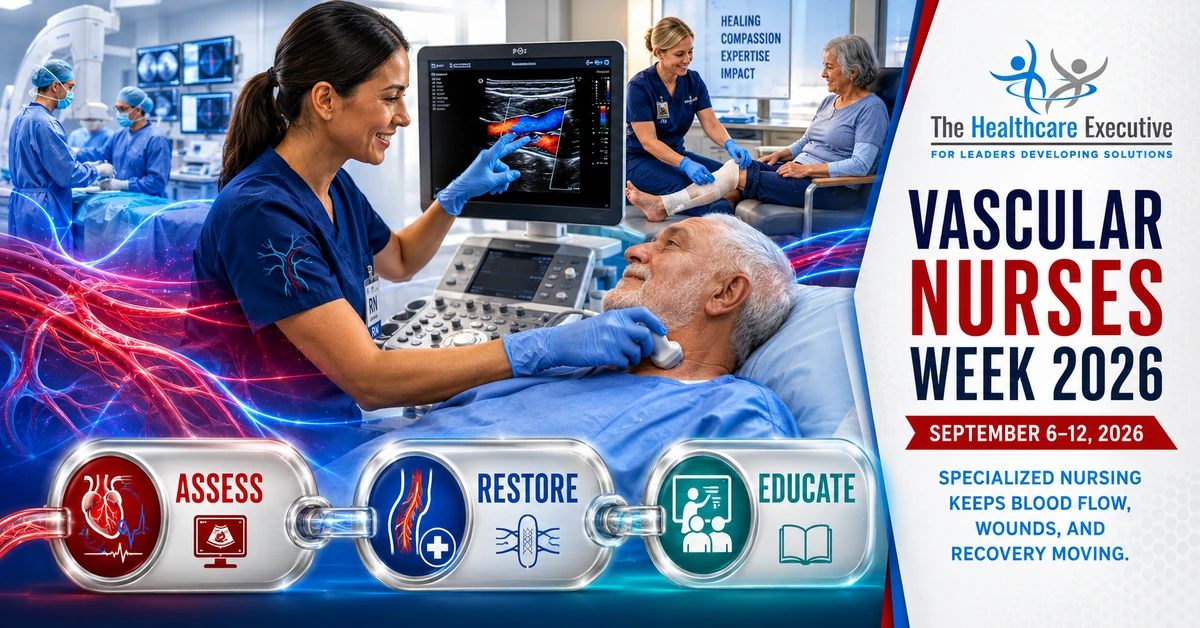
· Executive Brief
Vascular Nurses Week 2026
An executive-guidance framework for role clarity, workload visibility, handoffs, support, and improvement.

Leadership signal
Vascular Nurses Week can serve as an executive operating checkpoint.
Executive attention should extend beyond appreciation messages. Leaders can map where the role enters the operating system, which decisions remain outside its scope, how work is handed off, and whether staff have a safe way to raise barriers and improve the design.
Start by distinguishing what is known from what the organization still needs to learn. A campaign plan, communication volume, or meeting count does not establish that a route is usable. Leaders need direct listening, clear ownership, locally defined measures, and a method for keeping exceptions visible.
Executive opening
Limb preservation is a nursing operations question
Peripheral artery disease is common, often silent and unevenly detected. A 2026 review reported that it affects more than 230 million people worldwide, and that prevalence has almost doubled globally between 1990 and 2021.[10] The same review noted that only about half of physicians establish the diagnosis even when symptoms suggest it.[10] For health systems, that gap turns a manageable chronic condition into emergency admissions, wound clinic backlogs and preventable amputations.
Vascular nurses sit at many of the points where this pathway succeeds or fails. They perform and interpret screening tests, staff wound clinics, prepare patients for interventional procedures, coordinate follow-up after revascularization and support exercise programs. When those touch points are not connected, patients fall between them. A five-state study found that most patients who underwent major lower extremity amputation, more than 70%, had no prior revascularization or minor amputation.[9]
The operating risk is not a shortage of effective tests or treatments. It is that screening is ordered late, results are not acted on, referrals stall and follow-up thins out after the procedure. Among older veterans with a new diabetic foot ulcer, fewer than half received an objective vascular screening test within a year.[7] That finding points to system design rather than individual clinical judgment.
Vascular Nurses Week is a practical moment for executives to ask where vascular patients enter the organization, who owns each handoff and how results are measured. The sections below summarize current peer-reviewed evidence on burden, detection, access, equity, workforce and communication. They are meant to sit beside the executive guidance already on this page and give leaders a shared factual base for choosing where to act first. Vascular nurses often see the earliest signs of a failing pathway, from a delayed test to a missed follow-up call. Their observations belong in operating reviews.
Current evidence
What the research says about burden, detection and missed screening
The burden rises steeply with age and concentrates among patients with other chronic conditions. Prevalence increases from about 10% among people aged 55 to 59 years to 60% among people aged 85 years and older.[10] Chronic limb-threatening ischemia affects approximately 1.3% of adults aged 40 years and older and carries an annual risk of 20% for both mortality and amputation.[10] Smoking, diabetes, hypertension and dyslipidemia account for roughly 75% of cases, which places much of the burden within reach of prevention.[10] Tobacco use and diabetes are the most common associations.[10] Smoking cessation and diabetes programs are therefore natural partners for vascular screening.
Hidden disease is common in patients already under cardiac care. In a cross-sectional study of 383 patients with coronary artery disease at a tertiary hospital in Jordan, 76 patients (19.8%) had coexisting peripheral artery disease by ankle-brachial index.[4] The authors concluded that one in five such patients may have the condition and called for routine screening.[4] In a geriatric cohort of 130 patients at a national referral hospital in Indonesia, 61 (46.9%) were diagnosed with peripheral artery disease.[5]
Screening is underused even where guidelines are clear. In a national Veterans Affairs cohort of 57,265 patients aged 65 years and older with a new diabetic foot ulcer, 46.0% completed an ankle-brachial or toe-brachial index within a year.[7] Testing reached 74.5% of patients with complicated ulcers but only 43.0% of those with uncomplicated ulcers.[7] The median wait was 2 days for complicated ulcers and 32 days for uncomplicated ones, suggesting testing was often reserved for advanced disease.[7]
Facility practice mattered as much as patient characteristics. After adjustment, the median odds ratio for testing across facilities was 2.40, which the authors read as a sign that systemic barriers shape screening practice.[7] For executives, this is the most useful finding: variation between sites is a design problem that leaders can see and change.
The downstream consequences are visible in amputation data. In the five-state cohort of 21,233 patients who underwent major amputation from 2017 to 2019, over half were hospitalized at least twice in the preceding year.[9] Each of those admissions was a possible moment for vascular assessment, wound referral or limb-sparing care. Most health systems already hold the data needed to find those moments in their own patients, but few review it routinely. Taken together, the evidence describes a pathway with many entry points and too few reliable handoffs.
Figure 1
Vascular pathways reach too few patients at key steps
Percent of patients or limbs at a pathway step, as reported in each study. Values are copied from the cited studies [2], [7], [12]; none is estimated.
Data note. These values come from different studies, populations and definitions, so this is an indirect comparison; the bars show where vascular pathways lose patients, not how one step compares with another.
Limitation. Each value reflects its own setting and denominator; the testing figures are from older veterans, the surgery figures from a U.S. surgical registry and the exercise figure from a single university clinic.
Figure data (5 rows)
| Measure | Value | Population, setting and year as reported | Source |
|---|---|---|---|
| Diabetic foot ulcer patients completing ankle-brachial or toe-brachial index within a year | 46% | 57,265 Veterans aged 65 and older with a new diabetic foot ulcer, 2019 to 2023 | [7] |
| Uncomplicated diabetic foot ulcer patients tested | 43% | Same Veterans Affairs cohort; uncomplicated ulcers only | [7] |
| Black patients with limb-threatening ischemia undergoing open surgery | 38.4% | Surgical quality registry, 42,889 cases, 2012 to 2021 | [2] |
| Comparison patients with limb-threatening ischemia undergoing open surgery | 47.7% | Same registry; comparison group reported alongside Black patients | [2] |
| Patients completing 12 months of supervised exercise therapy | 16.8% | 32 of 190 patients at a university vascular outpatient clinic, 2018 to 2022 | [12] |

Continuum of care
Where the vascular continuum breaks before and after procedures
The continuum for peripheral artery disease runs from risk identification through testing, wound care, intervention, exercise therapy and long-term follow-up. Breaks before the procedure are the most costly. Most patients in the five-state amputation cohort reached major amputation without prior limb-sparing care, regardless of race, ethnicity or rurality.[9] The authors called for targeted prevention to reduce repeated hospitalizations and preventable amputations.[9]
Breaks after the procedure matter too. A national study followed 381,173 Medicare fee-for-service beneficiaries after endovascular revascularization for chronic limb-threatening ischemia from 2016 through 2023.[14] The Midwest showed the highest adjusted risk of death or major amputation (hazard ratio 1.20).[14] Median follow-up was 625 days.[14] The authors suggested that less frequent health care contact after revascularization may partly explain the higher risk in a region with many rural patients.[14] Post-procedure follow-up is therefore part of the outcome, not an administrative afterthought.
Repeat procedures and mortality add to the load. A national study in Singapore recorded 20,597 lower limb vascular procedures in 10,703 individuals from 2012 to 2021, and 88% of those individuals had diabetes.[11] Procedure rates increased by 3.22% annually, and amputation-free survival was 42.0% at three years.[11] The authors described high repeat intervention and mortality rates, particularly among patients with diabetes and end stage renal disease.[11] Median survival after a procedure was 22.7 months, a reminder that these patients carry heavy cardiovascular and renal burdens beyond the limb itself.[11]
Supervised exercise therapy is a recommended first-line service, yet few patients stay with it. In a university vascular outpatient clinic, 32 of 190 patients (16.8%) completed 12 months of supervised exercise therapy.[12] Dropout was mainly related to clinical deterioration, comorbidities or hospitalization, with sociodemographic and motivational barriers also contributing.[12] Participants improved walking distance, although the ankle-brachial index did not change significantly.[12]
The continuum also includes how results move between settings. A screening test performed in a cardiology clinic or wound center has value only if someone owns the result and the next step. Studies that found high rates of unrecognized disease in cardiac and geriatric patients concluded that integrated screening should become routine in those populations.[4][5] That requires defined ownership of the result, not only the test.
Figure 3
Why the pathway breaks
People
- Vascular laboratory and wound clinic capacity below hidden demand
- Limited nurse time to support exercise therapy adherence
- Variable training in interpreting discordant ankle-brachial results
Process
- Vascular testing reserved for complicated ulcers
- No vascular referral during repeated admissions before amputation
- No defined owner for results from cardiology or wound clinics
Technology
- Ankle-brachial index falsely normal in calcified or collateralized arteries
- Inter-leg asymmetry not reported
- New point-of-care tools not yet validated locally
Environment
- Rural distance to vascular services
- Fewer services in high-minority communities
- Exercise programs located far from patients
Policy
- Facility-level variation in screening practice
- Limited access to open bypass for Black patients
- Weak post-revascularization contact requirements
Measurement
- Amputations not reviewed for prior missed care
- Outcomes not stratified by race, rurality or community
- Exercise completion not tracked beyond referral
Unranked qualitative cause-and-effect diagram for the outcome in the box: Patients with peripheral artery disease reach amputation or poor limb outcomes without timely screening, limb-sparing care or follow-up Causes are assembled from the cited literature [2], [3], [6], [7], [8], [9], [12], [13], [14]; categories are not weighted and their order carries no meaning.
Data note. Qualitative; no frequencies are implied.
Limitation. Causes drawn from published studies may not all apply locally; validate them with frontline teams.
Figure data (6 rows)
| Category | Causes drawn from the cited literature |
|---|---|
| People | Vascular laboratory and wound clinic capacity below hidden demand; Limited nurse time to support exercise therapy adherence; Variable training in interpreting discordant ankle-brachial results |
| Process | Vascular testing reserved for complicated ulcers; No vascular referral during repeated admissions before amputation; No defined owner for results from cardiology or wound clinics |
| Technology | Ankle-brachial index falsely normal in calcified or collateralized arteries; Inter-leg asymmetry not reported; New point-of-care tools not yet validated locally |
| Environment | Rural distance to vascular services; Fewer services in high-minority communities; Exercise programs located far from patients |
| Policy | Facility-level variation in screening practice; Limited access to open bypass for Black patients; Weak post-revascularization contact requirements |
| Measurement | Amputations not reviewed for prior missed care; Outcomes not stratified by race, rurality or community; Exercise completion not tracked beyond referral |
Access
Making vascular testing, exercise therapy and limb-sparing care reachable
Access to vascular care begins with access to a test that can be trusted. The ankle-brachial index remains the standard screening tool, but its accuracy varies by patient group. In a retrospective study of 66 limbs from 45 men with Buerger disease, 50 limbs (75.7%) had complete occlusion of both tibial arteries on angiography.[6] Of those 50 limbs, 21 (42.0%) still had a normal ankle-brachial index.[6] The authors concluded that the test should not be used alone and that adjunct testing or imaging is required.[6]
Patients with diabetes face a similar problem because arterial calcification can produce falsely normal results. A prospective study of 120 participants tested a smartphone-based deep learning model that analyzed handheld Doppler signals.[8] The model identified abnormal flow in 37 of 40 diabetic patients with masked ischemia, a sensitivity of 92.5%.[8] The authors described it as point-of-care technology that may reduce delayed diagnoses, though it remains an early-stage evaluation.[8]
Simple measurement refinements can also expand what a standard test reveals. In 3,313 outpatients with peripheral artery disease tested in a certified vascular laboratory, 666 (20.1%) had a clinically significant difference between left and right legs.[3] That asymmetry was independently associated with nearly four times higher odds of a major adverse limb event over two years.[3] For executives, the point is that vascular laboratory reporting standards are an access issue as well as a quality one.
Access to exercise therapy depends on where programs are offered. A translational study placed a 12-week supervised exercise program in four rural Midwest cardiac rehabilitation settings, where an exercise physiologist or nurse prescribed the exercise.[15] Among 93 participants, the program improved six-minute walk distance by 32.1 meters on average.[15] Using existing cardiac rehabilitation space and staff is one way to bring the service closer to rural patients.
Geography shapes access to procedures as well. In the national Medicare study, the South performed 52.18% of all endovascular revascularizations for limb-threatening ischemia, while the Midwest performed 13.9%.[14] The authors called for targeted improvements in access in rural and economically disadvantaged regions.[14] Mapping where local patients travel for testing, wound care and follow-up is a reasonable first step. The same map can show which communities rely on emergency admissions as their main entry point to vascular care.
Executive guidance · System route
Build one visible operating route for Vascular Nurses Week.
Use this route as a discussion framework. Replace each stage with the organization’s approved process, qualified roles, current service capacity, and applicable requirements. Do not infer a clinical protocol from the observance title.
The route at a glance
- See the work
- Clarify the role
- Connect the recovery route
- Strengthen handoffs
- Learn with staff
Reliability rule: Every stage needs a named owner, an observable status, an approved escalation path, and a defined signal that shows whether responsibility moved or remained unresolved.
See the work
Map formal responsibilities, actual demand, recurring interruptions, coordination load, and work that arrives through informal channels.
Clarify the role
Align expectations, training, authority, support, and escalation with organizational policy and locally applicable requirements.
Connect the recovery route
Where locally relevant, make transitions among information, evaluation, services, recovery support, and follow-through visible without prescribing a clinical pathway.
Strengthen handoffs
Define what the role sends, receives, acknowledges, escalates, and documents when work crosses a boundary.
Learn with staff
Give the professionals closest to the work a regular voice in reviewing friction, testing changes, and confirming results.
Figure 2
The system route as one flow
The five stages of the system route described in this brief, drawn as one flow with a learning loop back to the start. The stages are the page’s original executive guidance, not a clinical protocol.
Data note. Shows sequence and handoffs only; it carries no counts or rates.
Limitation. Local processes may add, merge or reorder stages under organizational policy.
Figure data (5 rows)
| Stage | What the stage requires |
|---|---|
| See the work | Map formal responsibilities, actual demand, recurring interruptions, coordination load, and work that arrives through informal channels. |
| Clarify the role | Align expectations, training, authority, support, and escalation with organizational policy and locally applicable requirements. |
| Connect the recovery route | Where locally relevant, make transitions among information, evaluation, services, recovery support, and follow-through visible without prescribing a clinical pathway. |
| Strengthen handoffs | Define what the role sends, receives, acknowledges, escalates, and documents when work crosses a boundary. |
| Learn with staff | Give the professionals closest to the work a regular voice in reviewing friction, testing changes, and confirming results. |
Equity and trust
Amputation disparities are a measurable equity gap
Racial disparities in limb loss are among the most consistent findings in vascular care. A 2026 systematic review of eight studies covering 5,512,632 participants found that Black patients consistently experienced higher rates of lower-limb amputation.[1] They also had lower use of revascularization and evidence-based medical therapies than White patients.[1] The review noted that Hispanic patients made up only 0.93% of participants, which limits what is known about other groups.[1]
Large national cohorts show the same pattern. In Medicare data from 2017 to 2023, Black patients with peripheral artery disease had a higher risk of major amputation than White patients (hazard ratio 2.79).[13] These risks were greater in counties with a higher percentage of minority residents.[13] In those counties, Black patients were less likely to receive endovascular revascularization than in counties with the lowest minority percentage (hazard ratio 0.95).[13]
Access to open limb-saving surgery also differs. In a surgical quality registry of 42,889 cases of chronic limb-threatening ischemia from 2012 to 2021, Black patients were less likely to undergo open surgery (38.4% versus 47.7%).[2] After propensity matching, Black race remained an independent predictor of endovascular revascularization or amputation rather than open bypass.[2] The authors called for work to identify and reduce the barriers behind these differences.[2]
Prior contact with the health system shows where intervention was possible. In the five-state amputation cohort, non-rural Black and Hispanic patients were more likely to be hospitalized in the year before amputation.[9] Half of non-rural Black patients had three or more hospitalizations in that year.[9] Those admissions represent missed opportunities that an organization can find in its own records. A retrospective review of recent amputations, sorted by race, rurality and number of prior admissions, is a practical way to locate them. It also gives vascular nurses and hospital medicine teams a shared list of moments where a referral could have changed the path.
Equity in vascular care also extends beyond race. In Singapore, lower socioeconomic status was among the factors associated with poorer outcomes after lower limb procedures, alongside marked ethnic disparities.[11] Trust is built when organizations publish stratified amputation and revascularization data, explain what they are changing and show progress over time. Community partners can help reach patients who have had many admissions but no vascular referral.
Human infrastructure
The people who keep vascular pathways working
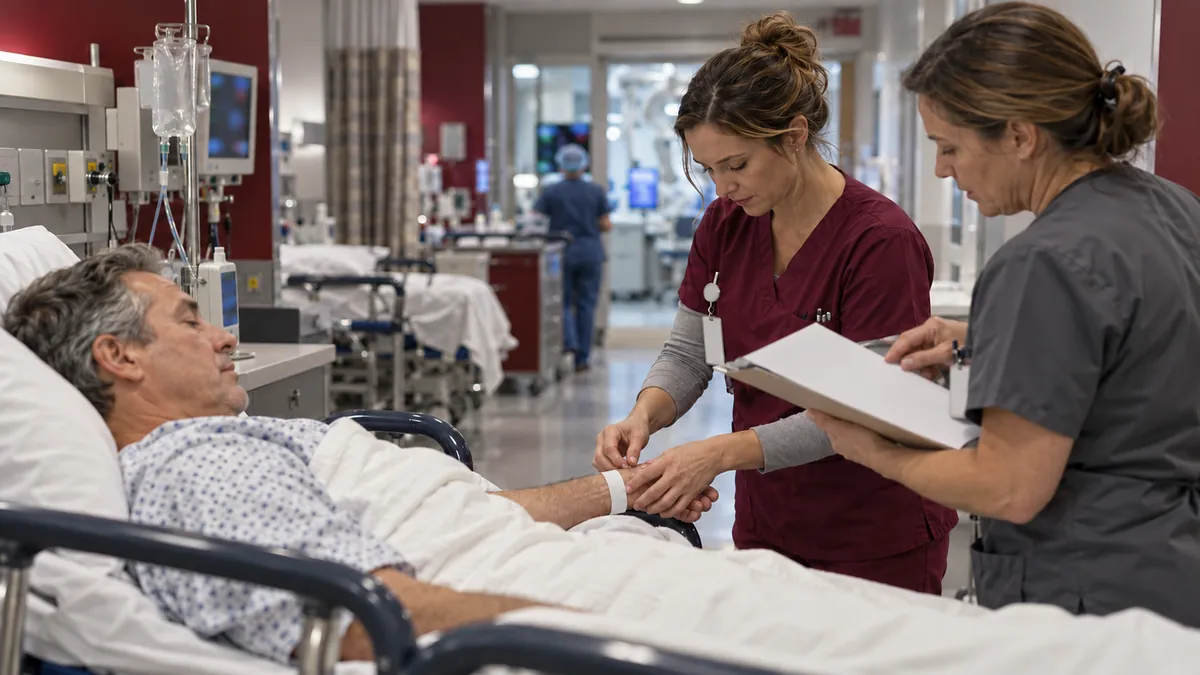
Vascular pathways depend on a small number of specialized roles. Vascular nurses, vascular laboratory technologists, wound care nurses, interventional suite staff, exercise physiologists and care coordinators each own a step that others cannot easily absorb. When any role is thinly staffed, the result appears as delayed tests, missed referrals and lost follow-up rather than visible failure. These roles also carry institutional knowledge about which patients are slipping away, knowledge that rarely appears on dashboards. Executives who invite vascular nurses into pathway reviews gain that knowledge at little cost.
Screening delays reflect workforce and workflow as well as clinical judgment. In the Veterans Affairs cohort, the median time from diabetic foot ulcer diagnosis to vascular testing was 24 days, with an interquartile range of 3 to 92 days.[7] The authors called for system-level interventions to implement universal testing for these patients.[7] Universal testing requires capacity in wound clinics and vascular laboratories, plus clear rules about who can order it.
Nurses already lead parts of the exercise pathway. In the rural translational study, either an exercise physiologist or a nurse prescribed the supervised exercise program according to current guidelines.[15] That model suggests vascular nurses can extend the reach of exercise therapy when they have defined authority and protected time. Retention support matters as well, given how many patients leave exercise programs early.[12]
Interpretation skills are part of the workforce plan. The ankle-brachial index can appear normal despite severe disease in some patients, such as those with Buerger disease.[6] Staff need training and escalation routes for results that do not match symptoms. Inter-leg asymmetry is another signal that trained staff can flag from data already collected in the vascular laboratory.[3] Newer point-of-care tools may help, but they add training, validation and governance work for nursing leaders.
Executives reviewing vascular nursing capacity can ask a direct question for each role. If screening of diabetic foot ulcers doubled next quarter, who would perform the tests, read the results and schedule the next step? Studies showing that fewer than half of eligible patients are tested suggest that demand is already larger than current workflows absorb. Workforce plans that ignore that hidden demand will understate the staff that limb preservation requires.
Executive guidance · Operating dashboard
Use a small dashboard to expose friction and ownership.
Do not publish a number until the organization defines its numerator, denominator where relevant, owner, source system, exclusions, review cadence, and limits. The candidates below are management prompts, not benchmarks or reported results.
Four operating signals
Each signal pairs an executive question with one candidate local measure, set out below.
Executive guidance · Signal
Role clarity
Are expectations, authority, support, and escalation understood by the role and its partners?
- Candidate local measure
- Locally defined scope questions, misroutes, reassignment, and escalation signals.
Executive guidance · Signal
Capacity resilience
Can the operating model absorb predictable demand and planned absences without unsafe workarounds?
- Candidate local measure
- Coverage gaps, schedule stability, overtime, backlog, and backup activation under local definitions.
Executive guidance · Signal
Recovery-route ownership
Where locally applicable, can people and teams identify the next owner across services and recovery support?
- Candidate local measure
- Locally defined transition acceptance, missing information, unresolved routes, repeat contacts, and experience feedback.
Executive guidance · Signal
Voice and improvement
Can staff raise concerns and help redesign the work with visible follow-through?
- Candidate local measure
- Improvement ideas, assigned owners, response status, completed changes, and staff feedback.
Figure 4
The operating system behind the dashboard
The four operating signals from this brief’s dashboard, each tied to the candidate owner named in the executive scorecard, around one accountable route. Drawn from the page’s original executive guidance.
Data note. Structural diagram; no measured values.
Limitation. Owners are candidates to be confirmed locally.
Figure data (4 rows)
| Operating signal | Candidate owner |
|---|---|
| Role clarity | Executive sponsor and operational lead |
| Capacity resilience | Operational owner and participating teams |
| Recovery-route ownership | Sending and receiving owners |
| Voice and improvement | Improvement owner and executive sponsor |
Executive guidance · Handoff workflow
Close the loop across teams, settings, and partners.
A handoff is reliable only when the sending party knows who is expected to receive the work, the receiving party acknowledges responsibility, and any unresolved exception remains visible. Local policy and qualified judgment control the actual process.
How responsibility moves
Lane A
From message to accepted ownership
- Confirm the approved message and intended audience.
- Publish the actual entry point and receiving role.
- Acknowledge receipt using the locally approved method.
- Escalate when ownership or response remains unclear.
Lane B
From accepted ownership to verified follow-through
- Record the next accountable owner and visible status.
- Confirm the receiving owner and next contact across services or recovery support where locally applicable.
- Keep unresolved work visible across boundaries.
- Confirm closure or document the continuing exception.
Executive guidance · Executive scorecard
Give leaders one view of route reliability and improvement.
The scorecard keeps review focused on decisions. Leaders should set definitions locally, examine variation without overclaiming cause, and pair quantitative signals with the experience of people who use and operate the route.
Who reviews what
- Executive sponsor and operational lead
- Operational owner and participating teams
- Sending and receiving owners
- Improvement owner and executive sponsor
Candidate owners named in the scorecard, confirmed locally.
| Operating signal | Executive question | Candidate owner | Suggested review point |
|---|---|---|---|
| Role clarity | Are expectations, authority, support, and escalation understood by the role and its partners? | Executive sponsor and operational lead | At campaign launch and close |
| Capacity resilience | Can the operating model absorb predictable demand and planned absences without unsafe workarounds? | Operational owner and participating teams | At a locally defined cadence |
| Recovery-route ownership | Where locally applicable, can people and teams identify the next owner across services and recovery support? | Sending and receiving owners | At a locally defined cadence |
| Voice and improvement | Can staff raise concerns and help redesign the work with visible follow-through? | Improvement owner and executive sponsor | Until action is verified |
Figure 5
Control points for a reliable vascular nursing pathway
| Control point | Risk if missing | Owner | Evidence of control |
|---|---|---|---|
| Universal vascular testing for new diabetic foot ulcers | Testing delayed or reserved for advanced disease | Wound care medical director and vascular nursing lead | Share of new ulcers tested and median days to test, by facility |
| Escalation rule for normal ankle-brachial results with concerning symptoms | Masked ischemia missed in calcified or collateralized arteries | Vascular laboratory director | Documented adjunct testing for discordant results |
| Vascular review at each admission of a high-risk patient | Repeated hospitalizations without limb-sparing care | Hospital medicine lead and vascular nurse coordinator | Share of pre-amputation admissions with vascular assessment |
| Structured contact after revascularization | Lost follow-up and higher death or amputation risk | Interventional services manager | Share of patients with documented follow-up contact within a set interval |
| Supervised exercise therapy enrollment and retention support | Few patients start or complete therapy | Cardiac and vascular rehabilitation manager | Referral, start and completion rates with dropout reasons |
| Stratified limb outcome review | Racial and community disparities stay invisible | Chief medical officer and board quality committee | Amputation and revascularization rates by race, rurality and community |
Control points derived from the cited evidence [2], [6], [7], [9], [12], [13], [14] and this brief’s executive guidance.
Data note. Each row is a control to verify, not a measured result.
Limitation. Owners and evidence of control must follow local policy and applicable requirements.
Public communication
Communicating vascular risk in ways that prompt timely action
Awareness of peripheral artery disease remains limited.[3] Underrecognition contributes to inadequate risk factor management.[10] Messages during Vascular Nurses Week can name the warning signs in plain language and explain where people can be tested. Communication works best when the organization can actually deliver the test within a reasonable time. A campaign that drives demand into a vascular laboratory with a long wait can erode the trust it was meant to build. Leaders should confirm testing capacity before promoting screening widely.
Messages should match the populations at highest risk. Black individuals have nearly double the prevalence of peripheral artery disease compared with non-Hispanic White individuals.[10] Communication that reaches Black communities through trusted local partners, faith groups and primary care clinics is more likely to reach the patients most affected. Materials should be tested with those communities rather than written only for clinicians.
Communication inside the organization matters as much as public messages. Cardiology, primary care, endocrinology and wound care teams need a shared understanding of who should be screened and how results move. Studies in cardiac and diabetic populations concluded that routine or universal screening was warranted.[4][7] Internal messages can make vascular screening a standard step rather than a specialist decision. Clinicians also need to hear that a normal ankle-brachial index does not always rule out disease in some patients.[6] Short, specific guidance about when to escalate is more useful than general reminders.
Patients also need honest information about exercise therapy and its demands. In the university clinic cohort, supervised exercise improved walking distance, but adherence was low and quality of life scores did not differ significantly.[12] Explaining both the benefit and the commitment helps patients choose with realistic expectations. Messages about exercise therapy should also describe practical support, such as scheduling options and help with transportation, where the organization offers them. Nurses who can describe the program and address barriers are well placed to deliver that message.
Trust depends on transparency about outcomes. Organizations that share amputation rates, revascularization rates and follow-up completion by community can show that they take disparities seriously. Patient stories, shared with consent and without identifying details, can show how timely screening and follow-up changed a path. Public communication should always point to a concrete next step, such as where to ask about vascular testing.

Executive guidance · 90-day plan
Turn the observance into one sustained operating change.
The time boxes below are a management framework, not a clinical timeline. Adjust them to risk, scope, governance, resources, stakeholder participation, and applicable review requirements.
Ninety days, three moves
- Days 1–30See the current route
- Days 31–60Build the reliable path
- Days 61–90Make the change visible
Days 1–30 · Listen and map
See the current route
- Name an executive sponsor and an operational owner.
- Listen to people using the route and representative frontline teams.
- Map how Vascular Nurses Week communications connect to real entry points, owners, transitions, and escalation.
- Select one recurring barrier that the organization can responsibly address.
Days 31–60 · Design and test
Build the reliable path
- Define the trigger, receiving owner, required information, acknowledgment, escalation, and closure signal.
- Validate the design with every sending and receiving team involved.
- Review one locally relevant service-to-recovery handoff and verify that ownership remains visible.
- Test the route in more than one representative setting or operating period where practical.
Days 61–90 · Implement and verify
Make the change visible
- Launch the redesigned route with a small set of locally defined measures.
- Review unresolved work and recurring friction using a learning approach.
- Correct implementation barriers and record who owns each remaining dependency.
- Report what changed, what evidence was reviewed, and what still requires live oversight.
Figure 6
The 90-day plan on one timeline
The 90-day plan from this brief drawn as a timeline: each action sits in the 30-day window the plan assigns it. The full wording of each action is in the figure data and in the plan above.
Data note. Time boxes are a management framework, not a clinical timeline.
Limitation. Durations are uniform 30-day windows; real tasks may span windows.
Figure data (12 rows)
| Window | Action |
|---|---|
| Days 1–30 · Listen and map | Name an executive sponsor and an operational owner. |
| Days 1–30 · Listen and map | Listen to people using the route and representative frontline teams. |
| Days 1–30 · Listen and map | Map how Vascular Nurses Week communications connect to real entry points, owners, transitions, and escalation. |
| Days 1–30 · Listen and map | Select one recurring barrier that the organization can responsibly address. |
| Days 31–60 · Design and test | Define the trigger, receiving owner, required information, acknowledgment, escalation, and closure signal. |
| Days 31–60 · Design and test | Validate the design with every sending and receiving team involved. |
| Days 31–60 · Design and test | Review one locally relevant service-to-recovery handoff and verify that ownership remains visible. |
| Days 31–60 · Design and test | Test the route in more than one representative setting or operating period where practical. |
| Days 61–90 · Implement and verify | Launch the redesigned route with a small set of locally defined measures. |
| Days 61–90 · Implement and verify | Review unresolved work and recurring friction using a learning approach. |
| Days 61–90 · Implement and verify | Correct implementation barriers and record who owns each remaining dependency. |
| Days 61–90 · Implement and verify | Report what changed, what evidence was reviewed, and what still requires live oversight. |
Executive guidance · Leadership close
Make Vascular Nurses Week a starting point, not an endpoint.
Recognition matters. It becomes durable when leaders also listen, clarify the route, support the people operating it, close an identified gap, and report the result without claiming more than the evidence supports.
Leadership commitment
Make ownership visible, test the route, and report what improved.
Executive action kit · Week observance
Turn Vascular Nurses Week into accountable action.
An executive-guidance framework for role clarity, workload visibility, handoffs, support, and improvement.
Leadership focus
Use this observance to examine role clarity, capacity, teamwork, and dependable handoffs. Select one verified barrier, assign an accountable owner, and carry the improvement beyond the campaign window.
Workforce lens
Ask whether staffing, role clarity, training, tools, workload, and escalation support the people operating the information, acute-to-ambulatory transition, rehabilitation, and follow-through pathway.
Patient and community lens
Make the approved first step clear. Test whether a person can move from information to an acknowledged next action without navigating conflicting instructions.
Equity and access lens
Review transportation, language, digital access, affordability, geography, disability, and whether the recovery route works across different settings.
Five-minute briefing
Inspect the operating sequence
Listen with patients, caregivers, cardiovascular teams, rehabilitation, pharmacy, and ambulatory partners. Find one an unowned transition, unclear recovery route, or unresolved access need, then test the locally approved route from entry through acknowledged follow-through.
- See the work
- Clarify the role
- Connect the recovery route
- Strengthen handoffs
- Learn with staff
Leadership actions for this week
- Name an executive sponsor and frontline operating owner.
- Ask people using and operating the pathway where ownership becomes unclear.
- Test one representative route from first question to acknowledged next step.
- Select one barrier that can be corrected without overstating the evidence.
- Set a review date and define how completion will be verified.
Candidate measures
Define every numerator, denominator where relevant, owner, data source, exclusions, cadence, and limitation locally. These are management prompts, not external benchmarks.
- Locally defined scope questions, misroutes, reassignment, and escalation signals.
- Coverage gaps, schedule stability, overtime, backlog, and backup activation under local definitions.
- Locally defined transition acceptance, missing information, unresolved routes, repeat contacts, and experience feedback.
Department readiness checklist
- The public and staff entry points match the actual approved process.
- A specific role accepts each request, referral, or escalation.
- Handoffs include acknowledgment and a visible unresolved state.
- Language, disability, digital, transportation, and trust barriers receive explicit review.
- Communications do not introduce unsupported themes, statistics, or clinical advice.
- A named leader will review what changed after the observance.
Intended audiences
- Executive and Operational Leaders
- Nursing and Clinical Leaders
- Workforce and Human Resources Leaders
Staff communication template
During Vascular Nurses Week, our organization will connect awareness with a practical review of the information, acute-to-ambulatory transition, rehabilitation, and follow-through pathway. Use approved information, identify the correct entry point, confirm ownership when work moves, protect privacy, and escalate unresolved barriers through local channels.
Community communication template
Vascular Nurses Week is an opportunity to share trustworthy information and make the next step easier to find. Use our approved channels for information and support. If a request changes hands, our goal is to keep ownership and follow-through visible.
Measurement worksheet
- Signal
- What observable condition will show whether the route works?
- Definition
- What is included, excluded, and counted?
- Owner
- Who reviews the signal and acts on exceptions?
- Cadence
- When will leaders review it?
- Equity check
- Which differences require protected, locally appropriate review?
- Closure
- What evidence will confirm the improvement was completed?
- Editorial review
- Completed
- Source records
- 2 listed under Authoritative resources
- Review standard
- Sourced facts remain separated from original executive guidance
- Clinical boundary
- No new statistical or clinical claim was added by this action kit
Sources and content boundary
Authoritative resources
Use note: All operating models, measures, scorecard questions, and action steps are original executive guidance. This article supports leadership planning and education. It does not replace clinical judgment, emergency procedures, legal advice, professional standards, organizational policy, or applicable federal, state, and local requirements.
Peer-reviewed references
References
Fifteen peer-reviewed sources, newest first. Each was individually verified through authenticated academic research databases. Bracketed numbers in the text link here; the original executive guidance on this page carries no citations because it is guidance, not a sourced claim. Sources last checked in those databases on .
- 1.Ojo A, Okorie MA, Okeke CC, Orie DE, Onyeogulu AO, Akinteye EI, et al. Racial and Ethnic Disparities in the Diagnosis and Care of Peripheral Artery Disease in the United States: A Systematic Review. Cureus. 2026. https://doi.org/10.7759/cureus.104538
- 2.Allen WE, Greendyk JD, Haider SF, Hossain A, Sharma A. Disparities in Limb-Saving Surgery Persist Among Black Patients With Peripheral Artery Disease. Cureus. 2026. https://doi.org/10.7759/cureus.105585
- 3.Li B, Zakaria M, Ali MB, Kassem O, Younes H, Zamzam A, et al. Assessing the Correlation Between Inter-Leg Ankle–Brachial Index Asymmetry and Peripheral Artery Disease Outcomes. Journal of Cardiovascular Development and Disease. 2026;13(9):470. https://doi.org/10.3390/jcdd13090470
- 4.Samara ME, Alshraideh JA, Alwahadneh AA, Mohammad AA, Ababneh SM, Alshraideh H, et al. Coexistence of peripheral artery disease and coronary artery disease: Prevalence and contributing factors. Journal of Vascular Nursing. 2026;44(3):201-206. https://doi.org/10.1016/j.jvn.2026.06.004
- 5.Pangestu A, Harimurti K, Antono D, Nugroho P, Nasution SA, Mulansari NA, et al. The association between Ankle Brachial Index (ABI) and cognitive impairment in geriatric patients at Dr Cipto Mangunkusumo Hospital Jakarta. BMC Geriatrics. 2026;26(1):262. https://doi.org/10.1186/s12877-025-06947-w
- 6.Canturk EM, Bayramoglu M, Samadli V, Oguzkurt L. The Diagnostic Pitfall of Ankle-Brachial Index in Buerger Disease: Can We Trust Pressure Measurements in the Presence of Corkscrew Collaterals?. Journal of Vascular and Interventional Radiology. 2026;37(6):108680. https://doi.org/10.1016/j.jvir.2026.108680
- 7.Suzuki H, Vaughan-Sarrazin M, Ohl M, Mecham B, McCoy K, Strief D, et al. Underutilization of an Objective Vascular Screening Test in Patients with Diabetic Foot Ulcers. Annals of Vascular Surgery. 2026;131:319-326. https://doi.org/10.1016/j.avsg.2026.05.114
- 8.Aydin E, Kurt D. Beyond the Cuff: Deep Learning Analysis of Handheld Doppler Signals Detects Masked Peripheral Ischemia in Diabetic Patients with Normal Ankle-Brachial Index. Annals of Vascular Surgery. 2026;132:296-304. https://doi.org/10.1016/j.avsg.2026.06.003
- 9.Longfellow GA, Shahoud M, McGinigle KL, Strassle PD. Racial and/or ethnic and rural disparities in health care utilization before major lower extremity amputation in patients with peripheral artery disease. Journal of Vascular Surgery. 2026;83(3):895-904.e12. https://doi.org/10.1016/j.jvs.2025.10.067
- 10.Yukselen Z, Mukherjee D. Epidemiology of Peripheral Artery Disease, Risk Factors, and Trends. International Journal of Angiology. 2026;35(03):163-169. https://doi.org/10.1055/a-2832-4161
- 11.Avinashi SD, Choong AM, Riandini T, Dharmaraj RB, Lo Zhiwen J, Hausenloy DJ, et al. Trends and Outcomes of Lower Limb Vascular Procedures in a Multiethnic Asian Population in Singapore: A 10 Year Study. European Journal of Vascular and Endovascular Surgery. 2026. https://doi.org/10.1016/j.ejvs.2026.07.039
- 12.Garabet W, Beckamp KH, Shabes P, Wagenhäuser MU, Arnautovic A, Knapsis A, et al. Patient participation in supervised exercise therapy and its impact on outcomes and quality of life in peripheral arterial disease. Vasa. 2026:0301-1526/a001280. https://doi.org/10.1024/0301-1526/a001280
- 13.Secemsky EA, Sato R, Williams AO, Fanaroff AC, Duval S, Jaff MR, et al. Interplay of Race and Community Characteristics on Health Disparities Among Medicare Beneficiaries With Peripheral Artery Disease. The American Journal of Cardiology. 2025;253:88-97. https://doi.org/10.1016/j.amjcard.2025.07.044
- 14.Kim JM, Li S, Song Y, Parikh SA, Schneider PA, Krishnan P, et al. Geographic variation in endovascular revascularization for chronic limb-threatening ischemia care among Medicare beneficiaries (2016-2023). Journal of Vascular Surgery. 2025;82(6):2102-2111.e18. https://doi.org/10.1016/j.jvs.2025.07.032
- 15.Salisbury DL, Brown R, Elgersma K, Larson K, Treat-Jacobson D. Clinical Effectiveness of a Supervised Exercise Therapy Program for Treatment of Peripheral Artery Disease: A Translational Study. Journal of Cardiopulmonary Rehabilitation and Prevention. 2023;43(5):361-367. https://doi.org/10.1097/hcr.0000000000000790
Claim-to-source matrix
What each source supports
Every sourced claim in the new sections maps to the references that support it, the section where it is used, and the limitation a reader should keep in mind. Original executive guidance carries no sources because it is guidance, not a finding.
| Claim group | Sources | Years | Used in | Limitation |
|---|---|---|---|---|
| Global burden, age gradient and underdiagnosis of peripheral artery disease | [10] | 2026 | Current evidence | Narrative review summarizing other studies; estimates vary by definition and population. |
| Unrecognized disease in cardiac and geriatric patients | [4] [5] | 2026 | Current evidence | Single-center cross-sectional studies in Jordan and Indonesia; may not generalize to U.S. populations. |
| Underuse and delay of vascular testing in diabetic foot ulcers | [7] | 2026 | Current evidence | Veterans aged 65 and older; retrospective records may miss testing performed outside the system. |
| Missed limb-sparing care before amputation | [9] | 2026 | Continuum of care | Inpatient data from five states; outpatient care before amputation not captured. |
| Regional variation and post-procedure follow-up | [14] [11] | 2026, 2025 | Continuum of care | Observational administrative data; residual confounding possible; Singapore data may not transfer to U.S. settings. |
| Supervised exercise therapy uptake and effectiveness | [12] [15] | 2026, 2023 | Access | Single-center and nonrandomized studies; one sample was entirely White. |
| Limits of the ankle-brachial index and new detection tools | [6] [3] [8] | 2026 | Access | Small or single-institution samples; the deep learning model is an early evaluation requiring external validation. |
| Racial and community disparities in amputation and revascularization | [1] [2] [13] | 2026, 2025 | Equity and trust | Observational registry and claims data; race recorded administratively; few data on Hispanic and other groups. |
About the author
Greg Wahlstrom
MBAHCM
President and Chief Executive Officer, The Healthcare Executive
View Greg’s profile©2014 – 2026 The Healthcare Executive. All rights reserved.