
AANHPI Breastfeeding Week | August 15-21, 2026
AANHPI Breastfeeding Week 2026: Build a Better-Data, Better-Care System
An executive evidence brief for replacing broad labels with community-governed data, reliable care pathways, respectful family choice, and accountable follow-through from pregnancy through the transition home.
The U.S. Breastfeeding Committee identifies August 15-21 as AANHPI Breastfeeding Week 2026 and lists the theme “Better Data, Better Care for AANHPI Families.” The observance was created in 2021 by the Asian Pacific Islander Breastfeeding Task Force to reduce inequities and normalize breast and chestfeeding through improved education and support practices.
Treat better data and better care as one leadership obligation.
AANHPI Breastfeeding Week asks leaders to connect two responsibilities that are often separated. The first is to know which families are being served, which goals they hold, which supports they receive, and where the care route breaks. The second is to improve care without turning a broad administrative category into a clinical assumption. Asian American, Native Hawaiian, and Pacific Islander communities include many distinct histories, languages, migration experiences, Indigenous identities, family structures, and relationships to healthcare institutions. A single AANHPI total can be useful for some advocacy or reporting purposes, but it cannot safely stand in for community-specific experience.
The consequences of aggregation are operational. A 2026 analysis of 1,859 Filipino respondents in the California Health Interview Survey found that 85.2% selected Asian, 8.8% selected Pacific Islander, and 6.1% selected “other.” The authors recommended write-in options and continuing community-driven work because fixed categories can misclassify how people identify.1 A 2025 latent-class analysis of two AANHPI survey samples found meaningful variation by income, education, language use, generational status, age, employment, homeownership, and perceptions of community well-being.2 These studies do not establish the correct identity architecture for every health system. They show why leaders should let people self-identify, retain more detail than a single rollup, and involve communities in deciding how information is interpreted.
Better data are not an invitation to collect everything. Each field should have a clear decision purpose. If preferred language is collected, the organization should be able to provide qualified interpretation and translated materials. If prenatal feeding intention is documented, it should trigger a respectful conversation and a support offer, not a compliance label. If hospital practices are measured, teams should know who will review variation and what authority they have to correct it. If subgroup reporting creates a reidentification risk, the organization needs suppression, access, and community-governance rules before publication.
Better care also requires more than culturally themed materials. It means asking rather than assuming, listening to the family’s own goals, understanding the influence of work and household conditions, providing consistent evidence-based options, and creating a reliable route to help after discharge. Qualitative research with Marshallese mothers found strong beliefs that human milk was healthy while also identifying hybrid feeding intentions, employment demands, family and community influence, public-feeding concerns, and a desire for autonomy.1115 Those findings belong to a specific sample. Their executive value is not a stereotype about Marshallese families. It is a reminder that care design must make room for real circumstances and self-determined choices.
The week can therefore be used as a governance test. Can leaders show who owns identity data, who validates categories, who monitors hospital practice, who responds when a family cannot reach support, and how communities influence interpretation? Can staff explain why a question is asked and how the answer will improve care? Can a family change an incorrect identity or language field? Can analysts protect small groups while still surfacing inequity? Can the organization follow one family’s intended care route from the prenatal setting to birth, discharge, and community support without blaming the family for system gaps?
A credible executive commitment is simple to state and demanding to operate: every family can identify themselves in their own terms, state their feeding goals, receive respectful support, and know where to obtain help next. Data should reveal whether that promise is being kept. When they reveal a gap, leadership should assign an owner, resource a response, and report back.
Executive starting point
Select one maternal-child care transition and test whether identity detail, language access, family goals, support practices, referral ownership, and community feedback remain connected from intake through follow-up.
Use evidence by subgroup, setting, design, and decision.
The 15-source evidence set combines breastfeeding-care research with scholarship on AANHPI data quality. It includes national survey analyses, a neonatal intensive care chart review, a small prospective Native Hawaiian cohort, Marshallese qualitative studies, a culturally adapted intervention pilot, a systematic review of migrant women’s experiences, federal survey content analysis, latent-class analysis, and policy or workshop reports. The sources were published from 2022 through 2026 and are ordered newest first in the reference list.
The evidence does not support one pooled AANHPI breastfeeding rate. Populations, measures, and settings differ too much. Some studies combine Asian and Pacific Islander respondents. Others examine Native Hawaiian, Filipino, Marshallese, or broader migrant populations. Outcomes include prenatal intention, receipt of hospital practices, any human-milk feeding, breastmilk receipt at neonatal intensive care discharge, qualitative experience, and intervention acceptability. A bar chart that placed those findings side by side would imply false comparability. Figure 2 therefore maps sources to decisions while keeping study boundaries visible.
Hospital practice is one actionable domain. A 2025 analysis of 60,395 mothers who initiated breastfeeding with healthy term newborns found that fewer than one quarter received all recommended Baby-Friendly Hospital Initiative practices. Compared with White non-Hispanic mothers, the aggregated Asian and Pacific Islander group had lower adjusted odds of receiving all practices.4 A separate 2025 analysis of 73,380 mothers found a 4.0 percentage-point decline in ideal hospital breastfeeding care among the aggregated Asian and Pacific Islander group during the early COVID-19 period compared with the preceding period.3 These retrospective survey analyses identify disparities in reported practice. They do not establish current local performance or explain which subgroups experienced which mechanisms.
Subgroup-specific studies reveal different questions. In a single Honolulu neonatal intensive care unit, a retrospective chart review of 2,528 infants found that Native Hawaiian, Pacific Islander, and Filipino infants had lower adjusted odds of receiving breastmilk at discharge than the broad Asian reference group.10 In a prospective study of 85 Native Hawaiian mother-infant dyads, prenatal intention strongly predicted human-milk feeding at birth and two months, while educational attainment and participation in nutrition-support programs were also associated with feeding outcomes.6 The very wide confidence intervals and small sample call for caution. A cross-sectional study of 242 pregnant Healthy Start participants in Arkansas also found that 18.5% of Marshallese participants intended to breastfeed exclusively, compared with different proportions among White, Black, and Hispanic participants.7 Intention is not later behavior, and a single program sample is not a population estimate. The useful leadership signal is to connect prenatal goals, resource needs, and postdischarge support rather than using intention as a promise or a performance judgment.
Community-engaged qualitative work adds mechanism and context. Interviews with 36 Marshallese women during pregnancy found that 28 intended to combine breastfeeding and formula, with work outside the home described as the dominant barrier to exclusive breastfeeding.15 Follow-up interviews with 36 participants at six to eight weeks postpartum identified mixed feeding and concerns that breastfeeding in public conflicted with perceived American customs.11 A small culturally adapted group intervention with Marshallese mothers was considered acceptable and feasible; themes included lactation support, introduction of solids, portion control, and finding resources.5 These are not prevalence estimates or universal cultural rules. They support co-design, practical access planning, and humility.
| Evidence signal | Population and design | Executive use | Transfer boundary |
|---|---|---|---|
| Filipino respondents selected more than one broad racial-category route.1 | California population survey, 1,859 Filipino respondents | Use self-identification, write-in detail, correction routes, and community review. | One state survey does not define identity for every person or setting. |
| Aggregated AANHPI samples contain important socioeconomic and language heterogeneity.2 | Latent-class analysis in two survey samples | Pair subgroup identity with decision-relevant social context. | Statistical classes are exploratory and should not become patient labels. |
| Less than one quarter of mothers received all recommended hospital practices; disparities affected an aggregated Asian and Pacific Islander group.4 | National retrospective survey, 60,395 mothers | Measure the bundle received, not only feeding initiation. | 2016-2019 self-report and broad categories cannot establish current local causes. |
| Native Hawaiian, Pacific Islander, and Filipino infants had lower adjusted odds of breastmilk receipt at neonatal intensive care discharge than an Asian reference group.10 | Single-center chart review, 2,528 infants | Audit subgroup variation and the processes that shape milk access. | Retrospective association in one unit is not causal or nationally generalizable. |
| Prenatal intention predicted human-milk feeding in a small Native Hawaiian cohort.6 | Prospective study, 85 mother-infant dyads | Ask goals early and connect them to support and follow-up. | Small sample, selected participants, and wide confidence intervals limit precision. |
| Migrant women’s successful exclusive breastfeeding reflected knowledge, ethnic identity, family, clinicians, peers, workplace, and autonomy.8 | Meta-ethnographic synthesis of 11 qualitative studies | Design care around interacting influences and family agency. | Migrant experiences across countries should not be assigned to all AANHPI families. |
Evidence becomes safe to use when the claim, denominator, setting, and limitation travel together. A national survey can justify examining local practice, but not claiming a local disparity. A qualitative study can illuminate a mechanism, but not quantify how often it occurs. A single-site chart review can identify a serious pattern for investigation, but not prove causality. A small pilot can show acceptability, but not improved feeding outcomes. Leaders should maintain an internal claim-to-source ledger and require the same discipline in dashboards, board reports, and public communication.
Build a data route that reaches a care decision.
A demographic field alone does not produce better care. The route begins with governance: define why data are needed, who shaped the question, who can see the response, how a person can decline or correct it, and what decision follows. The person answering should encounter plain language and an option that reflects their identity. Broad federal reporting fields may still be required, but the system can retain more granular information and roll it up later rather than discarding detail at intake.
Identity data should support, never replace, conversation. A subgroup label cannot predict feeding intention, language preference, immigration history, family involvement, public-feeding comfort, work flexibility, insurance access, milk expression needs, or preferred sources of help. Ask those questions directly when they are relevant. Do not infer them from surname, appearance, place of birth, or a previous record.
Collect multiple identities when people select them. The Hawai‘i data-disaggregation report explains that multiracial categories can disproportionately erase Native Hawaiians when a system moves people out of the Native Hawaiian count after they select another identity.9 Preserve original responses, document rollup logic, and publish the counting rule with every comparison. A person may be included in more than one identity-specific analysis when the purpose and denominator support it. Analysts should never silently force one identity into a mutually exclusive category simply because a dashboard is easier to build that way.
Language data need similar precision. Preferred spoken language, preferred written language, interpreter need, and language used at home are not interchangeable. Define which field controls which service. Verify interpreter availability across prenatal clinics, labor and delivery, neonatal intensive care, postpartum units, outpatient lactation, pediatrics, and community partners. A translated flyer without an accessible service route is not language access.
Family goals are time-sensitive. Document the family’s current intention, confidence, questions, previous experience, anticipated return to work or school, equipment needs, and preferred support person. Revisit the plan because goals and circumstances can change. A goal field should not become a target used to pressure a family after pain, illness, medication, infant needs, trauma, separation, supply concerns, or a personal decision changes the plan.
The analytic step should use defined denominators. If leaders ask who received a complete hospital-practice bundle, the denominator should include eligible families and specify exclusions. If they ask who reached outpatient support, they need a referral denominator, a successful contact definition, and time window. If they compare groups, they need stable identity rules, sufficient sample size, and a plan for missing or declined responses. Publish uncertainty, not just percentages.
The route ends where many equity dashboards stop: returning information to the people who helped create it. Community partners should see what leaders learned, what was not knowable, which decision changed, what remains open, and when the next review will occur. Families should see whether their own referrals reached a real service. Staff should receive practical feedback when a process fails. Better data are complete only when they change an accountable decision and when the effect of that decision can be examined.
Put community authority beside analytic authority.
Data disaggregation can reduce invisibility, but it can also increase exposure. Small communities may be identifiable even when names are removed. A highly specific table can invite stigma, deficit narratives, or decisions made without context. Community governance is therefore not a ceremonial advisory meeting after analysis. It is participation in purpose, definitions, collection, interpretation, release, response, and evaluation.
Federal survey collection improved between 2011 and 2019, according to a content analysis of national health surveys. In 2011, 4 of 15 surveys collected disaggregated Asian data, while 2 of 15 collected Native Hawaiian data and 2 of 15 collected disaggregated Pacific Islander data. By 2019, 14 of 21 surveys collected each of those forms of detail.12 The trend shows progress in collection, not completion in reporting or action. Health systems should ask whether detail survives extraction, quality checks, dashboards, improvement work, and public communication.
Community advisors can help detect category problems analysts miss. They can explain why a write-in response is meaningful, when a combined label conceals an Indigenous identity, which languages or dialects matter locally, and how an outreach message may be heard. They can also challenge a proposed measure that makes sense administratively but fails to capture a family’s experience.
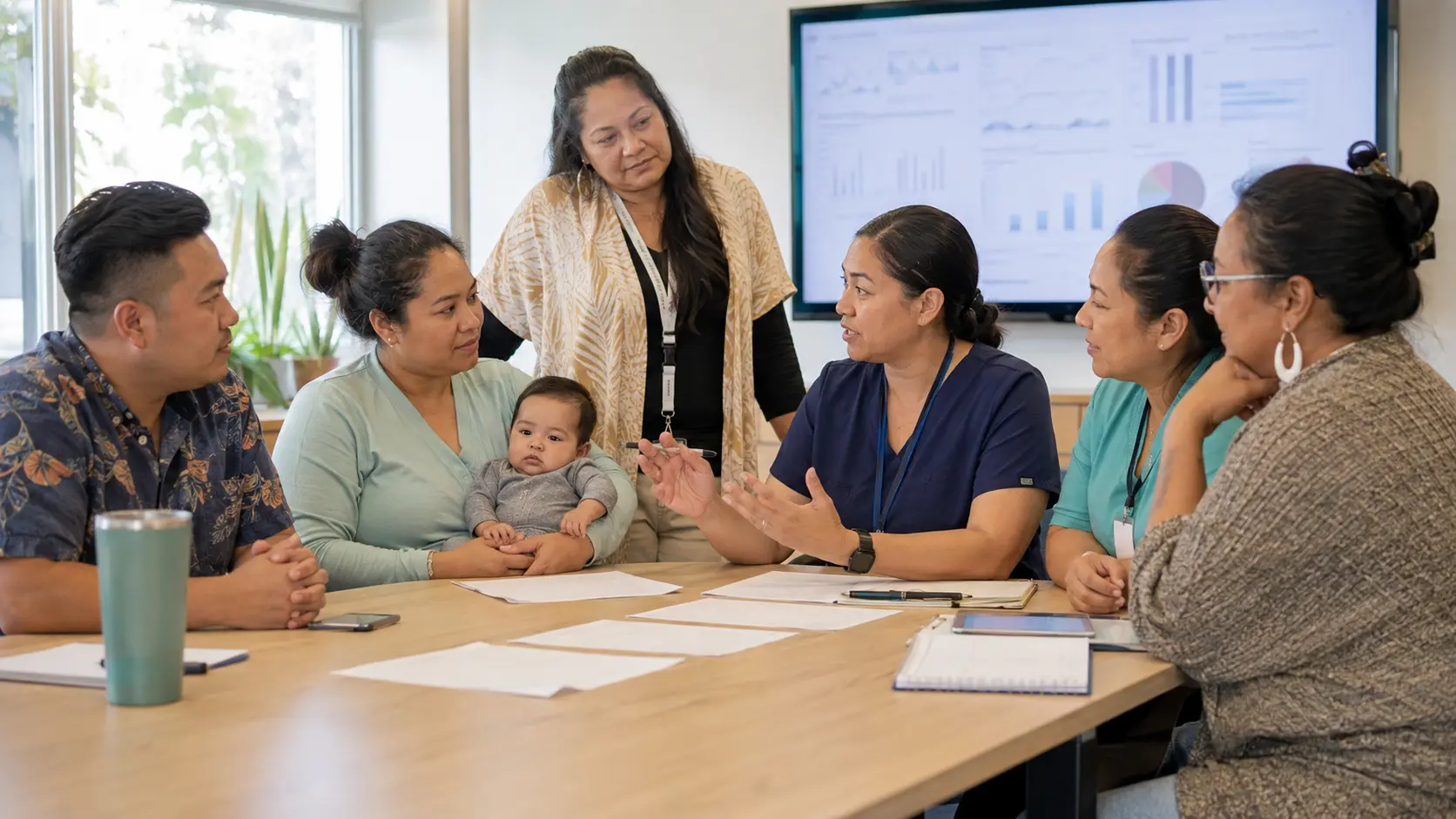
Formalize the relationship. Define who selects community representatives, how they are compensated, how conflicts are handled, which decisions they can shape, and how dissent is recorded. Make participation accessible through scheduling, language support, childcare or family accommodations, and remote options. Avoid asking one person to represent every Asian American, Native Hawaiian, or Pacific Islander community.
Use a release checklist. Does the table preserve self-identification? Are numerator and denominator clear? Are missing responses visible? Are multiple identities handled transparently? Could a small cell identify a family or staff member? Has a community reviewer examined wording and interpretation? Does the narrative identify system conditions rather than imply community deficiency? Is there a named response owner? If the answer to the last question is no, consider whether public reporting is premature.
Find where families disappear from the data or the care route.
When a dashboard shows no apparent gap, leaders should not assume the system is equitable. A family may be invisible because the registration system stores only a broad category. The record may hold detail, but the analytic extract may discard it. An interpreter field may be missing because staff used a family member. A referral may look complete when an order was placed, even though nobody contacted the family. A feeding plan may be recorded at birth and never updated after clinical circumstances changed.
Figure 5 organizes common failure modes for local investigation. Its branches are not a causal model and are not ranked. A true Pareto chart would require complete, mutually interpretable categories and a stable denominator. Many failures have more than one cause, so a simple count could also mislead. Use the fishbone to guide observation, record review, interviews, and community validation.
Walk the route using several real, deidentified cases. Start at prenatal intake and identify every point where identity, language, goals, risk, support, and referral status are entered, copied, transformed, or dropped. Observe how staff explain questions. Compare day, night, weekend, inpatient, outpatient, and neonatal intensive care workflows. Include people who use interpreters, change feeding goals, live far from the hospital, or need community-based support.
Look for administrative completion that hides functional failure. A checkbox may show education completed without confirming understanding or choice. A consult order may show a referral without a successful visit. Discharge instructions may list a telephone number without confirming hours, language access, eligibility, or next-step ownership. A small-cell suppression rule may protect privacy but also remove every Native Hawaiian or Pacific Islander result from executive review. The answer is not to weaken privacy. It is to build a protected review route and pair quantitative summaries with qualitative learning.
Make culturally responsive care observable.
Culturally responsive care is a way of working, not a script attached to a racial category. Staff begin with the family’s words. They use qualified language support, explain options and uncertainty, ask permission before teaching or touching, include support people the family chooses, and separate clinical safety discussion from personal judgment. They understand that human-milk feeding can be valued while exclusive breastfeeding may not be the family’s goal or may not remain feasible.
The systematic review of 11 qualitative studies of migrant women in high-income countries found five interacting themes: differences between home- and host-country practices, breastfeeding knowledge, ethnic identity, influence from family, clinicians, infants, peers and workplaces, and maternal autonomy.8 The review is not specific to all AANHPI communities, but it offers a useful design warning. A clinic-only education strategy will miss workplace, family, migration, and autonomy conditions that shape experience.
Marshallese studies add locally specific examples. Participants described strong positive beliefs about breastfeeding, support from women in the family and community, work outside the home as a major barrier, hybrid feeding intentions, and concern about public breastfeeding in the United States.1115 Leaders should not turn these findings into a cultural checklist. They should ask whether care teams can explore work plans, privacy, public settings, family influence, and preferred helpers without presuming the answer.
Consistency matters. Families may receive conflicting messages from obstetric, nursing, lactation, pediatric, neonatal intensive care, nutrition, and community teams. A qualitative study of complementary feeding among Native Hawaiian, other Pacific Islander, and Filipino caregivers found that participants reported conflicting advice from healthcare professionals, even though most said they followed professional advice.13 The study addressed complementary feeding rather than the full breastfeeding pathway, but it shows why cross-setting message alignment matters.

Define observable behaviors for training and coaching. Did the staff member verify preferred language and use the correct service? Did they ask the family’s current goal and what support would help? Did they explain choices without pressure? Did they verify understanding through teach-back or another appropriate method? Did they document questions, equipment, medication, pain, return-to-work, and follow-up needs? Did the next service accept responsibility? Observation should be used for learning, with privacy and consent, not as surveillance of families.
Support staff with infrastructure. Provide interpreter access, translated materials that have been community reviewed, adequate visit time, private spaces, compatible documentation, warm-referral capability, after-hours escalation, pump and supply pathways when indicated, and relationships with trusted community organizations. Cultural humility cannot compensate for unavailable appointments or a referral queue without ownership.
Run one better-data, better-care operating system.
The operating system in Figure 7 links functions that are often managed separately. Community governance defines legitimacy and meaning. Registration and digital teams preserve self-identification. Clinical teams ask goals and provide evidence-based support. Language-access teams make communication usable. Analysts protect identity detail and uncertainty. Referral owners maintain continuity. Executives remove resource barriers and report back.
No single committee can perform every role. The aim is shared accountability around a visible route. A maternal-child equity council might set definitions and review patterns. A clinical operations group might own practice reliability. A privacy and analytics group might set access and small-cell rules. Community partners might interpret findings and co-design changes. One executive sponsor should resolve barriers that cross budgets, departments, or external contracts.
| Work | Accountable owner | Evidence of completion | Failure escalation |
|---|---|---|---|
| Define identity, multiracial, language, and correction fields | Data governance leader with compensated community advisors | Approved data dictionary, user testing, correction route, rollup logic | Chief data or equity executive |
| Verify hospital support-practice reliability | Maternal-child clinical operations leader | Defined eligible denominator, practice audit, subgroup-safe review | Chief clinical or nursing executive |
| Connect prenatal goals to individualized support | Prenatal service-line owner | Goal reassessment, needs response, accepted referral when requested | Maternal-child executive sponsor |
| Provide qualified language access | Language-access program owner | Service availability, response testing, translated-resource review | Operations and compliance leadership |
| Complete hospital-to-community handoff | Named transition navigator or service owner | Referral accepted, family contacted, exception documented | Care-continuity executive |
| Interpret and report subgroup findings | Analytics owner with community review | Definitions, uncertainty, privacy check, action owner, feedback date | Equity and privacy governance |
Use the ledger in weekly exception review. Focus on work that has no accepted owner, language support that failed, a small group removed from analysis, a referral that never reached a family, or a clinical pattern awaiting response. Do not allow every issue to become a committee referral. Some require a direct operational decision, additional staff time, a contract change, technology configuration, or executive funding.
Connect this work to related observances rather than duplicating it. The National Breastfeeding Month 2026 brief frames the broader enterprise pathway. The World Breastfeeding Week 2026 brief provides an additional systems checkpoint. The Indigenous Milk Medicine Week 2026 brief centers Indigenous governance and continuity. AANHPI Breastfeeding Week should make subgroup visibility and community authority explicit within that larger work.
Make the transition home an accepted handoff.
Discharge is a predictable point of loss. Hospital support may have been strong, yet a family can leave without a reachable contact, compatible language service, equipment plan, medication review, pediatric connection, or help when feeding goals change. A referral entered into the record is not an accepted handoff. The receiving service must know the family is coming, understand the requested support, and assume responsibility for the next action.
Design the transition before the day of discharge. Confirm the family’s current goals and concerns. Identify the preferred contact method and language. Review work or school return, transportation, telehealth access, equipment, insurance or program eligibility, infant and parent follow-up, and urgent clinical escalation under local policy. Ask which support people the family wants involved. Provide a plan the family can use, not a stack of generic materials.
The Native Hawaiian prospective study found prenatal intention was associated with later human-milk feeding, but it also identified socioeconomic and program-participation factors.6 The neonatal intensive care chart review found subgroup differences in breastmilk receipt at discharge.10 These findings support attention to continuity and resources. They do not justify judging a family’s outcome or assuming that every barrier can be resolved by education.
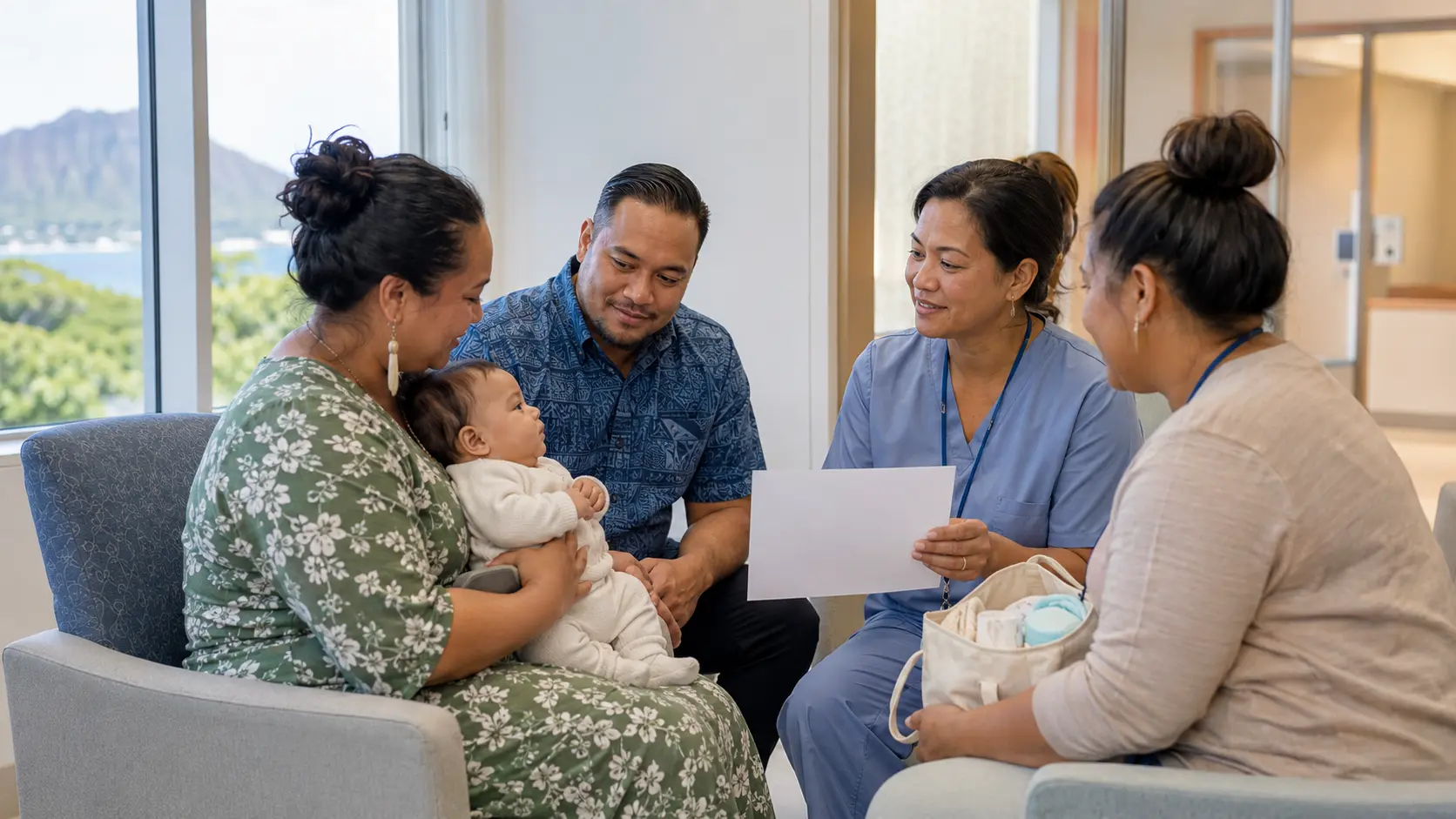
Set ownership rules. The sending team owns preparation and transmission. The receiving team owns acceptance and first contact. A transition navigator owns exceptions until a qualified service accepts them. Leaders own capacity barriers. The family should never be made the only messenger between disconnected clinical teams.
Define urgent and routine routes separately. A family with a clinical concern needs the appropriate qualified response, not an improvement-program inbox. A routine support request needs a response standard and alternative when the preferred service has no capacity. After-hours and weekend plans should be tested, not assumed.
Close the loop at two levels. For the individual family, record whether contact occurred, whether the need was addressed or redirected, and whether the family knows the next step. For the system, review failed contacts, language mismatches, ineligible referrals, capacity delays, equipment gaps, and repeat urgent use. Community partners should help interpret patterns and design alternatives.
Measure visibility, care received, continuity, and trust together.
A feeding-duration percentage cannot describe the whole system. It may reflect personal choice, clinical circumstances, work conditions, family context, access, hospital practice, community support, or measurement error. Executives need a balanced scorecard that examines whether the organization asked respectfully, delivered promised support, completed handoffs, protected privacy, and responded to inequity.
Begin with data quality. Report completion of detailed self-identification, preferred language, interpreter need, and current feeding goals, while preserving declined responses as legitimate choices. Monitor correction requests and field concordance across registration, clinical documentation, referrals, and analytics. A high completion rate is not success if people do not recognize the categories or staff cannot explain the purpose.
Measure care received, not only education documented. Candidate process measures include eligible families receiving the locally defined hospital-practice bundle, timely access to qualified lactation support when requested or indicated, interpreter use when needed, a documented and updated family goal, and an accepted transition referral. Each needs a numerator, denominator, time window, exclusions, data source, and missing-data rule.
Review subgroup patterns only when the data can support them. Preserve the original identity response, define how people with multiple identities are counted, show uncertainty, and use privacy protections. If a cell is too small for public display, create a controlled review process that can still trigger an operational response. Suppression should protect people, not suppress accountability.
| Domain | Candidate measure | Required definition | Balancing check |
|---|---|---|---|
| Identity visibility | Eligible records with self-identified detailed race or ethnicity data | Eligible population, field set, multiple identities, declined and missing responses | Category recognition, correction burden, privacy concern |
| Language access | Encounters using qualified language support when indicated | Need indicator, service type, start event, encounter scope, exceptions | Delay, family-member substitution, unavailable language, staff burden |
| Family goals | Current feeding goal documented and revisited at defined transitions | Transition points, change handling, refusal, neutral documentation standard | Coercion, shame, goal treated as performance target |
| Care received | Eligible families receiving the defined hospital support-practice bundle | Bundle elements, denominator, clinical exclusions, self-report or record source | Checkbox completion without usable support or consent |
| Continuity | Requested or indicated referrals accepted and contacted within standard | Referral denominator, acceptance, contact, response window, failed-attempt rule | Capacity, ineligible referral, repeated outreach burden, urgent escalation |
| Community authority | Priority analyses and changes reviewed with compensated community partners | Eligible decisions, partner selection, participation stage, dissent record | Tokenism, uncompensated labor, one person treated as universal representative |
| Outcome learning | Family-reported experience, goal concordance, feeding outcomes, and unresolved needs | Timing, survey access, attribution limits, clinical context, missingness | Outcome used to judge families, response bias, small-cell disclosure |
Pair counts with family and staff accounts. Quantitative measures can show where a pattern exists; interviews, listening sessions, complaint review, and case tracing can explain how the system behaves. The qualitative Marshallese and complementary-feeding studies demonstrate the value of asking about beliefs, work, public settings, family influence, professional advice, and autonomy.111315
Interpret improvement carefully. A rise in detailed identity completion may reflect better collection, but it may also reflect staff pressure. A rise in referrals may reflect improved recognition or a gap in routine care. A lower exclusive-breastfeeding rate is not automatically a quality failure because family choice and clinical context matter. A higher rate is not automatically equitable if support was coercive or inaccessible to some groups. Review process, experience, continuity, and outcomes together.
Use 90 days to prove one better-data, better-care route.
A focused pilot creates more learning than an enterprise declaration without an operational test. Choose one transition where the organization has enough volume to learn, a willing clinical team, a community partner relationship, and an executive sponsor who can remove barriers. A prenatal-to-birth route, neonatal intensive care-to-home route, or hospital-to-community lactation referral can work if the scope remains explicit.
During days 1 through 30, establish governance and map the current state. Compensate community advisors. Confirm the 2026 observance theme and local purpose. Inventory identity, language, goal, support-practice, and referral fields. Trace several deidentified journeys. Observe how questions are asked and how referrals move. Document where detail is lost, where staff create workarounds, and where a family becomes responsible for coordinating the system.
Build a baseline with known limits. Define eligibility, numerators, denominators, time windows, exclusions, missingness, multiracial counting, and privacy rules. Review whether subgroup reporting is statistically and ethically supportable. Pair the baseline with listening. Do not infer community preference from administrative data alone.
During days 31 through 60, co-design the minimum reliable route. Revise only fields that have a decision purpose. Add plain-language explanation and correction. Define interpreter activation. Establish the moments when feeding goals are revisited. Specify the hospital support practices to audit. Create a warm-referral standard with one accepted owner, response time, exception route, and family-facing next step.
Simulate conditions that usually expose fragility: a person selects multiple identities, the preferred language is not immediately available, the family changes its feeding goal, the newborn requires neonatal intensive care, a referral is sent on a weekend, the community service has no capacity, and a small subgroup cannot be displayed publicly. Confirm that staff can act without inventing a workaround that erases information or delays needed care.
During days 61 through 90, test the route with a limited number of real cases under local approval. Review exceptions weekly. Ask families and staff whether the questions, materials, and handoffs were usable. Check whether the receiving service actually accepted referrals. Examine whether data detail survives into the improvement report. Bring findings back to community advisors before deciding what they mean.
At day 90, make a decision. Continue when families and staff can use the route, identity detail is preserved, language support functions, referrals are accepted, privacy protections work, and leaders can identify what changed. Adapt when field definitions, capacity, workflow, or community interpretation remains weak. Pause when legal, privacy, clinical, or community-governance questions are unresolved. Expand only after the pilot demonstrates reliability across relevant shifts and settings.
Close the observance by reporting what was learned and what will happen next. State the data limits. Identify which subgroup detail was available and which was not. Describe the care gap as a system responsibility. Name the owner and next review date. Protect confidentiality. Thank community partners for expertise, not merely participation.
The annual commitment should survive the week: ask respectfully, preserve identity, make language access real, support family choice, accept the handoff, and return the learning to the communities whose data made the work possible.
Leadership commitment
Let families define who they are and what they need, protect the detail they share, connect every finding to an accountable care response, and return results to communities with humility and action.
References
Fifteen peer-reviewed full-text sources are ordered newest first by issue or publication date. Electronic-first and issue dates are represented by the cited publication year. Findings are applied within the population, design, setting, and limitations described in this brief. The observance name, dates, origin, and 2026 theme are supported separately by the U.S. Breastfeeding Committee.
- Shimkhada, R., Juhnke, A., & Ponce, N. A. (2026). Data disaggregation in action: Filipino Americans who do not identify as Asian. Journal of Racial and Ethnic Health Disparities, 13(3), 2059-2066. https://doi.org/10.1007/s40615-025-02398-6
- Dong, L., Shaff, J., Yeung, D., Lu, R., Bugliari, D., Rodriguez, A., & Chandra, A. (2025). Toward better data disaggregation: A person-centered approach to understanding AANHPI sociodemographic diversity in resource constrained times. PLOS ONE, 20(11), e0336912. https://doi.org/10.1371/journal.pone.0336912
- Lazar Tucker, J., Arcoleo, K., DiTomasso, D., Oaks, B. M., Cabral, H., & São-João, T. (2025). Hospital breastfeeding support during the early coronavirus disease 2019 pandemic: Worsening care for Black, Hispanic, and Asian mothers. Maternal and Child Health Journal, 29(9), 1226-1231. https://doi.org/10.1007/s10995-025-04123-5
- Tucker, J. L., Arcoleo, K., DiTomasso, D., Oaks, B. M., Cabral, H., & São-João, T. (2025). Racial and ethnic disparities in hospital breastfeeding care in the US. Maternal and Child Health Journal, 29(2), 173-182. https://doi.org/10.1007/s10995-025-04065-y
- Ayers, B. L., Short, E., Cline, C., Ammerman, A. S., Council, S. K., & Kabua, P. M. (2024). Assessing the acceptability of a culturally adapted group-based pediatric intervention, Kokajjiriri, for Marshallese mothers and infants to improve nutrition and prevent childhood obesity. Child: Care, Health and Development, 50(5), e13311. https://doi.org/10.1111/cch.13311
- Murray, M., Kai, J., Dentinger, A., Kaplan, L., Roman, M., O’Brien, E., Kearney, J., Kaneshiro, B., Zhu, F., & Fialkowski, M. K. (2024). Prenatal intention to human milk feed in the Native Hawaiian population: Predictors of any human milk feeding from birth to six months postpartum. International Breastfeeding Journal, 19(1), 54. https://doi.org/10.1186/s13006-024-00660-x
- Ayers, B. L., Brown, C. C., Andersen, J. A., Callaghan-Koru, J., & McElfish, P. A. (2024). Breastfeeding intentions among pregnant women enrolled in a Healthy Start program in Arkansas. Maternal and Child Health Journal, 28(6), 1113-1120. https://doi.org/10.1007/s10995-024-03902-w
- Izumi, C., Trigg, J., & Stephens, J. H. (2024). A systematic review of migrant women’s experiences of successful exclusive breastfeeding in high-income countries. Maternal & Child Nutrition, 20(1), e13556. https://doi.org/10.1111/mcn.13556
- Quint, J., Matagi, C., & Kaholokula, J. K. (2023). The Hawai‘i NHPI data disaggregation imperative: Preventing data genocide through statewide race and ethnicity standards. Hawai‘i Journal of Health & Social Welfare, 82(10 Suppl 1), 67-72.
- Kawamura, M. Y., Kimata, C., & Wong Ramsey, K. (2023). Racial disparities in breastmilk receipt and extremely low gestational age neonatal morbidities in an Asian Pacific Islander population. Journal of Racial and Ethnic Health Disparities, 10(2), 952-960. https://doi.org/10.1007/s40615-022-01283-w
- Ayers, B. L., Purvis, R. S., Bogulski, C. A., Reece, S., CarlLee, S., Kim Yeary, K. H., & McElfish, P. A. (2022). “It’s okay with our culture but we’re in a different place and we have to show respect”: Marshallese migrants and exclusive breastfeeding initiation. Journal of Human Lactation, 38(4), 732-739. https://doi.org/10.1177/08903344221077133
- Nguyen, K. H., Lew, K. P., & Trivedi, A. N. (2022). Trends in collection of disaggregated Asian American, Native Hawaiian, and Pacific Islander data: Opportunities in federal health surveys. American Journal of Public Health, 112(10), 1429-1435. https://doi.org/10.2105/AJPH.2022.306969
- Mulville, K., Kai, J., Kearney, J. M., Ng-Osorio, J., Boushey, C. J., & Fialkowski, M. K. (2022). A qualitative analysis of caregivers’ experience of complementary feeding in a population of Native Hawaiian, other Pacific Islander and Filipino infants: The timing of the introduction of complementary foods, and the role of transgenerational experience. Nutrients, 14(16), 3268. https://doi.org/10.3390/nu14163268
- Kanaya, A. M., Hsing, A. W., Panapasa, S. V., Kandula, N. R., Araneta, M. R. G., Shimbo, D., Wang, P., Gomez, S. L., Lee, J., Narayan, K. M. V., Mau, M. K. L. M., Bose, S., Daviglus, M. L., Hu, F. B., Islam, N., Jackson, C. L., Kataoka-Yahiro, M., Kauwe, J. S. K., Liu, S., & Ma, G. X. (2022). Knowledge gaps, challenges, and opportunities in health and prevention research for Asian Americans, Native Hawaiians, and Pacific Islanders: A report from the 2021 National Institutes of Health workshop. Annals of Internal Medicine, 175(4), 574-589. https://doi.org/10.7326/M21-3729
- Ayers, B. L., Purvis, R. S., White, A., CarlLee, S., Andersen, J. A., Bogulski, C. A., & McElfish, P. A. (2022). Best of intentions: Influential factors in infant feeding intent among Marshallese pregnant women. International Journal of Environmental Research and Public Health, 19(3), 1740. https://doi.org/10.3390/ijerph19031740