

Indigenous Milk Medicine Week | August 8-14, 2026
Indigenous Milk Medicine Week 2026: Build an Indigenous-Governed Care Pathway
A healthcare executive brief for turning observance into Indigenous authority, culturally safe lactation support, reliable handoffs, and accountable follow-through from pregnancy through the postpartum months.
The Indigenous Milk Medicine Collective identifies Indigenous Milk Medicine Week as August 8-14, 2026. The observance invites health systems to recognize milk medicine as relational, cultural, and community-held knowledge. This executive brief connects that purpose with current peer-reviewed evidence while keeping local Indigenous authority central.
Begin with Indigenous authority, not an institutional campaign.
Indigenous Milk Medicine Week can become a useful leadership checkpoint only when recognition is connected to governance. A social post, education handout, or staff celebration may increase visibility, but it cannot decide who sets priorities, who controls stories and data, whose knowledge is treated as expertise, or whether a family can obtain help after discharge. Those are operating-model decisions. Executives should therefore ask a direct question before approving observance activity: what authority, resource, or service reliability will be different because Indigenous families and communities helped define it?
A decolonial review of Indigenous infant and early childhood mental health describes the reclamation of Indigenous caregiving and knowledge as foundational to wellbeing across generations.4 Qualitative work with Inuit women in two Nunavut communities likewise identifies culture, kinship, Elders, peer networks, birth travel, breastfeeding information, and healing after birth as connected support needs rather than separate program categories.1 These sources do not provide a universal template. They do support a governance principle: institutions should stop treating cultural content as an addition to a pathway whose authority, staffing, timing, and measures were already fixed elsewhere.
Local governance can take different forms. A Tribal health organization, urban Indian health organization, First Nations health authority, Indigenous advisory council, community-based birthwork collective, or another locally recognized body may hold relevant authority. A hospital should not select one structure from a generic list. It should identify the people and agreements that apply in its service area, compensate participation, define decision rights in writing, and make room for disagreement. Consultation without the ability to change scope, resources, or measures is not shared governance.
Governance also changes the definition of success. Standard breastfeeding measures often focus on initiation, exclusivity, and duration. Those measures may be useful when locally accepted, but they are incomplete. Families may also value respect, privacy, kinship participation, traditional knowledge, continuity with a trusted helper, access to language, freedom from coercion, and rapid resolution of pain or feeding difficulty. An executive scorecard should include what families say makes care safe and usable, not only what the electronic record can easily count.
This approach complements broader August work on National Breastfeeding Month and World Breastfeeding Week, but it is not interchangeable with either. Indigenous Milk Medicine Week calls leaders to confront distinct histories, jurisdictional realities, strengths, rights, and community knowledge. An enterprise campaign should never flatten those differences into a single population label or presume that an intervention developed in one Nation, country, or community will transfer to another.
Executive starting point
Name the Indigenous authority that can shape the work, the decisions it can change, the resources available to it, and the process for protecting community knowledge and family stories before announcing a new initiative.
Use evidence for direction, then validate every design choice locally.
The current evidence base includes qualitative studies, observational analyses, a large retrospective cohort, a systematic review, and culturally grounded education research across the United States, Canada, Australia, India, and Ecuador. Together, the studies identify recurring operational concerns: respectful relationships, Indigenous workforce participation, timely skilled help, continuity after birth, family and peer support, distance, digital access, food and water conditions, and locally meaningful education. They do not justify a single global Indigenous lactation pathway. Nations, communities, health systems, and legal environments differ, and the lived meaning of milk medicine cannot be inferred from a database.
The most responsible use of this literature is to identify questions that local partners can accept, revise, or reject. For example, a study of 30 mothers birthing Aboriginal children in metropolitan Adelaide found that nonjudgmental care, Aboriginal staff, continuity, specialized lactation support, and home follow-through shaped feeding experiences.5 A mixed-method study in a rural Utah Navajo community identified pain, latch difficulty, perceived milk supply, provider confidence, and telehealth readiness as practical concerns.15 Each finding can prompt a local workflow review. Neither should be treated as a prevalence estimate for another community.
| Evidence signal | Population and design | Decision use | Transfer boundary |
|---|---|---|---|
| Culture, kinship, peer networks, travel, information, and healing are connected perinatal priorities.1 | Community-based survey with Inuit women in two Nunavut communities | Ask whether pathway governance, travel planning, and follow-up reflect locally defined relationships. | Do not generalize two Kivalliq communities to all Inuit or Indigenous peoples. |
| Traditional foodways, family support, local staff, and community action can be resilience assets.2 | Qualitative pandemic-era study with 53 Native American mothers in three reservation-based Southwest communities | Include community strengths and household conditions in preparedness planning. | Qualitative findings do not estimate prevalence or intervention effect. |
| Culturally grounded education can improve the relevance of breastfeeding promotion.3 | Quasi-experimental study in an Ecuadorian Indigenous setting | Co-design education, language, messengers, format, and evaluation. | One setting and nonrandomized design limit causal and cross-community claims. |
| Removal of lactation-consultant capacity was followed by less favorable early feeding patterns, especially among First Nations and remote-living infants.6 | Retrospective cohort of 126,285 Manitoba births | Treat skilled lactation availability and restoration planning as capacity and equity controls. | Before-and-after observational data cannot isolate every concurrent influence. |
| Digital tools may extend reach when co-designed and connected to local context.9 | Systematic review with only three eligible Indigenous maternal-child mHealth studies | Test access, trust, engagement, escalation, and local follow-through before scaling. | Small, heterogeneous evidence base supports caution, not an effectiveness conclusion. |
| Intention and initiation can coexist with short duration or difficult experiences.1115 | Rural Australian cohort subset and rural Utah Navajo mixed-method study | Extend the pathway beyond delivery and measure resolved barriers. | Different measures and denominators require study-specific interpretation. |
Leaders should maintain an evidence ledger for each proposed intervention. Record the population, setting, design, supported claim, limitation, local question, and decision owner. Separate evidence about association from evidence about effectiveness. Separate a culturally grounded intervention in one community from permission to reproduce it elsewhere. If local Indigenous partners identify a conflict between published literature and community knowledge, that conflict deserves governance review rather than automatic deference to the article.
The evidence also warns against deficit framing. A disparity describes an unequal outcome; it does not locate the cause inside a people. North Dakota analyses link modifiable barriers with racial and ethnic disparities and show that interpersonal violence did not explain the observed initiation disparity in the examined data.1014 Executives should investigate access, discrimination, service design, staffing, coverage, and social conditions without assuming one story explains every family or every community.
The gap between a stated plan and a later experience is an executive signal, not proof of individual failure. A health system can ask whether pain, latch concerns, milk-supply worries, inconsistent advice, travel, work, household resources, or delayed access went unresolved. It can also ask whether a family changed goals by choice and received respectful support. The correct measure is not forced continuation. It is reliable, informed, noncoercive support for the family's own goal, with timely response when that goal or the clinical situation changes.
Build one continuous route from prenatal preparation to resolved postpartum needs.
Fragmented lactation support often appears adequate when reviewed department by department. Prenatal education may be available, maternity nurses may document a feeding plan, a lactation clinician may round, discharge instructions may list a phone number, and primary care may screen weight and feeding. Yet the family can still encounter contradictory guidance, a weekend gap, an unanswered referral, a long return trip, or a telehealth visit without local examination support. Reliability must be judged across the complete route rather than by the presence of disconnected services.
The proposed pathway below is a future-state improvement model. It is not evidence that a named program already exists, and it should not be adopted without local Indigenous governance. Its purpose is to make ownership visible. Each stage needs a named owner, a receiving signal, a completion definition, and an escalation route. The pathway remains open until the family's stated goal is supported, urgent concerns are clinically addressed, nonurgent barriers are resolved or actively owned, and the family knows where to return.
- Community-defined preparationTrusted messengers, kinship choices, language, goals, and access risks
- Documented preferencesFamily goal, consent, support people, clinical and cultural escalation routes
- Immediate supportRespectful help after birth with rapid access to needed expertise
- Accepted handoffNamed recipient, shared plan, supplies, appointment, and contact route
- Local or remote follow-upCommunity, primary care, peer, lactation, and telehealth functions connected
- Resolution and learningBarrier closed or escalated, family experience reviewed, pathway improved
| Stage | Accountable function | Required handoff | Completion definition | Escalation route |
|---|---|---|---|---|
| Governance and preparation | Indigenous authority or community co-lead with executive sponsor | Locally approved priorities, language, compensation, data rules, and service scope | Decision rights and resource commitments are documented and understood. | Unresolved authority, consent, or resource conflict returns to the governance body and sponsor. |
| Prenatal planning | Maternity service with Indigenous birthworker, peer, navigator, or locally approved support | Family goals, chosen supporters, education preference, access risks, and clinical route | The family confirms the plan is understandable, voluntary, culturally safe, and changeable. | Urgent clinical concern follows local clinical protocol; access or cultural concern reaches the named owner. |
| Birth and immediate postpartum | Bedside maternity and newborn team with lactation access | Current goal, observed needs, support already provided, unresolved concerns, and family choices | Needed support is delivered or a qualified owner accepts the next action. | Clinical deterioration follows emergency policy; service gaps reach the operational lead. |
| Discharge | Discharging clinician and navigator | Plain-language plan, supplies, medication considerations, appointment, transportation, contact route, and receiving confirmation | The receiving person or team accepts responsibility and the family knows what happens next. | No accepted owner, unreachable service, or unsafe delay reaches the on-call clinical and operational route. |
| Postpartum follow-through | Community or primary care lead connected with lactation and peer support | Assessment, family goal, infant and parent concerns, advice already given, and pending actions | Barrier is resolved, goal changes by informed choice, or an escalation owner remains accountable. | Repeated contacts, missed care, or conflicting guidance trigger multidisciplinary review. |
| Learning and accountability | Indigenous governance body, quality lead, and executive sponsor | De-identified exceptions, experience, access measures, inequities, and action status | Actions have owners and dates; community feedback changes the pathway where agreed. | Persistent inequity, harm, or resource failure reaches executive and governance review. |
Control does not mean bureaucracy for its own sake. It means the family should not have to repeat the same history to discover who can help. A useful shared summary contains the family's current goal and language, chosen supporters, relevant clinical information, support already tried, current concerns, pending orders or referrals, access barriers, and the next accountable person. Documentation should follow privacy law, Tribal or community data agreements, and the minimum-necessary principle. Cultural knowledge should not be copied into a broad record merely because the field exists.
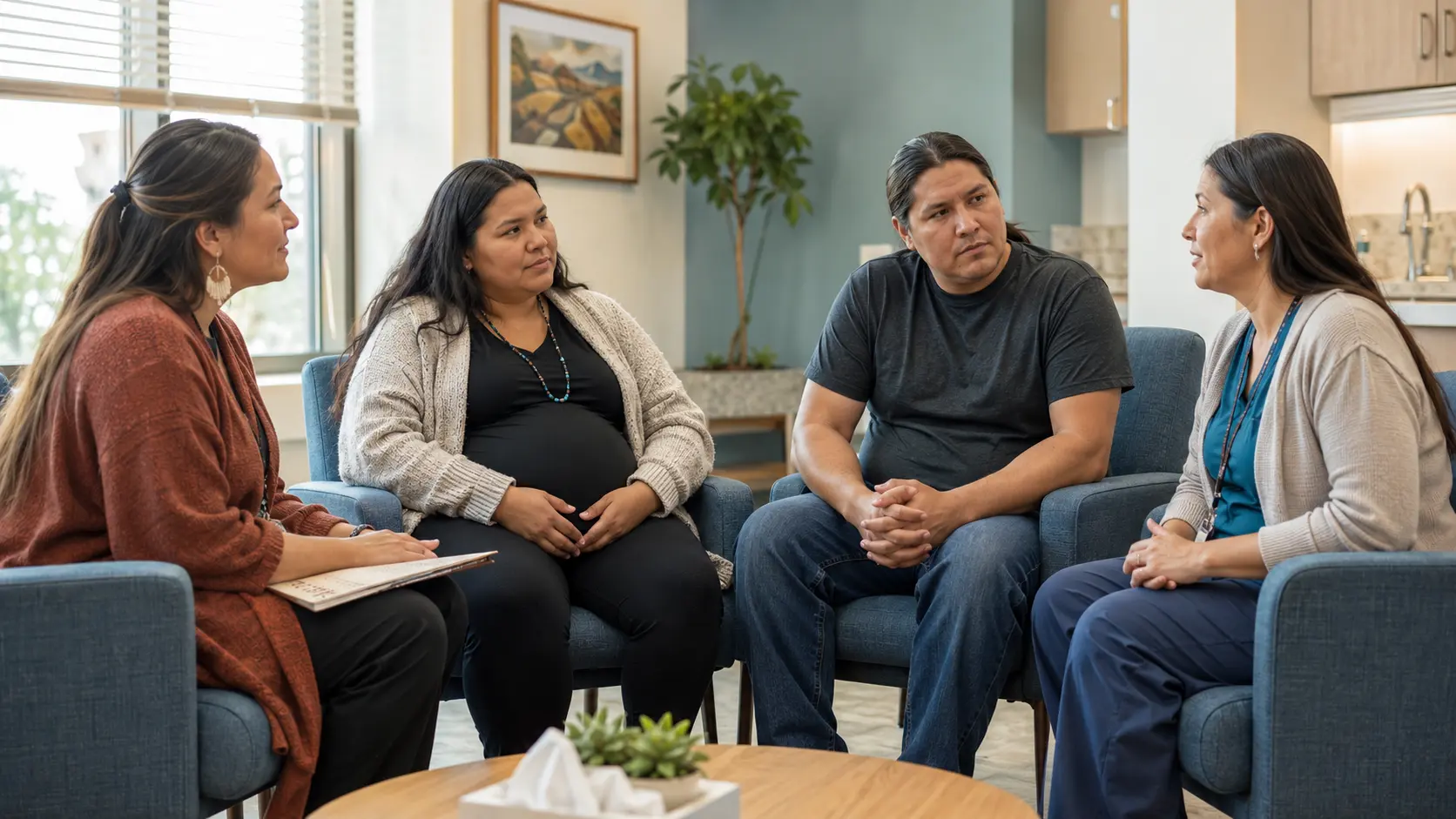
Planning should allow a family to say no, change a goal, identify who may be present, and describe what respectful support means to them. It should also surface constraints early. A parent who will travel for birth may need a different contact model than someone close to the maternity unit. A family without reliable water, food, phone service, transportation, or paid leave may need practical support, not another education sheet. An executive pathway should make those needs visible without turning social conditions into a reason for surveillance or coercion.
Treat interrupted support as a system signal, not a family deficit.
A pathway can fail through a combination of relationship, workforce, workflow, distance, household, and governance conditions. The same outcome may have very different mechanisms. A short feeding duration might reflect pain that was not addressed, a family-directed change in goal, conflicting advice, infant or parent illness, inadequate skilled capacity, return to work, a long trip, food or water insecurity, racism, privacy concerns, or another circumstance. Leaders need a review method that preserves complexity and avoids making one assumed cause stand in for a person's experience.
The qualitative fishbone below is an inquiry guide. Branches are deliberately equal in size because the studies do not supply comparable frequencies across a single population. The order does not rank importance, and the visual does not establish causality. Local teams should revise the branch labels with Indigenous governance and family input, then use actual cases, community feedback, and locally defined measures to identify which conditions warrant action.
Relationship and trust
Dismissal, racism, coercion, conflicting advice, missing language access, weak continuity, or exclusion of chosen kin and supporters
Workforce and capability
Insufficient Indigenous staff, peer support, birthworkers, lactation expertise, protected time, confidence, backup, or referral capacity
Birth and discharge workflow
Late planning, weekend gaps, rushed education, unclear ownership, incomplete supplies, unaccepted referrals, or no recovery route
Distance and digital access
Birth travel, transportation, lodging, connectivity, device access, privacy, remote-exam limits, or services that cannot respond locally
Household conditions
Food or water insecurity, work, caregiving, housing, safety, cost, fatigue, pain, health needs, or competing priorities
Measurement and governance
Institution-only goals, missing family experience, unprotected stories, small-number privacy risk, or no owner for documented inequity
Case review should begin with what the family wanted and what happened next. Ask where they first sought help, whether the response was timely and respectful, what actions were promised, who accepted each action, and what remained unresolved. Include successful cases as well as failures. A case that went well may reveal an Indigenous peer, community nurse, family member, or frontline worker whose informal coordination is holding the system together without protected time or stable funding.
Safety deserves care in both directions. Clinicians must act on urgent parent or infant concerns using local protocols, and families must be able to raise concerns without fear that feeding choices, cultural practices, or requests for support will trigger judgment. The executive pathway should connect clinical escalation with culturally safe communication. It should never substitute a diagram for professional assessment, and it should never use cultural safety language to soften a capacity problem that requires staffing, coverage, or specialist availability.
Interpersonal violence, mental health, substance use, housing instability, and other sensitive conditions may affect some families, but they require confidential, trauma-informed, choice-centered processes. One North Dakota analysis found that interpersonal violence did not explain the observed racial disparity in breastfeeding initiation in that dataset.14 Leaders should not single out a sensitive factor as the presumed cause of an inequity. Screening without safe response capacity can create risk rather than resolution.
Resource the trusted workforce and make every handoff an accepted transfer of responsibility.
Indigenous birthworkers, doulas, community health representatives, peer counselors, Elders, nurses, midwives, lactation professionals, primary care teams, and family supporters may each contribute distinct value. They are not interchangeable, and a hospital should not define Indigenous roles without community authority. The workforce design question is not simply how many lactation consultations occurred. It is whether the right person was available at the moment a family needed help, could work within their scope, had a clear route for clinical escalation, and was compensated for the expertise and coordination provided.
Capacity matters. A retrospective study of 126,285 births in Manitoba examined feeding patterns after a hospital lactation consultant program was discontinued. The observed changes were less favorable, with stronger unfavorable patterns among First Nations and remote-living infants.6 Because the study was observational, it cannot isolate every factor. It nevertheless gives executives a clear risk question: when a skilled service is reduced, who absorbs the work, how are equity effects monitored, and what restoration threshold has been established?
Staffing plans should include evenings, weekends, holidays, surges, absences, and geography. A single champion cannot be the pathway. Cross-training may improve basic response, but it does not replace advanced lactation expertise or Indigenous community roles. The organization should define which needs can be addressed by bedside staff, which require an International Board Certified Lactation Consultant or another qualified clinician, which benefit from peer or birthworker support, and how those functions connect without forcing a family to coordinate them.
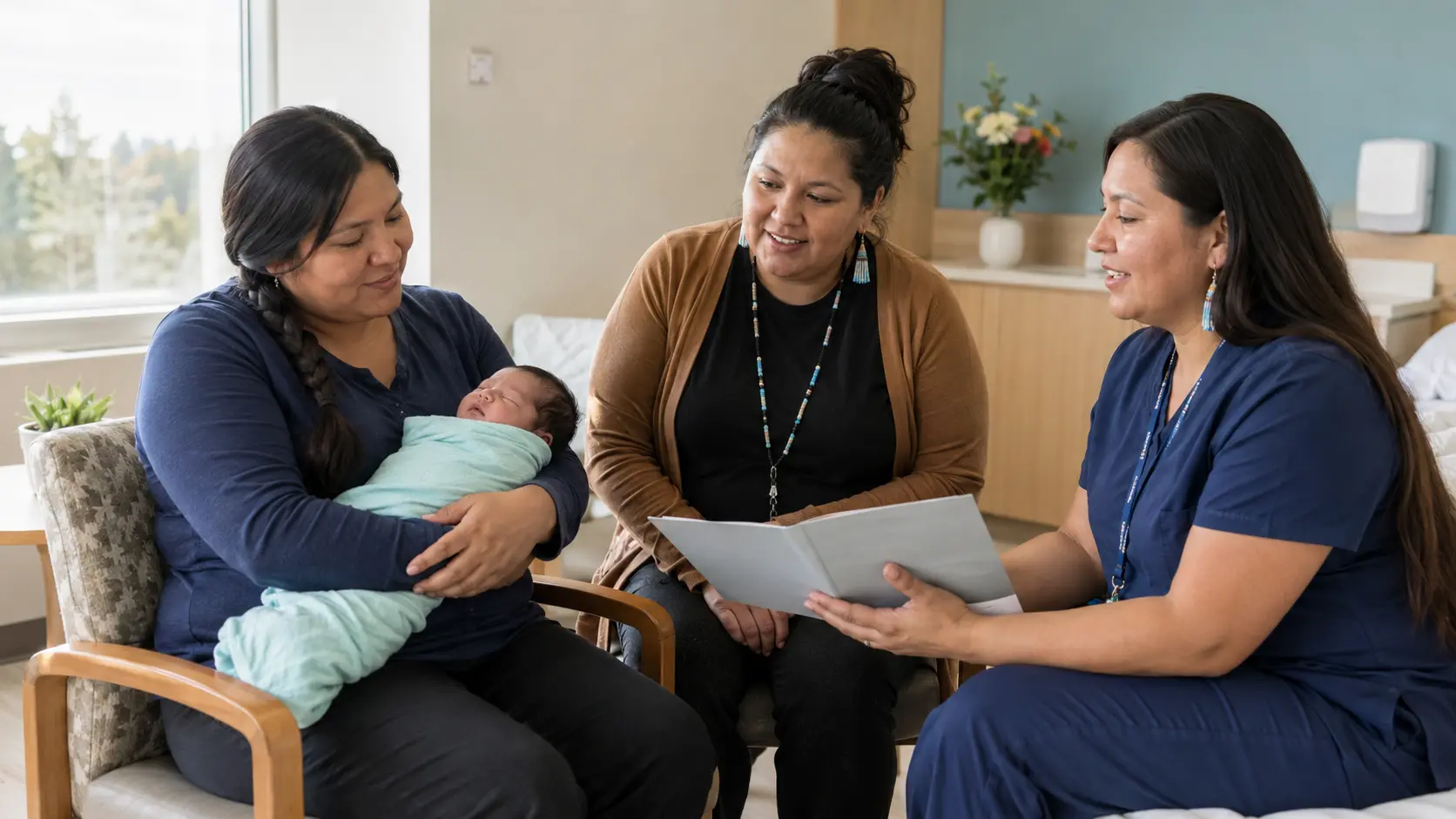
A referral is not a handoff until a recipient accepts it. The sending team should know whether the receiving service is open, eligible, affordable, reachable, and able to address the concern. The family should leave with a named contact, expected timing, transportation or digital plan, and instructions for what to do if the service does not respond. The receiver needs the family's current goal, consent, clinical concern, actions already tried, and any time-sensitive follow-up. Closed-loop communication should confirm acceptance and later confirm resolution or escalation.
Family supporters should be included when the family chooses, but institutions must not transfer professional responsibility to relatives. A grandmother, auntie, partner, or other kin may carry knowledge, reassurance, and practical help. That contribution should be respected without making unpaid family labor the substitute for accessible clinical care. Consent and privacy rules should be explained in plain language so the family controls who receives what information.
Workforce learning should combine cultural safety, anti-racism, trauma-informed practice, communication, clinical scope, referral navigation, and local protocols. Attendance is not the outcome. Observe whether staff can use the route in realistic scenarios, whether Indigenous colleagues experience the workplace as safe, whether families report respect, and whether unresolved concerns reach an accountable owner. Training without workload, leadership response, and structural change can place more burden on the people already naming the problem.
Design for distance, food and water realities, digital limits, and local follow-through.
Access begins before an appointment. Birth travel, weather, transportation, lodging, childcare, work, cost, pharmacy availability, phone service, broadband, device privacy, food access, and water security can shape whether support is usable. Research with Anishininew caregivers in Sandy Lake describes infant feeding within local knowledge, birthing support, income, and water conditions.12 A study across eight remote Australian Aboriginal and Torres Strait Islander communities likewise places diet quality, food security, and traditional food intake within the maternal and early-childhood environment.8 These are not reasons to judge a household. They are reasons to design a pathway that can respond to material conditions.
Executives should map the actual route from community to birthing site and back. Identify where responsibility changes, what travel support is available, how families obtain supplies, whether follow-up is timed to transportation realities, and how local teams obtain specialist advice. If a health system benefits from regional referral volume, it should also examine the cost and coordination burden transferred to families and community services.
Telehealth can extend expertise, but a video link is only one component. A systematic review found just three eligible Indigenous maternal and child mHealth studies, with heterogeneous approaches and important evidence limitations.9 Digital services should therefore be co-designed and evaluated for trust, cultural fit, language, accessibility, engagement, privacy, connectivity, local examination needs, emergency boundaries, and the ability to complete whatever the remote clinician recommends. Digital access should supplement relationships and local capacity, not displace them.
An operating system makes dependencies explicit. The executive sponsor owns institutional resources and barriers. Indigenous governance defines acceptable relationships, language, priorities, and data practice. Clinical teams own assessment and care within scope. Birthworkers and peers contribute roles defined with their communities. Navigation connects appointments, travel, supplies, and services. Measurement teams provide timely information under agreed privacy rules. When one interface fails, the system should show who restores it.
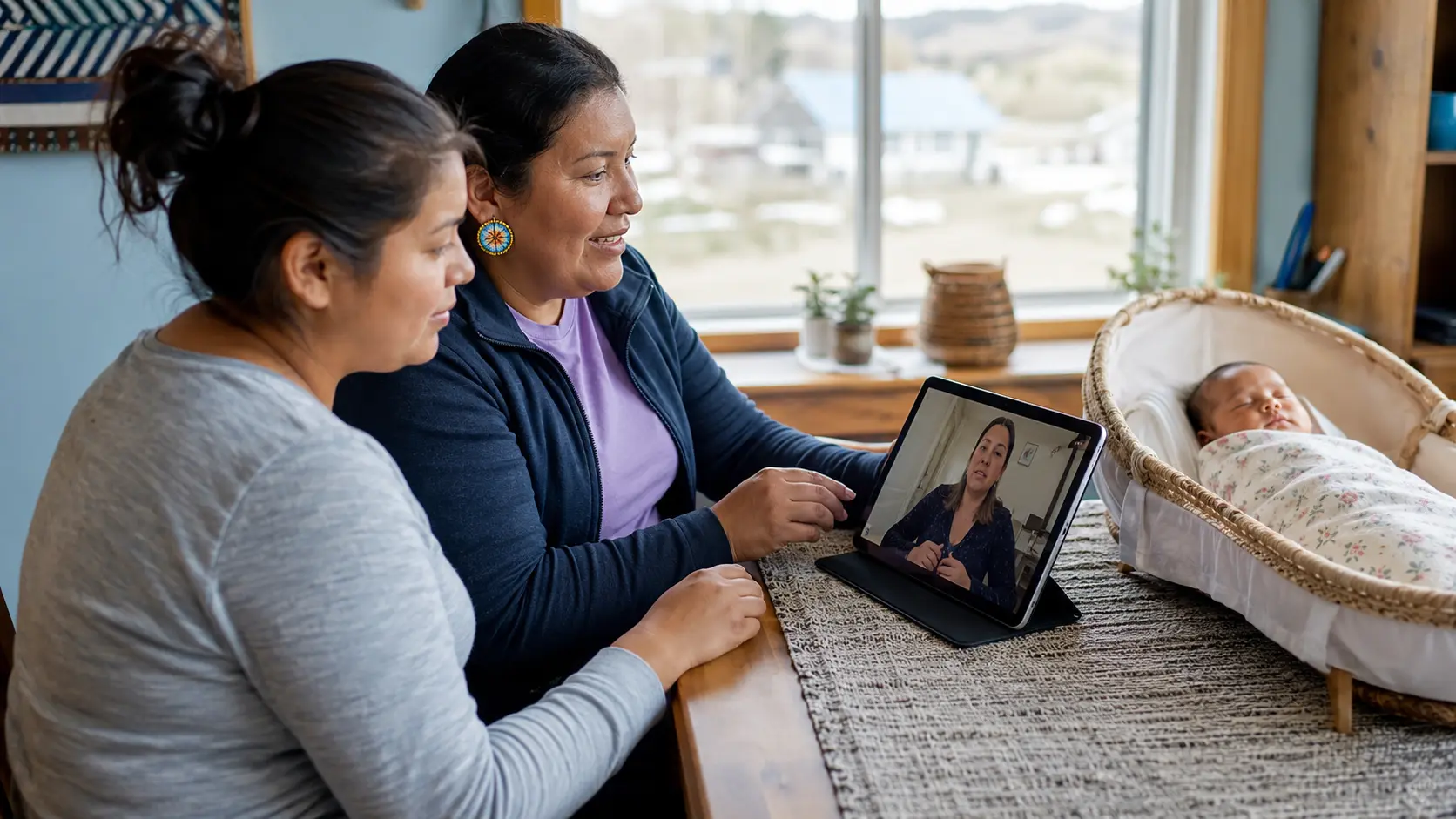
Distance-aware scheduling may include longer appointment windows, fewer unnecessary return trips, coordination with local visits, flexible modality, and rapid rescheduling after weather or transportation disruptions. Missed care should trigger a safe recovery process, not a punitive label. The recovery conversation should distinguish a family's choice from a barrier and should ask what route is realistic now.
Health centers can be crucial access points when roles and capacity are real. The related National Health Center Week executive brief offers a broader access and follow-through lens. For this observance, the narrower question is whether maternity, lactation, community, and primary care functions form one accountable route shaped by Indigenous authority. Listing a community clinic on a discharge sheet does not establish that relationship.
Measure respect, access, continuity, and resolved barriers without turning families into targets.
A responsible scorecard combines experience, process, capacity, and outcome signals. It begins with explicit definitions. For every rate, document the numerator, denominator, eligible population, exclusions, data source, owner, cadence, and stratification plan. For experience measures, specify who can respond, how language and accessibility are supported, whether anonymous response is available, and what action follows a concern. Small Indigenous populations require strong privacy protections because detailed stratification can make individuals identifiable.
Measurement should support a family's informed goal rather than impose one. Timely initiation is associated with infant survival in a large observational study of Indian tribal populations, but the design does not establish causation or transfer directly to North American settings.7 Initiation can be a locally accepted reliability measure while still requiring interpretation alongside clinical context, family choice, and respectful experience. Duration should not be used to pressure a family whose goal changes or whose clinical situation requires a different plan.
Barrier resolution is often more actionable than a broad disparity measure. North Dakota data support examining modifiable reported barriers rather than attributing differences to identity.10 A resolution measure can ask whether a documented concern received an accepted owner and whether action occurred within a locally defined interval. It should never create an incentive to avoid documenting complex needs. Review the number and type of open exceptions alongside the rate.
| Domain | Candidate measure | Definition discipline | Governance and equity check |
|---|---|---|---|
| Authority | Pathway decisions reviewed through the locally approved Indigenous governance process | Define which decisions require review and what completed review means. | Track compensation, decision changes, unresolved disagreement, and data permissions. |
| Respect | Families reporting that choices, culture, language, privacy, and chosen supporters were respected | Use locally developed questions and accessible response modes. | Pair scores with narratives and a protected action route; never publish identifiable small cells. |
| Skilled access | Eligible requests receiving appropriate lactation or clinical response within the locally defined interval | Define eligibility, urgency tiers, response, and after-hours treatment. | Review by geography, modality, language, birth travel, and service availability. |
| Handoff | Discharges with a named receiving owner who accepted the follow-up plan | Acceptance requires confirmation, not a referral order alone. | Review weekend, holiday, remote, and cross-organization failure patterns. |
| Resolution | Documented feeding or access barriers resolved or held by an active escalation owner | Define resolved with families and distinguish informed goal change. | Review open exceptions and whether documentation itself triggers unwanted surveillance. |
| Capacity | Coverage hours and demand intervals with the required Indigenous, peer, lactation, navigation, and clinical functions available | Measure actual usable capacity, not only positions or training counts. | Identify unpaid coordination, vacancy effects, and dependence on individual champions. |
| Continuity | Families who know the next contact and can reach a response after discharge | Test the route and include recovery after a missed connection. | Review travel, phone, broadband, cost, work, disability, and language barriers. |
Data governance is part of clinical and cultural safety. Decide who owns the data, who may interpret it, how community review occurs, how stories are protected, what small-number suppression rules apply, and when data must be destroyed or returned. Do not collect Tribal affiliation, cultural practice, or personal narratives merely because they might be interesting. Collect only what serves an agreed purpose and can be protected.
Use the scorecard for learning rather than punishment. A delayed contact may reflect weather, coverage, family preference, an emergency, or a service that was closed. Review exceptions with the people doing and receiving the work. When a measure improves, test whether the intended mechanism changed and whether improvement reached families equitably. When it does not improve, ask whether the intervention was implemented, whether the measure was valid, and whether governance partners believe a different action is needed.
Use 90 days to establish authority, test one handoff, and learn before expanding.
A 90-day improvement cycle cannot repair generations of harm, build trust on demand, or create a partnership by declaration. It can make one institutional commitment concrete. Choose a narrow pathway that local Indigenous authorities and families consider important, such as prenatal preparation for families who travel to give birth, access to skilled help after discharge, or a hospital-to-community handoff. Define what is inside the test and what remains outside it.
During days 1 through 30, establish governance and listen. Confirm the locally recognized authority, participation terms, compensation, decision rights, privacy expectations, and executive sponsor. Map the current route with families and frontline workers. Review a small set of successful and interrupted journeys. Identify current capacity, informal work, travel and digital realities, and the places where responsibility becomes unclear. Define only the baseline measures needed for the selected problem.
During days 31 through 60, co-design and simulate. Create the minimum shared plan, named owner, acknowledgment, escalation, and closure signal. Test language and workflow with people who did not design it. Include nights, weekends, remote locations, language needs, disability access, urgent clinical concerns, and a family who changes its goal. Resolve policy, consent, documentation, and technology questions before asking staff to improvise around them.
During days 61 through 90, launch on a limited scale and review exceptions frequently. Protect rapid feedback routes for families and Indigenous workers. Compare process and experience with baseline without claiming causation from a short test. Document who was not reached, what remained unresolved, what resource constraints appeared, and whether the governance body recommends adaptation, continuation, pause, or expansion.
Executive sponsorship should be visible through decisions, not ceremonial attendance. Remove one policy barrier, fund one locally requested role or capacity need, protect staff time, create an escalation route that receives answers, and report unresolved dependencies. If the organization lacks a legitimate governance relationship, the first 90-day outcome may be a properly resourced process to build one, not a public-facing program.
The observance can also improve internal accountability. Procurement can review compensation and contracting barriers for community expertise. Human resources can examine hiring, retention, workplace safety, and career pathways for Indigenous staff. Quality teams can revise measures and privacy controls. Information technology can support consent, accepted referrals, accessibility, and secure cross-setting communication. Clinical leaders can define escalation and coverage. Communications teams can obtain permission for language and stories rather than treating culture as brand material.
At day 90, report honestly. State what changed, what did not, whose experience informed the decision, what evidence remains uncertain, and what the governance body recommends. Do not describe a pilot as a proven solution or a consultation as a partnership. Sustainable work will likely require longer funding, workforce development, policy change, cross-organization agreements, and repeated trust-building beyond the observance window.
Leadership commitment
Place Indigenous authority and family-defined goals at the center, make one milk medicine pathway visible from preparation through follow-through, and keep every unresolved handoff, access barrier, and experience concern assigned until it is resolved or explicitly governed.
References
Fifteen peer-reviewed sources are ordered newest first. Findings are applied within the population, method, setting, and limitations described in this brief. The official observance name, dates, and 2026 theme are supported separately by the Indigenous Milk Medicine Collective.
- Galasso, J., Forbes, M. A., Long, R., Alareak, N., Amarudjuak, R., Baikie, G., Clark, J., & Johnston, P. P. (2026). Inuit women's voices from Nunavut, Canada: Informing perinatal support needs and priorities. Healthcare, 14(15), 2239. https://doi.org/10.3390/healthcare14152239
- Vanegas, S., Cuddy, R., Billey, T., Jones, T., Pablo, K., Goklish, N., Thacker, A., Nelson, L., Tessay, R., Neault, N., Nelson, K. E., Yazzie, K., & Barlow, A. (2026). Native American resilience to protect family nutrition during a pandemic: A qualitative analysis. PLOS Global Public Health, 6(3), 1-14. https://doi.org/10.1371/journal.pgph.0004822
- Hidrobo-Guzmán, J. F., Morejón-Jácome, G. E., Cárdenas-Robles, E. D., Pilco-Vargas, L. D., Posso López, D. V., & Iguago Angamarca, E. T. (2025). Effectiveness of ethnic-cultural educational strategies for the promotion of breastfeeding. International Journal of Environmental Research and Public Health, 22(9), 1416. https://doi.org/10.3390/ijerph22091416
- Richardson, M., Waubanascum, C., Waters, S. F., & Sarche, M. (2025). A decolonial perspective on Indigenous infant and early childhood mental health: Reclaiming Indigenous ways for the next seven generations. Infant Mental Health Journal, 46(4), 361-375. https://doi.org/10.1002/imhj.70000
- Hawke, K., Bowman, A., Cameron, C., Peterson, K. L., Middleton, P., Leane, C., Deverix, J., Collins-Clinch, A., Rumbold, A., & Glover, K. (2025). Breastfeeding experiences and infant feeding decisions for women birthing Aboriginal children in Adelaide, South Australia: A qualitative study. International Breastfeeding Journal, 20(1), 48. https://doi.org/10.1186/s13006-025-00742-4
- Hui, A., Yamamoto, J. M., Dragan, R., Poliquin, V., Birk, P., Kearns, K., Decaire, E., Omarr, V., Onyiuke, C., Friesen, K., Raimondi, C., Wicklow, B., Dyck, C., & Shen, G. X. (2025). Impact of discontinuation of lactation consultant program on early infant feeding in Manitoba. International Breastfeeding Journal, 20(1), 42. https://doi.org/10.1186/s13006-025-00737-1
- Hammad, M., & Rahman, M. H. U. (2025). Early nourishment, better survival: Association between breastfeeding initiation and infant mortality in Indian tribes. BMC Public Health, 25(1), 1898. https://doi.org/10.1186/s12889-025-23084-6
- Tonkin, E., Chatfield, M. D., Brimblecombe, J., Kleve, S., Chan, E., Deen, C., Brown, C., Stubbs, E., Booth, S., Thompson, K., Pauli, J., Leonard, D., Lee, A., Fredericks, B., & Ferguson, M. (2025). Diet quality, food security and traditional food intake of pregnant and breastfeeding women, and children 6 months to 5 years, living in eight remote Australian Aboriginal and Torres Strait Islander communities. BMC Public Health, 25(1), 1604. https://doi.org/10.1186/s12889-025-22815-z
- Ishaque, S., Ela, O., Dowling, A., Rissel, C., Canuto, K., Hall, K., Bidargaddi, N., Briley, A., Roberts, C. T., & Bonevski, B. (2025). Mobile health interventions for modifying Indigenous maternal and child-health related behaviors: Systematic review. Journal of Medical Internet Research, 27, e57019. https://doi.org/10.2196/57019
- Ross, A., MacPherson, C., Baker, L., Kim, S., Njau, G., & Williams, A. D. (2025). Impact of breastfeeding barriers on racial/ethnic disparities in breastfeeding outcomes in North Dakota. Journal of Racial and Ethnic Health Disparities, 12(2), 1063-1072. https://doi.org/10.1007/s40615-024-01943-z
- Onifade, O. M., Endacott, S. K., Schumacher, T., Rae, K. M., Pringle, K. G., & Gomeroi Gaaynggal Advisory Committee. (2025). Breastfeeding of Aboriginal and/or Torres Strait Islander infants from a small rural cohort in Australia. International Breastfeeding Journal, 20(1), 20. https://doi.org/10.1186/s13006-025-00708-6
- Monteith, H., Mamakeesick, M., Fiddler, L., Galloway, T., & Hanley, A. J. (2025). Anishininew infant feeding experiences in Sandy Lake, Canada: A story of Waabeequanee. Applied Physiology, Nutrition, and Metabolism, 50, 1-14. https://doi.org/10.1139/apnm-2024-0306
- Reimer, A., Specker, B. L., Hockett, C. W., Strasser, K., Ahrendt, L., & McCormack, L. A. (2024). Factors associated with breastfeeding initiation and continuation at two months postpartum in American Indian women: An exploratory analysis. American Indian and Alaska Native Mental Health Research, 31(1), 71-92. https://doi.org/10.5820/aian.3101.2024.71
- Kanichy Makah, M., Schmidt, L., Anderson, R., Njau, G., Stiffarm Aaniiih, A., Schmidt, M., Stepanov, A., & Williams, A. (2023). Examining the role of interpersonal violence in racial disparities in breastfeeding in North Dakota (ND PRAMS 2017-2019). International Journal of Environmental Research and Public Health, 20(8), 5445. https://doi.org/10.3390/ijerph20085445
- Brown, L. L., Talker, R., Stoddard, G. J., Clayton, J., Millar, M. M., Jo, Y., Bardsley, T., & Stipelman, C. H. (2022). Breastfeeding attitudes and practices in a rural Utah Navajo community. Maternal and Child Health Journal, 26(2), 397-406. https://doi.org/10.1007/s10995-021-03247-8