

The Support Dose
Use enough technology to preserve capability, then retune when life changes.
Smart technology can function exactly as designed and still deliver the wrong amount of help. A reminder can be too weak on a difficult day, automation can remove a movement or memory practice the person values, monitoring can create hidden caregiver work, and a reliable device can fail inside the actual home or support network.
Age and diagnosis do not define one stable capability. Sensory, cognitive, mobility, dexterity, stamina, pain, language, literacy, emotional, device, environmental, and support conditions can vary across the day and over time. The correct support dose must fit that changing state.
The Geriatric Support Dose is a variable support-fit model for one valued life function. Its Smart-Support Titration Card records preferred role, ordinary and difficult capability, no-tech baseline, failure consequence, minimum effective assist, maximum acceptable substitution, exact support layer, environment, human roles, permissions, data lifecycle, rehearsal, outcomes, and retitration triggers.
This article is not a gadget survey or a general digital-access guide. It does not recommend specific phones, watches, sensors, robots, applications, or home systems. It asks the narrower question: how much technological assistance fits the person, function, environment, and support available now?
The dose model complements broader executive guidance in Smart Technologies in Geriatric Care, Home Health Monitoring Innovations, Enhancing Patient Engagement With Telehealth, and Healthcare Cybersecurity for Executives. Those guides widen the system context while this Card fits one support layer to one valued function.
Smart technology improves geriatric care only when the amount of assistance fits a valued life function, current capability, real environment, and support actually available. The dose must change when life changes.
The Support Dose and Titration Card are editorial operating models, not AHRQ, IHI, ACL, WHO, FDA, CDC, HHS, FTC, NIST, legal, clinical, device, coverage, certification, or age-friendly recognition terms. They do not prove safety, benefit, independence, accessibility, privacy, or regulatory status. Apply the requirements and qualified judgment governing the exact person, function, product, data, and setting.
The sections below move from one valued function through changing capability, baseline, failure consequence, minimum and maximum dose, exact support layer, real environment, rehearsal, human help, lifecycle, outcomes, and retitration.
Smart is not the same as support.
A technology can connect, detect, classify, remind, automate, or report without preserving the function the older adult values. Product operation, delivered support, activity completion, net independence, safety, and clinical outcome are different claims that need different evidence.
AHRQ’s Aging Well in the 21st Century strategic plan emphasizes functional status, well-being, and independence in transforming care for older adults. It is not a technology standard or evidence that a specific product preserves those outcomes.
Define the support claim in the older adult’s terms. If the valued result is preparing breakfast, joining a weekly gathering, managing a morning routine, or reaching help, measure that function and the help required rather than only device use.
Put every use case on the Geriatric Support Dose.
Create one Titration Card for one older adult or tightly defined population, valued function, setting, technology function, support layer, and review period. A product with several features may require several Cards because each substitutes, observes, or assists differently.
IHI Age-Friendly Health Systems recognition uses the 4Ms as an anchor, including What Matters, Medication, Mentation, and Mobility. It is not a federal designation, product endorsement, or causal proof. Level 1 concerns participation; Level 2 includes reporting counts for at least three months.
Use What Matters to anchor the valued function, then build product, human, environment, and data controls around that function. Do not convert the 4Ms into a technology-selection score.
Version the Card after a product update, new feature, changed claim, different home, network, helper, permission, capability, health state, routine, goal, or review finding.
Start with one valued life function and the person’s preferred role.
Ask what the person wants to keep doing and how they want to participate: independently, with a cue, with shared help, through another method, or not at all. The answer can differ from what family, clinicians, vendors, or program leaders assume is convenient.
Describe the activity in observable terms: when it begins, meaningful steps, completion, acceptable support, failure, rescue, and the part the older adult wants to retain. Avoid broad goals such as stay independent or be safe without naming the function.
A valued function can include choosing when not to use technology. Preserve a human, low-tech, or nondigital route when the person prefers it and the consequence can be safely controlled.
When communication, cognition, or decision support is needed, adapt the conversation before replacing the person’s preference with a proxy answer. Use accessible formats, familiar examples, extra time, supported decision-making, and the person’s chosen communication partner as appropriate. Record whose preference is represented and what assistance made expression possible.
Recheck the preferred role after experience. A person may want more help once the burden is understood, or less automation after noticing lost practice, unwanted observation, or changed social contact.
Describe capability as a changing state, not an age or diagnosis.
Capability varies with fatigue, pain, mood, sleep, medication, acute illness, sensory conditions, lighting, noise, stress, device charge, connectivity, routine, and helper availability. Describe the range that matters for the function rather than assigning one permanent capable or incapable label.
Record only factors relevant to fitting the support dose, with appropriate privacy and role-based access. The Titration Card is not a complete geriatric assessment or a substitute for diagnosis, capacity evaluation, or clinical documentation.
Treat variation as design information. If the device works only on the best day, the dose is not fit for reliance. If it removes meaningful activity on every day, it may be too much.
Establish the no-tech baseline and bound the consequence of failure.
Before adding technology, observe how the function happens now. Include personal strategy, environment, routine, paper or tactile cue, ordinary device, human support, delay, rescue, work transferred to others, and what happens when the function is not completed.
Separate inconvenience, lost preference, reduced participation, increased burden, delayed care, and immediate safety consequence. The required reliability, backup, response, and monitoring differ. Do not assign a high-risk technology role to a product or support network designed only for convenience.
CDC reports that falls among adults aged 65 and older are consequential and often preventable. A fall-detection alert is not fall prevention, and a wearable, sensor, or prediction model requires its own evidence. Define whether the use case detects, responds, reduces a hazard, changes behavior, or measures an outcome.
Do not rely on remote patient monitoring as an emergency service. HHS patient education, updated June 16, 2026, tells users to understand setup, training, cost, instructions, supervision, help routes, and that RPM is not for emergencies. Build the correct urgent and emergency route separately.
Find the smallest support layer that reliably preserves the function.
Begin with environment, routine, human coordination, and low-tech support when they can safely meet the goal. Added sensing, connectivity, data sharing, and automation introduce setup, maintenance, privacy, response, and failure work that should earn their place.
Move one layer at a time: improve the environment; use a low-tech cue; amplify or translate; assist a physical or cognitive step; connect a person; observe with permission; prompt qualified review; or automate a bounded task. Rehearse after each change.
ACL’s 2026 Assistive Technology Awareness Day resource describes assistive technology broadly, including low-tech, high-tech, and mainstream products, and encourages opportunities to try and compare. It does not validate a product, guarantee coverage, or create a clinical guideline.
WHO describes assistive technology as products plus related systems and services in a global context. Its fact sheet is not a statement of U.S. coverage, legal requirements, or evidence for a specific device. Use the broader systems view while applying local rules and evidence.
Compare the simpler and higher support layers during the same valued task whenever practical. Hold capability, setting, helper, and consequence as constant as possible, then document the added benefit that justifies added complexity. If a higher layer wins only in a demonstration or creates work the trial did not count, it has not earned reliance.
Document why the chosen layer is the minimum effective dose for now. More technology is not the default next step, and less technology is not always safer when failure consequences and support availability require a stronger layer.
Set the maximum acceptable substitution before adding automation.
Support can become over-support when it unnecessarily replaces movement, memory practice, decision-making, social contact, privacy, or a meaningful role. Define what the older adult wants technology to do and what it must leave for the person or chosen helper.
Maximum substitution is not a universal independence ideal. A person may prefer automation for one burdensome task and direct participation in another. The boundary can change with fatigue, illness, environment, consequences, and personal priorities.
Measure substitution explicitly: which steps the system now performs, what practice disappeared, how human contact changed, what decisions moved, who now watches, and whether the person still experiences the result as their own activity.
Use the too much state as a real titration outcome. Step down, simplify, switch, narrow observation, restore a manual step, or change helper involvement when support exceeds the person’s preferred or beneficial dose.
Fit the exact support layer to the actual home, network, and hidden work.
A demonstration environment removes the clutter, noise, glare, distance, stairs, power limits, weak signal, shared devices, household routines, pets, visitors, and competing tasks that shape real use. Commission the support where the function happens.
FDA human-factors resources for medical devices frame safety through intended users, uses, use environments, user interface, and use-related risk. They do not apply to every consumer product or prove local benefit. FDA’s 2014 nonbinding home-use medical-device guidance is manufacturer-focused and does not guarantee safety in one home.
HHS Section 504 resources apply within their entity, funding, program, and content scope, and some compliance dates changed in 2026. Accessibility conformance does not by itself prove usability, person-specific fit, adoption, safety, or outcome. Test the real task with the person.
Count hidden work before release. If the dose requires daily charging, weekly correction, frequent false-alert review, complex updates, or unpaid coordination, confirm who accepts that work and what happens when they cannot perform it.
Rehearse ordinary, difficult, and changed-support days before reliance.
A successful setup session proves only that the function worked once under supported conditions. Rehearse the three person-states and the technology failures that matter before the older adult, family, staff, or clinician depends on the system.
Use teach-back and return demonstration where appropriate, but do not make the person carry every design defect through training. When several users struggle with the same interface, environment, alert, or recovery, redesign or choose another support.
Record a no-reliance condition when the support has not passed a consequential state. Continue the baseline or another safe route while repair and retesting occur.
Keep human help proportional, explicit, and separately authorized.
Technology often redistributes work rather than removing it. A family member may receive alerts, a clinician may review trends, paid staff may reset devices, and the older adult may perform more data entry and troubleshooting. Name the work before calling the system independent.
Separate role from permission. Being family, caregiver, emergency contact, proxy, technician, or clinician does not automatically authorize every device action or data view. Define what each person may see, change, receive, decide, and delegate, and how the older adult can revise the permission.
AHRQ’s InfoSAGE project explored information sharing across generations and environments from 2013 through 2019. It was an investigator project, and its findings are not an official AHRQ or HHS position or validation of a current platform. Use it as historical design context, not product proof.
Ask each named helper whether they accept the work, can perform it, and have a backup. Do not treat nearby family as an unlimited service layer. A plan that depends on unpaid availability, technical confidence, transportation, or rapid response must verify those conditions and offer another route when they fail.
Measure older-adult, caregiver, paid-staff, clinical, and technical minutes separately. A reduction in one person’s visible effort can conceal a larger burden transferred to someone else.
Change the dose when capability, environment, support, or preference changes.
Set review triggers before release: acute illness, hospitalization, fall or near fall, new pain, sensory change, medication change, cognitive change, caregiver transition, move, travel, bereavement, new network, device update, repeated rescue, alert burden, new privacy concern, or changed What Matters.
Retitration can move in either direction. Step up for a higher consequence or lower current capability; simplify when complexity is the failure; switch when another design fits better; add human or environmental support; step down when capability or preference changes; pause or retire when benefit no longer exceeds burden.
Do not wait for annual review after a material trigger. The previous dose may become too little or too much immediately. Preserve a safe interim route while the new state is assessed.
Reask preference. Life change can alter what the older adult values, which help feels acceptable, and how privacy, contact, movement, memory practice, or automation should be balanced.
Protect the smart-technology lifecycle from setup through retirement.
Lifecycle control includes selection, setup, identity, permission, network, update, alert, data flow, technical support, replacement, account closure, device transfer, disposal, and the care transition when the technology stops. Security and privacy are part of support fit, not separate paperwork.
The FTC Health Breach Notification Rule can apply to fact-specific apps and connected devices outside HIPAA; amended provisions took effect July 29, 2024. It is not a complete privacy or security program, and HIPAA status is not the only question.
The NISTIR 8259 series provides voluntary, generic cybersecurity guidance, largely for manufacturers and IoT baselines. The series page was updated May 14, 2026; Revision 1 was issued April 9, 2026, while NISTIR 8259C remains draft. These resources do not certify clinical validity, legal compliance, HIPAA compliance, or a product.
Test loss of vendor support, cloud service, phone, network, account, and helper access before reliance. A product sunset is a care transition when the valued function depends on it.
Measure net independence and What Matters, not adoption.
Keep the claim ladder separate: offered, delivered, set up, used, valued activity completed, help or burden changed, capability or What Matters changed, and safety or clinical outcome changed. A break at any step changes what can be claimed.
Define net independence as the valued function completed with the person’s preferred role, minus unwanted substitution, rescue, hidden human work, burden, privacy loss, and dependency introduced by the support. Do not reduce it to no human help.
Report people who decline, cannot set up, need another dose, experience a privacy conflict, or require a nondigital route. Excluding them can make adoption and success appear stronger while obscuring fit.
Treat a successful dose change as an outcome, not as program failure. Track the cost per valued function completed under the person’s preferred role, including equipment, subscription, setup, helper time, clinical review, rescue, replacement, and retirement. Report when simplification produces equal or better function at lower total burden.
Use an appropriate comparator and causal limits. Improvement can reflect clinical care, environmental change, recovery, caregiver action, practice, or selection as well as technology.
Titrate one valued function over ninety days.
In days one through thirty, select one function, define the older adult’s preferred role, observe ordinary and difficult capability, establish the no-tech and human baseline, bound failure, map the actual environment, set the minimum and maximum dose, and name human and data permissions.
In days thirty-one through sixty, try the smallest reasonable layer in supported shadow conditions. Rehearse ordinary, difficult, and changed-support days; remove power, network, or helper under control; measure hidden work, rescue, substitution, privacy, and preference; then retitrate.
In days sixty-one through ninety, rely on the bounded dose for a small, monitored period with the baseline still recoverable. Review fit weekly, practice backup, confirm permissions, inspect burden and lifecycle controls, and measure every claim-ladder step.
A ninety-day pilot cannot prove long-term functional preservation, reduced institutional use, fewer falls, cost savings, or broad population benefit. It can show whether one support dose is fit enough to continue under defined conditions.
Retire the failure patterns that confuse more technology with better support.
Do not call data collection care. A sensor value or alert has no protective effect unless the correct person receives, understands, and can act in time, and the complete response pathway is tested.
Do not call nonuse failure without asking whether the dose is too complex, too intrusive, too weak, too burdensome, poorly placed, inaccessible, or disconnected from What Matters. Simplification or retirement can be the successful decision.
Do not keep technology active because it was expensive, popular, or once useful. When the valued function, person, environment, support, evidence, or product changes, return the use case to the lever and choose the dose again.
Conclusion: Use enough support for now, then retune.
Smart technology does not improve geriatric care merely by operating, collecting data, generating alerts, or automating a task. It improves support when the dose fits a valued life function, changing capability, the real environment, human availability, permission, and the consequences of failure.
The Geriatric Support Dose begins with the older adult’s preferred role, preserves the no-tech and human baseline, finds the minimum effective assist, limits unwanted substitution, rehearses difficult states, assigns hidden work, protects the lifecycle, and treats step down or retirement as valid outcomes.
The strongest care team can show not only that a product worked, but that the valued activity was completed, the person retained the role they wanted, help and burden were measured across everyone involved, privacy and permissions stayed current, and the dose changed when life changed.
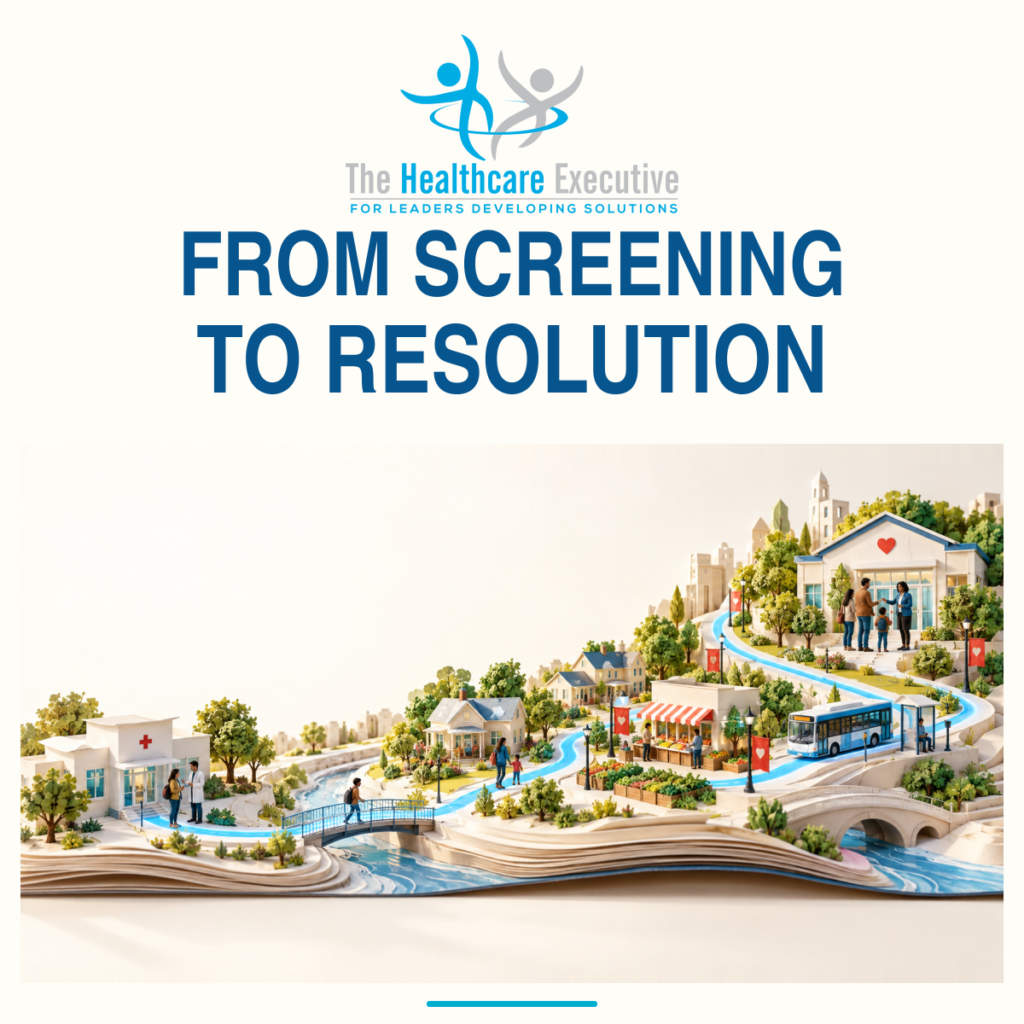
That is support titration: raise only the cradles the function needs, keep the glass ribbon free rather than enclosed, mark the dose that fits for now, and move the precision lever again whenever capability, environment, support, or preference shifts.
Sources and further reading
- Agency for Healthcare Research and Quality: Aging Well in the 21st Century. A strategic plan emphasizing function, well-being, and independence, not a technology standard or product proof.
- Institute for Healthcare Improvement: Age-Friendly Health Systems Recognition. Uses the 4Ms but is not a federal designation, product endorsement, or causal evidence.
- Administration for Community Living: National Assistive Technology Awareness Day. Broad low-tech, high-tech, and mainstream examples plus try-and-compare access, not validation or coverage.
- World Health Organization: Assistive Technology. A global products-and-systems perspective, not U.S. legal, coverage, or product evidence.
- U.S. Food and Drug Administration: Human Factors Considerations. Medical-device user, use, environment, interface, and risk framing, not universal consumer-product or local-benefit proof.
- U.S. Food and Drug Administration: Design Considerations for Devices Intended for Home Use. November 2014 nonbinding manufacturer guidance, not a guarantee for every home or consumer technology.
- Centers for Disease Control and Prevention: About Older Adult Fall Prevention. Falls are consequential and often preventable, but detection is not prevention and no specific product is validated.
- Telehealth.HHS.gov: How Can I Use Remote Patient Monitoring?. June 16, 2026 patient education on setup, training, cost, help, supervision, and the non-emergency boundary.
- Agency for Healthcare Research and Quality Digital Healthcare Research: InfoSAGE. A completed 2013–2019 investigator project, not an official agency position or current-platform validation.
- U.S. Department of Health and Human Services: Section 504 of the Rehabilitation Act of 1973. Scope and dates depend on entity, funding, program, and content; conformance is not usability or outcome proof.
- Federal Trade Commission: Health Breach Notification Rule, The Basics for Business. Fact-specific health apps and devices outside HIPAA may be covered; this is not a complete privacy or security program.
- National Institute of Standards and Technology: NISTIR 8259 Series. Voluntary generic IoT cybersecurity baselines, not clinical validation, certification, legal compliance, or HIPAA compliance.