

· Executive Brief
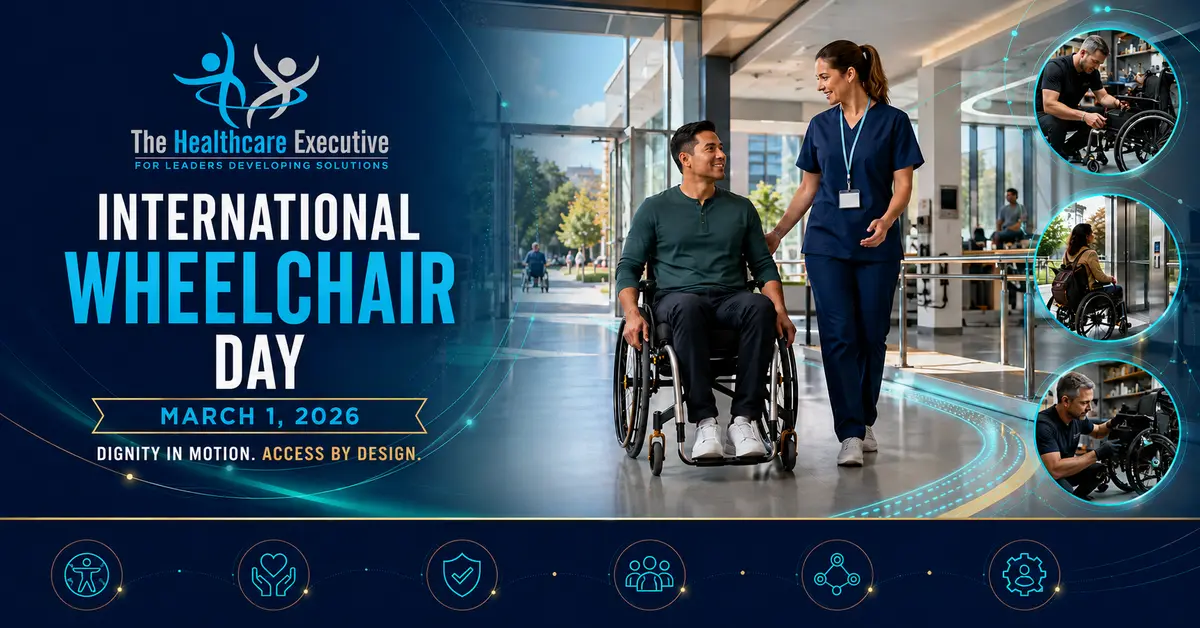
International Wheelchair Day 2026
Treat the wheelchair, the service around it, and the built environment as one access system.

The 2026 leadership signal
Wheelchair access is a service line, not an equipment transaction.
A wheelchair can support mobility, posture, independence, and participation when it matches the person and the environments in which it is used. A poorly fitted chair, delayed repair, inaccessible clinic, or transportation barrier can erase that value.
Executives should test the full route from referral through assessment, selection, fitting, training, maintenance, and follow-up, with wheelchair users involved in design and evaluation.
Map one wheelchair pathway with users and make every wait, repair delay, inaccessible touchpoint, and unclear owner visible.
Observed
March 1
Steve Wilkinson declared March 1, 2008 the first International Wheelchair Day.
Estimated need
80 million
WHO estimates that about 80 million people, or 1% of the world population, are likely to require a wheelchair for mobility.
Access gap
5% to 35%
WHO reports that only 5% to 35% of people who need a wheelchair have access, depending on the country.
Figures are summarized from the authoritative sources linked below. Definitions and denominators should be read with each source.
Executive opening
A wheelchair is a service that has to keep working
International Wheelchair Day asks a question that health systems rarely measure well. Does a person who needs a wheelchair end up with one that fits, works and can be used where daily life happens? Recent research answers that question in pieces, and the pieces rarely sit in one department. Assessment lives in rehabilitation, repair sits with equipment services or a contractor, funding runs through payer relations, and the built environment belongs to facilities. Each of these steps can look complete from inside its own department while the person still lacks a usable chair.
The evidence shows reliability gaps at several steps. In a study of 1,092 power wheelchairs prescribed through a public service in Greater Glasgow, about 68% to 80% of units failed across the models studied.[14] Mean time between failures ranged from 4 to 8 months over five years.[14] In a tertiary hospital in India, affordability was the most common reason participants lacked an appropriate wheelchair, cited by 78%.[12] In rural Wales, some clusters of wheelchair users face median travel times to specialist services approaching or exceeding 60 minutes.[7]
Skills are a second gap. A U.S. survey of 234 rehabilitation therapists found that, over six months, clinicians trained a median of 2 people for 60 minutes on 2 skills per trainee.[11] The authors concluded that clinicians lack confidence and infrequently train users, focusing mostly on basic skills.[11] A chair delivered without skills training, a repair route and an accessible environment is only part of a service. That is why this brief focuses on the operating system around the chair rather than on the equipment itself.
The sections below add peer-reviewed evidence on reliability, continuity, access, equity, workforce and communication. They sit beside the executive guidance already on this page. Their purpose is to give boards and operating leaders a shared factual base for deciding where a wheelchair pathway most needs an accountable owner.
Current evidence
What the research shows about reliability, safety and seating risk
Equipment reliability is the most measurable burden. The Glasgow repair analysis found that complex seating models had a significantly different repair distribution and lower reliability than standard seating models.[14] One complex model used actively outdoors was twice as costly but had one-fourth the reliability index of standard models.[14] The authors concluded that all study wheelchairs showed poor reliability and would require condition inspections every 3 to 6 months.[14] Repair distributions also differed significantly between adults and seniors, although recurrent repairs were not associated with age or sex as individual variables.[14]
Failures carry safety consequences. A separate analysis of 752 adverse incidents reported by the same Scottish service from 2020 to 2025 identified casters, belts, brakes and frames as high-risk components.[6] Tilt-in-space, ultralight and pediatric models had elevated but not statistically significant risks of falls and injuries after failures, with relative risks of 1.08 to 1.29.[6] Transfer-related incidents, outdoor navigation and belt misuse emerged as contextual factors.[6] The authors supported a tiered prevention strategy of design improvement, user training and routine servicing.[6] Regression analyses confirmed associations between fall status, injury severity and component failures.[6]
Seating risk can also be silent. In a Japanese rehabilitation center, MRI screening of 56 wheelchair-dependent adults with spinal cord injury detected subclinical deep tissue injury in 33 of 112 ischial regions (29.5%).[15] Ultrasonography was concordant in only 15 of those sites (45.5%).[15] Longer daily wheelchair use and greater subcutaneous tissue thickness at the ischial tuberosities were independently associated with injury.[15] Body mass index and peak interface pressure were not significant factors.[15] The authors suggested that a risk-based imaging surveillance strategy may enable earlier prevention.[15]
Needs also change over time. A narrative review of Duchenne muscular dystrophy noted that most patients develop scoliosis after loss of ambulation and that seating and wheelchair adaptations can provide postural support.[9] The review described multidisciplinary assessment as central to care planning.[9] For service leaders, progressive conditions mean that seating is a recurring assessment rather than a single delivery.
These studies measure different things in different settings, so their numbers should not be combined into one rate. Their shared message is that a delivered chair begins a risk-bearing service in which failures, injuries and refits need routine tracking.[6][14][15]
Figure 1
Wheelchair access fails at funding, environment and seating steps
Percent of participants or sites reporting each barrier or finding, as reported in each study. Values are copied from the cited studies [12], [15]; none is estimated.
Data note. Four values come from one Indian hospital study and one from a Japanese imaging study with a different denominator (ischial regions, not people), so this is an indirect comparison; the bars show where the pathway leaks, not relative severity.
Limitation. Barrier percentages are self-reported and could total more than 100% because participants could report several reasons; the imaging value reflects one center’s screening protocol.
Figure data (5 rows)
| Measure | Value | Population, setting and year as reported | Source |
|---|---|---|---|
| Affordability cited as reason for no appropriate wheelchair | 78% | 100 wheelchair users at a tertiary care hospital in India | [12] |
| Road or transport accessibility cited as obstacle to use | 63% | 100 wheelchair users at a tertiary care hospital in India | [12] |
| Home accessibility cited as obstacle to use | 53% | 100 wheelchair users at a tertiary care hospital in India | [12] |
| Ischial regions with subclinical deep tissue injury on MRI | 29.5% | 33 of 112 ischial regions in 56 wheelchair-dependent adults with spinal cord injury, Japanese rehabilitation center | [15] |
| Wheelchair obtained from the public sector | 10% | 100 wheelchair users at a tertiary care hospital in India | [12] |
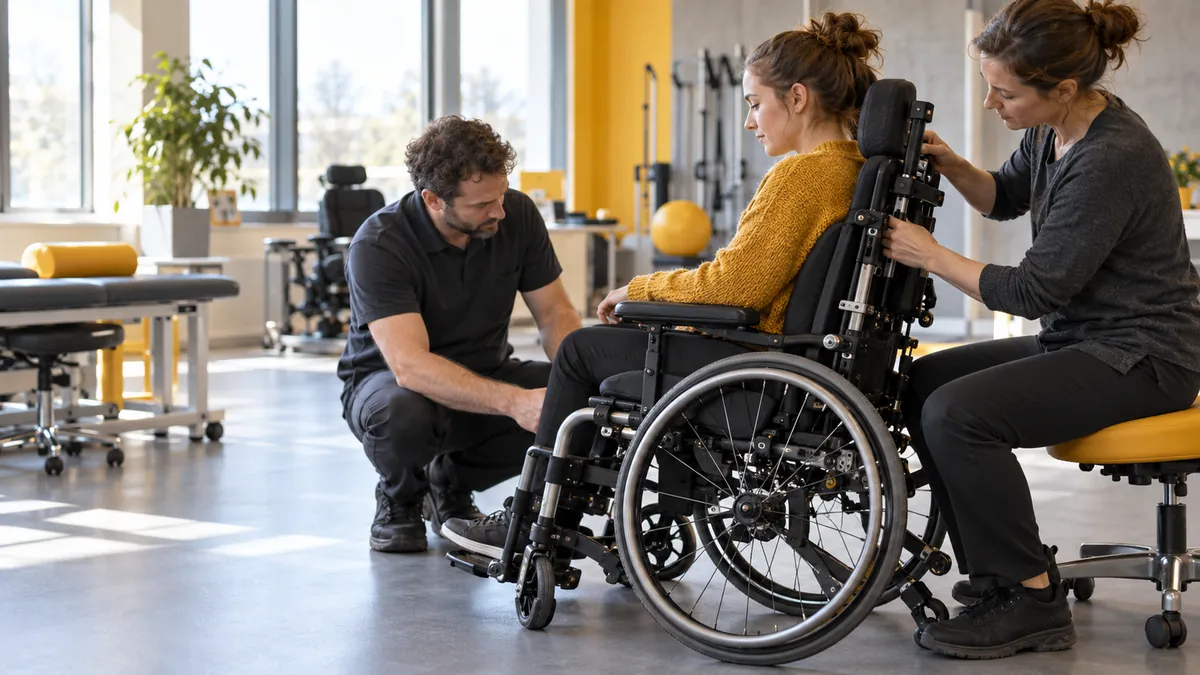
Continuum of care
Where the pathway breaks between rehabilitation and daily life
The move from inpatient rehabilitation to community life is where wheelchair skills matter most. A retrospective study of 150 inpatients with spinal cord injury at a single rehabilitation hospital examined independence in ramp, railing, curb and wheelie skills at discharge.[5] Older age was associated with dependent outcomes across skills; for wheelies, the odds ratios were 1.08 and 1.09 per year.[5] Upper-extremity strength favored independence in wheelie and ramp skills only.[5]
The authors recommended incorporating age and task-relevant upper-limb capacity into goal setting and training prioritization.[5] They also called for prospective studies that quantify training exposure and goal priorities.[5] Today, many services cannot say how much training a patient received before discharge, which makes that research gap an operating gap as well. For operating leaders, the practical point is that discharge plans should state who continues skills training after the inpatient stay ends, particularly for older patients.
People who begin wheelchair use later in life face a different gap. A qualitative multi-method study with manual wheelchair users and trainers found that training for people with chronic and progressive conditions remains inconsistent.[4] Its first phase used an online consultation with both users and trainers, so the priorities reflect both groups’ views.[4] Its four themes covered system capacity and equitable access, governance and accountability across the training continuum, person-centered and safe training, and foundations for inclusive training.[4] The authors called for aligned funding, governance and accountability supported by outcome frameworks that prioritize user-valued outcomes.[4] They concluded that improving training for older adults with these conditions requires coordinated system reform rather than isolated clinical effort.[4]
Continuity can extend beyond the clinic. In a follow-up from a multisite randomized trial in three Canadian urban centers, 19 adults completed a four-week peer-led eHealth skills program.[8] At six months, participants (n = 18) maintained or improved statistically significant gains in participation, skills and self-efficacy, but not in health-related quality of life.[8] Meeting recommended engagement guidelines was linked to larger gains in skills and confidence.[8]
Each of these studies places part of the pathway outside the hospital walls. The continuum therefore has several owners to name. They include the inpatient team that sets goals, the community or virtual program that sustains training, and the service that checks whether participation holds over time.
Figure 3
Why the pathway breaks
People
- Clinicians lack confidence to teach wheelchair skills
- Few people trained per clinician over six months
- Limited peer-trainer and pediatric training capacity
Process
- Skills training not continued after inpatient discharge
- Seating not reassessed as progressive conditions change
- No scheduled condition inspections
Technology
- Complex seating models with lower reliability
- Component failures in casters, belts, brakes and frames
- Incident reports kept as unanalyzed free text
Environment
- Long travel times to specialist centers in rural areas
- Inaccessible roads, transport and homes
- Urban barriers that require advanced skills
Policy
- Affordability limits and little public-sector provision
- Centralized service models without satellite sites
- Funding and accountability not aligned across the training continuum
Measurement
- Reliability and time between failures not tracked
- Wheelchair proficiency rarely measured with standardized tools
- Outcomes not stratified by geography or age
Unranked qualitative cause-and-effect diagram for the outcome in the box: Wheelchair users do not have a chair that fits, works and can be used safely in their daily environments after delivery Causes are assembled from the cited literature [1], [3], [4], [6], [7], [8], [11], [12], [14]; categories are not weighted and their order carries no meaning.
Data note. Qualitative; no frequencies are implied.
Limitation. Causes drawn from published studies may not all apply locally; validate them with frontline teams.
Figure data (6 rows)
| Category | Causes drawn from the cited literature |
|---|---|
| People | Clinicians lack confidence to teach wheelchair skills; Few people trained per clinician over six months; Limited peer-trainer and pediatric training capacity |
| Process | Skills training not continued after inpatient discharge; Seating not reassessed as progressive conditions change; No scheduled condition inspections |
| Technology | Complex seating models with lower reliability; Component failures in casters, belts, brakes and frames; Incident reports kept as unanalyzed free text |
| Environment | Long travel times to specialist centers in rural areas; Inaccessible roads, transport and homes; Urban barriers that require advanced skills |
| Policy | Affordability limits and little public-sector provision; Centralized service models without satellite sites; Funding and accountability not aligned across the training continuum |
| Measurement | Reliability and time between failures not tracked; Wheelchair proficiency rarely measured with standardized tools; Outcomes not stratified by geography or age |
Access
Geography, funding and environments shape who can use a chair
Geography shapes who can reach specialist seating services. In Wales, researchers mapped 43,790 registered wheelchair users against four specialist centers and found that people over 65 were the largest group at 49.1%.[7] High-demand clusters in urban South and North-East Wales had median travel times under 30 minutes.[7] Clusters in Pembrokeshire, Ceredigion and Powys had median travel times approaching or exceeding 60 minutes despite comparable local demand.[7]
A companion optimization study tested ten configurations of the same service.[3] Baseline median travel time was 19.22 minutes, and relocating individual clinics produced negligible improvement in spatial equity.[3] Adding one satellite clinic in west Wales reduced median travel time in Pembrokeshire by 42.4 minutes and lowered the Gini coefficient from 0.3562 to 0.329.[3] A second satellite in mid Wales reduced the coefficient further to 0.2868.[3] The authors concluded that the inequity reflected missing provision in west and mid Wales rather than poorly placed clinics.[3] All configurations remained stable under bootstrap sensitivity analysis of demand.[3]
Funding and procurement form a second barrier. In the tertiary hospital study in India, 35% of participants had obtained their wheelchairs from the private sector and 10% from the public sector.[12] Reasons for not having an appropriate wheelchair included affordability (78%), lack of support (64%) and lack of awareness (41%).[12] Road or transport accessibility (63%) and home accessibility (53%) were the main obstacles to wheelchair use.[12]
The built environment completes the picture. A scoping review of 14 studies found that greater physical impairment was associated with more perceived urban barriers and higher effort.[1] Wheelchair mobility proficiency, supported by training, experience and wheelchair fit, was associated with managing ramps and uneven surfaces.[1] Yet proficiency was rarely assessed with standardized performance measures.[1] No included study examined impairment, self-efficacy and proficiency together, and proficiency received the least attention.[1] The authors described urban mobility as a person-wheelchair-environment interaction, not only a property of streets and buildings.[1]
For executives, access is therefore a capacity decision, a payment decision and a facilities decision at once. Satellite sites, outreach clinics and accessible entrances all need small-area demand data and a named sponsor. Without that data, a service can appear adequate on average while rural users absorb the longest journeys.
System route
Connect clinical provision with everyday access.
WHO guidance emphasizes individualized assessment, fitting, training, and follow-up within an integrated system.
The route at a glance
- Refer
- Assess and select
- Fit and train
- Maintain and include
Refer
Use clear eligibility, funding, and urgency rules without forcing people to repeat their history.
Assess and select
Match posture, function, environment, goals, transport, and caregiver needs to an appropriate product range.
Fit and train
Verify comfort, pressure management, propulsion or controls, transfers, and safe use in the person’s settings.
Maintain and include
Provide a repair route and remove physical, digital, and transportation barriers across the care system.
Reliability rule: A delivered wheelchair is not a completed service until fit, skills, repair access, and follow-up are dependable.
Figure 2
The system route as one flow
The five stages of the system route described in this brief, drawn as one flow with a learning loop back to the start. The stages are the page’s original executive guidance, not a clinical protocol.
Data note. Shows sequence and handoffs only; it carries no counts or rates.
Limitation. Local processes may add, merge or reorder stages under organizational policy.
Figure data (4 rows)
| Stage | What the stage requires |
|---|---|
| Refer | Use clear eligibility, funding, and urgency rules without forcing people to repeat their history. |
| Assess and select | Match posture, function, environment, goals, transport, and caregiver needs to an appropriate product range. |
| Fit and train | Verify comfort, pressure management, propulsion or controls, transfers, and safe use in the person’s settings. |
| Maintain and include | Provide a repair route and remove physical, digital, and transportation barriers across the care system. |
Equity and trust
Rural users, children and low-resource settings carry the heaviest gaps
Equity gaps in wheelchair services follow geography, age and income. The Welsh spatial analysis described a rural penalty for both services and patients.[7] In that analysis, a centralized model failed to align infrastructure with the spatial distribution of clinical need.[7] Nearly half of registered users were over 65, the largest age group in the analysis.[7] The authors recommended additional satellite units in Mid- and West-Wales and noted that the optimal number and location of sites still requires formal investigation.[7]
Income and system integration matter as well. In the Indian study, interviews with 100 participants described barriers at assessment, prescription, customization, training, maintenance and follow-up.[12] The authors recommended integrating wheelchair service and delivery into the health care system to strengthen rehabilitation in line with WHO guidelines.[12] Those barriers mirror the steps of a complete service, which suggests that partial provision leaves the hardest steps to users and families. Crisis settings sharpen these gaps. The Ukrainian training study noted that service provision is hindered by limited workforce capacity, inadequate training and fragile supply systems.[13] Those challenges become critical in conflict and emergency settings.[13]
Children form a distinct equity group. In a Ugandan seating and mobility clinic, 35 nonambulatory children received wheelchairs and training through a structured project.[10] Scores showed statistically significant improvements in mobility, caregiver burden and children’s happiness.[10] The project relied on experiential learning involving physical therapy students and residents, linking service delivery with workforce development.[10] Quality of life and participation measures gathered during the project offered suggestions to guide future wheelchair delivery efforts.[10]
Training reach is another equity measure. In the TEAM Wheels follow-up, improvements were comparable across demographic groups, while higher engagement was linked to larger gains.[8] That finding comes from a small sample, but it suggests remote peer-led training may extend reach without widening differences between groups.[8] Children in a separate qualitative study likewise emphasized that every child and every person with a mobility aid is different.[2]
Trust depends on whether people see the whole route working for people like them. Stratified wait times, repair turnaround and training completion show which users the current design leaves behind. Those results can then be reported back to the communities affected, giving community partners a concrete basis for holding the system to its commitments.
Human infrastructure
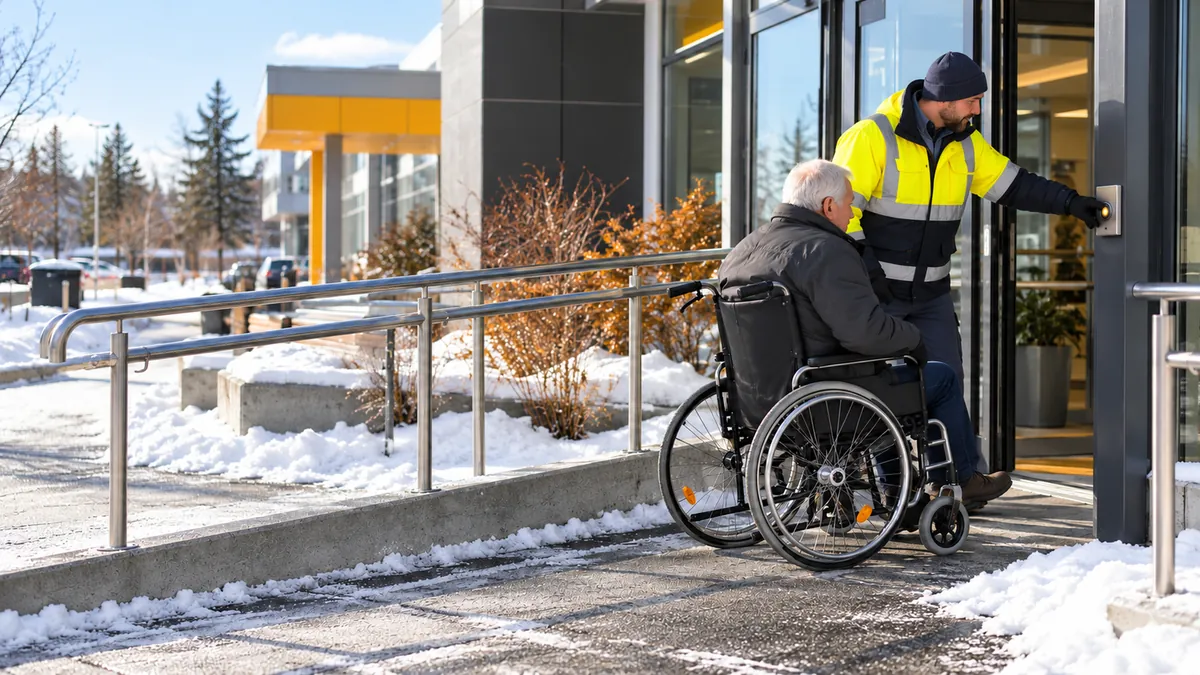
Skills trainers, seating specialists and repair capacity
The wheelchair workforce is thinnest at the point of skills training. In the U.S. survey of 234 rehabilitation therapists, training occurred predominantly in inpatient settings.[11] Higher clinician competency correlated with greater confidence and a wider variety of skills taught.[11] That correlation makes competency development something leaders can measure and fund, rather than a general hope for better training. The survey also captured training quantity and quality, including the skills trained and whether trainees reached mastery.[11] Those are the kinds of measures a service can adopt locally.
Structured training can expand capacity quickly. In Ukraine during armed conflict, a five-day, 40-hour program based on the WHO basic wheelchair service training package was delivered to 39 rehabilitation professionals.[13] All participants achieved certification in basic wheelchair service provision.[13] Performance scores rose from 42.72 to 68.08 and confidence scores from 40.72 to 67.72 on the skills questionnaire.[13] The authors concluded that targeted education can expand the assistive technology workforce even with limited infrastructure.[13] The program adapted its methods, including group-based testing, to work around infrastructure constraints.[13] The authors also identified challenges in mastering advanced skills and in teaching staff from diverse professional backgrounds.[13]
Pediatric services face a specific uptake problem. Use of the evidence-based skills training program remains limited in pediatric rehabilitation, partly because clinicians are unsure it suits playful, developmentally appropriate training.[2] Interviews with 32 pediatric manual wheelchair users described trainers who supported progress through collaborative goal-setting, learning strategies and enjoyable, appropriately challenging activities.[2] Those accounts describe trainer behaviors that can be taught, observed and supported through supervision.[2]
Peers and digital tools can extend a scarce clinical workforce. TEAM Wheels combined a tablet-based app with more than 200 instructional videos and three peer-led teleconferences.[8] The authors described eHealth and peer-led approaches as promising, sustainable alternatives to traditional clinician-led training.[8] The progressive-conditions study similarly called for a workforce capable of delivering training across contexts and time.[4]
Repair capacity belongs in the same plan. Inspection every 3 to 6 months, as the Glasgow authors recommended, is a servicing workload that should appear in staffing and contract decisions.[14] Without it, the reliability gaps described earlier stay with users and caregivers. Repair technicians, seating specialists and trainers are one workforce from the user’s point of view, even when they sit in different budgets.
Operating dashboard
Measure access, fit, repair, and participation.
Review results with wheelchair users and stratify by age, geography, payer, language, diagnosis, and product type.
Four operating signals
Each signal pairs an executive question with one candidate local measure, set out below.
01
Time to assessment
Track the full interval from accepted referral to completed specialist assessment.
- Measure
- Median and 90th-percentile days
02
First-fit reliability
Record whether the initial delivery meets documented clinical and functional requirements.
- Measure
- Chairs accepted without unplanned refit
03
Repair response
Measure time from repair request to safe resolution, including loaner support when needed.
- Measure
- Median repair resolution time
04
Accessible journey
Audit whether key facilities, portals, transport interfaces, and emergency plans work for wheelchair users.
- Measure
- User-validated access issues resolved
Figure 4
The operating system behind the dashboard
The four operating signals from this brief’s dashboard, each tied to the candidate owner named in the executive scorecard, around one accountable route. Drawn from the page’s original executive guidance.
Data note. Structural diagram; no measured values.
Limitation. Owners are candidates to be confirmed locally.
Figure data (4 rows)
| Operating signal | Candidate owner |
|---|---|
| Time to assessment | Rehabilitation operations |
| First-fit reliability | Wheelchair service lead |
| Repair response | Equipment services |
| Accessible journey | Facilities and patient experience |
Handoff workflow
Carry function, context, and ownership forward.
The receiving team needs more than a product code. It needs the person’s goals, environment, risk, and next action.
How responsibility moves
Lane
Referral to wheelchair service
- Document mobility and postural needs.
- Send funding and urgency information.
- Confirm acceptance and next contact.
Lane
Service to user and care team
- Record specifications and fit decisions.
- Teach operation, pressure care, and escalation.
- Name the repair and follow-up contacts.
Lane
Health system to community access
- Test entrances, rooms, scales, and transport.
- Offer accessible communication and scheduling.
- Close barriers with named facilities owners.
Use respectful, person-first or identity-first language according to each individual’s preference, and do not assume goals or capacity from mobility device use.
Executive scorecard
Ask whether mobility remains usable after delivery.
Pair procurement data with user-reported function and access.
Who reviews what
- Rehabilitation operations
- Wheelchair service lead
- Equipment services
- Facilities and patient experience
Candidate owners named in the scorecard, confirmed locally.
| Signal | Executive question | Accountable owner | Review cadence |
|---|---|---|---|
| Access | How long do accepted referrals wait for assessment and delivery? | Rehabilitation operations | Monthly |
| Fit | How often is unplanned refitting or replacement required? | Wheelchair service lead | Monthly |
| Continuity | Are urgent repairs resolved within the local standard? | Equipment services | Weekly |
| Inclusion | Which care settings still create barriers for wheelchair users? | Facilities and patient experience | Quarterly |
Figure 5
Control points for a reliable wheelchair service
| Control point | Risk if missing | Owner | Evidence of control |
|---|---|---|---|
| Scheduled condition inspections for prescribed wheelchairs | Failures go undetected until a breakdown or injury | Equipment services lead with supplier contract manager | Share of active chairs inspected within the local interval; repairs per chair-year by model |
| Structured incident review of wheelchair failures | Component and context risks repeat without detection | Patient safety officer | Incidents coded by component and context, reviewed monthly |
| Skills training plan at inpatient discharge | Users leave dependent on advanced skills without follow-up | Inpatient rehabilitation manager | Share of new users with documented training and a named community trainer |
| Clinician competency in skills training | Training is infrequent and limited to basic skills | Rehabilitation education lead | Share of therapists with completed competency assessment |
| Small-area travel-time review for specialist seating | Rural users face the longest journeys and delays | Rehabilitation operations and strategy | Median travel time by area, reviewed annually with capacity options |
| Seating reassessment for progressive conditions | Posture and pressure risk grow without review | Seating service clinical lead | Share of users with progressive conditions reassessed within the local standard |
Control points derived from the cited evidence [3], [4], [5], [6], [7], [9], [11], [14], [15] and this brief’s executive guidance.
Data note. Each row is a control to verify, not a measured result.
Limitation. Owners and evidence of control must follow local policy and applicable requirements.
Public communication
Listening to users and making reliability visible
Communication begins with listening. Children in the pediatric training study said that training was really a good thing because not many kids know how to use their wheelchair properly.[2] They valued training for mobility, confidence, risk awareness, autonomy and participation.[2] Their accounts give service leaders direct evidence about what users want from a program, not only what clinicians plan to deliver. A third theme, that training should be tailored to individual needs and preferences, applies equally to how services explain options and next steps.[2]
Public messaging about access should reflect that barriers sit in environments as well as in people.[1] The urban mobility review called for more systematic reporting of wheelchair fit and configuration to inform impairment-inclusive urban planning, rehabilitation and policy.[1] Health systems that publish accessibility information for their own campuses can apply the same person-wheelchair-environment view. The review also found that self-efficacy influenced whether people avoided or engaged in mobility tasks, beyond physical function alone.[1] Clear, accurate information about routes, entrances and surfaces can support that confidence.
Internal communication depends on usable incident data. The Scottish adverse-event study combined natural language processing with failure mode and effects analysis to extract contextual factors from free-text reports.[6] The authors proposed integrating these methods into incident-reporting systems to inform clinical practice, policy and product design.[6] They framed the resulting high-risk scenarios around risk identification, user training, appropriate provision, design improvement and technology development.[6] Free-text reports that no one reads cannot guide servicing or training decisions. Sharing summarized findings with frontline staff closes the loop between reporting and action.
Reliability can also become a shared language with suppliers and users. The Glasgow study proposed repair trend, mean time between failures and a wheelchair reliability index as performance measures.[14] It called for reliability monitoring to improve wheelchair selection, standards, servicing innovation and provision systems.[14] Reporting such measures openly can make conversations about repair performance concrete rather than anecdotal.
The progressive-conditions study recommended outcome frameworks that prioritize user-valued outcomes.[4] International Wheelchair Day messages are most credible when they report those outcomes, including participation, repair turnaround and access, alongside any announcement of new equipment or services. Messages that name a repair contact, a training option and an accessibility contact give users something they can act on the same day.

90-day plan
Repair one wheelchair access route in 90 days.
Choose a population with visible delays, repair failures, or access complaints.
Ninety days, three moves
- Days 1–30Listen and map
- Days 31–60Test a complete service
- Days 61–90Make ownership routine
Days 1–30
Listen and map
- Convene wheelchair users and service staff.
- Trace referral through follow-up.
- Baseline delays, refits, repairs, and barriers.
Days 31–60
Test a complete service
- Clarify required referral information.
- Create one repair escalation route.
- Audit one clinical journey with users.
Days 61–90
Make ownership routine
- Compare results with baseline.
- Assign owners for unresolved barriers.
- Publish the next access target with user partners.
Figure 6
The 90-day plan on one timeline
The 90-day plan from this brief drawn as a timeline: each action sits in the 30-day window the plan assigns it. The full wording of each action is in the figure data and in the plan above.
Data note. Time boxes are a management framework, not a clinical timeline.
Limitation. Durations are uniform 30-day windows; real tasks may span windows.
Figure data (9 rows)
| Window | Action |
|---|---|
| Days 1–30 | Convene wheelchair users and service staff. |
| Days 1–30 | Trace referral through follow-up. |
| Days 1–30 | Baseline delays, refits, repairs, and barriers. |
| Days 31–60 | Clarify required referral information. |
| Days 31–60 | Create one repair escalation route. |
| Days 31–60 | Audit one clinical journey with users. |
| Days 61–90 | Compare results with baseline. |
| Days 61–90 | Assign owners for unresolved barriers. |
| Days 61–90 | Publish the next access target with user partners. |
Mobility becomes freedom only when the whole route works.
International Wheelchair Day is a practical invitation to build provision and access around the expertise of wheelchair users.
Executive action
Sponsor a user-led audit of one wheelchair pathway and remove one high-impact clinical, repair, or facilities barrier within 90 days.
Operational readiness verification
Make the observance visible in everyday operations.
International Wheelchair Day becomes meaningful when each person receives appropriate assessment, configuration, training, repair support, and follow-up tied to personal goals. The weak version is a message without an operating change. The stronger version defines what teams should see, who owns each transition, how exceptions escalate, and how leaders know that the pathway actually closed.
The principal failure mode is that wheelchair access is often reduced to equipment delivery while assessment, fit, training, maintenance, environments, and participation remain fragmented. Leaders should test the route with recent cases, frontline staff, patients or community partners, and the teams that receive the next handoff. That review should distinguish a written policy from reliable execution under real workload, staffing, access, and communication conditions.
Refer
Confirm the accountable owner, expected evidence, exception route, communication standard, and documented closure for this step.
Assess and select
Confirm the accountable owner, expected evidence, exception route, communication standard, and documented closure for this step.
Fit and train
Confirm the accountable owner, expected evidence, exception route, communication standard, and documented closure for this step.
Maintain and include
Confirm the accountable owner, expected evidence, exception route, communication standard, and documented closure for this step.
Time to assessment
Confirm the accountable owner, expected evidence, exception route, communication standard, and documented closure for this step.
An equity review should audit physical, digital, transportation, housing, coverage, and repair barriers with wheelchair users as design partners. Aggregate performance can hide a pathway that works for people with the fewest barriers while failing those who need language support, accommodations, transportation, trusted outreach, flexible scheduling, or help navigating coverage. Stratified results and direct feedback should therefore guide the improvement plan.
Measurement should pair assessment interval, delivery time, fit issues, repair turnaround, pressure-injury risk, and participation goals. Counts alone do not establish reliability. The executive review should examine time, completion, unresolved exceptions, patient or workforce experience, and variation across sites. A small set of stable measures is more useful than a large dashboard that no one owns.
Governance should give rehabilitation and accessibility leaders authority to coordinate suppliers, clinicians, facilities, transportation, and payers. The accountable owner should convene the relevant clinical, operational, access, quality, and community voices; remove barriers that frontline teams cannot solve; and return decisions to the people doing the work. The 90-day test is simple: show which failure point changed, what evidence confirms the change, and what still requires executive action.
Executive action kit · Day observance
Turn International Wheelchair Day into accountable action.
Treat the wheelchair, the service around it, and the built environment as one access system.
Leadership focus
Use this observance to examine trustworthy information, prevention access, and community connection. Select one verified barrier, assign an accountable owner, and carry the improvement beyond the campaign window.
Workforce lens
Ask whether staffing, role clarity, training, tools, workload, and escalation support the people operating the information, access, coordination, and follow-through pathway.
Patient and community lens
Make the approved first step clear. Test whether a person can move from information to an acknowledged next action without navigating conflicting instructions.
Equity and access lens
Review language, disability, transportation, digital access, geography, trust, and other barriers using protected feedback and locally appropriate data.
Five-minute briefing
Inspect the operating sequence
Listen with people using the pathway, frontline teams, operational leaders, and community partners. Find one a message, request, referral, or handoff that does not reach an accountable owner, then test the locally approved route from entry through acknowledged follow-through.
- Refer
- Assess and select
- Fit and train
- Maintain and include
Leadership actions for this week
- Name an executive sponsor and frontline operating owner.
- Ask people using and operating the pathway where ownership becomes unclear.
- Test one representative route from first question to acknowledged next step.
- Select one barrier that can be corrected without overstating the evidence.
- Set a review date and define how completion will be verified.
Candidate measures
Define every numerator, denominator where relevant, owner, data source, exclusions, cadence, and limitation locally. These are management prompts, not external benchmarks.
- Median and 90th-percentile days
- Chairs accepted without unplanned refit
- Median repair resolution time
Department readiness checklist
- The public and staff entry points match the actual approved process.
- A specific role accepts each request, referral, or escalation.
- Handoffs include acknowledgment and a visible unresolved state.
- Language, disability, digital, transportation, and trust barriers receive explicit review.
- Communications do not introduce unsupported themes, statistics, or clinical advice.
- A named leader will review what changed after the observance.
Intended audiences
- Executive and Operational Leaders
- Public Health and Community Partners
Staff communication template
During International Wheelchair Day, our organization will connect awareness with a practical review of the information, access, coordination, and follow-through pathway. Use approved information, identify the correct entry point, confirm ownership when work moves, protect privacy, and escalate unresolved barriers through local channels.
Community communication template
International Wheelchair Day is an opportunity to share trustworthy information and make the next step easier to find. Use our approved channels for information and support. If a request changes hands, our goal is to keep ownership and follow-through visible.
Measurement worksheet
- Signal
- What observable condition will show whether the route works?
- Definition
- What is included, excluded, and counted?
- Owner
- Who reviews the signal and acts on exceptions?
- Cadence
- When will leaders review it?
- Equity check
- Which differences require protected, locally appropriate review?
- Closure
- What evidence will confirm the improvement was completed?
- Editorial review
- Completed
- Source records
- 2 listed under Authoritative resources
- Review standard
- Sourced facts remain separated from original executive guidance
- Clinical boundary
- No new statistical or clinical claim was added by this action kit
Authoritative resources
- International Wheelchair Day Launch History, International Wheelchair Day
- 2026 Related Observances, United Spinal Association
- Wheelchair Provision Guidelines, World Health Organization
- Strengthening Access to Appropriate Wheelchairs, World Health Organization
- Assistive Technology Fact Sheet, World Health Organization
Safety note: A wheelchair should be selected, fitted, and adjusted with appropriately trained personnel. New pressure injury, sudden loss of function, breathing difficulty, or another urgent health concern requires prompt clinical assessment; emergencies require immediate emergency help.
The founder’s history and United Spinal confirm March 1. No global campaign owner was found publishing a universal 2026 theme. A Sri Lankan government event used a local 2026 theme, which is not presented here as the global theme. Operational guidance follows WHO’s person-centered wheelchair provision framework.
Peer-reviewed references
References
Fifteen peer-reviewed sources, newest first. Each was individually verified through authenticated academic research databases. Bracketed numbers in the text link here; the original executive guidance on this page carries no citations because it is guidance, not a sourced claim. Sources last checked in those databases on .
- 1.Houshyar Yazdian SH, Sá KSGD, Jacquet W, Stiens J, Vanlandewijck Y. Understanding Urban Mobility Among Wheelchair Users: The Intersection of Physical Impairment, Wheelchair Mobility Proficiency, and Self-Efficacy in Wheeled Mobility-A Scoping Review. Healthcare. 2026;14(16):2517. https://doi.org/10.3390/healthcare14162517
- 2.Ouellet B, So S, Dib T, Rushton PW, Hebinck M, Moore SA, et al. Let us tell you how to train us! experiences of children and youth with the Wheelchair Skills Training Program and their preferences for training delivery: a descriptive qualitative study. Frontiers in Rehabilitation Sciences. 2026;7:1924405. https://doi.org/10.3389/fresc.2026.1924405
- 3.Pym D. Improving wheelchair user access to posture and mobility services in NHS Wales: a cross-sectional demand-weighted p-median analysis to minimise wheelchair user travel time. Disability and Rehabilitation: Assistive Technology. 2026:1-17. https://doi.org/10.1080/17483107.2026.2720326
- 4.Charlton K, Murray C, Layton N, Attrill S. Manual wheelchair training for people with chronic and progressive conditions: priority recommendations for a qualitative multi-method study. Disability and Rehabilitation: Assistive Technology. 2026:1-21. https://doi.org/10.1080/17483107.2026.2703295
- 5.Kim E, Kim HJ, Jeong A, Kweon H, Kim JH. Bridging clinical capacity and functional performance: Clinical predictors of independence in advanced wheelchair skills after spinal cord injury. The Journal of Spinal Cord Medicine. 2026:1-11. https://doi.org/10.1080/10790268.2026.2697598
- 6.Mhatre A, Zhao M, Berner T, Yankie M, Mair C, Newe C. Data-driven framework for adverse manual wheelchair event risk classification and prevention. Disability and Rehabilitation: Assistive Technology. 2026;21(6):2981-2992. https://doi.org/10.1080/17483107.2026.2658107
- 7.Pym D. Spatial distribution and local clustering of wheelchair users in Wales: a cross-sectional ecological study. Disability and Rehabilitation: Assistive Technology. 2026;21(6):2970-2980. https://doi.org/10.1080/17483107.2026.2658102
- 8.Giesbrecht E, Best KL, Miller WC, Routhier F, Harrison KL, Faieta J, et al. Outcomes retention and impact of demographic characteristics and engagement for a community-based peer-led eHealth wheelchair skills training program. Disability and Rehabilitation: Assistive Technology. 2026;21(5):2022-2033. https://doi.org/10.1080/17483107.2026.2623650
- 9.Tsirikos AI, Roberts SB. The Development of Spinal Deformity in Patients with Duchenne Muscular Dystrophy: Clinical Assessment, Surgical Considerations and Recommendations for Treatment. Journal of Clinical Medicine. 2026;15(6):2116. https://doi.org/10.3390/jcm15062116
- 10.Andrews M, Turner E, Keller E, Dodds C. Examining Outcomes Regarding Delivery of Wheelchairs to Children With Disabilities Through the Ugandan Wheelchair Project. Pediatric Physical Therapy. 2026;38(2):252-261. https://doi.org/10.1097/pep.0000000000001293
- 11.Worobey LA, Malacarne LR, Chou A, Campbell OG, Stanley EM, Kirby RL. Gaps in Wheelchair Skills Training: Clinician Confidence, Capacity, and Service Provision in US Rehabilitation Practice. Topics in Spinal Cord Injury Rehabilitation. 2026;32(Supplement1):68-79. https://doi.org/10.46292/sci25-00112
- 12.Srishti J, Avijit B, Gita H. Patterns and unmet needs in wheelchair utilization: A mixed-method study of user experience at a tertiary hospital in India. Journal of Rehabilitation and Assistive Technologies Engineering. 2026;13:20556683251397326. https://doi.org/10.1177/20556683251397326
- 13.Tofani M, Golyk V, Dieieva K, Kamadu A, Quinn ME, Tawashy AE. Wheelchair service provision training during armed conflict: preliminary results from a pre-post study in Ukraine. Frontiers in Rehabilitation Sciences. 2025;6:1723913. https://doi.org/10.3389/fresc.2025.1723913
- 14.Mhatre A, DiGiovine C, Mair C. Reliability assessment of power wheelchairs. The Journal of Spinal Cord Medicine. 2025;49(5):941-951. https://doi.org/10.1080/10790268.2025.2542020
- 15.Sakata Y, Namba T, Umemoto Y, Yoshikawa T, Furusawa K, Yamada G, et al. Deep tissue injury in patients with spinal cord injury: a magnetic resonance imaging-based risk assessment study. Spinal Cord. 2025;64(3):227-232. https://doi.org/10.1038/s41393-025-01150-5
Claim-to-source matrix
What each source supports
Every sourced claim in the new sections maps to the references that support it, the section where it is used, and the limitation a reader should keep in mind. Original executive guidance carries no sources because it is guidance, not a finding.
| Claim group | Sources | Years | Used in | Limitation |
|---|---|---|---|---|
| Power wheelchair reliability, repair frequency and inspection interval | [14] | 2025 | Current evidence | Retrospective repair records from one Scottish service, 2007 to 2013; four models only. |
| Adverse manual wheelchair incidents and high-risk components | [6] | 2026 | Current evidence | Reported incidents from one service, 2020 to 2025; elevated relative risks were not statistically significant. |
| Subclinical deep tissue injury among wheelchair-dependent adults | [15] | 2025 | Current evidence | Cross-sectional study of 56 adults at one Japanese center; MRI screening is not routine practice. |
| Seating needs in progressive neuromuscular conditions | [9] | 2026 | Current evidence | Narrative review and consensus focused on scoliosis surgery in Duchenne muscular dystrophy. |
| Predictors of advanced wheelchair skill independence at discharge | [5] | 2026 | Continuum of care | Retrospective single-hospital study; training exposure not quantified. |
| Training recommendations for people with chronic and progressive conditions | [4] | 2026 | Continuum of care | Qualitative consultation and synthesis; recommendations not yet tested. |
| Retention of gains from peer-led eHealth skills training | [8] | 2026 | Continuum of care | Eighteen to nineteen intervention participants in three Canadian cities; no control comparison at follow-up. |
| Geographic access to specialist posture and mobility services | [7] [3] | 2026 | Access | One national service in Wales; modeled road travel times rather than observed journeys. |
| Wheelchair procurement, affordability and environmental barriers | [12] | 2026 | Access | Single tertiary hospital in India with 100 participants; self-reported barriers. |
| Urban mobility as a person-wheelchair-environment interaction | [1] | 2026 | Access | Scoping review of 14 heterogeneous studies; no pooled estimates. |
| Wheelchair provision and training for children in low-resource settings | [10] | 2026 | Equity and trust | Pre-post cohort of 35 children without a control group. |
| Clinician capacity and confidence in wheelchair skills training | [11] | 2026 | Human infrastructure | Convenience sample of 234 U.S. therapists; self-reported training activity. |
| Wheelchair service workforce training during armed conflict | [13] | 2025 | Human infrastructure | Pre-post study of 39 professionals; immediate outcomes only. |
| Children’s experiences of and preferences for skills training | [2] | 2026 | Public communication | Qualitative interviews with 32 trial participants; may not reflect children outside research settings. |
About the author
Greg Wahlstrom
MBAHCM
President and Chief Executive Officer, The Healthcare Executive
View Greg’s profile©2014 – 2026 The Healthcare Executive. All rights reserved.