
· Executive Brief
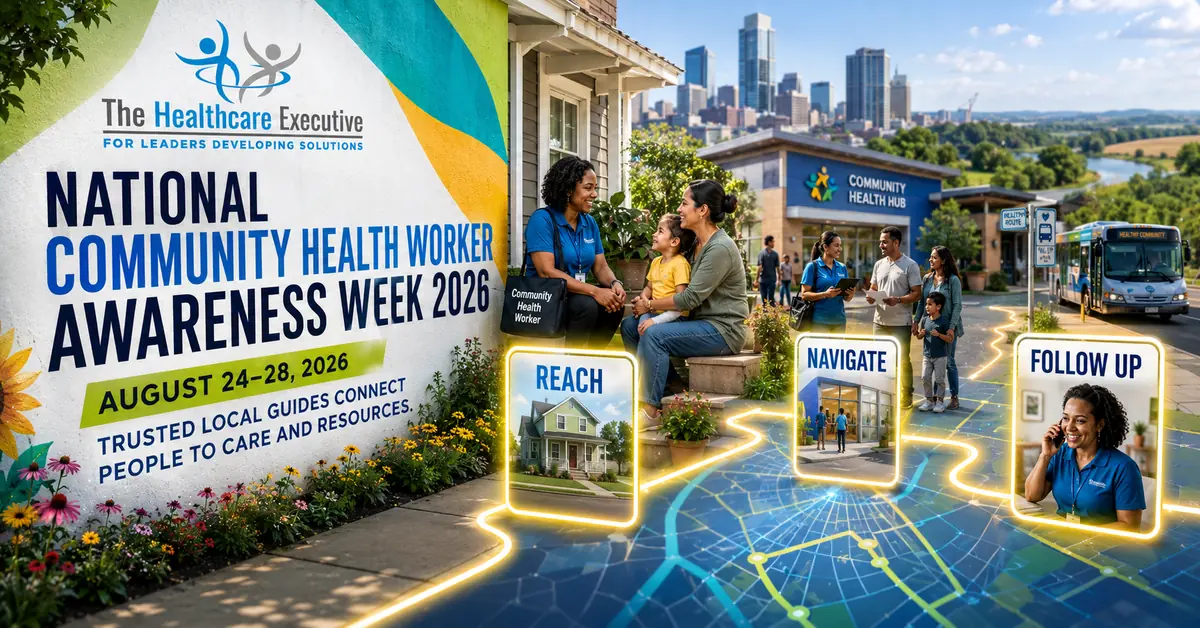
National Community Health Worker Awareness Week 2026
Move from recognition activity to a visible operating route with named owners and closed loops.

Leadership signal
Use National Community Health Worker Awareness Week to examine the system behind the message.
Leaders can use this window to test whether public information, service entry points, internal referrals, and follow-up responsibilities form one understandable route. The review should start with the experience of people using the system and the teams responsible for receiving them.
Start by distinguishing what is known from what the organization still needs to learn. A campaign plan, communication volume, or meeting count does not establish that a route is usable. Leaders need direct listening, clear ownership, locally defined measures, and a method for keeping exceptions visible.
Executive opening
Community health workers are infrastructure, not an add-on
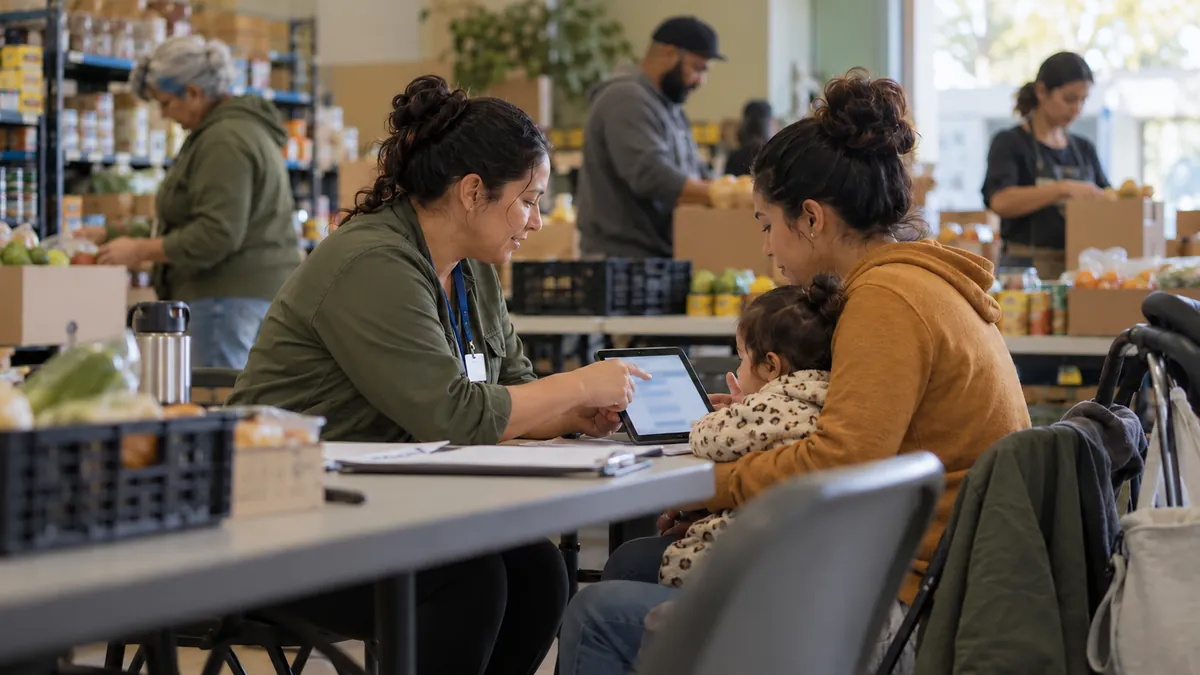
Community health workers sit at the point where health systems meet the conditions people live in. They hear about the missed rent payment, the unreliable ride and the empty refrigerator that never appear on a clinic form. They also carry those facts back into care teams, referral networks and follow-up plans. That makes them part of the operating system of a health organization, not a goodwill program attached to it.
The evidence for that role is growing more specific. In a large public health system, 43.3% of primary care patients disclosed at least one social need only to a community health worker, not on the standardized screener.[1] Community health workers identified food insecurity in 35.4% of patients, compared with 10.7% on the screener.[1] Systems that rely on forms alone may be undercounting the needs that drive avoidable utilization. In hospitalized children, unmet social needs are associated with longer stays and higher odds of intensive care admission.[4] Design choices, such as how patients are identified and where community health workers enter a care pathway, also shape what programs can achieve.[2][3]
Yet the workforce itself is under strain. In a Chicago-area survey, 61.9% of community health workers reported delaying their own medical care because of cost.[11] In governmental public health, intent to leave among community-oriented workers remained between 20% and 30%.[12] A Wisconsin survey found that 74% of community health workers reported low to neutral professional recognition, even though 84% rated their impact on patient outcomes as high.[10]
This awareness week is a chance for executives to look past recognition events and ask harder operating questions. Who identifies the patients community health workers should reach? Who supervises and supports them? How is their work financed, documented and measured? The sections below summarize recent peer-reviewed evidence on those questions to complement the executive guidance already on this page.
Current evidence
What recent research shows about reach, needs and outcomes
The clearest recent finding concerns identification of social needs. Among 2,077 adult primary care patients who completed both a structured screener and a community health worker assessment, 51.4% reported a need on both.[1] Only 1.8% reported a need solely on the screener.[1] Community health workers also identified more transportation needs (28.2% vs 11%) and legal assistance needs (23.8% vs 6.8%) than the screener did.[1] The authors concluded that conversational, relationship-based assessments reveal needs that standardized tools miss.[1]
Unmet social needs carry measurable operational costs. In a cohort of 3,645 pediatric hospital encounters, 28.8% reported at least one health-related social need.[4] Having one or more needs was associated with a 0.45-day longer length of stay and 38% higher odds of intensive care admission.[4] Children with both social needs and medical complexity had an estimated 3.13-day longer stay than those with neither.[4] No significant association was found with 30-day readmission or emergency department revisits.[4]
Outcome evidence for community health worker programs is promising but mixed, and depends on what is measured. In a behavioral health managed care organization, 593 of 865 Medicaid-enrolled adults with a substance use disorder admission received a community health worker care coordination intervention.[3] Those with community health worker contact had higher adjusted odds of follow-up within 7 and 30 days, and their readmission rate was 5.7%.[3] The study was observational, so differences between groups may reflect who was reached.
Randomized evidence shows similar nuance. In a trial of 350 low-income Bangladeshi immigrant mothers, community health workers delivered six home visits and six phone calls focused on child feeding and oral health.[6] Bottle and sippy-cup use increased less in the intervention group, but there was no difference in dental caries or weight gain velocity.[6] Behavior changed more readily than clinical outcomes, which is a useful caution for leaders setting expectations and measures.
Evidence from other settings points the same way. A review of 26 studies in India found that 95% reported statistically significant changes in child functioning and parental self-efficacy with parent-mediated interventions, including models overseen by community health workers.[15] In South Africa, a structured detection tool used by community health workers was judged viable for strengthening demand for mental health services.[7] These studies suggest that community health worker programs work best when they have a specific task, a defined population and a receiving service.
Figure 1
Community health workers uncover social needs that screeners miss
Percent of adult primary care patients with each social need identified, by assessment method. Values are copied from the cited studies [1]; none is estimated.
Data note. All values come from one study in which the same patients completed both instruments, so paired bars can be compared directly within each need; they are not benchmarks for other populations.
Limitation. One public health system in one year, with a largely uninsured, Medicaid, Hispanic and Black patient population; the order and setting of assessments may influence disclosure.
Figure data (6 rows)
| Measure | Value | Population, setting and year as reported | Source |
|---|---|---|---|
| Food insecurity, community health worker assessment | 35.4% | 2,077 adult primary care patients who completed both instruments in a New York City public health system, 2023 | [1] |
| Food insecurity, structured screener | 10.7% | Same 2,077 patients, standardized screener | [1] |
| Transportation need, community health worker assessment | 28.2% | Same patients, community health worker-led semistructured assessment | [1] |
| Transportation need, structured screener | 11% | Same patients, standardized screener | [1] |
| Legal assistance need, community health worker assessment | 23.8% | Same patients, community health worker-led semistructured assessment | [1] |
| Legal assistance need, structured screener | 6.8% | Same patients, standardized screener | [1] |

Continuum of care
Turning identification into referral and completed care
Finding a need is only the first link in a chain. A statewide survey of 54 Maryland pediatric primary care practices found that 85% screened for at least one social need, and 84% documented needs in the medical record.[5] Screening processes varied widely, with most done in the exam room (52%), verbally (57%) and by a physician or nurse practitioner (54%).[5] Referral pathways ranged from community resources to social workers and community health workers, with no consistent model.[5]
Linkage after referral is where many programs lose people. In a scale-up of a community mental health education and detection tool in South Africa, community health workers completed 2,135 administrations.[7] Seventeen percent screened positive and were referred, and 62% of those referred presented for assessment and care.[7] Barriers included poor data systems and an inconsistent supply of mental health services at receiving facilities.[7] A community health worker can create demand that the system is not ready to absorb.
Transitions out of acute or residential care are a natural fit for community health worker roles. In the substance use disorder cohort, about half of participants, 49.8%, received follow-up services within 30 days of admission.[3] The intervention addressed reasons for admission, health-related determinants and motivation for ongoing treatment.[3] The authors linked these results to community health workers working as part of a behavioral health treatment team.[3]
Integration into large systems requires clear roles across clinical and community settings. A study of the Veterans Affairs system interviewed 24 key informants about community health workers serving rural veterans and caregivers.[13] They described a need for role clarity, robust support systems and context-specific training.[13] They emphasized that leadership would need to standardize role definitions across clinical and community domains to sustain the work.[13] Without that clarity, a community health worker can become a catchall for tasks other teams cannot complete.
Hospital stays offer another handoff point. In the pediatric cohort, unmet social needs were associated with longer stays, and the effect was largest for children with medical complexity.[4] The authors suggested that these children may particularly benefit from targeted social care interventions.[4] Inpatient teams that screen for social needs at admission can route families to community health workers before discharge planning begins, rather than after.
Figure 3
Why the pathway breaks
People
- Community health workers with high mental distress and economic hardship
- Limited professional recognition
- Intent to leave among public health community workers
Process
- Screening done in varied ways by different staff
- No defined handoff point in care transitions
- Referrals not followed to completed care
Technology
- Poor data systems for tracking referrals
- Screeners missing needs disclosed in conversation
- Identification tools trained on historical referral patterns
Environment
- Inconsistent supply of receiving services
- Social networks that slow behavior change
- Rural populations with limited access
Policy
- Grant and volunteer models without stable financing
- Policies relying solely on structured screeners
- Role definitions not standardized across settings
Measurement
- Outcomes such as resolution and utilization rarely measured together
- Training evaluated without patient outcomes
- No business case data collected from launch
Unranked qualitative cause-and-effect diagram for the outcome in the box: Community health worker programs do not reliably identify, resolve and sustain support for patients with social needs Causes are assembled from the cited literature [1], [2], [5], [6], [7], [9], [10], [11], [12], [13], [14]; categories are not weighted and their order carries no meaning.
Data note. Qualitative; no frequencies are implied.
Limitation. Causes drawn from published studies may not all apply locally; validate them with frontline teams.
Figure data (6 rows)
| Category | Causes drawn from the cited literature |
|---|---|
| People | Community health workers with high mental distress and economic hardship; Limited professional recognition; Intent to leave among public health community workers |
| Process | Screening done in varied ways by different staff; No defined handoff point in care transitions; Referrals not followed to completed care |
| Technology | Poor data systems for tracking referrals; Screeners missing needs disclosed in conversation; Identification tools trained on historical referral patterns |
| Environment | Inconsistent supply of receiving services; Social networks that slow behavior change; Rural populations with limited access |
| Policy | Grant and volunteer models without stable financing; Policies relying solely on structured screeners; Role definitions not standardized across settings |
| Measurement | Outcomes such as resolution and utilization rarely measured together; Training evaluated without patient outcomes; No business case data collected from launch |
Access
Who gets referred, and who is missed
Access to community health worker support depends on how patients are found. One health system in southeast Minnesota trained an algorithm on past referrals to its community health worker program.[2] The model reached an area under the curve of 0.92 in a hold-out set of primary care patients.[2] Patients it flagged used interpreter services more often (12.6% vs 1.3%) than those identified by the social needs questionnaire.[2] They were also more likely to prefer a language other than English (14.1% vs 2.3%).[2]
Questionnaire-based identification has a reach problem of its own. Only 47.0% of patients flagged by the algorithm had responded to the social needs questionnaire within two years.[2] Variable importance was highest for health literacy and financial strain documented in clinical notes rather than on forms.[2] Patients with language barriers or low health literacy may be the least likely to complete a screener and the most likely to benefit from outreach.
Disclosure also depends on who asks. In the public health system study, 33% of patients were uninsured and 26.9% had Medicaid, and most were Hispanic or Black.[1] In that population, community health workers uncovered substantially more food, transportation and legal needs than the screener did.[1] Policies that rely only on structured social needs screening may therefore underestimate need in the communities that carry the most of it.[1]
Community health workers can also extend access where specialists are scarce. A systematic review of 26 studies from India found that parent-mediated interventions overseen by frontline community health workers achieved social-adaptive outcomes similar to clinic-based intensive behavioral interventions in non-inferiority studies.[15] Retention was 92% to 100% with synchronous telehealth formats.[15] Task-shifting of this kind is relevant for U.S. systems facing shortages in behavioral and developmental services, although context differs.[15]
Workforce shortages in behavioral health make this access role more urgent. Nearly half of adults with mental illness receive no treatment, according to the Kansas training study.[8] Its authors proposed mental health-focused community health worker training as a scalable strategy, with virtual or hybrid formats to reach rural and underserved areas.[8] Rural veterans and their caregivers face similar access, coordination and trust challenges that community health workers are positioned to address.[13]
Executive guidance · System route
Connect the week to an accountable system route.
Use this route as a discussion framework. Replace each stage with the organization’s approved process, qualified roles, current service capacity, and applicable requirements. Do not infer a clinical protocol from the observance title.
The route at a glance
- Listen
- Clarify entry
- Coordinate the partner route
- Protect transitions
- Verify and learn
Reliability rule: Every stage needs a named owner, an observable status, an approved escalation path, and a defined signal that shows whether responsibility moved or remained unresolved.
Listen
Gather questions and friction points from people using the route, frontline teams, and community-facing staff. Separate observed barriers from assumptions.
Clarify entry
Publish a plain-language first step and identify who receives requests through each approved channel.
Coordinate the partner route
Align internal teams and external partners around one current message, real entry point, receiving owner, escalation path, and follow-through signal.
Protect transitions
Use acknowledgment and status visibility when responsibility moves between services, locations, or organizations.
Verify and learn
Review unresolved work, repeat contacts, and avoidable handoffs. Use the findings to improve the route rather than blame individuals.
Figure 2
The system route as one flow
The five stages of the system route described in this brief, drawn as one flow with a learning loop back to the start. The stages are the page’s original executive guidance, not a clinical protocol.
Data note. Shows sequence and handoffs only; it carries no counts or rates.
Limitation. Local processes may add, merge or reorder stages under organizational policy.
Figure data (5 rows)
| Stage | What the stage requires |
|---|---|
| Listen | Gather questions and friction points from people using the route, frontline teams, and community-facing staff. Separate observed barriers from assumptions. |
| Clarify entry | Publish a plain-language first step and identify who receives requests through each approved channel. |
| Coordinate the partner route | Align internal teams and external partners around one current message, real entry point, receiving owner, escalation path, and follow-through signal. |
| Protect transitions | Use acknowledgment and status visibility when responsibility moves between services, locations, or organizations. |
| Verify and learn | Review unresolved work, repeat contacts, and avoidable handoffs. Use the findings to improve the route rather than blame individuals. |
Equity and trust
Relationships that reach people forms do not
The equity case for community health workers rests on trust as much as on capacity. In the public health system comparison, patients disclosed social needs to community health workers at substantially higher rates than on structured screeners.[1] The authors suggested that conversational, relationship-based assessment reveals needs that standardized tools do not capture.[1] For systems serving uninsured, Medicaid and immigrant populations, that relational access is difficult to replicate with technology alone. It is also slow to build and quick to lose when experienced staff leave, which ties equity directly to retention.
Cultural and linguistic fit matters in program design. The trial with Bangladeshi immigrant mothers relied on trained community health workers delivering education and support through home visits and calls.[6] The authors noted that social context, particularly social networks, may act as a barrier to adopting new healthy behaviors.[6] Equity-focused programs need to work with family and community networks, not only with individual patients.
Identification tools can either widen or narrow access gaps. The referral algorithm flagged more patients with interpreter needs and non-English language preferences than questionnaires did.[2] That suggests data-driven outreach can help reach groups that are least likely to complete forms.[2] It also means any such tool should be tested routinely for whom it misses, because training on historical referrals can carry forward past patterns.[2]
Trust also depends on how the workforce itself is treated. In the Chicago-area survey, 63.7% of community health workers were Hispanic and 32.4% were non-Hispanic Black, mirroring many communities they serve.[11] Nearly one-third reported fair or poor health, and 35.9% earned below $25,000 a year.[11] A workforce drawn from underserved communities and paid at those levels may share the economic precarity of the people it supports.[11] Equity commitments that exclude the workforce are incomplete.
Pediatric practice data show how equity depends on consistent process. Maryland practices screened in different settings, through different methods and with different staff.[5] The authors concluded that practice-level support is needed to ensure social needs are addressed optimally and equitably.[5] When each clinic designs its own route, families in less-resourced practices may receive less help. Standard referral pathways to community health workers can reduce that variation without removing local judgment.
Human infrastructure
Supervision, pay and career paths determine whether programs last
Sustaining a community health worker program is a workforce management challenge. In governmental public health, employment in community-oriented roles grew substantially during the COVID-19 pandemic but declined sharply after 2021, particularly at the state level.[12] Earnings peaked in 2021 and fell to levels comparable with workers outside public health by 2023.[12] The authors called for sustained investment in compensation, career development and retention.[12]
Health and well-being of the workforce deserve executive attention. Chicago-area community health workers reported worse general health, mental distress, emotional support and sleep than the general city population.[11] Nearly 40% reported inadequate emotional support.[11] The authors described a mixed but concerning profile and urged targeted employer and policy investment to sustain the workforce.[11] Supervision, peer support and fair pay are retention tools, not perks. Economic hardship was substantial in the same sample.[11]
Training is expanding into new clinical areas. A 40-hour mental health training for community health workers in Kansas was completed by 60 people, who showed improved knowledge of mental health and mental illness.[8] At follow-up, 17% of respondents were employed in community health worker or related roles.[8] A health literacy-centered training model reached 270 participants, and 83.1% of those assessed intended to apply its strategies.[9] Neither study measured patient outcomes, so training should be paired with on-the-job evaluation.[9]
Supervision appears to be a decisive implementation factor. In the South African scale-up, supportive leadership and supervision were strong facilitators of adoption, and adoption varied across community health worker teams.[7] Wisconsin community health workers named lack of funding, limited recognition and inadequate resources as major challenges.[10] They described sustaining commitment amid limited institutional support, a warning sign for any system relying on goodwill to fill gaps.[10]
Financing models shape how the workforce is valued. A perspective from African national public health institutions reported that more than 80% of the continent’s 1.4 million community health workers work under volunteer frameworks without formal employment or salaries.[14] Although the setting differs, the lesson travels: programs that depend on unpaid or underpaid labor are fragile.[14] Executives should treat compensation, benefits and supervision as core budget lines rather than contingencies funded by the next grant. Recognition this week means more when it accompanies those commitments.
Executive guidance · Operating dashboard
Review reliability, not campaign activity alone.
Do not publish a number until the organization defines its numerator, denominator where relevant, owner, source system, exclusions, review cadence, and limits. The candidates below are management prompts, not benchmarks or reported results.
Four operating signals
Each signal pairs an executive question with one candidate local measure, set out below.
Executive guidance · Signal
Entry-point clarity
Can people and staff identify the approved first step without searching across conflicting instructions?
- Candidate local measure
- Locally defined contact, routing, and repeat-contact signals by channel and service.
Executive guidance · Signal
Ownership reliability
Does a specific team accept each request and make its status visible?
- Candidate local measure
- Requests without an owner, aged work, transfers, and escalations using locally approved definitions.
Executive guidance · Signal
Partner-route reliability
Do participating teams share one current route and understand who owns each dependency?
- Candidate local measure
- Locally defined conflicting instructions, unaccepted handoffs, unresolved dependencies, repeat contacts, and partner feedback.
Executive guidance · Signal
Improvement closure
Does the organization correct recurring friction and report what changed?
- Candidate local measure
- Selected barriers, assigned actions, completion status, and post-change review.
Figure 4
The operating system behind the dashboard
The four operating signals from this brief’s dashboard, each tied to the candidate owner named in the executive scorecard, around one accountable route. Drawn from the page’s original executive guidance.
Data note. Structural diagram; no measured values.
Limitation. Owners are candidates to be confirmed locally.
Figure data (4 rows)
| Operating signal | Candidate owner |
|---|---|
| Entry-point clarity | Executive sponsor and operational lead |
| Ownership reliability | Operational owner and participating teams |
| Partner-route reliability | Sending and receiving owners |
| Improvement closure | Improvement owner and executive sponsor |
Executive guidance · Handoff workflow
Transfer responsibility with acknowledgment and visibility.
A handoff is reliable only when the sending party knows who is expected to receive the work, the receiving party acknowledges responsibility, and any unresolved exception remains visible. Local policy and qualified judgment control the actual process.
How responsibility moves
Lane A
From message to accepted ownership
- Confirm the approved message and intended audience.
- Publish the actual entry point and receiving role.
- Acknowledge receipt using the locally approved method.
- Escalate when ownership or response remains unclear.
Lane B
From accepted ownership to verified follow-through
- Record the next accountable owner and visible status.
- Name the sending and receiving owners, shared information, current status, and unresolved dependency.
- Keep unresolved work visible across boundaries.
- Confirm closure or document the continuing exception.
Executive guidance · Executive scorecard
Connect operating signals to accountable executive review.
The scorecard keeps review focused on decisions. Leaders should set definitions locally, examine variation without overclaiming cause, and pair quantitative signals with the experience of people who use and operate the route.
Who reviews what
- Executive sponsor and operational lead
- Operational owner and participating teams
- Sending and receiving owners
- Improvement owner and executive sponsor
Candidate owners named in the scorecard, confirmed locally.
| Operating signal | Executive question | Candidate owner | Suggested review point |
|---|---|---|---|
| Entry-point clarity | Can people and staff identify the approved first step without searching across conflicting instructions? | Executive sponsor and operational lead | At campaign launch and close |
| Ownership reliability | Does a specific team accept each request and make its status visible? | Operational owner and participating teams | At a locally defined cadence |
| Partner-route reliability | Do participating teams share one current route and understand who owns each dependency? | Sending and receiving owners | At a locally defined cadence |
| Improvement closure | Does the organization correct recurring friction and report what changed? | Improvement owner and executive sponsor | Until action is verified |
Figure 5
Control points for an integrated community health worker program
| Control point | Risk if missing | Owner | Evidence of control |
|---|---|---|---|
| Conversational social needs assessment alongside screeners | Needs are undercounted and patients are not referred | Ambulatory care and population health leaders | Share of patients with needs identified by community health worker assessment versus screener |
| Defined identification and referral rules, tested for who they miss | Patients with language or literacy barriers are not reached | Chief medical information officer and program director | Referral rates by preferred language, interpreter use and insurance |
| Defined handoff at discharge and care transitions | Patients leave acute or behavioral care without follow-up | Care management and behavioral health leaders | Share of eligible discharges with community health worker contact and 7- and 30-day follow-up |
| Referral loop closure with receiving services | Demand is created that the system cannot absorb | Community partnerships lead | Share of referred patients who received the service |
| Structured supervision and emotional support | Burnout, uneven adoption and turnover | Community health worker program manager | Supervision contact frequency and retention rate |
| Pay, benefits and career pathway review | Workforce economic precarity and departures | Chief human resources officer | Annual compensation benchmarking and promotion pathway in place |
| Business case measures collected from launch | Funding ends when grants expire | Chief financial officer | Quarterly report on care coordination, emergency use and social needs resolution |
Control points derived from the cited evidence [1], [2], [3], [7], [11], [12], [13] and this brief’s executive guidance.
Data note. Each row is a control to verify, not a measured result.
Limitation. Owners and evidence of control must follow local policy and applicable requirements.
Public communication
Telling the story with data that earns funding
Recognition messages are stronger when they describe what community health workers actually do. Wisconsin community health workers reported providing advocacy, health education, referrals and navigation of social needs, with a focus on chronic disease and behavioral health.[10] Public communication that names those functions helps patients know what to ask for and helps clinicians know when to refer.[10] Messages should also be honest about scope. Community health workers connect people to services, but they cannot replace those services when receiving capacity is thin, as the South African scale-up showed.[7]
Internal communication should make the business case visible. Veterans Affairs informants said a strong business case showing improved care coordination, reduced emergency department use and better social needs screening would be critical to secure funding.[13] They also noted that community health worker integration could offset staff burden.[13] Leaders should collect those measures from the start rather than reconstructing them later.
Health literacy is a communication competency for the whole team. A training model developed at a Fort Worth health science center positioned health literacy as a cross-cutting skill for social needs screening, referral and navigation.[9] Mean post-training knowledge was 84.9%.[9] When community health workers and clinicians share plain-language practices, patients receive consistent explanations across the care team.
Measurement is part of the story leaders tell boards and payers. Studies reviewed here measured disclosure rates, follow-up within 7 and 30 days, readmission, referral completion and training outcomes, but rarely all at once.[1][3][7][9] The South African program tracked administrations, positive screens and the share of referred people who received care, offering a simple cascade model.[7] A perspective on outbreak response proposed making community health worker surveillance capacity a scored metric in international evaluations, so that what is measured gets funded.[14] Executives can apply the same logic internally.
Reporting should also reflect the limits of current evidence. Several of the studies summarized here were observational, small or conducted outside the United States, and two training evaluations did not assess patient outcomes.[3][8][9] Honest communication about what is known protects credibility with boards, payers and community partners. It also signals that the organization is measuring its own program rather than relying on borrowed results. Celebrating the workforce this week is appropriate; claiming outcomes the program has not measured is not.

Executive guidance · 90-day plan
Use 90 days to correct one visible operating barrier.
The time boxes below are a management framework, not a clinical timeline. Adjust them to risk, scope, governance, resources, stakeholder participation, and applicable review requirements.
Ninety days, three moves
- Days 1–30See the current route
- Days 31–60Build the reliable path
- Days 61–90Make the change visible
Days 1–30 · Listen and map
See the current route
- Name an executive sponsor and an operational owner.
- Listen to people using the route and representative frontline teams.
- Map how National Community Health Worker Awareness Week communications connect to real entry points, owners, transitions, and escalation.
- Select one recurring barrier that the organization can responsibly address.
Days 31–60 · Design and test
Build the reliable path
- Define the trigger, receiving owner, required information, acknowledgment, escalation, and closure signal.
- Validate the design with every sending and receiving team involved.
- Test one internal or partner handoff and correct a verified communication, dependency, or ownership gap.
- Test the route in more than one representative setting or operating period where practical.
Days 61–90 · Implement and verify
Make the change visible
- Launch the redesigned route with a small set of locally defined measures.
- Review unresolved work and recurring friction using a learning approach.
- Correct implementation barriers and record who owns each remaining dependency.
- Report what changed, what evidence was reviewed, and what still requires live oversight.
Figure 6
The 90-day plan on one timeline
The 90-day plan from this brief drawn as a timeline: each action sits in the 30-day window the plan assigns it. The full wording of each action is in the figure data and in the plan above.
Data note. Time boxes are a management framework, not a clinical timeline.
Limitation. Durations are uniform 30-day windows; real tasks may span windows.
Figure data (12 rows)
| Window | Action |
|---|---|
| Days 1–30 · Listen and map | Name an executive sponsor and an operational owner. |
| Days 1–30 · Listen and map | Listen to people using the route and representative frontline teams. |
| Days 1–30 · Listen and map | Map how National Community Health Worker Awareness Week communications connect to real entry points, owners, transitions, and escalation. |
| Days 1–30 · Listen and map | Select one recurring barrier that the organization can responsibly address. |
| Days 31–60 · Design and test | Define the trigger, receiving owner, required information, acknowledgment, escalation, and closure signal. |
| Days 31–60 · Design and test | Validate the design with every sending and receiving team involved. |
| Days 31–60 · Design and test | Test one internal or partner handoff and correct a verified communication, dependency, or ownership gap. |
| Days 31–60 · Design and test | Test the route in more than one representative setting or operating period where practical. |
| Days 61–90 · Implement and verify | Launch the redesigned route with a small set of locally defined measures. |
| Days 61–90 · Implement and verify | Review unresolved work and recurring friction using a learning approach. |
| Days 61–90 · Implement and verify | Correct implementation barriers and record who owns each remaining dependency. |
| Days 61–90 · Implement and verify | Report what changed, what evidence was reviewed, and what still requires live oversight. |
Executive guidance · Leadership close
Pair recognition with a system people can trust.
Recognition matters. It becomes durable when leaders also listen, clarify the route, support the people operating it, close an identified gap, and report the result without claiming more than the evidence supports.
Leadership commitment
Connect the message to one usable, measured, and sustained operating change.
Executive action kit · Week observance
Turn National Community Health Worker Awareness Week into accountable action.
Move from recognition activity to a visible operating route with named owners and closed loops.
Leadership focus
Use this observance to examine trustworthy information, prevention access, and community connection. Select one verified barrier, assign an accountable owner, and carry the improvement beyond the campaign window.
Workforce lens
Ask whether staffing, role clarity, training, tools, workload, and escalation support the people operating the information, access, coordination, and follow-through pathway.
Patient and community lens
Make the approved first step clear. Test whether a person can move from information to an acknowledged next action without navigating conflicting instructions.
Equity and access lens
Review language, disability, transportation, digital access, geography, trust, and other barriers using protected feedback and locally appropriate data.
Five-minute briefing
Inspect the operating sequence
Listen with people using the pathway, frontline teams, operational leaders, and community partners. Find one a message, request, referral, or handoff that does not reach an accountable owner, then test the locally approved route from entry through acknowledged follow-through.
- Listen
- Clarify entry
- Coordinate the partner route
- Protect transitions
- Verify and learn
Leadership actions for this week
- Name an executive sponsor and frontline operating owner.
- Ask people using and operating the pathway where ownership becomes unclear.
- Test one representative route from first question to acknowledged next step.
- Select one barrier that can be corrected without overstating the evidence.
- Set a review date and define how completion will be verified.
Candidate measures
Define every numerator, denominator where relevant, owner, data source, exclusions, cadence, and limitation locally. These are management prompts, not external benchmarks.
- Locally defined contact, routing, and repeat-contact signals by channel and service.
- Requests without an owner, aged work, transfers, and escalations using locally approved definitions.
- Locally defined conflicting instructions, unaccepted handoffs, unresolved dependencies, repeat contacts, and partner feedback.
Department readiness checklist
- The public and staff entry points match the actual approved process.
- A specific role accepts each request, referral, or escalation.
- Handoffs include acknowledgment and a visible unresolved state.
- Language, disability, digital, transportation, and trust barriers receive explicit review.
- Communications do not introduce unsupported themes, statistics, or clinical advice.
- A named leader will review what changed after the observance.
Intended audiences
- Executive and Operational Leaders
- Public Health and Community Partners
Staff communication template
During National Community Health Worker Awareness Week, our organization will connect awareness with a practical review of the information, access, coordination, and follow-through pathway. Use approved information, identify the correct entry point, confirm ownership when work moves, protect privacy, and escalate unresolved barriers through local channels.
Community communication template
National Community Health Worker Awareness Week is an opportunity to share trustworthy information and make the next step easier to find. Use our approved channels for information and support. If a request changes hands, our goal is to keep ownership and follow-through visible.
Measurement worksheet
- Signal
- What observable condition will show whether the route works?
- Definition
- What is included, excluded, and counted?
- Owner
- Who reviews the signal and acts on exceptions?
- Cadence
- When will leaders review it?
- Equity check
- Which differences require protected, locally appropriate review?
- Closure
- What evidence will confirm the improvement was completed?
- Editorial review
- Completed
- Source records
- 2 listed under Authoritative resources
- Review standard
- Sourced facts remain separated from original executive guidance
- Clinical boundary
- No new statistical or clinical claim was added by this action kit
Sources and content boundary
Authoritative resources
Use note: All operating models, measures, scorecard questions, and action steps are original executive guidance. This article supports leadership planning and education. It does not replace clinical judgment, emergency procedures, legal advice, professional standards, organizational policy, or applicable federal, state, and local requirements.
Peer-reviewed references
References
Fifteen peer-reviewed sources, newest first. Each was individually verified through authenticated academic research databases. Bracketed numbers in the text link here; the original executive guidance on this page carries no citations because it is guidance, not a sourced claim. Sources last checked in those databases on .
- 1.Zein D, Gogia K, Clapp J, Calvo-Friedman A, Davis NJ, Chang JE. Comparison of Social Needs Identified Through Structured Screeners and Clinical Assessments. American Journal of Preventive Medicine. 2026;71(6):108442. https://doi.org/10.1016/j.amepre.2026.108442
- 2.Savitz ST, Broderick B, Paul MM, Bonner TJ, Ridgeway JL, Kall M, et al. Identification of Patients for a Community Health Worker Program Using an Artificial Intelligence Algorithm. Learning Health Systems. 2026;10(S1):e70089. https://doi.org/10.1002/lrh2.70089
- 3.Hutchison SL, Mengle DE, Karpov IO, Pooler TL, Herschell AD, Edwards JF. Community Health Worker Intervention to Decrease Substance Use Disorder Readmissions in Medicaid-Enrolled Adults. Community Mental Health Journal. 2026. https://doi.org/10.1007/s10597-026-01677-8
- 4.Muleta H, Levano S, Gabbay JM, Lemberg M, Islamovic F, Hametz P, et al. Association Between Health-Related Social Needs and Pediatric Hospitalization Outcomes. Hospital Pediatrics. 2026;16(5):384-392. https://doi.org/10.1542/hpeds.2025-008800
- 5.Fujii-Rios H, Lutz MR, Topel K, Lee C, Haut A, Cook M, et al. Statewide Variation in Social Needs Screening and Referral Practices Across Pediatric Primary Care Practices in Maryland. Academic Pediatrics. 2026:103409. https://doi.org/10.1016/j.acap.2026.103409
- 6.Debnath A, Bonuck K, Gao Q, Ramachandran U, Gaur S, Custodio-Lumsden CL, et al. The CHALO! Study Results of a Randomized Controlled Trial to Reduce Risk of Childhood Dental Caries and Obesity. International Journal of Environmental Research and Public Health. 2026;23(7):837. https://doi.org/10.3390/ijerph23070837
- 7.Grant M, Kathree T, Mthethwa L, Faris G, Radebe G, Bhana A, et al. Helping to improve demand for mental health services: Reach and adoption of a community mental health education and detection tool by community health workers within routine care in South Africa. Cambridge Prisms: Global Mental Health. 2026;13:e140. https://doi.org/10.1017/gmh.2026.10256
- 8.Gonzalez AIA, Neira TM, Scott A, Zwetzig H, Ablah E. Addressing Mental Health Workforce Shortages Through Community Health Worker Training. Community Mental Health Journal. 2026. https://doi.org/10.1007/s10597-026-01721-7
- 9.Wagner T, Murphy S, Achi S. Bridging the gap in aging systems: health literacy and community health worker workforce innovation to address health-related social needs. Frontiers in Public Health. 2026;14:1952147. https://doi.org/10.3389/fpubh.2026.1952147
- 10.Nataliansyah MM, Anguzu R, Iregbu SC, Sharda M, Amjad T, Jha P, et al. Community Health Workers’ Roles and Challenges in Wisconsin: A Mixed-Methods Study. Journal of Community Health. 2026;51(5):828-837. https://doi.org/10.1007/s10900-026-01601-x
- 11.Gutierrez-Kapheim M, Labellarte P, Fortune MR, Holloway A, Bishop-Royse J, Margellos-Anast H, et al. How Healthy Are Community Health Workers: Findings from a Chicago-Area Survey. Journal of Community Health. 2026. https://doi.org/10.1007/s10900-026-01621-7
- 12.Dill J, Kirkland C, Stabler H. Community-Oriented Workers in Local and State Public Health. Journal of Public Health Management & Practice. 2026. https://doi.org/10.1097/phh.0000000000002433
- 13.Harker K, Howard T, Smith B, Pinheiro S, Boucher NA. Community Health Workers in the Veterans Administration. Medical Care. 2026;64(9):611-622. https://doi.org/10.1097/mlr.0000000000002352
- 14.Ikoona EN, Namulemo L. Africa’s unpaid outbreak frontline workers: The political economy of community health worker neglect. Journal of Public Health in Africa. 2026;17(1):a1920. https://doi.org/10.4102/jphia.v17i1.1920
- 15.Suggarangaiah S, Girish D, Duriasamy P. Utilization, Accessibility and Outcomes of Parent-Mediated Therapies for Neurodivergent Children in India: A Systematic Review. Clinical Child Psychology and Psychiatry. 2026:13591045261491103. https://doi.org/10.1177/13591045261491103
Claim-to-source matrix
What each source supports
Every sourced claim in the new sections maps to the references that support it, the section where it is used, and the limitation a reader should keep in mind. Original executive guidance carries no sources because it is guidance, not a finding.
| Claim group | Sources | Years | Used in | Limitation |
|---|---|---|---|---|
| Community health worker assessments identify more social needs than structured screeners | [1] | 2026 | Current evidence | Single public health system in one year; observational comparison of two instruments in the same patients. |
| Social needs associated with pediatric hospital utilization | [4] | 2026 | Current evidence | Retrospective single-system cohort; associations, not effects of intervention. |
| Community health worker care coordination after substance use disorder admissions | [3] | 2026 | Continuum of care | Observational cohort within one managed care organization; selection into the intervention possible. |
| Home-visit community health worker intervention for immigrant families | [6] | 2026 | Current evidence | Self-reported behavior outcomes; no difference in clinical outcomes; one immigrant community. |
| Variation in social needs screening and referral processes | [5] | 2026 | Continuum of care | Self-reported practice survey of 54 pediatric practices in one state. |
| Referral and linkage cascades and supervision in scale-up | [7] | 2026 | Continuum of care | South African routine data over six months; health system context differs from the United States. |
| Algorithmic identification of patients for community health worker referral | [2] | 2026 | Access | Single health system; trained on historical referrals, which may carry past patterns. |
| Task-shifting to community health workers where specialists are scarce | [15] | 2026 | Access | Studies from India; heterogeneous designs and outcomes. |
| Community health worker health, pay and recognition | [11] [10] | 2026 | Human infrastructure | Convenience and statewide surveys with small samples; self-reported measures. |
| Public health workforce size, earnings and intent to leave | [12] | 2026 | Human infrastructure | Descriptive national data on governmental public health; does not cover health system employers. |
| Training programs for mental health and health literacy | [8] [9] | 2026 | Human infrastructure | Pilot evaluations without patient outcomes or pre-training comparison for some measures. |
| Integration, role clarity and business case in a federal system | [13] | 2026 | Public communication | Qualitative interviews with 24 key informants. |
| Financing and volunteer models for community health workers | [14] | 2026 | Human infrastructure | Perspective article focused on Africa; not an empirical study of U.S. programs. |
About the author
Greg Wahlstrom
MBAHCM
President and Chief Executive Officer, The Healthcare Executive
View Greg’s profile©2014 – 2026 The Healthcare Executive. All rights reserved.