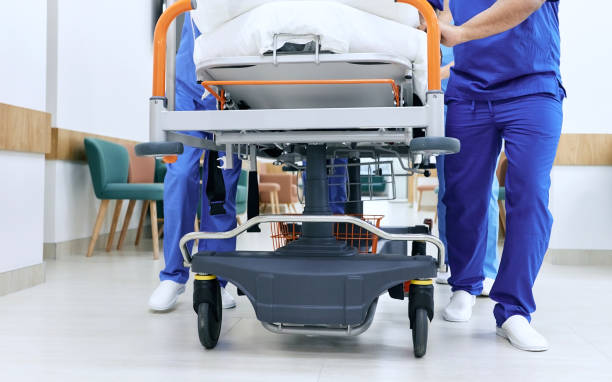


Enhancing Emergency Department Efficiency: Key Strategies for Healthcare Executives in 2024
Emergency department efficiency is not a race to move patients faster. It is the disciplined reduction of unsafe delay from arrival through evaluation, treatment, admission, transfer, or discharge.
Emergency department crowding is a hospital-wide signal. The ED becomes visibly congested when demand, diagnostic work, consultation, inpatient capacity, discharge, behavioral-health placement, transport, and community alternatives fail to move as one system.
The original 2024 guidance emphasized triage, dynamic staffing, lean management, point-of-care testing, information technology, telemedicine, patient communication, fast tracks, and discharge improvement. Those remain useful interventions. Yet a list of ED tactics can misdiagnose the problem if executives treat boarding and delay as the emergency department’s responsibility alone. An admitted patient waiting hours for an inpatient bed is not an ED workflow defect. It is an enterprise flow failure experienced in the ED.
The scale makes that distinction important. CDC’s current Emergency Department Visits FastStats, drawing on the 2022 National Hospital Ambulatory Medical Care Survey, reports an estimated 155.4 million U.S. ED visits, including 17.8 million visits resulting in hospital admission. Emergency care must absorb uncertainty, acuity, behavioral-health needs, injury, chronic illness, public-health events, and gaps elsewhere in the care system. Efficiency cannot mean denying complexity. It must mean organizing the response to complexity.
Operate an emergency flow observatory
A flow observatory is a small enterprise operating system that makes delay visible from the front door through safe disposition. It combines a common definition of demand and capacity, a live view of patient journeys, named queue owners, pre-agreed escalation thresholds, and a disciplined learning cadence. It is not another command center filled with screens. Its value comes from decisions that teams can make when a signal changes.
Begin with five connected views. The demand view shows arrivals by hour, mode, acuity, resource need, and likely disposition. The work view shows assessment, diagnostics, consultation, treatment, reassessment, and documentation. The disposition view shows decisions waiting for beds, transfers, medication, transport, or follow-up. The hospital view shows staffed capacity, expected admissions, discharges, environmental-services work, and unit constraints. The safety view shows deterioration, missed reassessment, crowding exposure, boarding burden, restraint, elopement, medication delay, and workforce strain.
Every red signal needs an owner and a response. If laboratory turnaround crosses its threshold, the response may involve specimen pickup, analyzer capacity, prioritization, or result escalation. If admitted boarding rises, the response belongs to hospital operations as well as the ED: staffed-bed barriers, discharge dependencies, housekeeping, transport, and load balancing must be addressed. If patients leave before evaluation, teams should examine wait, communication, symptom reassessment, access barriers, and arrival patterns rather than treating the number as a marketing metric.
The observatory should preserve clinical nuance. A stable patient awaiting transportation and a deteriorating patient awaiting a monitored bed are not equivalent delays. Segment by journey and risk. Track medians and percentiles, because averages hide long waits. Review equity across language, disability, age, race and ethnicity, payer, housing instability, arrival mode, and other locally relevant factors. Use small-number safeguards while investigating meaningful differences.
Close each operating cycle with learning. Ask which constraint emerged, which escalation was triggered, whether it worked, what burden shifted elsewhere, and what should change before the next surge. Daily control identifies immediate barriers; weekly improvement addresses recurrent failure modes; monthly executive review removes structural constraints and tests whether investments improve outcomes. The observatory succeeds when fewer patients experience unsafe delay—not when the dashboard merely becomes more sophisticated.
Define emergency efficiency as safe time
Not every minute has the same consequence. Delay before recognition of sepsis, stroke, myocardial infarction, respiratory failure, trauma, or a deteriorating child can change outcome. Delay after a stable discharge decision creates a different burden. Delay for an admitted patient boarding in the ED consumes capacity, fragments accountability, and may expose patients and staff to risk. Executives should therefore distinguish critical clinical time, avoidable process time, necessary observation time, and blocked transition time.
Safe time has four characteristics. First, urgency is recognized accurately and repeatedly, because patient condition can change. Second, work proceeds in parallel when clinically appropriate. Third, queues are visible with an accountable owner. Fourth, decisions trigger reliable transitions. A department may appear busy yet flow well when these conditions are present. It may appear calm while dangerous unseen delay accumulates when they are absent.
Efficiency must also preserve access obligations. CMS explains that EMTALA protects individuals who present to covered hospital emergency departments seeking examination or treatment, including a right to an appropriate medical screening examination and stabilizing treatment for an emergency medical condition within the law’s requirements. The CMS emergency-room-rights resource is written for patients, but it reinforces an executive boundary: front-end financial, coverage, capacity, or convenience processes must not interfere with required emergency evaluation and stabilization.
Manage six enterprise promises
These promises prevent a narrow throughput program from sacrificing safety or experience. For example, moving a patient from the waiting room to a hallway location may improve “left without being seen” performance while creating privacy, monitoring, or care-delivery risks. Sending a discharge order early does not reduce length of stay if medications, transportation, instructions, or follow-up remain unresolved. The measure should follow the actual patient journey.
Diagnose flow across four connected lanes
Before selecting a solution, build a minute-by-minute map of representative journeys. Separate high-acuity resuscitation, undifferentiated medical care, injury, pediatrics, behavioral health, low-resource vertical care, observation, admitted boarding, and transfer. Demand, work, staffing, diagnostic dependencies, and transition barriers differ. One average obscures these differences.
Patient journey
Arrival, screening, triage, placement, clinical contact, orders, diagnostics, consultation, treatment, reassessment, disposition, transition, communication, comfort, and changes in condition.
Clinical work
Nursing and physician decisions, protocol initiation, medication, procedures, consultation, monitoring, documentation, handoff, escalation, and cognitive load.
Operational flow
Demand, staffing, rooms, vertical spaces, laboratory, imaging, pharmacy, environmental services, transport, inpatient beds, observation, transfer, and community capacity.
Control system
Policies, decision rights, dashboards, queue ownership, escalation thresholds, safety review, equity, workforce support, downtime, governance, and continuous learning.
AHRQ’s guide to identifying patient-flow strategies recommends first determining the most likely causes of the specific problem. That principle is easy to skip. A hospital may purchase a predictive tool when the primary constraint is delayed inpatient discharge. It may create a fast track when laboratory turnaround or consultant response dominates length of stay. It may add ED clinicians while staffed inpatient beds remain unavailable. Diagnosis should precede intervention.
Separate input, throughput, and output constraints
Input: demand entering the emergency system
Input includes walk-ins, ambulance arrivals, referrals, transfers, seasonal illness, behavioral-health crises, and patients who cannot obtain timely care elsewhere. The hospital cannot control all demand, and it should not make access more difficult to improve a metric. It can forecast patterns, coordinate with emergency medical services, align urgent and virtual options, improve same-day access elsewhere in the system, and partner with community resources.
Forecast by hour, day, season, acuity, arrival mode, resource need, and disposition probability. Use prediction as a planning aid, not a staffing substitute. A model can estimate demand, but workforce schedules, break coverage, onboarding, skill mix, call-out response, surge space, and inpatient capacity must convert the forecast into readiness. Monitor forecast error and unusual events.
Throughput: work inside the ED
Throughput includes recognition, clinical assessment, diagnostics, treatment, reassessment, consultation, documentation, and disposition decision. Redesign should reduce handoffs, batch work, repeated movement, unnecessary waiting for rooms, and serial tasks that can safely occur in parallel. Standardization should support judgment, not suppress it.
Front-end protocols may allow qualified staff to initiate appropriate tests or treatments before a traditional room is available. Vertical care can match lower-resource patients to chairs or recliners when clinically suitable. Point-of-care testing can shorten selected diagnostic pathways. Provider-in-triage models may accelerate early decisions. Each approach requires scope, evidence, staffing, quality controls, physical design, and monitoring for unintended consequences such as overtesting, duplicated orders, or missed reassessment.
Output: movement beyond the ED
Output constraints include inpatient bed availability, environmental services, nurse staffing, discharge timing, pharmacy, transport, specialist acceptance, post-acute placement, behavioral-health capacity, and interfacility transfer. When admitted patients board, ED treatment spaces become inpatient spaces without the intended environment or staffing model. New arrivals then wait upstream.
Output performance requires hospital-wide governance. Use an executive flow huddle with current demand, predicted admissions and discharges, staffed beds, boarding time, unit constraints, transfers, and escalation actions. Set thresholds that trigger shared responses such as accelerated discharge work, flex staffing, load balancing, executive barriers removal, or regional coordination. Do not allow the ED to hold the problem silently.
Select interventions by failure mode
| Failure mode | Potential response | Risk to control | Evidence of improvement |
|---|---|---|---|
| Delayed initial assessment | Rapid safety screen, redesigned triage, provider or advanced-practice presence, protocol initiation, repeated reassessment. | Premature streaming, missed deterioration, insufficient privacy, triage burden. | Time by acuity, deterioration events, reassessment reliability, left-before-care, equity. |
| Room dependency | Vertical care, flexible spaces, bedside registration, mobile equipment, care started where the patient is. | Patients placed inappropriately, privacy, monitoring, infection prevention, staff travel. | Time to treatment, safe pathway adherence, movement, escalation, experience. |
| Diagnostic delay | Parallel orders, point-of-care testing, specimen redesign, imaging prioritization, transport coordination, result escalation. | Overtesting, quality-control failure, duplicate tests, incidental findings, alert fatigue. | Order-to-result, result-to-action, repeat tests, diagnostic quality, total stay. |
| Consultation delay | Response standards, single-call activation, teleconsultation, escalation, agreed decision criteria. | Role conflict, fragmented ownership, delayed bedside evaluation, technology dependence. | Request-to-response, decision time, escalations, disposition change, safety review. |
| Behavioral-health boarding | Early assessment, safe therapeutic space, telepsychiatry, standardized medical clearance, placement partnership. | Stigma, restraint, inadequate observation, repeated assessments, distant placement. | Time to assessment and placement, safety events, restraint, experience, return visits. |
| Admitted boarding | Enterprise bed management, early inpatient discharge, full-capacity protocols, unit-level accountability, staffing flex. | Moving congestion without care resources, unsafe hallway placement, rushed discharge. | Decision-to-departure, boarding burden, staffed beds, harm, inpatient flow. |
| Discharge delay | Early education, medication reconciliation, e-prescribing, transport, follow-up scheduling, teach-back. | Incomplete understanding, pharmacy barriers, unsafe transport, missing results. | Decision-to-departure, comprehension, medication access, follow-up, return visits. |
Design triage as a continuous safety function
Triage is not a one-time label. It is a risk assessment that must adapt as symptoms, vital signs, pain, mental status, and waiting conditions change. Define who reassesses, how often, which symptoms trigger immediate escalation, how patients report worsening, and what happens when monitoring capacity is constrained. Include people waiting in vehicles, remote intake channels, and other nontraditional locations if the organization uses them.
Advanced decision support can help prioritize information, but it should not replace clinical accountability. Validate local performance, subgroup differences, missing-data behavior, false negatives, alert burden, and the consequences of misclassification. Make the evidence visible to the clinician. Monitor overrides as learning signals. A high-performing algorithm cannot compensate for an unstaffed escalation pathway.
Equity review is essential. Communication barriers, disability, atypical presentation, age, pregnancy, mental-health symptoms, substance use, homelessness, and prior experiences with discrimination can affect recognition and trust. Compare time to assessment, analgesia, diagnostics, consultation, and disposition across relevant populations. Investigate differences rather than explaining them away with an aggregate acuity score.
Build dynamic staffing around work, not census alone
Patient count is an incomplete workload measure. Staffing must reflect acuity, arrivals, boarding, procedures, behavioral-health observation, transport, documentation, and the experience level of the team. Ten stable vertical-care patients create different work from ten resuscitation and boarded patients. Use demand forecasts, real-time workload signals, and minimum safety standards together.
Design coverage for handoffs, breaks, surges, call-outs, and high-risk events. Pair less experienced staff with reliable support. Maintain rapid access to respiratory therapy, pharmacy, laboratory, imaging, security, social work, case management, interpreters, transport, and environmental services. Capacity that exists only on an organizational chart does not help at 2 a.m.
Workforce efficiency is not constant utilization. Teams operating near maximum load have little resilience for variability. Chronic overload increases error risk, incivility, burnout, injury, and turnover. Protect recovery, debriefing, violence prevention, psychological safety, and the ability to raise a concern. Measure missed breaks, overtime, vacancies, assaults, near misses, and moral distress alongside throughput.
Use technology to coordinate decisions
Technology should create a shared operational picture: current demand, acuity, waiting risk, orders, diagnostics, consultation, disposition, boarding, beds, transport, and exceptions. The best display tells the responsible person what requires attention, why, and what action is available. A wall of timestamps without ownership becomes surveillance rather than coordination.
Predictive analytics can estimate arrivals, admission probability, length of stay, or deterioration. Telemedicine can extend specialist reach, support behavioral health, assist rural sites, or enable selected follow-up. Automation can route results, prepare documentation, or notify teams. These tools require local validation, workflow integration, cybersecurity, downtime, human review, and performance monitoring.
Do not automate the appearance of completion. A message sent is not a consultation completed. A bed assigned is not a patient transferred. A discharge order is not a safe departure. Measure the physical and clinical transition.
Communicate during uncertainty
Patients and families can tolerate uncertainty better than unexplained abandonment. Explain the sequence, why higher-acuity patients may be seen first, what has been completed, what is pending, how to report worsening symptoms, and when the next update will occur. Avoid promising a precise wait when the estimate is unreliable. Provide comfort, pain reassessment, food or mobility support when clinically appropriate, charging access, interpretation, and accessible communication.
What patients need to know
- How to report a change immediately.
- What the team is waiting for and who owns it.
- Why a test, consultation, admission, or transfer is needed.
- What options exist and what uncertainty remains.
- What must happen before a safe transition.
What leaders should measure
- Update reliability and patient comprehension.
- Complaints related to abandonment, bias, pain, or unclear delay.
- Interpreter and accessible-communication availability.
- Patients leaving before evaluation or treatment completion.
- Information failures during admission, transfer, and discharge.
Make discharge and admission complete transitions
Discharge preparation should begin when likely disposition becomes visible. Confirm medication access, transportation, home support, equipment, follow-up, pending results, return precautions, and the patient’s ability to understand and act. Use teach-back for high-consequence instructions. Schedule follow-up when feasible rather than providing only a phone number.
Admission requires the same rigor. Clarify who is responsible for ongoing orders, reassessment, medication, nutrition, mobility, and communication while the patient boards. Use standardized handoff and visible escalation for delayed beds. Boarding patients should receive care appropriate to their condition, not remain between departmental ownership models.
Transfers involve acceptance, clinical handoff, documentation, images, medication, consent, transport capability, timing, and contingency if condition changes. Track transfer request-to-acceptance, acceptance-to-departure, failed placement attempts, distance, and patient-family communication. Regional constraints require partnership, but the originating hospital still needs a safe process.
Apply eight executive rules
Build a balanced emergency-flow scorecard
One metric can be gamed or misunderstood. Use a balanced set that connects timeliness, safety, outcome, experience, workforce, and enterprise capacity. Stratify by pathway and acuity. Monitor median, percentile, and outlier performance, not only an average. A small group of extremely delayed patients can carry disproportionate risk.
Review measures as a system. A drop in length of stay accompanied by more return visits, missed diagnoses, staff overtime, or patients leaving before completion is not success. A rise in boarding despite stable ED throughput points upstream to inpatient flow. A new fast track that improves low-acuity performance while high-acuity delays worsen may be consuming shared diagnostics or staffing.
Use real-time management for immediate exceptions and a weekly learning review for patterns. Include frontline clinicians, operations, diagnostics, inpatient units, patient representatives, and support services. Study a small number of delayed journeys in depth. The timestamp tells leaders where delay occurred; direct observation and staff-patient inquiry explain why.
A 90-day emergency-flow agenda
- Establish an executive sponsor and hospital-wide patient-flow team.
- Map representative ED journeys across patient, clinical, operational, and control lanes.
- Separate input, throughput, and output delays and identify the highest-consequence constraint.
- Baseline safe-time, boarding, leaving, safety, experience, workforce, and equity measures.
- Select one intervention matched to the verified constraint rather than deploying a broad technology solution.
- Define eligibility, workflow, staffing, escalation, safety controls, downtime, and balancing measures.
- Create visible queue ownership for diagnostics, consultation, disposition, beds, and transport.
- Test the change during representative demand, including nights, weekends, and surge conditions.
- Launch with daily huddles and rapid review of delays, deterioration, and unintended consequences.
- Publish the balanced scorecard and disaggregate performance where appropriate.
- Remove the next enterprise constraint revealed by improved flow.
- Scale, redesign, pause, or retire the intervention based on safe completed transitions.
Prepare for predictable surges and degraded operations
Emergency demand is variable, but many difficult periods are not surprises. Seasonal respiratory illness, extreme weather, local events, inpatient bed compression, behavioral-health access gaps, staffing vacancies, and diagnostic outages produce recognizable pressure. Treating every surge as an exceptional crisis forces teams to improvise the same decisions repeatedly. Executives should define graduated operating states before the pressure arrives, with objective triggers, named authority, and actions that extend beyond the ED.
Define escalation by risk
Escalation triggers should combine demand, acuity, time, staffing, boarding, diagnostics, physical capacity, and signs of clinical deterioration. A waiting-room count alone is too crude. Ten stable patients awaiting minor treatment present a different operational risk than two time-sensitive patients without monitored space, even if the total census is lower.
Specify who declares each operating state, how often it is reviewed, and who can stand it down. The declaration should trigger a known package of actions rather than another meeting to decide what to do.
Make the response hospital-wide
When boarding drives the constraint, the response must activate inpatient, environmental services, transport, pharmacy, case management, specialty, and executive leadership. Possible actions include earlier discharge work, rapid bed cleaning, temporary discharge hospitality, focused specialty rounds, transfer escalation, and redeployment of qualified personnel.
Do not let surge protocols merely compress more patients into the ED. Every added treatment space requires safe staffing, monitoring, privacy, supplies, infection controls, medication access, and a clear clinical owner.
Downtime deserves the same rigor. Electronic health record interruptions, laboratory or imaging failures, telecommunications outages, cyber incidents, medication-system disruption, and facility problems can disable the coordination mechanisms on which a fast department depends. Maintain usable paper workflows, current contact lists, manual tracking boards, order and result reconciliation, patient-identification controls, communication scripts, and recovery procedures. Staff should practice them under realistic conditions. A binder that has not been tested during an active shift is not a reliable continuity plan.
Build recovery into the surge design. When demand falls or a system returns, hidden work remains: undocumented care, unreconciled orders, delayed results, incomplete referrals, exhausted personnel, missed breaks, and patients whose plans changed during the disruption. Assign ownership for this backlog. Review adverse events and near misses without blaming individuals for predictable system strain. Capture which thresholds were late, which actions helped, which dependencies failed, and what must change before the next event.
Finally, protect staff as a core flow resource. Persistent overload erodes attention, teamwork, empathy, and retention. Leaders should monitor missed breaks, excessive overtime, vacancy, violence, moral distress, and the frequency with which clinicians work outside intended roles. Psychological safety matters operationally: a nurse, technician, physician, registration specialist, or transporter must be able to call out an unsafe condition and receive a timely response. A surge plan is credible only when it protects both the people seeking care and the people providing it.
Questions every executive should ask
Where is the longest clinically meaningful delay? Do not assume the most visible queue is the most harmful constraint.
Which delay belongs outside the ED? Identify inpatient capacity, discharge, specialty, behavioral-health, transport, and transfer barriers with named executive owners.
Who is waiting without reassessment? Include waiting rooms, hallways, vehicles, virtual intake, behavioral-health spaces, and boarding locations.
What work can safely occur in parallel? Redesign orders, diagnostics, consultation, education, medication, and transition preparation around decision readiness.
What did the efficiency intervention worsen? Examine overtesting, rework, missed escalation, return visits, staff burden, privacy, equity, and patient understanding.
Can the model survive a surge or outage? Test staffing, physical space, supplies, communications, paper workflows, reconciliation, and command authority.
Does the patient reach the next safe setting? A decision, order, bed assignment, prescription, or referral is not the same as a completed transition.
The leadership mandate
The original call to action was right: analyze operations, identify bottlenecks, engage ED staff, use technology thoughtfully, and implement process improvement. The stronger mandate is to place emergency flow under enterprise governance and hold every part of the hospital accountable for the time it controls.
Begin with the patient clock. Identify where risk is first recognized, where work waits, where a decision lacks an owner, where a bed or transfer blocks movement, and where a discharge remains incomplete. Match the intervention to that constraint. Protect access, clinical judgment, reassessment, communication, equity, and workforce resilience while time improves.
Emergency department efficiency is ultimately a measure of institutional coordination under pressure. When the hospital can make risk visible, organize parallel work, support its teams, absorb boarding as an enterprise problem, and complete safe transitions, the ED becomes more responsive without becoming less humane. That is the standard executives should set: not speed for its own sake, but time used wisely in service of safety.