
· Executive Brief
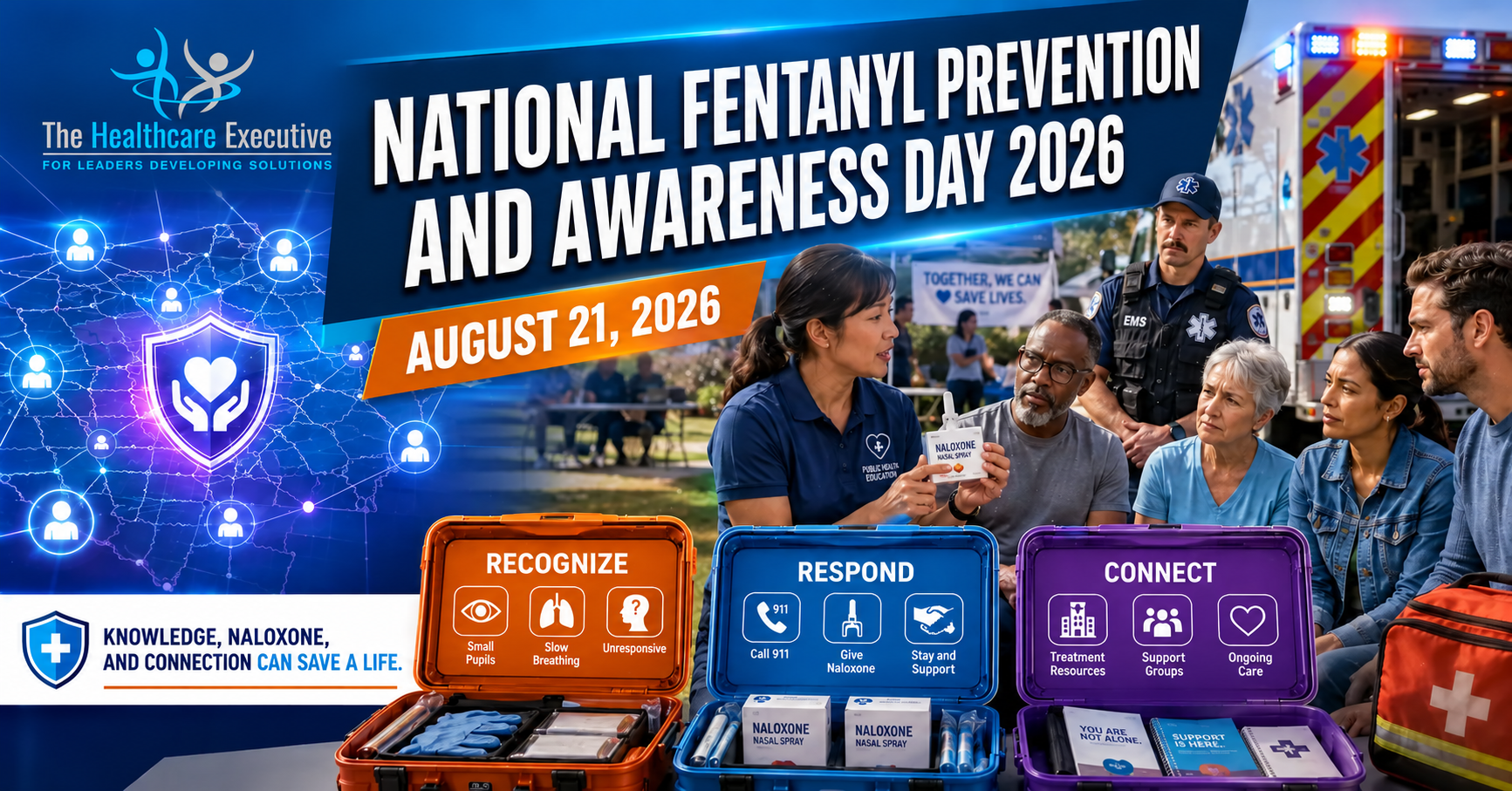
National Fentanyl Prevention and Awareness Day 2026
Move beyond reminders by reviewing how the organization prevents, detects, responds, and learns.

Leadership signal
Use National Fentanyl Prevention and Awareness Day to examine the system behind the message.
Campaign messages can raise attention, but operating reliability depends on what happens before, during, and after a concern. Leaders can map ownership, approved prevention practices, readiness checks, escalation, documentation, and the route used to learn from exceptions.
Start by distinguishing what is known from what the organization still needs to learn. A campaign plan, communication volume, or meeting count does not establish that a route is usable. Leaders need direct listening, clear ownership, locally defined measures, and a method for keeping exceptions visible.
Executive opening
Fentanyl prevention is an operating system, not a campaign
Fentanyl has changed the risk profile of adolescent drug use. Young people who experiment once with a counterfeit pill can face lethal exposure, and many have no history of opioid use. That makes prevention, naloxone access and emergency response a systems problem that spans schools, pharmacies, emergency services and clinical care, not a single health system department. It also means that the people most likely to be present at an overdose are friends, family members, teachers and coaches rather than clinicians.
National surveillance data show how fast the risk grew. Among U.S. adolescents aged 10 to 19, median monthly overdose deaths increased 109% from July to December 2019 to July to December 2021, and deaths involving illicitly manufactured fentanyls increased 182%.[15] Only 35% of those decedents had a documented history of opioid use.[15]
Many adolescents still underestimate the danger. In a nationally representative 2025 survey, fewer than half of 8th-grade students (47.8%) attributed great risk to trying fentanyl once or twice.[1] Perceived risk was higher among older students, but gaps persisted by race, ethnicity and grade.[1] Awareness gaps among the youngest students matter because many first exposures happen in early adolescence, before families or schools have discussed fentanyl directly.
For health system leaders, the practical questions are about reliability. Is naloxone available where young people are, can bystanders use it, and does someone own the handoff from overdose survival to treatment? This brief summarizes recent evidence on burden, school and pharmacy access, community training, treatment linkage and communication, adding to the operating guidance already on this page. The goal is to help leaders choose a small number of operating changes they can own and verify.
Current evidence
What the research says about burden and risk
Adolescent overdose deaths are dominated by opioids and fentanyl. In surveillance data from July 2019 to December 2021, approximately 90% of adolescent overdose deaths involved opioids and 83.9% involved illicitly manufactured fentanyls.[15] Counterfeit pill evidence was present in 24.5% of deaths, and 40.9% of decedents had evidence of mental health conditions or treatment.[15] Those figures point to mental health services as a prevention partner, not only addiction services.
State medical examiner data add detail about where deaths happen. A 10-year North Carolina review identified 138 fentanyl-related deaths among people aged 0 to 17 from 2015 to 2024.[2] Adolescents aged 15 to 17 had a fentanyl-related death rate of 1.96 per 100,000, above the statewide pediatric rate of 0.60 per 100,000.[2] Among those adolescents, 62.5% of overdose onsets occurred in the decedent’s primary residence and 13.8% at a friend’s residence.[2] Those findings mean that the people best placed to respond are often family members and friends rather than school staff or clinicians.
Young children are also exposed. In the same review, children under 2 years had a fentanyl-related death rate of 1.38 per 100,000, and 78.8% of overdose onsets occurred in the child’s primary residence.[2] Drugs or paraphernalia were present at the scene in 51.5% of those cases.[2] Prevention for infants and toddlers therefore depends on reaching caregivers through pediatric, obstetric and family services.
Risk perception data show which adolescents need more information. In the 2025 national survey, 63.6% of 10th-grade and 69.8% of 12th-grade students attributed great risk to experimental fentanyl use.[1] Hispanic 8th-grade students and non-Hispanic Black 10th- and 12th-grade students had the lowest levels of perceived risk.[1] Rural students had the highest perceived risk in 8th and 10th grade.[1] Variation in perceived risk by group suggests that a single statewide message will not reach every audience equally. School health partners and pediatric practices can use these findings to decide which grades and communities to reach first, and to plan materials in the languages families use at home.
Taken together, these studies describe a risk that often begins at home or with friends, involves counterfeit pills and appears in young people with no recorded opioid history. That pattern makes universal approaches, such as naloxone availability and school-based education, more practical than strategies that rely on identifying high-risk individuals in advance.
Figure 1
Naloxone is often on the shelf but not in hands or minds
Percent of respondents or participants, as reported in each study. Values are copied from the cited studies [3], [4], [8], [11]; none is estimated.
Data note. These values come from four different studies, populations and years, so this is an indirect comparison that shows where access breaks down, not a single trend.
Limitation. Survey and pre-post data with voluntary participation; none is a population estimate for a specific service area.
Figure data (5 rows)
| Measure | Value | Population, setting and year as reported | Source |
|---|---|---|---|
| School nurses reporting their schools stocked naloxone | 90% | 462 K-12 school nurses from 44 states, 2024 national survey | [4] |
| Schools providing student naloxone training | 6% | Same national school nurse survey | [4] |
| Rural people who use drugs possessing naloxone | 36.4% | 3,008 participants in rural counties of ten states, 2018 to 2020 | [3] |
| Adults aware of over-the-counter naloxone | 31.8% | 299 U.S. adults in an online survey, September 2023 | [11] |
| High school students confident to administer naloxone after training | 80% | Massachusetts high schools after a 20-minute curriculum; 29% before training | [8] |

Continuum of care
From overdose survival to sustained treatment
Naloxone reverses an overdose, but survival is only the first step. The surveillance report on adolescent deaths called for ensuring access to treatment for substance use and mental health disorders alongside naloxone training.[15] Each emergency department visit or inpatient stay for an opioid overdose is an opportunity to begin that treatment. Systems that treat the overdose visit as complete once the patient is medically stable miss the moment when engagement may be most possible.
Young people describe what helps them start and stay in care. In 11 interviews with adolescents and young adults aged 16 to 21 who started medication treatment in a county safety-net system, 10 of 11 (91%) identified as Latine and 9 (82%) were publicly insured.[13] Relationships with peers, caregivers, parole officers and health care providers enabled participants to start and continue treatment.[13] Those relationships are assets that health systems can build into discharge planning, for example by involving caregivers or peer supporters with the patient’s consent.
Inpatient initiation was largely viewed positively in that study, though a few participants had negative experiences.[13] Many participants identified barriers to continuing medication treatment long-term.[13] The handoff from hospital to outpatient care is therefore a control point that needs a named owner, a scheduled appointment and a follow-up call. Pharmacy access to prescribed medication and coverage checks before discharge also belong in that handoff.
Police officers are often first on scene, and they also experience the limits of naloxone. In 15 interviews with New York City police officers, naloxone was seen as supporting a shift toward a broader public safety role.[14] Officers also expressed frustration that naloxone could not address systemic barriers to addiction recovery.[14] Interagency partnerships that link first responders to treatment services can reduce that frustration and close the gap after reversal.
Health systems can make that link concrete. Emergency departments, urgent care centers and pediatric clinics can agree with emergency medical services and police on how overdose survivors are referred, who calls them and how outcomes are tracked. Without that agreement, each agency sees only its own part of the pathway. Shared measures, such as the share of overdose survivors contacted within an agreed time, give all partners the same view of whether the system works.
Figure 3
Why the pathway breaks
People
- Students and staff not trained to respond
- Stigma among responders and school staff
- Younger adolescents unaware of risk
Process
- Restrictions on who may administer naloxone in schools
- No defined handoff from reversal to treatment
- Inpatient treatment starts without outpatient follow-up
Technology
- No shared data on overdose events across schools, EMS and hospitals
- Naloxone stored in locked or single locations
Environment
- Overdoses at home or a friend’s residence
- Rural distance from services
Policy
- State school laws without incident response or reporting requirements
- Retail prices above what families will pay
Measurement
- Naloxone distribution not tracked by setting
- Treatment linkage after overdose not measured
Unranked qualitative cause-and-effect diagram for the outcome in the box: Young people exposed to fentanyl do not reliably receive naloxone, bystander response and linkage to treatment Causes are assembled from the cited literature [2], [4], [5], [11], [13], [14]; categories are not weighted and their order carries no meaning.
Data note. Qualitative; no frequencies are implied.
Limitation. Causes drawn from published studies may not all apply locally; validate them with frontline teams.
Figure data (6 rows)
| Category | Causes drawn from the cited literature |
|---|---|
| People | Students and staff not trained to respond; Stigma among responders and school staff; Younger adolescents unaware of risk |
| Process | Restrictions on who may administer naloxone in schools; No defined handoff from reversal to treatment; Inpatient treatment starts without outpatient follow-up |
| Technology | No shared data on overdose events across schools, EMS and hospitals; Naloxone stored in locked or single locations |
| Environment | Overdoses at home or a friend’s residence; Rural distance from services |
| Policy | State school laws without incident response or reporting requirements; Retail prices above what families will pay |
| Measurement | Naloxone distribution not tracked by setting; Treatment linkage after overdose not measured |
Access
Putting naloxone where young people are
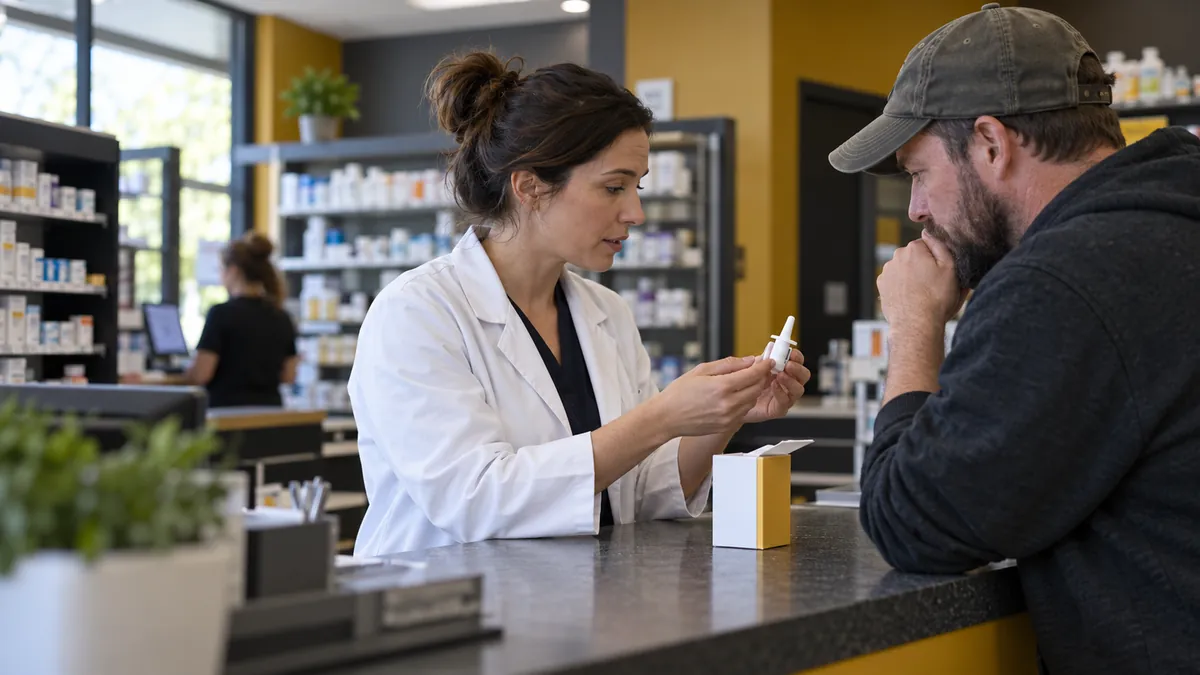
Schools have moved quickly, but access inside schools is uneven. In a national survey of 462 school nurses from 44 states, 90% reported that their schools stocked naloxone and 18% reported prior naloxone administration on campus.[4] Yet 37% reported restrictions on who can access or administer naloxone, and only 6% of schools provided student naloxone training.[4] Restrictions and lack of training can turn a stocked kit into one that no one present is allowed or able to use.
State law shapes those differences. A national review found that 38 states have laws on opioid antagonists in K-12 schools.[5] Nine states (24%) mandate a supply in schools, and most states detail who may administer the medication (89%) and provide immunity (84%).[5] Few laws include incident response after administration (24%), reporting of administration (21%) or parental involvement (13%).[5] Health systems that support school health programs can help districts fill those gaps with model procedures for incident response and reporting.
Pharmacies are the main public route since naloxone became available over the counter. In a national online survey of 299 adults in September 2023, awareness of over-the-counter naloxone was low (31.8%), and mean willingness to pay was $27.06.[11] Willingness to pay was lower among respondents with household income under $50,000, and purchase comfort was highest for community pharmacies.[11] Health system pharmacies can test free or low-cost distribution for patients and families who cannot afford retail prices.
Low-barrier distribution can reach young adults directly. A health vending machine at a large Midwestern university dispensed 297 units of naloxone from October 2024 to May 2025, making it the most dispensed item.[12] That model offers a practical way to provide time-sensitive health products without staffing a counter. Similar machines could be placed in hospital lobbies, clinic waiting rooms or community sites that health systems operate or sponsor.
Rural access needs targeted effort. Among 3,008 people who use drugs in rural counties of ten states, only 36.4% reported possessing naloxone.[3] Possession was associated with receiving syringes from syringe service programs, while no association was found with access to care.[3] Rural health systems may reach more people through community distribution partners than through clinic visits. Partnerships with syringe service programs and harm reduction organizations are therefore part of the access strategy, not an optional extra.
Executive guidance · System route
Connect the day to an accountable system route.
Use this route as a discussion framework. Replace each stage with the organization’s approved process, qualified roles, current service capacity, and applicable requirements. Do not infer a clinical protocol from the observance title.
The route at a glance
- Identify the concern
- Activate prevention
- Coordinate the partner route
- Escalate and respond
- Review and improve
Reliability rule: Every stage needs a named owner, an observable status, an approved escalation path, and a defined signal that shows whether responsibility moved or remained unresolved.
Identify the concern
Define approved ways to recognize and report a concern without asking unqualified staff to make clinical or legal determinations.
Activate prevention
Make locally approved controls, tools, education, and responsibilities visible where the work occurs.
Coordinate the partner route
Align internal teams and external partners around one current message, real entry point, receiving owner, escalation path, and follow-through signal.
Escalate and respond
Route the concern to the qualified owner, acknowledge receipt, and preserve visibility until the next action is accepted.
Review and improve
Examine exceptions, near misses, workarounds, and delays using a learning approach and transparent action ownership.
Figure 2
The system route as one flow
The five stages of the system route described in this brief, drawn as one flow with a learning loop back to the start. The stages are the page’s original executive guidance, not a clinical protocol.
Data note. Shows sequence and handoffs only; it carries no counts or rates.
Limitation. Local processes may add, merge or reorder stages under organizational policy.
Figure data (5 rows)
| Stage | What the stage requires |
|---|---|
| Identify the concern | Define approved ways to recognize and report a concern without asking unqualified staff to make clinical or legal determinations. |
| Activate prevention | Make locally approved controls, tools, education, and responsibilities visible where the work occurs. |
| Coordinate the partner route | Align internal teams and external partners around one current message, real entry point, receiving owner, escalation path, and follow-through signal. |
| Escalate and respond | Route the concern to the qualified owner, acknowledge receipt, and preserve visibility until the next action is accepted. |
| Review and improve | Examine exceptions, near misses, workarounds, and delays using a learning approach and transparent action ownership. |
Equity and trust
Closing gaps in awareness, possession and treatment
Awareness of fentanyl risk is not evenly distributed. In the 2025 national survey, non-Hispanic White students were most likely to ascribe great risk to fentanyl use in all grades, while Hispanic 8th-grade students and non-Hispanic Black older students had the lowest levels.[1] The authors concluded that clinicians, parents, schools and public education programs all have roles in communicating risk.[1] Communication programs that are not tailored by language, culture and grade level may miss the students who most need them.
Cost and income shape access to the medication itself. Mean willingness to pay for over-the-counter naloxone was lower than average retail prices, and lower still among households earning under $50,000.[11] Women also perceived more barriers to over-the-counter access than men in that survey.[11] Free distribution through health system pharmacies, clinics and community partners can reduce those barriers. Tracking distribution by neighborhood and payer helps confirm that free kits reach the communities where cost is the barrier.
Rural residents who use drugs face distinct obstacles. In the multistate rural study, naloxone possession was associated with younger age, overdose history, witnessing an overdose and current injection drug use.[3] The authors called for targeted naloxone distribution strategies in rural areas that consider the unique barriers rural residents face.[3] Health systems serving rural regions can map where naloxone is available and compare that map with where overdoses occur.
Treatment access for young people from marginalized communities depends on trust and relationships. Adolescents and young adults in a safety-net system, most of them Latine and publicly insured, identified relationships and perceived effectiveness of medication as key facilitators.[13] Equity plans should measure treatment starts and continuation by insurance, language and ethnicity, not only overall counts. Leaders should also ask whether young people with legal system involvement or public insurance face extra delays in starting medication.
Stigma remains a barrier inside institutions. School staff in New York City showed significantly reduced stigmatization of drug use after naloxone training.[7] Pairing naloxone training with stigma reduction is a low-cost way to build trust with families who fear judgment when they seek help. Training content should be reviewed with community members to make sure the language used does not reinforce the judgment it aims to reduce.
Human infrastructure
School nurses, staff, pharmacists and responders carry the response
School nurses are often the people who write and run school naloxone policies. In Texas, a survey of personnel who requested a naloxone standing order had a 25.0% response rate among 388 active contacts, with 16 follow-up interviews.[6] Most respondents were district or school nurses, and they drew on other schools’ policies, medication policies, professional associations and legislative language.[6] Policy work of this kind usually falls on nurses on top of their regular duties, so health system partners can help by sharing templates and clinical review.
Those nurses reported high availability but varied storage. Most respondents reported naloxone was available (87% district-level and 100% school-level), most often stored in a nurse’s office (72%) or a common-area closet or cabinet (41%).[6] The authors concluded that supporting nurses in policy development can build staff confidence in overdose response.[6] Storage in a single office can delay response when the nurse is absent, which makes placement and access rules a staffing issue as well as a supply issue.
Nonmedical school staff can be trained quickly. Through a public-academic partnership in New York City, nonmedical school staff attended a 90-minute in-person training.[7] Before training, 70.7% had never been trained to identify an opioid overdose and 73.5% had never been trained to administer naloxone.[7] Overdose knowledge, recognition of signs, response actions and confidence increased significantly after training.[7] The significant reduction in stigmatization of drug use after training suggests that well-designed sessions can change attitudes as well as skills.[7]
Police and other first responders need clear policies and support. Officers in New York City described tensions between enforcement and health roles, including concerns that reversal might enable continued drug use or crime.[14] The authors called for clear policies, comprehensive training and stronger interagency partnerships.[14] Health systems can contribute clinical training and a reliable referral route. Shared debriefs after serious events can also help responders and clinicians learn from each other.
Health system staff need the same preparation. Pharmacists, emergency clinicians, pediatricians and school-based health center teams all touch the pathway. Training plans should cover recognition, naloxone use, stigma and the referral steps that follow a reversal, with refresher sessions tracked as part of annual competencies. Workforce leaders should also consider staff wellbeing, since repeated exposure to overdose events can take a toll on those who respond.
Executive guidance · Operating dashboard
Review reliability, not campaign activity alone.
Do not publish a number until the organization defines its numerator, denominator where relevant, owner, source system, exclusions, review cadence, and limits. The candidates below are management prompts, not benchmarks or reported results.
Four operating signals
Each signal pairs an executive question with one candidate local measure, set out below.
Executive guidance · Signal
Prevention reliability
Are approved preventive steps usable and consistently supported in the real work environment?
- Candidate local measure
- Locally defined control checks, barriers, exceptions, and corrective-action status.
Executive guidance · Signal
Readiness
Can the right team, tool, information, and backup be reached when needed?
- Candidate local measure
- Readiness checks, unavailable resources, response barriers, and escalations.
Executive guidance · Signal
Partner-route reliability
Do participating teams share one current route and understand who owns each dependency?
- Candidate local measure
- Locally defined conflicting instructions, unaccepted handoffs, unresolved dependencies, repeat contacts, and partner feedback.
Executive guidance · Signal
Learning system
Are recurring patterns translated into owned improvements?
- Candidate local measure
- Review completion, assigned actions, overdue actions, verified changes, and shared learning.
Figure 4
The operating system behind the dashboard
The four operating signals from this brief’s dashboard, each tied to the candidate owner named in the executive scorecard, around one accountable route. Drawn from the page’s original executive guidance.
Data note. Structural diagram; no measured values.
Limitation. Owners are candidates to be confirmed locally.
Figure data (4 rows)
| Operating signal | Candidate owner |
|---|---|
| Prevention reliability | Executive sponsor and operational lead |
| Readiness | Operational owner and participating teams |
| Partner-route reliability | Sending and receiving owners |
| Learning system | Improvement owner and executive sponsor |
Executive guidance · Handoff workflow
Transfer responsibility with acknowledgment and visibility.
A handoff is reliable only when the sending party knows who is expected to receive the work, the receiving party acknowledges responsibility, and any unresolved exception remains visible. Local policy and qualified judgment control the actual process.
How responsibility moves
Lane A
From message to accepted ownership
- Confirm the approved message and intended audience.
- Publish the actual entry point and receiving role.
- Acknowledge receipt using the locally approved method.
- Escalate when ownership or response remains unclear.
Lane B
From accepted ownership to verified follow-through
- Record the next accountable owner and visible status.
- Name the sending and receiving owners, shared information, current status, and unresolved dependency.
- Keep unresolved work visible across boundaries.
- Confirm closure or document the continuing exception.
Executive guidance · Executive scorecard
Connect operating signals to accountable executive review.
The scorecard keeps review focused on decisions. Leaders should set definitions locally, examine variation without overclaiming cause, and pair quantitative signals with the experience of people who use and operate the route.
Who reviews what
- Executive sponsor and operational lead
- Operational owner and participating teams
- Sending and receiving owners
- Improvement owner and executive sponsor
Candidate owners named in the scorecard, confirmed locally.
| Operating signal | Executive question | Candidate owner | Suggested review point |
|---|---|---|---|
| Prevention reliability | Are approved preventive steps usable and consistently supported in the real work environment? | Executive sponsor and operational lead | At campaign launch and close |
| Readiness | Can the right team, tool, information, and backup be reached when needed? | Operational owner and participating teams | At a locally defined cadence |
| Partner-route reliability | Do participating teams share one current route and understand who owns each dependency? | Sending and receiving owners | At a locally defined cadence |
| Learning system | Are recurring patterns translated into owned improvements? | Improvement owner and executive sponsor | Until action is verified |
Figure 5
Control points for a reliable fentanyl overdose prevention system
| Control point | Risk if missing | Owner | Evidence of control |
|---|---|---|---|
| Naloxone stocked and accessible in partner schools and campuses | A reversal is delayed while staff search for the medication | Community health partnerships lead with school health partners | Inventory checks and access policy reviewed each semester |
| Staff and student training with stigma content | Bystanders hesitate or refuse to act | School-based health center director | Share of staff and students trained, with pre-post confidence |
| Free or low-cost naloxone through health system pharmacies | Families cannot afford retail naloxone | Chief pharmacy officer | Kits distributed by site, age group and payer |
| Emergency department and inpatient treatment initiation with outpatient appointment | Overdose survivors leave without a route to care | Emergency medicine and addiction medicine leads | Share of overdose visits with treatment start and kept follow-up |
| Interagency referral agreement with EMS and police | Responders reverse overdoses with no link to services | Chief medical officer with public safety partners | Referrals received and contacted within an agreed time |
| Overdose and naloxone data reviewed by governance | Trends by age, setting and equity group go unseen | Chief quality officer | Quarterly board report with stratified measures |
Control points derived from the cited evidence [4], [7], [11], [13], [14] and this brief’s executive guidance.
Data note. Each row is a control to verify, not a measured result.
Limitation. Owners and evidence of control must follow local policy and applicable requirements.
Public communication
Messages that change knowledge, confidence and conversations
School-based education can build skills in a short time. A 20-minute high school naloxone curriculum in Massachusetts raised student confidence in administering naloxone from 29% before training to 80% after training.[8] Students rated the training very or extremely important (85%) and strongly supported its inclusion in mandatory health curricula (81%).[8] The brevity of that curriculum makes it feasible to deliver within existing health classes without displacing other content.
Short videos can also shift knowledge. In a pilot pretest-posttest study of 76 high school students in Southern California, two public health harm reduction videos were followed by a statistically significant improvement in knowledge and attitudes at post-test and 3-month follow-up.[9] Knowledge retention did not change significantly between post-test and follow-up, possibly because of the small sample.[9] Partnering with local public health departments that have already produced such materials can save time and keep messages consistent.
Parents and caregivers are a critical audience. In an evaluation of a 90-minute parent fentanyl education presentation, 274 participants completed the pre-presentation survey and 276 the post-presentation survey.[10] Knowledge of overdose symptoms and naloxone effects increased, along with confidence in administering naloxone and discussing fentanyl with children.[10] Those gains remained high at 1-week and 2-month follow-ups among the 44 participants who completed follow-up surveys.[10] Parent sessions are a natural fit for school-based health centers, pediatric practices and community events that health systems already sponsor.
Messages should match the audience’s age and starting point. Because younger adolescents report the lowest perceived risk, communication aimed at middle school students and their parents may fill the largest knowledge gap.[1] Health systems can partner with school districts, pediatric practices and community organizations to deliver consistent content. Consistent wording across these partners reduces confusion and makes each message reinforce the others.
Finally, public communication should name the route as well as the risk. Families need to know where to get naloxone, what it costs, who can use it in a school and how to reach treatment after an overdose. Messages that raise fear without naming a next step can leave families with nowhere to go. Communications teams should also report back to the community on what changed, such as new naloxone locations or faster treatment referral, so that the observance is tied to visible results.

Executive guidance · 90-day plan
Use 90 days to correct one visible operating barrier.
The time boxes below are a management framework, not a clinical timeline. Adjust them to risk, scope, governance, resources, stakeholder participation, and applicable review requirements.
Ninety days, three moves
- Days 1–30See the current route
- Days 31–60Build the reliable path
- Days 61–90Make the change visible
Days 1–30 · Listen and map
See the current route
- Name an executive sponsor and an operational owner.
- Listen to people using the route and representative frontline teams.
- Map how National Fentanyl Prevention and Awareness Day communications connect to real entry points, owners, transitions, and escalation.
- Select one recurring barrier that the organization can responsibly address.
Days 31–60 · Design and test
Build the reliable path
- Define the trigger, receiving owner, required information, acknowledgment, escalation, and closure signal.
- Validate the design with every sending and receiving team involved.
- Test one internal or partner handoff and correct a verified communication, dependency, or ownership gap.
- Test the route in more than one representative setting or operating period where practical.
Days 61–90 · Implement and verify
Make the change visible
- Launch the redesigned route with a small set of locally defined measures.
- Review unresolved work and recurring friction using a learning approach.
- Correct implementation barriers and record who owns each remaining dependency.
- Report what changed, what evidence was reviewed, and what still requires live oversight.
Figure 6
The 90-day plan on one timeline
The 90-day plan from this brief drawn as a timeline: each action sits in the 30-day window the plan assigns it. The full wording of each action is in the figure data and in the plan above.
Data note. Time boxes are a management framework, not a clinical timeline.
Limitation. Durations are uniform 30-day windows; real tasks may span windows.
Figure data (12 rows)
| Window | Action |
|---|---|
| Days 1–30 · Listen and map | Name an executive sponsor and an operational owner. |
| Days 1–30 · Listen and map | Listen to people using the route and representative frontline teams. |
| Days 1–30 · Listen and map | Map how National Fentanyl Prevention and Awareness Day communications connect to real entry points, owners, transitions, and escalation. |
| Days 1–30 · Listen and map | Select one recurring barrier that the organization can responsibly address. |
| Days 31–60 · Design and test | Define the trigger, receiving owner, required information, acknowledgment, escalation, and closure signal. |
| Days 31–60 · Design and test | Validate the design with every sending and receiving team involved. |
| Days 31–60 · Design and test | Test one internal or partner handoff and correct a verified communication, dependency, or ownership gap. |
| Days 31–60 · Design and test | Test the route in more than one representative setting or operating period where practical. |
| Days 61–90 · Implement and verify | Launch the redesigned route with a small set of locally defined measures. |
| Days 61–90 · Implement and verify | Review unresolved work and recurring friction using a learning approach. |
| Days 61–90 · Implement and verify | Correct implementation barriers and record who owns each remaining dependency. |
| Days 61–90 · Implement and verify | Report what changed, what evidence was reviewed, and what still requires live oversight. |
Executive guidance · Leadership close
Pair recognition with a system people can trust.
Recognition matters. It becomes durable when leaders also listen, clarify the route, support the people operating it, close an identified gap, and report the result without claiming more than the evidence supports.
Leadership commitment
Connect the message to one usable, measured, and sustained operating change.
Executive action kit · Day observance
Turn National Fentanyl Prevention and Awareness Day into accountable action.
Move beyond reminders by reviewing how the organization prevents, detects, responds, and learns.
Leadership focus
Use this observance to examine trustworthy information, prevention access, and community connection. Select one verified barrier, assign an accountable owner, and carry the improvement beyond the campaign window.
Workforce lens
Ask whether staffing, role clarity, training, tools, workload, and escalation support the people operating the information, access, coordination, and follow-through pathway.
Patient and community lens
Make the approved first step clear. Test whether a person can move from information to an acknowledged next action without navigating conflicting instructions.
Equity and access lens
Review language, disability, transportation, digital access, geography, trust, and other barriers using protected feedback and locally appropriate data.
Five-minute briefing
Inspect the operating sequence
Listen with people using the pathway, frontline teams, operational leaders, and community partners. Find one a message, request, referral, or handoff that does not reach an accountable owner, then test the locally approved route from entry through acknowledged follow-through.
- Identify the concern
- Activate prevention
- Coordinate the partner route
- Escalate and respond
- Review and improve
Leadership actions for this week
- Name an executive sponsor and frontline operating owner.
- Ask people using and operating the pathway where ownership becomes unclear.
- Test one representative route from first question to acknowledged next step.
- Select one barrier that can be corrected without overstating the evidence.
- Set a review date and define how completion will be verified.
Candidate measures
Define every numerator, denominator where relevant, owner, data source, exclusions, cadence, and limitation locally. These are management prompts, not external benchmarks.
- Locally defined control checks, barriers, exceptions, and corrective-action status.
- Readiness checks, unavailable resources, response barriers, and escalations.
- Locally defined conflicting instructions, unaccepted handoffs, unresolved dependencies, repeat contacts, and partner feedback.
Department readiness checklist
- The public and staff entry points match the actual approved process.
- A specific role accepts each request, referral, or escalation.
- Handoffs include acknowledgment and a visible unresolved state.
- Language, disability, digital, transportation, and trust barriers receive explicit review.
- Communications do not introduce unsupported themes, statistics, or clinical advice.
- A named leader will review what changed after the observance.
Intended audiences
- Executive and Operational Leaders
- Public Health and Community Partners
Staff communication template
During National Fentanyl Prevention and Awareness Day, our organization will connect awareness with a practical review of the information, access, coordination, and follow-through pathway. Use approved information, identify the correct entry point, confirm ownership when work moves, protect privacy, and escalate unresolved barriers through local channels.
Community communication template
National Fentanyl Prevention and Awareness Day is an opportunity to share trustworthy information and make the next step easier to find. Use our approved channels for information and support. If a request changes hands, our goal is to keep ownership and follow-through visible.
Measurement worksheet
- Signal
- What observable condition will show whether the route works?
- Definition
- What is included, excluded, and counted?
- Owner
- Who reviews the signal and acts on exceptions?
- Cadence
- When will leaders review it?
- Equity check
- Which differences require protected, locally appropriate review?
- Closure
- What evidence will confirm the improvement was completed?
- Editorial review
- Completed
- Source records
- 2 listed under Authoritative resources
- Review standard
- Sourced facts remain separated from original executive guidance
- Clinical boundary
- No new statistical or clinical claim was added by this action kit
Sources and content boundary
Authoritative resources
Use note: All operating models, measures, scorecard questions, and action steps are original executive guidance. This article supports leadership planning and education. It does not replace clinical judgment, emergency procedures, legal advice, professional standards, organizational policy, or applicable federal, state, and local requirements.
Peer-reviewed references
References
Fifteen peer-reviewed sources, newest first. Each was individually verified through authenticated academic research databases. Bracketed numbers in the text link here; the original executive guidance on this page carries no citations because it is guidance, not a sourced claim. Sources last checked in those databases on .
- 1.Miech R, Patrick ME, Jager J, Jang JB. Perceived Risk of Fentanyl Use Among US Adolescents. JAMA Network Open. 2026;9(7):e2622039. https://doi.org/10.1001/jamanetworkopen.2026.22039
- 2.Welch M, Friederich LW, Cox ME, Aurelius MB, Bishop-Freeman SC. Trends and circumstances of pediatric fentanyl deaths in North Carolina: a 10-year retrospective study. Journal of Analytical Toxicology. 2026;50(6):1-13. https://doi.org/10.1093/jat/bkag057
- 3.Moore PQ, Mixson LS, Bolinski R, Colston DC, Cooper HLF, Crane HM, et al. Correlates of Rural Naloxone Possession Among People Who Use Drugs: A Multi‐State Cross‐Sectional Analysis. Journal of Rural Health. 2026;42(3):1-11. https://doi.org/10.1111/jrh.70187
- 4.Calihan JB, Herrera MC, Jinks-Chang S, Wilson JD, McDonald CC, Dowshen N, et al. Naloxone Access in Schools: A National Survey of School Nurses in the United States. Substance Use: Research & Treatment. 2026;20:1-11. https://doi.org/10.1177/29768357261478395
- 5.Kowalczyk M, Chow C, Huebner H, Carlberg-Racich S, Davis C, Freibott CE, et al. National review of state laws on opioid antagonists in Kindergarten-12th grade schools across the United States. Harm Reduction Journal. 2026;23(1). https://doi.org/10.1186/s12954-026-01504-z
- 6.Erickson E, Kane H, Garcia SA, Loera LJ, Hill LG, Hinnant L, et al. “Leaving the decision step to me”: School Naloxone Policies Developed and Implemented by District and School Nurses. Substance Use & Addiction Journal. 2026:29767342261448407. https://doi.org/10.1177/29767342261448407
- 7.Laskowski LK, Khezri M, Bennett AS, Lee M, Walters SM, Allen B, et al. The Prevention Education Partnership: A Public-Academic Partnership to Expand Overdose Education and Naloxone Training in New York City Public Schools. Health Promotion Practice. 2026;27(2):227-232. https://doi.org/10.1177/15248399251318695
- 8.Mitragotri S, Weiner S. High School‐Based Naloxone Curriculum: Development and Preliminary Evaluation. Journal of School Health. 2026;96(5):1-6. https://doi.org/10.1111/josh.70156
- 9.Wadhwa N, Nelson A, Handysides D, Sealy DA. Fentanyl Overdose Harm Reduction Intervention: A Pretest-Posttest Study Among High School Students in Southern California. Health Promotion Practice. 2026:1. https://doi.org/10.1177/15248399261460441
- 10.Lange-McPherson C, Epstein J, Halpern-Felsher B. Connect to protect: evaluating fentanyl overdose prevention education among parents and caregivers. Addictive Behaviors. 2026;182:108795. https://doi.org/10.1016/j.addbeh.2026.108795
- 11.Randles A, Tidmore E, Smith K, Sanders M, White A, Given A, et al. Public perceptions and willingness-to-pay regarding over-the-counter (OTC) naloxone: A national cross-sectional survey informed by the Theory of Planned Behavior. Exploratory Research in Clinical and Social Pharmacy. 2026;23. https://doi.org/10.1016/j.rcsop.2026.100802
- 12.Paa A, Chahal H, Walters J, Ngo G, Lovell M. Deploying health vending machines to increase access to naloxone and emergency contraceptives at a large Midwestern University (October 2024–May 2025). Journal of American College Health. 2026;74(7):1871-1875. https://doi.org/10.1080/07448481.2026.2626140
- 13.Raney CA, Raney JH, Tripp P, Halpern-Felsher B, Trope LA, Congdon JL. “I Just Knew That I Needed Help”: Primarily Latine Adolescents and Young Adults Speak About Medication Treatment for Opioid Use Disorder in the Fentanyl Era. Substance Use & Addiction Journal. 2026:29767342261489719. https://doi.org/10.1177/29767342261489719
- 14.Allen B, Harocopos A. From law enforcement to public safety: Police officer experiences of naloxone administration to reverse opioid overdose in New York City. PLOS ONE. 2026;21(1):1-17. https://doi.org/10.1371/journal.pone.0341062
- 15.Tanz LJ, Dinwiddie AT, Mattson CL, O’Donnell J, Davis NL. Drug Overdose Deaths Among Persons Aged 10-19 Years - United States, July 2019-December 2021. MMWR Morbidity and Mortality Weekly Report. 2022;71(50):1576-1582. https://doi.org/10.15585/mmwr.mm7150a2
Claim-to-source matrix
What each source supports
Every sourced claim in the new sections maps to the references that support it, the section where it is used, and the limitation a reader should keep in mind. Original executive guidance carries no sources because it is guidance, not a finding.
| Claim group | Sources | Years | Used in | Limitation |
|---|---|---|---|---|
| Adolescent overdose death trends and fentanyl involvement | [15] | 2022 | Current evidence | Surveillance data from participating states through 2021; history of use depends on available documentation. |
| Circumstances of pediatric fentanyl deaths | [2] | 2026 | Current evidence | Single-state medical examiner data; 138 deaths over ten years. |
| Adolescent perceived risk of fentanyl use | [1] | 2026 | Current evidence | Self-reported 2025 school survey; demographic percentages are weighted and do not reconcile with raw counts, so they are not cited. |
| Naloxone availability and restrictions in schools | [4] [6] | 2026 | Access | Voluntary surveys with low response rates of 23% and 25%. |
| State laws on opioid antagonists in schools | [5] | 2026 | Access | Statutes enacted by December 31, 2024; law on paper may differ from practice. |
| Over-the-counter naloxone awareness and willingness to pay | [11] | 2026 | Access | Online convenience sample of 299 adults in 2023. |
| Low-barrier naloxone distribution and rural possession | [12] [3] | 2026 | Access | Descriptive vending data at one university; rural survey data from 2018 to 2020. |
| Treatment initiation and continuation among young people | [13] | 2026 | Continuum of care | Eleven interviews in one county safety-net system. |
| Police experiences with naloxone administration | [14] | 2026 | Human infrastructure | Fifteen interviews in one city police department. |
| Training for school staff and students | [7] [8] [9] | 2026 | Public communication | Pre-post designs without control groups; short follow-up; small pilot samples. |
| Parent and caregiver fentanyl education | [10] | 2026 | Public communication | Opt-in follow-up with 44 participants; no comparison group. |
About the author
Greg Wahlstrom
MBAHCM
President and Chief Executive Officer, The Healthcare Executive
View Greg’s profile©2014 – 2026 The Healthcare Executive. All rights reserved.